A Fountain Conversion by Rebecca Sweet

Fountain Conversion Rebecca Sweet garden design

Fountain Conversion: A Michalis in the Garden 

We have been fortunate to have Rebecca Sweet write for The Yardstick in the past and knowing that she has a sustained love for Mediterranean gardens and is busy with clients seeking her expertise and experience, we are pleased that she took the time to answer some questions about her garden design featuring Eye of the Day’s Greek pot, the Michalis, as a fountain conversion.  Rebecca is the author of several esteemed books on gardening and her work has been featured in Sunset Magazine, Horticulture and a variety of other national publications.  Her design firm, Harmony in the Garden, is in Los Altos California.

Fountain Conversion Rebecca Sweet garden design
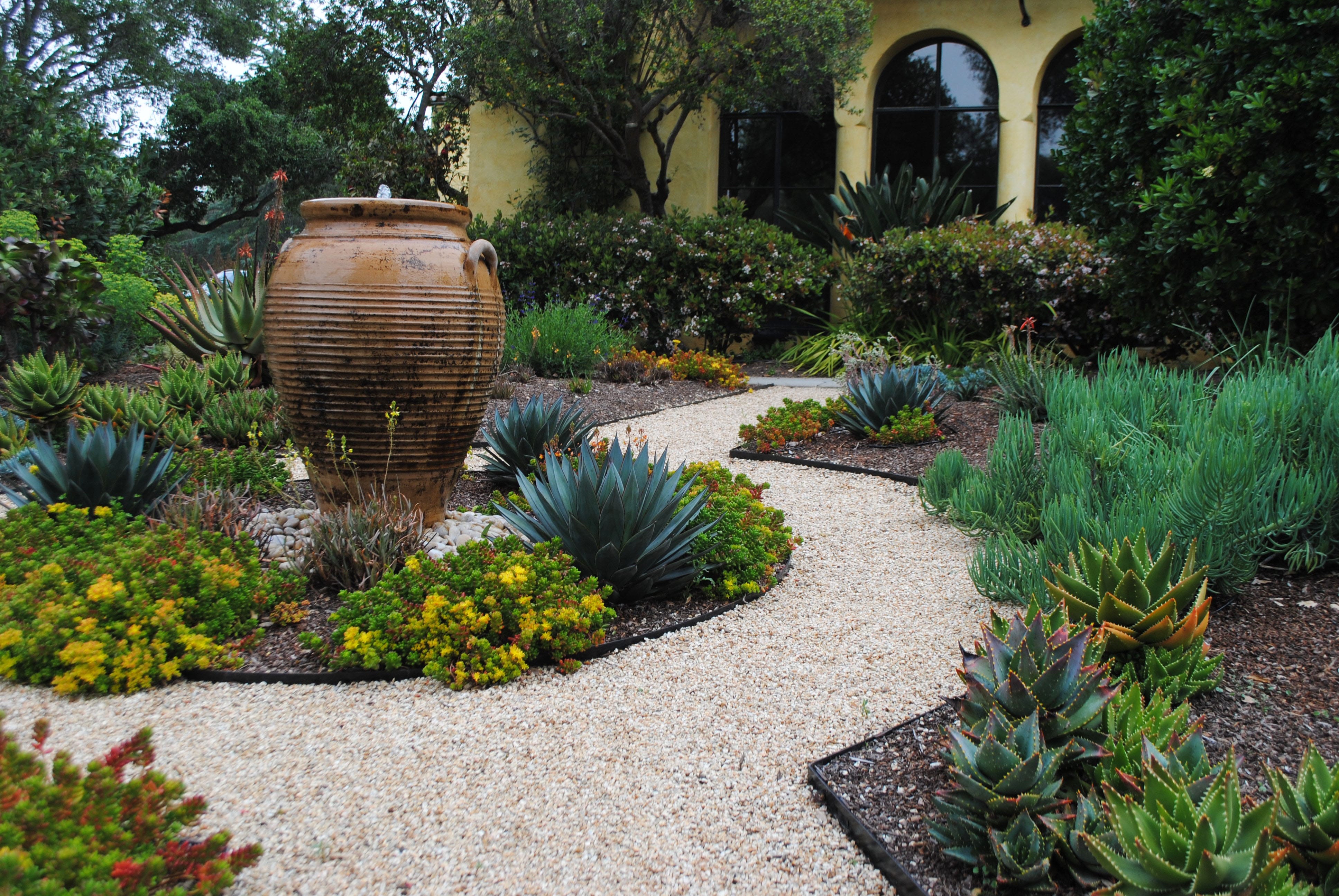
Michalis Fountain Conversion using our Greek terracotta pottery

The fountain surrounded by drought tolerant plantings


Q: Tell us a little about yourself as a designer and Harmony in the Garden.

I’m a California native, and though I’ve lived in both the southern and central parts of the state, I’ve spent most of my life in the Bay Area. Over the years I’ve seen this area’s sleepy suburbs transform into the bustling, densely populated, high-energy area that it is today. The people who call this place home come from all over the country, as well as the world, and have brought with them their unique perspectives on gardening. Having had my landscape design company, Harmony in the Garden, for over 15 years now, it’s been an incredible gift to be a part of these changes and to help so many people from different walks of life create their versions of paradise.

Q: What was your client’s goal for this garden?

As passionate gardeners themselves, the clients wanted to transform this part of their garden from a water-guzzling, and unsightly half-dead lawn into something that would require much less maintenance and water. This area is situated close to their home and can be viewed from several large windows, so it needed to look good year-round.

Fountain Conversion Rebecca Sweet garden design
Replacing lawn with low water succulents

Fountain Conversion Rebecca Sweet garden design
More beautiful succulents

Q: What was your initial vision for the landscape and did that change over time?

My vision and theirs complemented one another perfectly, as we are all succulent fans. So, to reduce water consumption, as well as indulge in our love of succulents, we removed the lawn, replacing it with a low-water succulent and cactus garden. To help tie this new space in with their existing, and more traditional style of garden, we also incorporated   several flowering shrubs and perennials that were colorful, yet also drought-tolerant and low-maintenance.

Because the area is fairly large, we knew we needed to break up the space into smaller, more manageable planting areas. Wide decomposed granite pathways were the solution, gently meandering through the space, helping to bring down the scale of the oversized garden.

Fountain Conversion Rebecca Sweet garden design
Adding some bright color

Q: Any unique issues or challenges for this project during the design or installation?

Initially, the homeowner wanted this garden to thrive without supplemental water but quickly realized that just wasn’t going to happen. This area is in full sun so even the cactus were suffering through the blistering summer heat-waves. Luckily, we had a feeling this might happen and had previously installed a framework of irrigation under the ground ‘just in case.’ We ended up irrigating the garden, on a very reduced schedule.

Q: What would you describe as your garden design aesthetic and how do you work with your client’s own vision for the landscape?

My own aesthetic is one that appears full and lush, yet is quite drought-tolerant. My passion for plants has allowed me to create drought tolerant gardens that don’t ‘look’ drought  tolerant, and is what I’m probably best known for creating.

Since so many of my clients come from around the world, their vision for their garden (and the    plants they’re used to seeing) can be challenging to translate with California’s lack of water. Luckily, living in a mild-winter climate such as ours, we have access to an expansive selection of drought-tolerant plants from which to choose.  I love interpreting their vision into a garden overflowing with plants that will thrive here.

Fountain Conversion Rebecca Sweet garden design
Adding some flowering shrubs

Fountain Conversion Rebecca Sweet garden design
Reducing the lawn with hardscape and succulents

Q: For garden décor, why the Michalis Greek pot for the fountain conversion?

When designing this garden, we knew we wanted a focal point to bisect the center of the pathways. To keep in scale with the large garden and home, we needed a large focal point.  The Michalis Greek pot an ideal choice for a fountain conversion and blends beautifully with their historic Mediterranean home. By converting the pot into to a fountain, we added the gentle sound of trickling water, entertainment from the multitude of birds that adore taking baths there, and the illusion of ‘coolness’ from the water itself. We couldn’t have chosen a more perfect focal point for this garden.


Q: What was your favorite part of this project?

My favorite part of this project was to see the joy on my clients’ faces as they saw their garden’s breathtaking transformation. I continue to visit them and their garden every few months and seeing the succulents grow and fill in, creating an ever-changing tapestry has given my clients so much happiness through the years – all while significantly reducing their water bill!


See Rebecca’s other work on our blog:

Rebecca Sweet On Shades of Gray in the Garden
Stylish and Sustainable Garden Design

Rebecca Sweet On Shades of Gray in the Garden

Eye of the Day|Rebecca Sweet|Shades of Gray Garden

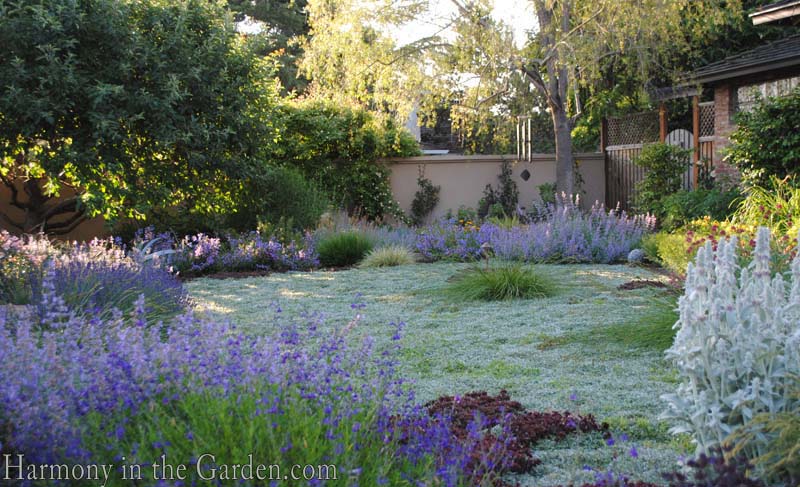
One of my favorite gardens that I designed a few years ago is a great example of how you can replace a water-thirsty lawn with lush looking, and less thirsty, plants.  One of the most successful strategies we used was to swap out the turf lawn and install a drought-tolerant Dymondia margaratea ‘lawn’ in its place.  But first, a little background and a few before & afters:

My client’s home is located on a busy corner within a stone’s throw of two nearby schools, has giant picture windows throughout the house and has a 4-foot high wall that surrounds most of the garden (a Lookiloo’s fantasy!)  What this translates into is the homeowners were on constant display to traffic and pedestrians alike and felt like they were living in a fishbowl, for all to see.

The lack of privacy would tempt many to build a fortress-like wall to surround the garden, but staying true to their welcoming personalities, they decided to create a garden that others might equally enjoy (after all, if they’re going to peek over the wall they might as well have something nice to look at, right?)

Tired of their threadbare, un-used, water-thirsty lawn and random mishmash of plantings, they wished for a more responsible, fun, and ‘livable’ garden that used less water and incorporated plenty of native plants to encourage wildlife to visit.  Our first step was to rip out the lawn and reinterpret a newer, smaller version using Dymondia.  I chose Dymondia because it’s extremely tough, drought-tolerant, evergreen and can withstand a fair amount of foot traffic. Plus, it’s just so darnned pretty.

Their concern, however, was that using such an expansive amount of the color gray in the garden would have a blinding, bright and parched effect.  This is a perfectly valid concern, and one that I’ve often heard from other clients who have experienced the unintended ‘glare’ in their gardens as a result of an overuse of gray plants.   To help avoid this common pitfall of using gray in the garden, here are a few tricks I’ve used to help tone down the brightness while still enjoying this beautiful color.

Shades of Gray

First, it’s important to realize that there are different shades of gray ranging from light & bright, to mid-level gray all the way to dark, charcoal-like foliage. And because of this range, it’s important to understand that not all grays are alike.  It’s perfectly okay to use plenty of gray plants in the garden, as long as you vary the shading.  No one wants to look at one bright gray plant after another without a place for the eye to rest, so remember to use plenty of mid-level and dark gray plants sprinkled throughout.

Keeping it Lush

In order to prevent gray colors from creating a ‘pass the sunglasses’ effect in your garden, it’s also important to include plenty of nearby plants that have deep, rich colors, such as burgundy, green and purple. In this garden, the plants chosen included the brilliant blue flowers of our native ‘Blue Springs’ Penstemon, vibrant purple Lavender and the deep burgundy Stonecrop that creeps throughout the edges of the Dymondia lawn.

Lambs Ear is used sparingly throughout the garden, as it’s a really bright shade of gray, almost bordering on white, and could easily cause the Dymondia to appear brighter than it actually is.

In fact, each Dymondia leaf consists of two colors – green on the bottom and silvery gray on top.  And once the Dymondia begins to grow and fill out (forming a soft and inviting 3-inch spongy mat), its slender leaves will begin to twist gently, revealing its different colors.

To further emphasize the green in the bi-colored foliage, I’ve included plenty of other surrounding plants with green colors to help strengthen the color echo.

For example, I’ve interspersed our native Carex divulsa (Berkeley Sedge) and Calamagrostis foliosa (Feather Reed Grass) throughout the lawn, as well as lots of perennials with green foliage.

It’s not just Dymondia that has hefty amounts of green in its coloring – take a look at a lot of other gray plants and you’ll notice green beneath the gray ‘fuzz’ (ie: many lavenders, senecios and hostas).  To emphasize the blue tones of the gray Dymondia colors, I also included plenty of blue plants in the garden, as well – like this ‘Beyond Blue’ fescue, various succulents, and many blue-flowered perennials.

My goal was to emphasize the tones and colors that I want while minimizing the tones that I don’t want.  Can you imagine how bright the garden would be if I had used an overabundance of white flowers and foliage?

Hardscaping

Hardscaping (such as nearby flagstones, patios and sidewalks) plays an important role when placed near gray plants as it, too, can serve to either tone down the brightness or amp it up to blinding proportions.

For this garden, we chose flagstones with slightly creamy-pink tones to them.  Again, the reason was to de-emphasize the bright gray colors by introducing softer muted shades to tone things down.

I’ve seen plenty of instances where a drift of bright gray plants, such as Lamb’s Ear or Artemesia, have been placed directly adjacent to a bright white cement walkway. And 9 times out of 10, that’s the area the homeowner is referring to when they say they don’t like the color gray.

To eliminate this blinding effect, just remember to use hardscaping ( as well as plants) with softer tones and/or darker colors.

A year after this garden was installed, we compared water bills – the result was amazing!   Compared to the wall-to-wall ‘carpeting’ of lawn from before, the new garden uses 40% less water, even though there is a ton of plants in this garden!  This shows that with creative and careful plant selection, and water-efficient drip irrigation, the result can be breathtaking while using much less water.


Summer 2015 Garden Design Magazine Review

Eye of the Day|Garden Design Magazine Summer 2015

GARDEN DESIGN: QUICK! GRAB YOURSELF A COPY!

Eye of the Day has been involved with the publication Garden Design magazine for many years. The latest iteration  of this “magazine” is quarterly and feels more like a book than a periodical.  There is absolutely no advertising to interrupt the flow of articles and inspiring photographs.

My eye was first caught by the Editor’s Note  “Moonshot Thinking for a Low Water World” in which Thad Orr, Editor-in-Chief, discusses replacing lawn with water-wise alternatives involving collection systems and irrigation monitoring. On the facing page is Fresh: Inspiration and Innovations from the World of Garden Design.  This article addresses “Tough Questions about Drought” by asking four people: the Director of the Nature Gardens of the Natural History Museum of Los Angeles, the Director of the Landscape Architecture and Horticulture Gardening Programs at UCLA, a well-known Californa Landscape Architect and the Water Efficiency Manager of Irvine Ranch Water District, what can be done to conserve water this summer and in the future. Initially, this was all I needed to  continue reading; we all need to immerse ourselves in questions and answers about water usage.

Elise’s Gift showcases the historic Redford Gardens in Quebec, illustrating the article about one of the largest plant collections in North America and the story of its founder, Elsie Stephen Redford with photos of the abundant flora of the gardens that were once the family’s fishing camp. Reading about Elsie’s vision and involvement in her “garden” overlooking the St. Lawrence River has me wishing for an in-depth  biography of her life.

These are only a few of the gems between the covers of Garden Design. This impressive publication is just jammed with articles and photos that are so interesting, beautiful and thought provoking that even those of us not claiming to be gardeners  will just want to absorb.

Subscribe here.


A LANDSCAPE ARCHITECT DESIGNS FOR THE DROUGHT

Eye of the Day Garden Design Center|Sally Farnum Before and After garden design|drought

A LANDSCAPE ARCHITECT DESIGNS FOR THE DROUGHT

While landscape architect Sally Farnum of SE Farnum Associates has been taking the time to educate her clients about how to deal with their outdated, thirsty landscapes—especially rolling, green lawns—she has designed and implemented an outside environment for her own home that is water-considerate and still lush, inviting and peaceful.

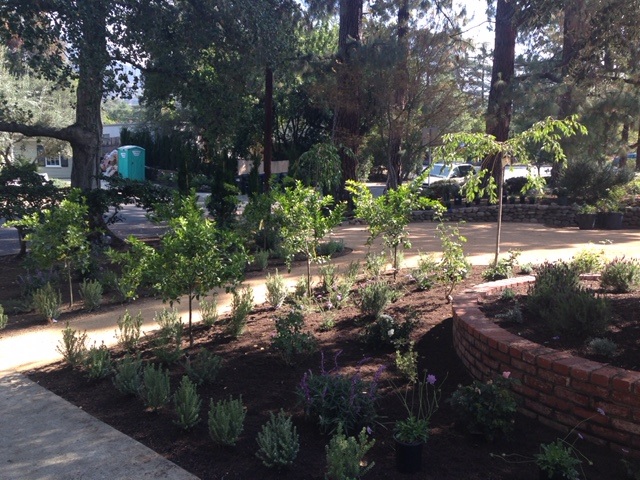
The first task was to remove a large front lawn and some accompanying flower beds.

BEFORE: Water-thirsty lawn

DURING: Removing lawn and introducing granite

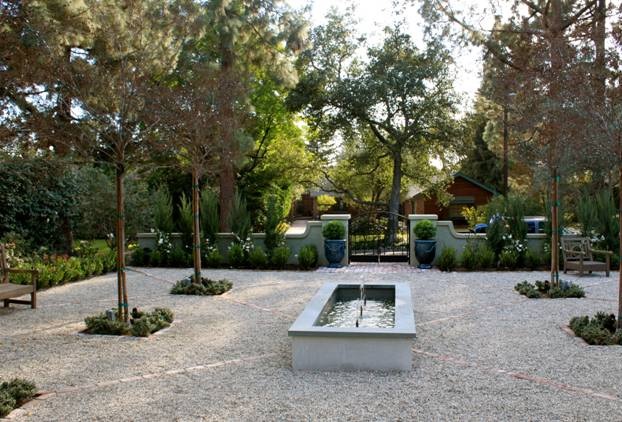
Next, grading, drainage and landscape plan was translated to the area. Decomposed granite was used as the base of the pathway from the driveway, culminating in a keyhole design, at the end of which a dry-stacked rock wall would serve as a retaining wall as well as the background for a Gladding McBean fountain conversion.


ALMOST FINISHED!
Flanking each side of the pathway are two Antique Green Gladding McBean Oil Jars, preparing the eye for the fountain.  Planting on the perimeter of the path area includes a variety of water-friendly plants and trees.


STAY TUNED
Check back next month on Sally’s design in progress for photos of the finished project.


How a Landscape Architect Approaches Garden Design During California Drought

Eye of the Day|Sally Farnum Landscape Architect|garden design drought

Having a sister with a long, successful career as a landscape architect has made it easy to have an ongoing conversation with Sally Farnum about design, client concerns and current issues. We are all especially interested in California’s water problem and wanted to find out how Sally is helping her clients address the issue.

Suzi: What have your clients have been asking about when it comes to water and their gardens?
Sally: Most of my clients are trying to be responsible when it comes to water usage in their landscape. They want to know if they need to take out their lawns, replace their flowering plants with desert plants and if it will still look pretty.

Suzi: How do you approach designing a plan that reflects water-consciousness but is still pretty?
Sally: I really work to combine good elements of design in all my plans: scale, balance, variety, form, line, texture and color. I like to use California natives, salvias, lavenders along with containers, sculpture and fountains.  I suggest using decomposed granite and gravel and, really important, an extra-efficient irrigation system.

Suzi: How do you convince them that a huge, green lawn isn’t the best plan anymore
Sally: Most people are visually oriented, so to describe an idea in words alone doesn’t always convince them. I show them photos or have them visit other projects I have completed.  But I don’t feel that it’s necessary to remove ALL lawn. Only 5% of residential water is used to keep lawns green and it contributes to cooling an area, cleaning the air and reduces noise. Grass in a front yard, used to fill space, should be eliminated.

Suzi: Do you have a favorite or most challenging project which incorporated water-wise elements?

Sally: One of my favorite and most challenging designs is right across the street from my own home.  Challenging because the home belongs to a friend and because I look at it most every day. My favorite because of the transformation from a front yard with a large asphalt driveway and lawn, to a garden with a walled-in gravel courtyard with a fountain and pots planted with flowering plants on the street side of the wall.

Suzi: How have you managed to change the way you designed in the past to meet the new challenges presented by the drought?
Sally:  The challenges are mainly in working with my clients and helping them accept new plants and watering habits.  Most plants will adapt to using less water, but people tend to water more than necessary.  I haven’t changed the way I design, but I have changed the materials and plants I use.


Suzi: Thanks, Sal.  You’re always such a wealth of information, and a fine sister, too.
Sally: You’re not so bad yourself.


Morocco in Your Own Garden

Eye of the Day|Moroccan Garden|Newsletter

Morocco in Your Own Garden

California gardens, especially those in Southern California have long utilized the concept of outdoor rooms. Countries with warm, dry climates around the Mediterranean basin have been creating miniature oases outdoors for centuries. Taking a cue from them is one way to replicate both the feel and appropriateness of this style.

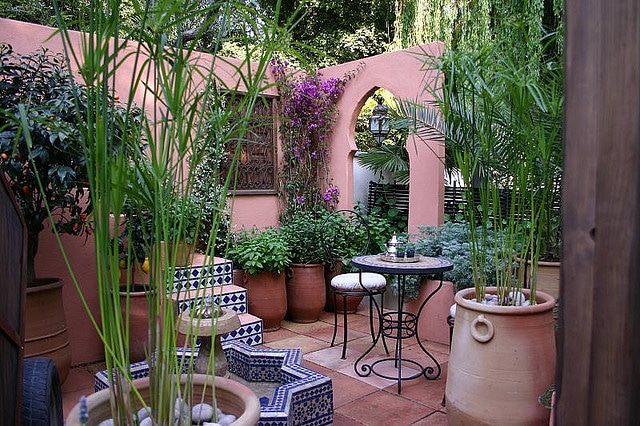
Moroccan gardens provide great examples of the restrained use of water to create a lush setting in outdoor courtyards and passageways. Even while reducing your water use in the landscape, you can create an intimate, yet luxuriant garden space by taking inspiration from arid North Africa. Gardens there are generally central to the dwelling, both to provide privacy and protection from the heat and winds.

One of the key elements of these enclosed spaces is limiting water use. The Arabic word for a garden of this type is riad and usually refers to the central fountain or ornamental pool. The fountain need not be large to provide a bit of cooling to the air as well as a sense of peace and luxury in a climate where water is scarce.  It is possible to recreate that feeling with a simple water feature created from a glazed pot and a small, efficient pump instead of building a large fountain.

Another feature is the exuberant use of color. Colorful pots, a painted wall or gate as well as bright flowers make for a vibrant and even joyful setting. Vivid glazed tiles, whether on the patio floor or the surface of a fountain, also contribute to creating an exotic paradise.

Plants can be used as well and they do not have to be those that require a lot of water. There are many that are drought tolerant, yet lush-looking. Large leaves give a more topical feel and species such as bird of paradise, aspidistra and pygmy date palm do well in containers. Succulents are a great choice; from cacti to agaves and aloes, they thrive on little water and their foliage provides drama and color. The Canary Islands is home to a wonderful group of succulents, the aeoniums, whose fleshy leaves grow in large, showy rosettes and would be perfect choices. Even the humble geranium (Pelargonium) is sturdy and produces flowers nearly year round. Assemble several plants in one container to provide a miniature landscape or group individual pots together, mixing and matching your color palette.

Look at Planted Wells blog for more Moroccan garden design inspiration.

Image Credits:
Moroccan Garden – Creative Commons, Chelsesa Flower Show Gardens by Rictor Norton and David Allen is licensed under CC by 2.0
Plant Image – Creative Commons, BCSS gloucester branch auction – The national agave collection by stephen boisvert is licensed under CC by 2.0