Top Water Garden Plants

Some of the many plants available to gardeners are uniquely suited to grow only in water (or quite damp conditions). These plants inhabit a unique microclimate so their needs are necessarily different than the majority of nursery offerings. To successfully grow them, you need to understand their whims and fancies.

Aquatic plants can be divided into three categories and each type has different requirements. There are water garden plants that freely drift about on the surface with their naked roots dangling into the water. Others are ecologically suited to root in the mud at the bottom of a pond or lake and send their leaves and flowers to float on surface where they can harvest sunlight and attract pollinators. The third group requires constant moisture in their root zones, but the plants emerge from muck to produce sturdy and ornamental aerial forms. Here are some of the most common, and most easily obtained of these three classes.

Free-floating species such as water hyacinth (Eichornia crassipes) or water lettuce (Pistia stratiotes) do a great job of cleaning the water of nutrients such as nitrogen that otherwise would support unsightly algal blooms and they are interesting and beautiful, but be advised that in California it is illegal to sell either of these may find them at farmers markets or back yard sales. They have become invasive in many waterways, so please grow them responsibly and when you have too many (they reproduce prodigiously), do not put them in the nearby lake or stream, but include them in your compost pile instead.

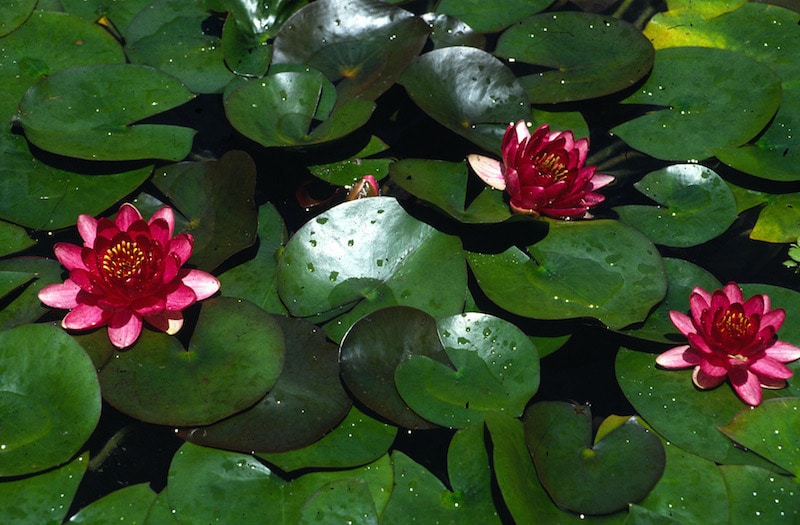
The most recognizable water garden plants are water lilies (Nymphaea species and cultivars). They anchor themselves in the mud (which means you need a pot to put them in) and send highly ornamental leaves and flowers up to the surface. Other, smaller, species with this habit include water hawthorne (Aponogeton distachyus), water poppy (Hydrocleys nymphoides), and floating heart (Nymphoides species).

'Perry's Baby Red' water lily
‘Perry’s Baby Red’ water lily

A much larger selection of what we like to call “bog plants” that normally grow on the fringes of natural bodies of water is also available for our water gardens. These include dramatic foliage plants like papyrus (Cyperus papyrus) and cattails (Typha species) as well as flowering plants like iris, canna, and a fun group of lobelias just suited for the damp. In water gardens, they need to be planted in soil and perched with their rims just an inch or two below the water surface. All of these can be easily found on the internet from respectable mail order nurseries. They should come with easy planting directions, but if they don’t, that information is also widely published.

Bring Water Lilies Home

Eye of the Day Garden Design Center

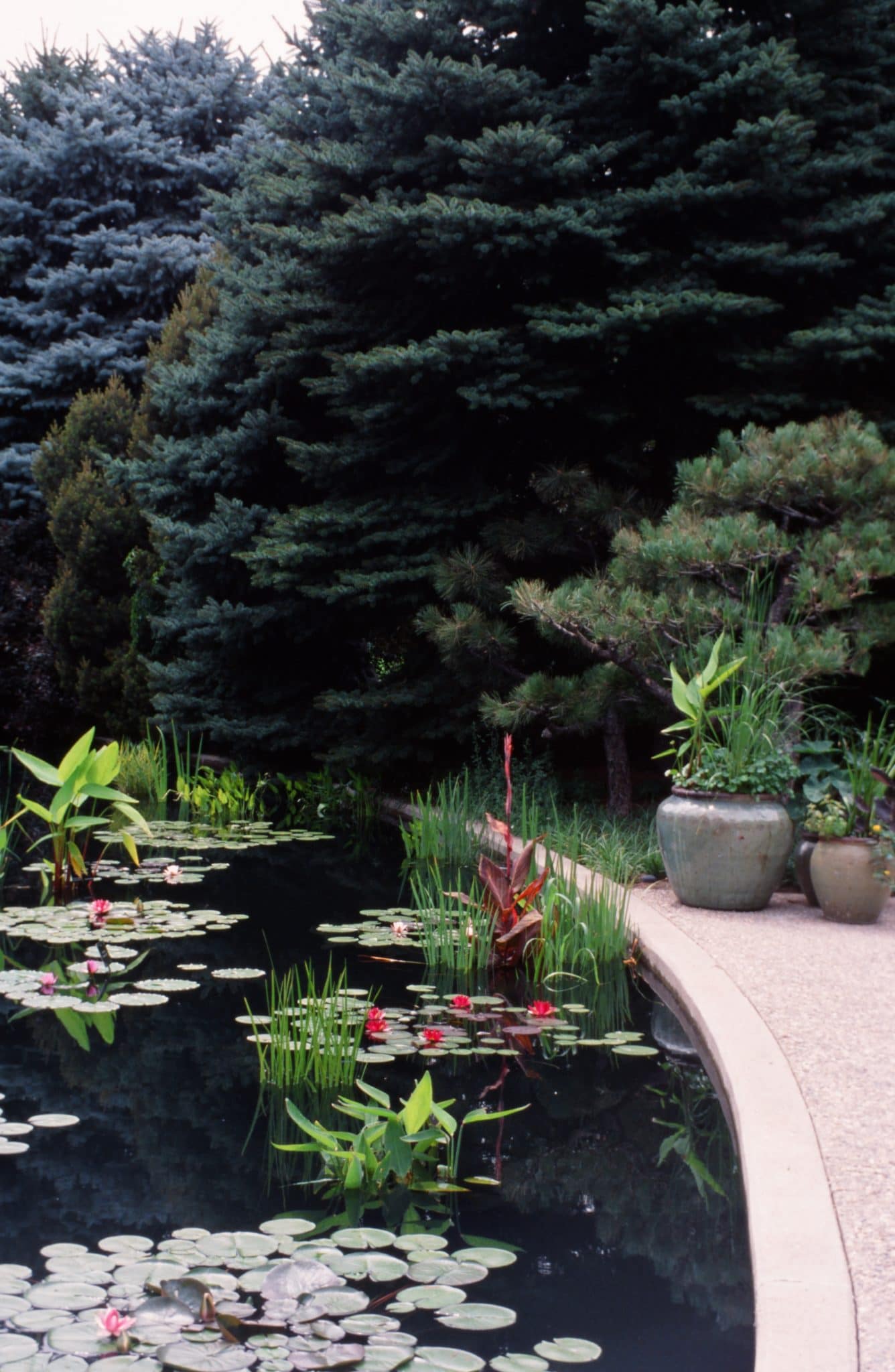
Eye of the Day Garden Design CenterMaybe you’ve had this experience: you are having a lovely picnic at Alice Keck Park Memorial Garden. Or, you are visiting one of the world-class botanic gardens around the country or the world. You stop by the pond to admire the lovely water lilies, the turtles that have crawled out to sun themselves on the shore, and the colorful koi moving in lazy patterns underwater. It all seems far away and idyllic, but what would it be like to get closer?

One way to do that (short of wading in and upsetting all of the creatures in the pond) is to grow a water lily (or two) in a smaller, above-ground container. In a container garden, the intricate and beautiful, even sometimes-fragrant flowers are within nose reach. You may not want to try turtles or koi, but aquatic plants, including water lilies, are very well suited to such confined quarters.

Eye of the Day Garden Design CenterWater lilies are unique plants and quite ancient in origin. Their showy flowers come in many colors and float on the surface of the water along with glossy orbicular leaves. There are hardy water lilies that go dormant in winter in temperate zones and tropicals that prefer to grow year-round in warmer climes. The tropical water lilies will perform wonderfully in cooler climates, but may have to be treated as annuals there.

Water lilies do grow in soil, so planting one in a container requires that a durable pot be prepared for them. The first rule of growing aquatic plants is to provide a growing medium free of organic material. I know that seems to go against all of our gardening instincts, but the root zone of aquatic plants is quite anaerobic, meaning that the bacteria (and other microorganisms living there) use other pathways in the decomposition of organics that can result in smelly and even toxic conditions. Nice clay soil, even sand, will support their roots and not contribute to other noxious problems.

Most water lilies require about 10 to 12 inches of soil in their growing pot and another 10 to 20 inches of water over the surface of the soil, although there are a few dwarf varieties that will bloom in far less space. Shop for them online and read the descriptions of their size and growth pattern to determine what size container will be best. The decorative outer planter will need to be water tight, of course, and many will be fired with an impervious glaze. Other choices are porous clay or concrete pots, which can be sealed. If the container already has drainage holes, they can be plugged to provide the perfect mini-water garden. Be sure to add a few mosquito-eating fish to complete your mini-ecosystem.