Your Garden In A Window Box

When you see images of homes that feature window boxes overflowing with color, herbs and bees and butterfly-friendly plants, doesn’t it make you want to create a little garden under your window?

Eye of the Day|Boston Window Box|Travel garden design
A trio of window boxes for this home in Boston

Eye of the Day|Boston Window Box|Travel, garden, design
With little yard space, window boxes solves the garden problem

During an East Coast trip, Brent was walking the streets of Boston’s Beacon Hill neighborhood and.. looked up.  He noticed them near doorways as well: window boxes overflowing with color, herbs, and seasonal gourds.  Beacon Hill is famous for the flower boxes gracing the windows of most homes.  Their legacy comes from a time when homes were built on the edge of the street and there was little area to garden.  In the late nineteenth and early twentieth century, most homes had a central courtyard where there might have been an outhouse, wood shed and animals, so the logical place to grow a small kitchen garden would be in planter boxes hung just outside the window in order to save space.

Eye of the Day|Boston Window Box|Travel, garden, design
Window boxes are easy to change up according to season.

Eye of the Day|Boston Window Box|Travel, garden, design
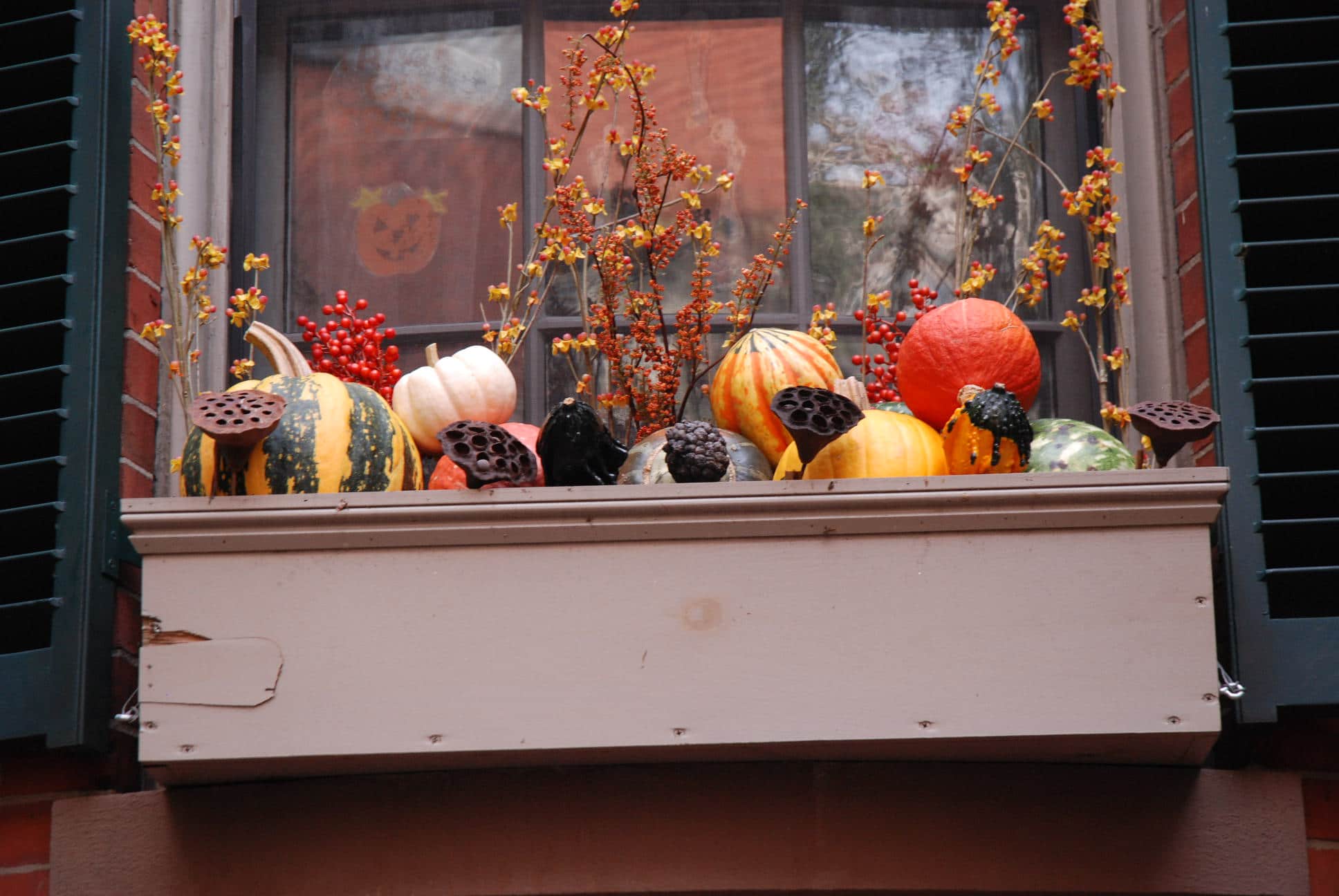
Festive Fall gourds line this window box in Beacon Hill

Eye of the Day|Boston Window Box|Travel, garden, design
Dramatic take on vertical gardening with window boxes in the Boston Beacon Hill neighborhood.

Eye of the Day|Boston Window Box|Travel, garden, design
Having fun with window box design.

Eye of the Day|Boston Window Box|Travel, garden, design
Despite all the brick, you can still incorporate greenery to your home design

Window boxes have a long history beginning in Europe and then traveling to America with the early settlers.  Terra cotta planter boxes date back to early Rome where it was common practice to cultivate cottage gardens for food, medicine and religious uses.  Eventually window boxes were planted with decorative flowers.

Eye of the Day|Boston Window Box|Travel, garden, design
Window boxes add a little color to this home exterior

Eye of the Day|Boston Window Box|Travel, garden, design
Lovely arrangement of colorful flowers for this window box design

Eye of the Day|Boston Window Box|Travel, garden, design
Grow your garden in a window box

Historically, planters placed below the window have been made from wire hay frames, wrought iron, wood and terra cotta.  And that brings us to Eye of the Day’s Italian terracotta clay window box or “Cassetta Balcone.”  These sturdy window boxes, made from Galestro clay by Terracotte San Rocco, are available in five sizes and can be used as regular rectangular planters, placed on the ground, but WHY NOT use them as the Beacon Hill Brahmins and hang them beneath your windows, filled with succulents,  herbs, and vegetables?

Eye of the Day|Window Box|Cassetta Balcone Liscia
The Cassetta Balcone Liscia

Eye of the Day|Boston Window Box|Travel, garden, design
You can even place your window boxes along your balcony or yard deck enclosure.

Eye of the Day|Boston Window Box|Travel, garden, design
Window boxes–great for every season.


Groundskeeping: Traveling South for a Peru Expedition

True to my “Profile” I do wander the globe looking, sometimes under rocks.  Here at Eye of the Day we have been successful in offering old rocks with a purpose for the garden.

Throughout the centuries, agricultural societies shaped stone to hold water and fodder, fodder and water, to sustain their livestock. These pieces make stellar planters and add mass and dimension to a landscape in many ways. Here at EOD we make them into beautiful container gardens, water plant containers, border containers and fountains.

Yes, they are heavy and we have become pretty good at delivering and installing them, but that isn’t the story I want to tell here. The story is where to go to find these old and handmade things.

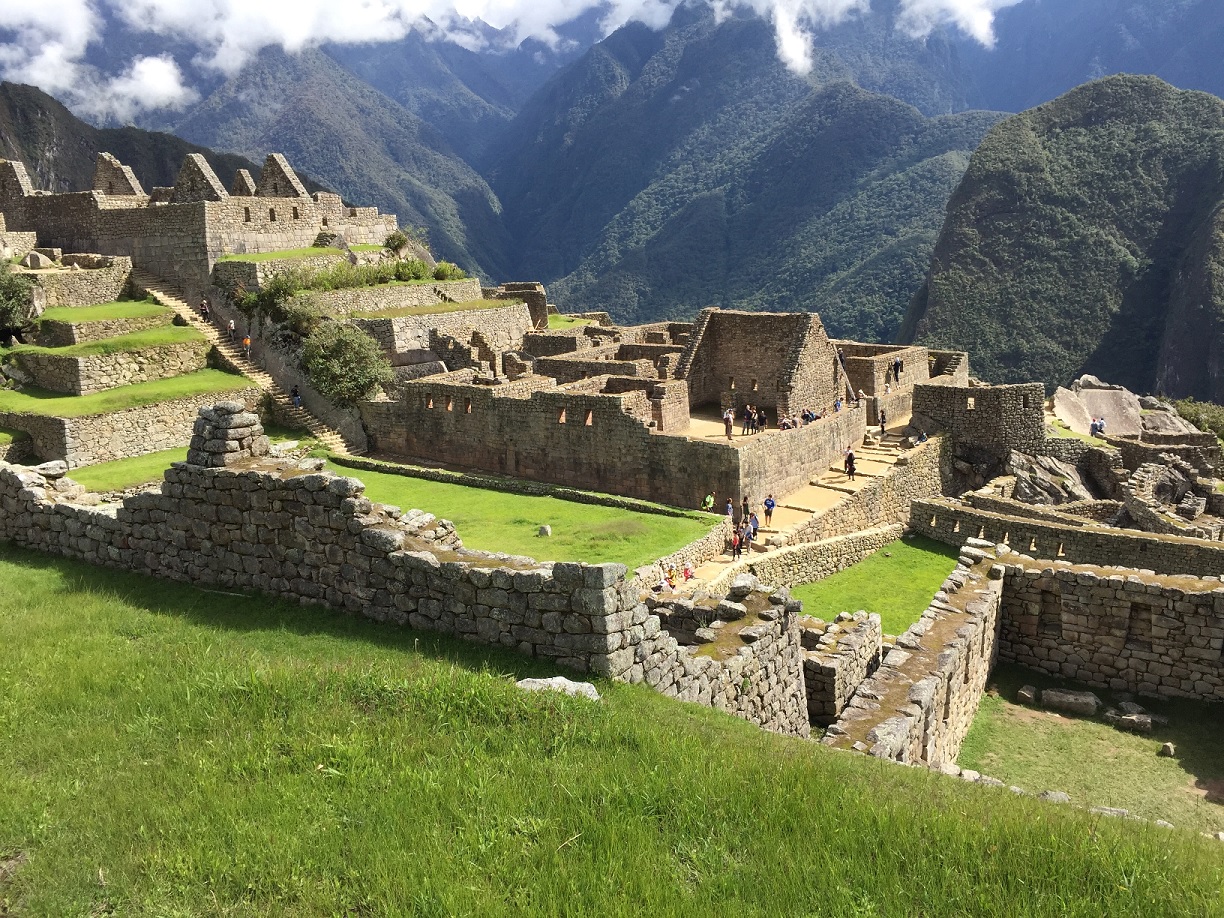
Where is there lots and lots of granite to hand pitch? The Andes, Peru, Machu Picchu.

Discovering Lima, Peru:

Busy and booming, this place where it never, and I mean never, rains is beyond bustling.  It reminds me of China with cars and buses everywhere so that if you’re not paying attention, you just might get run over.  There is smog, but being on the ocean, there is some relief.  Also, it’s a good idea to go in late November. Wait, that’s Summer. Or is it Winter there? T-shirts, sandals and shorts.

The city is spread out and the different districts make it fun and interesting to explore. The Baranca is funky, hip, and has a great flavor to it.


The M district, where everyone tells you to stay (I agree), is where the action is and the shopping and the best food. The food is fantastic, really. Ceviches galore and Pulpo,  the flavors and the talent of the cooks, chefs and kitchens is world class. The opportunities to walk and tour the city and sample their great restaurants are abundant.

Getting out of the City

But unless you are looking for crafts to purchase, especially things woven and crocheted from alpaca and sheep, or silverware all on a scale relative to grains of sand at the beach, you will be disappointed. So, I headed to the mountains of Cusco, something like 10,000 feet above sea level. This city is different in every way from Lima except for the woven and knitted goods.

Cusco is a small but bustling city with sights galore and outstanding food. The streets are still mostly made of granite cobblestone and strong ankles are recommended.  Let me say here that the coca tea is a good idea and tastes great, it helps with the altitude but it is not the experience many think it will be or maybe even want. I didn’t, however, chew any leaves, it just didn’t strike me as important. I was hunting for rocks!

If you could turn granite into energy, the Peruvians would be the wealthiest people on the planet.  How did the Incas move the boulders (some a hundred tons or more), not only downhill but, down mountain slopes, across large rivers and up mountain slopes hundreds and hundreds of feet into place, and when fitted together you could not slide an eyelash between them?

The ever present granite mountains granite buildings, granite temples and, granite streets are enough to cause a need in the hardened soul for some loamy soil and terracotta planters (that’s EOD humor, by the way). I was certain that I would come across some troughs or stones carved to hold water for thirsty beasts kept for their wool and hair.

Sadly, I canvassed from car, bus and train windows and never saw anything until we were on our way to Puno and we stopped at the most outrageous church I’ve ever seen. There I saw two old stones, definitely carved to hold water. Unfortunately, they were over two thousand years old and I could never have afforded them, at least for use as planters.  Oh well! Not every expedition is successful from the EOD point of view. Nor does it have to be, even for me, but I was surprised that in a country made of stone, so little of it has found  its way into the culture.

Oh well, on to the next spot!


Groundskeeping: Exploring Urban Landscapes and Frederick Law Olmsted

GROUNDSKEEPING is about my travels for my life’s work, keeping Eye of the Day fresh and exciting not just for me, but our clients and customers. I am always trying to find what others are seeking for their designs.  Like a chef experimenting with ingredients and flavors to interest his public, I look for those things that different places and cultures want and need, and that architecture requires for exteriors to be in harmony with structures.

Recently I decided to return to the East Coast, which is the market we ship to more and more frequently. While walking throughout New York and Boston my goal was to come up with new ideas and directions.

Revisiting and walking the length of Central Park, one of my favorite urban places on earth, was a specific goal.  It is 2.9 miles long (in a straight line), but my meandering probably added another half mile or so.  Fredrick Law Olmsted was a remarkable genius and I marvel at his accomplishments. The Ramble is still my favorite area of all.  It is hard to believe you’re in the city at all.

As I approached the northern end I came to the Conservatory Garden, the only formal garden in the Park. It’s truly an intense, wonderful experience for garden lovers. I recommend that you go to Google images for more wonderful photos. From the corner of 110th Street I took the bus down 5th Avenue to my reward, lunch at Gramercy Tavern. I needed plenty of oysters to soothe my soul and rest my sore feet.

Next, I traveled to Boston ($ one-way bus ticket) to compare cities and get a better feel for this historic place and the homes and offices of its famous residents. Boston is to NYC as Santa Barbara is to LA; while it is a major city and urban center, it feels much more intimate.

Boston Public Garden, like Central Park, is right in the center of the city; it’s smaller, but very dynamic. The 24-acre park was the first public botanic garden in the USA, established in 1837. My favorite site is the magnificent bronze statue of George Washington on his horse.

Boston Garden Lake & Bridge - Brent Travel Photo

Across the street from the Park is Beacon Hill. The word “historic” doesn’t begin to do justice to this neighborhood. Walking its narrow streets is not for those of weak ankle. I immediately saw what I was looking for, something you rarely see in the West: window boxes.  They were everywhere and many decorated for Halloween.

Boston Window Box 7 Boston Window Box 3 Boston Window Box 5I could have walked all day through the streets of Beacon Hill, taking pictures of the Federal style homes packed side by side sporting window boxes below every wonderfully fenestrated opening.  San Francisco, Pasadena, and Brentwood: why don’t you have any window boxes?  They are jewelry for the home. Designers, what are you afraid of?  I want window boxes.  I have window boxes.

Next, my pilgrimage led me to the unassuming home office of Frederick Law Olmsted in Brookline, Massachusetts. This is the location where The Master worked on his brilliant, timeless designs. The Park Rangers and volunteers were wonderful, helpful and spunky. It is moments from downtown Boston, just a short cab ride.

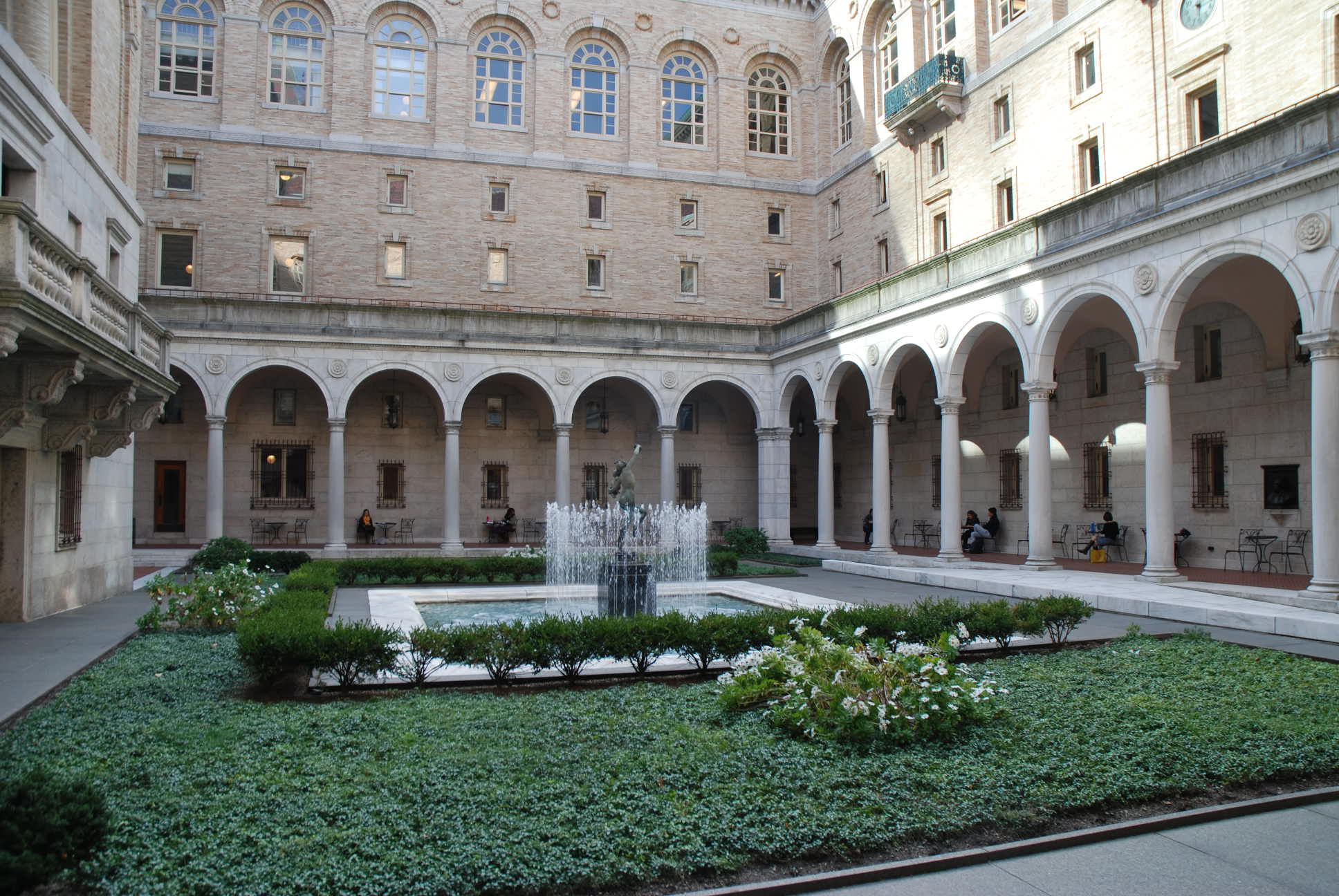
20459367-F2BB-45CB-9071-4C8F2EAC083FFinally: the fountain I stumbled upon when I walked through Boston’s main library.  In the courtyard is a fountain that replaces my favorite for many years, The Electric Fountain at the corner of Wilshire Boulevard and Santa Monica Boulevard in Beverly Hills.  In the courtyard of Boston’s public library is the most wonderful fountain, Frederick MacMonnies’ Bacchante and Infant Faun.

Boston Library Fountain 1

In its unique setting it is difficult to think of another fountain I’ve seen in my travels that could make me smile more.

Where to next??


City Fountains I Have Loved

City Fountains I Have Loved

My love of city fountains begins with my formative years.  I grew up in a suburb of Los Angeles where my father was a news photographer and intimately knew the nooks and crannies of the city.  Family drives all over the state and especially throughout greater L.A. were always amazing; there was so much to see. My sisters, brother and I were all given our own park, freeway, tree, public garden and fountain and I always thought my fountain was THE BEST. What a coincidence that when I met Brent I soon discovered my fountain was also HIS fountain. At the corner of Los Feliz Boulevard and Riverside Drive, near Griffith Park, is MY fountain, the William J. Mulholland Memorial Fountain. Each time we drive by the fountain, we both claim it. It’s still my favorite, but the two of us have also found other fountains to love in other US cities.

THE FACTS: The first “decorative” fountain in the US was dedicated in City Hall Park, New York City in 1842. Before that, fountains were primarily used to provide clean drinking water and had few decorative qualities. In the 20th century, fountains weren’t needed for drinking water and became purely ornamental, designed to honor events or individuals. There are now many computer controlled fountains that can even dance and perform music.

SOME FOUNTAINS OF CHOICE:


1. William J. Mulholland Memorial Fountain, Los Angeles CA. William Mulholland was the “father of the Los Angeles Water System.” His greatest contribution was being the engineer of the 233-mile long Los Angeles Aqueduct, completed in 1913. Unfortunately, many L.A. officials, including Mulholland were accused of shady dealings, from using scare tactics to convince Angelenos that the aqueduct was necessary to ensure the survival of the city, to buying up the San Fernando Valley from unsuspecting ranchers.  Remember Chinatown? After his death, all of these issues were forgotten and public funds were raised to construct a permanent shrine to Mulholland: The William J. Mulholland Memorial Fountain.


2. The Forsyth Park Fountain, Savannah. GA.  The most well known feature of Forsyth Park is its fountain.  It was installed in 1858 and selected from a manufacturer’s catalogue, rather than being an individually commissioned artwork.  Unlike other monuments in Forsyth Park, such as the Confederate Memorial and the Spanish American War Memorial, the fountain’s purpose is only its beauty.  It has been witness to the Civil War, survived vandalism and the forces of weather and through the generous support of the Savannah community, it lives on today.

3. The Fountains at Longwood Gardens, Kennett Square, PA.  Even if there were no fountains at the former estate of Pierre DuPont, the beauty of the 1100 acre, multi-faceted gardens is worth a long visit. It’s fantastic that Pierre DuPont himself made all the hydraulic calculations for the elaborately controlled, electrically illuminated and fountains known collectively as “The Waterworks,” the first of which began flowing in the mid 1920s.

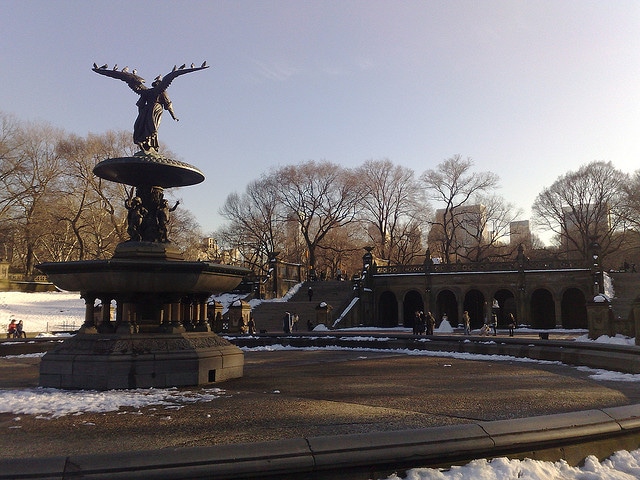
4. The Bethesda Fountain, Central Park, NY, also called “The Angel of the Waters.” Everyone knows this fountain, it seems like it’s in every movie shot in New York City and Bill Cunningham loves it, especially when it’s frozen.  The fountain was designed in 1868 by Emma Stebbens, the first woman to receive a public commission for a major work of art in New York City and was the only statue called for in the original design of the park.  Beneath the angel are four cherubs representing Temperance, Purity, Health and Peace.

This is the short version of the Fountain Favorites tour, but the best of the best so far seen in our worldwide review.

Image Credits:
Fountains Longwood Gardens via Flickr/Joshua Ludwig
William Mulholland Memorial Fountain-Griffith Park via Flickr/Konrad Summers
Bethesda Fountain via Flickr/V Manninen
Licensed under  CC by 20


A Mile High in Denver

In late Spring the opportunity to sell a complete container of Terrecotte San Rocco came our way.  Kitchell Construction was managing the building and development of a large estate in the greater Denver area and because of Eye of the Day’s past and current collaborations with them, we were recommended by their Santa Barbara team.

Everyone knows it snows at a mile high in the sky and when you’re building a large Mediterranean style house and need frost-proof terracotta pottery, who do you call? Sound the trumpets please: Eye of the Day, of course. As an authority on clay, we were able to help them select a large and diverse range of Italian terracotta pottery made from Galestro clay which comes with a ten-year warranty to minus 15 degrees Fahrenheit. Many people, including design professionals, incorrectly refer to this Italian clay as “Impruneta,” a village commune near Florence, Italy.

It has been 35 years since I was last in Denver, Colorado—what a vibrant and exciting place. I arrived to meet the container of our great Italian terracotta pottery for the project and took public transportation into the city center for far less than a shuttle, cab, or using Über. Two stops after stepping on the bus, I stepped off at the new, super organized terminal right in downtown, not far from the ballpark where the Rockies play. Across the street I stepped on the free Mall Shuttle, which took me to the other end of 17th Street and dropped me off outside the Sheraton Hotel.  Because I got there a day before the container was being delivered from the port in Houston, I walked the downtown, my pedometer said almost seven and a half miles in a day and a half which is about what I walk each day at the store.

The mixture of old and new architecture is very simpatico in Denver. I’ll bet there are dozens of brick buildings that are made from Gladding McBean bricks and they look even more beautiful today almost a hundred years later.

The development of downtown Denver looks more like Manhattan than Los Angeles with multiple high-rise residential buildings and projects throughout the city. Gleaming steel and glass buildings shadowing older low-rise buildings like a six-foot grandson might put his arm around his grandpa. They go together well in Denver. The ballpark on one side of downtown and Mile High Stadium on the other with an extreme amount and variety of great microbrews in between.

Here’s to being a Mile High!


Detour to Europe: How El Nino Led Us to Francesco del Re

In February of 1998 our lives were changed forever by El Niño. Eye of the Day was in its infancy, just two and a half years old and we became a statistic as the worst damaged business in Santa Barbara County. The federal government declared a disaster area and we lost nearly everything. But…what we didn’t know was that our journey was about to take us on a brilliant detour.

From its inception, the Eye of the Day plan was to sell pottery, fountains, statuary and other garden products. There were a lot of nurseries but not many focusing on accouterments for the garden. We began by selling wine barrel planters, Mexican pottery, American made concrete fountains, benches, bird baths and lots of colorful pots. At Christmas we sold only the Noble Fir. But then the forces of nature randomly decided to take us out.

There is a saying that when a door closes a window opens; I was looking for a window and it turned out to be FEMA. With a new FEMA loan and a lot of help from friends, Eye of the Day quickly found a new home in a bigger market, picked ourselves up off the very wet pavement and began again.

After we opened our doors in our new (and current) location in the small beach town of Carpinteria, we sensed a great opportunity to grow in a way that the pre-disaster Eye of the Day would not have been able to fulfill. Our business model was limited and we needed to think bigger, so we decided that the gift shows in Los Angeles, San Francisco and Atlanta just didn’t provide what we needed anymore. It makes me laugh when I remember how quickly my wife, Suzi, agreed that we needed to go to Paris and check out the gift show there. We didn’t realize at the time just how prescient we were.

The first day of the show was the ultimate shopping experience but only if you were buying at least ten of everything. Included was an area for outdoor garden decor and when we walked into Francesco del Re’s booth, I knew I had found something special:  the finest handmade terracotta pottery on planet Earth. His containers were classics and many were models of forms and shapes still in service after hundreds of years, including pots or “vasi”, urns and amphorae adorning villas and palaces throughout Europe. Francesco’s display screamed CLASSIC ITALIAN TERRACOTTA to me. I vowed right then that Eye of the Day would sell Francesco del Re, just as soon as I figured out how I could afford a container.

The following year we returned to Europe, this time to Italy. Something drives me to wander and explore and I knew Francesco del Re was somewhere around Florence and I knew I would find him. I scoured the small, famous hill town of Impruneta, walking into some fabulous artisan workshops. No one knew who and where FDR was, but I learned later that in Italy, few are willing to promote someone else and everyone in that famous commune was challenged by him. The hunt was on. I didn’t travel in order to give up. It was hard work, but over our excellent lunch in Greve, the proprietor of the restaurant told me how to find the factory. By the way, we selected the restaurant for lunch because there was a pair of classic Francesco del Re Vaso Lessona urns at the front door.

I have returned to the FDR factory every year for the last sixteen years. This May I flew there for three days to help load a forty-foot container and to see Signora Elettra Brancollini, Francesco’s partner and sculptor. Sadly, our friend Signore del Re passed away two years ago, but his classics will live on for centuries in our gardens.