A Fountain Conversion by Rebecca Sweet

Fountain Conversion Rebecca Sweet garden design

Fountain Conversion: A Michalis in the Garden 

We have been fortunate to have Rebecca Sweet write for The Yardstick in the past and knowing that she has a sustained love for Mediterranean gardens and is busy with clients seeking her expertise and experience, we are pleased that she took the time to answer some questions about her garden design featuring Eye of the Day’s Greek pot, the Michalis, as a fountain conversion.  Rebecca is the author of several esteemed books on gardening and her work has been featured in Sunset Magazine, Horticulture and a variety of other national publications.  Her design firm, Harmony in the Garden, is in Los Altos California.

Fountain Conversion Rebecca Sweet garden design
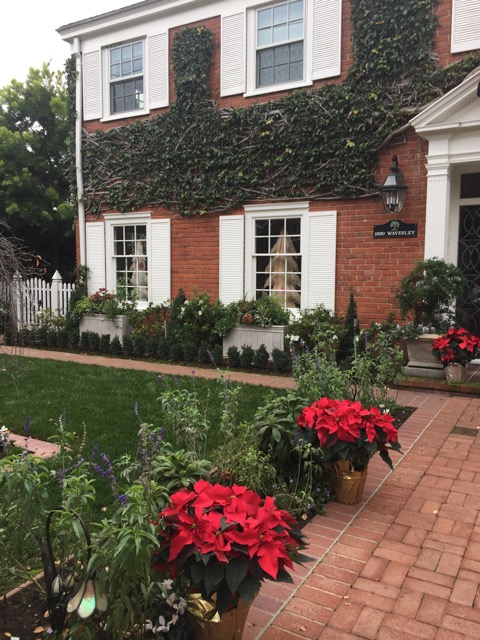
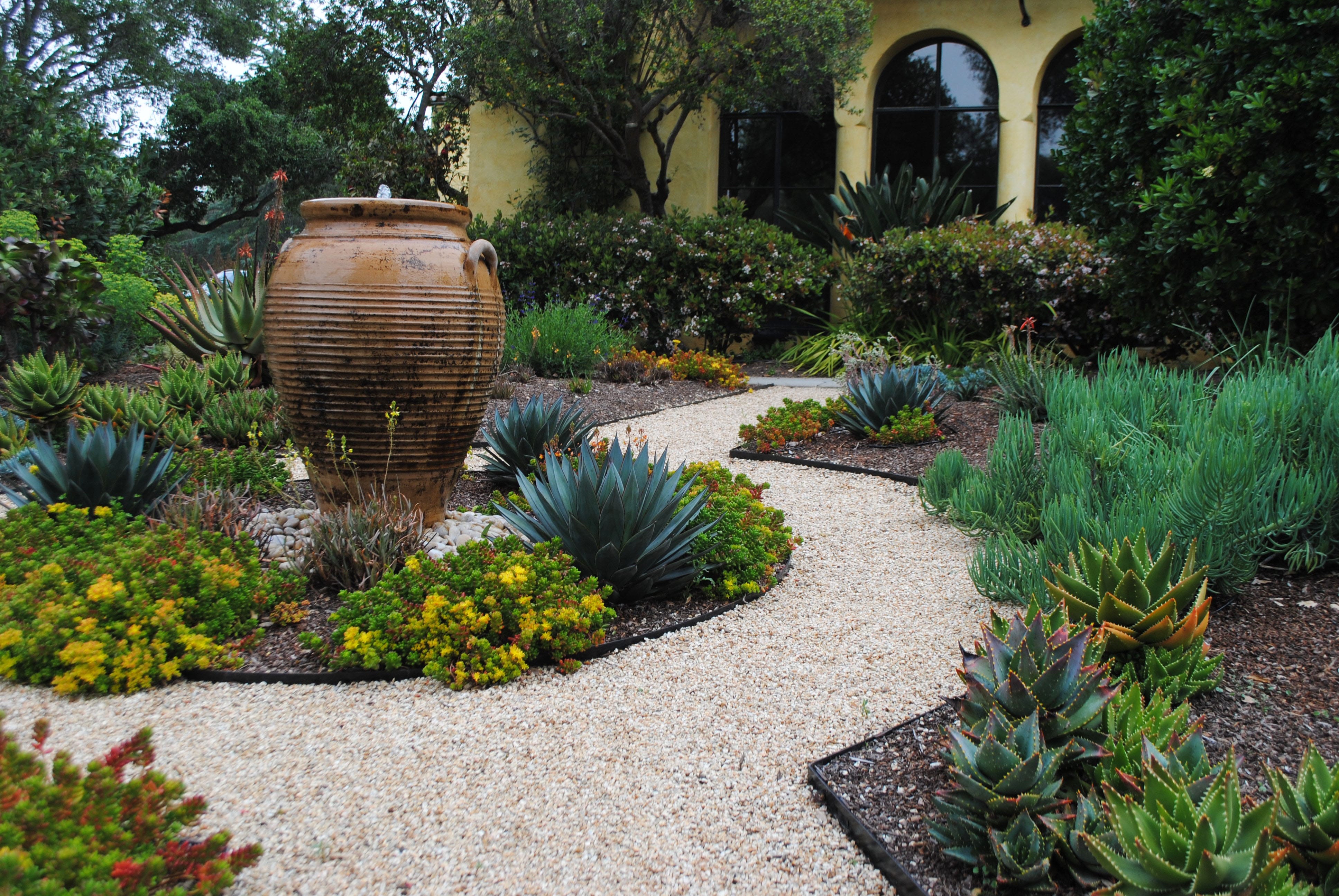
Michalis Fountain Conversion using our Greek terracotta pottery

The fountain surrounded by drought tolerant plantings


Q: Tell us a little about yourself as a designer and Harmony in the Garden.

I’m a California native, and though I’ve lived in both the southern and central parts of the state, I’ve spent most of my life in the Bay Area. Over the years I’ve seen this area’s sleepy suburbs transform into the bustling, densely populated, high-energy area that it is today. The people who call this place home come from all over the country, as well as the world, and have brought with them their unique perspectives on gardening. Having had my landscape design company, Harmony in the Garden, for over 15 years now, it’s been an incredible gift to be a part of these changes and to help so many people from different walks of life create their versions of paradise.

Q: What was your client’s goal for this garden?

As passionate gardeners themselves, the clients wanted to transform this part of their garden from a water-guzzling, and unsightly half-dead lawn into something that would require much less maintenance and water. This area is situated close to their home and can be viewed from several large windows, so it needed to look good year-round.

Fountain Conversion Rebecca Sweet garden design
Replacing lawn with low water succulents

Fountain Conversion Rebecca Sweet garden design
More beautiful succulents

Q: What was your initial vision for the landscape and did that change over time?

My vision and theirs complemented one another perfectly, as we are all succulent fans. So, to reduce water consumption, as well as indulge in our love of succulents, we removed the lawn, replacing it with a low-water succulent and cactus garden. To help tie this new space in with their existing, and more traditional style of garden, we also incorporated   several flowering shrubs and perennials that were colorful, yet also drought-tolerant and low-maintenance.

Because the area is fairly large, we knew we needed to break up the space into smaller, more manageable planting areas. Wide decomposed granite pathways were the solution, gently meandering through the space, helping to bring down the scale of the oversized garden.

Fountain Conversion Rebecca Sweet garden design
Adding some bright color

Q: Any unique issues or challenges for this project during the design or installation?

Initially, the homeowner wanted this garden to thrive without supplemental water but quickly realized that just wasn’t going to happen. This area is in full sun so even the cactus were suffering through the blistering summer heat-waves. Luckily, we had a feeling this might happen and had previously installed a framework of irrigation under the ground ‘just in case.’ We ended up irrigating the garden, on a very reduced schedule.

Q: What would you describe as your garden design aesthetic and how do you work with your client’s own vision for the landscape?

My own aesthetic is one that appears full and lush, yet is quite drought-tolerant. My passion for plants has allowed me to create drought tolerant gardens that don’t ‘look’ drought  tolerant, and is what I’m probably best known for creating.

Since so many of my clients come from around the world, their vision for their garden (and the    plants they’re used to seeing) can be challenging to translate with California’s lack of water. Luckily, living in a mild-winter climate such as ours, we have access to an expansive selection of drought-tolerant plants from which to choose.  I love interpreting their vision into a garden overflowing with plants that will thrive here.

Fountain Conversion Rebecca Sweet garden design
Adding some flowering shrubs

Fountain Conversion Rebecca Sweet garden design
Reducing the lawn with hardscape and succulents

Q: For garden décor, why the Michalis Greek pot for the fountain conversion?

When designing this garden, we knew we wanted a focal point to bisect the center of the pathways. To keep in scale with the large garden and home, we needed a large focal point.  The Michalis Greek pot an ideal choice for a fountain conversion and blends beautifully with their historic Mediterranean home. By converting the pot into to a fountain, we added the gentle sound of trickling water, entertainment from the multitude of birds that adore taking baths there, and the illusion of ‘coolness’ from the water itself. We couldn’t have chosen a more perfect focal point for this garden.


Q: What was your favorite part of this project?

My favorite part of this project was to see the joy on my clients’ faces as they saw their garden’s breathtaking transformation. I continue to visit them and their garden every few months and seeing the succulents grow and fill in, creating an ever-changing tapestry has given my clients so much happiness through the years – all while significantly reducing their water bill!


See Rebecca’s other work on our blog:

Rebecca Sweet On Shades of Gray in the Garden
Stylish and Sustainable Garden Design

Groundskeeping: In a Glazed Daze in Italy

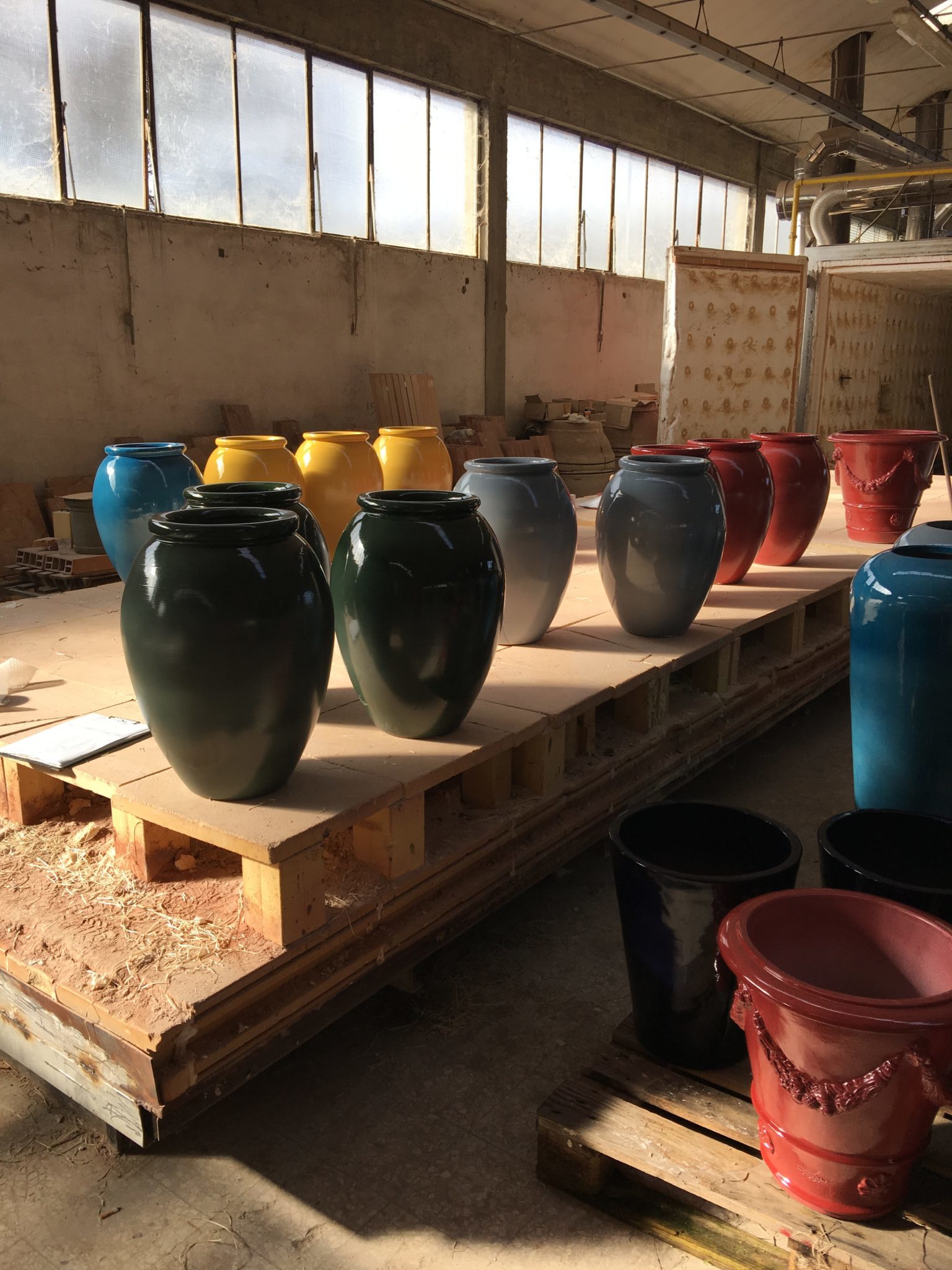
In a Glazed Daze in Italy: Glazed terracotta pottery

From concrete planters to Italian terracotta pots, custom glazing has been one of Eye of the Day’s strengths for over fifteen years. We are sometimes amazed by the wild colors envisioned by one designer after another for special colors or finishes, but always try to provide what each designer or client requests. Either the beauty, quality and history of the colorful kiln-fired glazes produced by our most treasured American manufacturer, Gladding McBean, or hand painted and stained Greek pots made the same way for millennia will fulfill most requests.

As the largest distributors in the USA of the famed French Provencal pottery known as Vase Anduze, we have a wide selection of colors and sizes. We ship them from New York to San Diego and Washington state to Florida. Colorful pottery is the finishing touch:  the eyeliner, pearls and earrings for your home and garden.

Last month my son had his winter break and was able to go to the Terrecotte San Rocco factory in Italy with me to see the glazes they have started to produce. Part of preparing our children for the world and possibly to follow in our footsteps is to share our day to day labors. I wanted to take Ben to the factory so he could see it and be part of the process as well as to show him where this historic tradition of terracotta pottery comes from. We Segwayed our way around Rome seeing sites with historic statues, fountains, and pots from past millennia. The context was not lost on him and when we got to the Rocco factory, he was as dazzled with the new colors as I was.

For more than five years our largest factory, Terrecotte San Rocco has been experimenting and testing glazes to add to their impressive line of fine, frost proof terracotta pottery and their range of colors is magnificent and beautiful. Now we can offer all the great shapes in colors, including custom colors, to our clients. Don’t be afraid to dream up impossible colors for all of Rocco’s fabulous shapes.

We’ll dazzle you!

Brent


Design Update with Inviting Spaces by Kim

Eye of the Day| Garden Design Update | Inviting Spaces by Kim

Design Update with Inviting Spaces by Kim 

Eye of the Day’s large rectangular Italian terra cotta planters, the Delos, were installed recently to add impact, structure and curb appeal to the entrance of a home with an overgrown, out of proportion boxwood border.

Eye of the Day| Garden Design Update | Inviting Spaces by Kim The planters provided a win- win situation when combined with the ability to peer out each of the four windows from the living room and dining room with views of the beautiful seasonal flowers at window level.

The choice of the Delos by Kim Beber Perlmutter of Inviting Spaces by Kim was made when she saw that the vertical pattern on the planters echoed the pattern on the entrance pillars of her client’s Georgian style home, giving the impression that they were specifically designed for the space.


INVITING SPACES BY KIM

(650) 776-6123
Creating Inviting Spaces For Any Time of Day


The Clay Authority: Protecting Terracotta

The Clay Authority: Protecting Terracotta

As a fifth generation Californian, it’s easy for me to take beautiful weather and sunny, sandy beaches for granted, I also realize that for most of the country, this time of year presents some concerns when it comes to taking care of your garden and terracotta planters

Two years ago I wrote an article for Eye of the Day entitled “How it Works: Frost Proof Terra Cotta”. The big take away from this article are the two words “vitrify” and “porosity” that are of particular interest to those of you from areas concerned with freeze/thaw issues, due to the porosity of certain clay used to make planters.

The following month I continued with “Terra Cotta Transformations”, bringing the reader into the realm of technical ceramics by explaining what exactly happens with clay during its firing cycle.

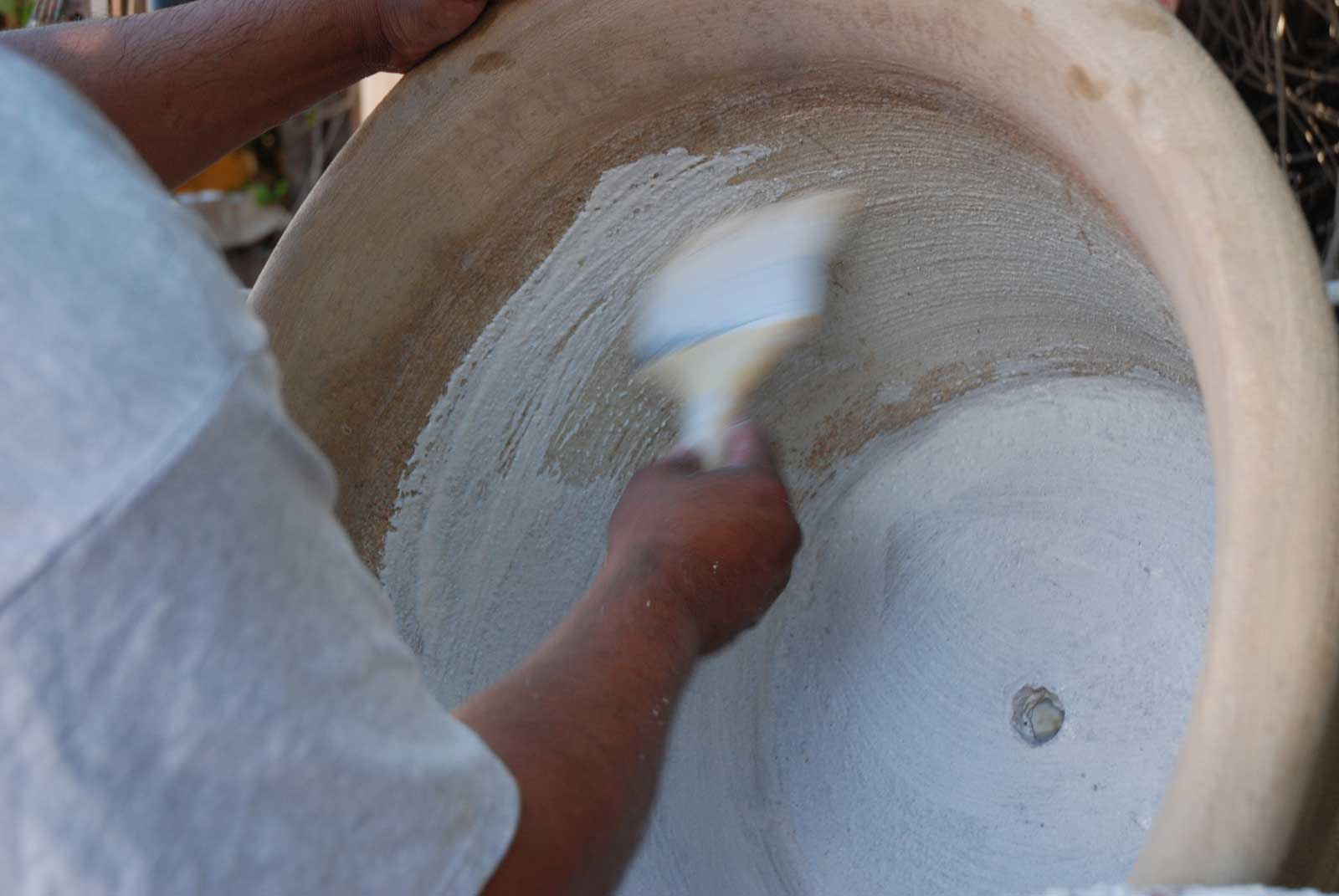
Freeze/thaw can be viewed as synonymous with expansion/contraction. But there are also many reasons to want to waterproof pottery. Although waterproofing and frost proofing pottery both pertain to porosity, frost proofing also deals with extreme temperatures.

So as we begin to move into winter and we consider protecting our garden pottery investments, here are a few things to think about:

Protection from Frost and Cold:
If you need to protect your terra cotta from freezing, either move it inside, cover the planter (and the plants), and definitely do not over water, or if possible, don’t water at all.  A quick test for the pottery itself would be to ask the dealer where you purchased the planters if they have any pot shards. Use them to test the durability of the pottery by soaking them in water, then put them in your freezer for a day or two. If it hasn’t cracked, take it directly from the freezer and put the shard in the sun. You’ll learn about the quality of your investment.

Waterproofing Terracotta:
If your concern is waterproofing your pottery, the research is simple to find a myriad of products on the market these days to seal low fire pottery (especially for tile). If it’s high fire then you don’t have to worry about water leeching through, especially if it’s been glazed.

Let’s all settle in for what always proves to be an elegant, sometimes challenging, yet always amazing time of year—Winter!

And if you ever have any technical questions about garden pottery, feel free to consult with me through EOD.


Why Expensive Pottery for Your Garden?

Expensive pottery|Eye of the Day|garden design

Why Expensive Pottery for Your Garden?

Whether you are a garden enthusiast or if you’re like me and have gardening in your soul, no doubt you are always on the lookout for great pots—not just great shapes and styles but pottery that lasts.

English lead containers and Francesco del Re’s pure bronze pots might be the most expensive planters on the planet, but who buys plant pots made from lead or solid bronze? Guilty! Recently I wrote about Italian pottery from the commune of Impruneta and tried to debunk the myth that it is not the name of Impruneta itself which is important but the clay they use. Not all clay is equal and when the pottery you are looking at has a high price tag, don’t be afraid to ask some questions about the origin, the clay body used, the firing temperature and duration in the kiln.

Many people think we only sell expensive pottery at Eye of the Day, and we do carry high-end items, but there is the saying “You get what you pay for”.

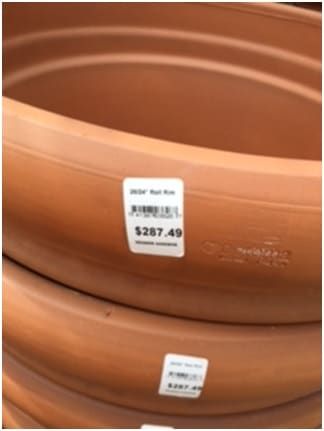
At a local nursery, a competitor of ours sells the classic Italian double rolled rim planter with a 24” diameter for $. The product is produced by one of the largest pot manufacturers in the world, Deroma of Italy. These pots are made from inferior clay and you will find that they start to break down almost immediately.

Our high quality Italian double roll rims will last for a century or more. Our price for the same size pot is $—a big difference for a pot that might last a decade opposed to one that will last for 100 years or more. The conclusion is: high quality pottery isn’t necessarily more expensive, it just depends on where you shop and what you know about the quality of the pots.

Learn more about terracotta and how terracotta pots are made at our blog.

Related Articles:
The Truth Behind the Aged Terracotta You Buy
Inside the Pieces: Why We Love Authentic Pottery


The Clay Authority – Debunking the Myth of Impruneta Clay

Impruneta|Galestro Clay|Eye of the Day

The Clay Authority – Debunking the Myth of Impruneta Clay 

If you don’t have a subscription to Garden Design magazine, you really should do yourself a favor and get one. This new issue, Spring 2016, has a beautifully presented article about the legendary pottery artisans of the small hill commune of Impruneta just outside of Florence.  If only as a travel guide to garden lovers, it reads like a NYT Travel section “36 Hours” of what to do and where to go in this tiny historic commune.  Of course, you always can pick up a copy at Eye of the Day.

For a long time I have complained that many Italian pottery manufacturers have falsely used the name “Impruneta” to sell their Italian pots, often at an inflated price. This wonderful article helps to debunk this misnomer and offers a wonderful guide to visitors and lovers of quality Italian garden pottery, abundant throughout the country. Besides, after pasta, what does one think of when Italy is mentioned but double rolled-rim planters?  Well, maybe shoes and olive oil might come up…

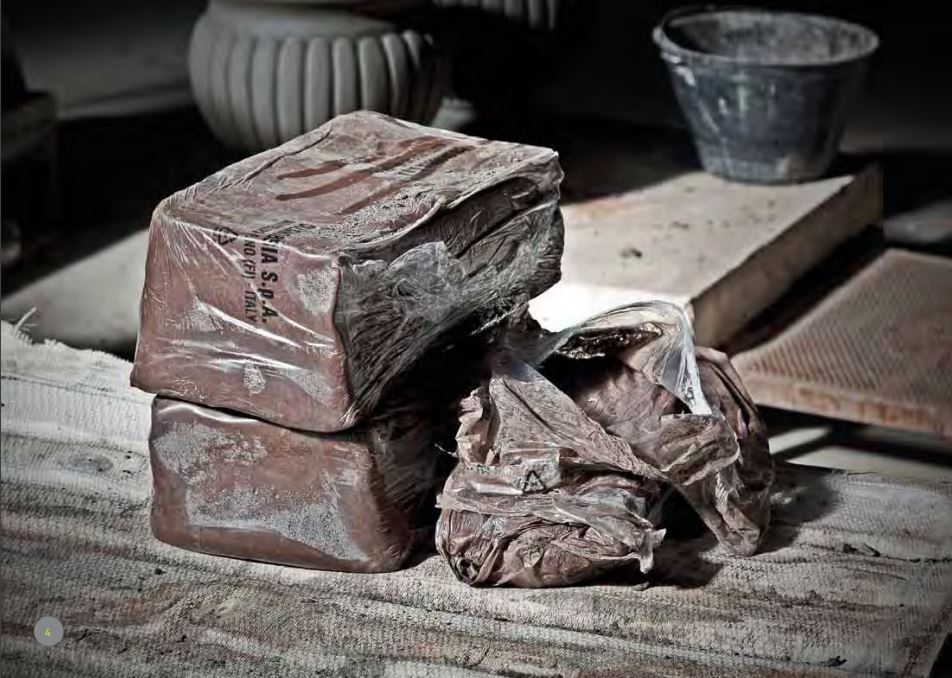
The essential part of the article was the brief mention of the actual terra cotta clay material found and used by these artisans in Impruneta. Many would have you think that Galestro clay can or is only found here and this is not the case as it is prevalent throughout the Sienese countryside. Francesco del Re was so adamant that his production of what many consider the finest Italian terracotta produced today be trademarked as “Terra Forte” clay so as not to be confused and wrongly named Impruneta. But the simple fact is still: All of the high quality, long lasting and frost proof terra cotta pottery found in Italy uses Galestro clay and does not have to be found within the commune of Impruneta.

At Eye of the Day, our main Italian terra cotta product is made with 100% Galestro clay manufactured for us by Colorobbia of Montelupo, Italy, and the largest Terracotta manufacturer in the world. Sounds impressive, doesn’t it?

What is really impressive is that our high quality, frost proof Italian terracotta will not only last for centuries, it is affordable when compared to similar pieces stamped with “Impruneta”. And please, don’t get me wrong, I have beautiful Impruneta pots, Francesco del Re pots as well as pots from other artisans of fine quality Italian terra cotta in my garden but all are manufactured using 100% Galestro Clay.  That’s why I’m the Clay Authority.