Top Your Pot with Tumbled Terracotta

Eye of the Day|Tumbled Terracotta Pot Topper|Baked Earth

TOP YOUR POT WITH TUMBLED TERRACOTTA

You have a beautiful citrus tree and a beautiful pot, together making a perfect statement piece, but maybe there’s something to make it even better from a design standpoint and for water conservation.

Design professionals typically use under-planting to finish the look of  a tree or tall plant in a pot.  They might use Alyssum,  Baby Tears, Lobelia,  Creeping Rosemary or any other trailing or low-growing plant.  During our current drought, we see more succulents being used, such as String of Bananas, String of Pearls,  Hens and Chicks or Sedum as under-planting and as a living mulch. You can see these same plants in action as part of our video: How to Convert a Fountain to a Succulent Garden. 

Eye of the Day|Tumbled Terracotta Pot Topper|Baked Earth
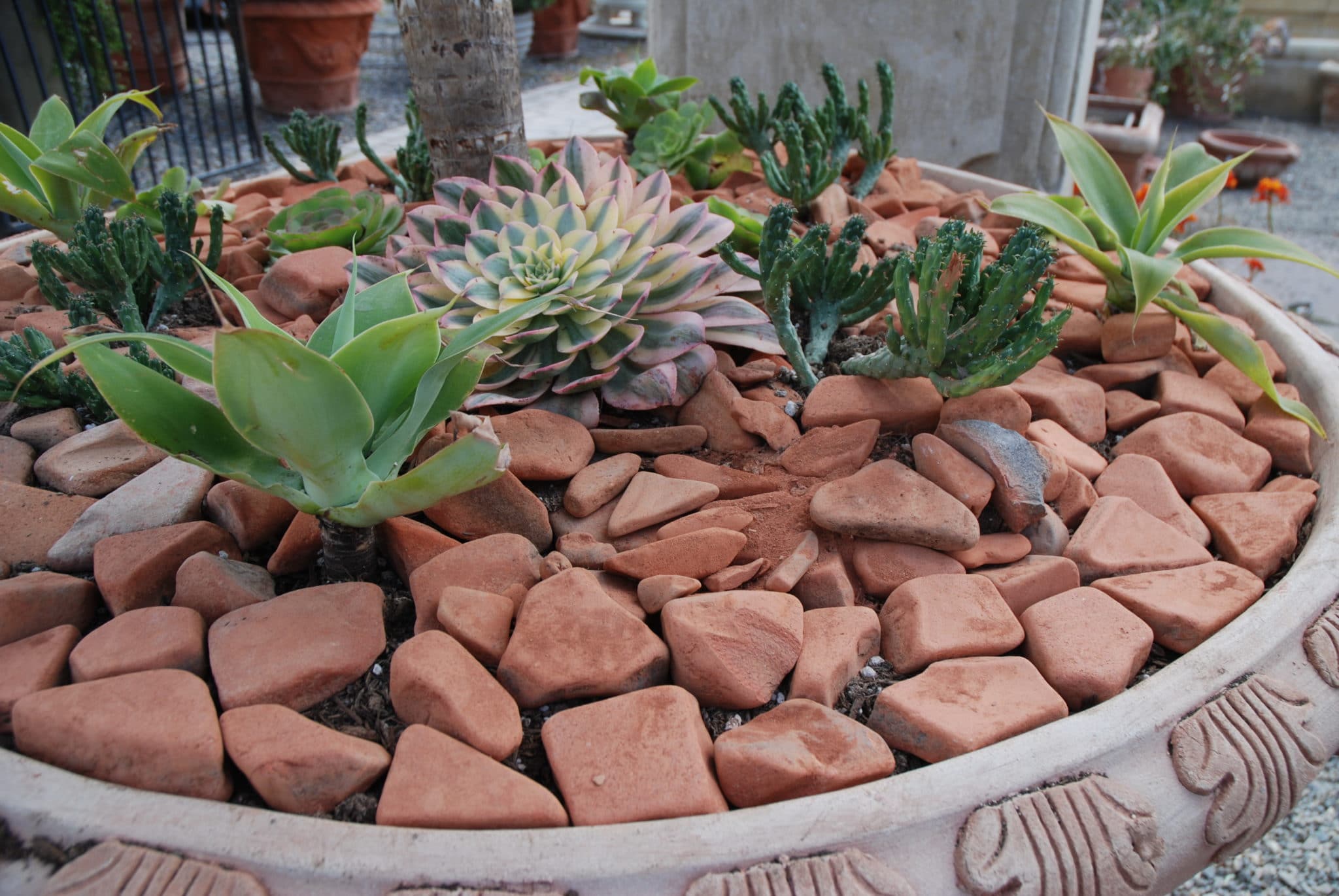
This container incorporates cacti and tumbled terracotta.

More recently, designers have moved beyond plants and have progressed to using tumbled glass in almost any color, moonstones and beach pebbles.  At Eye of the Day, we are ALL about terracotta, so we have developed a new “pot topper” which not only looks beautiful, but helps maintain and control soil moisture in the container while allowing the surface of the soil to breathe (VERY important to container health).

Eye of the Day|Tumbled Terracotta Pot Topper|Baked Earth
Tumbled terracotta is a great way to top your pot.

This new product is Tumbled Terracotta, produced from Italian terracotta fragments, tumbled to soften the edges.  Succulents, cactuses and aloes can also be planted between the pieces for a more carpeted effect further enhancing the design and beauty of container planting.

Eye of the Day|Tumbled Terracotta Pot Topper|Baked Earth
This design plants succulents at the base along with the tumbled terracotta.

Our Tumbled Terracotta is available in pieces categorized into three sizes, small at $3 per pound, medium and large at $2 per pound.  The next time you visit Eye of the Day, we’ll show you how using Tumbled Terracotta Pot Toppers adds beauty and practicality to your container planting.
The Truth Behind the Aged Terracotta You Buy

Eye of the Day|Quality terracotta differences|design pottery

The Truth Behind the Aged Terracotta You Buy

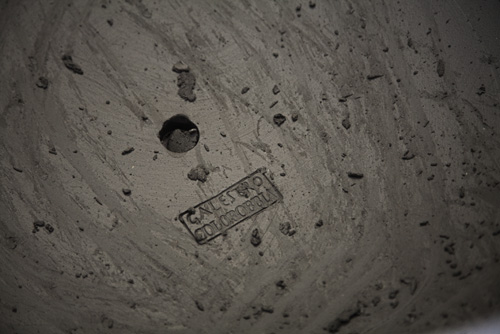
If you have read the articles by Scott Semple you now have a good understanding of what makes up terracotta pottery. From Gladding McBean’s stoneware to our Italian frost resistant earthenware containers, at Eye of the Day Garden Design Center we sell high-quality terra cotta products which last and last.

Now, what about aesthetics? Do you want your pots to last? Is it important that future generations are given your garden pots along with your jewelry, silverware and bedroom set? Many people love the patina of terracotta when it gets older and though a crumbling pot is not the same thing as “patina” they think it still looks cool.

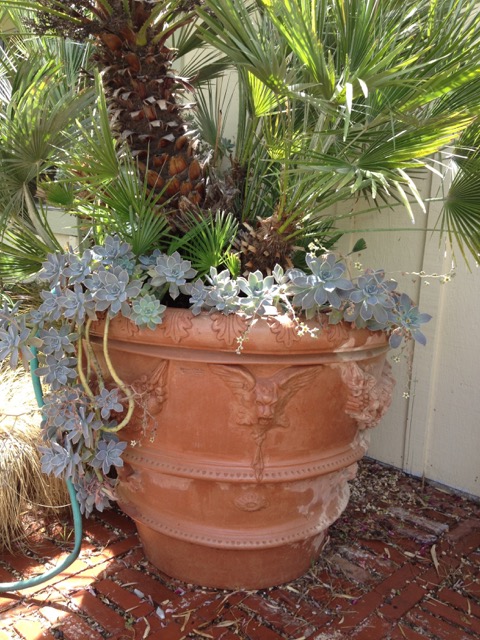
This Italian pot from Terrecotte Olympia of Tuscany, Italy is a favorite of designers in Southern California. It is not made with frost proof Galestro clay but with Sienna clay, which is clay Americans typically find at their garden store. Olympia, like many Italian clays and other clays from which garden pots are produced, will almost immediately begin to spall and flake. Although they have a wonderful aged patina that designers love to specify in their designs, the material does not have a long life compared to pottery made from Galestro clay. The problems will be seen in Mexican and most Asian terracotta products as well.

At Eye of the Day, we hope that our retail and professional design clients will consider the investment they are making and choose terracotta for the centuries. For a further example of how these pots age and look, take a look at the following pictures of the Italian pots at the Ralph Lauren Store at the Stanford Shopping Center in Palo Alto. If this is not enough to convince you, well, that’s why there are both vanilla and chocolate…something for everyone.

If you like that falling-apart look, come and see our seconds and close-out area at the store where we have lots of consigned pottery from customers who are replacing their containers with new ones. The prices are great and the look is shabby/chic. We also have remaining stock from Terrecotte Olympia at half price: it’s still half-good.


How To Choose A Terracotta Pot By Its Porosity

Eye of the Day|Baked Earth|terracotta porosity

In past articles I have discussed how freeze/thaw has an effect on ceramic containers and I have also discussed clay pot irrigation. We are in the worst drought in the state of California’s history, so by irrigating with low fire pots with high porosity,  water can be sent directly to the root system and feed plants on demand, as opposed to spraying the crusty, evaporative surface.

Eye of the Day|Baked Earth|terracotta porosity

Technically porosity is the amount of empty space in the structure of the fired clay that makes it capable of absorbing or distributing liquids. Simple, right? So if the terracotta is absorbing water and the temperature drops below freezing, you’re going to have potential problems with your investment as the water expands while it freezes.  But if your intention is to use the porosity to slowly distribute water, then the more porous the better. There are other uses for porosity in ceramics, for example insulation. The less dense a brick is, the more insulating capabilities it has.

Eye of the Day|Baked Earth|terracotta porosity

Natural clays can have a very high porosity.  When the grains are very small, there are countless small pore spaces, but what clay does NOT have is good permeability, which is the way you would measure how connected these porous spaces are. So generally speaking, if the clay is high fired it will be far less porous. This is advantageous for a freeze/thaw condition. If the clay is low fired, or under fired it will be porous and best for releasing or absorbing water.

So the bottom line is that the level of porosity you should seek depends on your intention for use of the ceramics.


Baked Earth: Your Passport Into Fascinating World of Fired Clay

eye of the day garden design center

Want to learn about the wide range of materials and methods used in the production of garden pottery? Professional ceramicist Scott Semple will answer all your questions concerning terracotta and its applications in garden design throughout the 35,000-year history of fired clay vessels, from ancient times until the present day. Our hope is that you will find this educational journey not only informative but a valuable tool when considering Eye of the Day pottery as a functional, aesthetic and site-specific option for your garden design needs. sm-scottSempleAbout the Author With over 40 years experience, internationally-recognized ceramic artist, arts activist, and educator Scott Semple of SS Clay Works will lead a monthly exploration into “What is clay and why is it important?” We are pleased to introduce Eye of the Day resident consultant Scott Semple: Scott 1Hi folks! What a great idea—mixing garden design, world travel, critical examination and mud! Sounds messy, fun and engaging all at once. So, a little back story on me: I am a fifth-generation Californian with brown thumbs. It’s like I was telling Brent last night, I’ve never been able to grow anything, but when it comes to mud—specifically clay, you are talking to the right guy. As a professional, I am what is referred to as a “Large Format Potter,” meaning I build huge pieces out of clay. I am fortunate to have my pieces in the private collections of many prominent and celebrated individuals, and currently balance my time between the studio, the classroom, and the natural world. Scott 2People often refer to clay, ceramics and pottery all in the same context. I do this all the time. Yet perhaps a little clarification is needed. Clay is the actual material. In its essence (and a very elementary definition) it is decomposed granite, at once sculptural and utilitarian, abundant and valuable. Ceramics on the other hand, is what happens when you add fire: Fired clay is ceramic. And pottery is pottery, it’s that simple. So don’t get confused as I move fluidly between terms. Scott 3There are countless applications for ceramics, especially when you consider ceramic engineering or clay in material sciences. NASA, Raytheon, Apple, and Toyota are but a few entities using clay. But in the garden design business, Eye of the Day really stands above and beyond the competition. They bring the real deal, direct from the countries, potteries, and clay villages of the world to our yards and ultimately our lives. I am proud to be working with this team. See you guys next month. -SS. Questions and thoughts for Scott? Let us know! Comment via Twitter or Facebook with the hashtag #BakedEarth and we’ll make sure your queries get to Scott. Better yet, leave a comment for him below in the comments section.


Rick Button: Puzzle Master

fountain conversion

Rick Button is a thoughtful man; a thoughtful landscape architect. It’s almost possible to see the wheels turning inside that head. He carefully considers color, elevations, planting palette and planters for each project. The Bennett residence presented a number of challenges for Rick’s grand intelligence.

  • The two story residence features interior shifts in elevation and because of the shifts,  each porch and terrace varies in elevation. To address this, Rick established a series of spaces at the same elevation to flow into one another.
  • The original grading and drainage was designed for all rainwater and irrigation runoff to travel under the house, through the basement. Now, one circulation system surrounds the entire structure and all water is sheet drained away from the structure.
  • The back of the property was too shallow and steep for needed construction. A retaining wall was built, expanding usable space 20’, three staircases were designed to connect the house to the lower garden featuring a new pool house designed by Ron Ettinger, fireplace, kitchenette, bar, two bathrooms, a 60; pool, a cook center/flower arranging area, a large terrace for sunning and dining as well as a  small lawn providing just enough space for croquet or badminton.
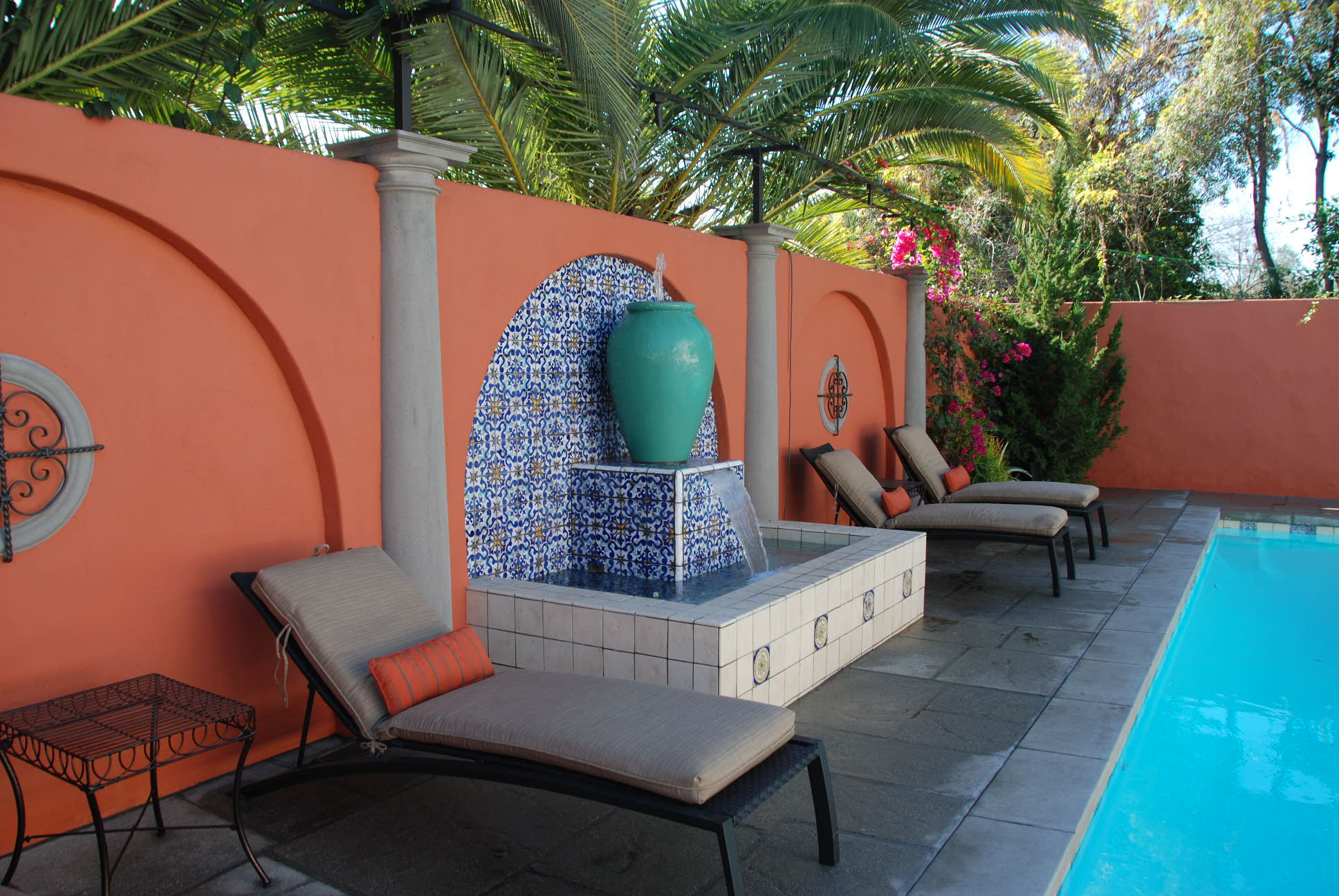
  • Wrought iron gates and fencing, decorative tile, terra cotta pots and one special Gladding McBean fountain conversion from Eye of the Day, along with a distinctively Mediterranean featuring agaves, bougainvillea, roses, geraniums and date palms all contribute to the overall desired look.

Rick has spent almost thirty years as a landscape architect working in residential garden design from his office in Pasadena. The photos of the Bennett residence illustrate his thoughtful design acumen and constructive use of space even more completely that any description can offer.

“Integrity of space, integrity of architecture, integrity of materials”.  ~Rick Button


Join Us at the San Francisco Flower and Garden Show

Starting this Wednesday, March 19th and running through the rest of the week and weekend, Eye of the Day will be exhibiting fine terra cotta garden pottery and Fermob outdoor furniture in a booth at the San Francisco Flower and Garden Show at the San Mateo Event Center.

The fun starts at the entry, where Eye of the Day’s authentic European pieces will be incorporated into the display garden that lines the path leading into the main exhibit hall. Designed by the show’s director Chris Woods. A native of England and now a U.S. citizen, Woods has worked in the garden world as a director and designer for over thirty years. He started his career at the Royal Botanical Gardens, Kew, where he was trained as a horticulturist.

After moving to the United States and occupying several prestigious positions in the garden world, he was commissioned by the Pennsylvania Horticultural Society to design the central feature for the Philadelphia International Flower Show 2013. The SFFGS is pleased to have him on board, and the entry gardens–complete with Eye of the Day’s beautiful containers–are sure to be spectacular.