Tips for Successful Edible Gardening by The Conscious Garden

Eye of the Day|Edible Gardening|The Conscious Garden

Tips for Successful Edible Gardening by The Conscious Garden

In Southern California we love to eat healthy food and there is no fresher, tastier or more nutrient dense foods than those that you pick from your own garden or that you buy from the farmers market.  It is important to know that your food is free of chemicals, organic and full of nutrients,  so what better way to know what is in your plants than growing it yourself?  I want to share with you some of the main things to remember when setting up an edible garden, and whether you have a yard or not, it IS possible!

Eye of the Day|Edible Gardening|The Conscious Garden
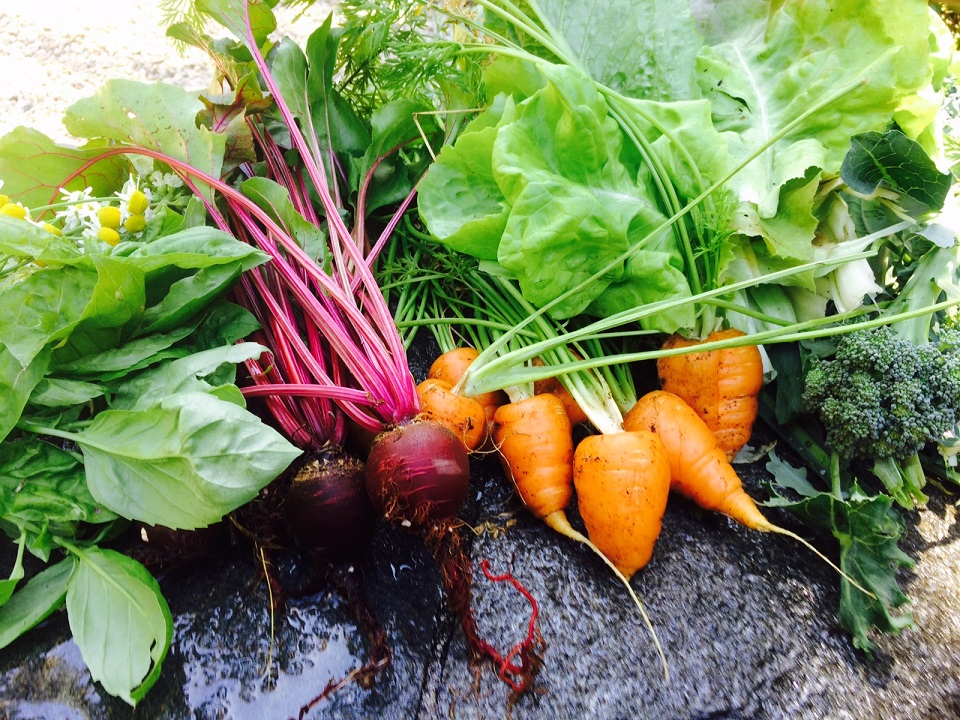
A bountiful vegetable harvest.

I have been growing food since I was a kid, and one of the things I have learned, is that plants will grow in anything.  So, what ever you have to grow food in, whether it is a raised bed, beautiful container or just a simple plastic drum, you too can have edible vegetables right at your home.

Tips for a Successful Edible Gardening

Soil
The key to having good nutrients in your food is in the soil and that is also the advantage of growing at home: you can truly know if it is organic and what’s in it as you plant.  Use a premium potting soil to begin with.  If you have a large garden, use a mixture of different composts such as manure and worm castings.  The soil provides the nutrients to the plants and allows them to be strong.

Almost any type of container can do for planting edibles.

Water
Edible plants require a little bit of water often and if you add a drip system, it will ensure the plants are getting water directly to their roots where it is required and it makes the garden more water efficient.  This is especially important in container gardening, and it will make life SO much easier.

Eye of the Day|Edible Gardening|The Conscious Garden
For first timers, try planting edibles in containers first like kale and lettuce.

Plants
When you decide to plant, choose seedlings from a good organic local supplier, providing bio-dynamic organic seedlings. This will ensure that the roots are strong and will stand up to transplanting and our current drought conditions, giving the plants a good start to their edible nutrient supplying journey. It is also time efficient.

Eye of the Day|Edible Gardening|The Conscious Garden
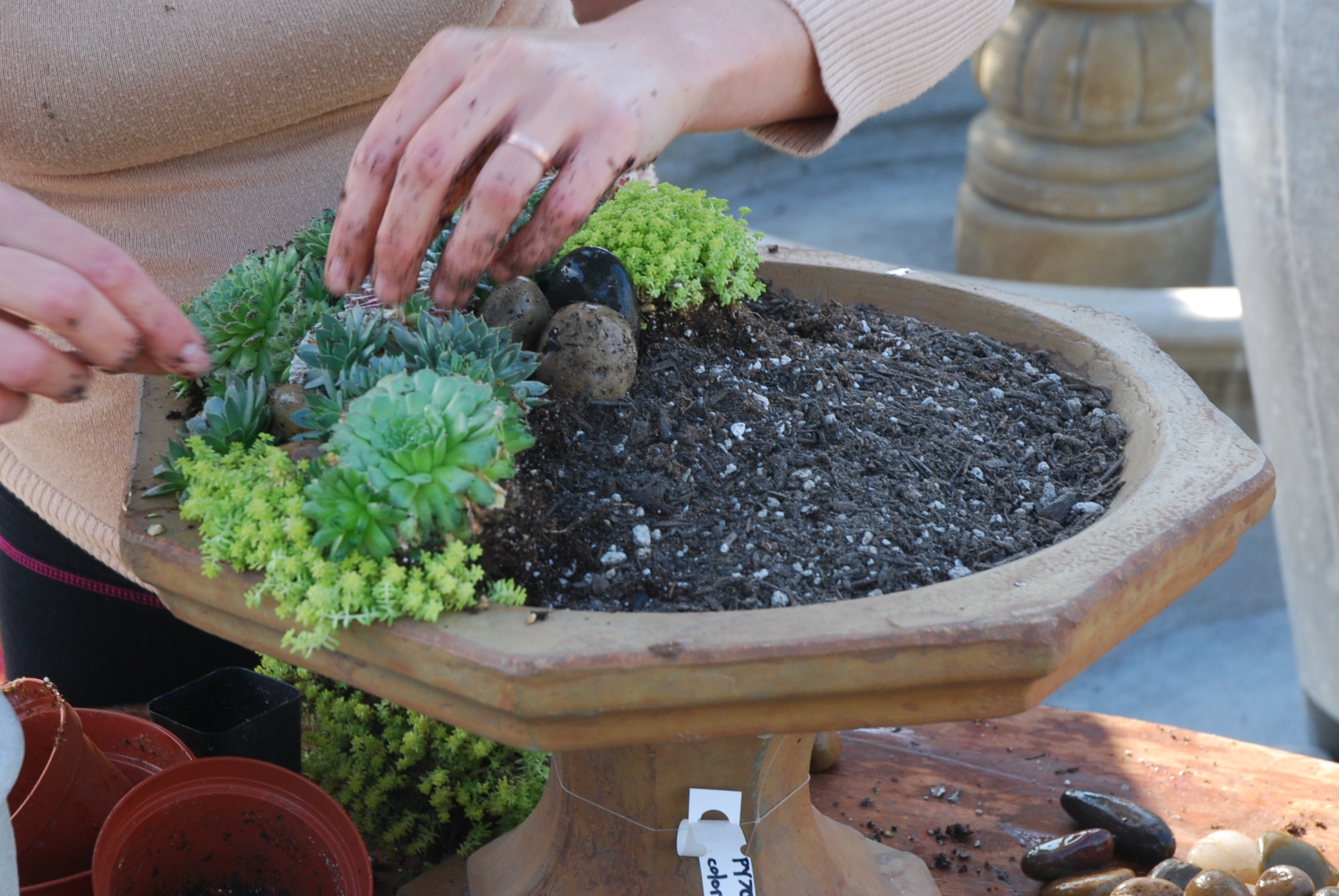
A smaller terracotta pot filled with delectable edible plants.

Pest Control
Be ready for providing pest control – and keep it organic, non-toxic.  Sluggo for snails, Organocide for bugs and Serenade for diseases.  I find that if you notice bugs attacking a particular plant, leave one of those plants free of pest control and the bugs will eat that one plant and leave the rest alone.  (Periodically remove the bug-plant and destroy it removing the bugs and disease).

Eye of the Day|Edible Gardening|The Conscious Garden
A raised bed of filled with a variety of lettuces and kale.

Feeding
Remember plants need food too!  Fish and kelp as the master formula is great. Or you can use an organic food with mycorrhizae. The numbers on the pack of organic fertilizer should not be higher than 5-5-5, which are nitrogen, phosphorus and potassium in a low balanced form.

A smaller terracotta pot filled with delectable edibles.
Healthy, organic, and free of chemicals.

Just remember, take care of your edibles and they will take care of you. Don’t be afraid to try your hand at an edible garden. If you see something you would like to plant, try a handful of plants and see how it goes.  Plants are sustaining and will grow for you if you just give them a chance.

I am available for consultations or garden support to fulfill your edible garden desires.

Happy Planting!

Sagar Faucheaux
The Conscious Garden

Phone:  (805) 745 5555
consciousgarden@


Stylish and Sustainable Garden Design

Stylish and Sustainable Garden Design

Living and designing in California, the ongoing and severe drought we’re experiencing is on everyone’s minds. And as such, drought-tolerant gardens are rapidly replacing outdated water-thirsty landscapes. While everyone is on board with the concept of a drought-tolerant garden I inevitably hear the same hesitation from clients – they don’t want their low-water garden to look like their neighbor’s new garden down the street. They want to make sure their new garden still reflects their personality and individual style.

This is a valid concern as it seems many drought-tolerant gardens seem to focus on the same twenty plants over and over again, with the end result being one of uninspired predictability. Luckily, there are a few simple ways to avoid this common trap.

For my clients who want a more traditional East Coast feeling in their garden, color is key. It’s important that I include low-water plants that contain a higher proportion of greens, maroons, blues and purples to mix along with the more common gray tones. The effect will be the same – a reduction in water use – but the garden will appear cool and lush.

For my clients who prefer a Mediterranean feel in their gardens, I tend to use a larger amount of warm colors, such as oranges, golds and reds mixed in with the greens and grays. The result is a garden that appears to glow in our perpetually sunny days.

But just because I’m reducing the use of water in these gardens doesn’t mean I’m eliminating it all together. On the contrary, it’s important to include a source of water in the garden as the sight and sound of it not only reinforces that we’re not living in the Sahara Desert but it also provides a much-needed source of water for wildlife during these thirsty times.

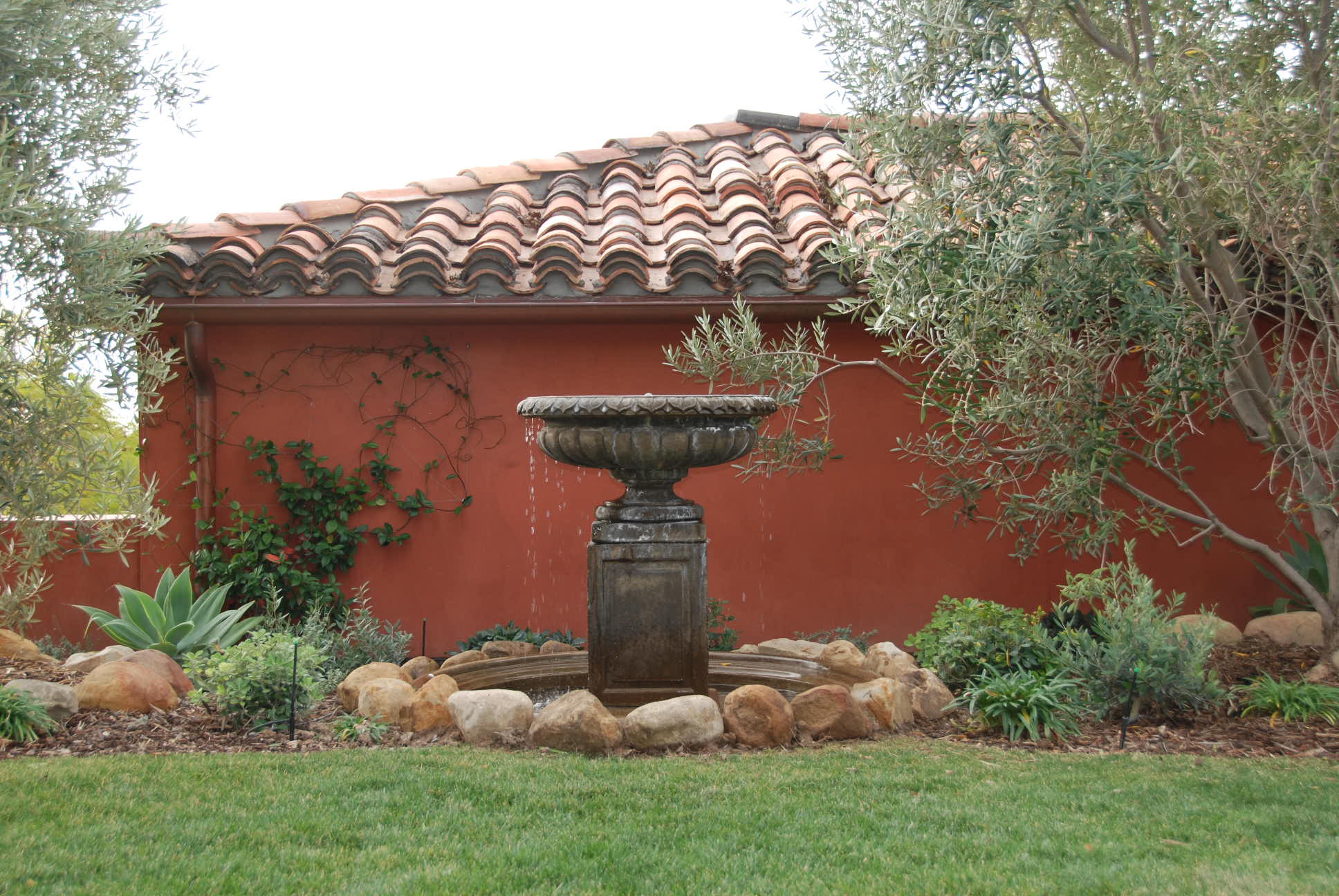
And depending on the style chosen, the fountain is one more way to help further define the character of the garden. For my East Coast inspired gardens, a traditional, stately three-tiered fountain is right at home, nestled among the Corsican hellebore, lavender and native penstemon.

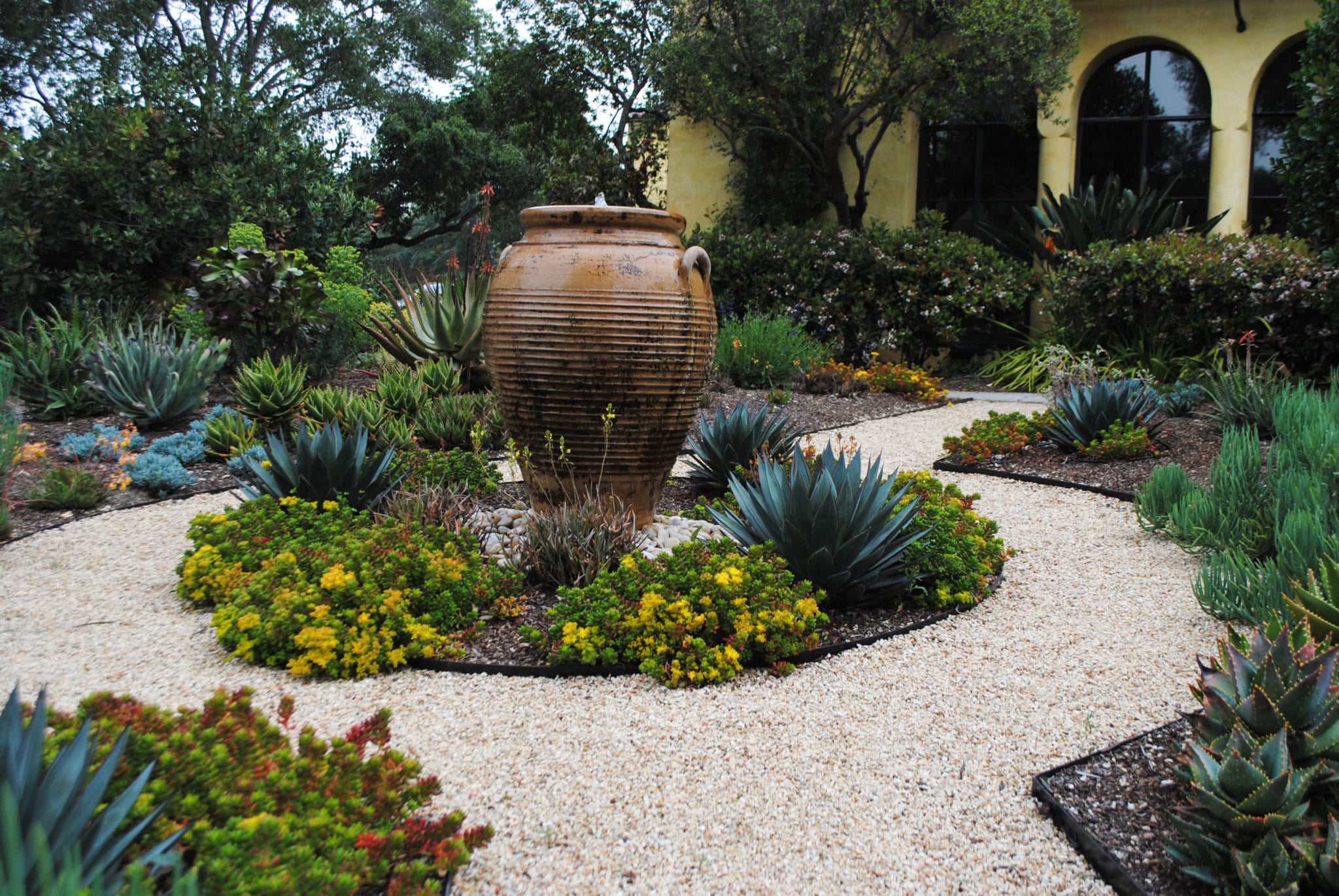
And for my Mediterranean-inspired gardens, a simple antique olive jar blends seamlessly into the surrounding garden filled with succulents, salvias and grasses.


How To Keep Your Fountains Water Wise During Drought

As we all face this unprecedented drought, we need to make smart choices about using water. At this point I’m praying for rain, but I’m realistic enough to know my lobbying may not be that influential.

But I have instituted several measures, the first of which regards my fountain. This water element is an essential part of the environment at my home. It runs 24/7 at this time of year and requires filling once a week. The sound it provides directly affects my sleep.  Could I live without it? Yes, I suppose I could, but why should I? It just doesn’t use as much water as one might think. It recycles the water and other than splash, evaporation and birds, the water goes round and round. I have calculated that I typically add about five gallons a week. The equivalent of about two toilet bowl flushes.

Water Wise fountain

Think about how much water a small lawn consumes and the minimal use of a fountain along with its relaxing and recuperative powers. It seems to me to that it’s a good use of water in my home. Some other tricks for your fountains are:

  • Turn down the pump to reduce the flow and splash
  • If you have a  fountain that splashes a lot, place plastic buckets around it to catch the errant water to add back to the fountain.
  • Use bath water: I am an ardent bather, I love a hot bath even in the summer, and I use that water to fill my fountains as well as water container plants. It’s easy to use an old pump and some tubing and when you’re finished with the bath, pump the water into 5 gallon pails and use it in the garden.

I don’t have any tips for you for your lawn because I haven’t had a lawn in twenty years. My feeling is: JUST SAY NO TO LAWNS. There are so many things that you can do instead and probably will have to do instead, especially if this drought continues for much longer.


The Importance of Sustainable Gardening

The word of the day is sustainability. The United Nations World Commission for the Environment defines sustainability as “meeting the needs of the present without compromising the ability of future generations to meet their own needs.”

The other word that makes headlines is “green.” What that means for gardeners and landscape designers: We must pay attention to the materials we use in our landscapes. Hardscape materials should be renewable. Plants should not require major input of chemicals (fertilizers, pesticides, fungicides) to keep them healthy. Water needs should be easily fulfilled by the local climatic regime. 2014-01-10 We can also invite in native sources of nutrients and pest control agents. In an ideal natural ecosystem, there are no major inputs from outside sources. Think about an old-growth forest. Seeds sprout, trees and herbs grow and die. Their elements are recycled by decomposing fungi and bacteria to feed the roots of the remaining members of the forest. The model for us to emulate is to recycle all of the organic material produced either on site or by directing it to the local recycling program. We are used to calling it green waste, but it is really a green resource. 2014-01-18 Caring for our landscapes, whether we have a small city lot or manage a golf course, should mean thinking about sustainable practices. We must begin to see our personal green spaces as little pieces of a much larger urban ecosystem. What are the integral parts of that ecosystem? Who or what are the major players in this cycle? What are their needs? What practices will we need to adopt to encourage this natural process? And, just as important, what practices must we abandon?

The goal of sustainable gardening is to have a complete cycling of nutrients and maximum health of the soil and plants.