Change in the Garden: What to Plant in your Fall Garden

Change in the Garden:  What To Plant in the Fall Garden

It’s that time of year where the weather gets a little cooler, we get some rain (maybe less in California), and changes are made in the garden. Eye of the Day interviews some plant experts on their Fall favorite plantings and best tips for the garden.

Alison Walker, a Texas native who recently moved to California, has worked with plants and nurseries for over six years. She is excited to be living in a cooler climate and to get to plant all her recommendations below.

Eye of the Day|Fall Garden|What to Plant
Mint

What to Plant:

Herbs:

  • Cilantro
  • Chamomile
  • Lemon Balm
  • Mints
  • Parsley
  • French Tarragon

Eye of the Day|Fall Garden|What to Plant
Brussels Sprouts

Veggies:

  • Cabbages
  • Lettuces
  • Carrots
  • Brussels Sprouts
  • Kohlrabi
  • Turnips
  • Kale

Edible Blooms:

  • Purslane
  • Nasturtiums
  • Oxalis
  • Calendula

Eye of the Day|Fall Garden|What to Plant
Sage

Evergreens:

  • Lavender
  • Rosemary
  • Sages
  • Thyme

Regular Garden Maintenance:

  • Add and Remove plants per climate requirements
  • Prune blooms and harvest bigger leaves on plants like Basil
  • Plant or deadhead Marigolds to act as deterrent for bugs
  • Fertilize, compost, and mulch as necessary
  • Replace and refresh any leggy leaves


Mimi Richardson is our resident succulent expert but grew up around all types of plants. She has worked at nurseries across the central coast. These are here tips for your Fall garden.

 What to Plant:

Grasses:

  • Fountain Grass
  • Mondo
  • Carex

Eye of the Day|Fall Garden|What to Plant
Carex

Blooming Plants

  • Coprosma
  • Easter Lily
  • Cotoneaster
  • Gazania
  • Strawflower
  • Proteas

Eye of the Day|Fall Garden|What to Plant
Protea

Other Recommendations:

  • You can be more hands off in the garden at this time of year
  • No Fruit Trees
  • Succulents are always a good idea
  • Have fun with fall containers and arrangements with:
    • Pumpkins, Warted Pumpkins
    • Artichokes
    • Oranges
    • Decorative Corn
    • Decorative Gourd
    • Butternut Squash
    • Ferns
    • Pomegranates
    • Celosia

Eye of the Day|Fall Garden|What to Plant
Decorative Gourd and Corn

Adrian Nunez is a Nurseryman at Seaside Gardens in Carpinteria, CA. He has focused on the retail side at Seaside for the last five years but has worked with wholesale nurseries for 17 years. He gives his best recommendations and tips for the Fall season.

No. 1 Tip for the Fall:  The most important and fundamental thing is to prepare your soil.  Get rid of weeds. Know your soil health, does it have enough nutrients? Use a soil tester that you can get at any garden store. Does it need nitrogen, phosphorus, or potassium? Dig at least six inches into the soil, loosen it up a bit, and add organic components. Before you plant anything, know your soil.

What to plant?

  • Bulbs
  • California natives
  • Shrubs
  • Vegetables: broccoli, Brussel sprouts, cabbage, cauliflower, lettuce, radish, spinach, kale

Eye of the Day|Fall Garden|What to Plant
Kale

What to look for in buying plants?

  • Check the laTbels, what size will it get in terms of height and spread. Check the growing information and know the size.
  • Take the time to find the best shape plant. Look at it for health.
  • Look for plants that haven’t bloomed yet—better chance of surviving transplants.

What to consider for water?

  • Once you’re done planting, mulch the area to reduce water loss. If we end up not getting any rain, just do a once-a-week deep watering which will further prevent water loss.
  • In case we get water, do it every other week and reduce watering depending on how much rain we get.

    Eye of the Day|Fall Garden|What to Plant
    Red Hot Poker

Any other common FAQs for Fall gardens

  • When is the right time? Plant at end of October, early November. Ground is still warm enough to plant even with cooler weather.
  • What’s going to bloom through Fall? Rudbeckia, Coreopsis, ornamental grasses, Red Hot Poker or Kniphofia
  • Other tips? Feed plants now if you haven’t already done so in the summer. Good season for feeding.


Photo Credits:
Creative Commons, mint by yoppy is licensed under CC by 2.0
Creative Commons, brussel sprouts on stalks by Nick Saltmarsh is licensed under CC by 2.0 
Creative Commons, sage by Isaac Wedin is licensed under CC by 2.0 
Creative Commons,  starr-120403-4187-Carex_buchananii-habit-Kula-Maui by Forest and Kim Starr is licensed under CC by 2.0 
Creative Commons, Protea. by Mark Freeth is licensed under CC by 2.0 
Creative Commons, farmersmarket09095 by Kel and Val is licensed under CC by 2.0 
Creative Commons, Kale by Clyde Robinson is licensed under CC by 2.0 
Creative Commons, Red Hot Pokers by Ian Parkes is licensed under CC by 2.0 

Know Your Soil: Geology to the Fore with Each Passing Storm Front

Eye of the Day|Garden Soil|

Know Your Soil: Geology to the Fore with Each Passing Storm Front
By Puck Erickson Lohnas

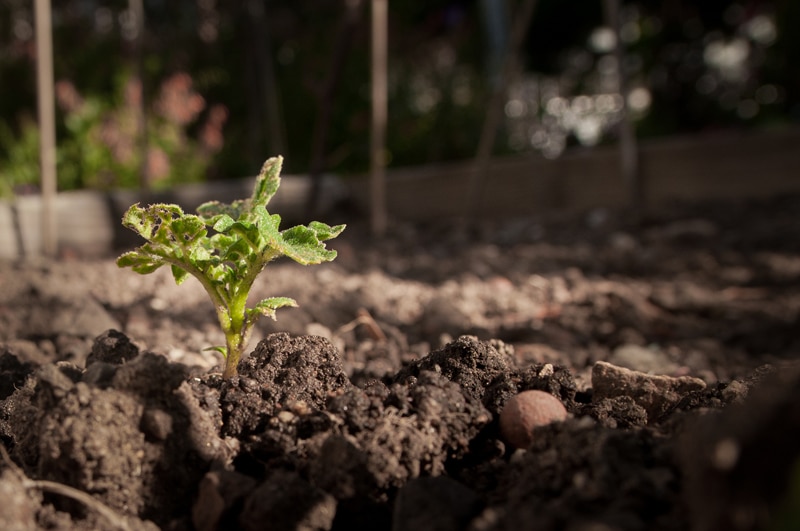
The sky is grey, a light mist is covering the ground and I hear the earth singing as each molecule of blessed rainfall works its way into the soil, winds between the rock, and trickles become flows. Our vintners celebrate the terroir of their vineyards and the pattern of our spring wildflowers reflects the ground below. Geology gives us the foundational knowledge about our soils, how they were created and what lies beneath them. Now is the time to study your soil to get ready for spring planting.

Eye of the Day|Garden Soil|Do you live on a mesa with a sneaky substrate of clay or caliche that refuses to drain? Or perhaps you are tucked in a valley filled with alluvial gravels that drain like a sieve? The chemical makeup of the soil is important as well. If you have never done a soil test in your garden, you might want to try. Take a sample from your most troublesome spot and send to one of our local labs*. Building the soil leads to improved plant vigor and garden sustainability. Remember as you look at the beautiful peaks and rolling folds of our valley, they share a history with your garden you might want to explore.

*LABORATORIES FOR SOIL TESTING:

Wallace Labs, (310) 615-0116

Fruit Growers Lab, (805) 783-2940

General Soil Science Information:
Marin Master Gardeners: How To Build Healthy Soil 

Photo Credit: Soil Photo, Creative Commons, [untitled 1] by David Goehring is licensed under CC BY 2.0


Tips for Successful Edible Gardening by The Conscious Garden

Eye of the Day|Edible Gardening|The Conscious Garden

Tips for Successful Edible Gardening by The Conscious Garden

In Southern California we love to eat healthy food and there is no fresher, tastier or more nutrient dense foods than those that you pick from your own garden or that you buy from the farmers market.  It is important to know that your food is free of chemicals, organic and full of nutrients,  so what better way to know what is in your plants than growing it yourself?  I want to share with you some of the main things to remember when setting up an edible garden, and whether you have a yard or not, it IS possible!

I have been growing food since I was a kid, and one of the things I have learned, is that plants will grow in anything.  So, what ever you have to grow food in, whether it is a raised bed, beautiful container or just a simple plastic drum, you too can have edible vegetables right at your home.

Tips for a Successful Edible Gardening

Soil
The key to having good nutrients in your food is in the soil and that is also the advantage of growing at home: you can truly know if it is organic and what’s in it as you plant.  Use a premium potting soil to begin with.  If you have a large garden, use a mixture of different composts such as manure and worm castings.  The soil provides the nutrients to the plants and allows them to be strong.

Water
Edible plants require a little bit of water often and if you add a drip system, it will ensure the plants are getting water directly to their roots where it is required and it makes the garden more water efficient.  This is especially important in container gardening, and it will make life SO much easier.

Plants
When you decide to plant, choose seedlings from a good organic local supplier, providing bio-dynamic organic seedlings. This will ensure that the roots are strong and will stand up to transplanting and our current drought conditions, giving the plants a good start to their edible nutrient supplying journey. It is also time efficient.

Pest Control
Be ready for providing pest control – and keep it organic, non-toxic.  Sluggo for snails, Organocide for bugs and Serenade for diseases.  I find that if you notice bugs attacking a particular plant, leave one of those plants free of pest control and the bugs will eat that one plant and leave the rest alone.  (Periodically remove the bug-plant and destroy it removing the bugs and disease).

Feeding
Remember plants need food too!  Fish and kelp as the master formula is great. Or you can use an organic food with mycorrhizae. The numbers on the pack of organic fertilizer should not be higher than 5-5-5, which are nitrogen, phosphorus and potassium in a low balanced form.

Just remember, take care of your edibles and they will take care of you. Don’t be afraid to try your hand at an edible garden. If you see something you would like to plant, try a handful of plants and see how it goes.  Plants are sustaining and will grow for you if you just give them a chance.

I am available for consultations or garden support to fulfill your edible garden desires.

Happy Planting!

Sagar Faucheaux
The Conscious Garden

Phone:  (805) 745 5555
consciousgarden@


The Rogue Garden

Eye of the Day|Rogue Garden| Container Garden

Brent’s Rogue Garden

People often ask me what my garden at home looks like.  I laugh and reply it looks like a psychedelic trip to a botanic garden gone rogue with cracked pots.  Then they laugh, not sure if I’m being honest or just outrageous, and they’re right, my garden is outrageous and honestly, it is a trip. While we sell volumes of the best and most authentic pottery and garden statuary around, we get our share of damage. Handling heavy pottery, moving it, merchandising it and delivering it involves some mistakes. So I have plenty of opportunities to take beautiful Italian terracotta pots home, albeit with chips and cracks (we epoxy the cracks so they will last just as long as the first quality ones). The problem is what to do with over twenty years’ worth of damaged pots.

Welcome to my test kitchen where I try different plants in different pots to learn what works. Just like a cook’s test kitchen, I have learned what works when potting different plants, hence my belief that the first thing to growing healthy container plants is the drainage.  No matter the plant, it must have freedom to drain continuously.

Eye of the Day|Rogue Garden| Container Garden

Second is the soil. If you match the plant’s root system with the proper soil mixture you will have a healthy plant growing in a beautiful pot. I am a strong believer that perlite added to any soil mixture helps to grow healthy container plants.  Why do I spend more on organic soil amendments? Because I’ve learned that chemical fertilizers work fast and make container plants grow and look healthy initially, but down the road, your container plants will suffer the toxicity of chemical salts which build up in the soil. Using products like “SuperThrive”, soap, Epsom salts, wood ash from my pizza oven and most of all, composted soils amendments from the great composter I got from .

I have pots everywhere, hence the “garden gone rogue.” I have created patio areas on all sides of my house to accommodate all of the pots and plants. If a planted pot at Eye of the Day begins to look shabby, I’ll will take the plant home and perform triage by restarting it in an appropriate looking pot. I learn from doing this what looks good from a design point of view and I can share what works in containers that clients may not have considered before. I have been able to grow and pair plants with our products to help market Eye of the Day while making my “test garden” a realistic place to prove that container gardening is the best way to create “Paradise at Home”!


Top Your Pot with Tumbled Terracotta

Eye of the Day|Tumbled Terracotta Pot Topper|Baked Earth

TOP YOUR POT WITH TUMBLED TERRACOTTA

You have a beautiful citrus tree and a beautiful pot, together making a perfect statement piece, but maybe there’s something to make it even better from a design standpoint and for water conservation.

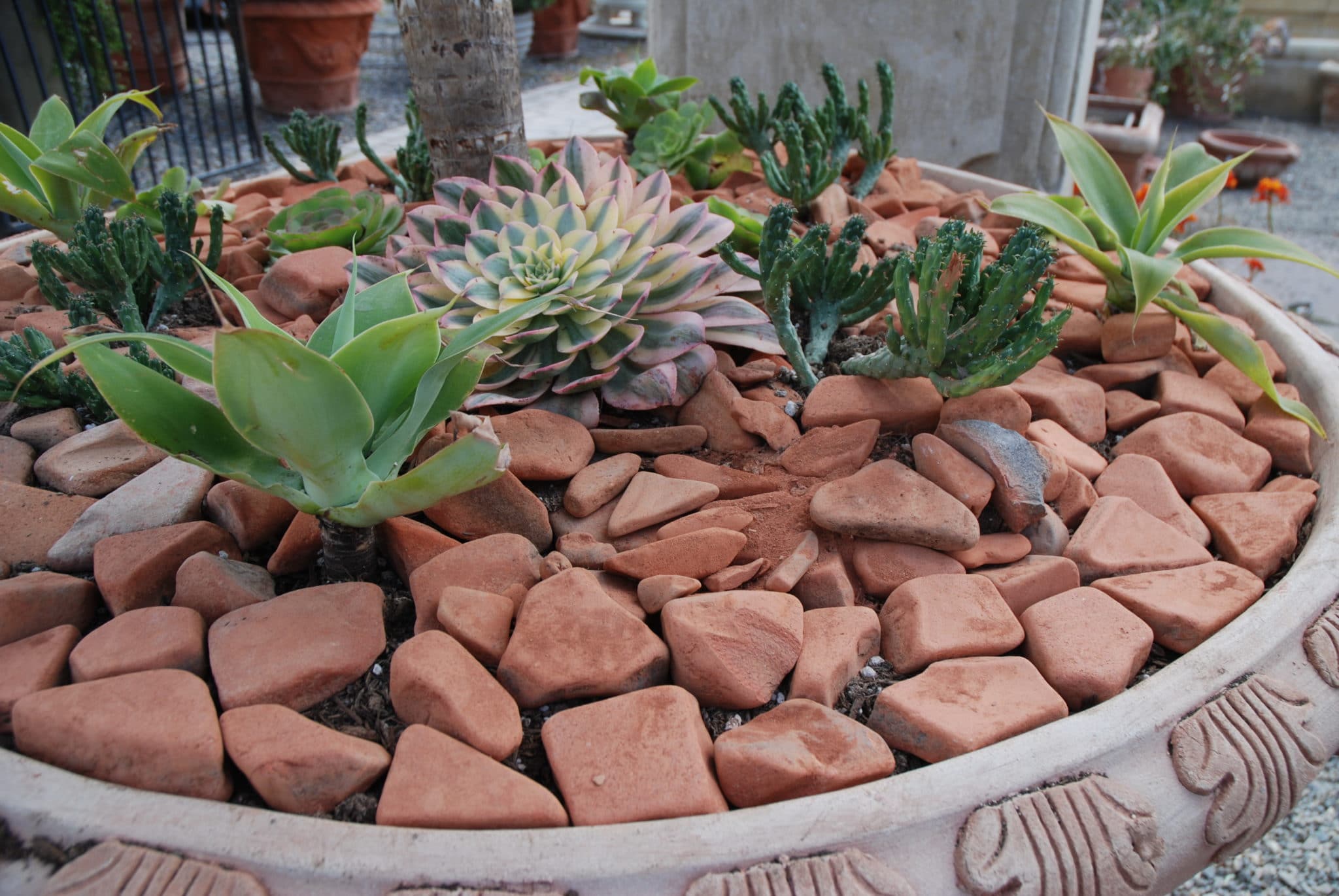
Design professionals typically use under-planting to finish the look of  a tree or tall plant in a pot.  They might use Alyssum,  Baby Tears, Lobelia,  Creeping Rosemary or any other trailing or low-growing plant.  During our current drought, we see more succulents being used, such as String of Bananas, String of Pearls,  Hens and Chicks or Sedum as under-planting and as a living mulch. You can see these same plants in action as part of our video: How to Convert a Fountain to a Succulent Garden. 

More recently, designers have moved beyond plants and have progressed to using tumbled glass in almost any color, moonstones and beach pebbles.  At Eye of the Day, we are ALL about terracotta, so we have developed a new “pot topper” which not only looks beautiful, but helps maintain and control soil moisture in the container while allowing the surface of the soil to breathe (VERY important to container health).

This new product is Tumbled Terracotta, produced from Italian terracotta fragments, tumbled to soften the edges.  Succulents, cactuses and aloes can also be planted between the pieces for a more carpeted effect further enhancing the design and beauty of container planting.

Our Tumbled Terracotta is available in pieces categorized into three sizes, small at $3 per pound, medium and large at $2 per pound.  The next time you visit Eye of the Day, we’ll show you how using Tumbled Terracotta Pot Toppers adds beauty and practicality to your container planting.