The Rogue Garden: Preparing for El Nino
Rain, rain, go ! No! Rain, rain, please stay…we need you, desperately! We all want it to rain here in California more than those outside the Southwest understand. As I am in traffic in either Southern or Northern California, I often wonder how we can keep watering our landscape or even fill every commode tank in this state of over 39 million people. It is truly frightening.
Once El Niño begins, all hell may break loose. Flooding, mudslides, standing water, highways washing out and roofs leaking are just a few of the problems being anticipated. A positive is all of the rainwater we can capture. I have over 40 five-gallon pails strategically located to capture roof runoff. I’m working on a collection system to store this runoff for later in the Spring to use on all of my container plants. Another thing to deal with is mosquitoes breeding in that stored water. I use mosquito dunks, sold everywhere.
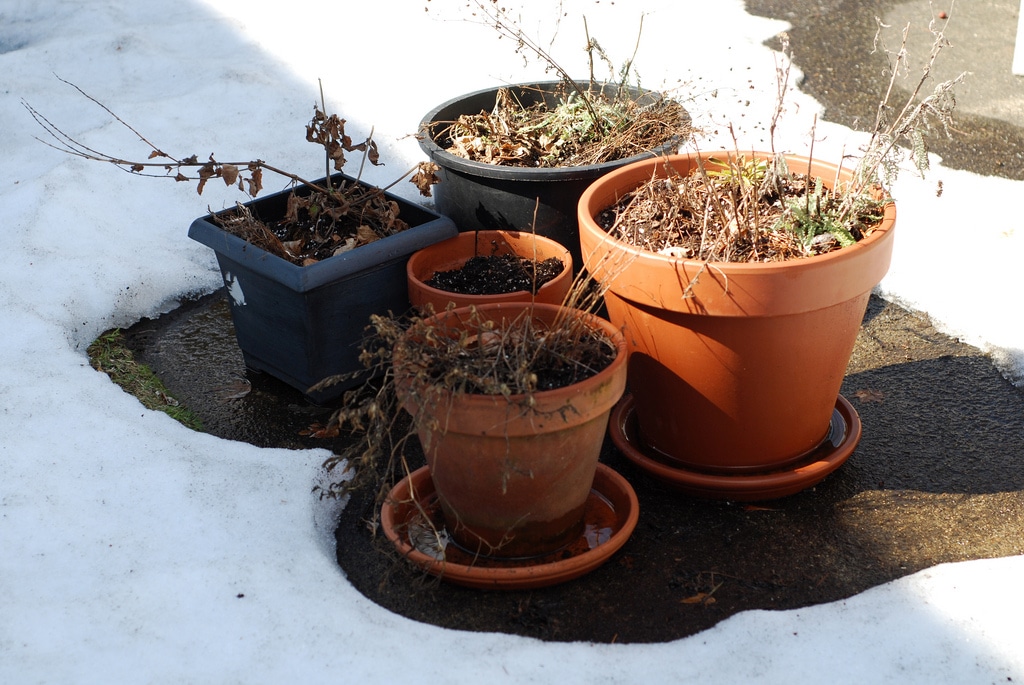
If you have a lot of plants in containers, as I do, a wet winter can drown plants in containers that do not drain well. If your containers have mature plants it is possible that the root system has clogged the drain holes. During a wet period this can mean that your plants are sitting in a swimming pool of water unable to drain out of the pot and the root system begins to rot. Here are some suggestions for maintaining a balanced environment in you container plantings:
- If you can manage it, turn the container onto its side (usually by laying it down on something soft like a tire or thick cardboard). Then with a screwdriver or something sturdy and sharp, clean any roots clogging the drain holes. Use a rod to poke into the hole to clear a drain path through the hole further into the pot or container.
- While the container is on its side, use a concrete/ceramic drill bit to add additional holes to the bottom. Be careful not to fracture the pot or to place the holes too close together, weakening the bottom structure of the pot.
- If you can’t get the container onto its side think about drilling an extra drain hole into the side of the pot at or near the bottom. This will allow for more drainage. Many pots are made with drain holes in their sides so this isn’t something unusual. You can place the side of the pot with the drain hole to the back for aesthetic purposes.
- You can move pots under eaves or downspouts under cover and use the water captured during the downpour to water the pot appropriately.
- If you are up to the challenge, remove the plant from the container and trim the roots/root ball (best done in the dormant period for the plant), add some new soil and repot.
Too much water can drown your plants, so be careful, and make sure you have good drainage even if they are planted in the ground and PRAY FOR RAIN!
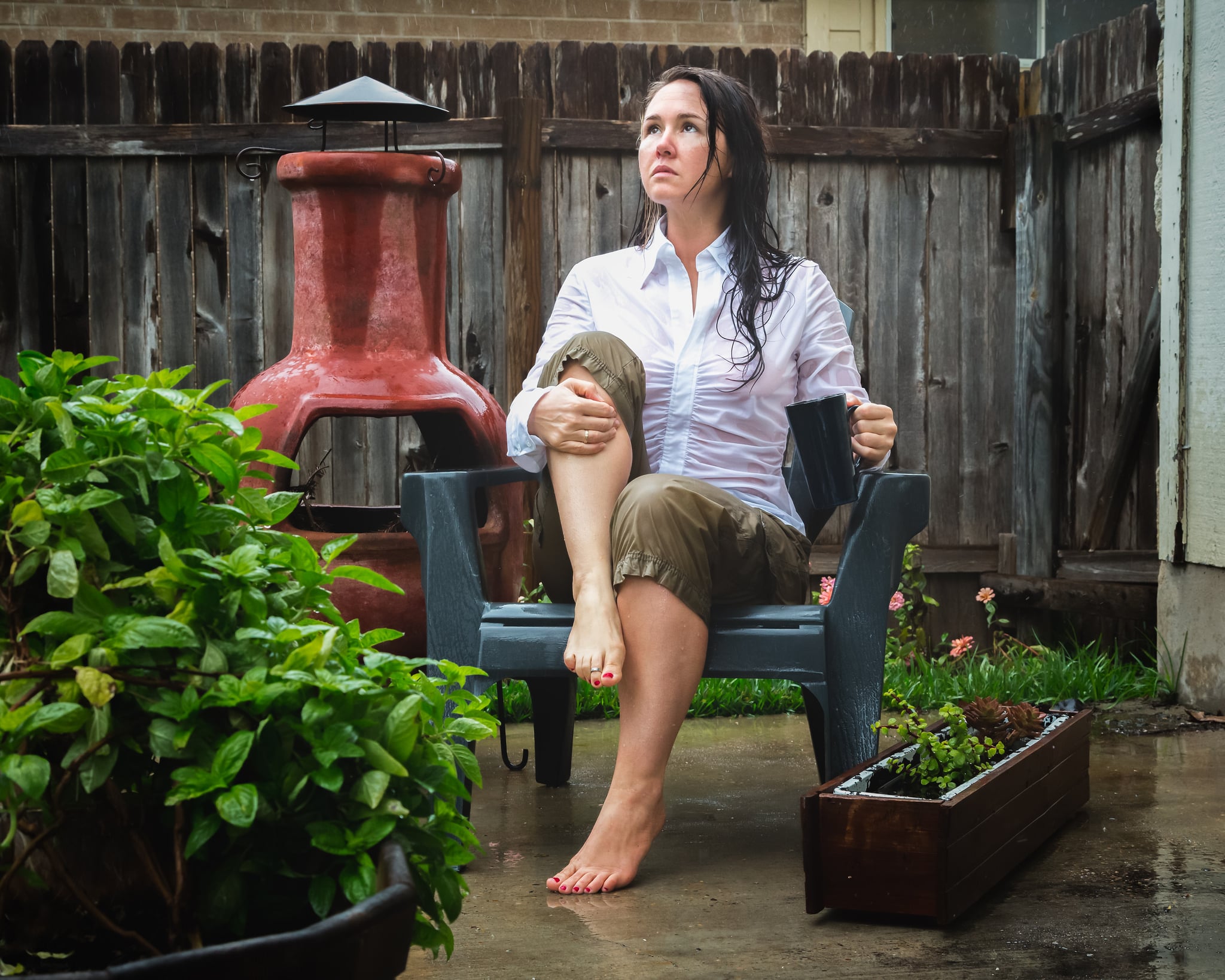
Photo Credit: Rain in the Garden, Creative Commons, Let It Come by Lotus Carroll is licensed under CC BY-NC-SA 2.0