The Art of Building Large Terracotta Pottery

Eye of the Day|Baked Earth|Scott Semple Large Terracotta

The Art of Building Large Terracotta Pottery

In all my days of fascination with clay, there is one tool that I would call my tool of choice: the wheel. But the two things that have influenced me most are my teachers and my travels.
Eye of the Day|Baked Earth|Scott Semple Large Terracotta

Over the past thirty years or so I have had the great fortune of traveling throughout the world.  My interest in large format pottery began in the early 90s and quickly became one of the key purposes of my explorations.

There are many ways to build a large, ceramic container.  In Thailand, I watched two assistant potters feed a rope of clay the size of my leg and 20’ long, over their shoulders to a master potter, who would very slowly spin a crude wheel and pinch the coils on top of each other.   This seems to be the most common way cultures build large terra cotta containers.
Eye of the Day|Baked Earth|Scott Semple Large Terracotta

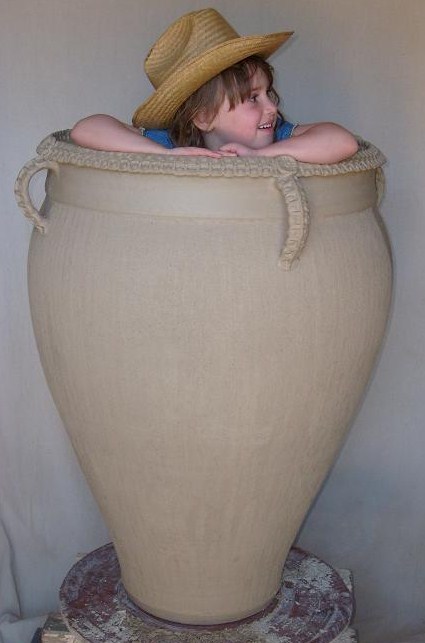
Recently I was a guest artist at a conference where, over the course of three days I made a 7’ Amphora using two wheels. I was positioned next to next to a family of Koreans who were making traditional Kimchi fermentation jars. These things were huge! They used the same coil/pinch method, but paddled the shapes into the forms.   In Georgia (Eastern Europe), they have been fermenting red wine for thousands of years in enormous ceramic vases called Qvervi; they use the same method. Spain probably has the largest pots I’ve ever seen called Tinajas. These absolutely spectacular containers are also used for fermentation,  as well as storing water.

Throughout my travels I have found that around the world, large terracotta forms are still produced for a great variety of uses.


Baked Earth: The Making of a Greek Pot

Eye of the Day|How to Make a Greek Pot| design

The Making of a Greek Pot

This month I’m going to discuss a tool that has captured my imagination for nearly 40 years: THE POTTER’S WHEEL. It started for me in Orange County California in 1976 at Irvine High School. For my P.E. class I was taking surfing and the instructor also taught Ceramics. It didn’t take me long to figure out that all the cool kids not only took surfing, but took Ceramics for second period, so if the waves were particularly good, the surf class would just stay and surf all the way through second period!

Thirty years later, I am still doing ceramics, primarily because of my fascination with the potter’s wheel, which is a relatively new invention in the history of pottery making. Originally functional vessels made of clay were constructed using a coiling technique. The artist would roll out “ropes” of clay and slowly, methodically, hand turn a small form by placing the coils on top of each other and pinching each coil into the one beneath it. Although this time honored method can be very slow and tedious in terms of production, there are still many cultures in the world that use this technique to create functional ceramic containers.

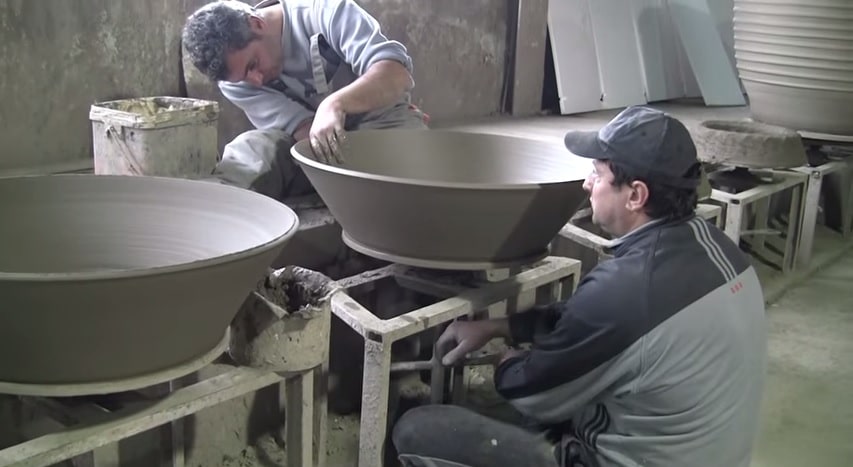
The potter’s wheel was born out of necessity. There are many theories, but all agree it was a matter of industrialization that brought about its creation. Recently I found a few video clips in my inbox that Brent (owner of Eye of the Day) had shot on the Island of Crete. They are an intimate look at the processes used in the production of the authentic Greek vessels Eye of the Day sells. The pieces are wheel thrown but on a wheel that is hand cranked by a potter’s assistant. The clay is made into fat coils, and added to the clay beneath it by pinching. Then the assistant spins the wheel faster and the potter begins to lift the clay into a form. It is particularly fascinating that Greece employs both old and new world techniques. They start with a slab of clay for the bottom, and work their way up by coiling, and pinching, and finally throwing the clay into shape. In the videos you see that there are multiple wheels working at once with vessels on each, in different stages of completion. When the clay needs to rest on one wheel,, the potters move in succession to each wheel down the line, until returning to the beginning to continue working toward a finished piece. These pieces are then fired and shipped directly to Eye of the Day.

We are very lucky to have this direct connection to handmade vessels for our garden design needs. The next time you are at Eye of the Day, remember what it takes for the artisans who build these vessels to deliver such an authentic and timeless piece of history for our own daily aesthetic.


Edible Container Gardening 101

Eye of the Day Garden Design Center|Edible Container Garden| Oscar Carmona

Edible Container Gardening 101

Edible container gardening is a great way to grow vegetables especially when there is no space for a traditional garden. If you live in a condominium or an apartment, containers can provide valuable growing options. A container on casters gives you the ability to move your vegetables to sun or shade, depending on what you want to grow and the time of year. With good, fertile potting soil and a topping of protective mulch you can get by with minimal water.

If you have never tried growing edibles in a container or have not had much success, here are five key considerations  that will greatly enhance your efforts.

POT SIZE

It is important to match the size of your pot to the types of vegetables you want to grow. Bowl shaped pots that are somewhat shallow, approximately 8 to 10 inches, can be great for growing lettuces and other leafy greens. Peppers, cucumbers, beans and larger growing herbs need a deeper pot, 12- 18 inches. Tomatoes like pots that are 18-24 inches deep and about 12-14 inches in diameter.

POTTING SOIL

I recommend choosing an organic potting soil that includes lots of good compost, organic nutrients and important beneficial soil microbiology. EB Stone’s 420 blend has all of these ingredients. Plants grow well in pots when they have a rich growing medium and regular watering. Purchasing top quality potting soil is key to growing healthy, productive plants in containers.

WHERE TO LOCATE YOUR EDIBLE GARDEN

Sunlight and favorable temperatures are also important to growing healthy plants.  Observe how much sun exposure your selected area gets.  Morning sun with shade in the afternoon is good for growing leafy greens such as lettuces, arugula or kale. Sun all day is great for tomatoes and peppers. Shade loving plants like the ambient temperature range of 56-75 degrees. Full sun loving plants are comfortable in the temperature range  of 60 to the mid to upper 80’s. You may find that you have spots in and around your home to grow a bit of both. Remember that the sunlight and temperature will vary throughout the year. So you may need to make adjustments to what you want to grow and/or move containers from season to season.

PLANT NUTRITION

Good organic potting soil will contain necessary organic nutrients. These nutrients not only provide an important food source for your plants, but also for the beneficial microorganisms in the soil. Beneficial soil microbiology will help plants grow strong, nutrient dense and more disease resistant. I also recommend an all-purpose fish/kelp liquid fertilizer applied once weekly throughout the growing season to ensure that your edibles have access to a full range of organic nutrients.

WATERING

Plants in pots need regular, efficient watering as they can become dry more quickly than when planted in the ground. Water until you see it coming out of the drain hole at the bottom of the pot. This means that you have watered completely through the root zone. Fertile potting soil and a layer of mulch will help retain moisture. As you get to know your growing environment you will be able to fine-tune your watering schedule.

Once you have experienced success  with your container garden, you can take growing to the next level by planting your favorite crops in succession over the course of the growing season, which is all year in our neck of the woods!   So don’t plant everything all at once. Start a little at a time with strategic new plantings at  four, eight and twelve week intervals. Leafy greens can be successively grown every four to six weeks. Longer growing crops can be planted every eight to twelve weeks.

Now you are ready to get started or advance your edible container gardening efforts. With some good observation for growing potential in and around your home and care to provide your edibles with a good growing environment you will enjoy successful harvests well into the future.

Oscar Carmona, Healing Grounds Nursery 

Special Event: Eye of the Day will be hosting a special Edible Container Gardening Workshop with Oscar Carmona on Saturday, June 27th. For more information and to reserve your spot, please visit the event page.
The Truth Behind the Aged Terracotta You Buy

Eye of the Day|Quality terracotta differences|design pottery

The Truth Behind the Aged Terracotta You Buy

If you have read the articles by Scott Semple you now have a good understanding of what makes up terracotta pottery. From Gladding McBean’s stoneware to our Italian frost resistant earthenware containers, at Eye of the Day Garden Design Center we sell high-quality terra cotta products which last and last.

Now, what about aesthetics? Do you want your pots to last? Is it important that future generations are given your garden pots along with your jewelry, silverware and bedroom set? Many people love the patina of terracotta when it gets older and though a crumbling pot is not the same thing as “patina” they think it still looks cool.

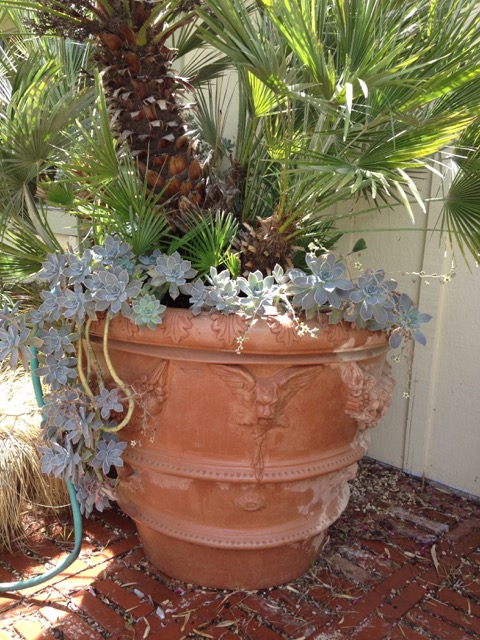
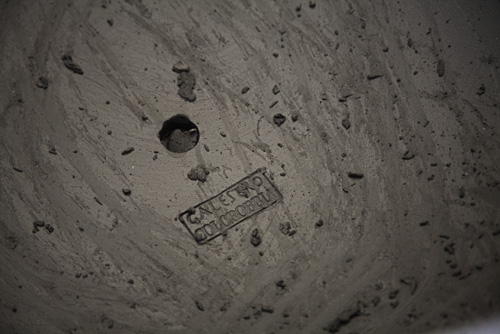
This Italian pot from Terrecotte Olympia of Tuscany, Italy is a favorite of designers in Southern California. It is not made with frost proof Galestro clay but with Sienna clay, which is clay Americans typically find at their garden store. Olympia, like many Italian clays and other clays from which garden pots are produced, will almost immediately begin to spall and flake. Although they have a wonderful aged patina that designers love to specify in their designs, the material does not have a long life compared to pottery made from Galestro clay. The problems will be seen in Mexican and most Asian terracotta products as well.

At Eye of the Day, we hope that our retail and professional design clients will consider the investment they are making and choose terracotta for the centuries. For a further example of how these pots age and look, take a look at the following pictures of the Italian pots at the Ralph Lauren Store at the Stanford Shopping Center in Palo Alto. If this is not enough to convince you, well, that’s why there are both vanilla and chocolate…something for everyone.

If you like that falling-apart look, come and see our seconds and close-out area at the store where we have lots of consigned pottery from customers who are replacing their containers with new ones. The prices are great and the look is shabby/chic. We also have remaining stock from Terrecotte Olympia at half price: it’s still half-good.


How To Choose A Terracotta Pot By Its Porosity

Eye of the Day|Baked Earth|terracotta porosity

In past articles I have discussed how freeze/thaw has an effect on ceramic containers and I have also discussed clay pot irrigation. We are in the worst drought in the state of California’s history, so by irrigating with low fire pots with high porosity,  water can be sent directly to the root system and feed plants on demand, as opposed to spraying the crusty, evaporative surface.

Eye of the Day|Baked Earth|terracotta porosity

Technically porosity is the amount of empty space in the structure of the fired clay that makes it capable of absorbing or distributing liquids. Simple, right? So if the terracotta is absorbing water and the temperature drops below freezing, you’re going to have potential problems with your investment as the water expands while it freezes.  But if your intention is to use the porosity to slowly distribute water, then the more porous the better. There are other uses for porosity in ceramics, for example insulation. The less dense a brick is, the more insulating capabilities it has.

Eye of the Day|Baked Earth|terracotta porosity

Natural clays can have a very high porosity.  When the grains are very small, there are countless small pore spaces, but what clay does NOT have is good permeability, which is the way you would measure how connected these porous spaces are. So generally speaking, if the clay is high fired it will be far less porous. This is advantageous for a freeze/thaw condition. If the clay is low fired, or under fired it will be porous and best for releasing or absorbing water.

So the bottom line is that the level of porosity you should seek depends on your intention for use of the ceramics.


Morocco in Your Own Garden

Eye of the Day|Moroccan Garden|Newsletter

Morocco in Your Own Garden

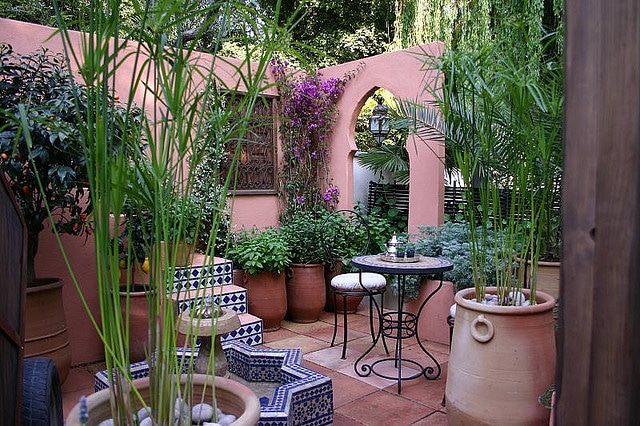
California gardens, especially those in Southern California have long utilized the concept of outdoor rooms. Countries with warm, dry climates around the Mediterranean basin have been creating miniature oases outdoors for centuries. Taking a cue from them is one way to replicate both the feel and appropriateness of this style.

Moroccan gardens provide great examples of the restrained use of water to create a lush setting in outdoor courtyards and passageways. Even while reducing your water use in the landscape, you can create an intimate, yet luxuriant garden space by taking inspiration from arid North Africa. Gardens there are generally central to the dwelling, both to provide privacy and protection from the heat and winds.

One of the key elements of these enclosed spaces is limiting water use. The Arabic word for a garden of this type is riad and usually refers to the central fountain or ornamental pool. The fountain need not be large to provide a bit of cooling to the air as well as a sense of peace and luxury in a climate where water is scarce.  It is possible to recreate that feeling with a simple water feature created from a glazed pot and a small, efficient pump instead of building a large fountain.

Another feature is the exuberant use of color. Colorful pots, a painted wall or gate as well as bright flowers make for a vibrant and even joyful setting. Vivid glazed tiles, whether on the patio floor or the surface of a fountain, also contribute to creating an exotic paradise.

Plants can be used as well and they do not have to be those that require a lot of water. There are many that are drought tolerant, yet lush-looking. Large leaves give a more topical feel and species such as bird of paradise, aspidistra and pygmy date palm do well in containers. Succulents are a great choice; from cacti to agaves and aloes, they thrive on little water and their foliage provides drama and color. The Canary Islands is home to a wonderful group of succulents, the aeoniums, whose fleshy leaves grow in large, showy rosettes and would be perfect choices. Even the humble geranium (Pelargonium) is sturdy and produces flowers nearly year round. Assemble several plants in one container to provide a miniature landscape or group individual pots together, mixing and matching your color palette.

Look at Planted Wells blog for more Moroccan garden design inspiration.

Image Credits:
Moroccan Garden – Creative Commons, Chelsesa Flower Show Gardens by Rictor Norton and David Allen is licensed under CC by 2.0
Plant Image – Creative Commons, BCSS gloucester branch auction – The national agave collection by stephen boisvert is licensed under CC by 2.0