How It Works: Frostproof Terracotta

How It Works: Frostproof Terracotta

It’s hard to believe that it is already Fall. In California, leaves don’t change much in a drought, no matter what time of year. But as another October becomes a thing of the past, much of the country can already feel the promise of winter. So let’s talk about frostproof terracotta.

Eye of the Day Garden Design Center|Frostproof Terracotta|Baked Earth series on terracotta
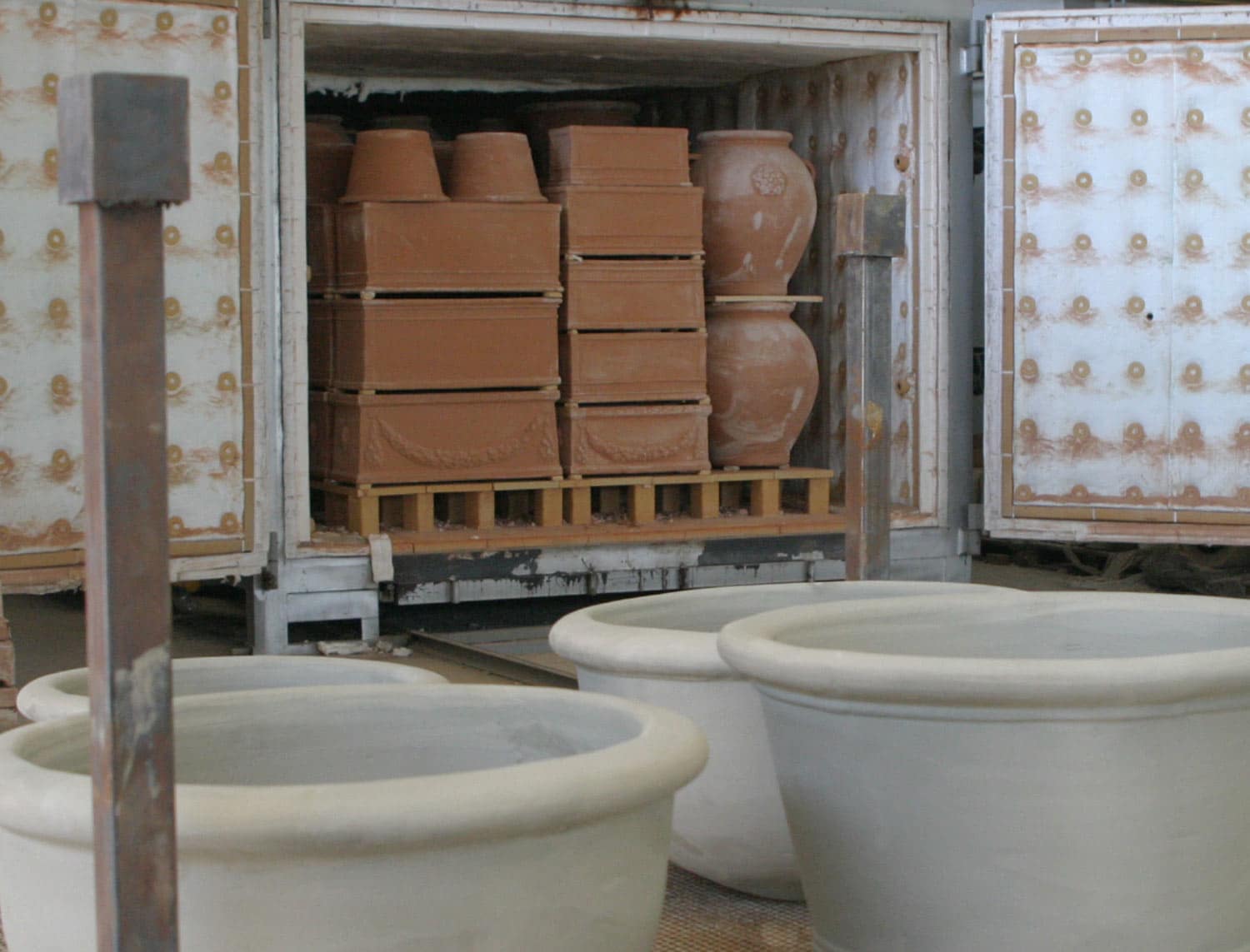
Clay after getting fired in the kiln.

Many of you live and work in places that freeze, and much has been said, both by homeowners and garden designers about the freeze/thaw capability of ceramic plant containers. Remember that ‘clay’ is the earthen material, ‘ceramic’ is the clay when it has been fired. Terracotta is low fire red clay found all over the world. There are low fire clay bodies, and high fire clay bodies. Low fire is also referred to as earthenware, high fire is stoneware. Once clay is fired it becomes ceramic no matter what temperature it is fired to. But that doesn’t mean it is mature. I want to introduce you to two new key words: “vitrify” and “absorption.”

Every clay, whether earthenware or stoneware, has an optimum maturation point when fired. When this point is reached, the clay is “vitrified.” When clay becomes vitreous, it means that all the different ingredients in the clay have melted and bonded together to form a mature, very strong, “ceramic.” If a clay is over-fired it becomes flakey and worthless. If a clay is under-fired (like many of the pottery containers that are called “terracotta”) it is weak and porous and highly susceptible to cracking, even without being frozen. So when we talk about frostproof ceramic or terracotta, interestingly enough, we have to talk about fire first. In ceramics it always, always, always, comes back to the fire.

The key equation: the more vitrified, the less absorption. Did you catch that? Absorption yields expansion/contraction and hence cracking, during a freeze/thaw cycle. That’s basically it. You’ve got clay, you’ve got fire, you’ve got maturation/vitrification, and you’ve got frostproof ceramic. Or, more plainly put, if a ceramic vessel is not fired to its target temperature, it will die an easy death no matter what the weather is doing.  But if it will last longer than you do.  Just think about that for a moment.

Here is what you can do when you are ready to purchase frostproof ceramic containers:

1) Research the manufacturer’s credibility. If you are buying real, frostproof ware, know where it comes from and how it was fired, and get something on paper, like a warranty.

2) Protect your investment! Do not add moisture to a vessel that you know is going to freeze. And if you are going to take the time to cover the plants, take the time to cover the container too. Start to think of the ceramics as a living, breathing, expanding and contracting entity, just like the plant that it holds.

3) IMMEDIATELY call Eye of the Day. They have been selling frostproof terracotta for more than fifteen are not only knowledgeable, but relatively good looking and congenial, and carry the best frostproof terracotta on the market (guaranteed to withstand temperatures down to minus 15° F).

4) Move to California!

Container Gardening: Finding Joy in Scarcity

Author Brené Brown stated in her now famous Ted Talk, “The opposite of scarcity is not abundance, it is enough.” As we deal with the drought in our gardens, let’s not respond by grabbing more water from others or becoming despondent about losing lawns that are largely unsustainable in our climate.

Use your creativity and discover how container gardening can enliven your landscape while using little water. Let go of those garden images where plants luxuriate in 95% humidity and weekly rainfall. Let’s get started.

Destination Inspiration

Why do we love love love Italy, Mexico, Spain, or Morocco? Courtyards and shade. It’s not the turf. Most of our residences have outdoor living spaces that are too small or too close to the house to be truly enjoyed. If you are considering what to do with your thirsty landscape, think about expanding or adding terraces or courtyards adjacent to your home. Add new gathering areas in other parts of the garden. Even in a very small garden, you can create a new space at the back or side of the property and discover a new view into your landscape.

Planters: The Versatile Garden Feature

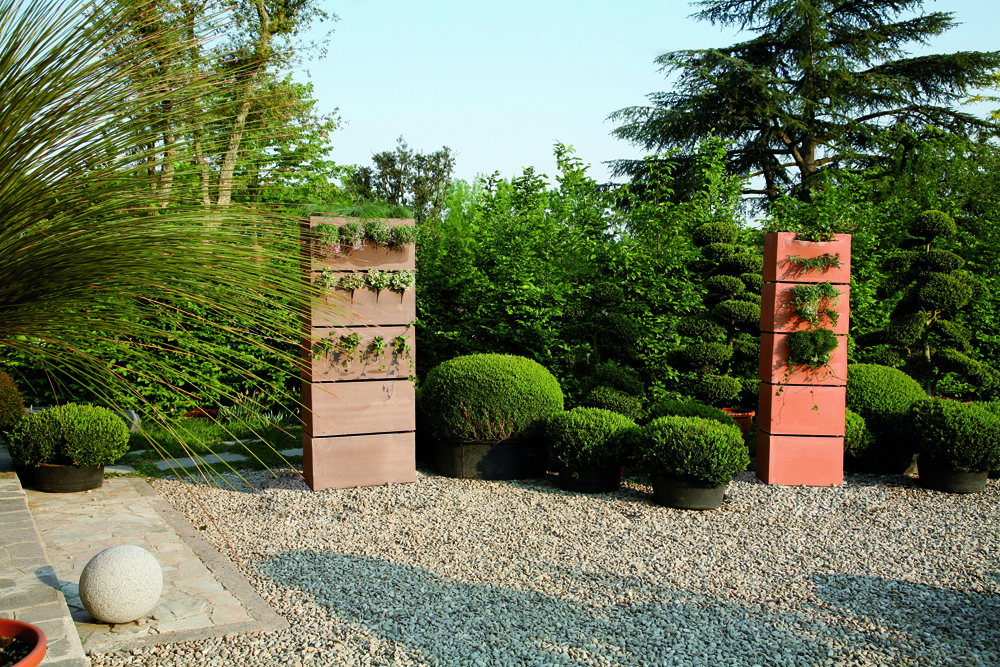
These new spaces can be paved with a variety of materials such as gravel, recycled concrete, stone or pavers. A grouping of planters can serve a variety of functions. Need some shade? Find a large pot, 42” diameter plus and add a drought tolerant small tree such as a fruitless olive. Add smaller pots with succulents or color and you have quickly filled your new garden space with pattern and detail, two aesthetic qualities that enliven our living spaces.

Planters can be adapted or reinforce the visual quality of any type of garden. If you have young children, add lots of color and tuck in a few edibles to share at the table. If you are looking for a place to escape the pace of work and family, discover the cool palette of succulents. Be brave, take a risk. Planter gardening is a great way to play with plants without breaking your budget.

So let go of some of the old ideas and embrace the challenge to live with ‘enough.’ Take a fresh look at that existing landscape and find joy in a new direction for your garden.

To view more of Puck Erickson’s work, please visit Arcadia Studio.


Groundskeeping: The Art of Showing Up on Site

Eye of the Day

As a professional designer you have to visit your clients and job sites. You cannot put together a credible working document without physically walking the site.

That said, when my clients (landscape designers, architects and builders) are surprised to see me get out of the truck when their orders arrive on their job sites, I’m always just as surprised by their surprise. There’s no better way to understand what they have created and how Eye of the Day was included in that process than to be there walking their design. Without the in-person visit, there’s a disconnect.

By the time the containers and other decor elements are placed, the rest of the garden is close to completion. That means Eye of the Day’s delivery puts the finishing touch on the garden. I call it the jewelry.

When the Tommy Bahama store designer for their new flagship location on 5th Avenue in Manhattan specified our Greek Terracotta done in a custom whitewash, I decided to fly to New York to meet the shipment. Because delivery is the trickiest part of my business, I wanted to be there to answer questions in person and sort out any problems if there was breakage en route, for example. In the more likely event that there were no shipping problems at all, I just wanted to show my face and make sure my clients knew I stood by my products in the most literal sense.

The man who held the door open for me at Tommy Bahama turned out to be the company’s CEO. When he found out that I was the owner of Eye of the Day and had made the special effort to come all the way from California, well, to say the least, he was impressed. It’s rare for vendors of custom, authentic products in niche industries to be so present, and it must have been a welcome change because we got the job for their Chicago store, too.

I won’t lie: travel isn’t only a sacrifice. I enjoy the perks, too. It didn’t hurt that I got to have lunch at one of my favorite restaurants, Gramercy Tavern. I just wish Cooperstown and the Baseball Hall of Fame was closer, but such is a traveling man’s plight.


A Malibu Getaway | Design by Wendy Harper

We recently had the pleasure of photographing a Malibu garden design by landscape architect Wendy Harper.

Brooks Color Plan ViewHidden in a canyon perched on a point overlooking the Pacific, the property owned by Harper’s clients is a perfect weekend getaway. The experience begins on the winding narrow road leading you around a bend where you get your first glimpse of the ocean. To enter the property you must then cross over a babbling creek on a beach cobble bridge. Harper used natural beach cobble and Santa Barbara stone to connect with the surrounding environment. Large Monterey Cypress and towering California Sycamores, planted when the home was built in the mid 1900s, create an inviting canopy over the site.

2014-01-22

“The property is long and narrow with many constraints and challenges,” says Harper. “My goal was to make all of the spaces in the garden feel like living spaces, even the parking court, which is incorporated into the yard by introducing a weeping wall water feature, grass ribbons in the beach cobble paving, lush plantings with antique urns dripping with succulents and colorful blooms most of the year.”

2014-01-22

The entertaining patio outside of the kitchen is warmed by an outdoor fireplace decorated with Eye of the Day’s Antique French mantel and surround. Select cut Santa Barbara stone set on sand paves this outdoor room. Eye of the Day’s containers planted with succulents and citrus decorate the space.

2014-01-22

A curved stone staircase leads you up to the pool area. Tuscan-style molded brick columns support the long pavilion framing the pool. Taking a swim in the pool is a musical experience where you can listen to your favorite songs…underwater. Sigis cut glass tile compliments the spa and waterline, and colored pool lights transform the water into a kaleidoscope at night. The ipe hardwood deck ties to the railings which mimic the turned wood railings of the home’s balconies. Interestingly, the use of ipe was the only specification from the homeowner for this project. Everything else was left to Harper’s creativity and expertise.

2014-01-22

“I wanted it to feel like it had all been here from the start, so bringing the turned railings onto the deck was a natural choice,” explains Harper.

2014-01-22

Chisel-cut Santa Barbara Stone walls hold olive trees and sycamores on the upper slope as a lazy hammock swings between the trees. Three small ancient church windows from Eye of the Day’s antique collection inspired the changing room with outdoor shower. The pilaster planters are purposely understated with simple succulent plantings so as not to crowd or overshadow, just to compliment the space.

About the Designer:
Wendy Harper is a landscape architect based in Moorpark, California. To view more of her work, visit the Wendy Harper Landscape Architecture Facebook page. 


Container Gardening During Drought

Eye of the Day garden Design Center

Best Practices for Container Gardening During a Drought

Those of us who garden have seen the effects of the lack of rain, and enjoying our gardens is going to take more work. Longtime Californians have already experienced this kind of shortage and we know the drill. You turn on your shower in the morning, you grab a handy bucket kept nearby to catch those first 60 seconds of cold water you wouldn’t dare step foot in. Later, you carry that bucket outdoors and hand-water your beds, borders and trees, or maybe just one bed depending on the size and fullness of your bucket. This becomes a daily tradition.

If this seems far-fetched, consider that the politicos and water managers have finally weighed in and declared that we are actually in a drought. Not just a minor water shortage, but a state of extreme drought. Now we are not just encouraged, but, in some areas mandated to reduce water usage immediately.

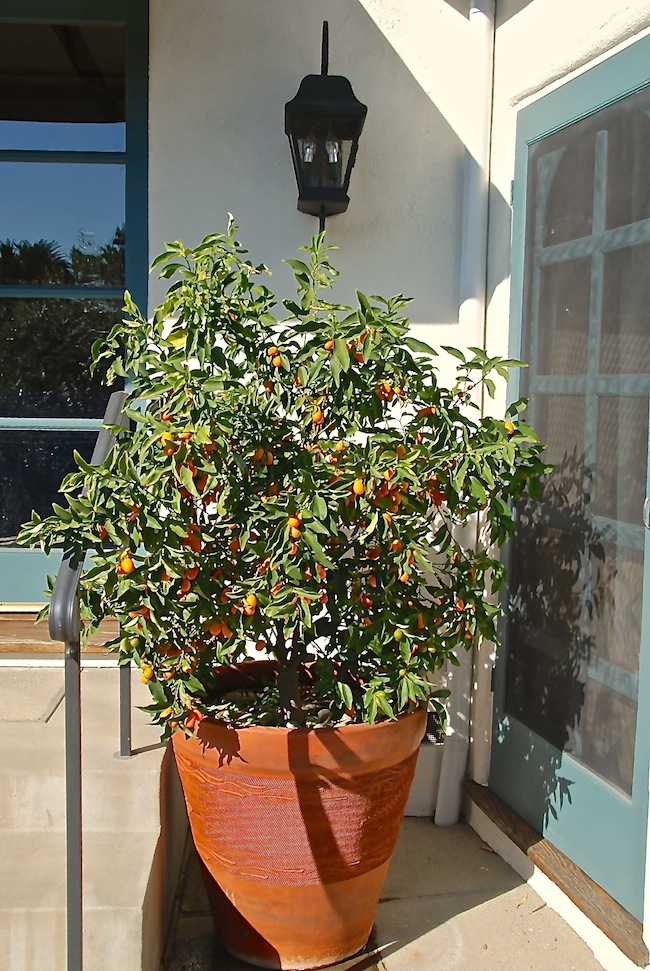
Eye of the Day garden Design CenterOne solution to having handsome specimen plants to adorn our outdoor living spaces is to plant them in containers. Planters are small, “contained” gardens after all. Everything from our favorite tropical plants like cannas and palms to flowering and fruiting trees and shrubs like citrus and even camellias can be grown in containers. When planting in a pot you can tailor the soil mix to maximize water absorption and retention and closely monitor just how much water is needed and used.

While I still encourage you to keep that bucket handy in the bathroom, you have other options with containers, such as low-flow and efficient drip irrigation systems. Take this opportunity to embrace the world of container gardening and do your part to conserve our most precious resource, water. And check back here for lots of specific tips on growing your favorites from ornamentals to herbs and vegetables, even a mini water garden. Also, look for future posts that will teach you how to choose the right container for your needs and tailor the soil for the plants you want to grow.


Brent Freitas Featured on NewHomeSource.com

Eye of the DayBrent Freitas, President of Eye of the Day, was recently sought out by for his expertise on garden containers. Interviewed for a story that is now live on the NHS website, Brent provided helpful information on the subject of extending the season by adding heat elements in the garden.

In an effort to make their gardens more distinct and more beautiful, many homeowners incorporate garden containers for use as fire pits–but this can prove both costly and dangerous if the wrong techniques are used.

As Brent says: “Customers often ask for pots or containers to use in their backyards for fire pits. They want something attractive and different from the average offering. They want to know if our concrete or terra cotta will stand up to the heat, and this is what I tell them: if you want to burn wood, no. But if you are going to install gas and use a flame delivery system that is properly install so the flame is diffused upwards through the rock or tumbled glass, well then, yes.”

Design experts Heather Lenkin, Debra Prinzing and Phil Maddux also contributed to the story on heat in the garden. Want to learn more? Click HERE to read the whole story.

is a high-volume consumer website that is funded and endorsed by a group of the nation’s largest homebuilders. The site includes new home listings as well as a resource center called the New Home Guide, which is full of articles to help with the home-buying process, designing your new home and settling in.