Flowers and Plants for a Drought Tolerant Garden

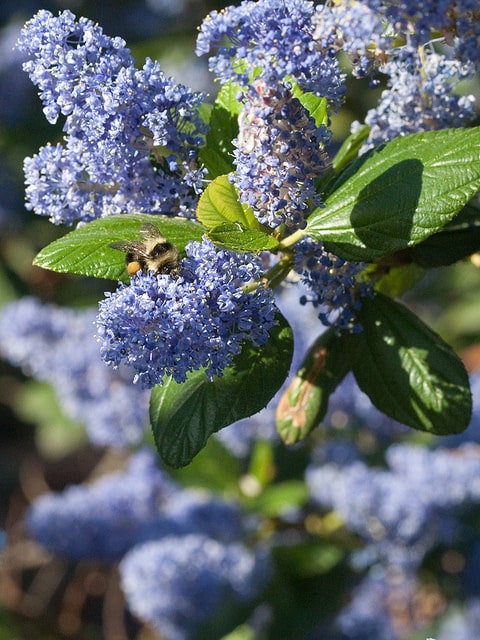
Eye of the Day|Verdure newsletter| wild lilac with bumblebee

Drought Concerns in the Garden

We are in a drought. And it may last for more than the short cycle of approximately seven years that has regularly occurred here in recent history. Some scientists are saying that this is part of a much larger cycle that could be one hundred to one hundred-fifty years in length (and let’s not even try to imagine how climate change will affect that). So, how do we keep our love of living, green things around us with much reduced water resources? One way is to look at the plants that have evolved in this habitat for many thousands of years. Native California plants are great choices for our modern gardens as are plants native to climate zones similar to ours.

Eye of the Day|Verdure newsletter| wild lilac with bumblebee, drought
A busy bumblebee pays a visit to this gorgeous Wild Lilac (Ceanothus) Photo Credit: JKehoe_Photos

Plant Options for Drought
Obvious choices for evergreen shrubs are Manzanita and Ceanothus. Both of these have been bred and selected for a variety of plant shapes and sizes. There are ground-hugging cultivars as well as tall and broad shapes to provide screening. Manzanitas have interesting bark as well as dainty, bell-shaped flowers. Ceanothus are often called California, or wild lilac, for the resemblance their flowers have to the cultivated lilacs our grandmothers grew. Consult a good garden guide or your local nursery for selections and specifics of each cultivar.

Eye of the Day| Verdure blog| pride of madeira, drought
A Monarch butterfly and a Pride of Madeira (Echium candicans). Photo Credit: Franco Folini

Mediterranean Plant Options for Drought
Other readily available options to replace thirsty plants during our dry spells hail from the Mediterranean region.  Some favorites include Echium candicans, Pride of Madeira, that covers itself with spires of tiny flowers in shades of blue and purple as well as Lion’s Tail, Leonotis leonuris, which bursts forth with sprays of brilliant orange blossoms from spring through fall.  And let’s not forget the many selections and species of rosemary and lavender that are ideally suited to our climate as well as their native zones.

Water for the Birds, Bees, and Bugs
One added perk for all of these native and non-natives is that they are quite attractive to bees, butterflies and other beneficial fauna that are seeking sustenance through this dry spell. So don’t be afraid to lose that thirsty garden and replace it with a verdant, more water thrifty landscape.
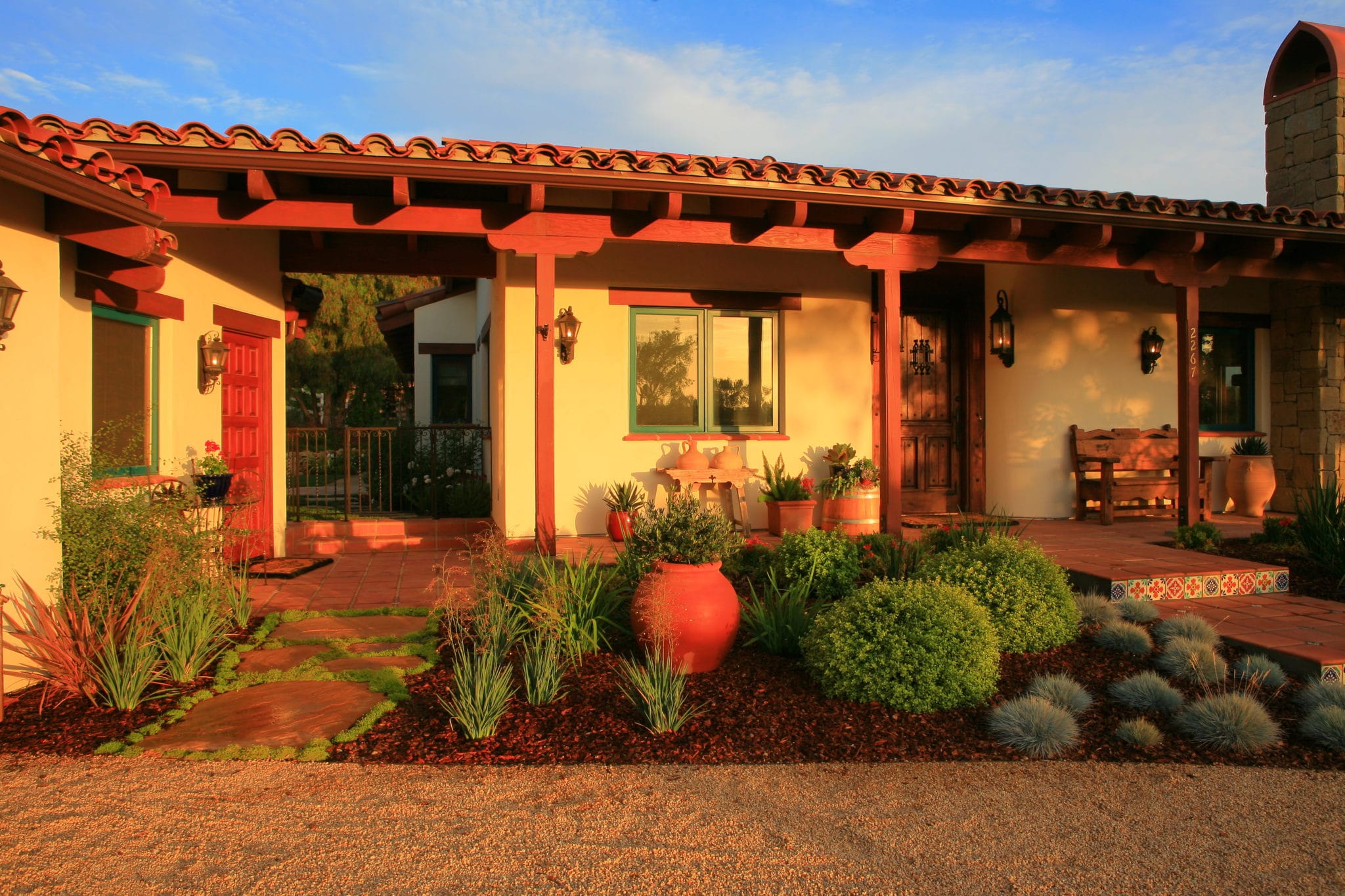


Eco Friendly Landscape Design by Lisa Cox for Hacienda Style Home

Lisa Cox, of Lisa Cox Landscape Design has happily designed landscapes ranging from simple tract homes to vast estates.  As she plans an outdoor environment, she envisions a transformation that communicates the lifestyle and personal taste of the client, while incorporating her own style. Each garden is designed and built with all materials including stone, plants, trees, water features, and garden art selected by Lisa using local, top qualified growers and suppliers.

Commitment to sustainability, the use of drought tolerant plants and trees, including California natives, has been an integral part of her design process, allowing a more “naturalistic” result that mimics the local terrain.

When Lisa met with her new clients in the Santa Ynez Valley, they requested that the newly constructed home not have any sod in the front area, and that she use drought tolerant plants including grasses and succulents. Working with a blank slate, except four nice sized olive trees at the entrance, she was free to design the space, including selection of a plant palette that complimented the Hacienda style of the home. With the use of local sandstone boulders, salvias and phormiums as her base, she also incorporated deciduous trees and perennials for color in the Spring and Summer, and a few rows of grape vines because after all, it’s the Santa Ynez Valley!

Choosing Greek terracotta pots from Eye of the Day, filled with “Blue Glow” Agaves gave the clean, rustic look she was looking for on the front porch and the traditional Terrecotte San Rocco terracotta pot in front worked perfectly to show off the “Little Ollie.”

It seems everything progressed perfectly for Lisa and her clients, but there WERE a few important challenges:

  1. The need to place a gopher basket for every plant as the local area is inundated with gophers that would quickly destroy the plantings, and
  2. The necessity of paying close attention to selecting plants that can stand the heat as well as the sometimes frigid nights where temperatures can go into the low 20’s or below.

As Lisa’s work on the project came to a close, she felt deep satisfaction; in fact she felt this was a home environment she could inhabit herself.  The project was a dream to work on and the end result was exactly what the homeowner envisioned.

Visit Lisa Cox Landscape Design to view more of her work.