Morocco in Your Own Garden

Eye of the Day|Moroccan Garden|Newsletter

Morocco in Your Own Garden

California gardens, especially those in Southern California have long utilized the concept of outdoor rooms. Countries with warm, dry climates around the Mediterranean basin have been creating miniature oases outdoors for centuries. Taking a cue from them is one way to replicate both the feel and appropriateness of this style.

Moroccan gardens provide great examples of the restrained use of water to create a lush setting in outdoor courtyards and passageways. Even while reducing your water use in the landscape, you can create an intimate, yet luxuriant garden space by taking inspiration from arid North Africa. Gardens there are generally central to the dwelling, both to provide privacy and protection from the heat and winds.

Eye of the Day|Moroccan Garden|Newsletter
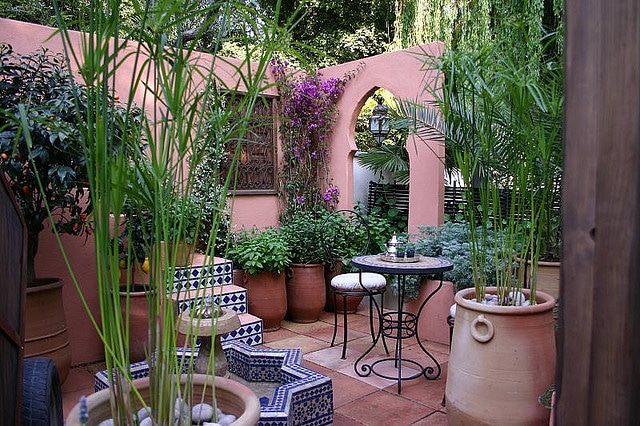
A Moroccan Courtyard Garden that incorporates a water feature, colorful plantings and pottery.

One of the key elements of these enclosed spaces is limiting water use. The Arabic word for a garden of this type is riad and usually refers to the central fountain or ornamental pool. The fountain need not be large to provide a bit of cooling to the air as well as a sense of peace and luxury in a climate where water is scarce.  It is possible to recreate that feeling with a simple water feature created from a glazed pot and a small, efficient pump instead of building a large fountain.

Another feature is the exuberant use of color. Colorful pots, a painted wall or gate as well as bright flowers make for a vibrant and even joyful setting. Vivid glazed tiles, whether on the patio floor or the surface of a fountain, also contribute to creating an exotic paradise.

Eye of the Day|Plants for Moroccan Garden|Newsletter blog
Plants for an outdoor Moroccan style garden

Plants can be used as well and they do not have to be those that require a lot of water. There are many that are drought tolerant, yet lush-looking. Large leaves give a more topical feel and species such as bird of paradise, aspidistra and pygmy date palm do well in containers. Succulents are a great choice; from cacti to agaves and aloes, they thrive on little water and their foliage provides drama and color. The Canary Islands is home to a wonderful group of succulents, the aeoniums, whose fleshy leaves grow in large, showy rosettes and would be perfect choices. Even the humble geranium (Pelargonium) is sturdy and produces flowers nearly year round. Assemble several plants in one container to provide a miniature landscape or group individual pots together, mixing and matching your color palette.

Look at Planted Wells blog for more Moroccan garden design inspiration.

Image Credits:
Moroccan Garden – Creative Commons, Chelsesa Flower Show Gardens by Rictor Norton and David Allen is licensed under CC by 2.0
Plant Image – Creative Commons, BCSS gloucester branch auction – The national agave collection by stephen boisvert is licensed under CC by 2.0 

The Landscape Professional and Client Relationship

THE DESIGN PROCESS SHOULD BE ENJOYABLE FOR EVERYONE
An interview with Stacy Fausett

Stacy Fausett is a highly respected Landscape Architect who takes great pride in what she does. She is quick to say that when she is asked to return and do further work for a client, she considers it a great compliment. We often see her at Eye of the Day, pen and paper in hand, walking the greenhouse and annex, taking lots of notes for her clients. She is looking for things that will fit into a particular design for her clients’ landscape and home. Stacy has worked to build long-lasting relationships with many of her clients, seeing them through a project, and over time moving on to new ideas in the same project later and then to other properties as they change homes. I asked Stacy a few questions about how she achieves these long-term client relationships.

EOD: How has your design relationship evolved with a client’s different projects?

SF: Obviously, having an established working relationship and familiarity allows me to skip the formalities of getting to know the client and then I can jump right into the design process. The familiarity is wonderful and makes for a fun project. It’s like working with an old friend.

EOD: How do you accommodate the client’s changing tastes over a span of time and still allow your own accumulated professional experience to show through?

SF: Each project varies with the style of architecture, the unique qualities of the property, and the client’s needs and desires. The client’s needs may have changed over time, so assessing these elements are the same as it would be for a new project. Having more years of experience behind me and knowing the likes and dislikes of the client allows me to make assessments and design suggestions. It is a very efficient way to work on a project.

EOD: What does it take to gain the client’s confidence in order for them to continue a long-term personal and professional relationship with you?

SF: It’s actually very simple to gain the trust and confidence of a client:

  1. Listen to your clients: their wants, likes, dislikes,needs and critical elements susch as time frame and budget. Respect this information.
  2. Do your homework and present quality, well thought out materials and design work.
  3. Most importantly, do what you say you are going to do in a professional and timely manner. Organization and communication are key to a successful relationship in every circumstance.


Eye of the Day|Stacey Fausett| client professional relationships STACY FAUSSET studied Landscape Architecture at California State Polytechnic University and has been practicing for over twenty six years. After many years of working for other Landscape Architects, she opened her own office in Santa Barbara in 2010.


Landscaping to Keep Your Friends: An Outdoor Makeover

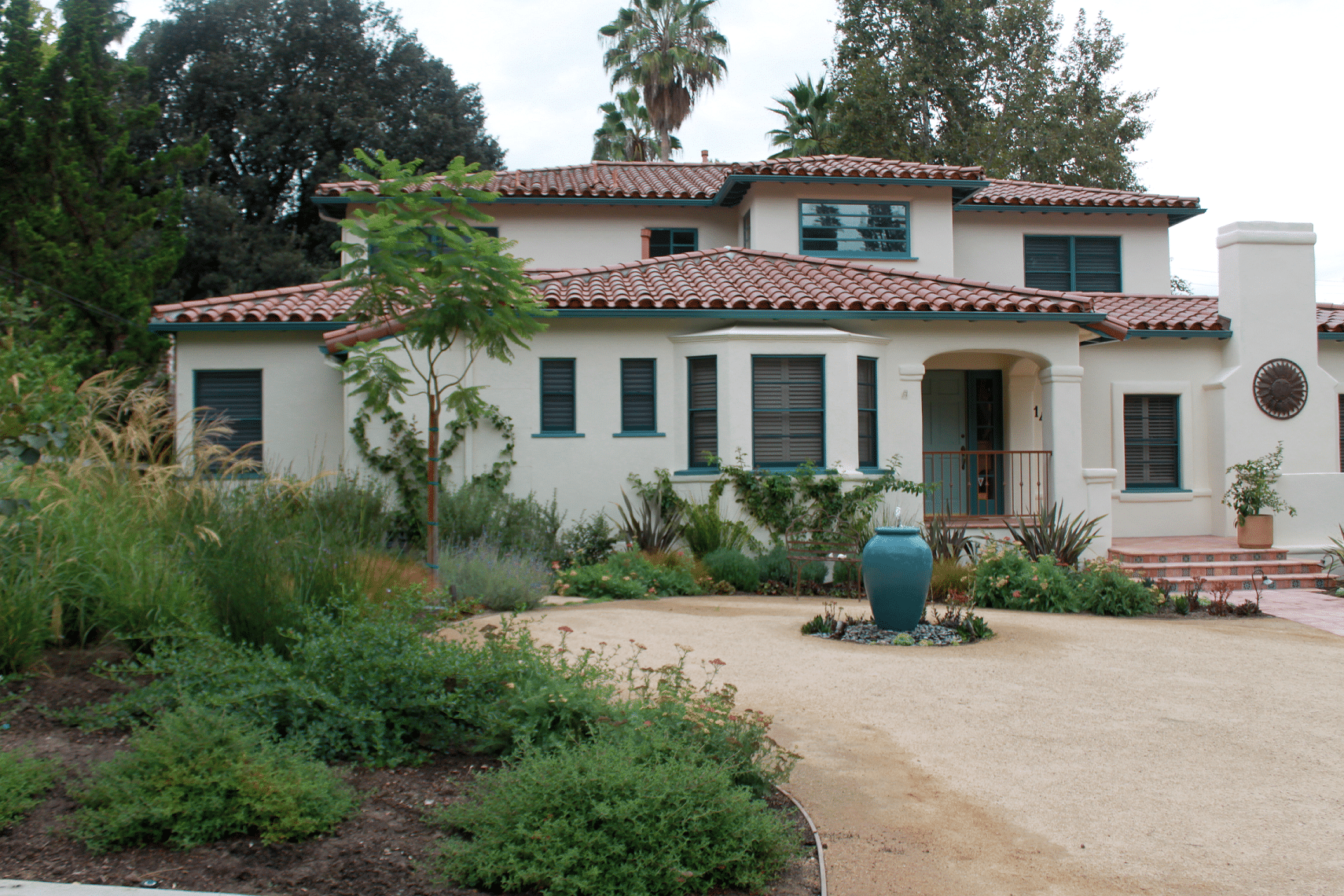
The owners of this classic Mediterranean home in Glendale, California contacted Sally Farnum of SE Farnum Associates in Altadena for a new front yard design requiring minimal maintenance and low water use. Her design included a Gladding McBean Oil Jar fountain conversion in Caribbean, as well as two Gladding McBean planters flanking the front entrance.

The neighborhood in Glendale, California, a suburb of Los Angeles, was lined with houses showing off well-manicured lawns and lush plantings. But like most streets, it had ”that one house.” You know the house. Dried and dying lawn, gopher holes dotting the landscape, and essentially an eyesore to a neighborhood that otherwise boasts its curb appeal.  Before their neighbors stopped talking to them, my clients contacted me to revamp the landscape in front of their home. These were busy clients who just work, work, work, leaving very little time for yard work. They were leaving the digging and turning of the soil to the gophers and the trimming to the deer. They even spent a few hours a week unsuccessfully trying to combat rodents with traps, flooding, and varmint bombs.


Change did not come easily to these clients, but they knew they needed to do something. They requested a garden design that would require minimal maintenance and low water but still incorporate beautiful plantings, as well as being deer and gopher proof. I discussed the beauty of replacing their lawn with a composition of decomposed granite, new and colorful water-wise plantings, hardscape using saltillo concrete tiles and a new fountain.

Initially the clients’ three colors of choice were beige, dark beige, and white, but I was able to convince them that a lively color palette can be beautiful, energizing, and attractive not only to them, but to desirable visitors like butterflies, bees, and birds. The plantings include colorful sages, ceanothus, lantana, and achillea that not only drink little but the deer and pesky gophers don’t find them to their culinary liking.  It’s been almost a year and they haven’t lost any plants to the wildlife, what a success!


The colors of the Malibu tiles that we used in the hardscape were definitely an influence on my desire to use a Gladding, McBean oil jar for a fountain. I was thrilled that my clients selected the Caribbean blue over a more subtle color and love the fountain conversion done by Eye of the Day. The clients are so happy with their colorful garden that they recently asked me to help select the palette for the re-painting of their house and of course the selections are very close to the color of the Gladding McBean fountain.


Container Gardening: Finding Joy in Scarcity

Author Brené Brown stated in her now famous Ted Talk, “The opposite of scarcity is not abundance, it is enough.” As we deal with the drought in our gardens, let’s not respond by grabbing more water from others or becoming despondent about losing lawns that are largely unsustainable in our climate.

Use your creativity and discover how container gardening can enliven your landscape while using little water. Let go of those garden images where plants luxuriate in 95% humidity and weekly rainfall. Let’s get started.

Destination Inspiration

Why do we love love love Italy, Mexico, Spain, or Morocco? Courtyards and shade. It’s not the turf. Most of our residences have outdoor living spaces that are too small or too close to the house to be truly enjoyed. If you are considering what to do with your thirsty landscape, think about expanding or adding terraces or courtyards adjacent to your home. Add new gathering areas in other parts of the garden. Even in a very small garden, you can create a new space at the back or side of the property and discover a new view into your landscape.

Planters: The Versatile Garden Feature

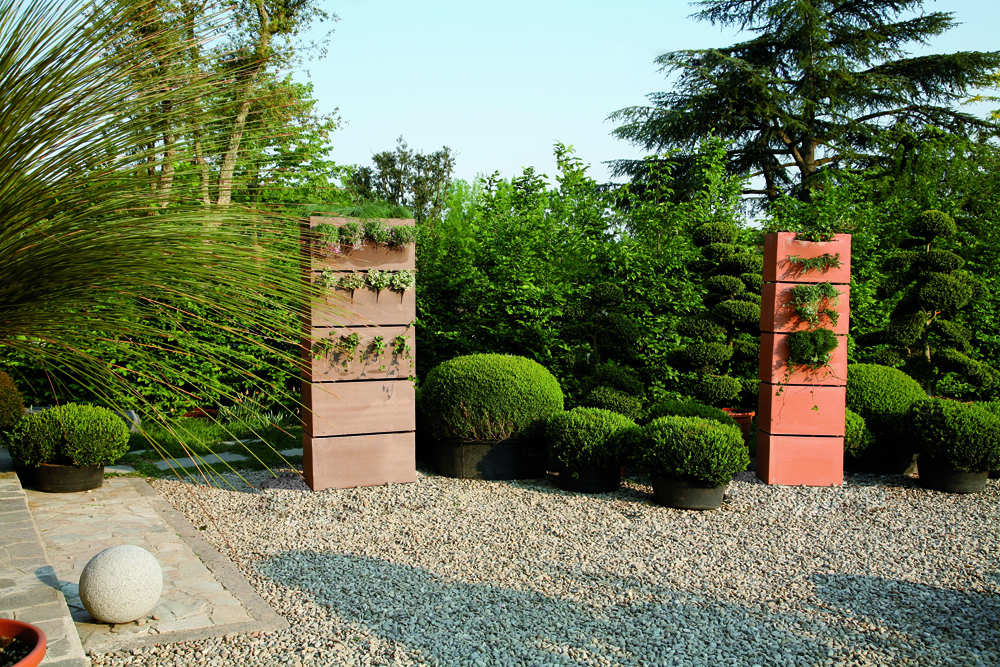
These new spaces can be paved with a variety of materials such as gravel, recycled concrete, stone or pavers. A grouping of planters can serve a variety of functions. Need some shade? Find a large pot, 42” diameter plus and add a drought tolerant small tree such as a fruitless olive. Add smaller pots with succulents or color and you have quickly filled your new garden space with pattern and detail, two aesthetic qualities that enliven our living spaces.

Planters can be adapted or reinforce the visual quality of any type of garden. If you have young children, add lots of color and tuck in a few edibles to share at the table. If you are looking for a place to escape the pace of work and family, discover the cool palette of succulents. Be brave, take a risk. Planter gardening is a great way to play with plants without breaking your budget.

So let go of some of the old ideas and embrace the challenge to live with ‘enough.’ Take a fresh look at that existing landscape and find joy in a new direction for your garden.

To view more of Puck Erickson’s work, please visit Arcadia Studio.


Home Outside Palette App: Landscape Design Made Easy and On the Go

Could it be time to add your mobile device to your set of gardening tools? There really is an app for everything. Bring out your inner designer to create the dream landscape you always imagined with the Home Outside Palette app. Move, resize, and even undo with over 280 available elements (trees, paths, enclosures, and more) to an existing or new landscape before even stepping outside. Design on the go has never been easier for novice and experienced designers.

“We created the Home Outside Palette app to help homeowners design their properties,” says Julie Moir Messervy, owner of landscape architecture and design firm JMMDS and creator of the app and the Home Outside online landscape design service. Using any iOS or Android smartphone or tablet, users can upload a property survey and use it as a background, or select a grid or colored background, and mock up their landscape by tapping and dragging hundreds of elements into place. The grouping feature lets you lock permanent elements together (such as the house, garage, and driveway), and the layers tool gives you the ability to play with different versions of a design.

An in-app purchase offers additional elements as well as a measuring tool that lets you input rectangular measurements or “walk-and-click” a GPS-based outline of your space. A drawing tool allows you to sketch free-form garden beds and other features. “From the start we knew that we wanted to include all the green features that today’s homeowners need: laundry lines, greenroofs, chicken coops, veggie gardens, compost bins, greenhouses, solar panels, and more,” says Messervy. “It is possible to have a functional, sustainable yard that’s also beautiful—and this app helps you get the design right before ever picking up a shovel.” When you’re finished, get important feedback before committing to any design element. You can share designs from the app on social media or email them to friends. For additional help with your landscape, the Ask an Expert feature lets you send a design from the app to JMMDS’s award-winning designers for their expert suggestions. The app is designed to be practical and user-friendly for the imaginative homeowner to the professional designer. Messervy adds, “Our mission is to make beautiful design available to anyone, anywhere.”


By Jennifer Silver, Marketing and Special Projects Manager of Julie Moir Messervy Design Studio

Jennifer has held a variety of teaching, writing and editing positions. When she moved to Vermont 12 years ago, she discovered her true passion: sustainable agriculture. She is never happier than when writing or gardening. At JMMDS, she gets to write about gardens—what could be better?


Elements of Style: The Classic Mediterranean Garden

Elements of Style: The Classic Mediterranean Garden

A classic Mediterranean style garden is typically low-maintenance, drought tolerant and perfect for a climate dry and hot in Summer and warm and moist in Winter. For those of us living in California, this seems a perfect fit. Traveling throughout the Mediterranean region, focused on the landscape and gardens, reminders of California are constant.

The defining characteristics of the Mediterranean style are:

  • Focus on hardscapes, with very little or no lawn
  • Citrus, olive trees, rosemary and lavender often planted in terracotta pots
  • Fountains and water features are key. Water features became popular in the gardens of the Italian Renaissance. They reflect the garden and provide the relaxing elements of sight and sound.  Because of the scarcity of water in the Mediterranean,  many water elements offer a relief from the heat.
  • Large and small terracotta pots and urns and statuary. Pottery in many forms has been a part of Mediterranean gardens since their origins in ancient Roman households. From intricate bas-relief to simple and plain, they are quintessential for a European garden.  Statues, urns and planters provide focal points and because their footprints are small, they are particularly useful in a small garden. The Greeks and Romans filled their pots with flowers to add color to their courtyards and pathways without depleting the water supply, or they used them to grow fruit trees that could be moved about  according to the outside temperature.  But pots were also used as beautiful objects on their own – a classic oil jar at the end of an allee, a row of terracotta pots topping a balustrade, or an urn crowning a pedestal.

You don’t have to live in Spain, Greece or Italy to reflect the siren call of the Mediterranean classic garden.  A few carefully chosen garden elements… an antique Greek pithari, a scattering of large terracotta pots and urns and a simple water feature will create your classic otium.  Being water conscious and embracing a rustic, muted look will go a long way toward making your space the place to be.