The Rogue Garden: Brent’s Test Kitchen

Eye of the Day|Brent's Rogue Garden|The Test Kitchen

THE ROGUE GARDEN: Brent’s Test Kitchen

Hey! All you hoity toity landscape designers—this blog’s for you!

Eye of the Day|Brent's Rogue Garden|The Test Kitchen
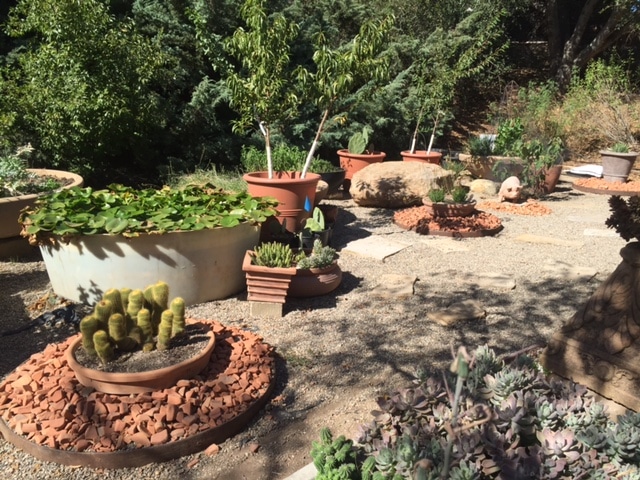
Tumbled terracotta has come out of years of testing out new stuff in the garden.

When my professional landscape design friends come to my home garden for the first time, they are usually thrown off balance by what they see: there are pots and containers everywhere.  I constantly rescue or buy plants to try out in our pots to show how they work together in the landscape and also to see how a plant performs in a container versus the ground.

Eye of the Day|Brent's Rogue Garden|The Test Kitchen
Pots of all sizes and shapes.

While my garden is a “test kitchen”, it serves as inspiration for Eye of the Day as well as for the genetic sequence I received from my Portuguese great grandfather. He was a truck farmer who indentured himself in 1868 to the Campbell Estate in Hawaii to grow sugarcane. I love putting my hands in the dirt.
Eye of the Day|Brent's Rogue Garden|The Test Kitchen

My garden at home has helped us at Eye of the Day in many ways. We have learned that French Anduze pottery must be sealed or the glazing starts to fall off almost immediately. So, we tell everyone that if you purchase French Anduze, you must have it sealed to protect the glazing.

Eye of the Day|Brent's Rogue Garden|The Test Kitchen
Watching how a plant grows in this terracotta pot.

Something that every design professional should know about is how to properly plant pots and especially large pots. Pots that have diameters larger than 30” usually have plant material that starts big or will grow large due to the space for more root ball. But after a period of years and sometime climate conditions, a large plant needs to be removed from its container and trimmed and replaced. By replicating these situations in my own garden, I have formulated successful service practices for performing operations which allow clients to benefit by getting the most from their purchase of our products.

Eye of the Day|Brent's Rogue Garden|The Test Kitchen
Even fountains make their way over.

Also in my garden, there are odd experimental items like “vertical wall” planters and terra cotta shelf units for the patio. 25 years of business has resulted in a new product. Whether damaged in the container coming from Italy or through rough handling here at Eye of the Day, we take the broken pieces of pottery and produce Tumbled Terra Cotta.

Eye of the Day|Brent's Rogue Garden|The Test Kitchen
Organized chaos at the rogue garden.

Yes, my garden at home looks like a madman’s landscape but, I love it and I love spending time in this intimate setting surrounded by the products, plants and ideas that fuel my life.

Let me know if you’d like to visit.

Brent, the Rogue Gardener

5 Tips for Winterizing Your Terracotta Pottery

Eye of the Day|How To Winterize Your Terracotta Pots

5 Tips for Winterizing Your Terracotta Pottery

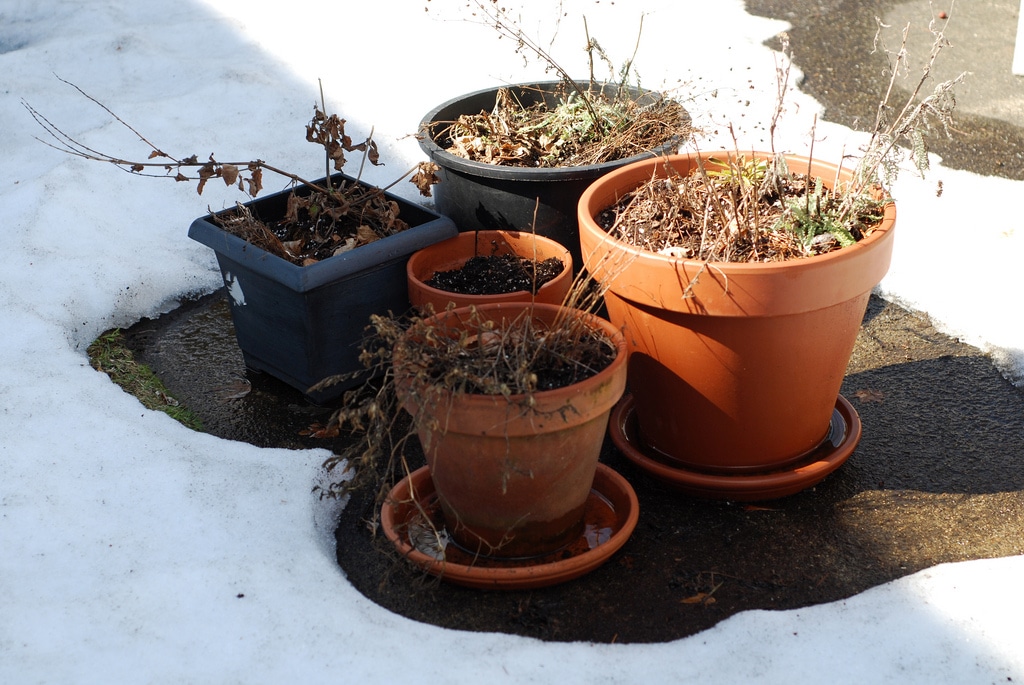
To many people winterizing terra cotta pottery may seem like a completely irrelevant subject for discourse, but consider that you can add this information to your knowledge just IN CASE it ever gets cold enough to freeze. This is an actual problem for people with terracotta pots in parts of the US , which is why you don’t see great pottery everywhere.

There ARE steps that can be taken to help prevent your pots from cracking when old man winter whips through your garden. The goal is to eliminate the possibility of water being absorbed, frozen and thus causing the pot to crack.

  1. Lift the pot from the ground by placing it on pot feet, wooden blocks or pieces of stone. This will allow air to circulate beneath the pot.
  2. Seal the pot with a penetrating sealer, such as one used to seal slate floors and swimming pools
  3. Remove plants and soil from the pot, as the soil will absorb water, freeze, expand and can cause cracking
  4. Cover the pot with plastic sheeting to avoid contact with water
  5. Most fool-proof: move it inside

Much depends on the quality of the terra cotta as well.  Eye of the Day’s is the highest quality, high fired Italian terracotta, made from Galestro clay. Our pots, manufactured by Terrecotte San Rocco, are guaranteed frost proof to minus 15 degrees. It helps to know that if a pot is high-fired, the absorption rate is lower, and so the risk of cracking in freezing weather is reduced.

You may need this information some day. Maybe.

Photo Credit: Terracotta Pots, Creative Commons, My Container Garden After Winter by Rachel James is licensed under CC BY-NC-ND 2.0


Flowers and Plants for a Drought Tolerant Garden

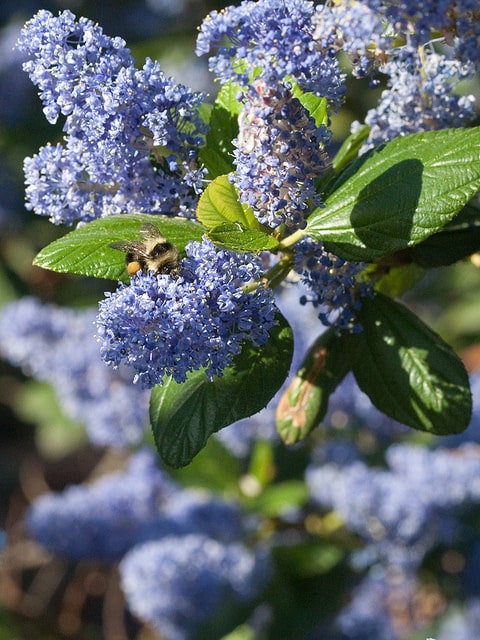
Eye of the Day|Verdure newsletter| wild lilac with bumblebee

Drought Concerns in the Garden

We are in a drought. And it may last for more than the short cycle of approximately seven years that has regularly occurred here in recent history. Some scientists are saying that this is part of a much larger cycle that could be one hundred to one hundred-fifty years in length (and let’s not even try to imagine how climate change will affect that). So, how do we keep our love of living, green things around us with much reduced water resources? One way is to look at the plants that have evolved in this habitat for many thousands of years. Native California plants are great choices for our modern gardens as are plants native to climate zones similar to ours.

Plant Options for Drought
Obvious choices for evergreen shrubs are Manzanita and Ceanothus. Both of these have been bred and selected for a variety of plant shapes and sizes. There are ground-hugging cultivars as well as tall and broad shapes to provide screening. Manzanitas have interesting bark as well as dainty, bell-shaped flowers. Ceanothus are often called California, or wild lilac, for the resemblance their flowers have to the cultivated lilacs our grandmothers grew. Consult a good garden guide or your local nursery for selections and specifics of each cultivar.

Mediterranean Plant Options for Drought
Other readily available options to replace thirsty plants during our dry spells hail from the Mediterranean region.  Some favorites include Echium candicans, Pride of Madeira, that covers itself with spires of tiny flowers in shades of blue and purple as well as Lion’s Tail, Leonotis leonuris, which bursts forth with sprays of brilliant orange blossoms from spring through fall.  And let’s not forget the many selections and species of rosemary and lavender that are ideally suited to our climate as well as their native zones.

Water for the Birds, Bees, and Bugs
One added perk for all of these native and non-natives is that they are quite attractive to bees, butterflies and other beneficial fauna that are seeking sustenance through this dry spell. So don’t be afraid to lose that thirsty garden and replace it with a verdant, more water thrifty landscape.