The Landscape Professional and Client Relationship

THE DESIGN PROCESS SHOULD BE ENJOYABLE FOR EVERYONE
An interview with Stacy Fausett

Eye of the Day|Stacey Fausett| client professional relationships
A garden design by Stacey that incorporates Eye of the Day garden decor.

Stacy Fausett is a highly respected Landscape Architect who takes great pride in what she does. She is quick to say that when she is asked to return and do further work for a client, she considers it a great compliment. We often see her at Eye of the Day, pen and paper in hand, walking the greenhouse and annex, taking lots of notes for her clients. She is looking for things that will fit into a particular design for her clients’ landscape and home. Stacy has worked to build long-lasting relationships with many of her clients, seeing them through a project, and over time moving on to new ideas in the same project later and then to other properties as they change homes. I asked Stacy a few questions about how she achieves these long-term client relationships.

EOD: How has your design relationship evolved with a client’s different projects?

SF: Obviously, having an established working relationship and familiarity allows me to skip the formalities of getting to know the client and then I can jump right into the design process. The familiarity is wonderful and makes for a fun project. It’s like working with an old friend.

Eye of the Day|Stacey Fausett| client professional relationships
One of Stacey’s designs

EOD: How do you accommodate the client’s changing tastes over a span of time and still allow your own accumulated professional experience to show through?

SF: Each project varies with the style of architecture, the unique qualities of the property, and the client’s needs and desires. The client’s needs may have changed over time, so assessing these elements are the same as it would be for a new project. Having more years of experience behind me and knowing the likes and dislikes of the client allows me to make assessments and design suggestions. It is a very efficient way to work on a project.

EOD: What does it take to gain the client’s confidence in order for them to continue a long-term personal and professional relationship with you?

SF: It’s actually very simple to gain the trust and confidence of a client:

  1. Listen to your clients: their wants, likes, dislikes,needs and critical elements susch as time frame and budget. Respect this information.
  2. Do your homework and present quality, well thought out materials and design work.
  3. Most importantly, do what you say you are going to do in a professional and timely manner. Organization and communication are key to a successful relationship in every circumstance.


Eye of the Day|Stacey Fausett| client professional relationships STACY FAUSSET studied Landscape Architecture at California State Polytechnic University and has been practicing for over twenty six years. After many years of working for other Landscape Architects, she opened her own office in Santa Barbara in 2010.
Clay Pot Irrigation Benefits During Drought

We had a very quick winter here on the Central Coast with just a little bit of rain, spotty at best, while the rest of the country has been buried under blankets of snow. As California is technically still experiencing a severe drought, I want to address ceramics in irrigation.

Irrigation Through Clay
In the newsletter, we have covered many subjects concerning ceramics.  In irrigation, ceramics also has many uses. The Romans created an intricate system of aqueducts, which directed water throughout all parts of the empire. We see this around the world, ceramic pipe systems carrying water through towns and villages.

Clay Shards and Slow Water Release
Ceramic “shards” can also be used as a soil amendment. The broken pottery has to be low fire to be absorbent.  Low fire ware may be crushed and added to the soil and as you water, the shards act as little sponges and absorb the water and release it essentially as needed below ground.

Clay Pot Irrigation

Another use I find very interesting is what is called “clay pot irrigation.” If you perform an internet search of this term and go to “Images,” you will see excellent examples of how this works.  Essentially, it is a very simple technique.  Again, a low fire vessel is made by a potter, and is then buried right next to the plants you want to irrigate; fill it with water, and because of the porosity of the low fire ceramic, it leeches through the walls of the vessel and waters the plant by slowly releasing a minimal amount of water.

Cultures around the world have been using this method forever!  Look it up, check it out, and enjoy these new yet very old techniques of gardening.  Ceramics in your garden is not just decorative, it can be very functional.


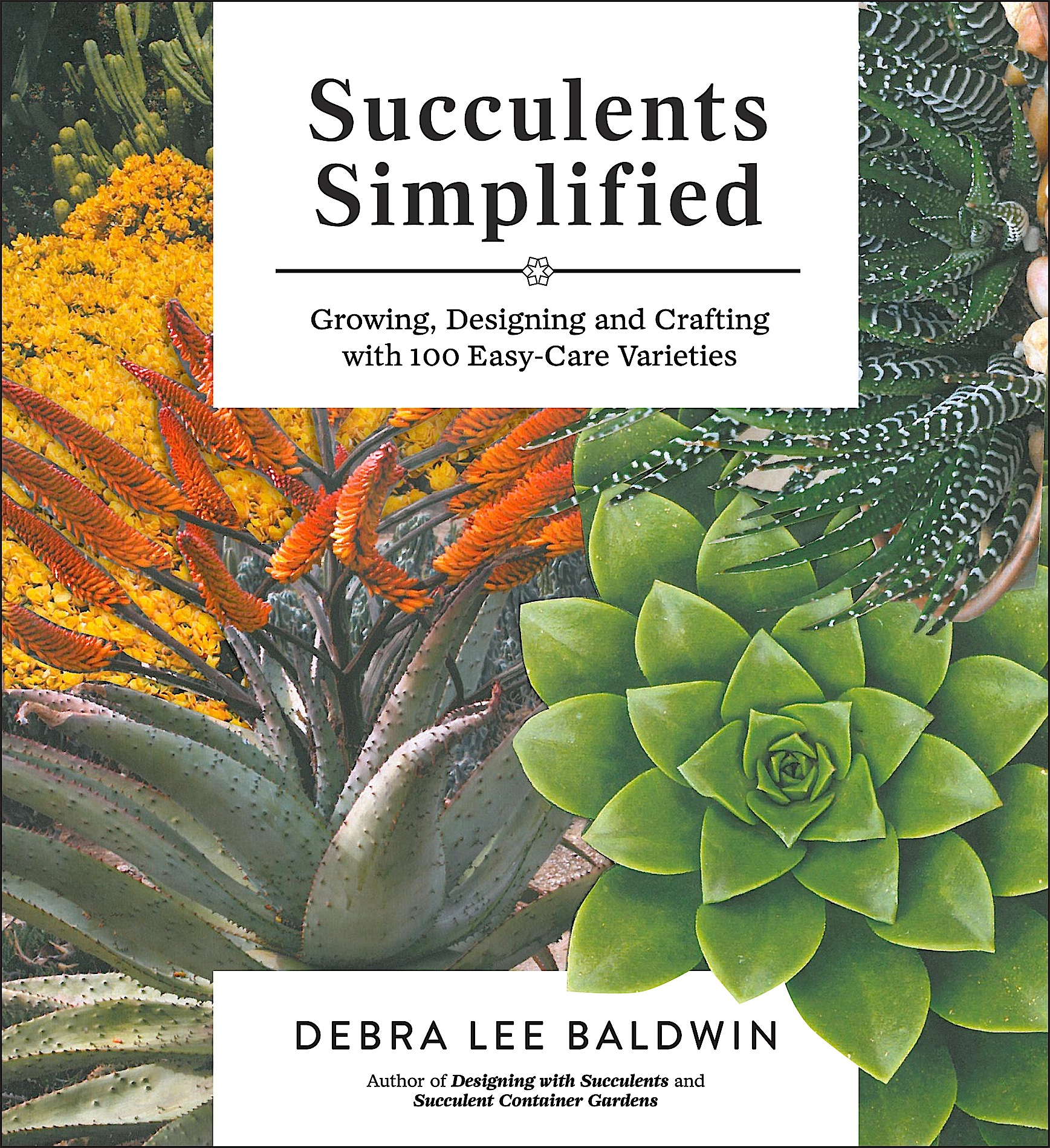
Book Review: Succulents Simplified by Debra Lee Baldwin

Eye of the Day|Succulents Simplified| Debra Lee Baldwin book review

SUCCULENTS SIMPLIFIED, Debra Lee Baldwin

I think we can all agree that succulents are hot. In California, hot can translate to Dry and Dry to Drought.  Which we have.  I also think that we all want green, living things around us and that in our present dry state, succulents and cacti can fill an ever-widening void for both landscape professionals and every day green lovers.

Debra Lee Baldwin is a notable expert on succulents and succulent gardening.  In her book, Succulents Simplified, Debra keeps it easy enough for someone taking their first stab at succulent gardening but interesting for any landscape professional.  With plenty of photographs and simple care instructions including recommendations for no water and low water plants, I can’t imagine why anyone wouldn’t need and want to take a long hard, look at this book and a long, hard look at the slowly browning lawn in front of their home.

In a perfectly friendly tone, Baldwin has included a page entitled “Good Riddance to Your Lawn”; we should all read this and begin to implement her ideas.  Succulents Simplified has inspiring sections like “Surreal Shapes, Testures and Patterns,” and “100 Easy Care Succulents” along with container and landscape projects, but my favorite section is entitled “Edible, Herbal and Illegal Succulents.”

About the Author:Eye of the Day|Debra Lee Baldwin| Succulents simplified book review
Debra Lee Baldwin specializes in showing how top floral and garden designers use dynamic, sculptural succulents in a wide variety of eye-catching applications. See more of her work at her website:

 Photo Credit: Debra Lee Baldwin and Timber Press (profile)


Flowers and Plants for a Drought Tolerant Garden

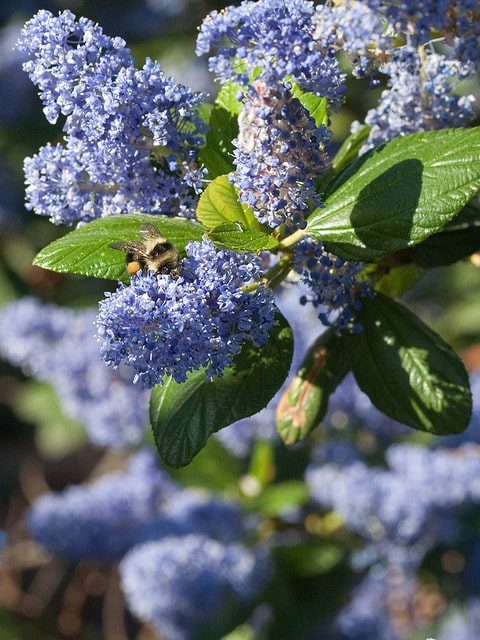
Eye of the Day|Verdure newsletter| wild lilac with bumblebee

Drought Concerns in the Garden

We are in a drought. And it may last for more than the short cycle of approximately seven years that has regularly occurred here in recent history. Some scientists are saying that this is part of a much larger cycle that could be one hundred to one hundred-fifty years in length (and let’s not even try to imagine how climate change will affect that). So, how do we keep our love of living, green things around us with much reduced water resources? One way is to look at the plants that have evolved in this habitat for many thousands of years. Native California plants are great choices for our modern gardens as are plants native to climate zones similar to ours.

Plant Options for Drought
Obvious choices for evergreen shrubs are Manzanita and Ceanothus. Both of these have been bred and selected for a variety of plant shapes and sizes. There are ground-hugging cultivars as well as tall and broad shapes to provide screening. Manzanitas have interesting bark as well as dainty, bell-shaped flowers. Ceanothus are often called California, or wild lilac, for the resemblance their flowers have to the cultivated lilacs our grandmothers grew. Consult a good garden guide or your local nursery for selections and specifics of each cultivar.

Mediterranean Plant Options for Drought
Other readily available options to replace thirsty plants during our dry spells hail from the Mediterranean region.  Some favorites include Echium candicans, Pride of Madeira, that covers itself with spires of tiny flowers in shades of blue and purple as well as Lion’s Tail, Leonotis leonuris, which bursts forth with sprays of brilliant orange blossoms from spring through fall.  And let’s not forget the many selections and species of rosemary and lavender that are ideally suited to our climate as well as their native zones.

Water for the Birds, Bees, and Bugs
One added perk for all of these native and non-natives is that they are quite attractive to bees, butterflies and other beneficial fauna that are seeking sustenance through this dry spell. So don’t be afraid to lose that thirsty garden and replace it with a verdant, more water thrifty landscape.


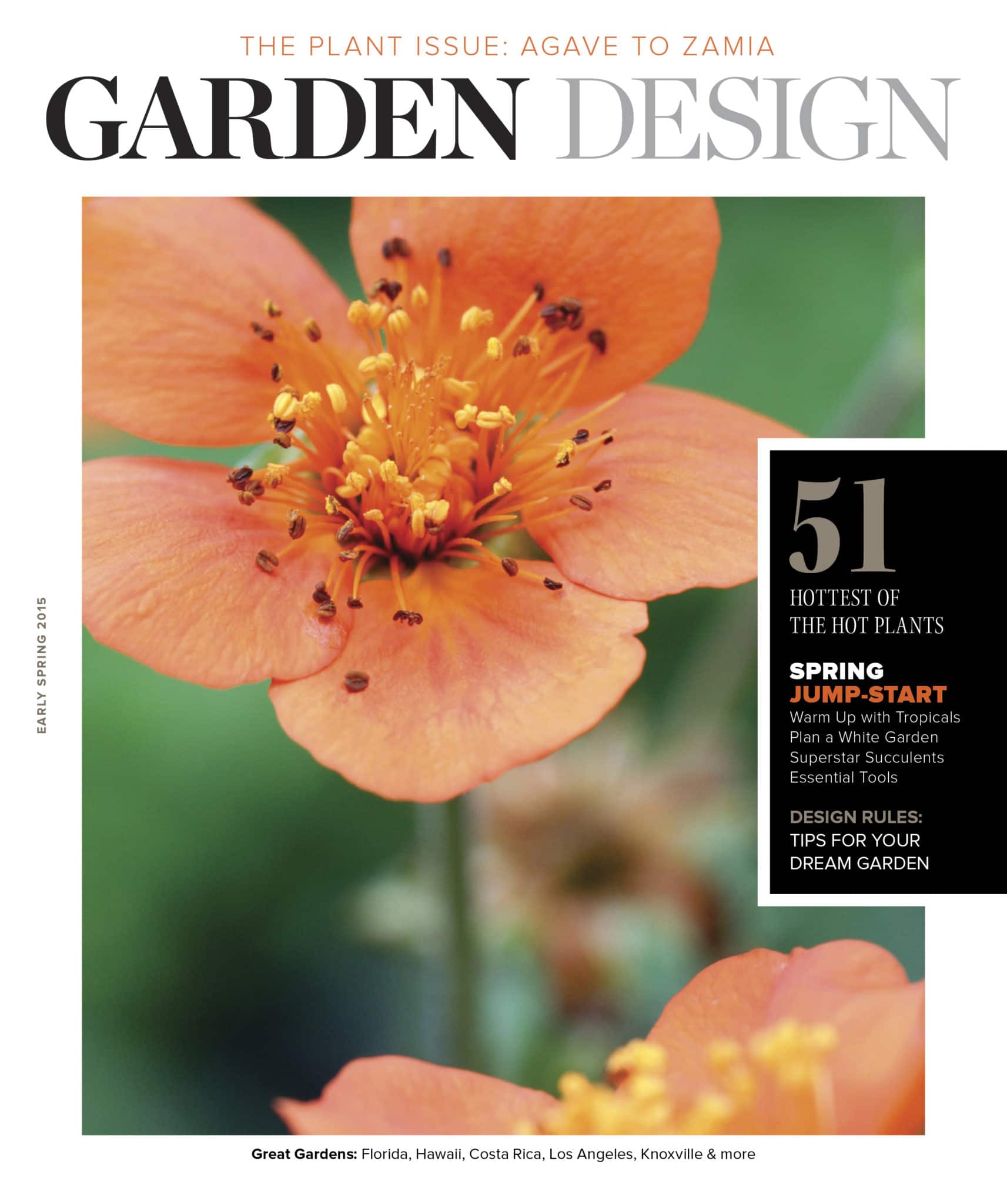
Preview Spring Garden Design Magazine

Eye of the Day|Spring Garden Design |


Garden Design magazine is bringing back their always-popular collection of Way Hot Plants–perennials, shrubs, and grasses plant aficionados love. See them all plus much more stunning photography, gardens, plants, and products in their current issue Early Spring, on sale now. Preview the issue and subscribe today: .


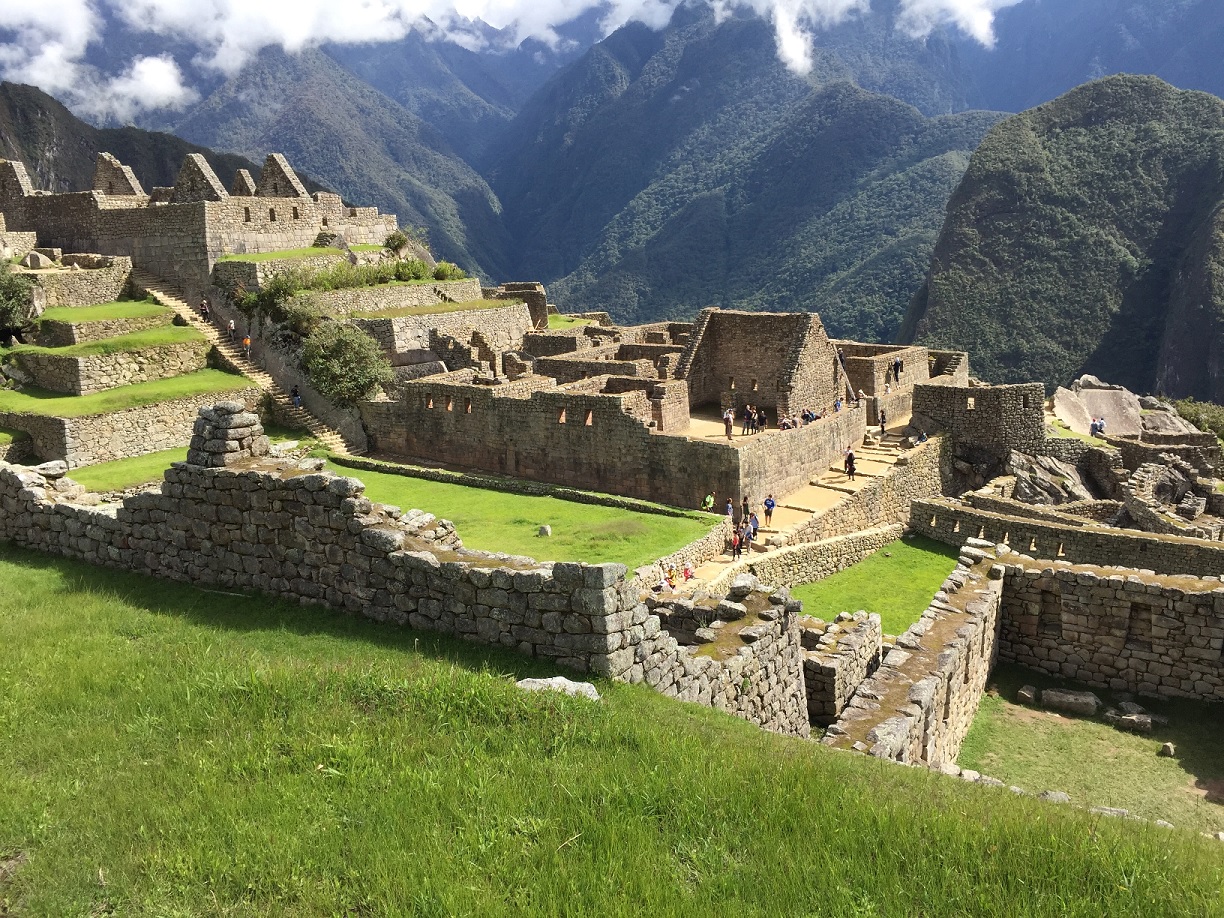
Groundskeeping: Traveling South for a Peru Expedition

True to my “Profile” I do wander the globe looking, sometimes under rocks.  Here at Eye of the Day we have been successful in offering old rocks with a purpose for the garden.

Throughout the centuries, agricultural societies shaped stone to hold water and fodder, fodder and water, to sustain their livestock. These pieces make stellar planters and add mass and dimension to a landscape in many ways. Here at EOD we make them into beautiful container gardens, water plant containers, border containers and fountains.

Yes, they are heavy and we have become pretty good at delivering and installing them, but that isn’t the story I want to tell here. The story is where to go to find these old and handmade things.

Where is there lots and lots of granite to hand pitch? The Andes, Peru, Machu Picchu.

Discovering Lima, Peru:

Busy and booming, this place where it never, and I mean never, rains is beyond bustling.  It reminds me of China with cars and buses everywhere so that if you’re not paying attention, you just might get run over.  There is smog, but being on the ocean, there is some relief.  Also, it’s a good idea to go in late November. Wait, that’s Summer. Or is it Winter there? T-shirts, sandals and shorts.

The city is spread out and the different districts make it fun and interesting to explore. The Baranca is funky, hip, and has a great flavor to it.


The M district, where everyone tells you to stay (I agree), is where the action is and the shopping and the best food. The food is fantastic, really. Ceviches galore and Pulpo,  the flavors and the talent of the cooks, chefs and kitchens is world class. The opportunities to walk and tour the city and sample their great restaurants are abundant.

Getting out of the City

But unless you are looking for crafts to purchase, especially things woven and crocheted from alpaca and sheep, or silverware all on a scale relative to grains of sand at the beach, you will be disappointed. So, I headed to the mountains of Cusco, something like 10,000 feet above sea level. This city is different in every way from Lima except for the woven and knitted goods.

Cusco is a small but bustling city with sights galore and outstanding food. The streets are still mostly made of granite cobblestone and strong ankles are recommended.  Let me say here that the coca tea is a good idea and tastes great, it helps with the altitude but it is not the experience many think it will be or maybe even want. I didn’t, however, chew any leaves, it just didn’t strike me as important. I was hunting for rocks!

If you could turn granite into energy, the Peruvians would be the wealthiest people on the planet.  How did the Incas move the boulders (some a hundred tons or more), not only downhill but, down mountain slopes, across large rivers and up mountain slopes hundreds and hundreds of feet into place, and when fitted together you could not slide an eyelash between them?

The ever present granite mountains granite buildings, granite temples and, granite streets are enough to cause a need in the hardened soul for some loamy soil and terracotta planters (that’s EOD humor, by the way). I was certain that I would come across some troughs or stones carved to hold water for thirsty beasts kept for their wool and hair.

Sadly, I canvassed from car, bus and train windows and never saw anything until we were on our way to Puno and we stopped at the most outrageous church I’ve ever seen. There I saw two old stones, definitely carved to hold water. Unfortunately, they were over two thousand years old and I could never have afforded them, at least for use as planters.  Oh well! Not every expedition is successful from the EOD point of view. Nor does it have to be, even for me, but I was surprised that in a country made of stone, so little of it has found  its way into the culture.

Oh well, on to the next spot!