Home Outside Palette App: Landscape Design Made Easy and On the Go

Could it be time to add your mobile device to your set of gardening tools? There really is an app for everything. Bring out your inner designer to create the dream landscape you always imagined with the Home Outside Palette app. Move, resize, and even undo with over 280 available elements (trees, paths, enclosures, and more) to an existing or new landscape before even stepping outside. Design on the go has never been easier for novice and experienced designers.

PaletteApp_AllDevices
The Palette app on various mobile devices assists with landscape design

“We created the Home Outside Palette app to help homeowners design their properties,” says Julie Moir Messervy, owner of landscape architecture and design firm JMMDS and creator of the app and the Home Outside online landscape design service. Using any iOS or Android smartphone or tablet, users can upload a property survey and use it as a background, or select a grid or colored background, and mock up their landscape by tapping and dragging hundreds of elements into place. The grouping feature lets you lock permanent elements together (such as the house, garage, and driveway), and the layers tool gives you the ability to play with different versions of a design.

Palette_ipad-1
You can even change up your design elements with your tablet

An in-app purchase offers additional elements as well as a measuring tool that lets you input rectangular measurements or “walk-and-click” a GPS-based outline of your space. A drawing tool allows you to sketch free-form garden beds and other features. “From the start we knew that we wanted to include all the green features that today’s homeowners need: laundry lines, greenroofs, chicken coops, veggie gardens, compost bins, greenhouses, solar panels, and more,” says Messervy. “It is possible to have a functional, sustainable yard that’s also beautiful—and this app helps you get the design right before ever picking up a shovel.” When you’re finished, get important feedback before committing to any design element. You can share designs from the app on social media or email them to friends. For additional help with your landscape, the Ask an Expert feature lets you send a design from the app to JMMDS’s award-winning designers for their expert suggestions. The app is designed to be practical and user-friendly for the imaginative homeowner to the professional designer. Messervy adds, “Our mission is to make beautiful design available to anyone, anywhere.”


By Jennifer Silver, Marketing and Special Projects Manager of Julie Moir Messervy Design Studio

Jennifer has held a variety of teaching, writing and editing positions. When she moved to Vermont 12 years ago, she discovered her true passion: sustainable agriculture. She is never happier than when writing or gardening. At JMMDS, she gets to write about gardens—what could be better?


Debunking the Terracotta Mythos

Debunking the Terracotta Mythos

The sun has yet to awaken, the moon just rose as a wink on the horizon, and the roosters are making that heinous sound only roosters can make, disturbing my first cup of coffee. Excuse me while I get that cup…


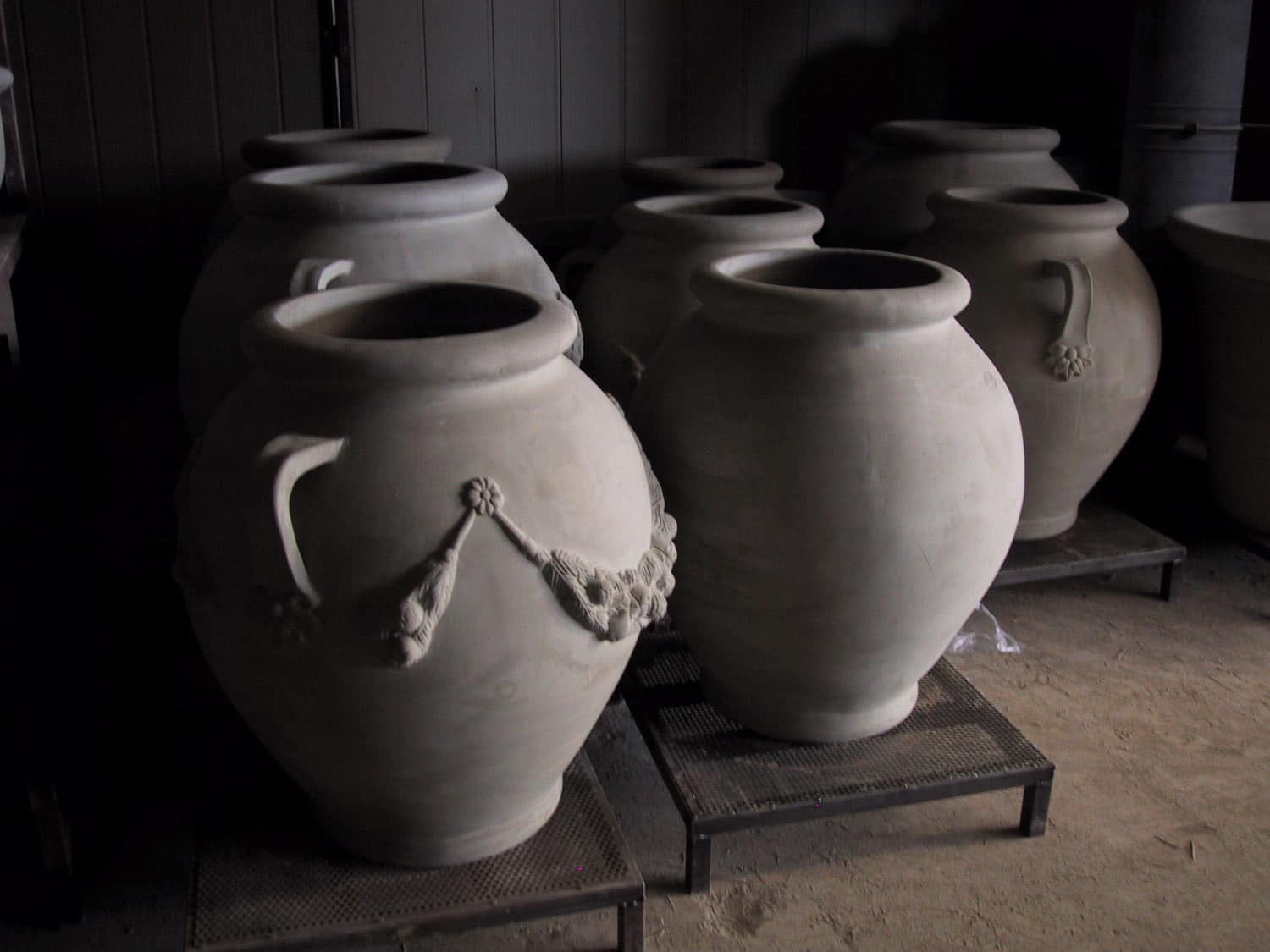
I want to talk about terracotta and it’s classification as an earthenware clay body. In ceramics we have hundreds of clays available to us, but all of them fit into one of two categories; earthenware, or stoneware. The difference between earthenware and stoneware is the maturation temperature, more easily termed as low or high fire clay. Low fire clays, having been fired to their maximum temperature (anywhere from 1800-2100°F) remain porous, while high fire clays vitrify when fired to higher temperatures ( 2200-2500° F). Since clays have many “ingredients” that are specific to their particular region, all clays have a different temperature range, but all can be classified as either low fire or high fire clay. Terracotta is technically a red earthenware, a low fire clay containing between 5 and 10% iron.


The meaning of “terracotta” is “baked earth” in Italian. Many people mistakenly use the words “terracotta” to describe anything made of clay from anywhere in the world, whether it is low or high fired. But as we are beginning to understand, terracotta is an actual clay body itself. It is abundant and utilitarian, can be found on every continent, and has been used for millennia to create irrigation piping, garden pots, and roof tile. It is best to speak of terracotta regionally, for example Mexican terracotta is essentially the same as Italian, but fired at a lower temperature. Another mistake about terracotta is that it is weak. In many places in the world it is hard to find even enough fuel to bring the fire up to the maturation temperature of the clay. If the temperature that matures (hardens, strengthens) the red clay is 1980°F, but the fire only reaches 1800°F, what happens? You have immature, under-baked pottery that is susceptible to cracking and doesn’t last very long. This happens all over the places simply don’t have the wood to do the firings, so they will use whatever they can to heat up their pots, resulting in a market in which one terracotta pot will last only two years and the one next to it will last two hundred… it just depends on the fire and country of origin.

The next time someone says to you that terracotta is junk and won’t stand the test of time, tell them in all confidence that it depends on where it is from and how it was fired. Then you can say that Eye of the Day garden design center only sells authentic Italian Galestro terracotta, mined for five generations from the same clay deposit, and fired to perfection. You can always depend on Eye of the Day for the highest quality in garden design products.

Hope this was informative. See you all next month!


Elements of Style: The Classic Mediterranean Garden

Elements of Style: The Classic Mediterranean Garden

A classic Mediterranean style garden is typically low-maintenance, drought tolerant and perfect for a climate dry and hot in Summer and warm and moist in Winter. For those of us living in California, this seems a perfect fit. Traveling throughout the Mediterranean region, focused on the landscape and gardens, reminders of California are constant.

The defining characteristics of the Mediterranean style are:

  • Focus on hardscapes, with very little or no lawn
  • Citrus, olive trees, rosemary and lavender often planted in terracotta pots
  • Fountains and water features are key. Water features became popular in the gardens of the Italian Renaissance. They reflect the garden and provide the relaxing elements of sight and sound.  Because of the scarcity of water in the Mediterranean,  many water elements offer a relief from the heat.
  • Large and small terracotta pots and urns and statuary. Pottery in many forms has been a part of Mediterranean gardens since their origins in ancient Roman households. From intricate bas-relief to simple and plain, they are quintessential for a European garden.  Statues, urns and planters provide focal points and because their footprints are small, they are particularly useful in a small garden. The Greeks and Romans filled their pots with flowers to add color to their courtyards and pathways without depleting the water supply, or they used them to grow fruit trees that could be moved about  according to the outside temperature.  But pots were also used as beautiful objects on their own – a classic oil jar at the end of an allee, a row of terracotta pots topping a balustrade, or an urn crowning a pedestal.

You don’t have to live in Spain, Greece or Italy to reflect the siren call of the Mediterranean classic garden.  A few carefully chosen garden elements… an antique Greek pithari, a scattering of large terracotta pots and urns and a simple water feature will create your classic otium.  Being water conscious and embracing a rustic, muted look will go a long way toward making your space the place to be.


Lisa Cox Design | Los Olivos Tasting Room Gets Design Update

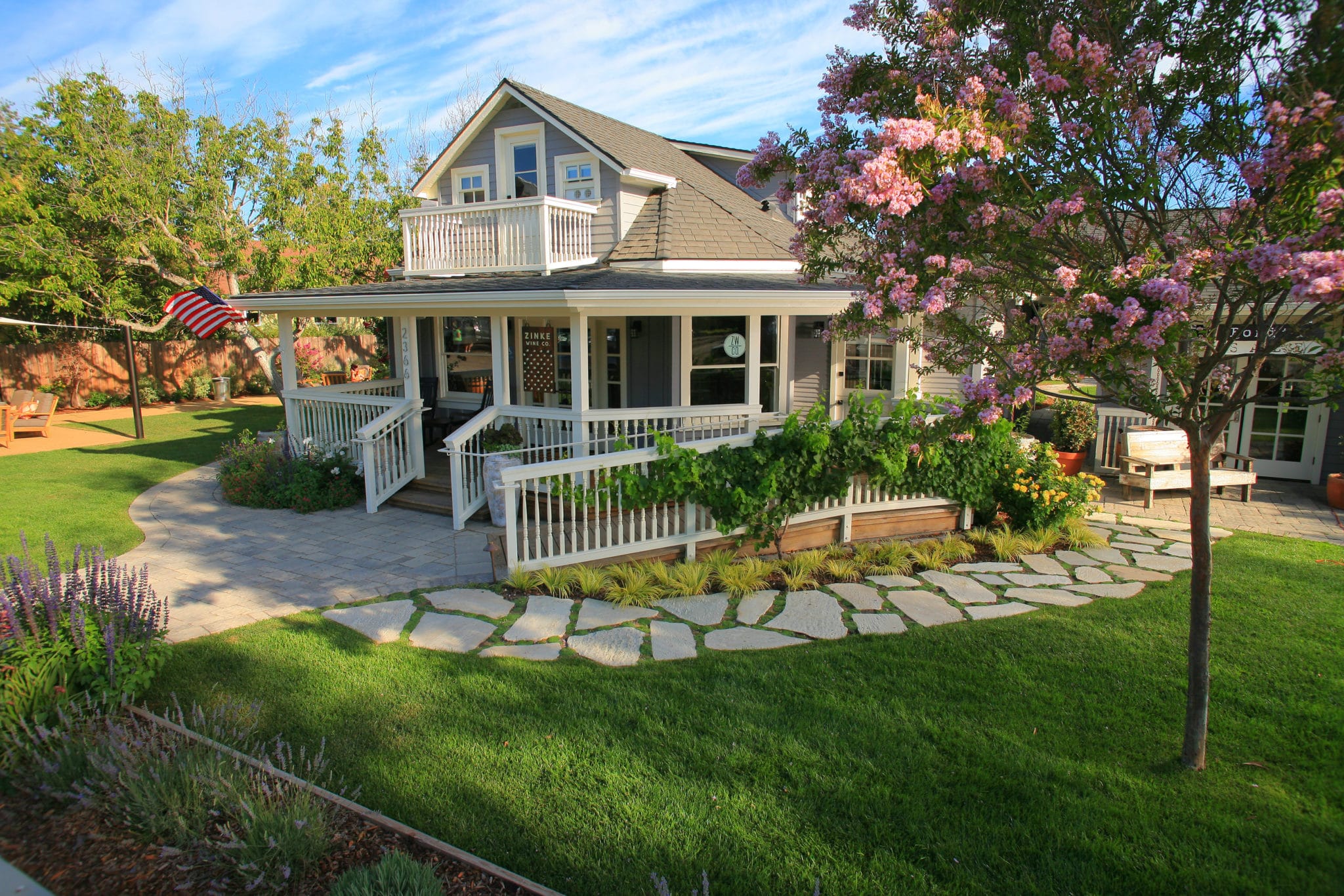
In the relatively short time Lisa Cox Landscape Design has been working in the Santa Barbara area and Santa Ynez Valley, she has become the go-to for anyone wanting clean and sharp designs with a focused point of view. This is clearly evident in her design for the brand new Zinke Wine Co. tasting room. Lisa says she can’t take complete credit for the beautiful design as she worked closely with Thierry Fraye of Paysage Landscape and the Zinkes who have impeccable taste and a clear vision for their brand.

Michael and Ashley Zinke are Zinke Wines. Michael Zinke is a self-taught winemaker that apprenticed at Girouard and Sans Liege wineries before venturing out on his own. They opened their state-of-the-art tasting facility in the wine country township of Los Olivos, CA this past May. They create single vineyard Rhone varietal wines sourced from a handful of Central Coast vineyards. They needed a venue befitting their precious creations and Lisa was the one to deliver.

Lisa incorporated Eye of the Day products throughout her design. As you approach the building you are greeted by two ‘aged’ Greek Bottle pots customized by Eye of the Day standing guard aside the main entrance. Each pot is planted with drought tolerant growth. While enjoying your first taste of Viognier you overlook an impressive Asian carved granite trough bursting with colorful succulents. You can also admire the lovely Italian San Rocco Giara Liscia pot that flanks the bocce court while waiting for your next throw. Zinke Winery Blueprint OverheadAfter taking it all in, we had some questions for Lisa:  

What was your inspiration for the design?
My Inspiration came from a few sources.  First and foremost, the owners, Michael and Ashley Zinke have distinct, incredible taste.  They were looking for a look that felt something with a rustic/industrial look and a warm welcoming feeling from the street that would draw in customers who were looking for something a little different.  Also, with the existing Cape Cod style structure of the Tasting Room, we wanted to keep that charm, but infuse it with a bit of modern charm!

Did the Zinkes have strong opinions on what they wanted or did they leave it up to you?
I would say they gave me a direction as stated above, but pretty much let me design what I felt would present both function and form to the space.

What were the particular challenges with this project?
We needed an area that would allow furniture placement which I accomplished with the DG cutouts that are surrounded with lush green grass. There was some existing hardscape that we “improved” with either widening pathways or substituting new flagstone stepping stones. With a mixed plant palette of natives, lush perennials and color, the end product turned out quite pleasing to the eye…and of course the succulent filled planters are incredible!

What do you most like about designing in the ‘Valley’?
I can honestly say, what I like most about designing in the valley are the people! Since my husband and I have only been here for 1½ years, we can honestly say we are overwhelmed with the warm, friendly and caring SYV community!  And of course, how can you beat our gorgeous natural landscape of rolling hills, oak trees and vineyards…it’s hard to beat! A special thanks to Rich Cox Photography for the images!


Why Shopping Here is a Pleasure

Eva Powers at Creative Garden Design shared this post about us on Facebook earlier in the week:


Post by Creative Garden Design.

We appreciate your kind words Eva! And we hope to see you at the showroom soon.


A Malibu Getaway | Design by Wendy Harper

We recently had the pleasure of photographing a Malibu garden design by landscape architect Wendy Harper.

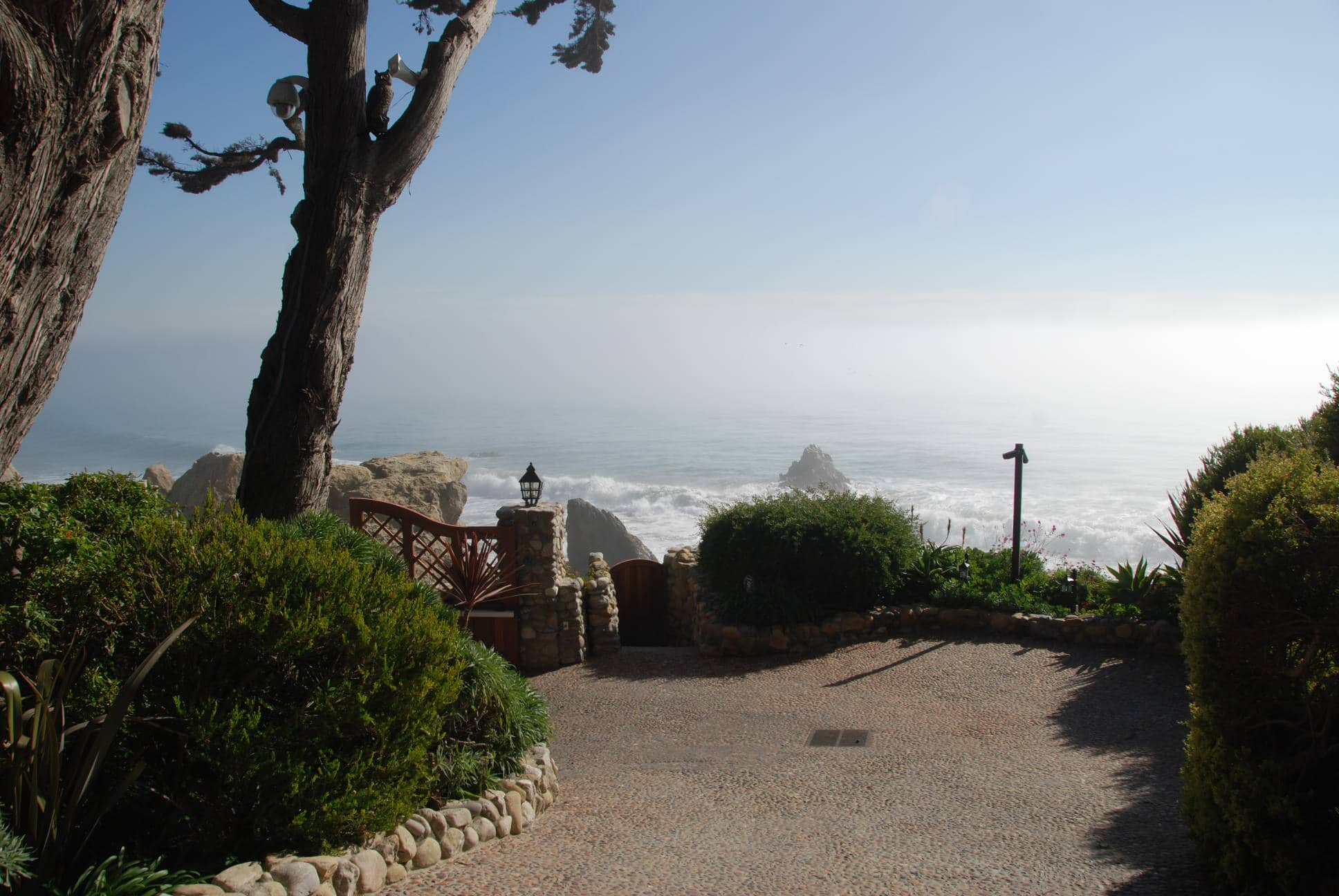
Brooks Color Plan ViewHidden in a canyon perched on a point overlooking the Pacific, the property owned by Harper’s clients is a perfect weekend getaway. The experience begins on the winding narrow road leading you around a bend where you get your first glimpse of the ocean. To enter the property you must then cross over a babbling creek on a beach cobble bridge. Harper used natural beach cobble and Santa Barbara stone to connect with the surrounding environment. Large Monterey Cypress and towering California Sycamores, planted when the home was built in the mid 1900s, create an inviting canopy over the site.

2014-01-22

“The property is long and narrow with many constraints and challenges,” says Harper. “My goal was to make all of the spaces in the garden feel like living spaces, even the parking court, which is incorporated into the yard by introducing a weeping wall water feature, grass ribbons in the beach cobble paving, lush plantings with antique urns dripping with succulents and colorful blooms most of the year.”

2014-01-22

The entertaining patio outside of the kitchen is warmed by an outdoor fireplace decorated with Eye of the Day’s Antique French mantel and surround. Select cut Santa Barbara stone set on sand paves this outdoor room. Eye of the Day’s containers planted with succulents and citrus decorate the space.

2014-01-22

A curved stone staircase leads you up to the pool area. Tuscan-style molded brick columns support the long pavilion framing the pool. Taking a swim in the pool is a musical experience where you can listen to your favorite songs…underwater. Sigis cut glass tile compliments the spa and waterline, and colored pool lights transform the water into a kaleidoscope at night. The ipe hardwood deck ties to the railings which mimic the turned wood railings of the home’s balconies. Interestingly, the use of ipe was the only specification from the homeowner for this project. Everything else was left to Harper’s creativity and expertise.

2014-01-22

“I wanted it to feel like it had all been here from the start, so bringing the turned railings onto the deck was a natural choice,” explains Harper.

2014-01-22

Chisel-cut Santa Barbara Stone walls hold olive trees and sycamores on the upper slope as a lazy hammock swings between the trees. Three small ancient church windows from Eye of the Day’s antique collection inspired the changing room with outdoor shower. The pilaster planters are purposely understated with simple succulent plantings so as not to crowd or overshadow, just to compliment the space.

About the Designer:
Wendy Harper is a landscape architect based in Moorpark, California. To view more of her work, visit the Wendy Harper Landscape Architecture Facebook page.