Fountain Conversion – Bringing Your Water Feature to Life

The Fountain Conversion – Bringing Your Water Feature to Life

FONT – FONTANA – FUENTE – FONTÄN – آبنما –噴泉 – FOUNTAIN

It is said that elephants are good luck because wherever you find them you find water and food.  Water fountains have become a necessity of life in our gardens: the sound, the reflection, the energy of water in our environment. The Chinese art or practice of feng shui is to create harmonious surroundings and water is an essential element. Natural surroundings balanced between wind, water, light and energy come together to create an environment of peace and serenity.

French Biot Fountain Conversion

This time of year, lying in bed on a balmy night, listening to the timpani of a running fountain is a luxury. When you wake and look out the window into the garden, what catches your eye? Is it the fresh bloom on the rose bush or the luxuriousness of a newly cut lawn or the sparkling water of your fountain? The perfect answer would be:  all three.

What is the main element to look for in your fountain?  Is it “visual”?

Think of your favorite fountain when you were a child. Suzi’s was the fountain at Griffith Park on Los Feliz Boulevard. Mine was the fountain at the corner of Wilshire Boulevard and Santa Monica Boulevard in Beverly Hills. At night, it was alive with colored lights. Built in 1931 and known as the Beverly Hills Electric Fountain.

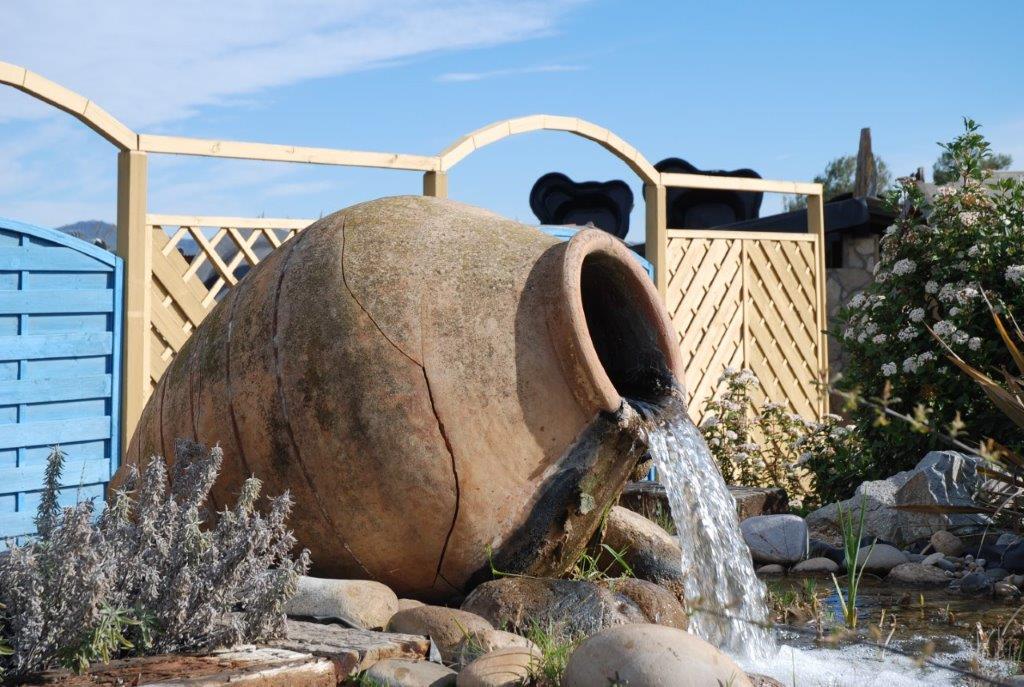
19th Century Spanish wine jar fountain conversion
19th Century Spanish wine jar fountain conversion found outside of Barcelona, Spain

19th Century Spanish wine jar fountain conversion
This fountain conversion makes a striking presence.

19th Century Spanish wine jar fountain conversion
A unique, one-of-a-kind water feature for the garden.

Another element is “sound”. From the roar of a natural waterfall to the zen-esque rhythm of a Japanese bamboo deer-scare fountain, as it fills, spills and then the hollow knock as it hits its rock.  From quiet to loud, hearing water move and splash, tumble and fall onto itself creates mood, energy and a powerful balm for the soul.

The third element is “form”, possibly the most subjective when choosing your fountain.

All fountains work the same: water circulates, rises and falls from its source and back. The physical form and structure of the fountain resists, shapes and redirects the water’s flow. There are tiered fountains that many describe as a wedding cake. There are wall fountains, structures with spouts directing the water to flow into a vessel or intermediate bowls and finally spilling into a pond or container to recirculate up and down again.

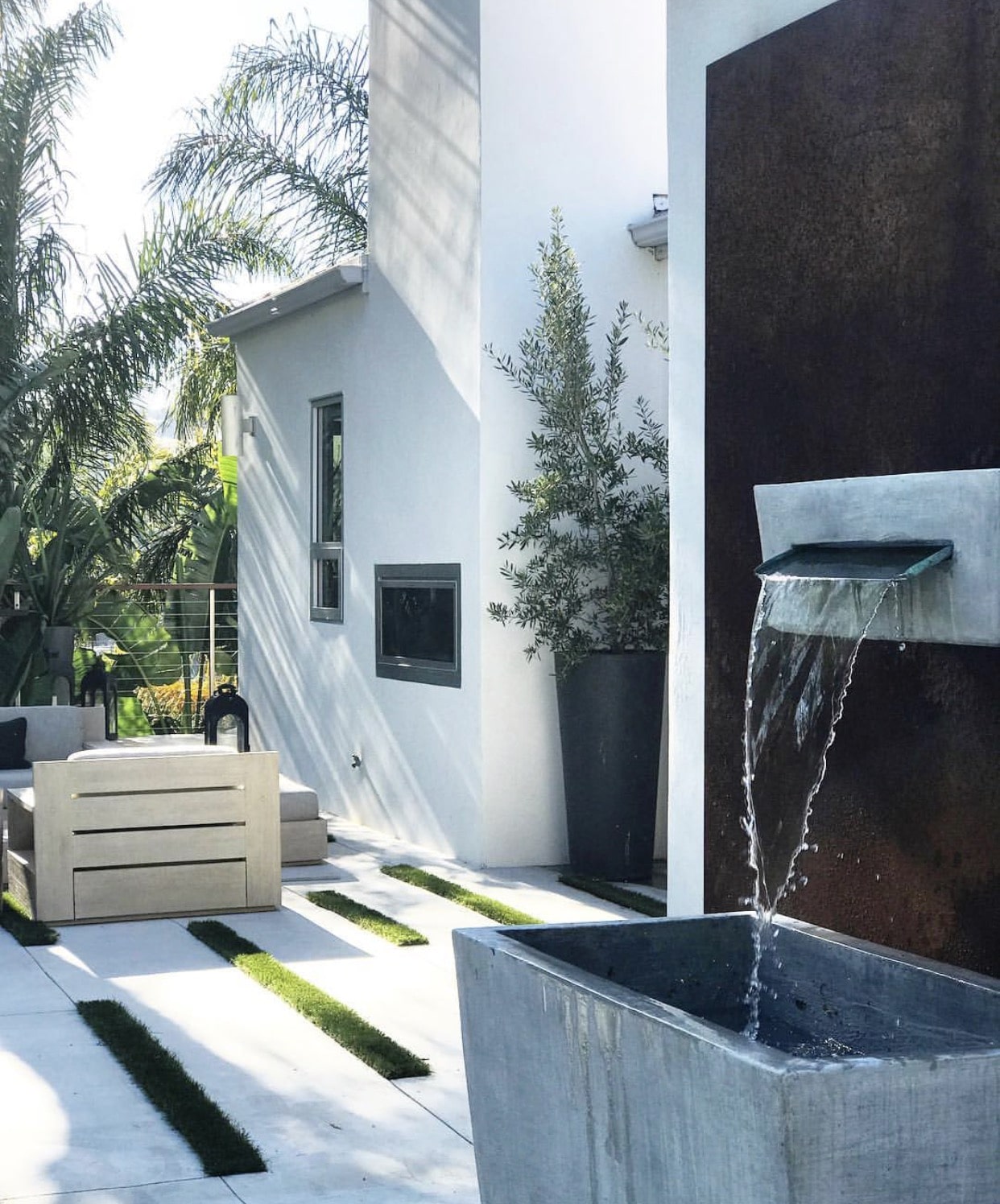
John Russo American Concrete Fountain Conversion
American Concrete Fountain Conversion against this home’s wall. PC: John Russo Photo

Sally Farnum Fountain Conversion Pasadena
A concrete fountain conversion using more traditional elements.

A vessel is defined as a hollow or concave utensil, as a cup, bowl, pitcher, or vase, used for holding liquids. At Eye of the Day we can convert almost any pot, container, urn, or vase in our inventory into a fountain. Fountain conversions have become a signature service and our reputation for making bespoke fountains for the projects of our clients and designers has led us to shipping them throughout the United States.

A fountain conversion can be performed on most any pot, allowing for hundreds if not thousands of choices. If you want a unique fountain for your space and don’t want one that looks like the one your neighbor has, think about choosing your own shape, color, design and then have us convert it into a fountain.

Our Gladding McBean 88-33 is a simple pot; a sleek, high fired and colorful urn perfect for a fountain conversion.  We create a water-tight seal at the bottom and attach a copper riser to carry the water to the top and create a head.

Fountains GMB 88 Conversions
Our most popular fountain conversion is the GMB88-33 Oil Jar

The “head” is the water that bubbles above the waterline at the top of the pot and creates the reflection, motion and sound when its falls back upon itself. As the vessel fills to the brim, it will spill over the pot and fall back to the basin and be recirculated back to the top forever and ever (as long as you keep the basin full).

The basin, which we refer to most often as the “pond” can sit above grade or below. It is very popular to hide the basin below grade and then cover it with rocks or pebbles or tumbled glass, giving the appearance of an eternal spring, its source hidden and mysterious as if it emanates from the earth.

Fountain Conversion Rebecca Sweet garden design
A Greek terracotta fountain conversion that hides the basin with ground cover. PC: Harmony in the Garden

The pump is housed in this pond or basin and its electric cord either comes out underneath the basin/pond or over its side where it can be obscured with stones or other ground cover. Always remember to keep a couple of inches of the basin above grade so that when it rains, dirt and debris can’t wash into it and compromise the pump.

Your container must be prepared to hold water and have water run over all surfaces continuously for a long period of time.  There are many quality products on the market to seal and waterproof your fountain. You can use any larger container to act as your basin, it doesn’t have to be concrete or something special. I once had a client who took a heavy-duty trash can and cut it down to 12 inches and buried it in the ground.

Custom Colored Italian Terracotta Fountain Conversion
Custom Colored Italian Terracotta Fountain Conversion. Pump house hidden beneath.

In addition to the vessel to be made into your fountain and the basin for it to sit in, you will need a “pump house”.  This is exactly what it sounds like: a house for your pump. In addition to hiding the pump from view, the pump house has another purpose, to act as a pedestal for your fountain vessel to sit on and it must be strong and stable enough to carry the fountain’s weight.

Converting pottery to fountains is easy and everything to complete the job can be purchased from your local hardware store. The one thing you might want to spend time searching for is that perfect vessel.

Another type of fountain conversion has the water returning inside of the vessel. This eliminates the need for a basin/pond and the pump house, eliminating the cost of these two additional items and the same container will fit into an even smaller space.

Terracotta Low Bowl Fountain Conversion
Italian Terracotta Low Bowl Fountain Conversion that returns water inside the vessel.

There is very little splash if the water is kept at a lower level within the container.  Also, the sound will resonate at different pitches depending on how full you keep the vessel. Just think of a wine glass being tapped with a knife.

Other ideas for Fountain Conversions:

  • Rectangular troughs
  • Low Bowls
  • Turning a wall into a fountain
  • Old Stones 


    French Limestone Fountain with Flowers
    French Limestone Fountain

    French Biot Fountain Conversion
    French Biot Fountain Conversion


Materials Needed:

  1. Vessel of your choice
  2. Basin/Pond to fit underneath and wide enough diameter to catch as much splash as possible.
  3. PVC or copper tubing for riser.
  4. Pump house large and sturdy enough to enclose your pump and carry the weight of your vessel filled with water.
  5. Water pump strong enough to pump water to top of your pot

Let your imagination be your guide and create a unique fountain for your space from almost any water worthy vessel.  Please come see our incredible selection of pots and containers as well as old European stone troughs, millstones and other garden art here at Eye of the Day.

We will bring your vision to life!
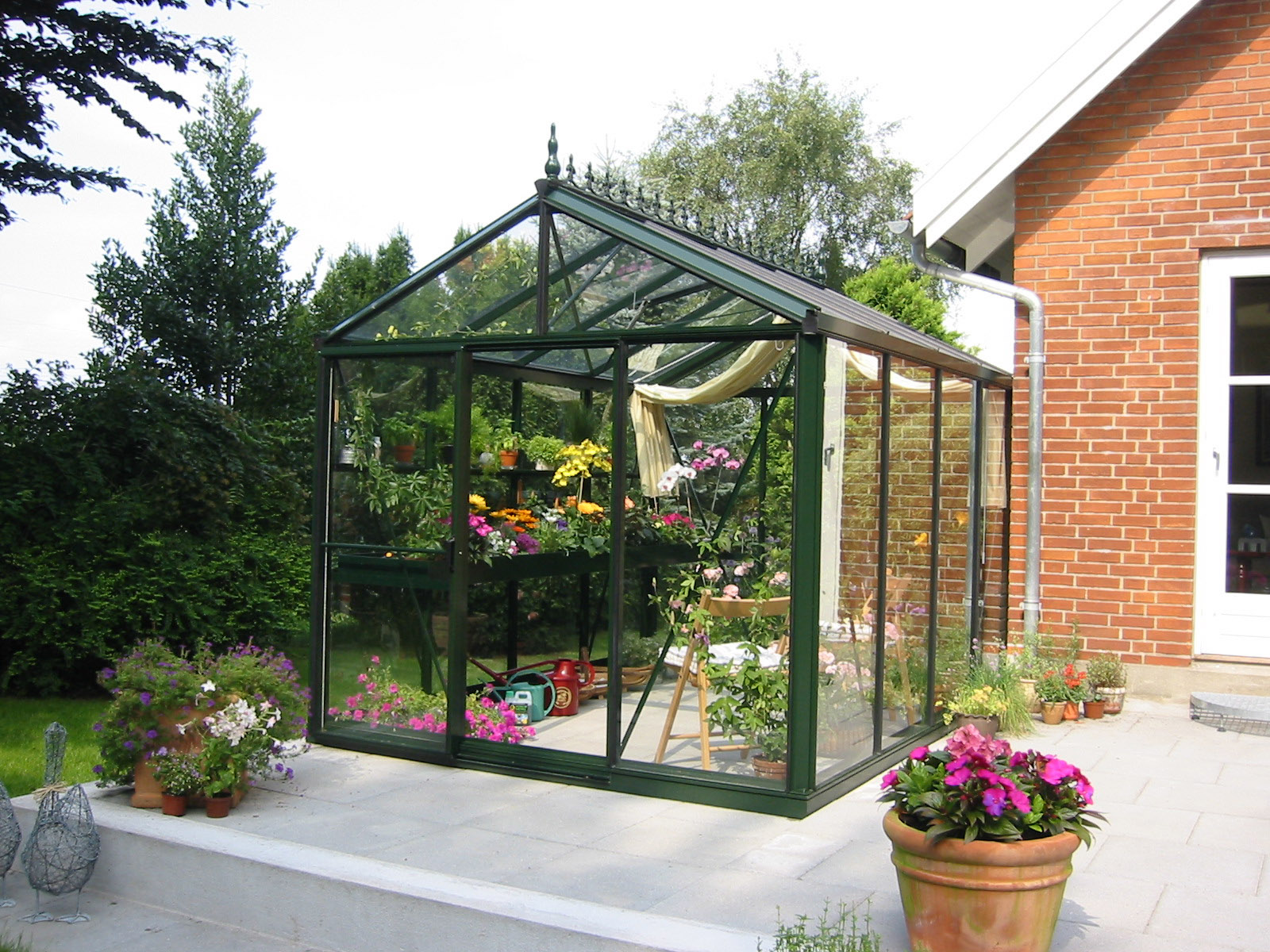

EXACO Trading: Premier Greenhouses for the Garden

EXACO Trading Greenhouse Garden

Exaco Trading Co., a division started in 2001, specializes in the distribution of unique and high quality imported lawn and garden products, focusing mainly on high-quality European greenhouses, composters and other “green” products. Our products include the finest greenhouses from Germany and Belgium to high-quality outdoor composters, kitchen compost pails, rain barrels, sandboxes, and planters.

The RIGA is truly a greenhouse by the European definition of a greenhouse – designed to be used to grow fresh vegetables, herbs and flowers in the middle of winter. While other so called “greenhouses” using less than 8 mm twin-wall polycarbonate, are considered to be season extenders, to be used when only a slight night frost might be expected during the spring or fall season. At best they can only be used to house established plants during the winter season.

EXACO Trading Greenhouse Garden

The RIGA Extra Large – 16 mm polycarbonate – is the largest commercial quality hobby-kit type greenhouse now available in the country Designed, engineered, and manufactured in Germany by Hoklartherm, a leading manufacturer of commercial and hobby greenhouses, sunrooms, pavillions, pool covers, home additions, and commercial building, with 28 years of experience.EXACO Trading Greenhouse Garden
The Royal Victorian Antique Orangerie Greenhouse is one of the premier greenhouses in the Helios line of greenhouses from Janssens of Belgium. This company has been making high-end glass greenhouses for over 30 years. Since the introduction of the Victorian model, in 1999, Janssens have become a leading supplier of this style of greenhouse in Europe. Exaco are proud to now be the USA distributor of this very fine greenhouse.

EXACO Trading Greenhouse Garden

The classic Antique Orangerie Greenhouse not only provides a first-class quality greenhouse environment, it also adds significant old fashion English style and beauty to your backyard.

EXACO Trading Greenhouse Garden


Exaco Trading, based in Austin, Texas, is the exclusive distributor of the Janssens line in North America and sells these fine greenhouses through the online sites of national retailers. For more information, contact Exaco Trading at 512-407-8500.


Top 5 Fountain Conversions

American Concrete - Fountain Conversions

Top 5 Fountain Conversions

Fountain conversions have become a signature service of Eye of the Day. Spring and Summer is the time to order this popular water feature. From classic shapes to more contemporary forms, fountain conversions are an elegant addition to any garden design. Depending on the style and aesthetic of the garden, the conversion process starts with choosing a container. Almost any vessel at Eye of the Day can be converted, but there are definite favorites at the store. We rank the top five fountain conversions that homeowners and designers love.

5. French Terracotta Fountain Conversions

While not as common a choice for a fountain conversion, French Anduze pots and biots are an elegant option for a water feature. We recommend sealing for this type of terracotta, especially to protect the glaze,

4. Concrete Fountain Conversions

Our American made concrete pots are the ideal containers for both contemporary and traditional styles. These water features can be made up of different concrete garden décor pieces from birdbaths and urns, to ponds and containers.


This custom feature uses a concrete birdbath set into a pond based on an English garden the clients loved while visiting England.


This design used two American made concrete pots for the conversion. A custom insert was used for the flat spout.


3. Greek Terracotta Fountain Conversions

Here in California, Mediterranean style gardens are popular throughout the state. With sunshine filled days, proximity to the ocean, and lush plant life, our similar climates are the ideal foundation for a Mediterranean garden. Our Greek line of terracotta pottery is a popular option for containers and fountain conversions.

The Michalis pot fountain conversion was a popular design for Bay Area designer, Rebecca Sweet. Its classic shape was perfect for the Mediterranean garden design of her Palo Alto clients.

2. Italian Terracotta Fountain Conversions

Eye of the Day specializes in Italian terracotta pottery. Naturally, many clients and designers choose an Italian terra cotta pot as the vessel for their fountain conversion. We carry classic, ornate, and contemporary styles.

1. Gladding McBean Oil Jar Fountain Conversions

This is the most popular fountain conversion we do—and with good reason. The classic oil jar shape is a favorite among customers and as a water feature, it becomes a striking focal point in the home or garden. Available in a variety of colorful glazed finishes from Gladding McBean, both traditional and modern designs can incorporate this oil jar fountain conversion. The GMB88-33 is the most popular, but the GMB45 with the narrow neck is a lovely option as well.

Get inspired with the pottery and containers from Eye of the Day for your next garden design project. Contact us today to learn more about fountain conversions.


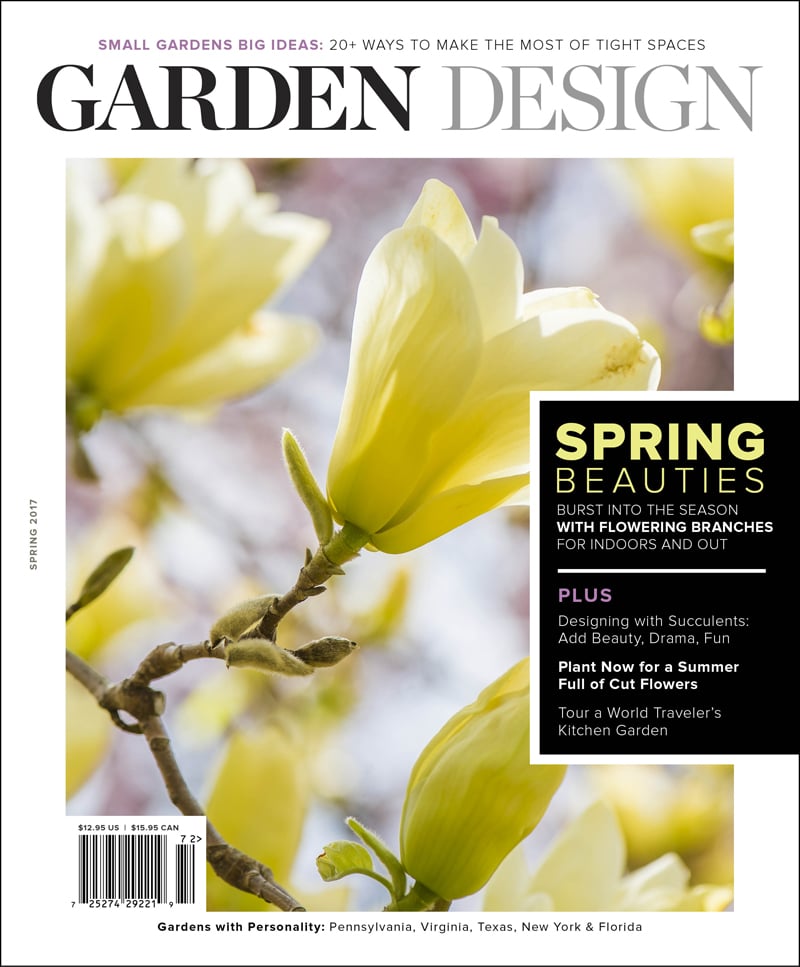
Garden Design Magazine: Spring 2017

Garden Design Magazine Spring 2017

Garden Design’s Spring Issue Now Shipping – Get Yours!

Subscribe before April 15th, 2017 and get this issue free when you subscribe! Go to

Garden Design Magazine Spring 2017

If you haven’t seen Garden Design magazine yet, the current issue is a great one to start off with!

  • There are no ads in Garden Design. Yes, you read that right—no ads.  Just 148 pages of beautiful gardens and plants delivered to you each quarter. These are more like books.
  • Many of the stories unfold over 8 to 20 pages. So you get the behind-the-scenes look at topics you care about most—designing with plants, landscape design, container gardens, kitchen gardens, houseplants, and more.
  • Each magazine is collectible and coffee table worthy. It’s filled with large, bold photography so you can appreciate the details of gardens that make them great.

Plant lovers will love this issue:

  • Daffodils: Here’s what you need to know about planting, growing, and enjoying daffodils. Wait until you see the photos!
  • Learn how Annie’s Annuals become one of the most trusted gardeners in America.
  • Flowering branches: The parade of blossoms from flowering branches starts in February and continues through May and beyond. Get tips for growing, arranging, and harvesting them

There is so much more in this issue! Here is what a recent subscriber said:

“I saw a copy of Garden Design magazine late last year and was absolutely impressed with the in-depth articles and the beautiful photography. This past spring I became a subscriber and love every single page. It is beautifully presented and I love that there are no ads. I don’t subscribe to too many magazines, but Garden Design is worth every single penny. I highly recommend it.”

Subscribe before April 15th, 2017 and get this issue free when you subscribe!

Go to: 

Photo Credits:

Daffodils- Georgianna Lane
Annie (Nursery display garden)- Meg Smith
Flowering branches’ Ngoc Minh Ngo​


Lotusland Profile: Eric Nagelmann

Lotusland profile | Eric Nagelmann

Eric Nagelmann* was once somewhat of a shy violet. One of nine children raised a stone’s throw from Lotusland, he spent time quietly tending his family’s garden as a child. He is rarely described as shy today, as he is not afraid to lend his voice as a champion for things close to his heart. Lotusland is grateful to be among Eric’s passions. He has gifted us his design work pro-bono, as well as supporting many other local organizations including the Carpinteria Bluffs, the Carpinteria Arts Center, Santa Barbara High School’s Green Academy, Elings Park and Planned Parenthood.

A preeminent landscape designer whose international work and reputation are unparalleled, Eric’s generosity, energy and impact at Lotusland are immeasurable. Current professional projects include the Goldstein residence in Los Angeles, which was recently bequeathed to the Los Angeles County Museum of Art. Eric is leading a Lotusland field trip to the residence on February 10, 2017. Another of Eric’s recent projects is Cuixmala, a glamorous bohemian resort in Careyes, Mexico.

Eric was first introduced to Lotusland by a friend in the 1970s. He recalls a meeting with Madame Walska, who greeted him warmly and invited him to enjoy the property, long before it became open to the public. That visit left an impression that led to Eric’s deep involvement as a long-time donor and designer at Lotusland. He has gifted his talents on three significant gardens. First was the creation of the Dunlap cactus garden in 2003, which he fondly refers to as “Salvador Dali goes to the desert.”

In 2015, Eric created the Palmetum, by reimagining the central garden and walkway between the water garden and the front of the historic Reginald Johnson-designed home and opening up an important 514′-long architectural axis reaching south to the wishing well. Most recently, Eric renovated our insectary garden, now a humming haven for beneficial insects and a valuable teaching tool for our Sustainable Horticulture Program. While the cactus garden is arguably Eric’s biggest achievement at Lotusland, the insectary represents Eric’s deep connection to the garden. It is a garden that, like Eric, warmly draws you in, creates a buzz of positive activity and has a far-reaching benefit for the entire property and our community.

In spring of 2017, when the insectary is in full bloom, Lotusland will celebrate with a ribbon-cutting and reception. We hope you will join us to help recognize Eric, and please say thank you when you see him in the garden!

By Rebecca Anderson

*This profile was originally printed in the Winter 2017 Lotusland bulletin. Text and profile photo courtesy of Lotusland.

Photo Credits:
Creative Commons, Cacti and euphorbia garden, Lotusland,by brewbooks, is licensed under CC BY-SA 2.0


Design Update with Inviting Spaces by Kim

Eye of the Day| Garden Design Update | Inviting Spaces by Kim

Design Update with Inviting Spaces by Kim 

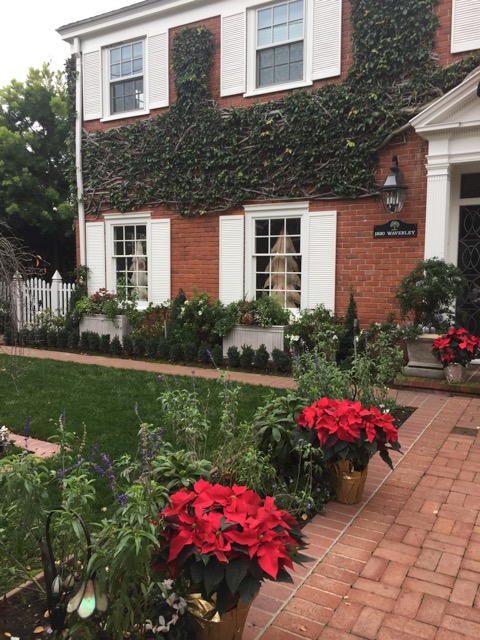
Eye of the Day’s large rectangular Italian terra cotta planters, the Delos, were installed recently to add impact, structure and curb appeal to the entrance of a home with an overgrown, out of proportion boxwood border.

Eye of the Day| Garden Design Update | Inviting Spaces by Kim The planters provided a win- win situation when combined with the ability to peer out each of the four windows from the living room and dining room with views of the beautiful seasonal flowers at window level.

The choice of the Delos by Kim Beber Perlmutter of Inviting Spaces by Kim was made when she saw that the vertical pattern on the planters echoed the pattern on the entrance pillars of her client’s Georgian style home, giving the impression that they were specifically designed for the space.


INVITING SPACES BY KIM

(650) 776-6123
Creating Inviting Spaces For Any Time of Day