Change in the Garden: What to Plant in your Fall Garden

Change in the Garden:  What To Plant in the Fall Garden

It’s that time of year where the weather gets a little cooler, we get some rain (maybe less in California), and changes are made in the garden. Eye of the Day interviews some plant experts on their Fall favorite plantings and best tips for the garden.

Alison Walker, a Texas native who recently moved to California, has worked with plants and nurseries for over six years. She is excited to be living in a cooler climate and to get to plant all her recommendations below.

Eye of the Day|Fall Garden|What to Plant
Mint

What to Plant:

Herbs:

  • Cilantro
  • Chamomile
  • Lemon Balm
  • Mints
  • Parsley
  • French Tarragon

Eye of the Day|Fall Garden|What to Plant
Brussels Sprouts

Veggies:

  • Cabbages
  • Lettuces
  • Carrots
  • Brussels Sprouts
  • Kohlrabi
  • Turnips
  • Kale

Edible Blooms:

  • Purslane
  • Nasturtiums
  • Oxalis
  • Calendula

Eye of the Day|Fall Garden|What to Plant
Sage

Evergreens:

  • Lavender
  • Rosemary
  • Sages
  • Thyme

Regular Garden Maintenance:

  • Add and Remove plants per climate requirements
  • Prune blooms and harvest bigger leaves on plants like Basil
  • Plant or deadhead Marigolds to act as deterrent for bugs
  • Fertilize, compost, and mulch as necessary
  • Replace and refresh any leggy leaves


Mimi Richardson is our resident succulent expert but grew up around all types of plants. She has worked at nurseries across the central coast. These are here tips for your Fall garden.

 What to Plant:

Grasses:

  • Fountain Grass
  • Mondo
  • Carex

Eye of the Day|Fall Garden|What to Plant
Carex

Blooming Plants

  • Coprosma
  • Easter Lily
  • Cotoneaster
  • Gazania
  • Strawflower
  • Proteas

Eye of the Day|Fall Garden|What to Plant
Protea

Other Recommendations:

  • You can be more hands off in the garden at this time of year
  • No Fruit Trees
  • Succulents are always a good idea
  • Have fun with fall containers and arrangements with:
    • Pumpkins, Warted Pumpkins
    • Artichokes
    • Oranges
    • Decorative Corn
    • Decorative Gourd
    • Butternut Squash
    • Ferns
    • Pomegranates
    • Celosia

Eye of the Day|Fall Garden|What to Plant
Decorative Gourd and Corn

Adrian Nunez is a Nurseryman at Seaside Gardens in Carpinteria, CA. He has focused on the retail side at Seaside for the last five years but has worked with wholesale nurseries for 17 years. He gives his best recommendations and tips for the Fall season.

No. 1 Tip for the Fall:  The most important and fundamental thing is to prepare your soil.  Get rid of weeds. Know your soil health, does it have enough nutrients? Use a soil tester that you can get at any garden store. Does it need nitrogen, phosphorus, or potassium? Dig at least six inches into the soil, loosen it up a bit, and add organic components. Before you plant anything, know your soil.

What to plant?

  • Bulbs
  • California natives
  • Shrubs
  • Vegetables: broccoli, Brussel sprouts, cabbage, cauliflower, lettuce, radish, spinach, kale

Eye of the Day|Fall Garden|What to Plant
Kale

What to look for in buying plants?

  • Check the laTbels, what size will it get in terms of height and spread. Check the growing information and know the size.
  • Take the time to find the best shape plant. Look at it for health.
  • Look for plants that haven’t bloomed yet—better chance of surviving transplants.

What to consider for water?

  • Once you’re done planting, mulch the area to reduce water loss. If we end up not getting any rain, just do a once-a-week deep watering which will further prevent water loss.
  • In case we get water, do it every other week and reduce watering depending on how much rain we get.

    Eye of the Day|Fall Garden|What to Plant
    Red Hot Poker

Any other common FAQs for Fall gardens

  • When is the right time? Plant at end of October, early November. Ground is still warm enough to plant even with cooler weather.
  • What’s going to bloom through Fall? Rudbeckia, Coreopsis, ornamental grasses, Red Hot Poker or Kniphofia
  • Other tips? Feed plants now if you haven’t already done so in the summer. Good season for feeding.


Photo Credits:
Creative Commons, mint by yoppy is licensed under CC by 2.0
Creative Commons, brussel sprouts on stalks by Nick Saltmarsh is licensed under CC by 2.0 
Creative Commons, sage by Isaac Wedin is licensed under CC by 2.0 
Creative Commons,  starr-120403-4187-Carex_buchananii-habit-Kula-Maui by Forest and Kim Starr is licensed under CC by 2.0 
Creative Commons, Protea. by Mark Freeth is licensed under CC by 2.0 
Creative Commons, farmersmarket09095 by Kel and Val is licensed under CC by 2.0 
Creative Commons, Kale by Clyde Robinson is licensed under CC by 2.0 
Creative Commons, Red Hot Pokers by Ian Parkes is licensed under CC by 2.0 

Edible Container Gardening 101

Eye of the Day Garden Design Center|Edible Container Garden| Oscar Carmona

Edible Container Gardening 101

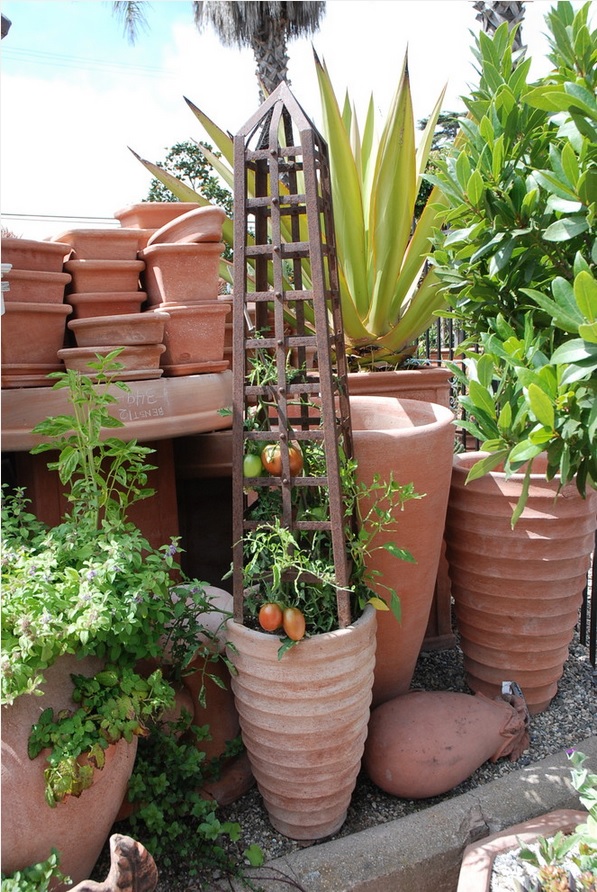
Edible container gardening is a great way to grow vegetables especially when there is no space for a traditional garden. If you live in a condominium or an apartment, containers can provide valuable growing options. A container on casters gives you the ability to move your vegetables to sun or shade, depending on what you want to grow and the time of year. With good, fertile potting soil and a topping of protective mulch you can get by with minimal water.

If you have never tried growing edibles in a container or have not had much success, here are five key considerations  that will greatly enhance your efforts.

POT SIZE

It is important to match the size of your pot to the types of vegetables you want to grow. Bowl shaped pots that are somewhat shallow, approximately 8 to 10 inches, can be great for growing lettuces and other leafy greens. Peppers, cucumbers, beans and larger growing herbs need a deeper pot, 12- 18 inches. Tomatoes like pots that are 18-24 inches deep and about 12-14 inches in diameter.

POTTING SOIL

I recommend choosing an organic potting soil that includes lots of good compost, organic nutrients and important beneficial soil microbiology. EB Stone’s 420 blend has all of these ingredients. Plants grow well in pots when they have a rich growing medium and regular watering. Purchasing top quality potting soil is key to growing healthy, productive plants in containers.

WHERE TO LOCATE YOUR EDIBLE GARDEN

Sunlight and favorable temperatures are also important to growing healthy plants.  Observe how much sun exposure your selected area gets.  Morning sun with shade in the afternoon is good for growing leafy greens such as lettuces, arugula or kale. Sun all day is great for tomatoes and peppers. Shade loving plants like the ambient temperature range of 56-75 degrees. Full sun loving plants are comfortable in the temperature range  of 60 to the mid to upper 80’s. You may find that you have spots in and around your home to grow a bit of both. Remember that the sunlight and temperature will vary throughout the year. So you may need to make adjustments to what you want to grow and/or move containers from season to season.

PLANT NUTRITION

Good organic potting soil will contain necessary organic nutrients. These nutrients not only provide an important food source for your plants, but also for the beneficial microorganisms in the soil. Beneficial soil microbiology will help plants grow strong, nutrient dense and more disease resistant. I also recommend an all-purpose fish/kelp liquid fertilizer applied once weekly throughout the growing season to ensure that your edibles have access to a full range of organic nutrients.

WATERING

Plants in pots need regular, efficient watering as they can become dry more quickly than when planted in the ground. Water until you see it coming out of the drain hole at the bottom of the pot. This means that you have watered completely through the root zone. Fertile potting soil and a layer of mulch will help retain moisture. As you get to know your growing environment you will be able to fine-tune your watering schedule.

Once you have experienced success  with your container garden, you can take growing to the next level by planting your favorite crops in succession over the course of the growing season, which is all year in our neck of the woods!   So don’t plant everything all at once. Start a little at a time with strategic new plantings at  four, eight and twelve week intervals. Leafy greens can be successively grown every four to six weeks. Longer growing crops can be planted every eight to twelve weeks.

Now you are ready to get started or advance your edible container gardening efforts. With some good observation for growing potential in and around your home and care to provide your edibles with a good growing environment you will enjoy successful harvests well into the future.

Oscar Carmona, Healing Grounds Nursery 

Special Event: Eye of the Day will be hosting a special Edible Container Gardening Workshop with Oscar Carmona on Saturday, June 27th. For more information and to reserve your spot, please visit the event page.