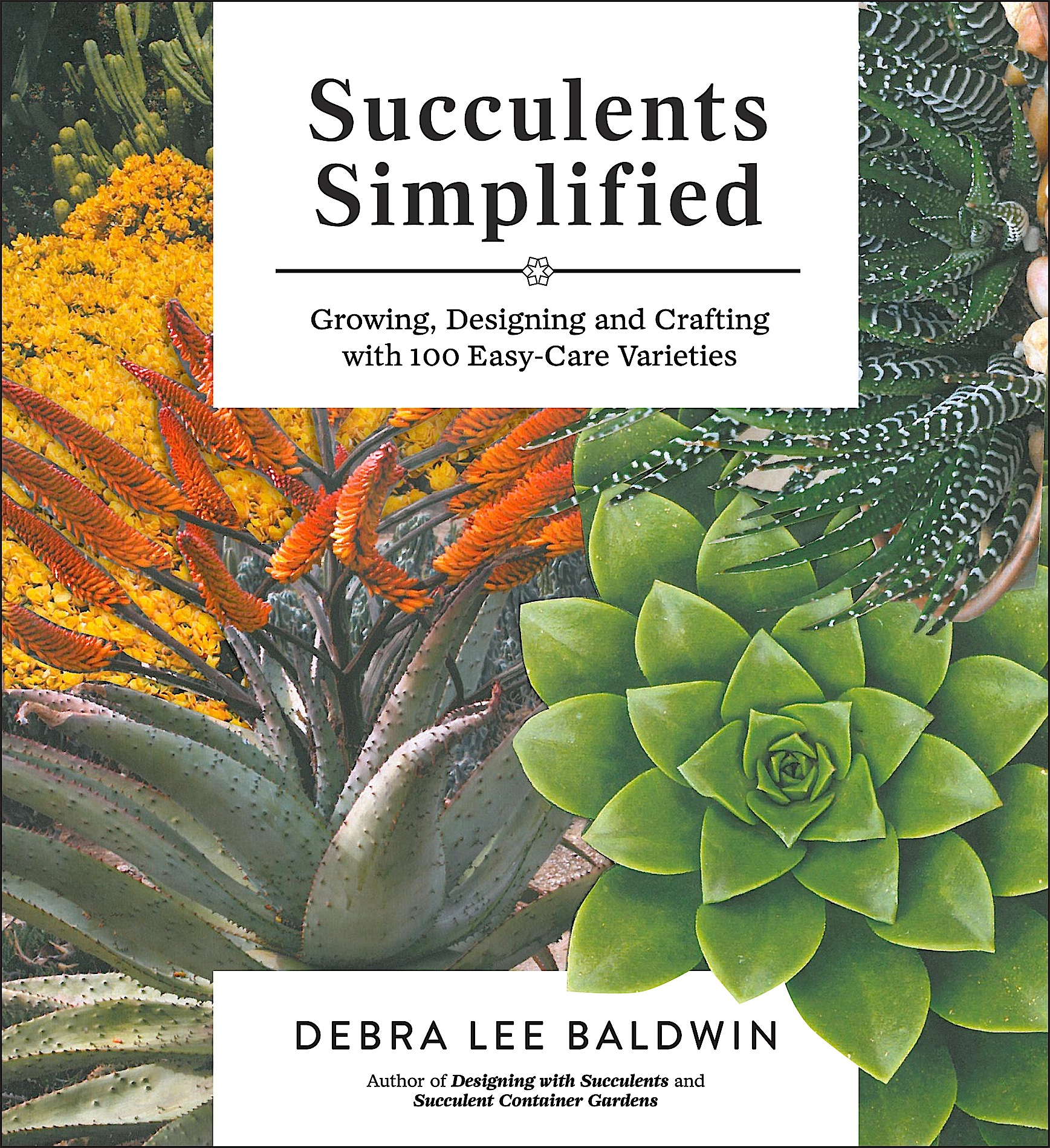
Book Review: Succulents Simplified by Debra Lee Baldwin

Eye of the Day|Succulents Simplified| Debra Lee Baldwin book review

SUCCULENTS SIMPLIFIED, Debra Lee Baldwin

Eye of the Day|Succulents Simplified| Debra Lee Baldwin book review
The Cover of Succulents Simplified

I think we can all agree that succulents are hot. In California, hot can translate to Dry and Dry to Drought.  Which we have.  I also think that we all want green, living things around us and that in our present dry state, succulents and cacti can fill an ever-widening void for both landscape professionals and every day green lovers.

Eye of the Day|Debra Lee Baldwin Succulent| Echeveria imbricata
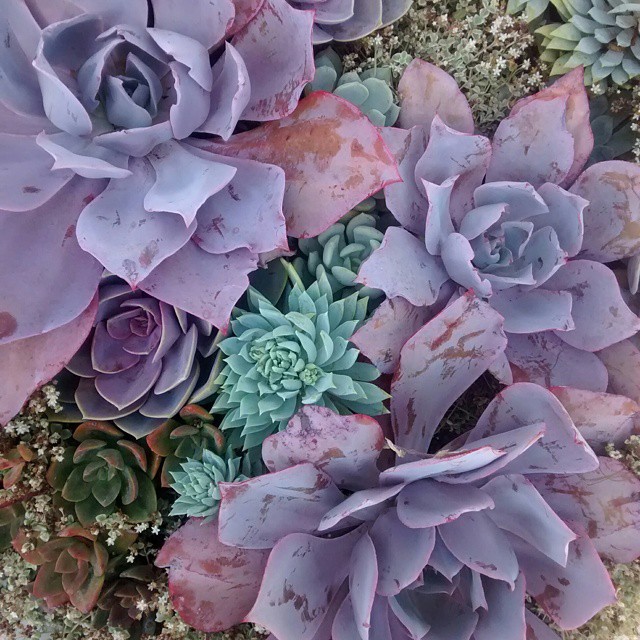
Up Close and Personal with an Echeveria Imbricata succulent.

Debra Lee Baldwin is a notable expert on succulents and succulent gardening.  In her book, Succulents Simplified, Debra keeps it easy enough for someone taking their first stab at succulent gardening but interesting for any landscape professional.  With plenty of photographs and simple care instructions including recommendations for no water and low water plants, I can’t imagine why anyone wouldn’t need and want to take a long hard, look at this book and a long, hard look at the slowly browning lawn in front of their home.

Eye of the Day| Debra Lee Baldwin succulent| Tuxedo agave pot
Tuxedo agave in a French Anduze pot at Eye of the Day.

In a perfectly friendly tone, Baldwin has included a page entitled “Good Riddance to Your Lawn”; we should all read this and begin to implement her ideas.  Succulents Simplified has inspiring sections like “Surreal Shapes, Testures and Patterns,” and “100 Easy Care Succulents” along with container and landscape projects, but my favorite section is entitled “Edible, Herbal and Illegal Succulents.”

About the Author:Eye of the Day|Debra Lee Baldwin| Succulents simplified book review
Debra Lee Baldwin specializes in showing how top floral and garden designers use dynamic, sculptural succulents in a wide variety of eye-catching applications. See more of her work at her website:

 Photo Credit: Debra Lee Baldwin and Timber Press (profile)

Flowers and Plants for a Drought Tolerant Garden

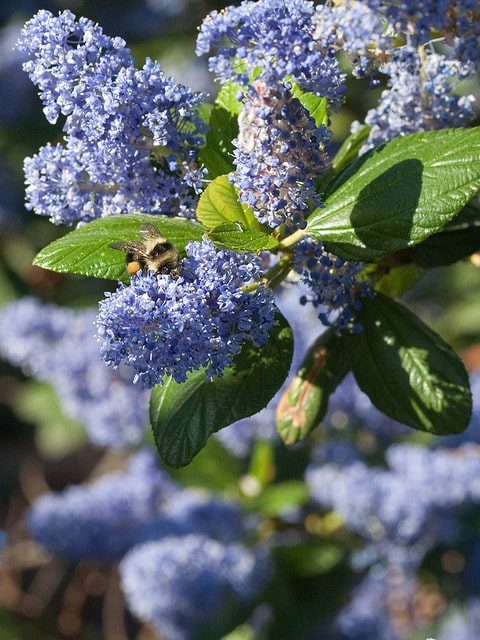
Eye of the Day|Verdure newsletter| wild lilac with bumblebee

Drought Concerns in the Garden

We are in a drought. And it may last for more than the short cycle of approximately seven years that has regularly occurred here in recent history. Some scientists are saying that this is part of a much larger cycle that could be one hundred to one hundred-fifty years in length (and let’s not even try to imagine how climate change will affect that). So, how do we keep our love of living, green things around us with much reduced water resources? One way is to look at the plants that have evolved in this habitat for many thousands of years. Native California plants are great choices for our modern gardens as are plants native to climate zones similar to ours.

Plant Options for Drought
Obvious choices for evergreen shrubs are Manzanita and Ceanothus. Both of these have been bred and selected for a variety of plant shapes and sizes. There are ground-hugging cultivars as well as tall and broad shapes to provide screening. Manzanitas have interesting bark as well as dainty, bell-shaped flowers. Ceanothus are often called California, or wild lilac, for the resemblance their flowers have to the cultivated lilacs our grandmothers grew. Consult a good garden guide or your local nursery for selections and specifics of each cultivar.

Mediterranean Plant Options for Drought
Other readily available options to replace thirsty plants during our dry spells hail from the Mediterranean region.  Some favorites include Echium candicans, Pride of Madeira, that covers itself with spires of tiny flowers in shades of blue and purple as well as Lion’s Tail, Leonotis leonuris, which bursts forth with sprays of brilliant orange blossoms from spring through fall.  And let’s not forget the many selections and species of rosemary and lavender that are ideally suited to our climate as well as their native zones.

Water for the Birds, Bees, and Bugs
One added perk for all of these native and non-natives is that they are quite attractive to bees, butterflies and other beneficial fauna that are seeking sustenance through this dry spell. So don’t be afraid to lose that thirsty garden and replace it with a verdant, more water thrifty landscape.


Rosette Succulents for the Garden

Succulents are all the rage and for several good reasons: many have a unique make-up that puts them ahead of the game in extreme heat. Succulents are composed of spongy tissue capable of storing water in dry times. And they maintain their good looks without a lot of maintenance.

Some of my favorite succulents are in the plant family known as the houseleek family. Many form rosettes of leaves, giving them a floral quality, but without the need for deadheading and other pruning. The other great part about this family is that there are a variety of shapes and forms to choose from. Their main requirement is a bright sunny spot, though some will even take a spell of shade if they have to.

The stone crops are all in the genus Sedum and most are low-growing perennials. Sedum acre is grayish with leaves that form small, whorled rosettes. Two other diminutive species are S. brevifolium and S. dasyphyllum.

“Live Forever” is just an English translation of the botanical Latin Sempervivum. All form densely star-like rosettes composed of many pointed leaves. Two commonly available species are S. tectorum and its many varieties and S. arachnoideum, called the cobweb houseleek because of the white filaments that cross from leaf tip to leaf tip.

Another group of ground-hugging plants are in the genus Echeveria and many are commonly called hens and chicks. Their leaves come in simple or densely whorled bunches that look like fleshy roses and the colors and forms are mind-boggling. From pale whitish green through bluish, to purple, bronze, red, and even yellowish tones, collectors can go wild accumulating them all. Then, there are the leaf shapes and textures; edges may be smooth to wavy to elaborately crimped and top surfaces may be cupped and smooth or bowed and covered with warty bumps (or both!).

Last are the many forms of Aeonium. From flattened dinner plate sized A. tabuliforme to the more tree-like forms such as the nearly black A. ‘Zwartkop’ and colorfully variegated A.‘Sunburst’, there are many selections for bold color and form.

Tough, sculptural, colorful—what more could you ask for in a plant family?


Container Gardening: Finding Joy in Scarcity

Author Brené Brown stated in her now famous Ted Talk, “The opposite of scarcity is not abundance, it is enough.” As we deal with the drought in our gardens, let’s not respond by grabbing more water from others or becoming despondent about losing lawns that are largely unsustainable in our climate.

Use your creativity and discover how container gardening can enliven your landscape while using little water. Let go of those garden images where plants luxuriate in 95% humidity and weekly rainfall. Let’s get started.

Destination Inspiration

Why do we love love love Italy, Mexico, Spain, or Morocco? Courtyards and shade. It’s not the turf. Most of our residences have outdoor living spaces that are too small or too close to the house to be truly enjoyed. If you are considering what to do with your thirsty landscape, think about expanding or adding terraces or courtyards adjacent to your home. Add new gathering areas in other parts of the garden. Even in a very small garden, you can create a new space at the back or side of the property and discover a new view into your landscape.

Planters: The Versatile Garden Feature

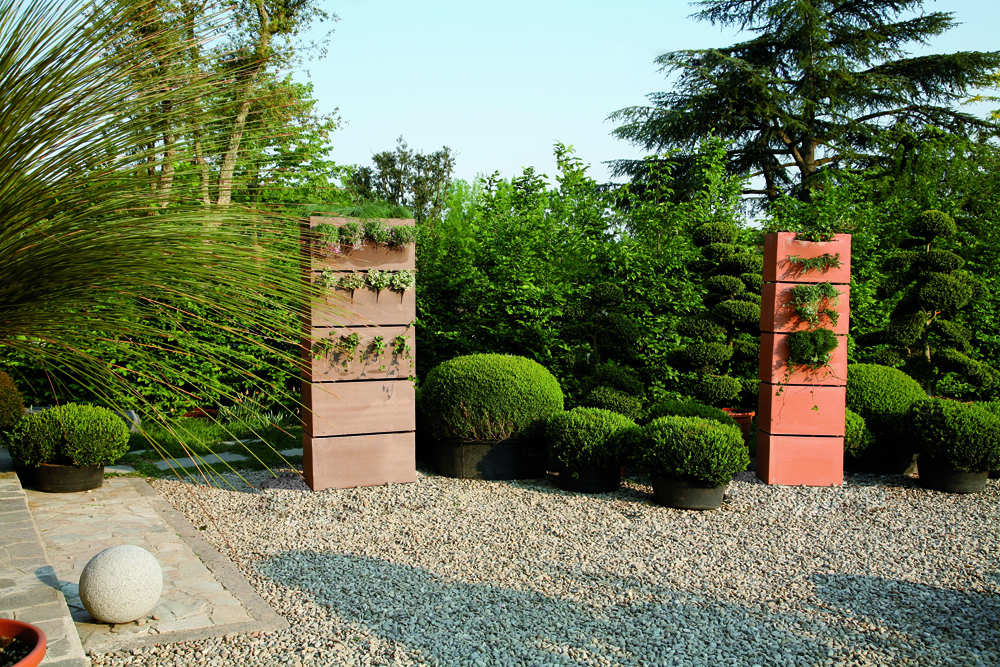
These new spaces can be paved with a variety of materials such as gravel, recycled concrete, stone or pavers. A grouping of planters can serve a variety of functions. Need some shade? Find a large pot, 42” diameter plus and add a drought tolerant small tree such as a fruitless olive. Add smaller pots with succulents or color and you have quickly filled your new garden space with pattern and detail, two aesthetic qualities that enliven our living spaces.

Planters can be adapted or reinforce the visual quality of any type of garden. If you have young children, add lots of color and tuck in a few edibles to share at the table. If you are looking for a place to escape the pace of work and family, discover the cool palette of succulents. Be brave, take a risk. Planter gardening is a great way to play with plants without breaking your budget.

So let go of some of the old ideas and embrace the challenge to live with ‘enough.’ Take a fresh look at that existing landscape and find joy in a new direction for your garden.

To view more of Puck Erickson’s work, please visit Arcadia Studio.


Stylish and Sustainable Garden Design

Stylish and Sustainable Garden Design

Living and designing in California, the ongoing and severe drought we’re experiencing is on everyone’s minds. And as such, drought-tolerant gardens are rapidly replacing outdated water-thirsty landscapes. While everyone is on board with the concept of a drought-tolerant garden I inevitably hear the same hesitation from clients – they don’t want their low-water garden to look like their neighbor’s new garden down the street. They want to make sure their new garden still reflects their personality and individual style.

This is a valid concern as it seems many drought-tolerant gardens seem to focus on the same twenty plants over and over again, with the end result being one of uninspired predictability. Luckily, there are a few simple ways to avoid this common trap.

For my clients who want a more traditional East Coast feeling in their garden, color is key. It’s important that I include low-water plants that contain a higher proportion of greens, maroons, blues and purples to mix along with the more common gray tones. The effect will be the same – a reduction in water use – but the garden will appear cool and lush.

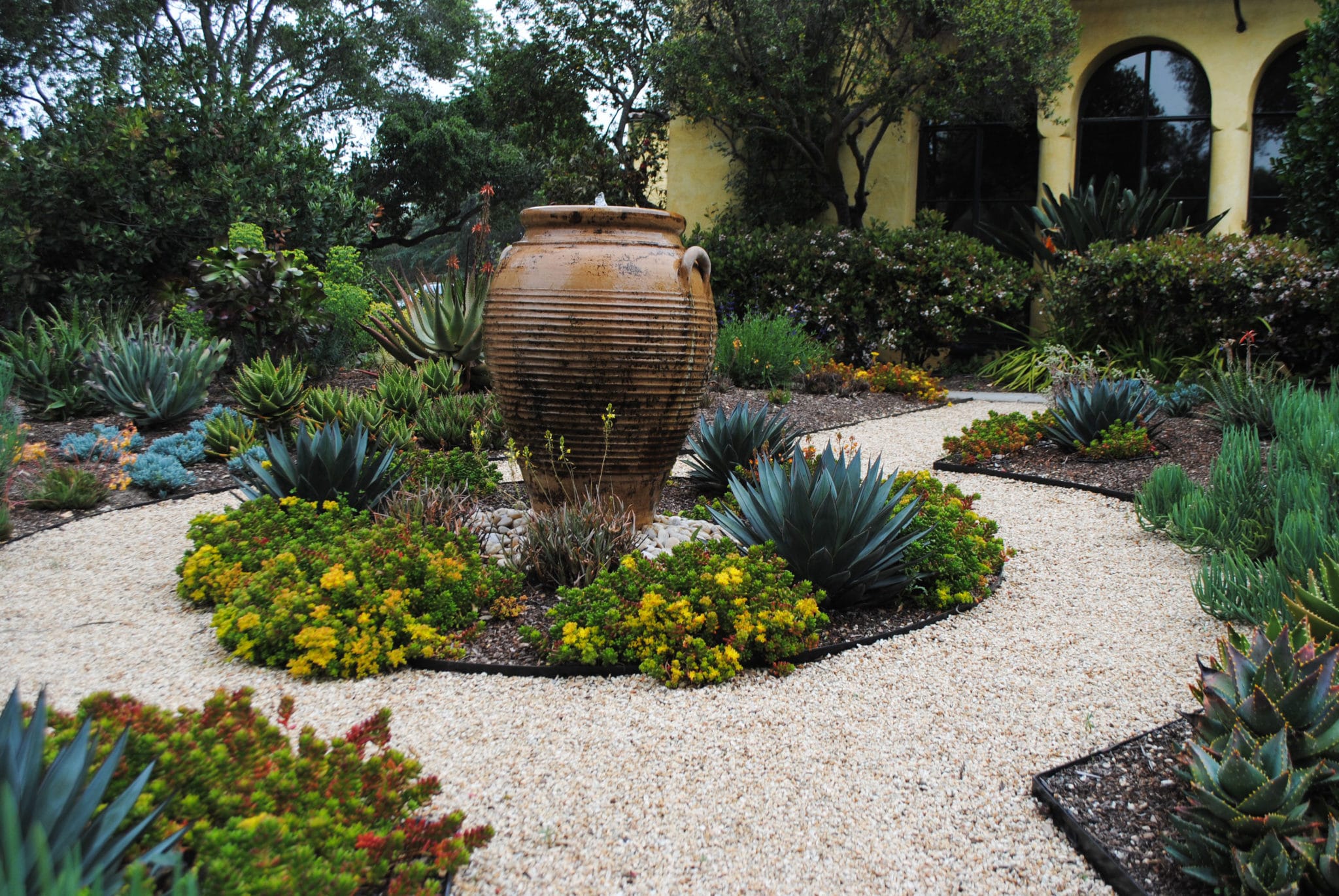
For my clients who prefer a Mediterranean feel in their gardens, I tend to use a larger amount of warm colors, such as oranges, golds and reds mixed in with the greens and grays. The result is a garden that appears to glow in our perpetually sunny days.

But just because I’m reducing the use of water in these gardens doesn’t mean I’m eliminating it all together. On the contrary, it’s important to include a source of water in the garden as the sight and sound of it not only reinforces that we’re not living in the Sahara Desert but it also provides a much-needed source of water for wildlife during these thirsty times.

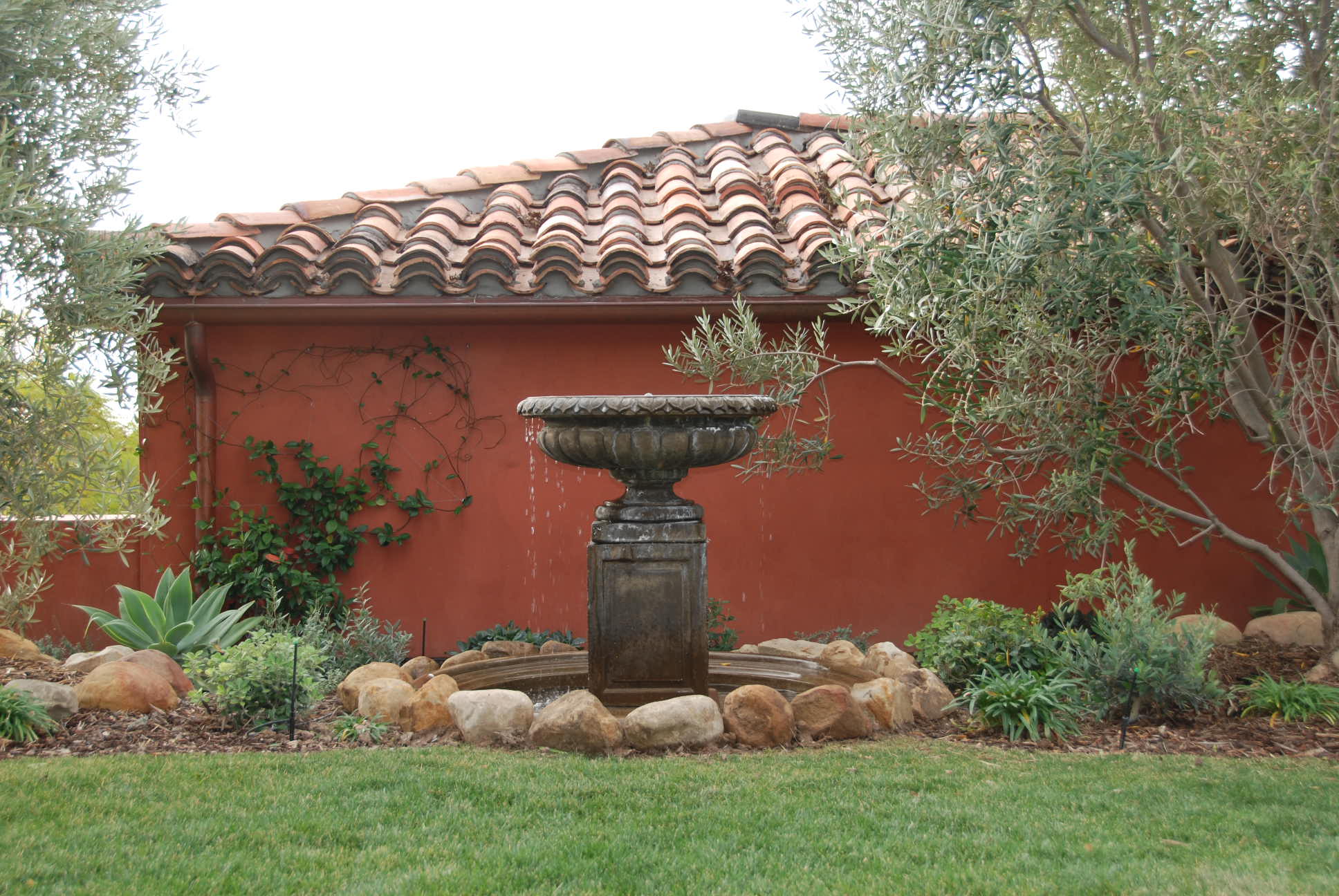
And depending on the style chosen, the fountain is one more way to help further define the character of the garden. For my East Coast inspired gardens, a traditional, stately three-tiered fountain is right at home, nestled among the Corsican hellebore, lavender and native penstemon.

And for my Mediterranean-inspired gardens, a simple antique olive jar blends seamlessly into the surrounding garden filled with succulents, salvias and grasses.


How To Keep Your Fountains Water Wise During Drought

As we all face this unprecedented drought, we need to make smart choices about using water. At this point I’m praying for rain, but I’m realistic enough to know my lobbying may not be that influential.

But I have instituted several measures, the first of which regards my fountain. This water element is an essential part of the environment at my home. It runs 24/7 at this time of year and requires filling once a week. The sound it provides directly affects my sleep.  Could I live without it? Yes, I suppose I could, but why should I? It just doesn’t use as much water as one might think. It recycles the water and other than splash, evaporation and birds, the water goes round and round. I have calculated that I typically add about five gallons a week. The equivalent of about two toilet bowl flushes.

Water Wise fountain

Think about how much water a small lawn consumes and the minimal use of a fountain along with its relaxing and recuperative powers. It seems to me to that it’s a good use of water in my home. Some other tricks for your fountains are:

  • Turn down the pump to reduce the flow and splash
  • If you have a  fountain that splashes a lot, place plastic buckets around it to catch the errant water to add back to the fountain.
  • Use bath water: I am an ardent bather, I love a hot bath even in the summer, and I use that water to fill my fountains as well as water container plants. It’s easy to use an old pump and some tubing and when you’re finished with the bath, pump the water into 5 gallon pails and use it in the garden.

I don’t have any tips for you for your lawn because I haven’t had a lawn in twenty years. My feeling is: JUST SAY NO TO LAWNS. There are so many things that you can do instead and probably will have to do instead, especially if this drought continues for much longer.