10 Design Principles of Frederick Law Olmsted

Frederick Law Olmsted, the father of American landscape architecture, is in many ways responsible for the way America looks. Beginning in 1857 with Central Park in New York City, he created designs for thousands of landscapes, including many of the world’s most important parks. Prospect Park and Fort Greene Park in Brooklyn are designed by Olmsted, as well as Boston’s Emerald Necklace, The Biltmore Estate in North Carolina, Mount Royal in Montreal, the grounds of the U.S. Capitol and the White House, Washington Park, Jackson Park and the World’s Columbian Exposition of 1893 in Chicago. Many of the green spaces that define towns and cities across the country are influenced by Olmsted. Frederick Law Olmsted Full Photo The “Maker of Parks”, Olmsted was a prolific writer and outlined his approach to design with ten principles:

1) Respect “the genius of a place”
Olmsted wanted his designs to stay true to the character of their natural surroundings.  The goal was to “access this genius” and let it infuse all design decisions.

2) Subordinate details to the whole
There was no room for details that were to be viewed as individual elements.  In his work, they were threads in a larger fabric.

3) The art is to conceal art
Olmsted believed the goal wasn’t to make viewers see his work. It was to make them unaware of it. To him, the art was to conceal art. And the way to do this was to remove distractions and demands on the conscious mind. Viewers weren’t supposed to examine or analyze parts of the scene. They were supposed to be unaware of everything that was working.

4) Aim for the unconscious
His designs subtly direct movement through the landscape. Pedestrians are led without realizing they’re being led. There is the sensation of feeling lost yet completely confident that you can easily return to your starting point.

5) Avoid fashion for fashion’s sake
He felt popular trends of the day, like specimen planting and flower-bedding of exotics, often intruded more than they helped.

FLO map6) Formal training isn’t required
Olmsted had no formal design training and didn’t commit to landscape architecture until he was 44.  His views on landscapes developed from traveling and reading.

7) Words matter
Olmsted wrote often and thought hard about the words he used. For example, he rejected the term “landscape gardening” for his own work since he felt he worked on a larger scale than gardeners.

8) Stand for something
His writings show that, in his view, he wasn’t just making pretty, green spaces, he was democratizing nature.

9) Utility trumps ornament
He wrote, “So long as considerations of utility are neglected or overridden by considerations of ornament, there will be not true art.”

10) Never too much, hardly enough
He constantly simplified the scene, clearing and planting to clarify the “leading motive” of the natural site. Thirty years after he helped to design Central Park, he wrote to his ex-partner, Calvert Vaux, “The great merit of all the works you and I have done is that in them the larger opportunities of the topography have not been wasted in aiming at ordinary suburban gardening, cottage gardening effects. We have let it alone more than most gardeners can. But never too much, hardly enough.”

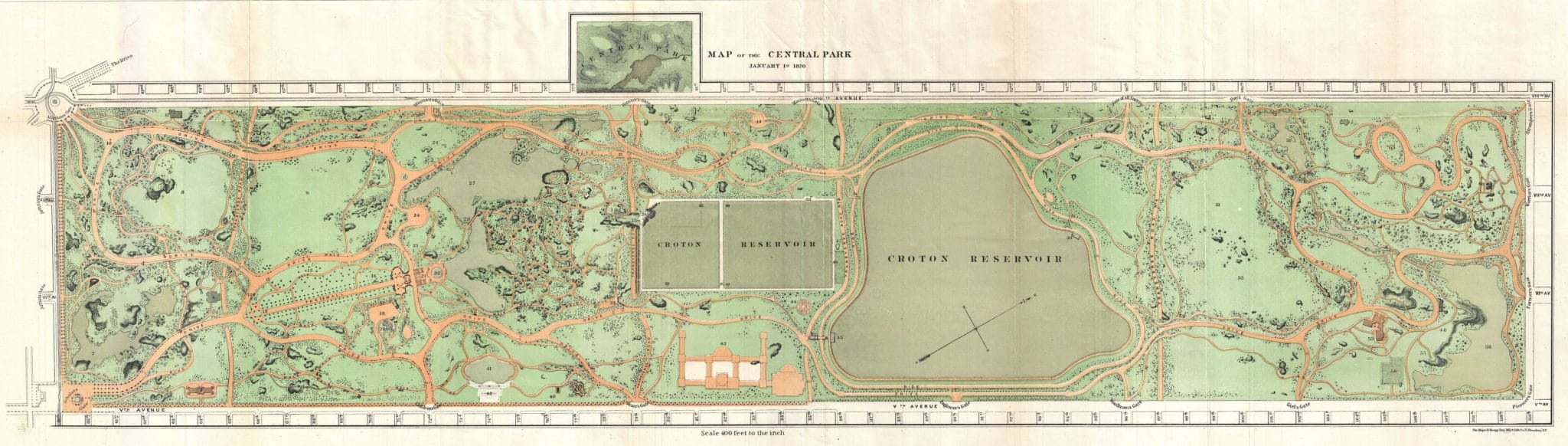
Central Park Design
Via flickr user vagueonthenow

Olmsted believed in the restorative power of landscape for ordinary people. He disliked straight lines. He loved contrasting textures, but it was a cardinal rule with him to blur the boundaries. The architecture of Europe impressed him, but trees were his true love. And that true love shows.  Everywhere.

Groundskeeping: On The Road to an Ancient Landscape – The Bristlecone Pine Forest

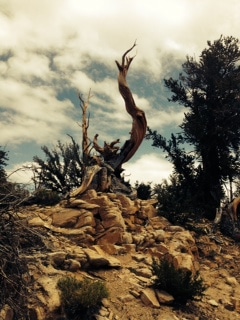
Rushing from place to place trying to fulfill our obligations to one and all, we miss so many beautiful moments and opportunities.  I recently made a large delivery to El Dorado Hills to a client who found Eye of the Day through our website.  The house reminded me of L’Amorosa in Tuscany, a mini fortress built of stone. The entrance required two of our largest Terrecotte San Rocco Orcios (oil jars). bristlecone 1 However, rushing this order to meet a deadline, I was not excited about a 14-hour round trip from Santa Barbara to Sacramento. After all, with fear and trepidation, I could have freighted it all including the antique Orcios, but I had a plan that would allow my sense of adventure, my love of horticulture and my need to spend time with South Pasadena’s 2014 Teacher of the Year, my sister Nan, on her much deserved summer break. bristlecone 4bristlecone 5The plan was to take advantage of being so near to California Highway 49, which goes through California’s Gold Country, and drive back via this scenic byway checking out how things have developed over the last 20 odd years. Then, we could take advantage of the open passes over the Sierra Nevada Mountains to smell the pine sapped air and dip our toes in cool mountain lakes. And because I suffer from a Sisyphus complex, crest the divide and descend the eastern side down to Highway 395 to the Owens Valley (think about the movie Chinatown and you’ll remember the fight for the water from this valley). bristlecone 3And here, just 26 miles up, up and up outside of Lone Pine, California was our true destination: the Bristlecone Pine Forest, home to Earth’s oldest living things, trees that are over 4,000 years old. Nature’s longest lasting landscape design in one of the planet’s harshest environments. A trek at 10,000 feet sucking thin air to be in a landscape of such desolation and beauty.  I look at sophisticated, lush, and beautiful landscape designs and gardens every day of my life and the contrast of this magnificent place and its unfathomable significance is seared into my mind’s eye forever. bristlecone 2Oh, the places my work takes me!


Take a Look Inside Our Brand Book

Eye of the Day Garden Design Center is proud to announce the launch of our first-ever Brand Book. When you visit our store you meet the unforgettable people and see the authentic pottery that we’ve built our business on, and now you can have that Eye of the Day experience by viewing digital publication on any device.

Why a Brand Book? As our clientele becomes more nationwide, we have felt people were missing out on the core idea that we are a local, family business with a visually spectacular array of products. Some of our long-standing customers and friends wanted the opportunity to see our ever expanding selection as well.

mission statement

“Coming to Eye of the Day is about finding design inspiration,” says Brent Freitas Owner and CEO. That inspiration is conveyed via the Brand Book by breathtaking photos of products in and out of the landscape settings, coupled with informative text that has the depth and richness you’d expect from Eye of the Day. “If you are drawn to a container but unsure as to how you could use it in your garden, there is probably an answer for you in the Brand Book.”

The Brand Book is as helpful to the novice as it is to garden professionals, some of whose profiles and projects grace the digital pages. Rick Button and Carol ‘Puck’ Erickson are just a couple of the featured designers that share their thoughts on our containers and fountains are incorporated into their projects.

Print

If you are looking for quality and durability but have been unable to get that finish that you need for your project, the Brand Book also touches upon our customization process. This release is intended to be an important digital resource for anyone who loves or is involved with creating exceptional outdoor living spaces.

Click here to be among the first to preview our brand new book.


A Malibu Getaway | Design by Wendy Harper

We recently had the pleasure of photographing a Malibu garden design by landscape architect Wendy Harper.

Brooks Color Plan ViewHidden in a canyon perched on a point overlooking the Pacific, the property owned by Harper’s clients is a perfect weekend getaway. The experience begins on the winding narrow road leading you around a bend where you get your first glimpse of the ocean. To enter the property you must then cross over a babbling creek on a beach cobble bridge. Harper used natural beach cobble and Santa Barbara stone to connect with the surrounding environment. Large Monterey Cypress and towering California Sycamores, planted when the home was built in the mid 1900s, create an inviting canopy over the site.

2014-01-22

“The property is long and narrow with many constraints and challenges,” says Harper. “My goal was to make all of the spaces in the garden feel like living spaces, even the parking court, which is incorporated into the yard by introducing a weeping wall water feature, grass ribbons in the beach cobble paving, lush plantings with antique urns dripping with succulents and colorful blooms most of the year.”

2014-01-22

The entertaining patio outside of the kitchen is warmed by an outdoor fireplace decorated with Eye of the Day’s Antique French mantel and surround. Select cut Santa Barbara stone set on sand paves this outdoor room. Eye of the Day’s containers planted with succulents and citrus decorate the space.

2014-01-22

A curved stone staircase leads you up to the pool area. Tuscan-style molded brick columns support the long pavilion framing the pool. Taking a swim in the pool is a musical experience where you can listen to your favorite songs…underwater. Sigis cut glass tile compliments the spa and waterline, and colored pool lights transform the water into a kaleidoscope at night. The ipe hardwood deck ties to the railings which mimic the turned wood railings of the home’s balconies. Interestingly, the use of ipe was the only specification from the homeowner for this project. Everything else was left to Harper’s creativity and expertise.

2014-01-22

“I wanted it to feel like it had all been here from the start, so bringing the turned railings onto the deck was a natural choice,” explains Harper.

2014-01-22

Chisel-cut Santa Barbara Stone walls hold olive trees and sycamores on the upper slope as a lazy hammock swings between the trees. Three small ancient church windows from Eye of the Day’s antique collection inspired the changing room with outdoor shower. The pilaster planters are purposely understated with simple succulent plantings so as not to crowd or overshadow, just to compliment the space.

About the Designer:
Wendy Harper is a landscape architect based in Moorpark, California. To view more of her work, visit the Wendy Harper Landscape Architecture Facebook page.