A Day In the Life of a Ceramic Terracotta Commission Artist

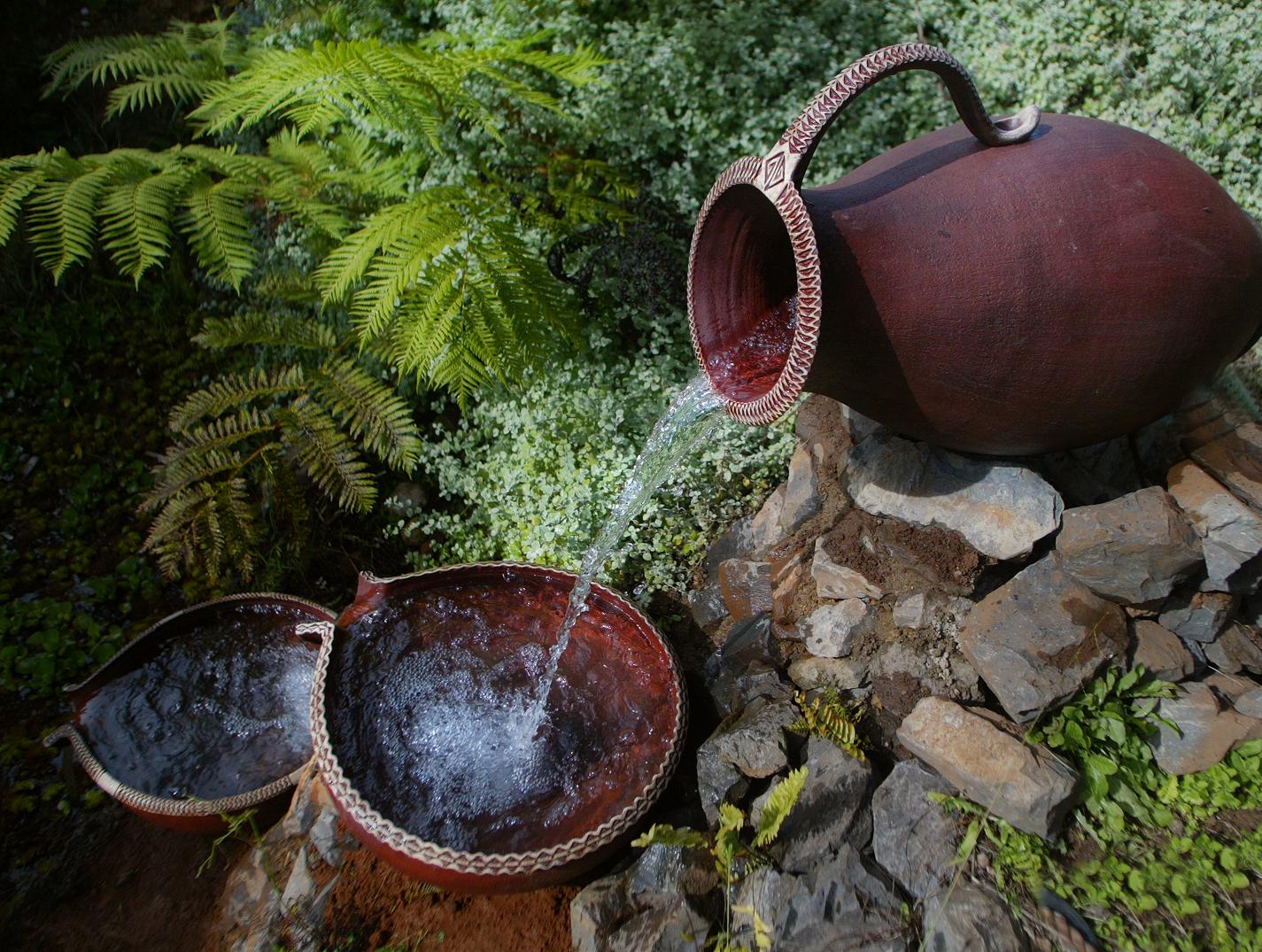
Eye of the Day|Scott Semple Baked Earth|terracotta design

Baked Earth: A Day In the Life of a Ceramic Terracotta Commission Artist

It’s a random Tuesday afternoon in September of any year. I am sipping ginger tea and trying to figure out what to do with the tail end of an already long day, when the phone rings and it’s a number I don’t recognize.  I answer and it’s a potential client with an exterior aesthetic conundrum. “Well”,  I say to myself, “here we go again!”
Eye of the Day|Scott Semple Baked Earth|terracotta design ceramic

This month I am going to walk you through what it is like to be on the receiving end of an exterior ceramic commission.

Now…I love people.  With that in mind, as a commission artist, in many ways I become a problem solver as well as a solution.  I always want to get to the heart of what the client wants for his or her space, and often the gray area is that word “want”.  What a client wants and what works best aesthetically for a space, may be two different things!  So I end up being the voice not only for the client, but for the land, the property as it relates to other properties, the overall environment, the seasons, and of course the clay.  Why are we using clay on this project? Why does using an earthen material make the most sense here?  And so on.
Eye of the Day|Scott Semple Baked Earth|terracotta design ceramic

Typically, I will begin with an interview.  I will Skype if I have to, but the best way to get to know a project is to get on site during the initial phase.  (Many times I‘ve  shown up to a job site and actually found native clay on the property!)  We then move into constructing the pieces. It has always been my practice to have an open door policy to my studio; I love the client to get involved with the construction process.  This way we can troubleshoot together  and/or celebrate any pieces that come from my hands.  I realized a long time ago that when building things to the specifications of others, it’s important to be very clear and communicative, especially during the “wet work” phase.

Eye of the Day|Scott Semple Baked Earth|terracotta design ceramic

I also like to discuss the inherent connection between interior and exterior space. Sure, we can do planters and water features , but what if you had a vessel sink in your bathroom or a fireplace surround, or an interior sconce or two with the same motif? The transition between interior and exterior spaces has always fascinated me as an artist, so that’s often what I strive for.
Eye of the Day|Scott Semple Baked Earth|terracotta design ceramicThe last phase is delivery and installation.  When I end up placing pieces and getting down and dirty in a garden, I know I have made someone very happy.  I have made the environment happy, the property happy, the neighbors happy, and being the solution is always an awesome feeling!  In this phase, I know that what I have made is not only SITE specific, but RESOLVE specific.


Musings On Design: Jeffrey Gordon Smith Landscape Architecture Part 1

Eye of the Day|Jeffrey Gordon Smith Landscape Architecture

Jeffrey Gordon Smith Landscape Architecture and the Spirit of Place

The spirit of a place. This concept comes up throughout our interview with Jeffrey Gordon Smith, principal architect of Jeffrey Gordon Smith Landscape Architecture based in Baywood-Los Osos, CA. There is a respect and celebration of space throughout the work of Smith and his firm. They encourage clients to celebrate where they live and do so by connecting the designs of their projects to the existing natural landscape. From a chain of volcanic plugs corresponding to an outdoor space’s pergola design to a Japanese garden in the Pacific Rim evoking neighboring farm fields, site and architecture speak to each other and create a cohesive landscape.

Eye of the Day: What lead to you becoming a landscape architect and starting your own firm?

Jeffrey Gordon Smith: I was always interested in design. Basically, I wanted to go to school for architecture but the program at Cal Poly was impacted. So, I consulted my father and he directed me to a similar profession — Civil Engineering. I got into Civil Engineering only to find out later it was just impacted as Architecture. I think they made a mistake letting me in because my grades weren’t all that great. I spent a year in Civil Engineering taking all the calculus, physics, all the brutal courses and found out it wasn’t really my gig. Not only from a professional standpoint, but it just didn’t have enough of an artistic side to it I think.

I basically fell into Landscape Architecture. I started looking back into the school’s environmental design, landscape architecture, regional planning, architecture, and architectural engineering. I found Landscape Architecture almost by accident. I was really interested in the curriculum and what it potentially had to offer. I’m not really religious, but when I started taking courses, it was like I was a born-again Landscape Architect –that was it for me.

My father suggested I start an internship with a Landscape Architect. A firm was working for his company so he helped me get an internship with Emmett Wemple and Associates—one of the most important landscape architects in the Los Angeles area 50 years back. He did the Malibu Getty and other important projects. I did a summer internship and got more of a sense of what the field was about.

EOD: So you’ve been involved with Landscape Architecture since college. When did you start Jeffrey Gordon Smith Landscape Architecture?

JGS: God… I don’t know. I actually don’t know. I’ve probably been practicing for 15 years. I worked for several big firms before. Out of college, I worked for Peridian down in Irvine and they were one of the largest firms at the time. I was hired to work on a Spanish theme park in Japan. I got to be one of the head designers on a 172-acre Spanish theme park in Japan. I got to be involved at a high level in design right out of school. This was right before the great recession in the 90s. I thought I was such a rock star, but they started to get more into residential housing that wasn’t very creative. So I left and landed a job at Schwartz, Smith, Meyer with Martha Schwartz, this rock star of landscape architects at the time, very controversial. She was married to Peter Walker, who’s probably the landscape architect of our time right now. She splintered off and created her own design team with two others. We were doing high profile projects around the world. We worked for Rem Koolhaas, Isozaki, Frank Gehry. Then the recession hit and I was going from job to job and the profession was suffering. It was really tough to run a business in this economy. So I got kind of disenchanted with the profession because everyone was so unhappy at the time financially. It was really a tough time to be starting out.

I started doing side work with models—specifically model trees for one of the finest model tree makers in the world. I’ve worked on models from all over from Disney Concert Hall, to Richard Meyer, to Guggenheim Museum. I started moonlighting and doing my own stuff, a couple of outside projects and started doing a lot of production work for a house designer. The economy started swinging back on high end homes in Portola Valley and Bay Area. I was doing a lot of work and never decided to open my own office but I was doing so much that I needed all my work together, a title block, business cards…had I needed to open up my own office it would have been a daunting task, but it just kind of happened over a couple of years where I realized I needed to do this and my own work ended up keeping me going.

EOD: This is essentially where you branch off and start your own company. Your firm focuses on high end landscape design for a range of clients in residential and commercial projects. What design philosophy do you personally bring to each project? Is it important that you complete a design with a certain goal in mind? 

JGS: When I started out on my own I was working on these cookie-cutter, McMansion stuff that wasn’t very creative or innovative. I was always trying to push the edge but really to also pay the bills. I was fortunate enough in the real estate market  to buy property in San Francisco and sell it at the right time during the height of the tech industry—right place, right time. I was able to look at what I was doing and step back. I think we make decisions too often on money. Since I had a little breathing room from the house sale I looked in the mirror and asked myself what do I want to be when I grow up. I wanted to do much more interesting work and that got me into this present-day philosophy that I have.

I never set out to do a mission statement about what I needed to do. It was really trying to find a little bit more soul into what we’re working with and trying to find—sometimes I hate to use the word– the genus loci or the “spirit of the place.” It was something we always talked about in school and I felt like how could I dare to say that I could conjure up the spirit of a place or the power to call that. But I’ve been doing this so long that I think we have a fairly good tact and understanding in what’s going on in the process of the space or place and trying to extract out the greatest elements of that place. It’s almost as if you were to take a volume knob and crank it up and ask what this place wants to be, what is this place talking about, and really trying to put feelers out and be sensitive to what’s going on.

Eye of the Day|Jeffrey Gordon Smith Landscape Architecture

We came up with that idea of regionalism and looking back at my work over ten years that I kind of changed what I wanted to do and people started to follow my work and request work that wasn’t that McMansion type but the uniqueness of site. I started getting work because of this versus just working for someone who was trying to sell a house. It was more of the art side coming out and exploring that and pushing it in each project.

Not every project has that but I try to use a three-prong approach: site, architecture and client in trying to explore and unite it. You’re marrying the site to the architecture and back to the client. That’s basically been the formula of what we try to draw on each project. Sometimes you get an amazing site or neighbors on all sides, but you’re always given typically architecture which sometimes can be “architorture”, or it could be nondescript, bastardized architecture that you’re playing a smoke and mirrors game of don’t look at the architecture but look at the site. The other component of client is going in and interjecting into the architecture how the client lives, what they’re interior is about, and relate interior to the exterior. So that three element approach has been a foundation for what we do and springboard from.


Stay tuned next month for Part 2 of this interview!

Art in the Garden: Henry Null of the Romantic Garden

Eye of the Day|Henry Null| Garden Design Sako Balls

Art in the Garden: Henry Null of The Romantic Garden

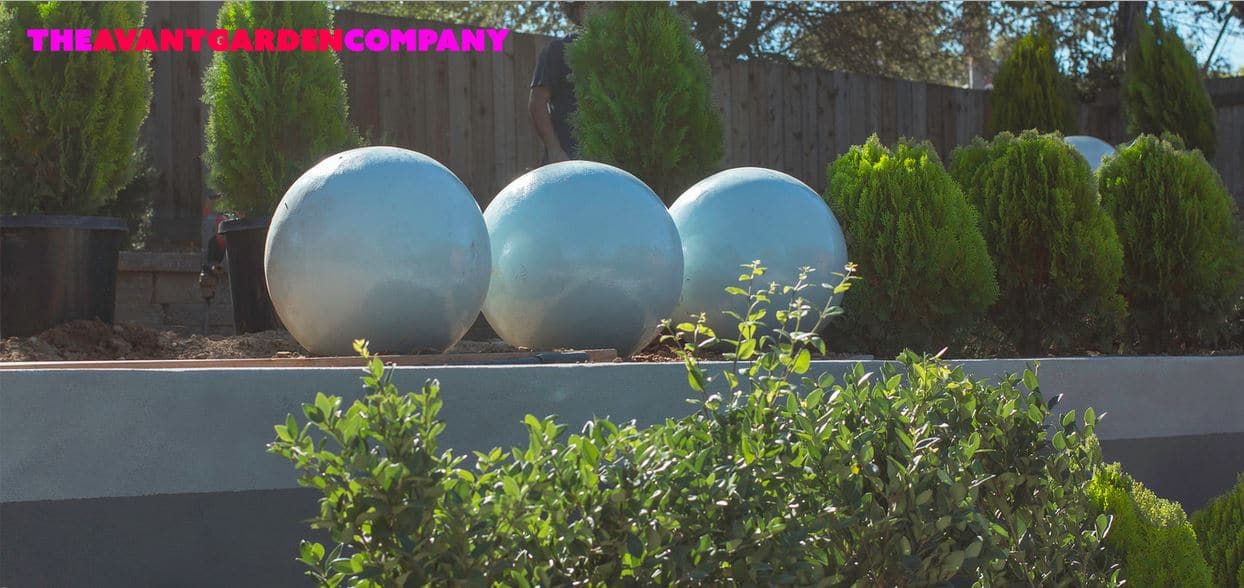
Long time Eye of the Day customer Henry Null of The Romantic Garden Company recently installed three Italian terracotta Sako balls in a Santa Barbara garden. The three globes, provided by Eye of the Day,  were custom colored by the company’s Service department. Null describes the project: “The Italian terra cotta Sako balls were rolled into place at the terraced garden we built in Santa Barbara. We had Eye of the Day epoxy-paint them to my color instructions (I wanted something close to the sky color to represent the universe.) But I also wanted the globes to break up the linear pattern of the texanum hedge. At the same time I wanted the globes to repeat a pattern of 3’s that I was constructing vertically with plants of Thuja occidentalis. Sound complicated? Well, it was.

One further general point about artistic objects in the garden:  to be effective, they should be distinctive or displayed in some distinctive way.  It should be the customer’s option, as a matter of personal taste.”

On another garden from years before, Null relates an example of using unique objects in the garden: “Years ago I worked for the late Margaret Mallory on Ortega Ridge. She was an art collector and in her garden a five-foot pedestal supported a beat-up metal gyroscope which was maybe 18 inches in diameter. I asked her about it and her reply was, “that gyroscope was on the last British gunship in Palestine.’ You don’t get much more distinctive than that. We don’t have any spare, war-weary gyroscopes hanging around, but we have a selection of odd garden ornaments that can be used for focal points.”

Null’s recent venture The Avant Garden Company “offers a unique perspective to gardening by providing a philosophical and metaphorical approach. Each aspect of the garden is strategically designed and formed to create a celestial garden piece.”

To view more of Henry’s work, please visit The Avant Garden Company and The Romantic Garden Company.

Custom finishes are a specialty at Eye of the Day. Please visit our website for more information.


Top Your Pot with Tumbled Terracotta

Eye of the Day|Tumbled Terracotta Pot Topper|Baked Earth

TOP YOUR POT WITH TUMBLED TERRACOTTA

You have a beautiful citrus tree and a beautiful pot, together making a perfect statement piece, but maybe there’s something to make it even better from a design standpoint and for water conservation.

Design professionals typically use under-planting to finish the look of  a tree or tall plant in a pot.  They might use Alyssum,  Baby Tears, Lobelia,  Creeping Rosemary or any other trailing or low-growing plant.  During our current drought, we see more succulents being used, such as String of Bananas, String of Pearls,  Hens and Chicks or Sedum as under-planting and as a living mulch. You can see these same plants in action as part of our video: How to Convert a Fountain to a Succulent Garden. 

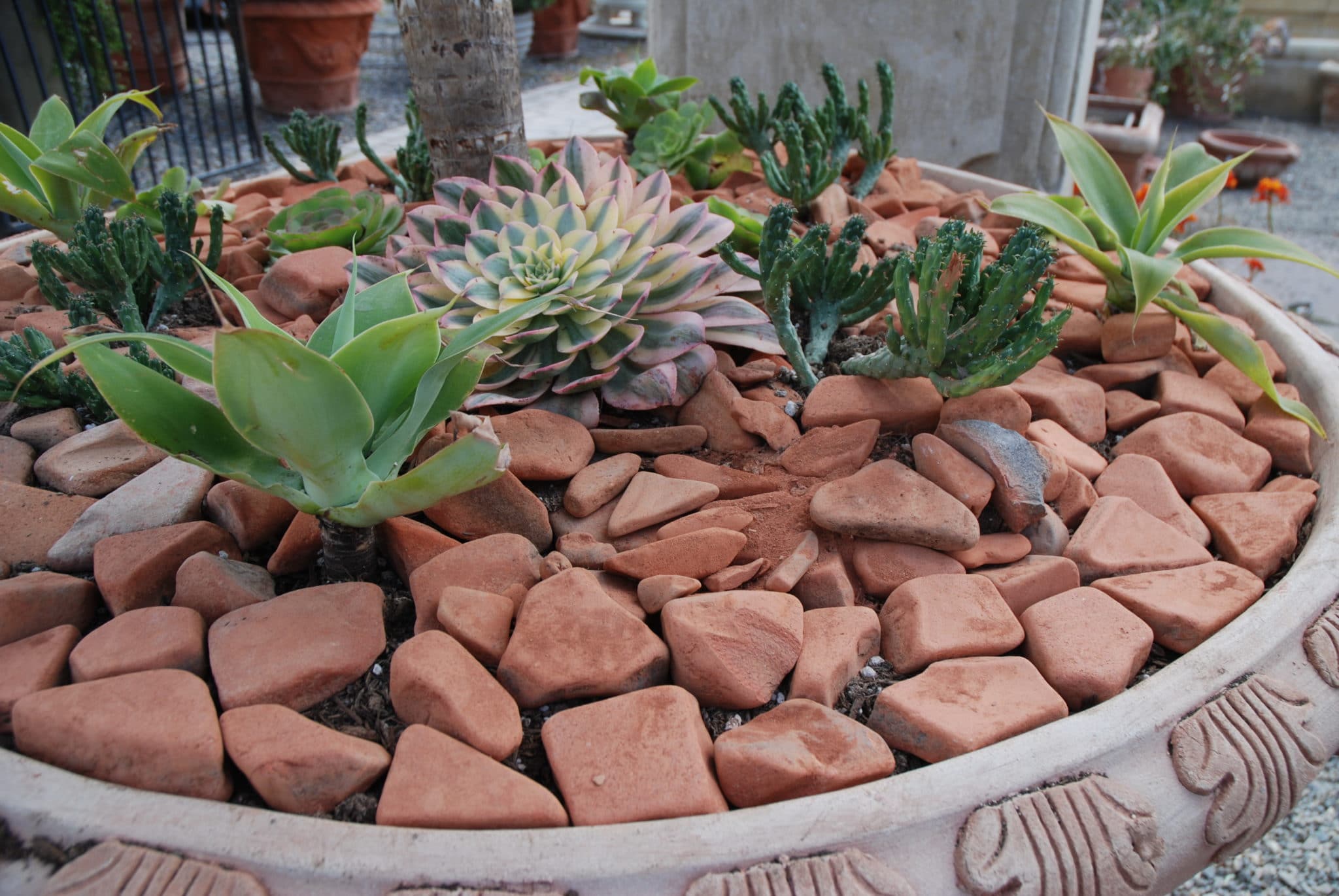
More recently, designers have moved beyond plants and have progressed to using tumbled glass in almost any color, moonstones and beach pebbles.  At Eye of the Day, we are ALL about terracotta, so we have developed a new “pot topper” which not only looks beautiful, but helps maintain and control soil moisture in the container while allowing the surface of the soil to breathe (VERY important to container health).

This new product is Tumbled Terracotta, produced from Italian terracotta fragments, tumbled to soften the edges.  Succulents, cactuses and aloes can also be planted between the pieces for a more carpeted effect further enhancing the design and beauty of container planting.

Our Tumbled Terracotta is available in pieces categorized into three sizes, small at $3 per pound, medium and large at $2 per pound.  The next time you visit Eye of the Day, we’ll show you how using Tumbled Terracotta Pot Toppers adds beauty and practicality to your container planting.


Groundskeeping: Brent’s Eye on Austin

Eye of the Day Garden Design Center|Austin travel groundskeeping| limestone

GROUNDSKEEPING:  Austin, Texas

Being from California, born and raised, I have always had a prejudice towards Texas.  They were cowboys and we were beach people if not surfers.  They like six guns and we like bongs, they eat TexMex and we eat real Mexican food.  Girls in Texas have big hair and wear lots of makeup and who doesn’t still dream about California girls.

Texas is a desert and so is most of California. We both have major water issues and we both landscape our homes and developments like there is no bottom to the aquifers that provide much of our water.

Travelling to Austin to visit my family I have come to really, really enjoy it.  This hilly area along the Colorado River (different Colorado from the one we know in California) is a fun and exciting place and I enjoy driving the neighborhoods and suburbs when I’m there.  On a recent trip I went out to visit different landscape architects and design firms.

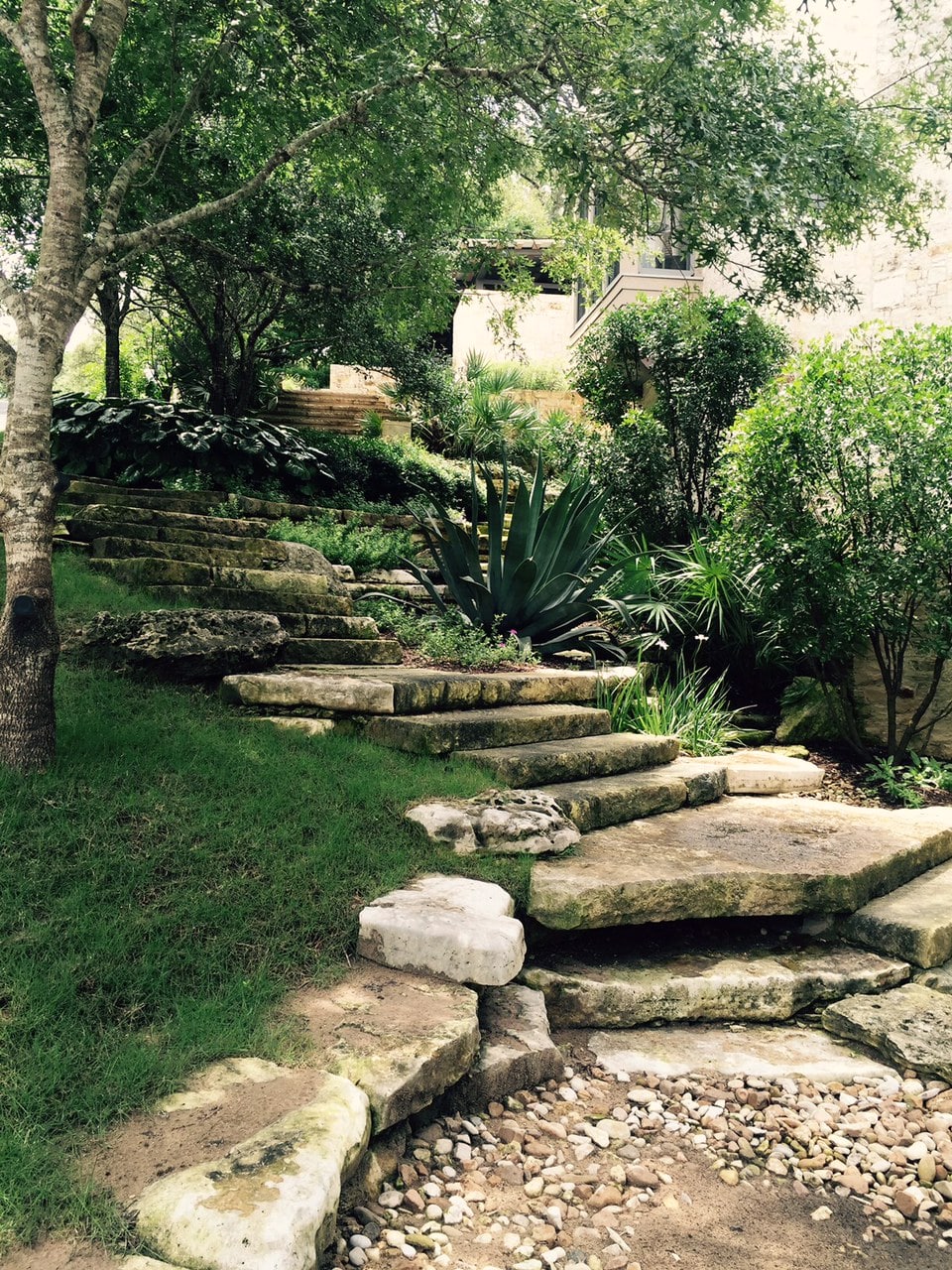
Several were in the Tarrytown neighborhood just west of the downtown which is doing its best to emulate the high-rise culture of many large cities today.  Tarrytown is an area of old and new residences that fit the description of “stately”.  With their use of Texas limestone for structures, walls and pathways and stairs, there is a feeling of substance and earth filled with lush landscapes that make one appreciate the humidity and heat in a way that as a Californian I didn’t know I could.

There are many, many architects and developers in the busy and growing Austin area and the design elements are trending to mid-century modern and contemporary.  The populace is very conscious of their outdoor areas and driving the neighborhoods shows a diversity of styles when it come to containers they use.

This historic estate makes the most of its entrance with lidded finials on the entry posts and two Campania concrete vase planters on the front porch.
 

Next is an empty tree planter downtown Austin on Willy Nelson Blvd.  Metal and wood, built for public traffic.  A new, modern twist on the Versailles planter used all over Europe with a very western feeling.  Perfect for walking on the sunny side of the street.  

Another commercial application, this project is in the University of Texas neighborhood – a large, metal square.  I like the scale and simplicity of its design and size in front of this office building.  

If you haven’t been and think of Texas the way I used to, I suggest a trip to the Austin area.  Great food, great music, the home of Whole Foods and a great place to experience the South and easy livin’ in great gardens.


A LANDSCAPE ARCHITECT DESIGNS FOR THE DROUGHT

Eye of the Day Garden Design Center|Sally Farnum Before and After garden design|drought

A LANDSCAPE ARCHITECT DESIGNS FOR THE DROUGHT

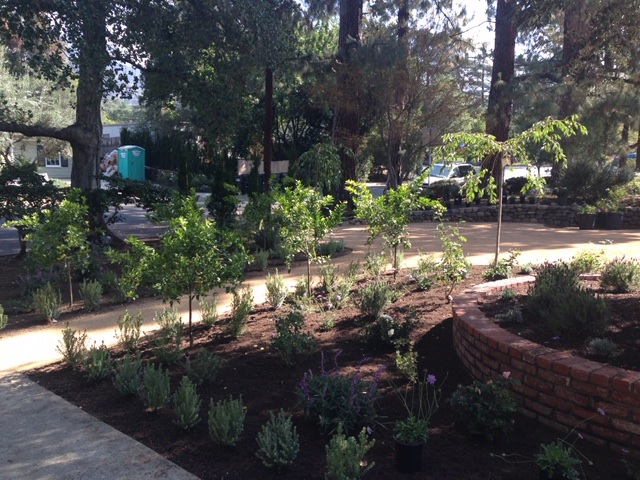
While landscape architect Sally Farnum of SE Farnum Associates has been taking the time to educate her clients about how to deal with their outdated, thirsty landscapes—especially rolling, green lawns—she has designed and implemented an outside environment for her own home that is water-considerate and still lush, inviting and peaceful.

The first task was to remove a large front lawn and some accompanying flower beds.

BEFORE: Water-thirsty lawn

DURING: Removing lawn and introducing granite

Next, grading, drainage and landscape plan was translated to the area. Decomposed granite was used as the base of the pathway from the driveway, culminating in a keyhole design, at the end of which a dry-stacked rock wall would serve as a retaining wall as well as the background for a Gladding McBean fountain conversion.


ALMOST FINISHED!
Flanking each side of the pathway are two Antique Green Gladding McBean Oil Jars, preparing the eye for the fountain.  Planting on the perimeter of the path area includes a variety of water-friendly plants and trees.


STAY TUNED
Check back next month on Sally’s design in progress for photos of the finished project.