Tips for Successful Edible Gardening by The Conscious Garden

Eye of the Day|Edible Gardening|The Conscious Garden

Tips for Successful Edible Gardening by The Conscious Garden

In Southern California we love to eat healthy food and there is no fresher, tastier or more nutrient dense foods than those that you pick from your own garden or that you buy from the farmers market.  It is important to know that your food is free of chemicals, organic and full of nutrients,  so what better way to know what is in your plants than growing it yourself?  I want to share with you some of the main things to remember when setting up an edible garden, and whether you have a yard or not, it IS possible!

Eye of the Day|Edible Gardening|The Conscious Garden
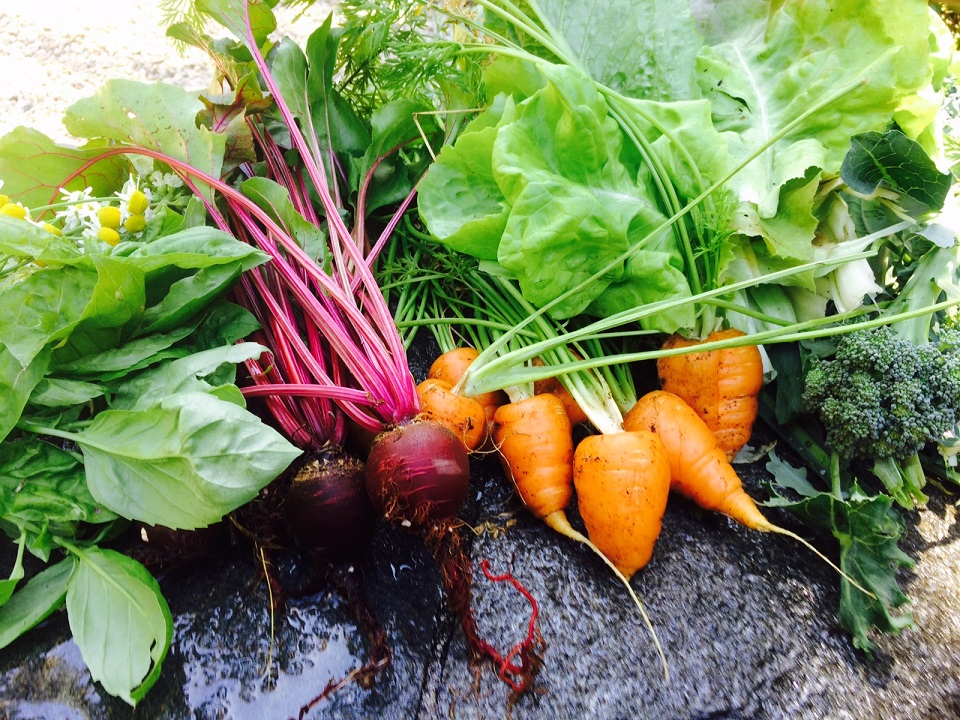
A bountiful vegetable harvest.

I have been growing food since I was a kid, and one of the things I have learned, is that plants will grow in anything.  So, what ever you have to grow food in, whether it is a raised bed, beautiful container or just a simple plastic drum, you too can have edible vegetables right at your home.

Tips for a Successful Edible Gardening

Soil
The key to having good nutrients in your food is in the soil and that is also the advantage of growing at home: you can truly know if it is organic and what’s in it as you plant.  Use a premium potting soil to begin with.  If you have a large garden, use a mixture of different composts such as manure and worm castings.  The soil provides the nutrients to the plants and allows them to be strong.

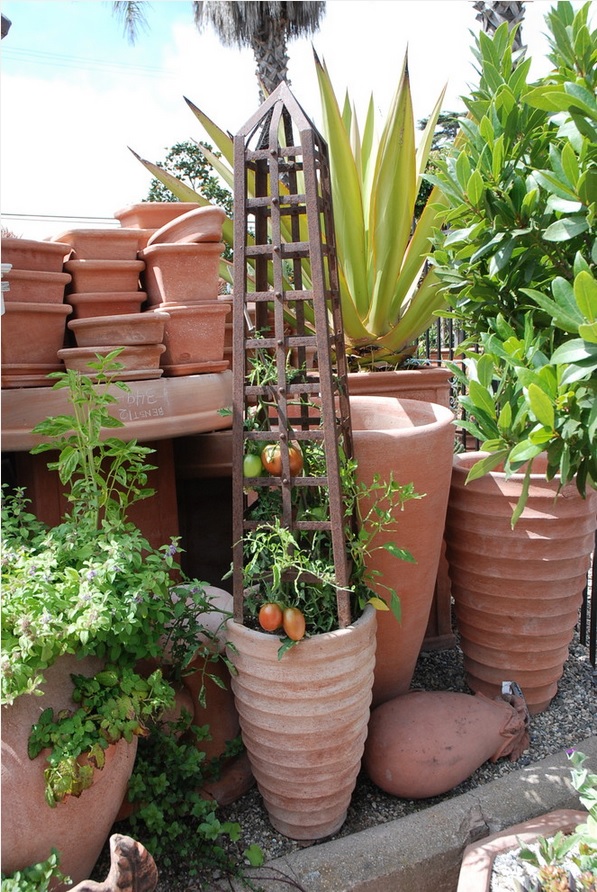
Almost any type of container can do for planting edibles.

Water
Edible plants require a little bit of water often and if you add a drip system, it will ensure the plants are getting water directly to their roots where it is required and it makes the garden more water efficient.  This is especially important in container gardening, and it will make life SO much easier.

Eye of the Day|Edible Gardening|The Conscious Garden
For first timers, try planting edibles in containers first like kale and lettuce.

Plants
When you decide to plant, choose seedlings from a good organic local supplier, providing bio-dynamic organic seedlings. This will ensure that the roots are strong and will stand up to transplanting and our current drought conditions, giving the plants a good start to their edible nutrient supplying journey. It is also time efficient.

Eye of the Day|Edible Gardening|The Conscious Garden
A smaller terracotta pot filled with delectable edible plants.

Pest Control
Be ready for providing pest control – and keep it organic, non-toxic.  Sluggo for snails, Organocide for bugs and Serenade for diseases.  I find that if you notice bugs attacking a particular plant, leave one of those plants free of pest control and the bugs will eat that one plant and leave the rest alone.  (Periodically remove the bug-plant and destroy it removing the bugs and disease).

Eye of the Day|Edible Gardening|The Conscious Garden
A raised bed of filled with a variety of lettuces and kale.

Feeding
Remember plants need food too!  Fish and kelp as the master formula is great. Or you can use an organic food with mycorrhizae. The numbers on the pack of organic fertilizer should not be higher than 5-5-5, which are nitrogen, phosphorus and potassium in a low balanced form.

A smaller terracotta pot filled with delectable edibles.
Healthy, organic, and free of chemicals.

Just remember, take care of your edibles and they will take care of you. Don’t be afraid to try your hand at an edible garden. If you see something you would like to plant, try a handful of plants and see how it goes.  Plants are sustaining and will grow for you if you just give them a chance.

I am available for consultations or garden support to fulfill your edible garden desires.

Happy Planting!

Sagar Faucheaux
The Conscious Garden

Phone:  (805) 745 5555
consciousgarden@


Eye of the Day’s Edible Container Gardening Workshop

Edible Container Gardening Workshop Ad 1 copy


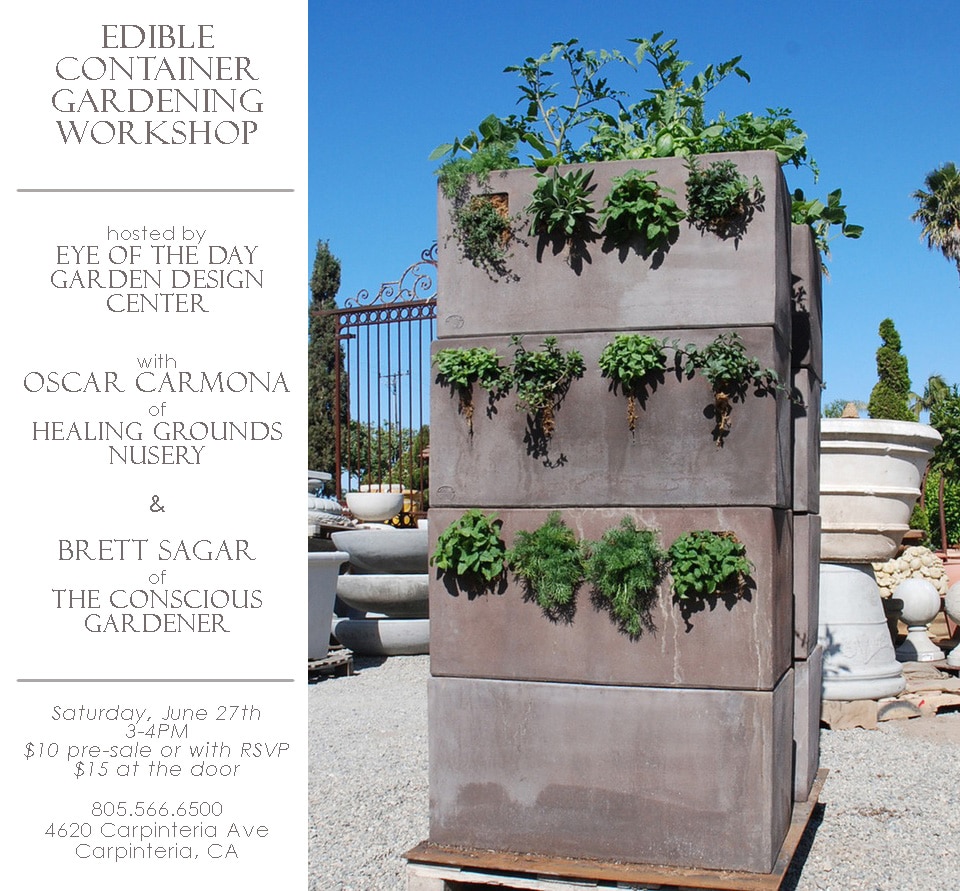
Eye of the Day Garden Design Center is pleased to announce an Edible Container Gardening Workshop right here at our store.

It will be conducted by Oscar Carmona of Healing Grounds Nursery and Sagar Faucheaux  of The Conscious Gardener.

When: Saturday, June 27th

Time: 3-4 PM

Where: Eye of the Day Garden Design Center, 4620 Carpinteria Ave, Carpinteria, CA

Attendance is only $10 before June 27th or $15 at the door.
Attendees who RSVP before the day of the event will be guaranteed the $10 fee.
All participants may have their entrance fee credited toward any purchase on the day of the event!

RSVP at 805-566-6500 or suzi@. Space is limited so please contact us to reserve your spot.


Edible Container Gardening 101

Eye of the Day Garden Design Center|Edible Container Garden| Oscar Carmona

Edible Container Gardening 101

Edible container gardening is a great way to grow vegetables especially when there is no space for a traditional garden. If you live in a condominium or an apartment, containers can provide valuable growing options. A container on casters gives you the ability to move your vegetables to sun or shade, depending on what you want to grow and the time of year. With good, fertile potting soil and a topping of protective mulch you can get by with minimal water.

If you have never tried growing edibles in a container or have not had much success, here are five key considerations  that will greatly enhance your efforts.

POT SIZE

It is important to match the size of your pot to the types of vegetables you want to grow. Bowl shaped pots that are somewhat shallow, approximately 8 to 10 inches, can be great for growing lettuces and other leafy greens. Peppers, cucumbers, beans and larger growing herbs need a deeper pot, 12- 18 inches. Tomatoes like pots that are 18-24 inches deep and about 12-14 inches in diameter.

POTTING SOIL

I recommend choosing an organic potting soil that includes lots of good compost, organic nutrients and important beneficial soil microbiology. EB Stone’s 420 blend has all of these ingredients. Plants grow well in pots when they have a rich growing medium and regular watering. Purchasing top quality potting soil is key to growing healthy, productive plants in containers.

WHERE TO LOCATE YOUR EDIBLE GARDEN

Sunlight and favorable temperatures are also important to growing healthy plants.  Observe how much sun exposure your selected area gets.  Morning sun with shade in the afternoon is good for growing leafy greens such as lettuces, arugula or kale. Sun all day is great for tomatoes and peppers. Shade loving plants like the ambient temperature range of 56-75 degrees. Full sun loving plants are comfortable in the temperature range  of 60 to the mid to upper 80’s. You may find that you have spots in and around your home to grow a bit of both. Remember that the sunlight and temperature will vary throughout the year. So you may need to make adjustments to what you want to grow and/or move containers from season to season.

PLANT NUTRITION

Good organic potting soil will contain necessary organic nutrients. These nutrients not only provide an important food source for your plants, but also for the beneficial microorganisms in the soil. Beneficial soil microbiology will help plants grow strong, nutrient dense and more disease resistant. I also recommend an all-purpose fish/kelp liquid fertilizer applied once weekly throughout the growing season to ensure that your edibles have access to a full range of organic nutrients.

WATERING

Plants in pots need regular, efficient watering as they can become dry more quickly than when planted in the ground. Water until you see it coming out of the drain hole at the bottom of the pot. This means that you have watered completely through the root zone. Fertile potting soil and a layer of mulch will help retain moisture. As you get to know your growing environment you will be able to fine-tune your watering schedule.

Once you have experienced success  with your container garden, you can take growing to the next level by planting your favorite crops in succession over the course of the growing season, which is all year in our neck of the woods!   So don’t plant everything all at once. Start a little at a time with strategic new plantings at  four, eight and twelve week intervals. Leafy greens can be successively grown every four to six weeks. Longer growing crops can be planted every eight to twelve weeks.

Now you are ready to get started or advance your edible container gardening efforts. With some good observation for growing potential in and around your home and care to provide your edibles with a good growing environment you will enjoy successful harvests well into the future.

Oscar Carmona, Healing Grounds Nursery 

Special Event: Eye of the Day will be hosting a special Edible Container Gardening Workshop with Oscar Carmona on Saturday, June 27th. For more information and to reserve your spot, please visit the event page.


From Your Edible Garden: Go From Terracotta Bowl to Salad Bowl

Eye of the Day|Kale and Cilantro Salad|

From Your Edible Garden: Go From Terracotta Bowl to Salad Bowl

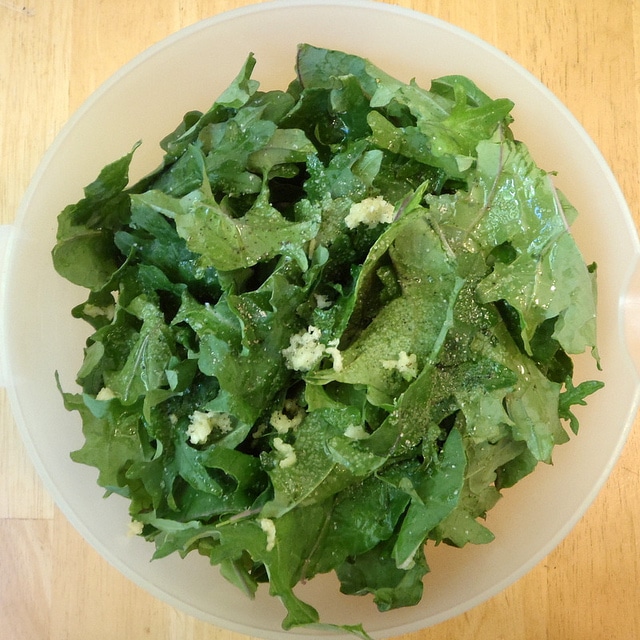
A few edible green things you could EASILY plant in your edible garden container are KALE and CILANTRO.  Oh, I know…kale, kale, kale…maybe you think you’ve heard enough about kale to last until the end of your days.  I’m with you.  But when I tasted this at the home of some great friends, I thought I could EAT this until the end of my days.

Salad Recipe:

  1. Pick a bunch of young, black kale (lacinato kale, Tuscan kale, dinosaur kale) from the beautiful Italian terra cotta bowl you so carefully planted. Alternatively, purchase a bunch at your farmers’ market.
  2. Do the same with a bunch of cilantro. Stem both kale and cilantro and mix together in a large bowl.
  3. Douse it with the best tasting olive oil you know. Squeeze a lemon on it.  Scatter salt and pepper then toss it all together.  Taste it and add more lemon juice if it needs more sparkle.
  4. It’s so perfect just the way it is, but thin shards of Parmigiano Reggiano only make you want to have a never ending supply of kale and cilantro for this salad.


Photo Credit: Kale Salad, Creative Commons, PA113178 by Joy is licensed under C.C. 2.0


Groundskeeping: Traveling South for a Peru Expedition

True to my “Profile” I do wander the globe looking, sometimes under rocks.  Here at Eye of the Day we have been successful in offering old rocks with a purpose for the garden.

Throughout the centuries, agricultural societies shaped stone to hold water and fodder, fodder and water, to sustain their livestock. These pieces make stellar planters and add mass and dimension to a landscape in many ways. Here at EOD we make them into beautiful container gardens, water plant containers, border containers and fountains.

Yes, they are heavy and we have become pretty good at delivering and installing them, but that isn’t the story I want to tell here. The story is where to go to find these old and handmade things.

Where is there lots and lots of granite to hand pitch? The Andes, Peru, Machu Picchu.

Discovering Lima, Peru:

Busy and booming, this place where it never, and I mean never, rains is beyond bustling.  It reminds me of China with cars and buses everywhere so that if you’re not paying attention, you just might get run over.  There is smog, but being on the ocean, there is some relief.  Also, it’s a good idea to go in late November. Wait, that’s Summer. Or is it Winter there? T-shirts, sandals and shorts.

The city is spread out and the different districts make it fun and interesting to explore. The Baranca is funky, hip, and has a great flavor to it.


The M district, where everyone tells you to stay (I agree), is where the action is and the shopping and the best food. The food is fantastic, really. Ceviches galore and Pulpo,  the flavors and the talent of the cooks, chefs and kitchens is world class. The opportunities to walk and tour the city and sample their great restaurants are abundant.

Getting out of the City

But unless you are looking for crafts to purchase, especially things woven and crocheted from alpaca and sheep, or silverware all on a scale relative to grains of sand at the beach, you will be disappointed. So, I headed to the mountains of Cusco, something like 10,000 feet above sea level. This city is different in every way from Lima except for the woven and knitted goods.

Cusco is a small but bustling city with sights galore and outstanding food. The streets are still mostly made of granite cobblestone and strong ankles are recommended.  Let me say here that the coca tea is a good idea and tastes great, it helps with the altitude but it is not the experience many think it will be or maybe even want. I didn’t, however, chew any leaves, it just didn’t strike me as important. I was hunting for rocks!

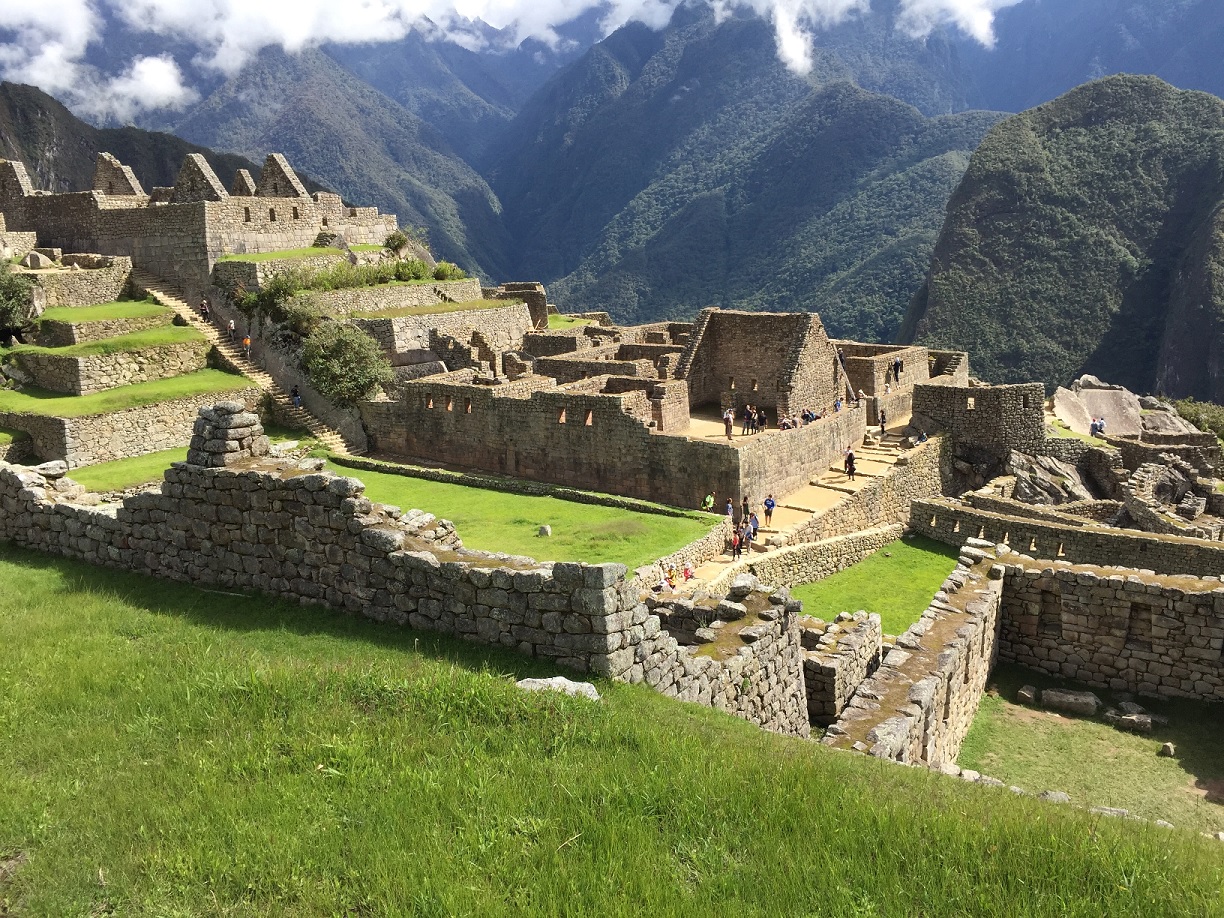
If you could turn granite into energy, the Peruvians would be the wealthiest people on the planet.  How did the Incas move the boulders (some a hundred tons or more), not only downhill but, down mountain slopes, across large rivers and up mountain slopes hundreds and hundreds of feet into place, and when fitted together you could not slide an eyelash between them?

The ever present granite mountains granite buildings, granite temples and, granite streets are enough to cause a need in the hardened soul for some loamy soil and terracotta planters (that’s EOD humor, by the way). I was certain that I would come across some troughs or stones carved to hold water for thirsty beasts kept for their wool and hair.

Sadly, I canvassed from car, bus and train windows and never saw anything until we were on our way to Puno and we stopped at the most outrageous church I’ve ever seen. There I saw two old stones, definitely carved to hold water. Unfortunately, they were over two thousand years old and I could never have afforded them, at least for use as planters.  Oh well! Not every expedition is successful from the EOD point of view. Nor does it have to be, even for me, but I was surprised that in a country made of stone, so little of it has found  its way into the culture.

Oh well, on to the next spot!


Container Gardening: Finding Joy in Scarcity

Author Brené Brown stated in her now famous Ted Talk, “The opposite of scarcity is not abundance, it is enough.” As we deal with the drought in our gardens, let’s not respond by grabbing more water from others or becoming despondent about losing lawns that are largely unsustainable in our climate.

Use your creativity and discover how container gardening can enliven your landscape while using little water. Let go of those garden images where plants luxuriate in 95% humidity and weekly rainfall. Let’s get started.

Destination Inspiration

Why do we love love love Italy, Mexico, Spain, or Morocco? Courtyards and shade. It’s not the turf. Most of our residences have outdoor living spaces that are too small or too close to the house to be truly enjoyed. If you are considering what to do with your thirsty landscape, think about expanding or adding terraces or courtyards adjacent to your home. Add new gathering areas in other parts of the garden. Even in a very small garden, you can create a new space at the back or side of the property and discover a new view into your landscape.

Planters: The Versatile Garden Feature

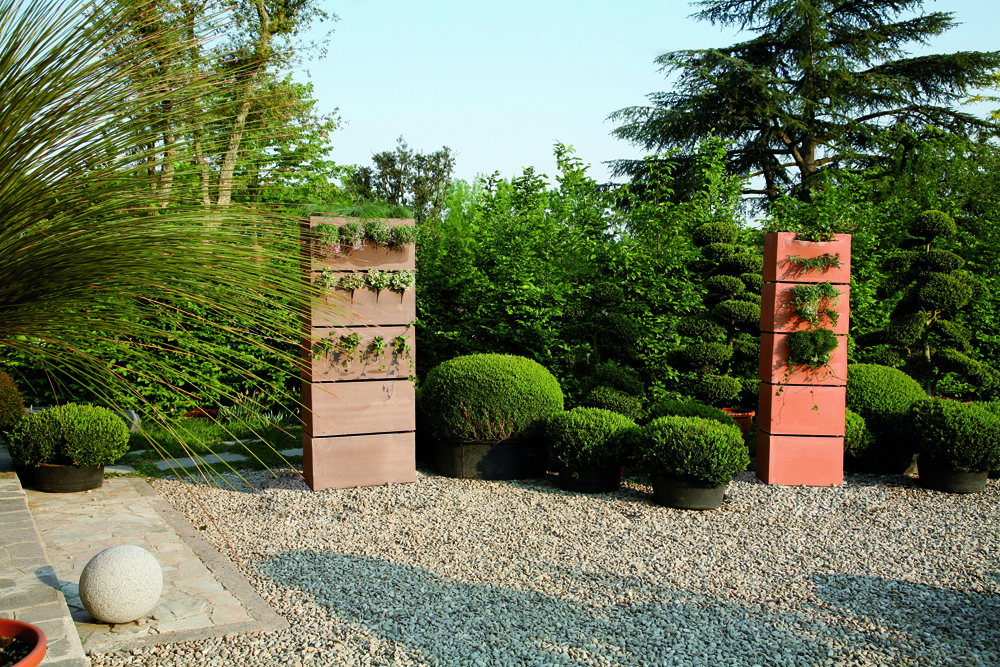
These new spaces can be paved with a variety of materials such as gravel, recycled concrete, stone or pavers. A grouping of planters can serve a variety of functions. Need some shade? Find a large pot, 42” diameter plus and add a drought tolerant small tree such as a fruitless olive. Add smaller pots with succulents or color and you have quickly filled your new garden space with pattern and detail, two aesthetic qualities that enliven our living spaces.

Planters can be adapted or reinforce the visual quality of any type of garden. If you have young children, add lots of color and tuck in a few edibles to share at the table. If you are looking for a place to escape the pace of work and family, discover the cool palette of succulents. Be brave, take a risk. Planter gardening is a great way to play with plants without breaking your budget.

So let go of some of the old ideas and embrace the challenge to live with ‘enough.’ Take a fresh look at that existing landscape and find joy in a new direction for your garden.

To view more of Puck Erickson’s work, please visit Arcadia Studio.