The Simple Art of Collaboration: An Introduction to Sempleware

Eye of the Day|Sempleware| pottery, terracotta, design

The Simple Art of Collaboration: An Introduction to Sempleware

 As an artist, if there is one thing I have always believed in it’s been the concept of collaboration. There is something very powerful, very organic that comes from two or more people coming together on one idea, like a symphony. Or consider the hundreds of ceramic pieces that Pablo Picasso produced towards the end of his life with the help of the Madoura Pottery workshop. Both the process and the outcome can be engaging in unexpected ways that keep fresh the evolving cycles of creation.

Eye of the Day|Sempleware| pottery, terracotta, design
Introducing a collaboration in clay: Sempleware

My name is Scott Semple and I’ve been contributing to this newsletter for about two years now, but my day job is ‘large format potter’.

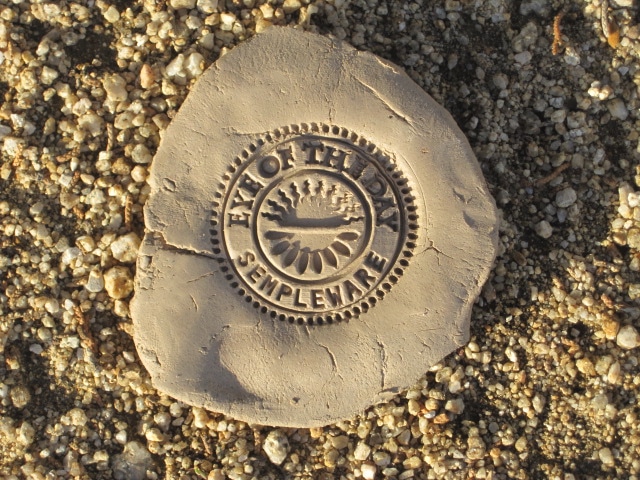
This year I am celebrating forty years in ceramics by announcing my newest collaboration with Brent Freitas and the team at Eye of the Day, entitled “Sempleware”. Our concept is to offer in-house, hand made ceramics, based on an artisan pottery and sustainability model.

Eye of the Day|Sempleware| pottery, terracotta, design
Pottery made by Scott Semple

Beginning in April, I will be throwing pots right there in the store using custom designs and shapes to fit the needs of the ever widening garden design community. Together we want to allow homeowners and designers alike—all customers who come through the doors—direct access to the artistic process, while providing a local option. Very local in this case. We see this partnership as not just collaboration between Brent and me, but as a movement between Eye of the Day and the community as a whole, combining performance art with retail design needs.

Sempleware is an offering as much as it is a line of products and I believe it will be an engaging component when considering sustainable product awareness. And quite frankly, I’ll jump at the opportunity to share what I love most with anyone who will listen, I’m selfish that way.

Eye of the Day|Sempleware| pottery, terracotta, design
See Scott demo in person at Eye of the Day.

We’ve been talking about this for a while now and it seems that all the pieces have finally landed in place.

So that’s the big news! Beginning in April, I’ll be at Eye of the Day throwing down! Come by and say hi, watch me spin some pottery, see what you think! Your favorite Central Coast ceramic supplier for all your authentic garden design needs.

How To Choose A Terracotta Pot By Its Porosity

Eye of the Day|Baked Earth|terracotta porosity

In past articles I have discussed how freeze/thaw has an effect on ceramic containers and I have also discussed clay pot irrigation. We are in the worst drought in the state of California’s history, so by irrigating with low fire pots with high porosity,  water can be sent directly to the root system and feed plants on demand, as opposed to spraying the crusty, evaporative surface.

Eye of the Day|Baked Earth|terracotta porosity

Technically porosity is the amount of empty space in the structure of the fired clay that makes it capable of absorbing or distributing liquids. Simple, right? So if the terracotta is absorbing water and the temperature drops below freezing, you’re going to have potential problems with your investment as the water expands while it freezes.  But if your intention is to use the porosity to slowly distribute water, then the more porous the better. There are other uses for porosity in ceramics, for example insulation. The less dense a brick is, the more insulating capabilities it has.

Eye of the Day|Baked Earth|terracotta porosity

Natural clays can have a very high porosity.  When the grains are very small, there are countless small pore spaces, but what clay does NOT have is good permeability, which is the way you would measure how connected these porous spaces are. So generally speaking, if the clay is high fired it will be far less porous. This is advantageous for a freeze/thaw condition. If the clay is low fired, or under fired it will be porous and best for releasing or absorbing water.

So the bottom line is that the level of porosity you should seek depends on your intention for use of the ceramics.