Book Review: The American Meadow Garden by John Greenlee

Eye of the Day|American meadow|John Greenlee

“We’ve reached a stage where we can no longer follow past practices unthinkingly, particularly when those practices are wasteful and injurious to the environment. It’s time to get rid of the old-fashioned lawn and embrace a sane and healthy future: the designed meadow.” – John Greenlee

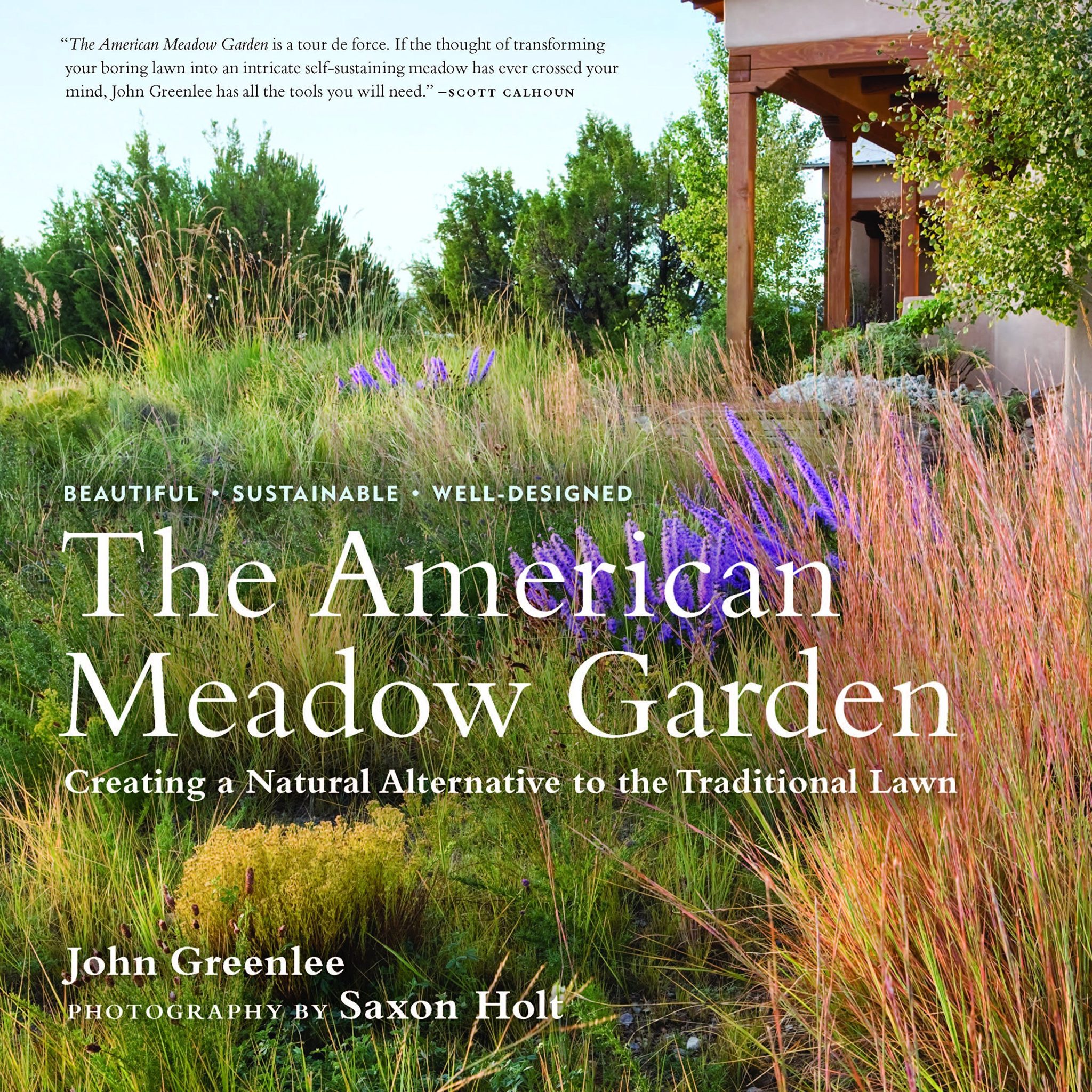
In The American Meadow Garden: Creating a Natural Alternative to the Traditional Lawn, “grass guru” John Greenlee leads us into a new way of thinking about grass.  He uses the words “glade,” “grassland,” “mead,” “savanna,” “pasture,” “sod,” and “meadow” among other terms, to describe areas around the world that are largely treeless, grass-covered landscapes.

Eye of the Day|American meadow|John Greenlee
Image via Timber Press

These words paint an image of golden or green grassy carpets, rippling in a breeze. In this beautiful book, we are given a portfolio of meadow gardens and a guide to grasses for meadows and how to maintain them.

We’re constantly looking for ways in which to cope with our water-challenged world in California and Greenlee offers alternatives to our lawn habit. In many areas, aquifers are dwindling and water is increasingly scarce. There is no longer enough of it to supply lawns. Growing populations and dwindling supply is our scary future and our landscapes must change with the times. The American Meadow Garden was published in 2009, but the relevance of the information and ideas within its covers increases every year.

The American Meadow Garden: Creating a Natural Alternative to the Traditional Lawn, by John Greenlee, Timber Press 2009


Montecito Landscape Refine a Santa Barbara Garden

Eye of the Day|Montecito Landscape|Garden Carpinteria Design
Blueprint: Montecito Landscape Refine a Santa Barbara Garden

Chris Cullen, the founder of Montecito Landscape, began landscaping at the tender age of eight at his family home in Los Altos Hills, CA. He got his contractor’s license in 1970 and moved to Montecito and named his company after his new home town.

Since then, Montecito Landscape has specialized in design and installation of residential landscapes. Chris has created some of the mainstays of the “Montecito Landscape” that are part of the image we see when we think of Montecito. For example, he was responsible for the creation of original landscaping at Ennisbrook (on Sheffield Road) adding the double line of Stone Pines that line the walking paths through the west end and choosing the specific type of trees planted at the entrance to match the plaster wall of the original construction (the plaster color was later changed, but the trees still remain).

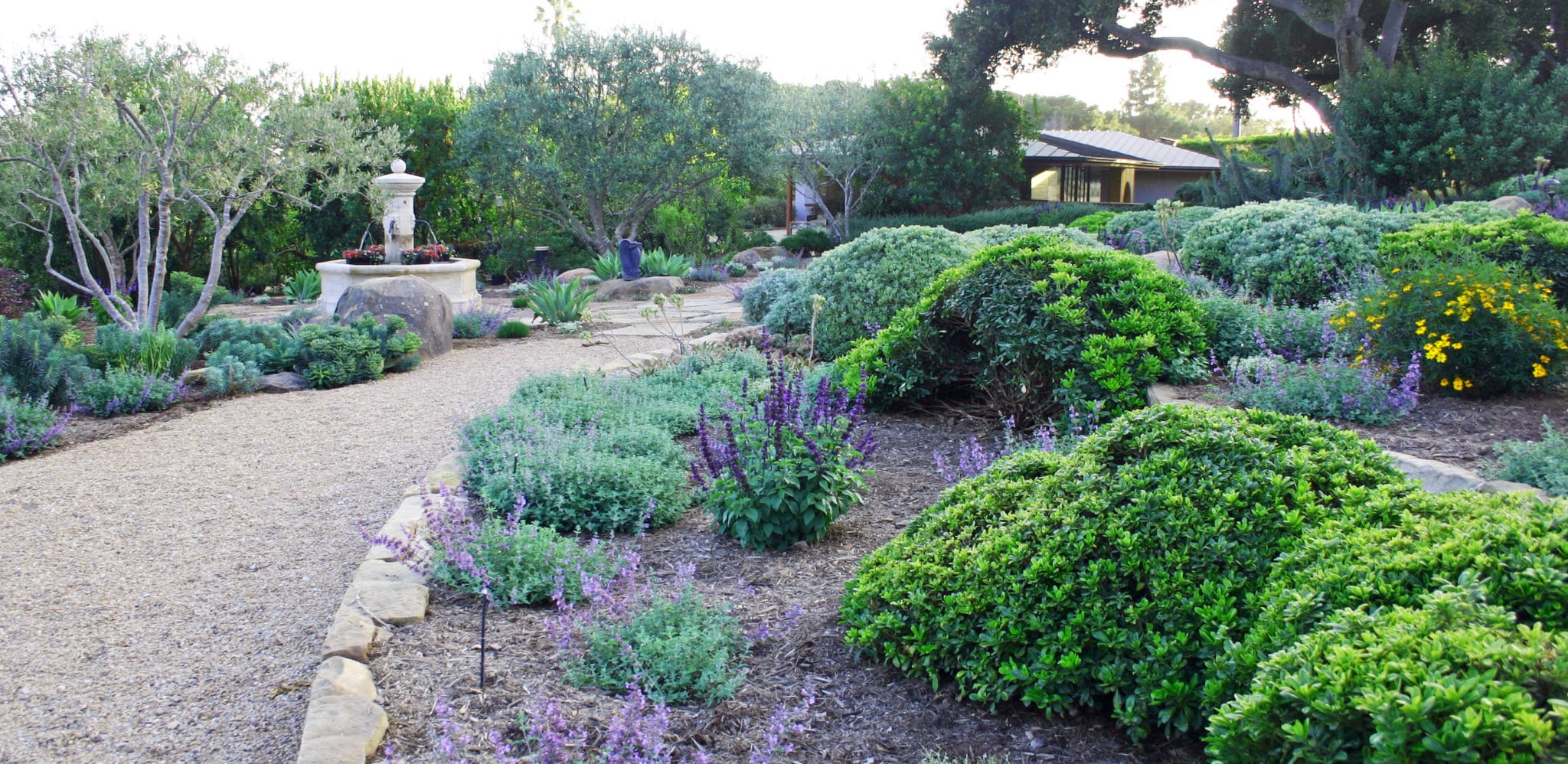
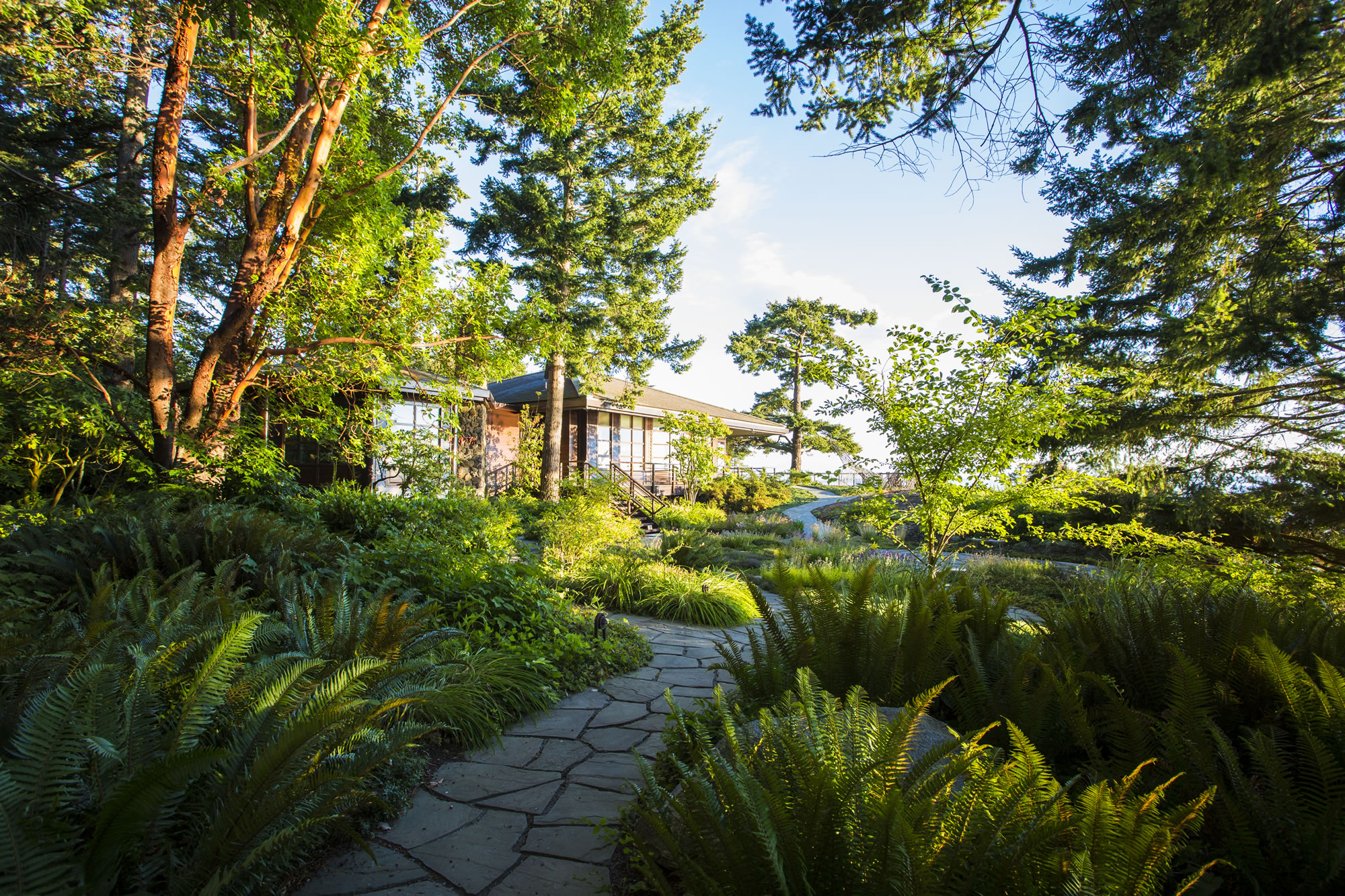
One of Chris and Lisa’s newest projects is a Santa Barbara home. The property had “good bones” but needed refinement. There were a number of unattractive hedges that blocked the beautiful vistas and made it feel hemmed in. The home is a work of art in itself with its simple, modern design and the way it is nestled into the property gives it the sense that it is a work of nature. Their job was to enhance the organic feel of the house and property while creating some space both visually and literally.

Consistent with Montecito Landscape’s garden design philosophy, they first isolate, and then focus on bringing out the best features of a property. Their feeling that each location is as different as each client helps them to approach every new project “intending to help the client see and appreciate their assets and then work with them to discover what it is they need and want.” It then becomes a focus to fulfill the clients’ dreams in such a way that uses their home and property’s intrinsic beauty in unexpected and surprising ways. The goal is to use the entire property in the “picture”, creating “negative space” in a three dimensional design.

When determining exactly what needed to be done when working on this project and how to fulfill what the client wanted, the Cullens knew that something about the landscape “wasn’t quite right” but they couldn’t identify it themselves. “In fact most of our clients know what they want and know when something works and when it doesn’t. What they don’t know is how fix it. That’s where we come in. This garden already had a drought tolerant theme, however many of the plantings were just not working; they were kind of ‘clunky.’ We suggested the addition of brightness and light to the scene, so that is what we did. With the addition of Euphorbia, Mexican Sage, Nepeta, Santa Barbara Daisy, Santolina and others we were able to add color and softness. When there is a lot of hardscape, as there was in this landscape, we wanted some softness as a counterpoint.”

When it came to adding garden décor “the client knew they wanted a water feature as a focal point and so of course, we sent them to Eye of the Day. With Brent’s help they found exactly what they were looking for. It then became our job to incorporate the fountain into the landscape in such a way that it seemed as if it were always there. This is our goal, then, when we utilize garden décor, fountains, sculpture, etc. it should feel as it belongs.”

For Chris and Lisa, “It is always a pleasure to create a beautiful ‘picture’ in the landscape; it’s why we do what we do. We live for the creation of aesthetics. The pleasure comes in working with the client to give them a garden they will use and enjoy for years to come. This project was no different. We loved collaborating with this particular couple because they were very involved and they love to work in their garden.”

Eye of the Day|Montecito Landscape|Garden Carpinteria Design

See more of Chris and Lisa Cullen’s work at Montecito Landscape.

Summer 2015 Garden Design Magazine Review

Eye of the Day|Garden Design Magazine Summer 2015

GARDEN DESIGN: QUICK! GRAB YOURSELF A COPY!

Eye of the Day has been involved with the publication Garden Design magazine for many years. The latest iteration  of this “magazine” is quarterly and feels more like a book than a periodical.  There is absolutely no advertising to interrupt the flow of articles and inspiring photographs.

My eye was first caught by the Editor’s Note  “Moonshot Thinking for a Low Water World” in which Thad Orr, Editor-in-Chief, discusses replacing lawn with water-wise alternatives involving collection systems and irrigation monitoring. On the facing page is Fresh: Inspiration and Innovations from the World of Garden Design.  This article addresses “Tough Questions about Drought” by asking four people: the Director of the Nature Gardens of the Natural History Museum of Los Angeles, the Director of the Landscape Architecture and Horticulture Gardening Programs at UCLA, a well-known Californa Landscape Architect and the Water Efficiency Manager of Irvine Ranch Water District, what can be done to conserve water this summer and in the future. Initially, this was all I needed to  continue reading; we all need to immerse ourselves in questions and answers about water usage.

Elise’s Gift showcases the historic Redford Gardens in Quebec, illustrating the article about one of the largest plant collections in North America and the story of its founder, Elsie Stephen Redford with photos of the abundant flora of the gardens that were once the family’s fishing camp. Reading about Elsie’s vision and involvement in her “garden” overlooking the St. Lawrence River has me wishing for an in-depth  biography of her life.

These are only a few of the gems between the covers of Garden Design. This impressive publication is just jammed with articles and photos that are so interesting, beautiful and thought provoking that even those of us not claiming to be gardeners  will just want to absorb.

Subscribe here.


A LANDSCAPE ARCHITECT DESIGNS FOR THE DROUGHT

Eye of the Day Garden Design Center|Sally Farnum Before and After garden design|drought

A LANDSCAPE ARCHITECT DESIGNS FOR THE DROUGHT

While landscape architect Sally Farnum of SE Farnum Associates has been taking the time to educate her clients about how to deal with their outdated, thirsty landscapes—especially rolling, green lawns—she has designed and implemented an outside environment for her own home that is water-considerate and still lush, inviting and peaceful.

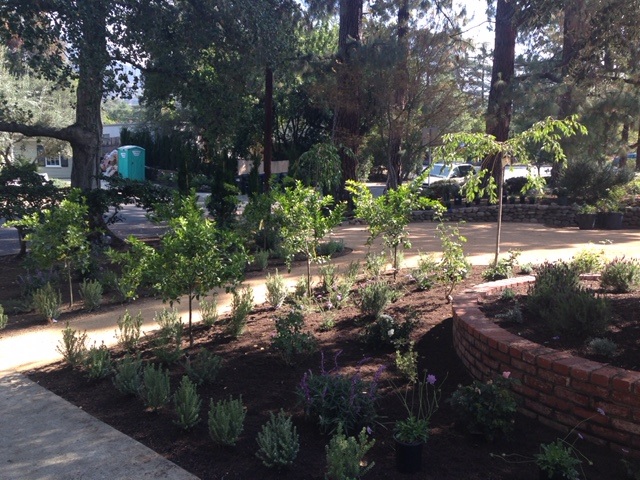
The first task was to remove a large front lawn and some accompanying flower beds.

BEFORE: Water-thirsty lawn

DURING: Removing lawn and introducing granite

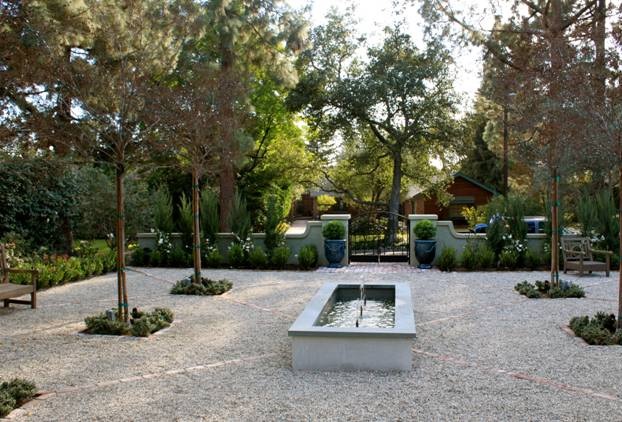
Next, grading, drainage and landscape plan was translated to the area. Decomposed granite was used as the base of the pathway from the driveway, culminating in a keyhole design, at the end of which a dry-stacked rock wall would serve as a retaining wall as well as the background for a Gladding McBean fountain conversion.


ALMOST FINISHED!
Flanking each side of the pathway are two Antique Green Gladding McBean Oil Jars, preparing the eye for the fountain.  Planting on the perimeter of the path area includes a variety of water-friendly plants and trees.


STAY TUNED
Check back next month on Sally’s design in progress for photos of the finished project.


How a Landscape Architect Approaches Garden Design During California Drought

Eye of the Day|Sally Farnum Landscape Architect|garden design drought

Having a sister with a long, successful career as a landscape architect has made it easy to have an ongoing conversation with Sally Farnum about design, client concerns and current issues. We are all especially interested in California’s water problem and wanted to find out how Sally is helping her clients address the issue.

Suzi: What have your clients have been asking about when it comes to water and their gardens?
Sally: Most of my clients are trying to be responsible when it comes to water usage in their landscape. They want to know if they need to take out their lawns, replace their flowering plants with desert plants and if it will still look pretty.

Suzi: How do you approach designing a plan that reflects water-consciousness but is still pretty?
Sally: I really work to combine good elements of design in all my plans: scale, balance, variety, form, line, texture and color. I like to use California natives, salvias, lavenders along with containers, sculpture and fountains.  I suggest using decomposed granite and gravel and, really important, an extra-efficient irrigation system.

Suzi: How do you convince them that a huge, green lawn isn’t the best plan anymore
Sally: Most people are visually oriented, so to describe an idea in words alone doesn’t always convince them. I show them photos or have them visit other projects I have completed.  But I don’t feel that it’s necessary to remove ALL lawn. Only 5% of residential water is used to keep lawns green and it contributes to cooling an area, cleaning the air and reduces noise. Grass in a front yard, used to fill space, should be eliminated.

Suzi: Do you have a favorite or most challenging project which incorporated water-wise elements?

Sally: One of my favorite and most challenging designs is right across the street from my own home.  Challenging because the home belongs to a friend and because I look at it most every day. My favorite because of the transformation from a front yard with a large asphalt driveway and lawn, to a garden with a walled-in gravel courtyard with a fountain and pots planted with flowering plants on the street side of the wall.

Suzi: How have you managed to change the way you designed in the past to meet the new challenges presented by the drought?
Sally:  The challenges are mainly in working with my clients and helping them accept new plants and watering habits.  Most plants will adapt to using less water, but people tend to water more than necessary.  I haven’t changed the way I design, but I have changed the materials and plants I use.


Suzi: Thanks, Sal.  You’re always such a wealth of information, and a fine sister, too.
Sally: You’re not so bad yourself.


Morocco in Your Own Garden

Eye of the Day|Moroccan Garden|Newsletter

Morocco in Your Own Garden

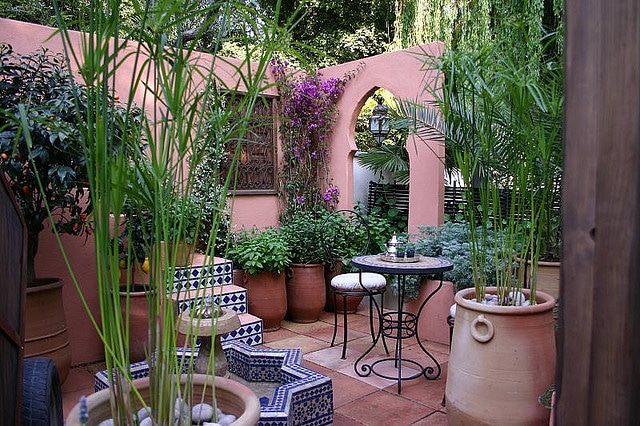
California gardens, especially those in Southern California have long utilized the concept of outdoor rooms. Countries with warm, dry climates around the Mediterranean basin have been creating miniature oases outdoors for centuries. Taking a cue from them is one way to replicate both the feel and appropriateness of this style.

Moroccan gardens provide great examples of the restrained use of water to create a lush setting in outdoor courtyards and passageways. Even while reducing your water use in the landscape, you can create an intimate, yet luxuriant garden space by taking inspiration from arid North Africa. Gardens there are generally central to the dwelling, both to provide privacy and protection from the heat and winds.

One of the key elements of these enclosed spaces is limiting water use. The Arabic word for a garden of this type is riad and usually refers to the central fountain or ornamental pool. The fountain need not be large to provide a bit of cooling to the air as well as a sense of peace and luxury in a climate where water is scarce.  It is possible to recreate that feeling with a simple water feature created from a glazed pot and a small, efficient pump instead of building a large fountain.

Another feature is the exuberant use of color. Colorful pots, a painted wall or gate as well as bright flowers make for a vibrant and even joyful setting. Vivid glazed tiles, whether on the patio floor or the surface of a fountain, also contribute to creating an exotic paradise.

Plants can be used as well and they do not have to be those that require a lot of water. There are many that are drought tolerant, yet lush-looking. Large leaves give a more topical feel and species such as bird of paradise, aspidistra and pygmy date palm do well in containers. Succulents are a great choice; from cacti to agaves and aloes, they thrive on little water and their foliage provides drama and color. The Canary Islands is home to a wonderful group of succulents, the aeoniums, whose fleshy leaves grow in large, showy rosettes and would be perfect choices. Even the humble geranium (Pelargonium) is sturdy and produces flowers nearly year round. Assemble several plants in one container to provide a miniature landscape or group individual pots together, mixing and matching your color palette.

Look at Planted Wells blog for more Moroccan garden design inspiration.

Image Credits:
Moroccan Garden – Creative Commons, Chelsesa Flower Show Gardens by Rictor Norton and David Allen is licensed under CC by 2.0
Plant Image – Creative Commons, BCSS gloucester branch auction – The national agave collection by stephen boisvert is licensed under CC by 2.0