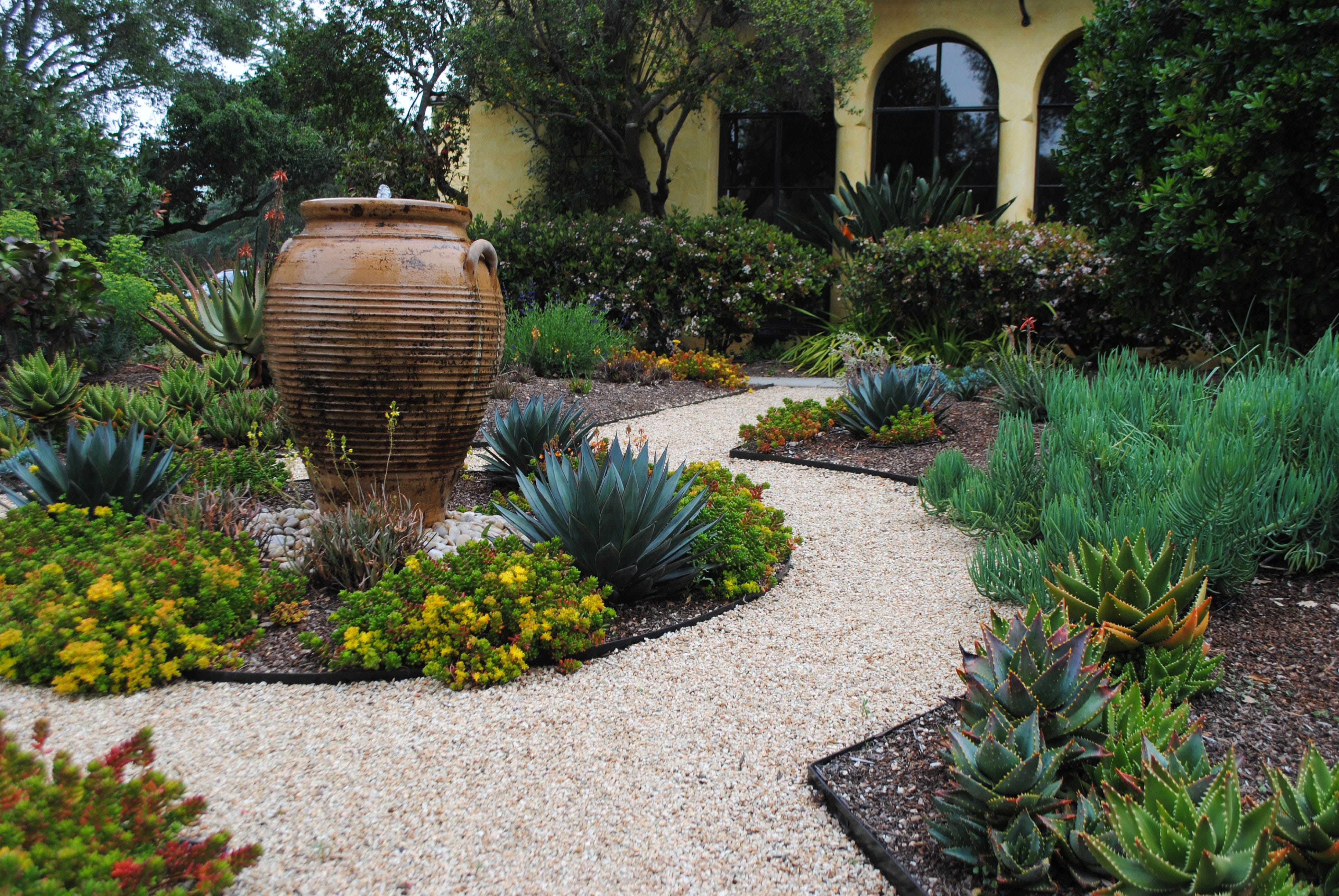
A Fountain Conversion by Rebecca Sweet

Fountain Conversion Rebecca Sweet garden design

Fountain Conversion: A Michalis in the Garden 

We have been fortunate to have Rebecca Sweet write for The Yardstick in the past and knowing that she has a sustained love for Mediterranean gardens and is busy with clients seeking her expertise and experience, we are pleased that she took the time to answer some questions about her garden design featuring Eye of the Day’s Greek pot, the Michalis, as a fountain conversion.  Rebecca is the author of several esteemed books on gardening and her work has been featured in Sunset Magazine, Horticulture and a variety of other national publications.  Her design firm, Harmony in the Garden, is in Los Altos California.

Fountain Conversion Rebecca Sweet garden design
Michalis Fountain Conversion using our Greek terracotta pottery

The fountain surrounded by drought tolerant plantings


Q: Tell us a little about yourself as a designer and Harmony in the Garden.

I’m a California native, and though I’ve lived in both the southern and central parts of the state, I’ve spent most of my life in the Bay Area. Over the years I’ve seen this area’s sleepy suburbs transform into the bustling, densely populated, high-energy area that it is today. The people who call this place home come from all over the country, as well as the world, and have brought with them their unique perspectives on gardening. Having had my landscape design company, Harmony in the Garden, for over 15 years now, it’s been an incredible gift to be a part of these changes and to help so many people from different walks of life create their versions of paradise.

Q: What was your client’s goal for this garden?

As passionate gardeners themselves, the clients wanted to transform this part of their garden from a water-guzzling, and unsightly half-dead lawn into something that would require much less maintenance and water. This area is situated close to their home and can be viewed from several large windows, so it needed to look good year-round.

Fountain Conversion Rebecca Sweet garden design
Replacing lawn with low water succulents

Fountain Conversion Rebecca Sweet garden design
More beautiful succulents

Q: What was your initial vision for the landscape and did that change over time?

My vision and theirs complemented one another perfectly, as we are all succulent fans. So, to reduce water consumption, as well as indulge in our love of succulents, we removed the lawn, replacing it with a low-water succulent and cactus garden. To help tie this new space in with their existing, and more traditional style of garden, we also incorporated   several flowering shrubs and perennials that were colorful, yet also drought-tolerant and low-maintenance.

Because the area is fairly large, we knew we needed to break up the space into smaller, more manageable planting areas. Wide decomposed granite pathways were the solution, gently meandering through the space, helping to bring down the scale of the oversized garden.

Fountain Conversion Rebecca Sweet garden design
Adding some bright color

Q: Any unique issues or challenges for this project during the design or installation?

Initially, the homeowner wanted this garden to thrive without supplemental water but quickly realized that just wasn’t going to happen. This area is in full sun so even the cactus were suffering through the blistering summer heat-waves. Luckily, we had a feeling this might happen and had previously installed a framework of irrigation under the ground ‘just in case.’ We ended up irrigating the garden, on a very reduced schedule.

Q: What would you describe as your garden design aesthetic and how do you work with your client’s own vision for the landscape?

My own aesthetic is one that appears full and lush, yet is quite drought-tolerant. My passion for plants has allowed me to create drought tolerant gardens that don’t ‘look’ drought  tolerant, and is what I’m probably best known for creating.

Since so many of my clients come from around the world, their vision for their garden (and the    plants they’re used to seeing) can be challenging to translate with California’s lack of water. Luckily, living in a mild-winter climate such as ours, we have access to an expansive selection of drought-tolerant plants from which to choose.  I love interpreting their vision into a garden overflowing with plants that will thrive here.

Fountain Conversion Rebecca Sweet garden design
Adding some flowering shrubs

Fountain Conversion Rebecca Sweet garden design
Reducing the lawn with hardscape and succulents

Q: For garden décor, why the Michalis Greek pot for the fountain conversion?

When designing this garden, we knew we wanted a focal point to bisect the center of the pathways. To keep in scale with the large garden and home, we needed a large focal point.  The Michalis Greek pot an ideal choice for a fountain conversion and blends beautifully with their historic Mediterranean home. By converting the pot into to a fountain, we added the gentle sound of trickling water, entertainment from the multitude of birds that adore taking baths there, and the illusion of ‘coolness’ from the water itself. We couldn’t have chosen a more perfect focal point for this garden.


Q: What was your favorite part of this project?

My favorite part of this project was to see the joy on my clients’ faces as they saw their garden’s breathtaking transformation. I continue to visit them and their garden every few months and seeing the succulents grow and fill in, creating an ever-changing tapestry has given my clients so much happiness through the years – all while significantly reducing their water bill!


See Rebecca’s other work on our blog:

Rebecca Sweet On Shades of Gray in the Garden
Stylish and Sustainable Garden Design
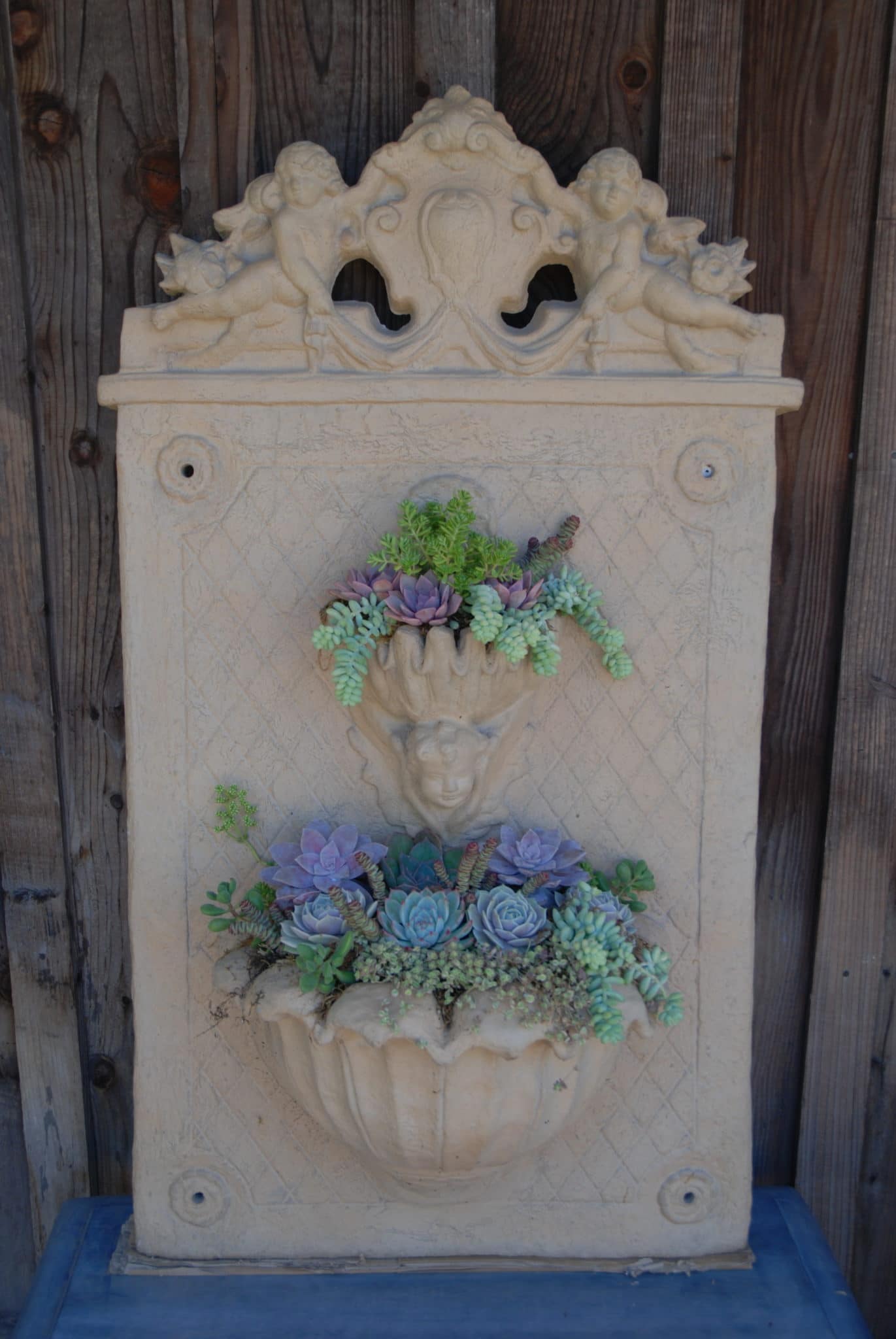

DIY Project How to Make a Succulent Fountain

DIY Succulent Fountain Conversion Garden Design

DIY: How to Make a Succulent Fountain 

Looking for a way to add a beautiful and water friendly feature to your garden? We’ve got the perfect garden project for your next weekend outdoors.

Here at Eye of the Day, Amelia Richardson, better known as Mimi, takes care of the succulent plantings around the store. An expert on succulents, she takes an overlooked wall fountain and transforms it into a beautiful container garden. This project is great not just for drought-stricken California, but any garden that gets enough sunlight throughout the year.

Here is a step-by-step guide to converting a fountain into a succulent fountain garden.

Step 1: Choose Your Vessel

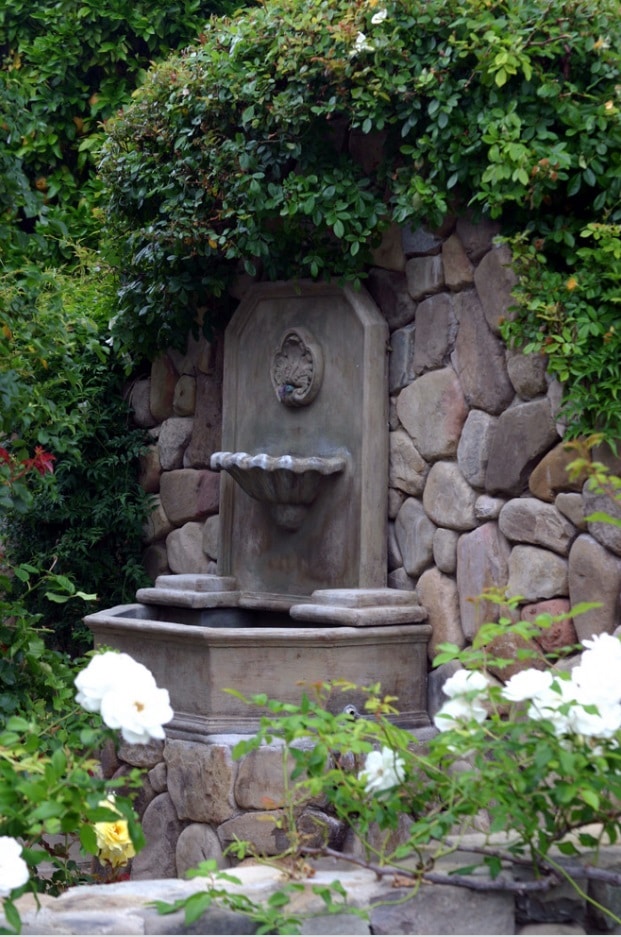
Choose a fountain. It can be one meant to mount a wall, a standalone fountain, single or multi-tiered, or even a birdbath will do!

Step 2: Prep Your Container

Drain the fountain of water and make sure that any drainage holes are covered, if any. You can use a broken piece of pottery or terracotta. The soil will still shift so periodically check the draining that soil isn’t completely blocking it off.

You can also add a layer of rock gravel first before adding soil. If you’re using a birdbath, this step is a must.

Step 3: Add Your Soil

We recommend using cactus mix when planting succulents. It drains quickly which is good for plants that can’t sit in wet soil. We use EB Stone’s Organic Cactus Mix. If you live near Eye of the Day here in the Santa Barbara area, be sure to stop by and get some!DIY Succulent Fountain Conversion Garden Design

Step 4: Choose Your Succulents

When picking succulents, it will really depend on the planter. On large planters, you can choose a focal plant that you can work smaller succulents around. For example: A large Echeveria or Aeonium in the center that is worked around with smaller accent pieces like Sedum morganianum. 

Mimi Tips:

  • Have fun when picking succulents. Grouping like with like is also easier.
  • Color story: Jewel toned, all greens, chartreuses, blacks, cool tones versus warm tones
  • Textural: Soft, sharp, or hardy.
  • Shape: Round (Echeveria, aeonium, sempervivum), spiky (crassula, sansevieria), mix of large and small, tall and short. Senicio radicans and Sedum morganianum even mimic water flow as they drape over the edges.
  • Single type: Just one type of succulent for beginner planters. All rosette types are always pretty.

Step 5: Plan the Layout

Before you start the actual planting, place the succulents either on the ground or in the fountain as you imagine the final product. Here you can edit and rearrange as you see how it’ll all come together.

Sometimes planters can be organized and others more organic and wild. It will depend on the container and where it’s going.DIY Succulent Fountain Conversion Garden Design

Step 6: Start Planting

When removing a succulent from its plastic container, sometimes you’ll be transplanting to an area smaller than the soil around the succulent. You can remove much of the soil while still preserving the roots to get it to fit in the container spot.DIY Succulent Fountain Conversion Garden Design

Mimi Tip: Don’t be afraid to plant them close together. You can always leave space to let them fill out but getting into every nook and cranny helps to create its own ecosystem and that full growth actually slows down the propagation.

DIY Succulent Fountain Conversion Garden DesignBesides, you can always remove, replace and transplant—that’s the great nature of succulents. Succulents are hardy; they’re hard to ruin so press them into the soil. You can also use wet sheet moss to keep the plants moist and reduce the need for additional watering.

Step 7: Add Decorative Elements

Depending on the container get creative using shells, pieces of wood, rocks, broken pot or statue pieces, sea glass, etc. as added decorative material. If you prefer space between your succulents, these elements can help cover the soil.

DIY Succulent Fountain Conversion Garden Design

Step 8: Final Watering 

Give it a quick but generous soak and wash off the container with any leftover dirt. With succulents you want to water once or twice a week depending on sun and weather conditions. Soil should dry out (not completely bone dry) between watering. If soil is still damp you don’t need to water just yet.

If you’re using a container that does not have a drainage hole like a birdbath, then you would let it go bone dry between watering.

DIY Succulent Fountain Conversion Garden Design

Voila! You have a beautiful, water friendly, succulent fountain!


To check out another fun DIY project take a look at Design Rulz article on DIY Macrame Plant Hanger Patterns.


Paul Hendershot and Designing with Water Features

Paul Hendershot Garden Design Water Features

When Paul Hendershot and his trusty dog Chief walk through the door, our day at Eye of the Day becomes just that much better.  Paul likes to stroll through the store, seeing new products and picking the pieces he wants to show his clients. He’s funny and warm and stiletto sharp.

Paul Hendershot Garden Design Water Features

We were looking at his website one day and were pulled in by his remarkable, unique style.  He often works with clients in Ojai and given the heat and water problems particular to that area, we wanted to ask him about how he works within the inherent parameters as well as get a little background.

EOD: When did you become interested in landscape design and how did you begin?
PH:  I always had my own garden starting at a young age.  In my mid-30s I decided to be a landscape designer. I started by doing garden maintenance on my own. I read all the best books, such as those by Russell Page. Slowly people started asking me to help design their gardens and from there it took on a life of its own.

Paul Hendershot Garden Design Water Features

EOD: From whom or where have you drawn the inspiration for your style?
PH: Traveling, especially in Europe and noticing. Russell Page was the most dramatic influence as well as Sydney Baumgartner from Santa Barbara.

Paul Hendershot Garden Design Water Features

EOD: What do you want in a water feature and how do you include them in your designs?
PH: I use water features in courtyards and places where people linger, the sound is great. I also use them in gardens to attract birds. It depends on the space if it is a wall fountain or more of a pool-like fountain.

Paul Hendershot Garden Design Water Features

EOD: What challenges in your designs and with your clients do you deal with when considering the drought?
PH: My biggest challenge with clients is to convince them to get rid of their lawns.  People are really attached to their lawns. Lawns use more water than trees, shrubs, etc., lawns are water guzzlers.

Paul Hendershot Garden Design Water Features

EOD: So what do you offer them as an alternative? How do you get them to give it up?
PH: I usually suggest courtyards with trees for shade and pea gravel as the surface and of course some kind of fountain. Pea gravel is inexpensive, good looking and allows the rainwater to return to the water table. With trees and shrubs, it has a very lush look. Also, groves of trees with pea gravel pathways and boxwood clipped in geometric shapes and pots as accents.

Paul Hendershot Garden Design Water Features

I think we need to change our aesthetic about gardens in California. We should use the examples of Spain, the South of France, Italy, and Morocco which often feature a courtyard with trees, shrubs, pots and water features. Connect them to the house and make outside rooms.

Paul Hendershot Garden Design Water Features

EOD: Are there any advantages or disadvantages to container planting?
PH: Depending on the space, containers, or I should say beautiful pots, add interest and beauty. Also, you can control the soil in a pot. You can make it more acidic or use the correct soil for orchids and unusual plants.  There is nothing more classic than a citrus tree in a beautiful pot.

EOD: Thanks for taking the time to talk to us Paul, we can’t wait to see you and Chief at Eye of the Day really soon.

View more of Paul’s work: Paul Hendershot Design 


Designer Recommendations for the California Garden

Eye of the Day| California Plant recommendations|Aristida Purpurea

What to Plant? The California Garden Checklist

Many of the landscape architects, designers and trade professionals  that have been frequenting Eye of the Day over the years are now friends and we asked a few of them what plants they like to use and why when designing for their clients.

Rick Button of Rick Button Landscaping

Some of Rick’s favorites:

  • OLIVES – They are simply beautiful in leaf, form and symbolism. I can make a case for them matching up with any vernacular of architecture.  They belong here.
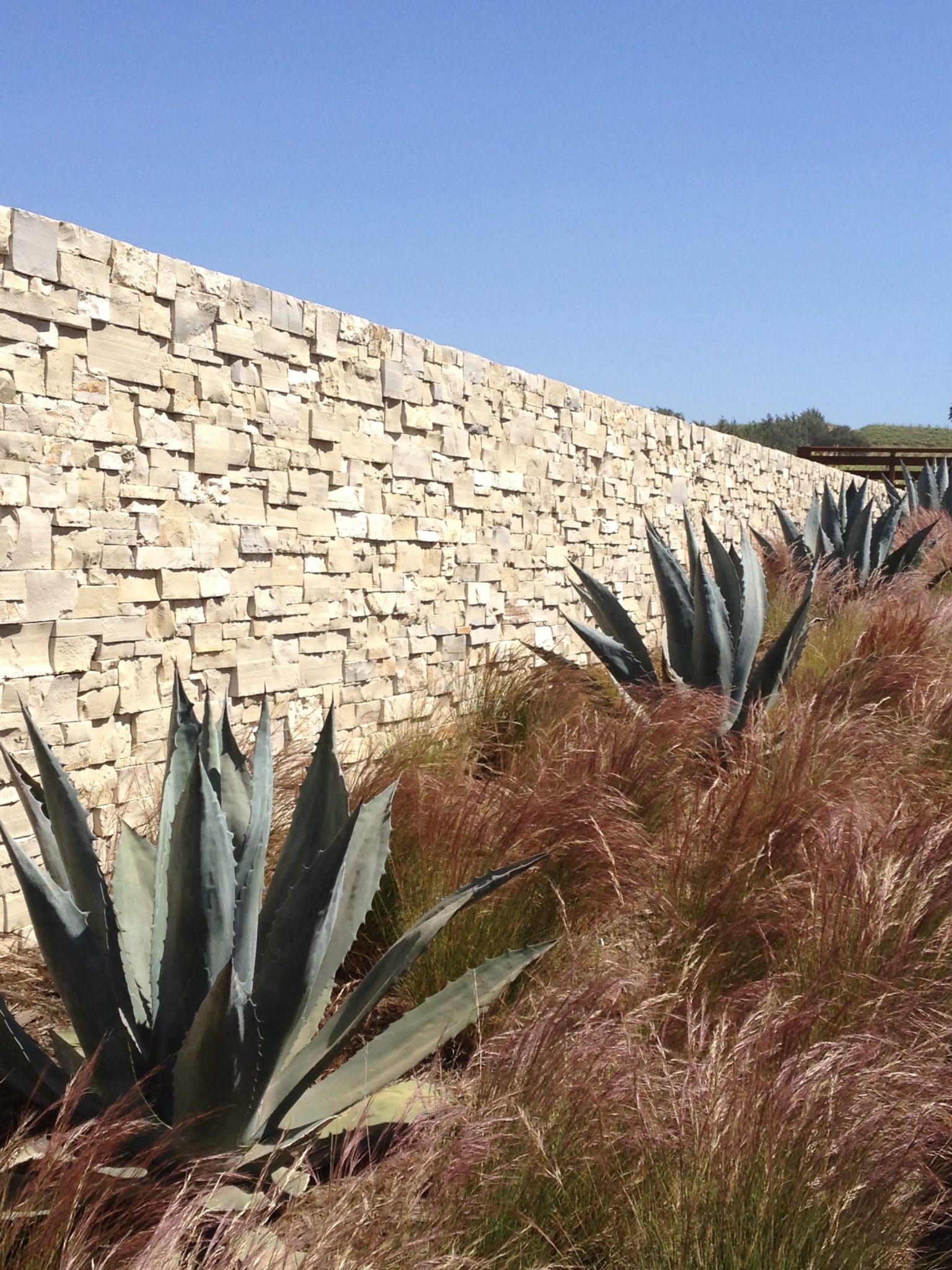
  • AGAVES – Where I am allowed to include them, I am always pleased. They are pure sculpture. Beautiful color. Put them with anything.  They steal the show.
  • CURRY – That gorgeous little shot of silver. Put it right next to a vibrant yellow green and you do not need another color in the garden. I keep them cut close without ever blooming and they become big billowy mounds.
  • ROSES – Always.
  • BOUGAINVILLEA – Always.
  • CITRUS – Always.

Puck Erickson of Arcadia Studio

I am going for Aristida purpurea.

  • PURPLE THREE-AWN – One of my favorite California grasses, it is worth the weight as it settles into the landscape. A great substitute for the invasive Mexican Feather Grass which should never be planted. Its delicate texture and subtle color picks up our afternoon light and it moves easily in the wind.

Bridget Walker of Arcadia Studios

Bridget also asked some of her colleagues for their favorites:

  • FRUITLESS OLIVE – A beautiful evergreen tree with silver green foliage. Olives are a great choice for drought tolerant landscapes; they are low water usage, love full sun and can be planted in many forms.
  • CLUSTERED FIELD SEDGE – A low-growing native grass commonly used as a drought tolerant lawn alternative. Perfect for informal lawns and meadow gardening
  • GIANT ORANGE NODDING PINCUSHION. A low mounding South African Native with course green foliage. Spring brings spectacular orange blooms 4-6″ wide.  Great in the green or for cut flowers for the home.

Sally Farnum of S E Farnum Associates

Sally gave me a list so long I had to make my own choices from her list:

  • CEANOTHUS “RAY HARTMAN”. Pale blue, fragrant blooms, it requires little water, no soil disturbance, no fertilizing, no drip and no application of soil amendment.
  • LANTANA “CONFETTI”. A shrub-type Lantana that loves the sunshine, it produces masses of flower clusters in yellow, pink, purple and wine-colored hues, it is drought and deer-resistant.
  • Many roses are cultivated for low water use, such as Meidiland, drift roses, knockout roses and some David Austins

If you are interested in more suggestions for drought-tolerant plants, please let me know: I have more recommendations for our friends.

Photo Credit: Courtesy of Arcadia Studio 


Book Review: Reimagining the California Lawn

Eye of the Day|Reimagining the California Lawn|drought garden

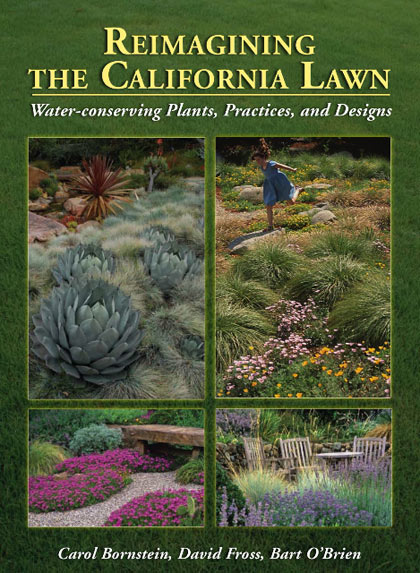
Book Review – Reimagining the California Lawn: Water-conserving Plants, Practices, and Designs

Continuing on a road we have just begun to travel, this month’s book,  Reimagining the California Lawn: Water-conserving Plants, Practices and Designs gives us another look at drought tolerant plants from around the world and offers design ideas and practical solutions to complement our Mediterranean climate.

From greenswards and meadows to succulent and kitchen gardens, this book presents alternatives to the traditional lawn that can reduce water use, beautify the landscape, and attract birds and butterflies. The horticulturist authors of Reimagining the California Lawn, Carol Bornstein, David Fross, and Bart O Brien, wrote the award-winning book California Native Plants for the Garden.

Eye of the Day|Reimagining the California Lawn|drought garden
“After considering the resources and maintenance that most California lawns demand – from heavy irrigation to regular applications of fertilizer to frequent mowing with power equipment – one conclusion becomes inescapable: we need to find alternatives to turf grass that are more environmentally sound.”

When you’re ready to remove or down-size your lawn, this inspiring book will be the perfect companion to help with the process. Reimagining the California Lawn is illustrated with more than 300 color photographs and offers a variety of plant palettes to choose from as you begin to create a more sustainable landscape.

The book’s publisher, Cachuma Press was founded by John Evarts and Marjorie Popper and has been a California corporation since 1991. Cachuma is a place name in the Santa Ynez Valley, where Cachuma Press is located. “Cachuma” comes from the name of a Chumash village on the Santa Ynez River which the Spanish spelled Aquitsumu. The Chumash word for the village, ‘Aqitsu’m, means “Constant Sign.”

For an interesting and cool plus, John and Marjorie were some of our first friends in the Santa Ynez Valley when our family moved there in 1991 and their daughter, Naomi went to school with, and was great friends with our daughter, Daisy.

Photo Credit: Image via Cachuma Press


Drought Tips: Shrink Your Lawn or Ditch it All Together

Shrink Your Lawn or Ditch it All Together

Spring Equinox ushers in longer days and with  the recent arrival of the first day of spring and Daylight Saving Time just kicking in this means more time to devote to our outdoor spaces and gardens. We need to be sure to take time to enjoy our roses’ first flush of blooms, the most glorious of the whole year.

Assess Your Garden
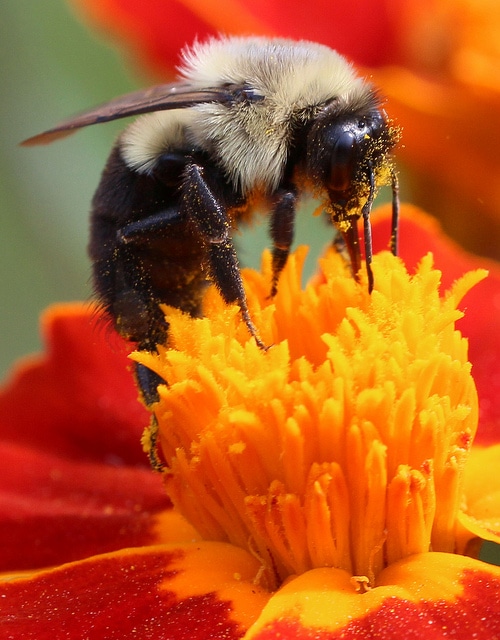
Take a look at your yard. Do you really need that plot of water-guzzling lawn? Across California, lawns are the leading consumer of outdoor residential water use. Let’s be honest, with very little to offer in the way of habitat value, thirsty traditional lawns could be smaller in favor of providing habitat for butterflies, birds, and bees.

In our mild climate, consider the many relaxing benefits of a water feature in your turf-free zone. Many no-turf options combine the use of local native plants, inviting paths, seating areas, perhaps a small meadow of flowering perennials, and water features.

Thoughtful Design
Think about your outdoor activity needs and limiting turf to places where you really need it (like a kids’ play areas). Some types of grassy lawns require less water than others so consider this when combining drought tolerant plantings alongside a lawn. Or, try eliminating it altogether—it’s the most effective way to reduce your outdoor water use (plus it gets you out of the mowing grind).

So if you don’t use it, why not ditch it? Beautiful landscapes that replace turf with easy care, drought-tolerant plants will make you wonder why it took you so long to make the change.  Eye of the Day has over two acres brimming with pots converted to fountains, multi-tiered fountains, beautiful statuary, antique wrought iron, birdbaths, patio furniture and staff who will happily guide you through making the switch to ditch your lawn, and to create a beautiful, peaceful outdoor space.


Photo Credit: Bee, Creative Commons, Pollen covered Bee by Bill Damon is licensed under CC by 2.0