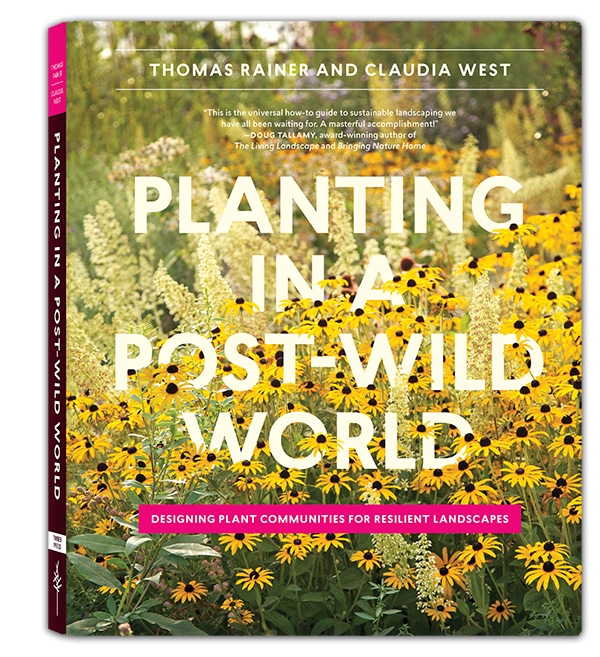
Book Review: Planting in a Post Wild World

Book Review Planting in a Post Wild World

BOOK REVIEW: PLANTING IN A POST-WILD WORLD

Though most of their readers might be other designers, Thomas Rainer and Claudia West’s Planting in a Post-Wild World offers plenty of information for non-professionals as well. The book shows how to design and maintain an ecological landscape and does so in a beautifully, clear way. One of the most helpful sections of the book suggests viewing a landscape in four different layers:

  1. Structural Layer: comprised of the year-round key parts of a design. These components should always be maintained, though replaced if needed, and kept clearly defined as they are the basis of the design.
  2. Seasonal Layer: waves of color/texture provided by each season’s visually dominant plants. These are maintained by treating them en masse, thinning or spreading as necessary.
  3. Groundcover Layer: provides the main diversity of the planting and most of the ecological function. This layer does not contribute noticeably to the aesthetic design, except as a living mulch. It’s managed by retaining and adding diversity as much as possible to maximize the health of all the plants in the landscape.
  4. Gap Fillers: self-sowing plants throughout the design and encouraged to set seed. This builds up a seed bank of desirable plants which will ideally sprout to fill any gaps that occur.


Book Review Planting in a Post Wild World I love how the authors separate the main aesthetic contributors (the first two layers) from the main ecological contributors (the last two). That makes it much easier to create a landscape that is strong in both beauty and functionality.

For a gardener, unfamiliar with ecology, this book is a great primer.


Book Review: All The Presidents’ Gardens

Book Review| All the Presidents' Gardens| White House Garden

Book Review| All the Presidents' Gardens| White House Garden As we near the holidays, we find ourselves needing a break from the daily pummeling of post-election news, but with the constant overload, our interest in the Presidency has been heightened. So, let’s take a non-political walk with the U.S. Presidents through their White House gardens.

All the Presidents’ Gardens; Madison’s Cabbages to Kennedy’s Roses, How the White House Grounds Have Grown with America by Marta McDowell, offers us a linear story about the eighteen acres surrounding the White House as a witness to history.  It’s the story of the White House grounds, beginning with the seed-collecting, plant-obsessed George Washington and ending with Michelle Obama’s focus on edibles, making it also the story of America. Book Review| All the Presidents' Gardens| White House Garden

We learn about Lincoln’s goats, Ike’s putting green, Jackie’s iconic roses, the last cow to graze on the White House lawn (Pauline Wayne in 1912) and Amy Carter’s tree house.  Illustrated with new and historical photographs, art, botanical drawings, garden plans and artwork, this is a book that will keep you interested but cheerfully distracted from partisan politics. This would also be a great gift for that friend of yours that knows everything about politics and needs to have his focus subtly shifted.


Photo Credits:
White House Garden Photo, Creative Commons, is licensed under CC0 License
White House Kitchen Garden by angela n., is licensed under CC by 2.0
Reagan Garden is under the public domain.


Book Review of Gardens – An Essay on the Human Condition

Gardens An Essay on the Human Condition Book Review

Book Review
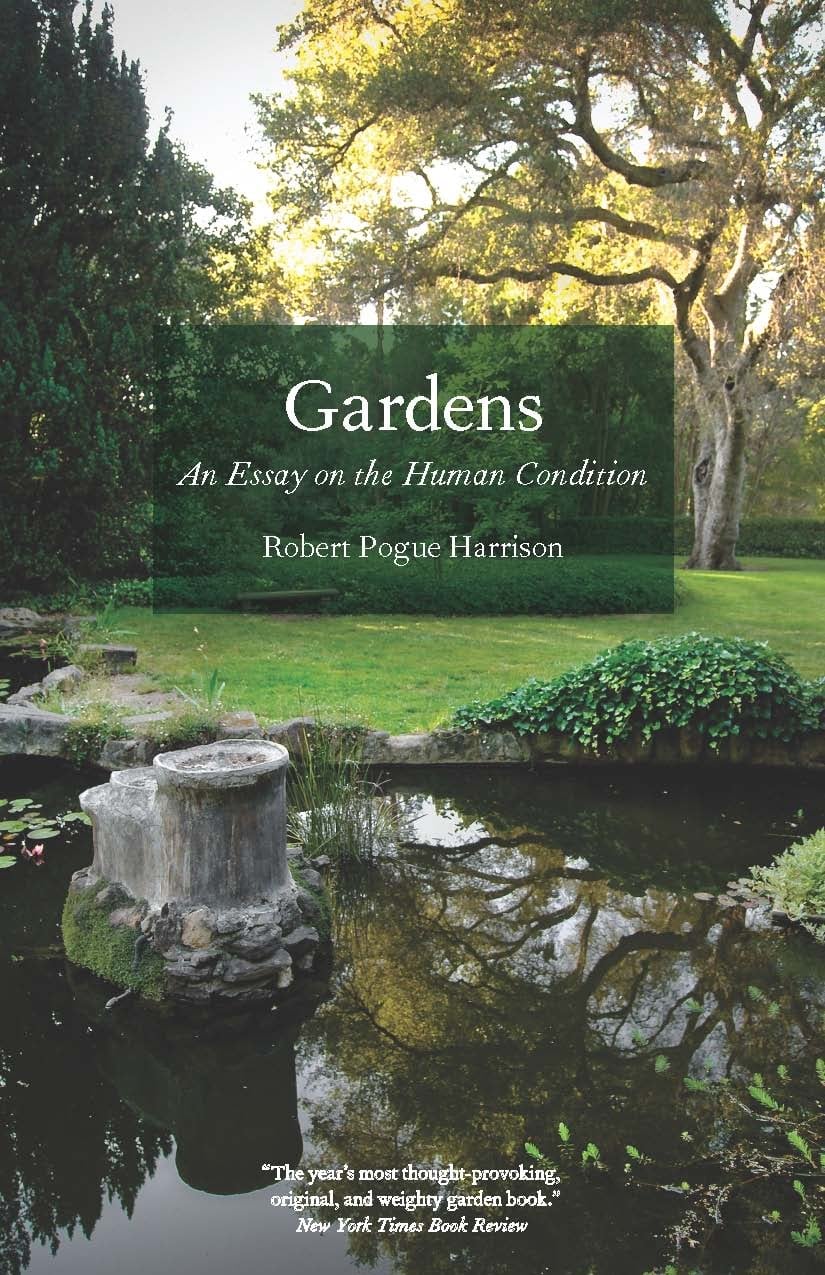
GARDENS: AN ESSAY ON THE HUMAN CONDITION by Robert Pogue Harrison

This title caught my eye while browsing in my favorite bookstore in Austin, Texas and I really thought Brent would like it. I’m only about half way through it, but Harrison’s writing has me hooked. He shows us why gardens have become so important to us and we see how they have saturated our literature and our culture.

Gardens An Essay on the Human Condition Book Review
Each chapter is organized around a type of garden. For example: Eden, the temporary gardens of the homeless, or contemporary urban gardens which allows Harrison to explore, interrogate, meditate upon what these spaces tell us about the connection between earth, human, and spirit. Harrison argues that gardening is a path to patience and wisdom as an alternative to the restlessness of the human spirit.

As each of us spends time outdoors, either in our own garden or out in the world, there is an unusual type of communion that takes place between person and nature. Every weekend I see Brent in his element, almost as though in meditation, moving potted plants, watering with his ever-present watering can, propagating his palate of succulents, and at the end of the day he seems renewed.  This fine book strives to define and almost undefinable bond between human and garden.

“Whereas most people believe gardening to be a subset of life, gardeners understand that life is a subset of gardening.” – Robert Pogue Harrison

Photo via The University of Chicago Press Books


Book Review: Reimagining the California Lawn

Eye of the Day|Reimagining the California Lawn|drought garden

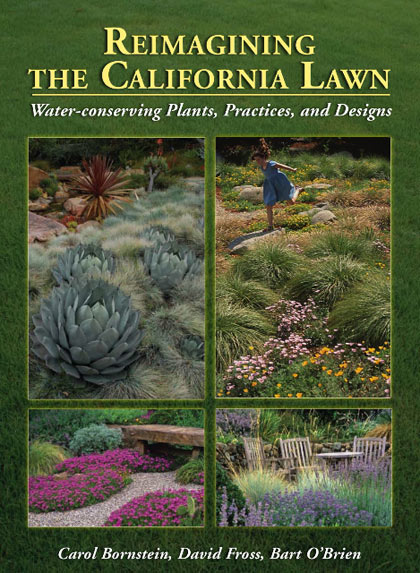
Book Review – Reimagining the California Lawn: Water-conserving Plants, Practices, and Designs

Continuing on a road we have just begun to travel, this month’s book,  Reimagining the California Lawn: Water-conserving Plants, Practices and Designs gives us another look at drought tolerant plants from around the world and offers design ideas and practical solutions to complement our Mediterranean climate.

From greenswards and meadows to succulent and kitchen gardens, this book presents alternatives to the traditional lawn that can reduce water use, beautify the landscape, and attract birds and butterflies. The horticulturist authors of Reimagining the California Lawn, Carol Bornstein, David Fross, and Bart O Brien, wrote the award-winning book California Native Plants for the Garden.

Eye of the Day|Reimagining the California Lawn|drought garden
“After considering the resources and maintenance that most California lawns demand – from heavy irrigation to regular applications of fertilizer to frequent mowing with power equipment – one conclusion becomes inescapable: we need to find alternatives to turf grass that are more environmentally sound.”

When you’re ready to remove or down-size your lawn, this inspiring book will be the perfect companion to help with the process. Reimagining the California Lawn is illustrated with more than 300 color photographs and offers a variety of plant palettes to choose from as you begin to create a more sustainable landscape.

The book’s publisher, Cachuma Press was founded by John Evarts and Marjorie Popper and has been a California corporation since 1991. Cachuma is a place name in the Santa Ynez Valley, where Cachuma Press is located. “Cachuma” comes from the name of a Chumash village on the Santa Ynez River which the Spanish spelled Aquitsumu. The Chumash word for the village, ‘Aqitsu’m, means “Constant Sign.”

For an interesting and cool plus, John and Marjorie were some of our first friends in the Santa Ynez Valley when our family moved there in 1991 and their daughter, Naomi went to school with, and was great friends with our daughter, Daisy.

Photo Credit: Image via Cachuma Press


Book Review: The Beekeeper’s Lament

Eye of the Day|Book Review|Beekeeper's Lament

Book Review: The Beekeeper’s Lament

On one of Santa Barbara’s warm, almost-Spring days, spending some time in my favorite book store, I noticed a book that fit right in with our newsletter this month.

Eye of the Day|Book Review|Beekeeper's Lament

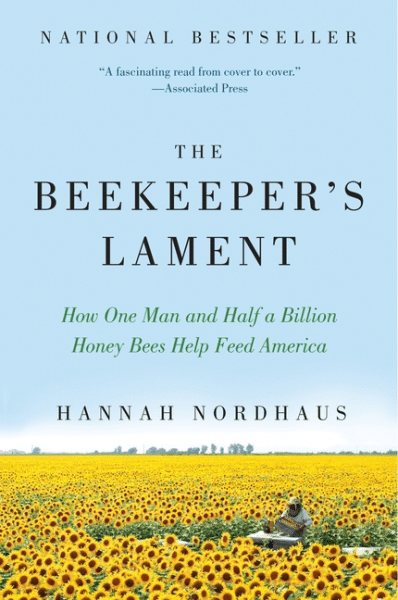
It was The Beekeeper’s Lament, by award winning journalist Hannah Nordhaus.  Even if you have never thought about the plight of the American honeybee, this book will get your attention.  Nordhaus tells the story of John Miller, a well-known migratory beekeeper, and the many complicated epidemics threatening the honeybee population. Nordhaus discusses the important role that honeybees play in American agribusiness, the maintenance of our food chain, and the very future of the nation.

Through Nordhaus’ clear storytelling, we see John Miller, who moves his hives around the country, bringing millions of bees to farmers lacking natural pollinators. As the deadly epidemic known as Colony Collapse Disorder devastates bee populations around the world, Miller forges ahead.  The Beekeeper’s Lament tells his story and that of his bees, in a complex and unforgettable way. As you sit near your garden, sipping your Pinky’s Paloma and snacking your honeyed feta, take a moment to listen ?

Photo Credit: Image via HarperCollins Publishers 


Book Review: The Inspired Landscape

Eye of the Day|Book Review|Inspired Landscape Susan Cohen

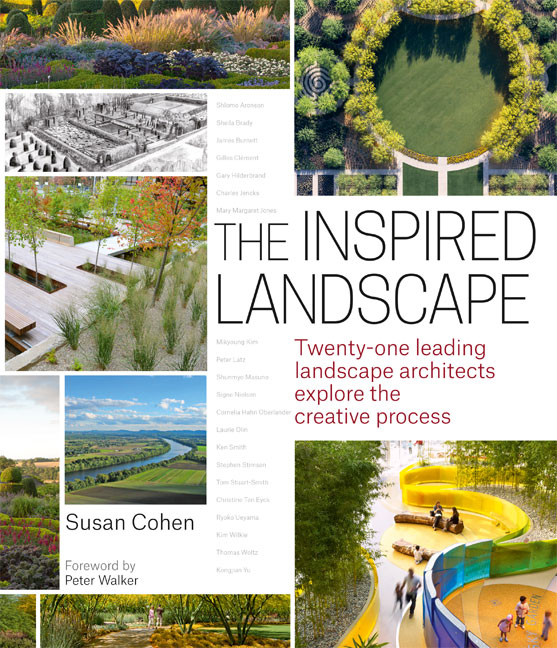
Book Review: The Inspired Landscape: Twenty-one leading landscape architects explore the creative process by Susan Cohen

I planned on liking this book before I opened it, but it had me at the dedication:

“For landscape architects – whose works, grounded in the practical, are elevated by their imaginations.”

Since we opened our business in 1994, we have met many, many landscape architects and some have been using Eye of the Day as their source for Italian terracotta, French Anduze pottery, Greek pottery and American concrete since our first year. This is a well researched book that I wish I could give every one of those loyal customers.  The Inspired Landscape by Susan Cohen features professionals from around the world and with drawings, plans, photographs and resources attempts to portray the creative process experienced personally by these individuals through specific projects.

The landscape architect forms a plan by taking cues from topography, light, client style and natural conditions.  Included in this book are designs of public places, botanical gardens, modern landscapes, country homes and on top of structures.  Cohen spots and magnifies the initial flicker of creativity and follows it through to the resulting design.  This book is a series of investigations into the inspiration and process of these twenty one specific designers, and a great resource for anyone looking for insight into and inspiration from landscape design.

And this is Interesting about Susan Cohen, too: besides being a landscape architect herself, she is a teacher and lecturer on landscape design and history and is the coordinator of the Landscape Design Program at the New York Botanical Garden where she founded the Landscape Design Portfolio Series.