The Rogue Garden

Eye of the Day|Rogue Garden| Container Garden

Brent’s Rogue Garden

People often ask me what my garden at home looks like.  I laugh and reply it looks like a psychedelic trip to a botanic garden gone rogue with cracked pots.  Then they laugh, not sure if I’m being honest or just outrageous, and they’re right, my garden is outrageous and honestly, it is a trip. While we sell volumes of the best and most authentic pottery and garden statuary around, we get our share of damage. Handling heavy pottery, moving it, merchandising it and delivering it involves some mistakes. So I have plenty of opportunities to take beautiful Italian terracotta pots home, albeit with chips and cracks (we epoxy the cracks so they will last just as long as the first quality ones). The problem is what to do with over twenty years’ worth of damaged pots.

Eye of the Day|Rogue Garden| Container Garden
A collection of potted plants in the patio area.

Eye of the Day|Rogue Garden| Container Garden
It all starts with good soil.

Eye of the Day|Rogue Garden| Container Garden
Another assortment of pottery with drought tolerant plantings.

Welcome to my test kitchen where I try different plants in different pots to learn what works. Just like a cook’s test kitchen, I have learned what works when potting different plants, hence my belief that the first thing to growing healthy container plants is the drainage.  No matter the plant, it must have freedom to drain continuously.

Eye of the Day|Rogue Garden| Container Garden
Triage on a bowl of succulents that weren’t doing well at the store.

Eye of the Day|Rogue Garden| Container Garden

Second is the soil. If you match the plant’s root system with the proper soil mixture you will have a healthy plant growing in a beautiful pot. I am a strong believer that perlite added to any soil mixture helps to grow healthy container plants.  Why do I spend more on organic soil amendments? Because I’ve learned that chemical fertilizers work fast and make container plants grow and look healthy initially, but down the road, your container plants will suffer the toxicity of chemical salts which build up in the soil. Using products like “SuperThrive”, soap, Epsom salts, wood ash from my pizza oven and most of all, composted soils amendments from the great composter I got from .

Eye of the Day|Rogue Garden| Container Garden
Flowers bloom beautifully in this mini Greek pot.

Eye of the Day|Rogue Garden| Container Garden
A grouping of Italian terracotta pots right outside the bedroom.

I have pots everywhere, hence the “garden gone rogue.” I have created patio areas on all sides of my house to accommodate all of the pots and plants. If a planted pot at Eye of the Day begins to look shabby, I’ll will take the plant home and perform triage by restarting it in an appropriate looking pot. I learn from doing this what looks good from a design point of view and I can share what works in containers that clients may not have considered before. I have been able to grow and pair plants with our products to help market Eye of the Day while making my “test garden” a realistic place to prove that container gardening is the best way to create “Paradise at Home”!
Baked Earth: The Making of a Greek Pot

Eye of the Day|How to Make a Greek Pot| design

The Making of a Greek Pot

This month I’m going to discuss a tool that has captured my imagination for nearly 40 years: THE POTTER’S WHEEL. It started for me in Orange County California in 1976 at Irvine High School. For my P.E. class I was taking surfing and the instructor also taught Ceramics. It didn’t take me long to figure out that all the cool kids not only took surfing, but took Ceramics for second period, so if the waves were particularly good, the surf class would just stay and surf all the way through second period!

Thirty years later, I am still doing ceramics, primarily because of my fascination with the potter’s wheel, which is a relatively new invention in the history of pottery making. Originally functional vessels made of clay were constructed using a coiling technique. The artist would roll out “ropes” of clay and slowly, methodically, hand turn a small form by placing the coils on top of each other and pinching each coil into the one beneath it. Although this time honored method can be very slow and tedious in terms of production, there are still many cultures in the world that use this technique to create functional ceramic containers.

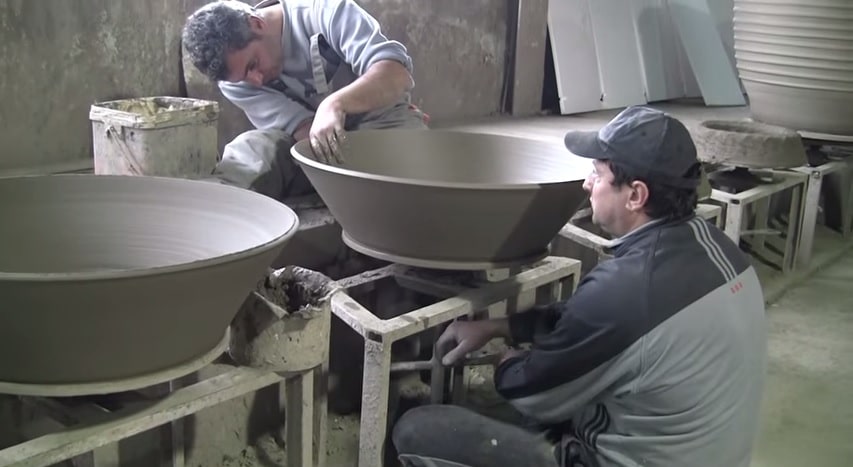
The potter’s wheel was born out of necessity. There are many theories, but all agree it was a matter of industrialization that brought about its creation. Recently I found a few video clips in my inbox that Brent (owner of Eye of the Day) had shot on the Island of Crete. They are an intimate look at the processes used in the production of the authentic Greek vessels Eye of the Day sells. The pieces are wheel thrown but on a wheel that is hand cranked by a potter’s assistant. The clay is made into fat coils, and added to the clay beneath it by pinching. Then the assistant spins the wheel faster and the potter begins to lift the clay into a form. It is particularly fascinating that Greece employs both old and new world techniques. They start with a slab of clay for the bottom, and work their way up by coiling, and pinching, and finally throwing the clay into shape. In the videos you see that there are multiple wheels working at once with vessels on each, in different stages of completion. When the clay needs to rest on one wheel,, the potters move in succession to each wheel down the line, until returning to the beginning to continue working toward a finished piece. These pieces are then fired and shipped directly to Eye of the Day.

We are very lucky to have this direct connection to handmade vessels for our garden design needs. The next time you are at Eye of the Day, remember what it takes for the artisans who build these vessels to deliver such an authentic and timeless piece of history for our own daily aesthetic.


The Truth Behind the Aged Terracotta You Buy

Eye of the Day|Quality terracotta differences|design pottery

The Truth Behind the Aged Terracotta You Buy

If you have read the articles by Scott Semple you now have a good understanding of what makes up terracotta pottery. From Gladding McBean’s stoneware to our Italian frost resistant earthenware containers, at Eye of the Day Garden Design Center we sell high-quality terra cotta products which last and last.

Now, what about aesthetics? Do you want your pots to last? Is it important that future generations are given your garden pots along with your jewelry, silverware and bedroom set? Many people love the patina of terracotta when it gets older and though a crumbling pot is not the same thing as “patina” they think it still looks cool.

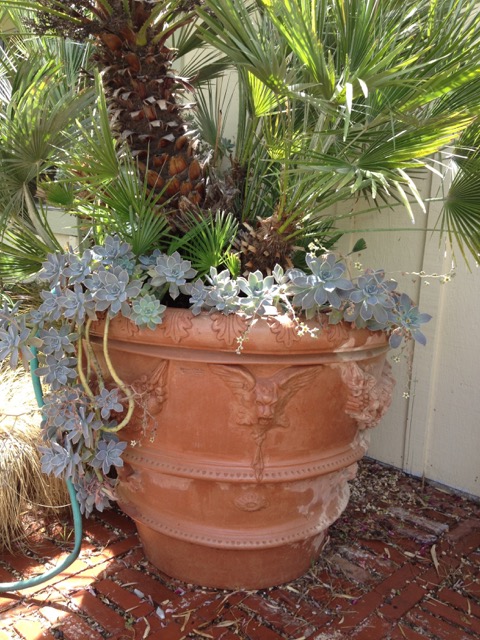
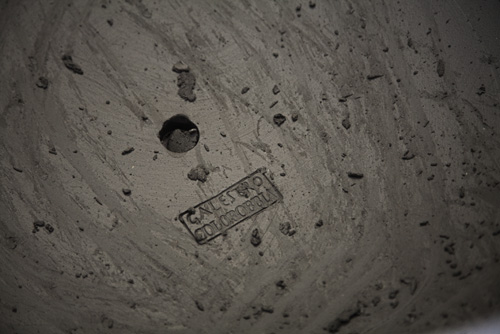
This Italian pot from Terrecotte Olympia of Tuscany, Italy is a favorite of designers in Southern California. It is not made with frost proof Galestro clay but with Sienna clay, which is clay Americans typically find at their garden store. Olympia, like many Italian clays and other clays from which garden pots are produced, will almost immediately begin to spall and flake. Although they have a wonderful aged patina that designers love to specify in their designs, the material does not have a long life compared to pottery made from Galestro clay. The problems will be seen in Mexican and most Asian terracotta products as well.

At Eye of the Day, we hope that our retail and professional design clients will consider the investment they are making and choose terracotta for the centuries. For a further example of how these pots age and look, take a look at the following pictures of the Italian pots at the Ralph Lauren Store at the Stanford Shopping Center in Palo Alto. If this is not enough to convince you, well, that’s why there are both vanilla and chocolate…something for everyone.

If you like that falling-apart look, come and see our seconds and close-out area at the store where we have lots of consigned pottery from customers who are replacing their containers with new ones. The prices are great and the look is shabby/chic. We also have remaining stock from Terrecotte Olympia at half price: it’s still half-good.


How To Choose A Terracotta Pot By Its Porosity

Eye of the Day|Baked Earth|terracotta porosity

In past articles I have discussed how freeze/thaw has an effect on ceramic containers and I have also discussed clay pot irrigation. We are in the worst drought in the state of California’s history, so by irrigating with low fire pots with high porosity,  water can be sent directly to the root system and feed plants on demand, as opposed to spraying the crusty, evaporative surface.

Eye of the Day|Baked Earth|terracotta porosity

Technically porosity is the amount of empty space in the structure of the fired clay that makes it capable of absorbing or distributing liquids. Simple, right? So if the terracotta is absorbing water and the temperature drops below freezing, you’re going to have potential problems with your investment as the water expands while it freezes.  But if your intention is to use the porosity to slowly distribute water, then the more porous the better. There are other uses for porosity in ceramics, for example insulation. The less dense a brick is, the more insulating capabilities it has.

Eye of the Day|Baked Earth|terracotta porosity

Natural clays can have a very high porosity.  When the grains are very small, there are countless small pore spaces, but what clay does NOT have is good permeability, which is the way you would measure how connected these porous spaces are. So generally speaking, if the clay is high fired it will be far less porous. This is advantageous for a freeze/thaw condition. If the clay is low fired, or under fired it will be porous and best for releasing or absorbing water.

So the bottom line is that the level of porosity you should seek depends on your intention for use of the ceramics.


Clay Pot Irrigation Benefits During Drought

We had a very quick winter here on the Central Coast with just a little bit of rain, spotty at best, while the rest of the country has been buried under blankets of snow. As California is technically still experiencing a severe drought, I want to address ceramics in irrigation.

Irrigation Through Clay
In the newsletter, we have covered many subjects concerning ceramics.  In irrigation, ceramics also has many uses. The Romans created an intricate system of aqueducts, which directed water throughout all parts of the empire. We see this around the world, ceramic pipe systems carrying water through towns and villages.

Clay Shards and Slow Water Release
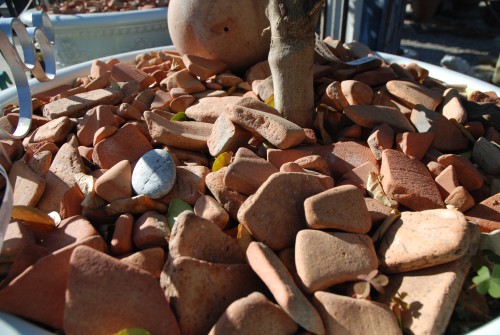
Ceramic “shards” can also be used as a soil amendment. The broken pottery has to be low fire to be absorbent.  Low fire ware may be crushed and added to the soil and as you water, the shards act as little sponges and absorb the water and release it essentially as needed below ground.

Clay Pot Irrigation

Another use I find very interesting is what is called “clay pot irrigation.” If you perform an internet search of this term and go to “Images,” you will see excellent examples of how this works.  Essentially, it is a very simple technique.  Again, a low fire vessel is made by a potter, and is then buried right next to the plants you want to irrigate; fill it with water, and because of the porosity of the low fire ceramic, it leeches through the walls of the vessel and waters the plant by slowly releasing a minimal amount of water.

Cultures around the world have been using this method forever!  Look it up, check it out, and enjoy these new yet very old techniques of gardening.  Ceramics in your garden is not just decorative, it can be very functional.


Eco Friendly Landscape Design by Lisa Cox for Hacienda Style Home

Lisa Cox, of Lisa Cox Landscape Design has happily designed landscapes ranging from simple tract homes to vast estates.  As she plans an outdoor environment, she envisions a transformation that communicates the lifestyle and personal taste of the client, while incorporating her own style. Each garden is designed and built with all materials including stone, plants, trees, water features, and garden art selected by Lisa using local, top qualified growers and suppliers.

Commitment to sustainability, the use of drought tolerant plants and trees, including California natives, has been an integral part of her design process, allowing a more “naturalistic” result that mimics the local terrain.

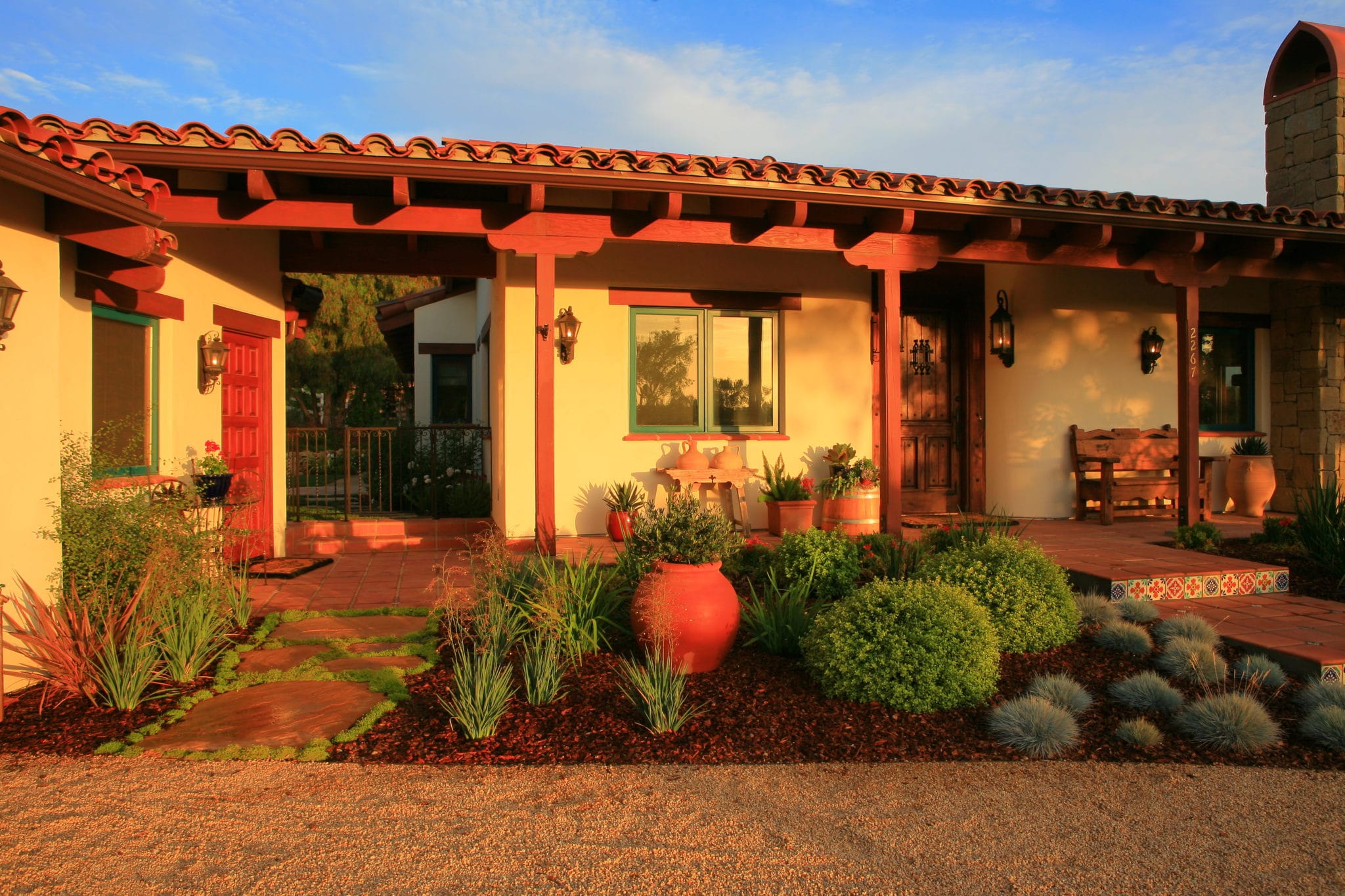
When Lisa met with her new clients in the Santa Ynez Valley, they requested that the newly constructed home not have any sod in the front area, and that she use drought tolerant plants including grasses and succulents. Working with a blank slate, except four nice sized olive trees at the entrance, she was free to design the space, including selection of a plant palette that complimented the Hacienda style of the home. With the use of local sandstone boulders, salvias and phormiums as her base, she also incorporated deciduous trees and perennials for color in the Spring and Summer, and a few rows of grape vines because after all, it’s the Santa Ynez Valley!

Choosing Greek terracotta pots from Eye of the Day, filled with “Blue Glow” Agaves gave the clean, rustic look she was looking for on the front porch and the traditional Terrecotte San Rocco terracotta pot in front worked perfectly to show off the “Little Ollie.”

It seems everything progressed perfectly for Lisa and her clients, but there WERE a few important challenges:

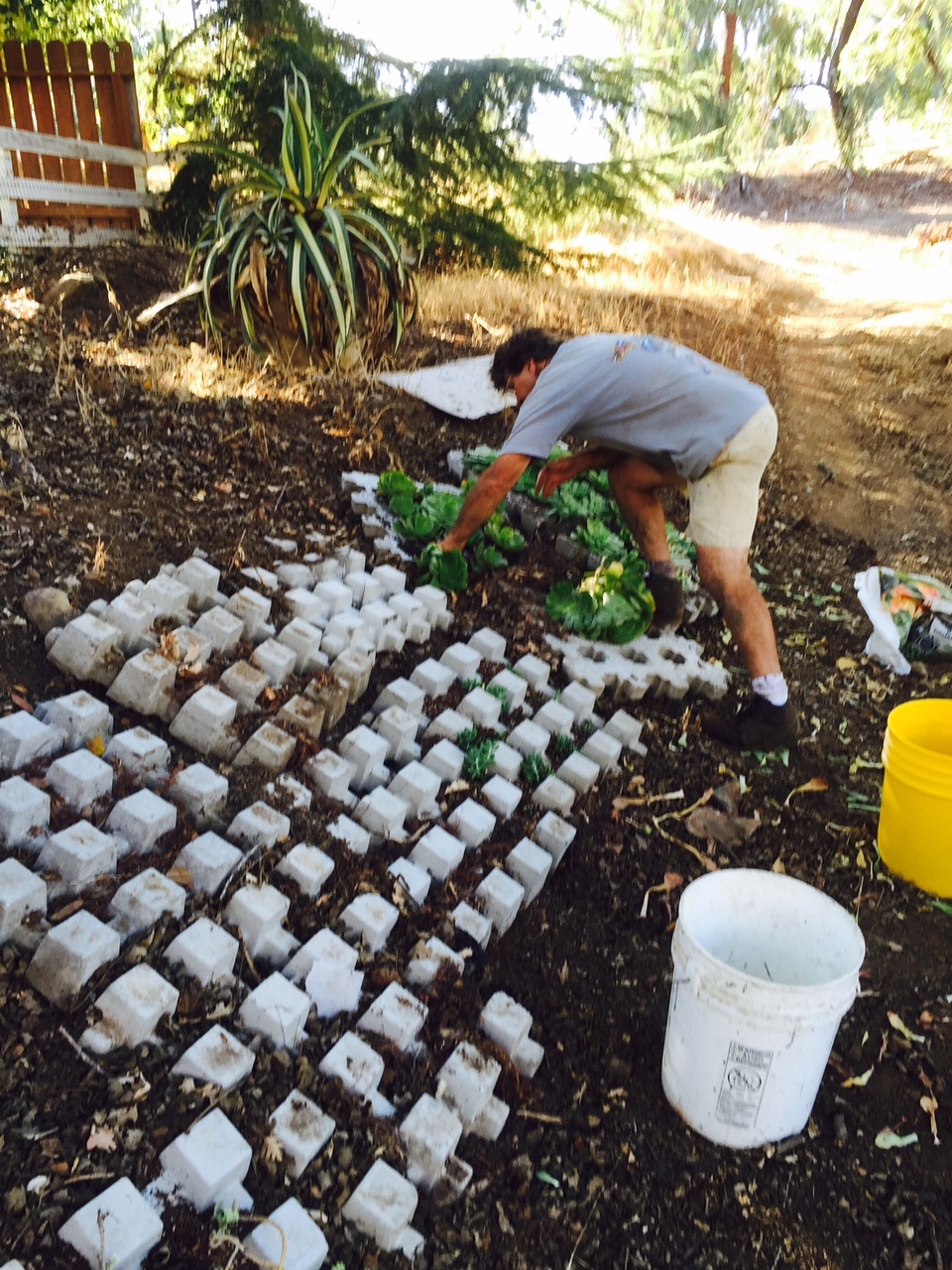
  1. The need to place a gopher basket for every plant as the local area is inundated with gophers that would quickly destroy the plantings, and
  2. The necessity of paying close attention to selecting plants that can stand the heat as well as the sometimes frigid nights where temperatures can go into the low 20’s or below.

As Lisa’s work on the project came to a close, she felt deep satisfaction; in fact she felt this was a home environment she could inhabit herself.  The project was a dream to work on and the end result was exactly what the homeowner envisioned.

Visit Lisa Cox Landscape Design to view more of her work.