The Outlier’s Garden

Eye of the Day|Outlier's Garden| garden design

THE OUTLIER’S GARDEN

Outlier: something that lies outside the main body or group that it is a part of; “different” than the rest, not better, not trying to fit in, just different.

This is how I describe my garden when I’m asked.

Eye of the Day|Outlier's Garden| garden design Even when big-time designers visit Eye of the Day, their jaws drop. We often hear, “I’ve never seen anything like this.” We are proud of our store and business. Most people assume our home must be some magnificent park or arboretum. We just laugh and smile and say it more resembles a garden on LSD, it’s definitely a trip.

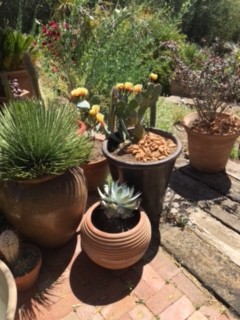
Eye of the Day|Outlier's Garden| garden design Eye of the Day|Outlier's Garden| garden designMy garden is truly my sanctuary, my go-to place; it is where I want to be all of the time. It is my laboratory, my test kitchen and I love every recipe I try. I learn about the plants, I learn how they function in different pots and soils. I propagate, I mix, I simply play all day.  I’m fortunate to have access to so many beautiful containers; yes, most are broken and rescued from the dumpster but I don’t care. I get to experiment and when the results are spectacular, I bring them back to Eye of the Day to share them.

Eye of the Day|Outlier's Garden| garden design Take a look at this Greek Pithari I planted five years ago with a miniature rose, spectacular if I say so myself.  Even landscape designers comment on it and we know how critical they can be. They make winemakers look good.

Eye of the Day|Outlier's Garden| garden design My garden is an outlier when it comes to design but I think it is far more interesting and it is definitely more alive than most.

Eye of the Day|Outlier's Garden| garden design I will be posting pictures of my private garden here on the Blog ongoing for those who are interested to see just how unarboretum-like my wonderful garden really is.


New Container: Antique Spanish Oil Jars

Eye of the Day|Antique Spanish oil jars|terracotta pottery
Antique Spanish Oil Jars

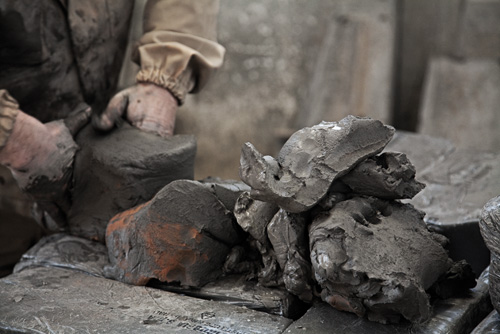
I get a call from Brent at Eye of the Day.  He’s stuck in traffic on the 405 freeway in L.A., and he could use a little help unloading a container that’s just arrived at the Port of Los Angeles. I get up from the potters wheel, wrap my clay in plastic and head to Carpinteria not knowing what to expect.

Typically, Eye of the Day containers are from Greece, Italy or France  and are packed to the gills, having made the arduous journey from the Mediterranean. I know from experience that shipping ceramics in any capacity can be precarious at best, so you never know what to expect when you finally open the door.  On this particular day I figured it was more of the same, the usual three-to-four-hour marathon of unloading fragile, heavy, awkward, authentic terra cotta. I was both right and wrong. To my great surprise, the container comes from Spain. Oh man, this is gonna be awesome!

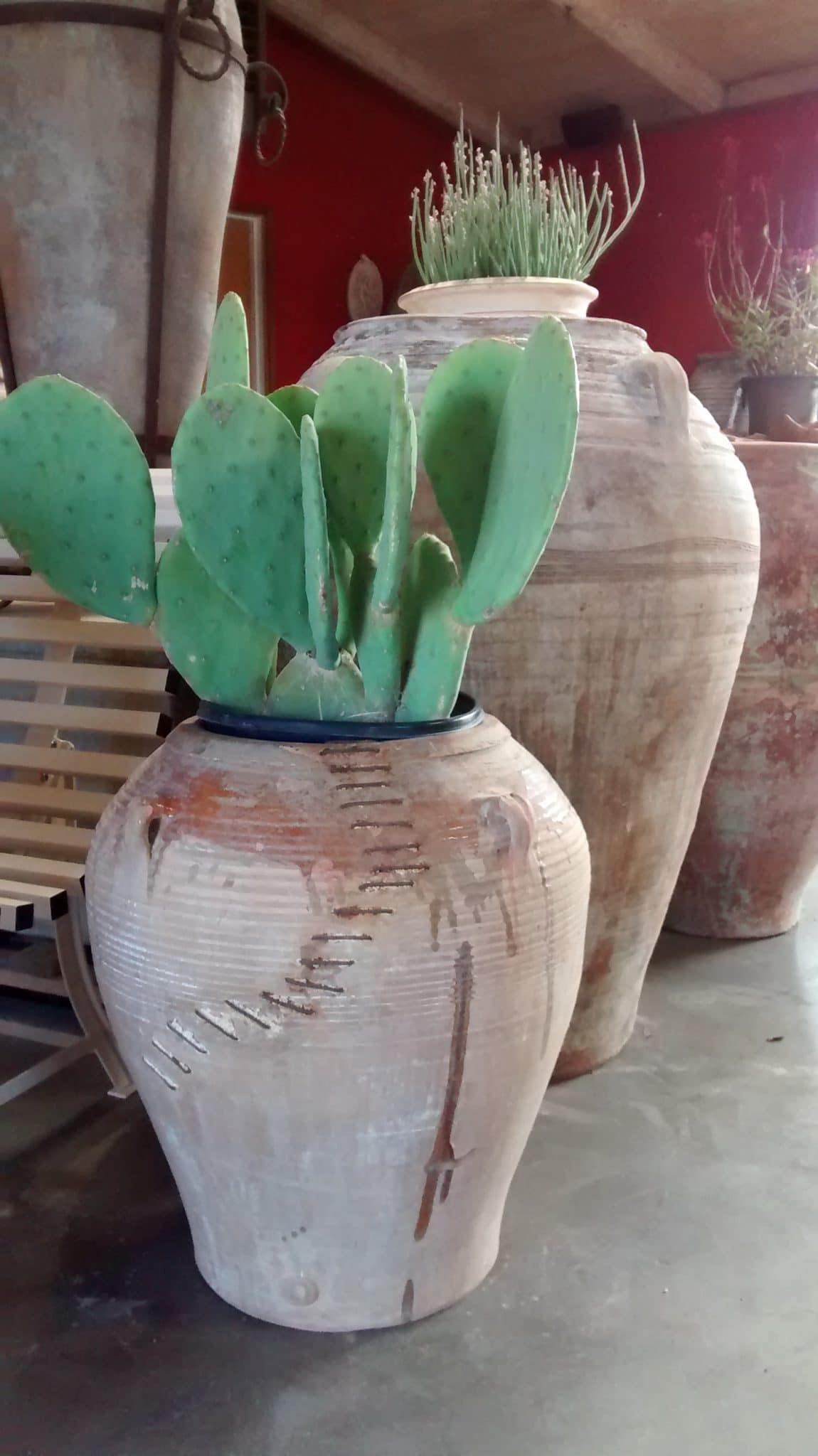
When Juan cracks open the door ever so slowly, so as not to lose anything that may have shifted in transport, it is clear that this is perhaps a once in a lifetime experience. Before me lies the mother lode of antique Spanish oil jars, richly textured, impeccably handmade, and well worn from years of use. Some are stitched up with metal staples, some seemingly have bee’s wax in them, some look as if they were glazed by the hand of a two-year old, and almost all of them have some measure of olive oil still inside!

Each pot is a masterpiece. It’s as if each and every piece has its own unique story of function colliding with inherent beauty.  These oil jars are museum quality, some of the most fantastic pieces of pottery I will ever see in my life. Yours too, when you make the trip to Eye of the Day to catch a glimpse of these Spanish beauties before they are all sold!


The Simple Art of Collaboration: An Introduction to Sempleware

Eye of the Day|Sempleware| pottery, terracotta, design

The Simple Art of Collaboration: An Introduction to Sempleware

 As an artist, if there is one thing I have always believed in it’s been the concept of collaboration. There is something very powerful, very organic that comes from two or more people coming together on one idea, like a symphony. Or consider the hundreds of ceramic pieces that Pablo Picasso produced towards the end of his life with the help of the Madoura Pottery workshop. Both the process and the outcome can be engaging in unexpected ways that keep fresh the evolving cycles of creation.

My name is Scott Semple and I’ve been contributing to this newsletter for about two years now, but my day job is ‘large format potter’.

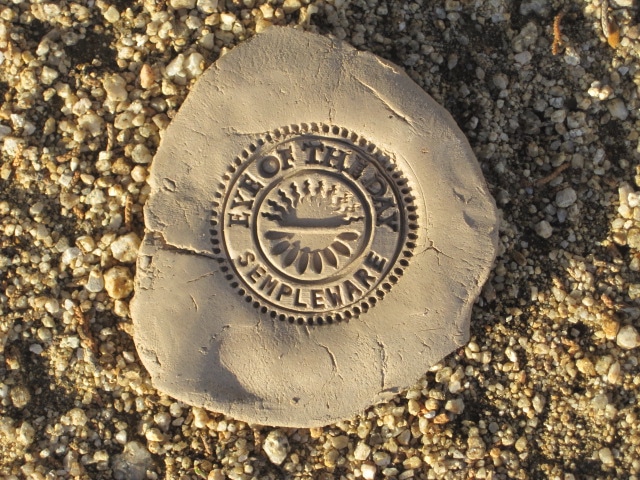
This year I am celebrating forty years in ceramics by announcing my newest collaboration with Brent Freitas and the team at Eye of the Day, entitled “Sempleware”. Our concept is to offer in-house, hand made ceramics, based on an artisan pottery and sustainability model.

Beginning in April, I will be throwing pots right there in the store using custom designs and shapes to fit the needs of the ever widening garden design community. Together we want to allow homeowners and designers alike—all customers who come through the doors—direct access to the artistic process, while providing a local option. Very local in this case. We see this partnership as not just collaboration between Brent and me, but as a movement between Eye of the Day and the community as a whole, combining performance art with retail design needs.

Sempleware is an offering as much as it is a line of products and I believe it will be an engaging component when considering sustainable product awareness. And quite frankly, I’ll jump at the opportunity to share what I love most with anyone who will listen, I’m selfish that way.

We’ve been talking about this for a while now and it seems that all the pieces have finally landed in place.

So that’s the big news! Beginning in April, I’ll be at Eye of the Day throwing down! Come by and say hi, watch me spin some pottery, see what you think! Your favorite Central Coast ceramic supplier for all your authentic garden design needs.


The Rogue Garden: Preparing for El Nino

Eye of the Day|Rogue Garden| Preparing for El Nino

The Rogue Garden: Preparing for El Nino

Rain, rain, go ! No!  Rain, rain, please stay…we need you, desperately!  We all want it to rain here in California more than those outside the Southwest understand.  As I am in traffic in either Southern or Northern California, I often wonder how we can keep watering our landscape or even fill every commode tank in this state of over 39 million people. It is truly frightening.

Once El Niño begins, all hell may break loose.  Flooding, mudslides, standing water, highways washing out and roofs leaking are just a few of the problems being anticipated. A positive is all of the rainwater we can capture.  I have over 40 five-gallon pails strategically located to capture roof runoff. I’m working on a collection system to store this runoff for later in the Spring to use on all of my container plants.  Another thing to deal with is mosquitoes breeding in that stored water. I use mosquito dunks, sold everywhere.

Eye of the Day|Rogue Garden| Preparing for El NinoIf you have a lot of plants in containers, as I do, a wet winter can drown plants in containers that do not drain well. If your containers have mature plants it is possible that the root system has clogged the drain holes. During a wet period this can mean that your plants are sitting in a swimming pool of water unable to drain out of the pot and the root system begins to rot. Here are some suggestions for maintaining a balanced environment in you container plantings:

  1. If you can manage it, turn the container onto its side (usually by laying it down on something soft like a tire or thick cardboard). Then with a screwdriver or something sturdy and sharp, clean any roots clogging the drain holes. Use a rod to poke into the hole to clear a drain path through the hole further into the pot or container.
  2. While the container is on its side, use a concrete/ceramic drill bit to add additional holes to the bottom. Be careful not to fracture the pot or to place the holes too close together, weakening the bottom structure of the pot.
  3. If you can’t get the container onto its side think about drilling an extra drain hole into the side of the pot at or near the bottom. This will allow for more drainage.  Many pots are made with drain holes in their sides so this isn’t something unusual.  You can place the side of the pot with the drain hole to the back for aesthetic purposes.
  4. You can move pots under eaves or downspouts under cover and use the water captured during the downpour to water the pot appropriately.
  5. If you are up to the challenge, remove the plant from the container and trim the roots/root ball (best done in the dormant period for the plant), add some new soil and repot.

Too much water can drown your plants, so be careful, and make sure you have good drainage even if they are planted in the ground and PRAY FOR RAIN!

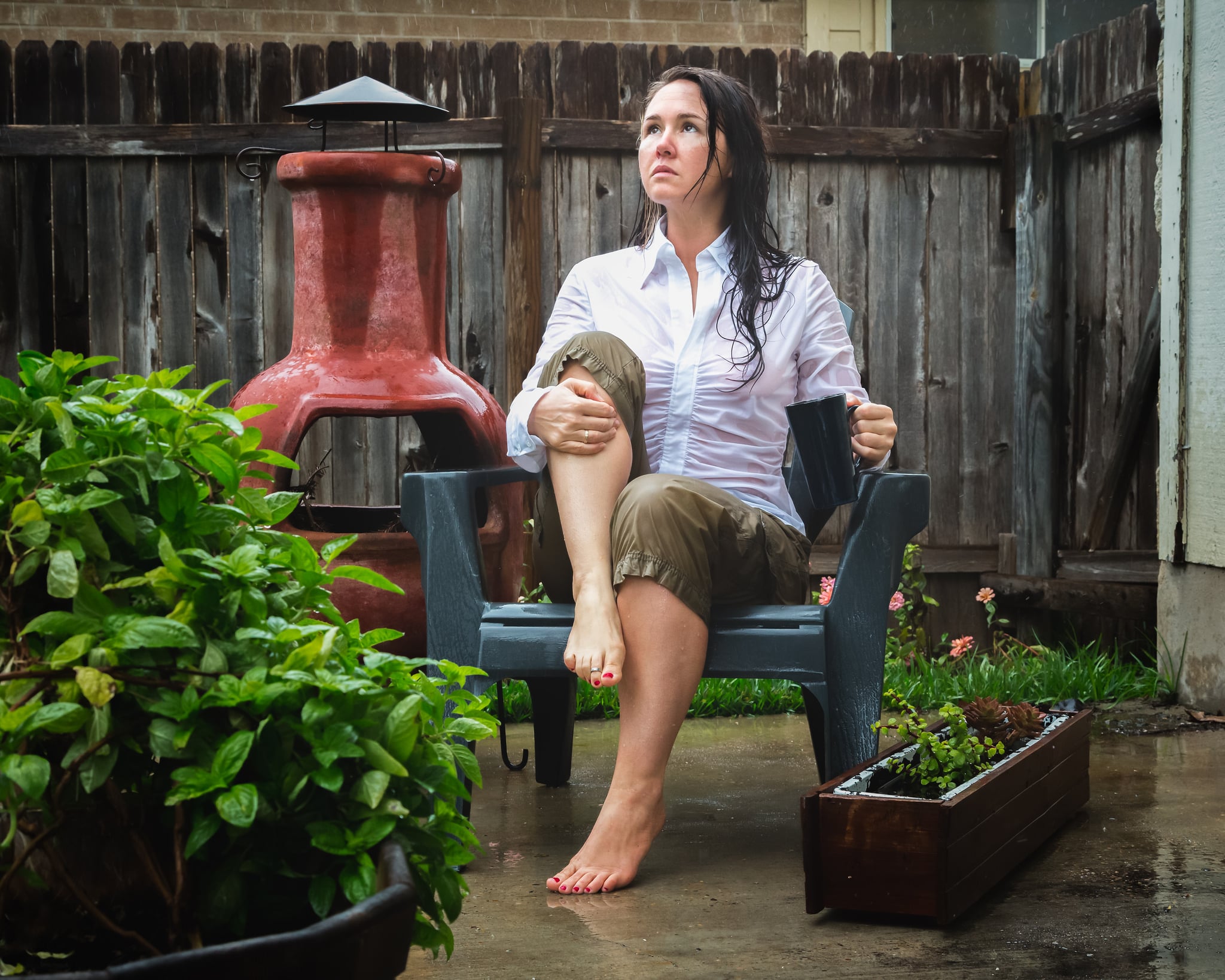
Photo Credit: Rain in the Garden, Creative Commons, Let It Come by Lotus Carroll is licensed under CC BY-NC-SA 2.0


Baked Earth: The Truth Behind Authentic Impruneta Pottery

Eye of the Day|Impruneta clay|terracotta Baked Earth

Baked Earth: The Truth Behind Authentic Impruneta Pottery

Welcome to another edition of Baked Earth, with information about what’s happening in the world of clay, ceramics and installation pottery. This month, we would like to pop the mythical bubble concerning Impruneta pottery.

Impruneta is a commune in the province of Florence, in the Tuscany region of Italy. It has been famous for many centuries as the producer of the region’s finest terracotta, everything from tiles to garden art, to large terracotta planters. Along with the handmade nature and unparalleled craftsmanship of Impruneta terracotta lies the real secret of its success: the clay body.

It has been known for countless generations that Galestro clay is the superior material of the region. Galestro clay is extremely high in subsoil minerals, has an excellent plasticity, and due to its unusually high granitic content, can withstand sub freezing temperatures. Galestro clay yields a high quality product with great versatility and many ceramic manufacturers in the Tuscany region use Galestro, including Terrecotte San Rocco, Eye of the Day’s premier terracotta source.

Only a handful of factories produce wares actually in the commune of Impruneta and therein lies the problem. Because the potteries in the outlying communities are also using Galestro clay, or part Galestro and part local material, some producers will stamp their work with the word “Impruneta,” which can lead to retailers here in the US (either unknowingly or complicit in the process) to sell merchandise as “Impruneta terracotta,” when in fact it was not made within the boundaries of the Impruneta commune.

It’s akin to wearing a Timex and calling it a Rolex. Both are well made watches, but one has the reputation of distinct craftsmanship and is branded as such, so you are paying for the brand. It is the same with Impruneta—it has been branded by generations of superb craftsmanship and these days it is not uncommon for people in this business to use the branding of “Impruneta” to their advantage by calling it something that it is not.

So garden designers, homeowners, and landscape architects alike, be forewarned! There are only a handful of families producing authentic Impruneta terracotta in that commune, so if someone claims to be selling or installing Impruneta wares made with Galestro clay, be sure to ask them who the manufacturer is, and cross check their references. But as I have said countless times, it all comes back to the clay. And anything made with Galestro clay from the foothills of Tuscany is a sure bet as the highest quality pottery for your home.

By the way, I’m wearing a Timex…
Know your terracotta!


Terra Malia Designs : Santa Barbara Sonos Headquarters

Eye of the Day| Terra Malia Designs| Sonos

Earlier this year we were fortunate to meet Terra Basche of Terra Malia Designs in Santa Barbara.  She was looking for pots for the new Sonos location in Santa Barbara and found them at Eye of the Day.  We caught up with this busy woman and asked her a few questions about her blooming career.

How did you become interested in landscape design and what was your path to your current career?
I completely fell head over heels in love with succulents back in 1996 when I was attending UCSB. I remember the very visit to Santa Paula Nursery where I ohhh and ahhhed over the variety of colors, textures and structural make up of each individual one. I tried to fit as many in each fist as possible, as I headed to Ivan at check out.

I naturally have a design eye, as those on my mom’s side of the family have practiced every kind of art. I designed succulent centerpieces for my own wedding in 2001 and proceeded to design pots, weddings, gifts and mini-landscapes for friends and family until I started getting offers from others who would actually pay me to do what I loved. When my oldest daughter was born, I quit my 9 to 5 to be a mom, but began to lazily pursue my love professionally on a very part-time basis. Terra Malia Designs was my “second born” back in 2008.

My business presently is a healthy mix of artistic interiors/exteriors for residential and business and wedding floral with a healthy dose of untraditional elements including mixing succulents, tillandsias and other living props, so the plants in tablescapes can be reused and planted back into the ground, so unnecessary waste is eliminated. My business model closely mirrors my life models and beliefs about sustainability and what makes sense. Plain and simple…it feels good!

What are your clients asking you about water-wise planting and hardscaping?
Most often, clients seek me out for my succulent design. I have almost always reached for plants that require low water, as they are just as lovely as those other plants that need lots of water. Saving resources when necessary is responsible.

How do you design a plan that addresses water issues but is welcoming and pleasing to the eye?
There are so many varieties of succulents and cacti; it is easy to create a design that has enough variety for the eye. I enjoy combining succulents with grasses to add movement potential and texture. The continual exotic blooms from succulents create a softer feel, while adding interest. Using the neon green Crassula, mixed with Aloe Striata and Blue Fescue for color variation, for instance, provides the viewer with color difference so each plant can be appreciated, and the style boasts both soft and hard lines with movement in the Blue Fescue.

How did you approach the Sonos project in order to solve the physical issues of a “parking lot?”
Sonos wishes to maintain their offices in the city of Santa Barbara…which means convenience for their employees, but at the same time, means not as much potential for green space. Terra Malia Designs has helped to transform parking lots, patios and rooftops into greener spaces where a more natural environment can be enjoyed.

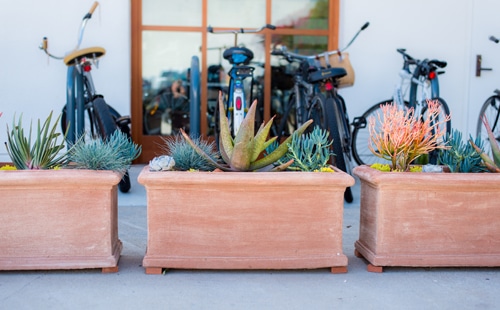
The Sonos headquarters, located at 614 Chapala Street, has a staff parking lot that backs up to the building. Sonos wanted to create a patio area where staff could go to have an outdoor meeting or sit and have lunch. Terra Malia Designs utilized the Cassetta Liscia Atlas Italian terracotta pots from Eye of the Day placed side-by-side to create a barrier between the parking lot and the patio zone. Visually, the barrier is essential to differentiate the spaces and as the planting has filled in, it has created a space that is more pleasing to spend time.

To see more of Terry Basche’s work, please visit Terra Malia Designs