Tips for Successful Edible Gardening by The Conscious Garden

Eye of the Day|Edible Gardening|The Conscious Garden

Tips for Successful Edible Gardening by The Conscious Garden

In Southern California we love to eat healthy food and there is no fresher, tastier or more nutrient dense foods than those that you pick from your own garden or that you buy from the farmers market.  It is important to know that your food is free of chemicals, organic and full of nutrients,  so what better way to know what is in your plants than growing it yourself?  I want to share with you some of the main things to remember when setting up an edible garden, and whether you have a yard or not, it IS possible!

Eye of the Day|Edible Gardening|The Conscious Garden
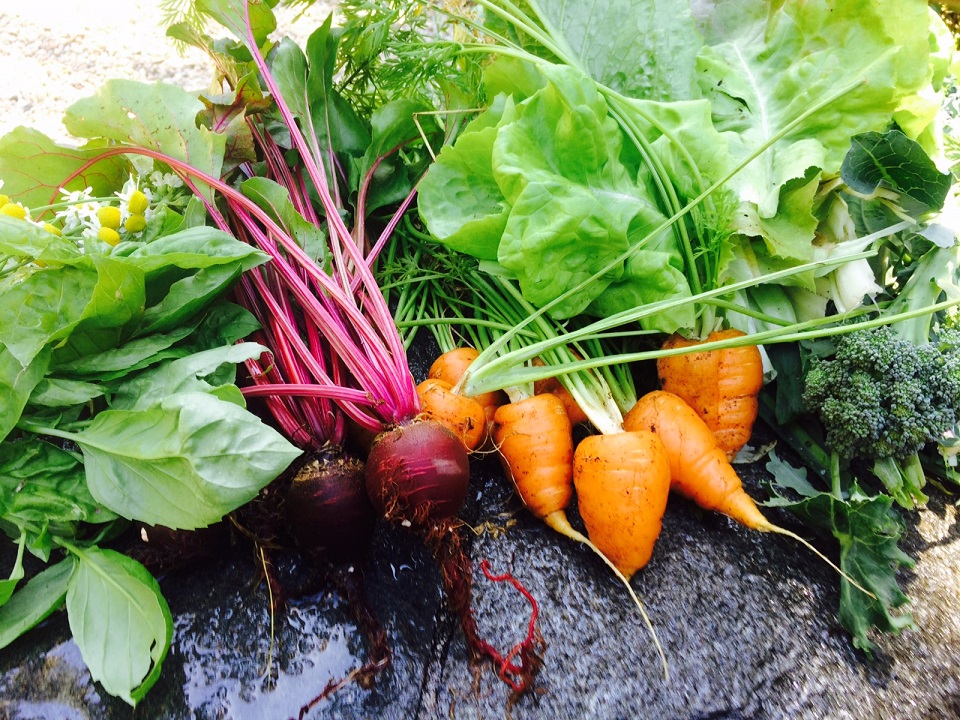
A bountiful vegetable harvest.

I have been growing food since I was a kid, and one of the things I have learned, is that plants will grow in anything.  So, what ever you have to grow food in, whether it is a raised bed, beautiful container or just a simple plastic drum, you too can have edible vegetables right at your home.

Tips for a Successful Edible Gardening

Soil
The key to having good nutrients in your food is in the soil and that is also the advantage of growing at home: you can truly know if it is organic and what’s in it as you plant.  Use a premium potting soil to begin with.  If you have a large garden, use a mixture of different composts such as manure and worm castings.  The soil provides the nutrients to the plants and allows them to be strong.

Almost any type of container can do for planting edibles.

Water
Edible plants require a little bit of water often and if you add a drip system, it will ensure the plants are getting water directly to their roots where it is required and it makes the garden more water efficient.  This is especially important in container gardening, and it will make life SO much easier.

Eye of the Day|Edible Gardening|The Conscious Garden
For first timers, try planting edibles in containers first like kale and lettuce.

Plants
When you decide to plant, choose seedlings from a good organic local supplier, providing bio-dynamic organic seedlings. This will ensure that the roots are strong and will stand up to transplanting and our current drought conditions, giving the plants a good start to their edible nutrient supplying journey. It is also time efficient.

Eye of the Day|Edible Gardening|The Conscious Garden
A smaller terracotta pot filled with delectable edible plants.

Pest Control
Be ready for providing pest control – and keep it organic, non-toxic.  Sluggo for snails, Organocide for bugs and Serenade for diseases.  I find that if you notice bugs attacking a particular plant, leave one of those plants free of pest control and the bugs will eat that one plant and leave the rest alone.  (Periodically remove the bug-plant and destroy it removing the bugs and disease).

Eye of the Day|Edible Gardening|The Conscious Garden
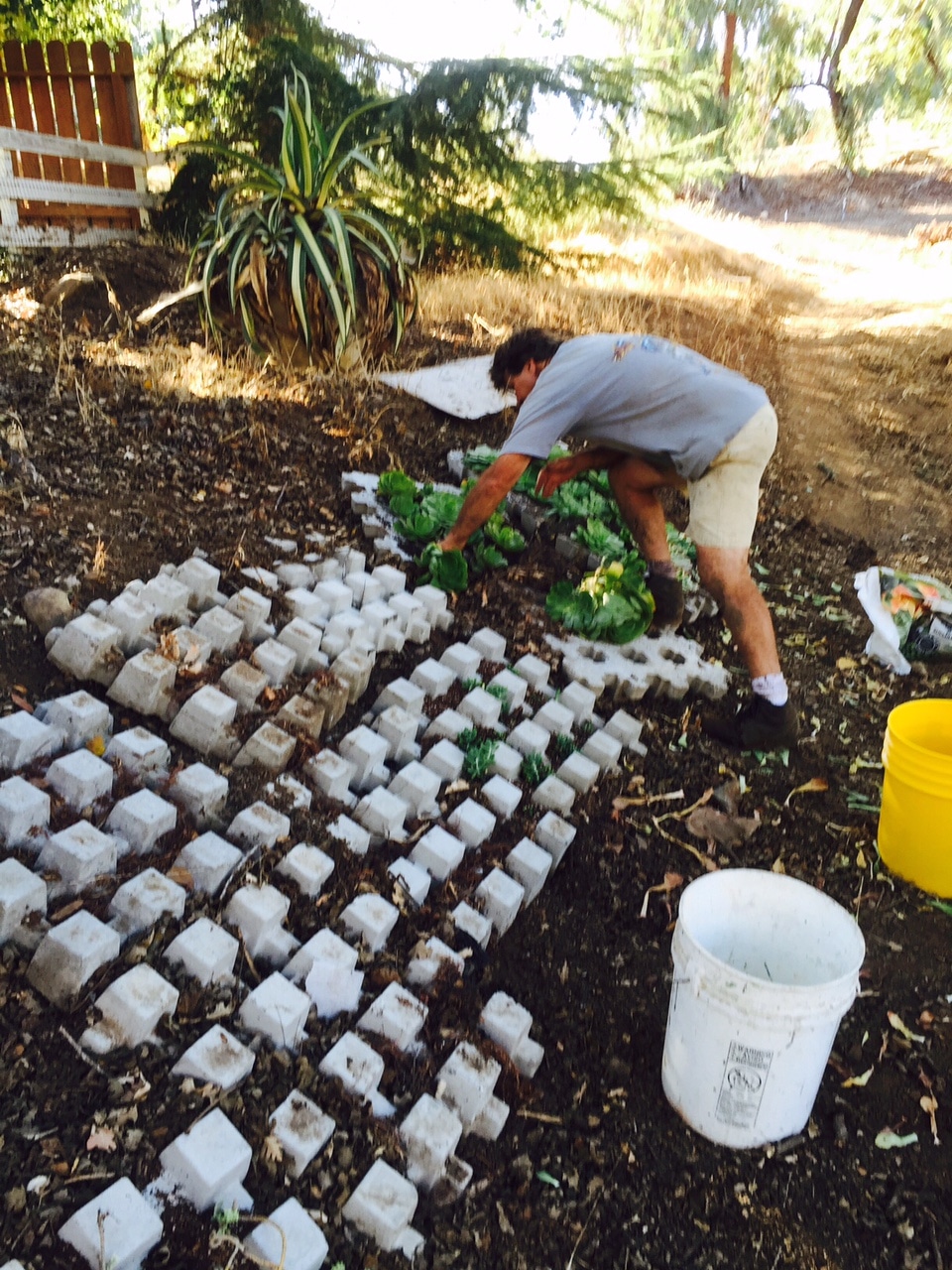
A raised bed of filled with a variety of lettuces and kale.

Feeding
Remember plants need food too!  Fish and kelp as the master formula is great. Or you can use an organic food with mycorrhizae. The numbers on the pack of organic fertilizer should not be higher than 5-5-5, which are nitrogen, phosphorus and potassium in a low balanced form.

A smaller terracotta pot filled with delectable edibles.
Healthy, organic, and free of chemicals.

Just remember, take care of your edibles and they will take care of you. Don’t be afraid to try your hand at an edible garden. If you see something you would like to plant, try a handful of plants and see how it goes.  Plants are sustaining and will grow for you if you just give them a chance.

I am available for consultations or garden support to fulfill your edible garden desires.

Happy Planting!

Sagar Faucheaux
The Conscious Garden

Phone:  (805) 745 5555
consciousgarden@
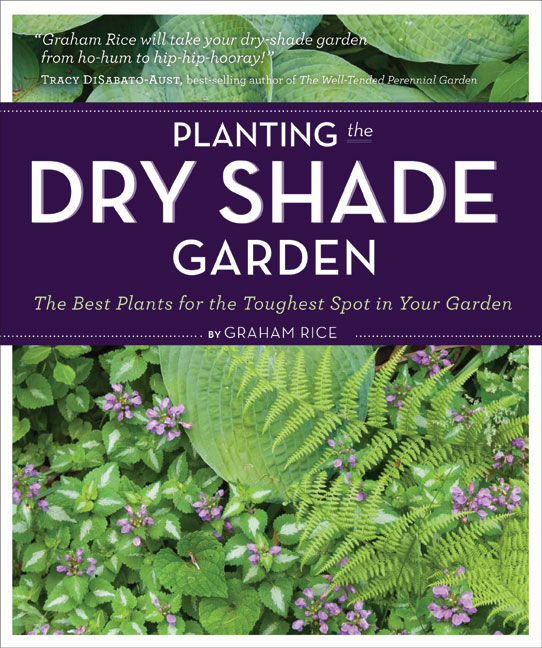


Book Review: Planting the Dry Shade Garden

Eye of the Day|Shade Garden| Graham Rice

IT’S NOT A DARK, DRY BOOK!

Apparently, figuring out what to plant in an area of your garden that has shade, but no moisture, is a problem that stymies gardeners everywhere. We have been focused like a laser beam on our lack of water and how to logically use what little we have and Planting the Dry Shade Garden: the Best Spot for the Toughest Spot in Your Garden, by Graham Rice, Timber press 2011, provides practical ideas and solutions for these problem places in the garden.

Eye of the Day|Shade Garden| Graham Rice

Read through and find out how to prune to allow more light and how to work with the soil to condition it to hold more water. Mr. Rice offers 130 plants that do fine with reduced light and moisture levels —long-blooming woodland gems like epimediums and hellebores, and even lush foliage plants like evergreen ferns and bear’s breeches (my personal favorite, of course). Shrubs, climbers, perennials, ground covers, bulbs, annuals, and perennials — an entire palette to help you transform challenging spaces into rich, rewarding gardens.

The book’s 125 beautiful color plates are mainly the work of award-winning photographer Judy White, so not only is the book packed with good advice, but the pictures reveal the beauty of the plants you can grow in the garden’s heart of darkness.

Photo Credit: Bear’s Breeches, Acanthus Mollis by Kristen Paulus is licensed under C.C. 2.0


Garden Cocktails: A Watermelon Toss for Summer

Eye of the Day|Watermelon Garden Cocktail|Edible garden

GARDEN COCKTAILS: A METHOD FOR ENJOYING MORE SUMMER

If you were smart and planted watermelon vines in your garden, your summer is about to become even more exceptional.  A farmers’ market is another way to fulfill your summer watermelon dreams, but either way this remarkable summer drink invented by our daughter, Daisy Ryan, will be a great accompaniment to evening garden-gazing.  Do not hesitate to substitute vodka or gin.

WATERMELON TOSS

1 ½ oz blanco tequila
2 oz fresh watermelon juice
1 oz fresh lime juice
½ oz simple syrup
Pinch cayenne
1 tsp pickling liquid from watermelon pickles

Garnish: watermelon pickle
Put all ingredients (except the watermelon pickle) in a cocktail shaker with crushed ice, shake, and pour over ice in a double rocks glass and garnish with the watermelon pickle on a pick.  Go outside, sit down and drink it while the sun turns the sky the same color as your drink.

Watermelon Juice

Cut rind off watermelon, including ¼” of the pink flesh, put aside.  Juice ½ of the melon at a time in a blender until it turns to juice and strain it.  Add simple syrup and salt to taste

Watermelon Pickles

Reserved watermelon rind
3 c champagne vinegar
2 c water
1 c sugar
½ c pink peppercorns
¼ t cayenne pepper

Using a sharp knife, cut the rind into lengthwise strips including ¼” of an inch of the pink flesh. Cut into ½” squares.  Heat the vinegar, water, sugar, pink peppercorns and cayenne.  When it comes to a boil,  pour over the rind, let it cool then refrigerate for 24 hours.


The Rogue Garden

Eye of the Day|Rogue Garden| Container Garden

Brent’s Rogue Garden

People often ask me what my garden at home looks like.  I laugh and reply it looks like a psychedelic trip to a botanic garden gone rogue with cracked pots.  Then they laugh, not sure if I’m being honest or just outrageous, and they’re right, my garden is outrageous and honestly, it is a trip. While we sell volumes of the best and most authentic pottery and garden statuary around, we get our share of damage. Handling heavy pottery, moving it, merchandising it and delivering it involves some mistakes. So I have plenty of opportunities to take beautiful Italian terracotta pots home, albeit with chips and cracks (we epoxy the cracks so they will last just as long as the first quality ones). The problem is what to do with over twenty years’ worth of damaged pots.

Welcome to my test kitchen where I try different plants in different pots to learn what works. Just like a cook’s test kitchen, I have learned what works when potting different plants, hence my belief that the first thing to growing healthy container plants is the drainage.  No matter the plant, it must have freedom to drain continuously.

Eye of the Day|Rogue Garden| Container Garden

Second is the soil. If you match the plant’s root system with the proper soil mixture you will have a healthy plant growing in a beautiful pot. I am a strong believer that perlite added to any soil mixture helps to grow healthy container plants.  Why do I spend more on organic soil amendments? Because I’ve learned that chemical fertilizers work fast and make container plants grow and look healthy initially, but down the road, your container plants will suffer the toxicity of chemical salts which build up in the soil. Using products like “SuperThrive”, soap, Epsom salts, wood ash from my pizza oven and most of all, composted soils amendments from the great composter I got from .

I have pots everywhere, hence the “garden gone rogue.” I have created patio areas on all sides of my house to accommodate all of the pots and plants. If a planted pot at Eye of the Day begins to look shabby, I’ll will take the plant home and perform triage by restarting it in an appropriate looking pot. I learn from doing this what looks good from a design point of view and I can share what works in containers that clients may not have considered before. I have been able to grow and pair plants with our products to help market Eye of the Day while making my “test garden” a realistic place to prove that container gardening is the best way to create “Paradise at Home”!


Rebecca Sweet On Shades of Gray in the Garden

Eye of the Day|Rebecca Sweet|Shades of Gray Garden

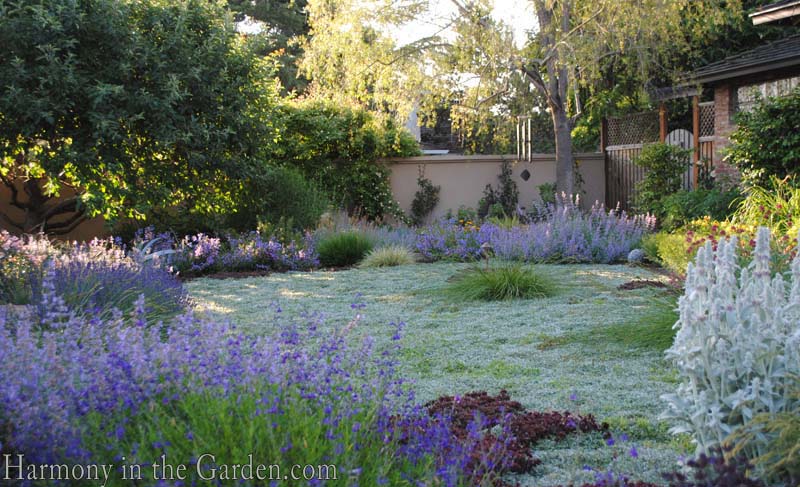
One of my favorite gardens that I designed a few years ago is a great example of how you can replace a water-thirsty lawn with lush looking, and less thirsty, plants.  One of the most successful strategies we used was to swap out the turf lawn and install a drought-tolerant Dymondia margaratea ‘lawn’ in its place.  But first, a little background and a few before & afters:

My client’s home is located on a busy corner within a stone’s throw of two nearby schools, has giant picture windows throughout the house and has a 4-foot high wall that surrounds most of the garden (a Lookiloo’s fantasy!)  What this translates into is the homeowners were on constant display to traffic and pedestrians alike and felt like they were living in a fishbowl, for all to see.

The lack of privacy would tempt many to build a fortress-like wall to surround the garden, but staying true to their welcoming personalities, they decided to create a garden that others might equally enjoy (after all, if they’re going to peek over the wall they might as well have something nice to look at, right?)

Tired of their threadbare, un-used, water-thirsty lawn and random mishmash of plantings, they wished for a more responsible, fun, and ‘livable’ garden that used less water and incorporated plenty of native plants to encourage wildlife to visit.  Our first step was to rip out the lawn and reinterpret a newer, smaller version using Dymondia.  I chose Dymondia because it’s extremely tough, drought-tolerant, evergreen and can withstand a fair amount of foot traffic. Plus, it’s just so darnned pretty.

Their concern, however, was that using such an expansive amount of the color gray in the garden would have a blinding, bright and parched effect.  This is a perfectly valid concern, and one that I’ve often heard from other clients who have experienced the unintended ‘glare’ in their gardens as a result of an overuse of gray plants.   To help avoid this common pitfall of using gray in the garden, here are a few tricks I’ve used to help tone down the brightness while still enjoying this beautiful color.

Shades of Gray

First, it’s important to realize that there are different shades of gray ranging from light & bright, to mid-level gray all the way to dark, charcoal-like foliage. And because of this range, it’s important to understand that not all grays are alike.  It’s perfectly okay to use plenty of gray plants in the garden, as long as you vary the shading.  No one wants to look at one bright gray plant after another without a place for the eye to rest, so remember to use plenty of mid-level and dark gray plants sprinkled throughout.

Keeping it Lush

In order to prevent gray colors from creating a ‘pass the sunglasses’ effect in your garden, it’s also important to include plenty of nearby plants that have deep, rich colors, such as burgundy, green and purple. In this garden, the plants chosen included the brilliant blue flowers of our native ‘Blue Springs’ Penstemon, vibrant purple Lavender and the deep burgundy Stonecrop that creeps throughout the edges of the Dymondia lawn.

Lambs Ear is used sparingly throughout the garden, as it’s a really bright shade of gray, almost bordering on white, and could easily cause the Dymondia to appear brighter than it actually is.

In fact, each Dymondia leaf consists of two colors – green on the bottom and silvery gray on top.  And once the Dymondia begins to grow and fill out (forming a soft and inviting 3-inch spongy mat), its slender leaves will begin to twist gently, revealing its different colors.

To further emphasize the green in the bi-colored foliage, I’ve included plenty of other surrounding plants with green colors to help strengthen the color echo.

For example, I’ve interspersed our native Carex divulsa (Berkeley Sedge) and Calamagrostis foliosa (Feather Reed Grass) throughout the lawn, as well as lots of perennials with green foliage.

It’s not just Dymondia that has hefty amounts of green in its coloring – take a look at a lot of other gray plants and you’ll notice green beneath the gray ‘fuzz’ (ie: many lavenders, senecios and hostas).  To emphasize the blue tones of the gray Dymondia colors, I also included plenty of blue plants in the garden, as well – like this ‘Beyond Blue’ fescue, various succulents, and many blue-flowered perennials.

My goal was to emphasize the tones and colors that I want while minimizing the tones that I don’t want.  Can you imagine how bright the garden would be if I had used an overabundance of white flowers and foliage?

Hardscaping

Hardscaping (such as nearby flagstones, patios and sidewalks) plays an important role when placed near gray plants as it, too, can serve to either tone down the brightness or amp it up to blinding proportions.

For this garden, we chose flagstones with slightly creamy-pink tones to them.  Again, the reason was to de-emphasize the bright gray colors by introducing softer muted shades to tone things down.

I’ve seen plenty of instances where a drift of bright gray plants, such as Lamb’s Ear or Artemesia, have been placed directly adjacent to a bright white cement walkway. And 9 times out of 10, that’s the area the homeowner is referring to when they say they don’t like the color gray.

To eliminate this blinding effect, just remember to use hardscaping ( as well as plants) with softer tones and/or darker colors.

A year after this garden was installed, we compared water bills – the result was amazing!   Compared to the wall-to-wall ‘carpeting’ of lawn from before, the new garden uses 40% less water, even though there is a ton of plants in this garden!  This shows that with creative and careful plant selection, and water-efficient drip irrigation, the result can be breathtaking while using much less water.


Summer 2015 Garden Design Magazine Review

Eye of the Day|Garden Design Magazine Summer 2015

GARDEN DESIGN: QUICK! GRAB YOURSELF A COPY!

Eye of the Day has been involved with the publication Garden Design magazine for many years. The latest iteration  of this “magazine” is quarterly and feels more like a book than a periodical.  There is absolutely no advertising to interrupt the flow of articles and inspiring photographs.

My eye was first caught by the Editor’s Note  “Moonshot Thinking for a Low Water World” in which Thad Orr, Editor-in-Chief, discusses replacing lawn with water-wise alternatives involving collection systems and irrigation monitoring. On the facing page is Fresh: Inspiration and Innovations from the World of Garden Design.  This article addresses “Tough Questions about Drought” by asking four people: the Director of the Nature Gardens of the Natural History Museum of Los Angeles, the Director of the Landscape Architecture and Horticulture Gardening Programs at UCLA, a well-known Californa Landscape Architect and the Water Efficiency Manager of Irvine Ranch Water District, what can be done to conserve water this summer and in the future. Initially, this was all I needed to  continue reading; we all need to immerse ourselves in questions and answers about water usage.

Elise’s Gift showcases the historic Redford Gardens in Quebec, illustrating the article about one of the largest plant collections in North America and the story of its founder, Elsie Stephen Redford with photos of the abundant flora of the gardens that were once the family’s fishing camp. Reading about Elsie’s vision and involvement in her “garden” overlooking the St. Lawrence River has me wishing for an in-depth  biography of her life.

These are only a few of the gems between the covers of Garden Design. This impressive publication is just jammed with articles and photos that are so interesting, beautiful and thought provoking that even those of us not claiming to be gardeners  will just want to absorb.

Subscribe here.