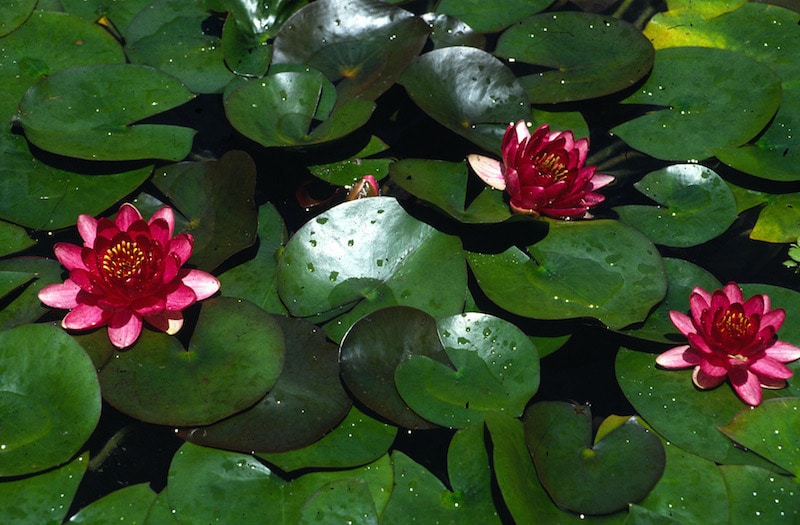
Some of the many plants available to gardeners are uniquely suited to grow only in water (or quite damp conditions). These plants inhabit a unique microclimate so their needs are necessarily different than the majority of nursery offerings. To successfully grow them, you need to understand their whims and fancies.
Aquatic plants can be divided into three categories and each type has different requirements. There are water garden plants that freely drift about on the surface with their naked roots dangling into the water. Others are ecologically suited to root in the mud at the bottom of a pond or lake and send their leaves and flowers to float on surface where they can harvest sunlight and attract pollinators. The third group requires constant moisture in their root zones, but the plants emerge from muck to produce sturdy and ornamental aerial forms. Here are some of the most common, and most easily obtained of these three classes.
Free-floating species such as water hyacinth (Eichornia crassipes) or water lettuce (Pistia stratiotes) do a great job of cleaning the water of nutrients such as nitrogen that otherwise would support unsightly algal blooms and they are interesting and beautiful, but be advised that in California it is illegal to sell either of these may find them at farmers markets or back yard sales. They have become invasive in many waterways, so please grow them responsibly and when you have too many (they reproduce prodigiously), do not put them in the nearby lake or stream, but include them in your compost pile instead.
The most recognizable water garden plants are water lilies (Nymphaea species and cultivars). They anchor themselves in the mud (which means you need a pot to put them in) and send highly ornamental leaves and flowers up to the surface. Other, smaller, species with this habit include water hawthorne (Aponogeton distachyus), water poppy (Hydrocleys nymphoides), and floating heart (Nymphoides species).
A much larger selection of what we like to call “bog plants” that normally grow on the fringes of natural bodies of water is also available for our water gardens. These include dramatic foliage plants like papyrus (Cyperus papyrus) and cattails (Typha species) as well as flowering plants like iris, canna, and a fun group of lobelias just suited for the damp. In water gardens, they need to be planted in soil and perched with their rims just an inch or two below the water surface. All of these can be easily found on the internet from respectable mail order nurseries. They should come with easy planting directions, but if they don’t, that information is also widely published.
 Visiting Roger Reynolds Nursery in Menlo Park, California is almost intoxicating. It is two acres of Japanese Maples, perennial and annual bedding plants, fruit trees, roses, and lots of container plants. They carry fountains, birdbaths, pottery and garden care products. This beloved Bay Area nursery, situated in a mystical, one hundred year old redwood grove, has been in business and owned by the same family since 1919 and is truly an inspiration. Because of its solid place in the community and our good luck, Eye of the Day is about to join up with Roger Reynolds Nursery.