Your Potager | Making a French Kitchen Garden

French kitchen Garden - Potager

A Potager – Your French Kitchen Garden

Votre Potager Francais

In France the kitchen garden, or “potager” is centered on vegetables and herbs and is typically an informal design perfectly in tune with nature. The garden can be a place where local fauna, including insects, birds and reptiles feel at home. Great promoters of biodiversity, kitchen gardeners have saved many heirloom vegetable varieties with their efforts, so by planting your kitchen garden you can be part of a growing and necessary group.

French kitchen Garden - Potager
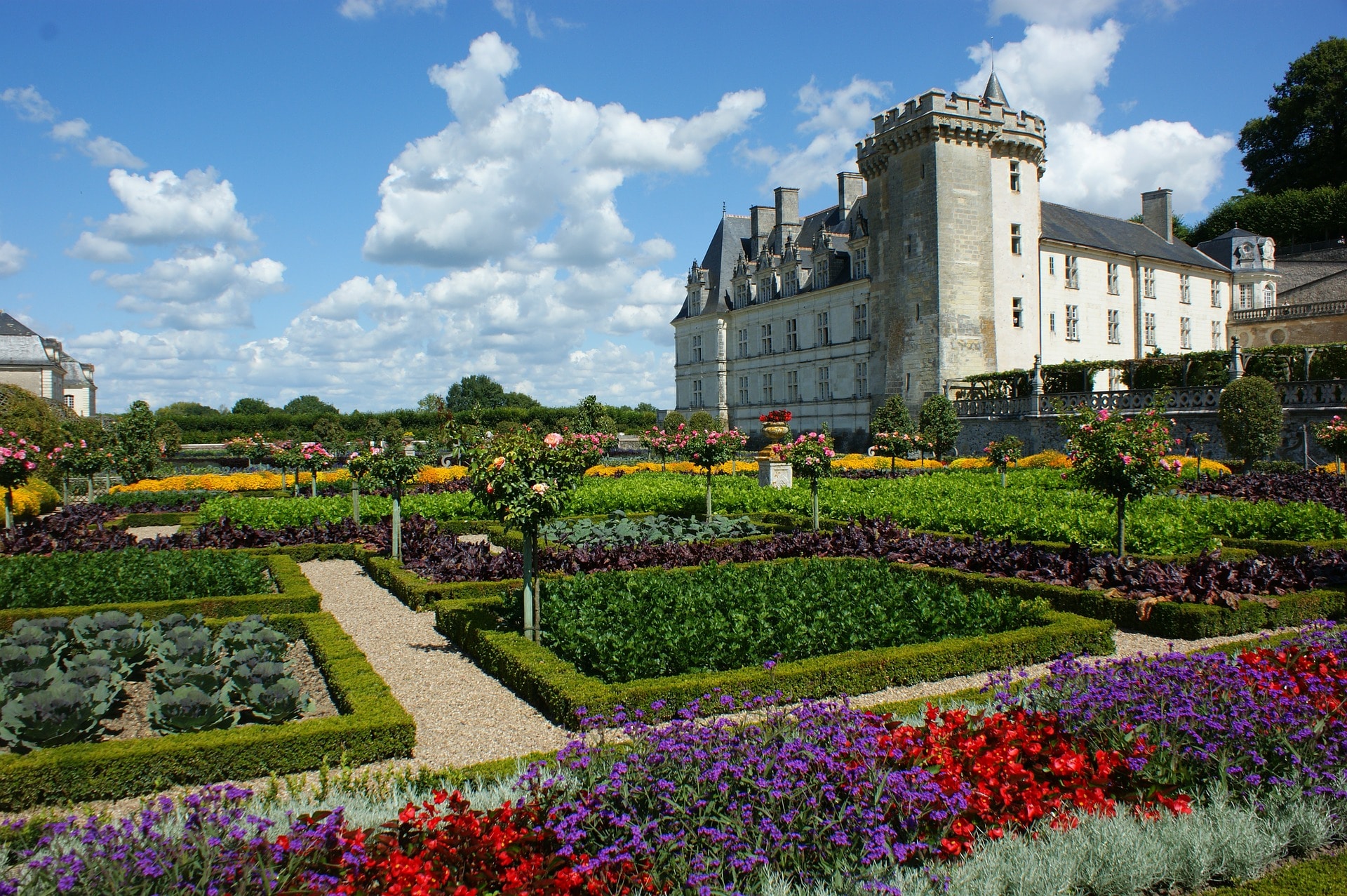
A classic potager next to a French chateau.

When planning your own potager, consider how the site you choose fits into the rest of the landscape, it’s proximity to your kitchen and your vantage point to get the best view of the garden.

Designing Your Potager

French kitchen Garden - Potager
A variety of plants artfully arranged in this kitchen garden.

Also, consider the overall design and how you plan to cultivate by hand or machine to determine the width of the paths and shape of the beds. As the seasons change and your plants grow, the width of the paths will evolve, and you won’t see much bare earth between plantings. A good design will include vertical accents as well as lots of colors and shapes. Small fruit trees traditionally stand at the edge of the potager with strawberries, annual herbs or flowers planted at their feet. Aggressive herbs like mint should be planted in containers.

Floral Elements

French kitchen Garden - Potager
A mix of trees is dispersed throughout the potager.

Complete your potager garden with stunning floral displays. Annuals like poppies, cornflowers and sweet peas add a cottage garden charm, plus their roots don’t take up much soil space. You can also grow edible flowers to make the entire garden productive. Rose petals taste delicious, and chamomile flowers can be used to make tea. Borage is stunning floated in drinks or frozen in ice cubes, and lavender adds subtle flavor to sugar, cocktails, champagne and baked treats like shortbread.

Useful Plants in the Garden

French kitchen Garden - Potager
Herbs are a must for any garden that supplies the kitchen–big or small.

You can also choose flowers that help you out in the garden. Plant calendulas (English marigolds) around your tomatoes to deter aphids. The orange petals have a peppery flavor and can be used as a cheap alternative to saffron in the kitchen.  Nasturtiums have edible leaves and petals too, but unlike marigolds they attract aphids, as well as cabbage white butterflies. Plant them near vulnerable vegetables like kale, beans, cabbage and cauliflower, and the pests will eat the nasturtiums instead of your dinner. After harvesting, plant fast growing plants such as chervil and salad greens to fill in any empty spaces.

With some effort, your potager can be as lovely as this small Provençal garden described by novelist Henri Bosco, which “nestled under the terrace, sheltered by high, warm walls but open onto the valley full of brown and blue summits, offered to the rosebushes, the tulips, and even to the stray weeds a well of warm air which smelled all at once of fruit trees, hawthorn, and hyssop. Birds twittered among the was more charming than this garden. It existed in this tiny sheltered bit of land which had trusted itself to man, under the large benevolent house—just big enough for a soul without worldly ambition or possessing the genius of retirement.”


Photo Credits:

Creative Commons, Villandry-Loire-Garden1 is licensed under CC0 by 1.0
Creative Commons, Vegetable Garden is licensed under CC0 by 1.0
Kitchen Garden, Creative Commons, Kitchen Garden at Emmaus House in Bristol by Heather Cowper is licensed under CC BY 2.0.
Villandry – Le potager, Creative Commons, Villandry – Le potager by sgustin78 is licensed under CC BY-SA 2.0


A Fountain Conversion by Rebecca Sweet

Fountain Conversion Rebecca Sweet garden design

Fountain Conversion: A Michalis in the Garden 

We have been fortunate to have Rebecca Sweet write for The Yardstick in the past and knowing that she has a sustained love for Mediterranean gardens and is busy with clients seeking her expertise and experience, we are pleased that she took the time to answer some questions about her garden design featuring Eye of the Day’s Greek pot, the Michalis, as a fountain conversion.  Rebecca is the author of several esteemed books on gardening and her work has been featured in Sunset Magazine, Horticulture and a variety of other national publications.  Her design firm, Harmony in the Garden, is in Los Altos California.


Q: Tell us a little about yourself as a designer and Harmony in the Garden.

I’m a California native, and though I’ve lived in both the southern and central parts of the state, I’ve spent most of my life in the Bay Area. Over the years I’ve seen this area’s sleepy suburbs transform into the bustling, densely populated, high-energy area that it is today. The people who call this place home come from all over the country, as well as the world, and have brought with them their unique perspectives on gardening. Having had my landscape design company, Harmony in the Garden, for over 15 years now, it’s been an incredible gift to be a part of these changes and to help so many people from different walks of life create their versions of paradise.

Q: What was your client’s goal for this garden?

As passionate gardeners themselves, the clients wanted to transform this part of their garden from a water-guzzling, and unsightly half-dead lawn into something that would require much less maintenance and water. This area is situated close to their home and can be viewed from several large windows, so it needed to look good year-round.

Q: What was your initial vision for the landscape and did that change over time?

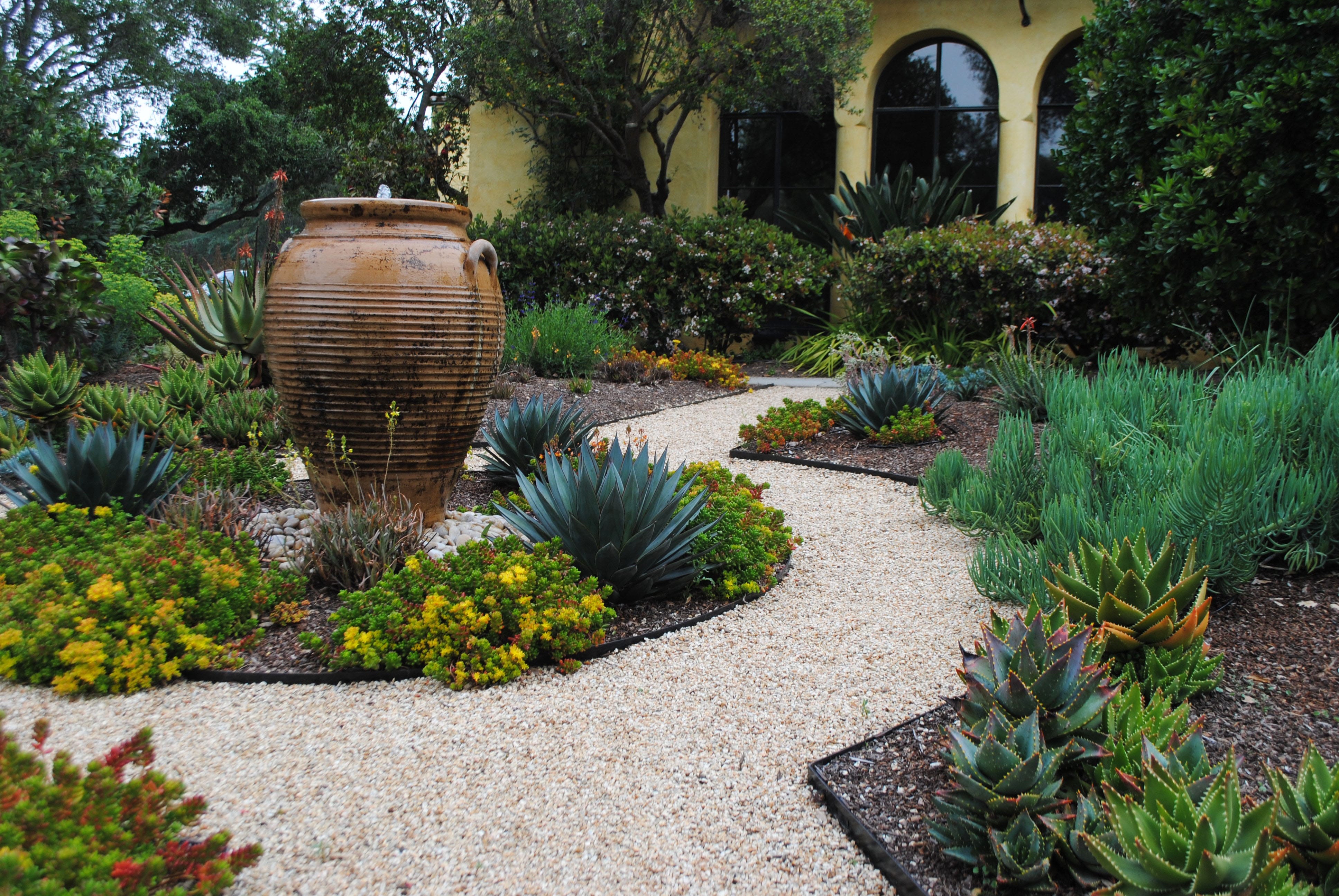
My vision and theirs complemented one another perfectly, as we are all succulent fans. So, to reduce water consumption, as well as indulge in our love of succulents, we removed the lawn, replacing it with a low-water succulent and cactus garden. To help tie this new space in with their existing, and more traditional style of garden, we also incorporated   several flowering shrubs and perennials that were colorful, yet also drought-tolerant and low-maintenance.

Because the area is fairly large, we knew we needed to break up the space into smaller, more manageable planting areas. Wide decomposed granite pathways were the solution, gently meandering through the space, helping to bring down the scale of the oversized garden.

Q: Any unique issues or challenges for this project during the design or installation?

Initially, the homeowner wanted this garden to thrive without supplemental water but quickly realized that just wasn’t going to happen. This area is in full sun so even the cactus were suffering through the blistering summer heat-waves. Luckily, we had a feeling this might happen and had previously installed a framework of irrigation under the ground ‘just in case.’ We ended up irrigating the garden, on a very reduced schedule.

Q: What would you describe as your garden design aesthetic and how do you work with your client’s own vision for the landscape?

My own aesthetic is one that appears full and lush, yet is quite drought-tolerant. My passion for plants has allowed me to create drought tolerant gardens that don’t ‘look’ drought  tolerant, and is what I’m probably best known for creating.

Since so many of my clients come from around the world, their vision for their garden (and the    plants they’re used to seeing) can be challenging to translate with California’s lack of water. Luckily, living in a mild-winter climate such as ours, we have access to an expansive selection of drought-tolerant plants from which to choose.  I love interpreting their vision into a garden overflowing with plants that will thrive here.

Q: For garden décor, why the Michalis Greek pot for the fountain conversion?

When designing this garden, we knew we wanted a focal point to bisect the center of the pathways. To keep in scale with the large garden and home, we needed a large focal point.  The Michalis Greek pot an ideal choice for a fountain conversion and blends beautifully with their historic Mediterranean home. By converting the pot into to a fountain, we added the gentle sound of trickling water, entertainment from the multitude of birds that adore taking baths there, and the illusion of ‘coolness’ from the water itself. We couldn’t have chosen a more perfect focal point for this garden.


Q: What was your favorite part of this project?

My favorite part of this project was to see the joy on my clients’ faces as they saw their garden’s breathtaking transformation. I continue to visit them and their garden every few months and seeing the succulents grow and fill in, creating an ever-changing tapestry has given my clients so much happiness through the years – all while significantly reducing their water bill!


See Rebecca’s other work on our blog:

Rebecca Sweet On Shades of Gray in the Garden
Stylish and Sustainable Garden Design


Garden Recipes: Green Peach Salad

Garden Recipes: Green Peach Salad

Garden Recipes: Green Peach Salad


Garden Recipes: Green Peach Salad

Sometimes there are so many peaches on your tree, you’re eating and drinking the beautiful fruit, but you’ve got to have something for lunch that is not quite so sweet.  Have this:

Green Peach Salad (for 4 to 6)
2 ½ lb. unripe peaches, peeled and sliced like you’re going to make a pie
Scant ¼ c sugar *
½ t salt
½ t freshly ground black pepper
2 T excellent, flavorful olive oil
2 T fresh mint chiffonade
A handful of arugula for each plate

Toss the peaches with the sugar and salt and let them sit for ten minutes. Add olive oil, mint and pepper and refrigerate for 30+ minutes.  Put a handful of arugula on each plate and then the peach salad. You can also add small or medium shrimp, some garlic mayonnaise and sliced scallions. That’s good too.

*Scant means “just barely.”


Photo Credit: Peach Salad, Creative Commons, Peach salad by viamarisol, is licensed under CC BY-NC-ND 2.0. 


Edible Garden: All About Tomatoes

container garden | tomatoes| edible

Edible Garden: All About Tomatoes

Emily Moore of Sproutabl, a lawn and garden blog, shares her best tips and practices for growing tomatoes. Check out her helpful infographic below:


And if you’re thinking of using containers, here are some great container garden pot options from our Italian terracotta Classic line and Contemporary terracotta collection.

Photo Credit: Emily Moore, Sproutabl


Montecito Landscape Garden Design – The Cullen Meadow

Garden Design | Montecito Landscape | Cullen Meadow

Montecito Landscape Garden Design – The Cullen Meadow

Lisa and Chris Cullen of Montecito Landscape are long time customers of Eye of the Day. We feature one of their recent designs as they transform a large lawn to a walking garden with a central water feature using a custom Eye of the Day fountain conversion.


Garden Design | Montecito Landscape | Cullen Meadow

Tell us a little about Montecito Landscape and this project. 

Montecito Landscape is celebrating 47 years of creating gardens in Montecito and beyond this month! We are a small, boutique company specializing in landscape design and installation. This particular project is one of our favorites. The client was very involved in the development of the design and she trusted us when we presented an out-of-the ordinary idea.

What was your client’s goal for this garden?

The area was a huge, dead lawn and with the drought and water restrictions it was going to be difficult if they wanted to keep it looking good. They wanted something drought tolerant but beautiful and interesting. Initially, the client wanted lawn, but we wanted to do something completely different from the norm. They trusted our vision and agreed to go along.

What was your initial vision for the landscape?

We wanted to eliminate the lawn all together and create a “walking garden” providing destinations that would invite meandering and discovering. We also wanted to take advantage of the outer perimeter of the property by removing the Pittosporum hedges that were cutting off what became “the forest” from the rest of the property. We created pathways and destinations in this area that connected to the main garden, so that one could enjoy it from every vantage point.

Our innovation was “The Cullen Meadow” which is a drought tolerant alternative to lawn. The “meadow” consists of drought tolerant, flowering plants such as Santa Barbara daisy, Nepeta, Carex and others that can be walked on and mowed like a lawn, but that needs only occasional maintenance. Plus, it is way more interesting than a lawn!

The idea for the central pond came from the client when she sent us a photo of one she saw in England. The minute we saw it, we knew this was exactly what this garden needed. We also needed a fountain to mitigate the noise from the street and the pond created the perfect way of integrating a water feature into the design.


Were there any unique problems that came up during the design or installation?

Working out how to make the “Cullen Meadow” something that could be used as a lawn and how to lessen the street sounds and visual distraction of cars going by without blocking the distant views.


What would you describe as your garden design aesthetic and how do you work with your client’s own vision for the landscape?

We work with Nature not against her. We design gardens that are cohesive from conception to the finished product. A garden should flow, it should “feel right”. They should have a theme, a vibe and a sense of place. Our designs take the entire property into account, taking advantage of the unique qualities and features of that specific property. We begin by looking at what makes the space special, what are the assets and work out how we can use those features to their best advantage. We also believe that drought tolerant gardens can be beautiful. They can have roses, camellias and even hydrangeas if planted in the appropriate location and using correct gardening technique.

We love to collaborate with the client. We spend time with them, driving around if needed, pointing out various gardens so that we can tune into their specific aesthetic and discover exactly how they envision using the garden. We want our clients to get out and be in their gardens so we design for the individual. Gardens are for living and we know we have been successful when we hear how much our clients love their new landscapes.


For the garden décor, why these pieces?

The fountain needed to be simple and the correct scale if it was to work in the pond. The pond is 15 feet across and is the main feature of the landscape design, so the fountain needed to be perfect. Brent Freitas at Eye of the Day helped us in selecting the exact right fountain and we (and the client) are very happy with the result.

What was your favorite part of this project and design?

The central pond, fountain and the “meadow” are what make this garden so special. We knew the house and the location deserved something special and I think we succeeded. I love water features, ponds, and fountains and believe that every garden needs one or two for the visual and musical sound aesthetic. Fountains and water features can be “tuned” to fit the type of effect you are trying to create. And fountains are not just for aesthetic reasons! A fountain brings birds and bees to a garden and we all know how important the birds and the bees are!


Visit Montecito Landscape to view more of their work.


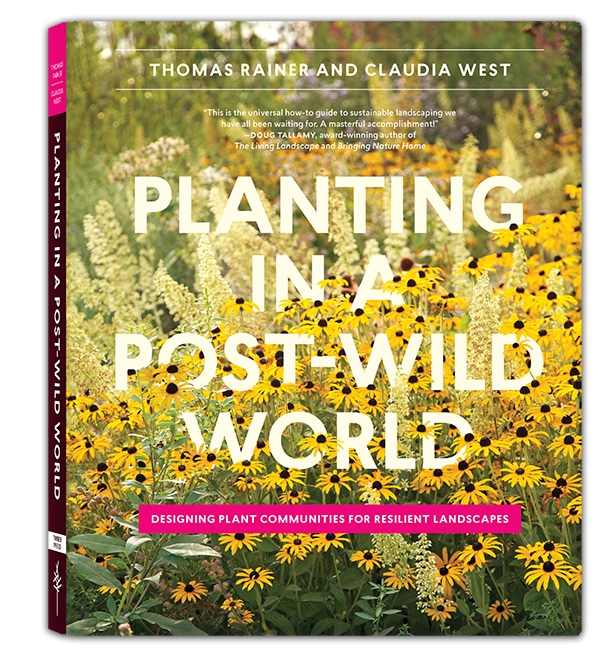
Book Review: Planting in a Post Wild World

Book Review Planting in a Post Wild World

BOOK REVIEW: PLANTING IN A POST-WILD WORLD

Though most of their readers might be other designers, Thomas Rainer and Claudia West’s Planting in a Post-Wild World offers plenty of information for non-professionals as well. The book shows how to design and maintain an ecological landscape and does so in a beautifully, clear way. One of the most helpful sections of the book suggests viewing a landscape in four different layers:

  1. Structural Layer: comprised of the year-round key parts of a design. These components should always be maintained, though replaced if needed, and kept clearly defined as they are the basis of the design.
  2. Seasonal Layer: waves of color/texture provided by each season’s visually dominant plants. These are maintained by treating them en masse, thinning or spreading as necessary.
  3. Groundcover Layer: provides the main diversity of the planting and most of the ecological function. This layer does not contribute noticeably to the aesthetic design, except as a living mulch. It’s managed by retaining and adding diversity as much as possible to maximize the health of all the plants in the landscape.
  4. Gap Fillers: self-sowing plants throughout the design and encouraged to set seed. This builds up a seed bank of desirable plants which will ideally sprout to fill any gaps that occur.


Book Review Planting in a Post Wild World I love how the authors separate the main aesthetic contributors (the first two layers) from the main ecological contributors (the last two). That makes it much easier to create a landscape that is strong in both beauty and functionality.

For a gardener, unfamiliar with ecology, this book is a great primer.