The History of Versailles Citrus Planter Boxes

Versailles Citrus planter box

The History of Versailles Citrus Planter Boxes

When you think of Louis XIV, you automatically picture the Palace of Versailles with its perfectly manicured gardens, fountains and the iconic Versailles citrus planter boxes designed by Andre Le Notre.

Versailles Citrus planter box
The famous Orangerie in the gardens at Versailles

A French landscape architect and the head gardener of King Louis XIV of France, Le Notre’s work in the gardens of Versailles was his masterpiece.

His father, Jean Le Notre, was the master gardener of King Louis XIII at the Tuileries. As a student of painter François Vouet, he studied the laws of perspective and optics and from François Mansart, the principal architect of Versailles, he learned the principles of architecture. After succeeding his father, Le Notre redesigned the Tuileries gardens, revealing his eye for extensive vistas. (Encyclopedia Britannica)

Versailles Citrus planter box
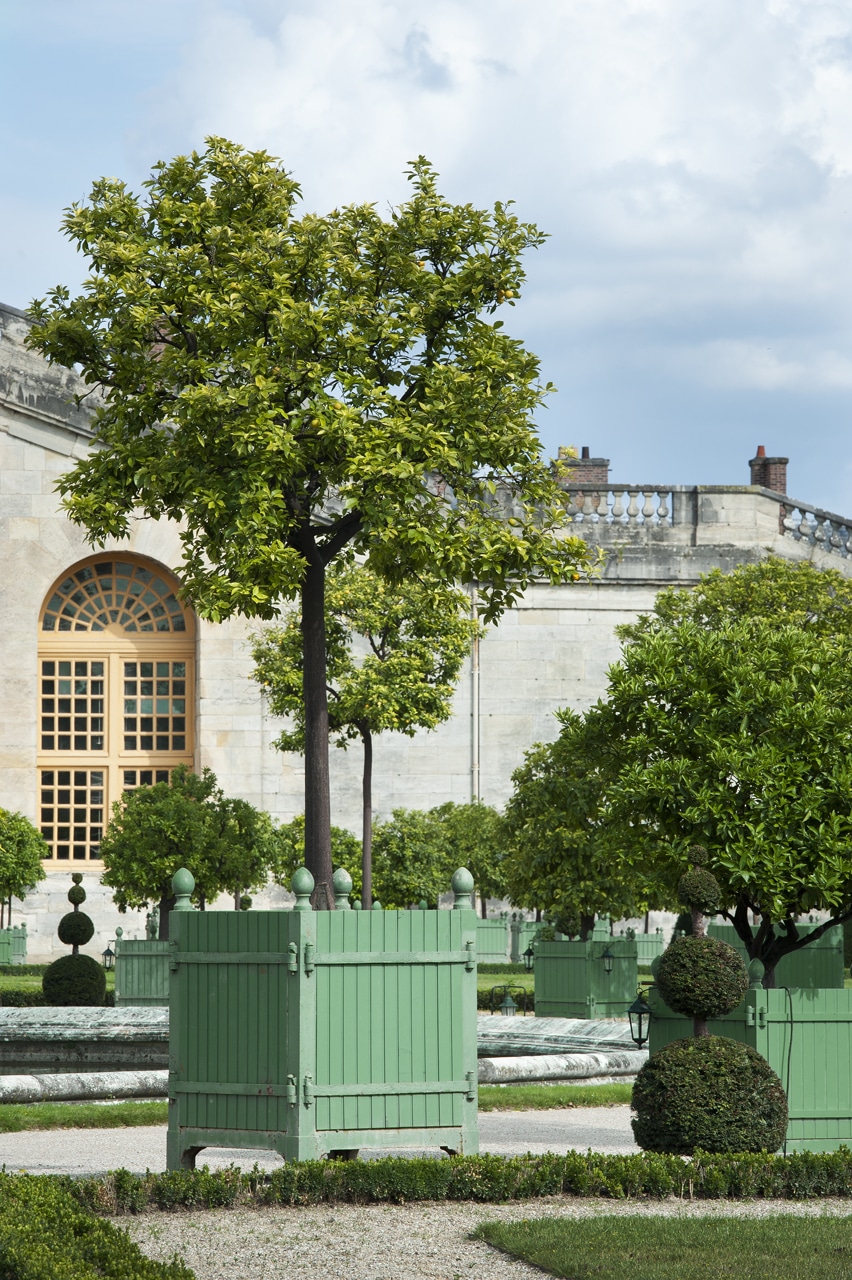
Iconic Versailles citrus planters in a traditional green color.

The Palace itself is well known for its opulence, both interior and exterior. Chandeliers and topiaries along with fountains and fireplaces, fenestration and propagation on a scale that blows the ordinary mind even today.

The Orangerie
The Orangerie was an extension of the Palace built not only to protect the citrus in the winter, but also to impress visitors. It contains many of the citrus boxes that are a hallmark of French garden design. Throughout Europe and the world, these simple but elegant boxes with their ball finials epitomize classic design.

The Original Orange Planter Box
The first original orange planter boxes were invented during the 17th century by La Quintinie and André Le Nôtre.

Versailles Citrus planter box
Single palms or citrus trees in each box allow for flexibility in transportation.

At that time exotic fruits were brought from abroad to Versailles, and as the plants were sensitive to the harsh winter weather in Versailles, a giant orangerie was built capable of containing thousands of the most exotic trees, like citrus and palm trees. They would be moved to the orangerie to spend the winter season, from November to April.

Instead of stressing the plants and trees by transplanting several times a year from the gardens to the orangerie, Le Notre invented a portable planter box where the trees could remain permanently all year long.

Bring French Style to Your Garden
Due to the cold winters and the heavy weight of the trees, the orange tree planter boxes were manufactured with an exceptional solidity. Today, Jardins du Roi Soleil under an exclusive license, manufactures the “Chateau de Versailles” orange tree-boxes. Eye of the Day has been appointed as their exclusive West Coast distributors.

Versailles Citrus planter box
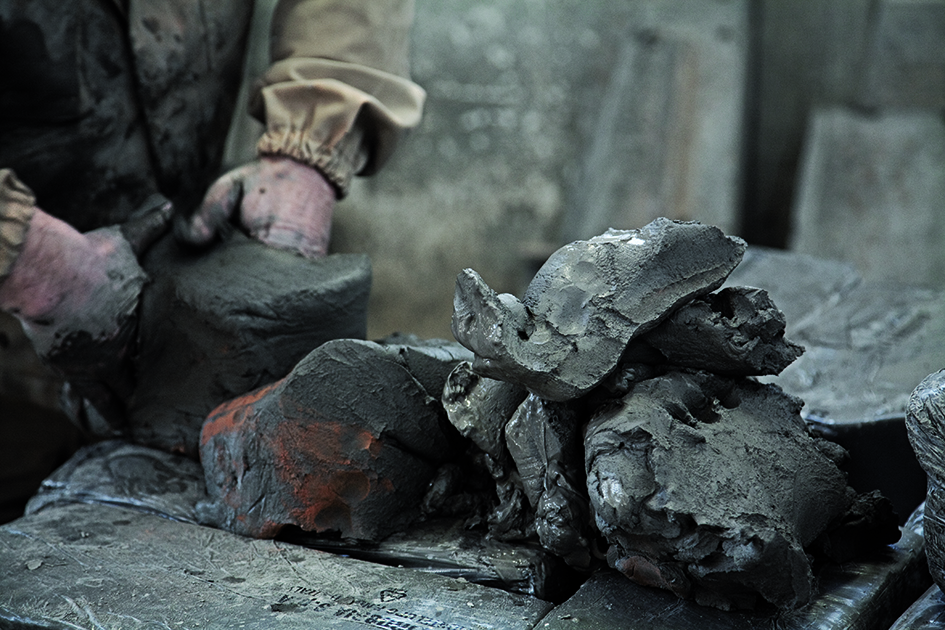
Preparation of the core box using a mold.

Our orange tree planter boxes are made entirely in France in the strict respect of traditional artisanal techniques. The design of the Versailles citrus planter owes its reputation to a rigorous selection of noble materials like French oak and cast-iron as well as the quality of assembly.

The main purpose of Le Notre’s design of the Versailles citrus planter was to enable ease of handling while relocating the citrus trees during the cold weather.  The boxes stand on four cast iron legs of and are easily lifted and moved, especially with today’s equipment.  The planter can easily be opened to change or replace the plant without causing it stress, also, allowing access to trim the root ball of plants intended to remain in the container for longer periods of time.

Versailles Citrus planter box
Assembling the final product.

Whether you use a forklift or pallet jack to move these timeless planters, they will roll along into whatever greenhouse or warm winter spot you have for them.  And, if you don’t want to move the entire planter, you can open it and remove one or more sides to remove the plant, leaving the planter box where it rests and replanting it in Spring.

The Chateau de Versailles wooden orange tree box has been copied for centuries and its basic design has been riffed upon in dozens of ways, including all wood to Corten steel cubes. The basic geometry of a square planter box is not unique or particularly clever, but the design of Le Notre’s Versailles planter is not only iconic, it is as French as Champagne, unique and authentic to the Palace of Versailles.

The quality of the Roi du Soleil planters has improved over the years with modern forging and the quality of French oak, which is unsurpassed for strength, beauty and longevity. One company copying this planter down to the metal frame uses aluminum for the frame and an alternative wood for the box. At Eye of the Day we look forward to helping you better understand the quality and unique design of the original Versailles planter box. With every sale, we send a percentage to the Palace of Versailles, not only as tribute but to ensure that, like the last 500 years, production remains focused on authenticity and quality.


Photos courtesy of Jardins du Roi Soleil

Frostproof Terracotta Pottery – A Worthwhile Investment

frostproof Italian terracotta pottery

Frostproof Terracotta Pottery – A Worthwhile Investment

You have just designed a garden in an area where it snows and freezes, and the temperature goes from freeze to thaw, freeze to thaw for weeks and months on end.  You are putting the finishing touches to the project with garden art you chose, approved by your client and they ask you if the pots are frostproof and if they will last through the winter. Should they be removed, stored away from the elements? Or, your design incorporates many containers on the client’s patio next to their pool and overlooking the golf course in Palm Desert, California.  They want to know if the pots will crack on a hot day if splashed with cold pool or hose water.  Are you comfortable with the quality of the product you have specified?frostproof Italian terracotta pottery

Just as specifying high quality plant material is important for your designs, so is choosing durable pottery that will last. It’s important to provide a strong, stable container that will support the plants as well as withstand replanting for years to come.

The difficulty and expense of handling large planters in and out of the landscape is another reason to more closely consider your selection. There are other frost proof materials such as metal and stone. However, for our purposes we are discussing and defining terracotta clay pots and containers, specifically made using the quality Italian clay known as Galestro. Galestro’s most famous iteration is known as Impruneta clay because it is used by the historic artisans of the commune of Impruneta long known for their pottery. The clay is found throughout the Tuscan region and its high mineral content gives it its strength and makes it frost resistant.

For over 35,000 years man has taken clay from the earth, shaped it and baked it in fire to produce ceramics for art, function and protection. There are places where fire isn’t even used, instead the sun bakes the clay into a harder form. The quality of the clay and the temperature at which it is fired determines the longevity of the end product. Our Italian terracotta products, made with Galestro clay and fired in a kiln are considered earthenware. If you were to rate the hardness or porosity of earthenware on a scale of one to ten, our frost proof terracotta would be a four and porcelain eight. Our Gladding McBean pottery is stoneware and is also frost proof. Its resistance to freezing is even higher than Italian clay.

I like to tell clients that the Wrigley Building in Chicago, which was completed in 1921 is covered in the same clay tiles that our Gladding McBean pottery is made from today. The original Wrigley tiles have withstood freezing temperatures to minus 50 degrees for almost a hundred years. Talk about frost resistant! If you are interested in learning more about clay and pottery check out Erik Painter’s Quora thread on “What is the difference between stoneware and earthenware clay? How is each used and made?”

The most important thing for our clients, whether they are retail customers or professional designers, is that both our Italian terracotta manufacturers and Gladding McBean continue to create products that are frost proof using clay and processes that are not just frost resistant, but long lasting too. I’m often amazed by terracotta pottery from elsewhere in Italy, Asia or Mexico and how fast it deteriorates—even in Southern California climates. There are individuals who like to see the terracotta flaking or spalling because they see it as aged and patinaed. This is usually around the top edge of the pot but also can happen lower down the side of the pots where water leaches through the clay and begins to break it down.  If there is freeze when this is happening the clay will expand and then contract causing the flaking and breakdown of the pottery to accelerate. If you like this look, then purchase terracotta pots which are not frost proof.  frostproof Italian terracotta pottery

For clients living in areas which experience freeze and freezing temperatures for extended periods of time, it is necessary to remove containers to a covered, dry area or building or run the risk that their investment won’t last more than a year or two. Even if you remove the plant material and bag the pots, any remaining moisture in the pores of the containers will cause damage in freezing climates.  Fifteen years ago, when I was in France I noticed that the garden centers were selling pottery from China and Malaysia. There were lots of colorful choices and of course the price had the local gardeners snapping them up. A couple of years later I didn’t see as many, so I asked my French friend why not and he told me, “They don’t last more than a year or two, they fall apart.” This non-frost resistant pottery is colorful and priced well below most handmade pottery that is frost proof.  However, if you look at the cost of a quality pot that last decades, even centuries, you will not be just money ahead (or your heirs will) you will have the satisfaction of watching your containers patina and age into beautiful artifacts for your garden.

“But I don’t live in a cold climate, why do I need pottery that is frost proof”, you ask?  Well, because it is the quality that you are buying. If Italian terracotta pottery is frost proof, it is high quality and that quality in climates like Santa Barbara will last even longer but more importantly in the near term it will look and outperform any other clay products you might choose.

Frost proof terracotta will last longer in the heat of the desert?  Yes!  The quality and strength of this product will withstand the desert heat. When pots get super-heated from the sun they absorb water quickly and expand and crack. Our terracotta will not do this; just the way they stand up to frost they stand up to heat because of their high porosity.

Winterize Your Terracotta Pots

While our Italian terracotta is super strong, has a high porosity (meaning tight pores, less permeable) and doesn’t absorb moisture like inferior clay, it still must be cared for in the winter time. The following are some tips for making your investment last:

  • Put pots on wooden feet away from the ground so the frozen earth cannot fuse to the pot, expand and crack it.
  • Ensure that the pot drains well and will not retain moisture which may find its way into it during the frost season.
  • Further guarantee that the pot is covered and sealed from allowing rain or snow into it.
  • Remember the warranty is to minus 15 degrees so if you feel there will be extremes beyond this to take precautions which will further protect them from moisture.

Like anything, a good dose of common sense will go a long way so pay attention to planting all containers with plant material that have aggressive root balls i.e. giant birds of paradise, agaves etc.

The case for purchasing quality terracotta pottery is that if it is of the highest quality it should be of clay that is fired at temperatures that ensure that it is frost and heat proof and will last for many years. To prove this point, I would like to offer the following argument:  If you have ever seen many of the ruins in Rome, you might have noticed the remaining terracotta tiles that make up the massive walls. Most of these structures were built a more than a thousand years B.C. and they still exist today. Their quality and longevity prove my point. Thanks for your time.  Brent


Eye of the Day – 2017 Long Beach Landscape Expo

Long beach Expo 2017 Eye of the Day

Eye of the Day at the 2017 Long Beach Landscape Expo

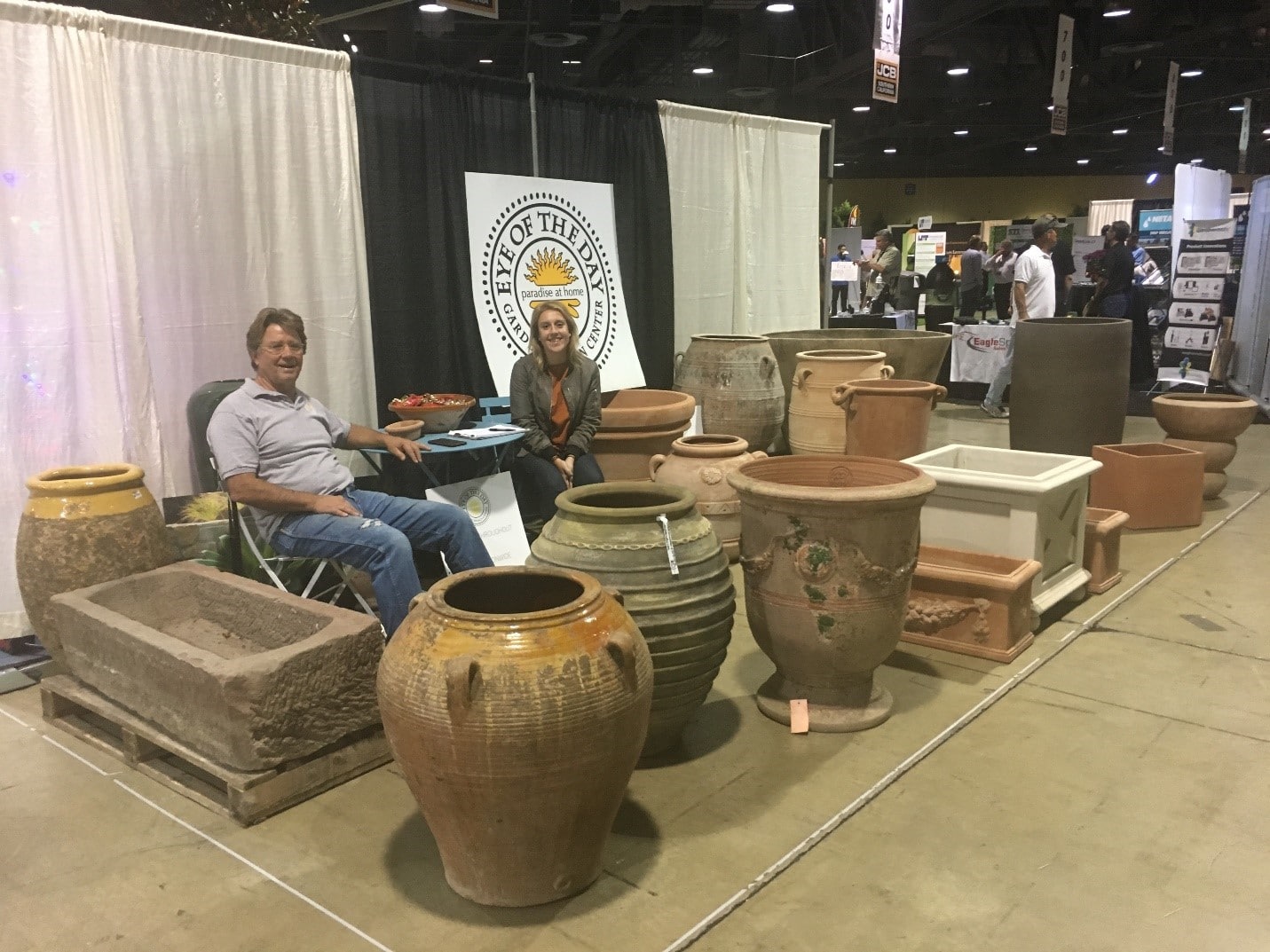
Eye of the Day attended the 2017 Long Beach Landscape Expo this past October. It was our second year exhibiting with TLE. Each year the Expo grows, and this year hit record numbers with over 60 seminars and 1,400 seminar attendees not counting those who just come to network.

The Landscape Expo has a wide variety of attendees ranging from construction, city planners, nurseries, water pump creators, the latest in landscaping machinery, and more. It is such an amazing community to see all the new inventions, equipment, and modifications to landscape design and construction. Here at Eye of the Day we normally only see our final product placement in a finished garden, so it was nice to see what goes into this process.Long beach Landscape Expo 2017 Eye of the Day

For our booth we brought a little bit of everything in our inventory to give a true sampling of what we carry at the store. We brought our Francesco del Re, antique and vintage Spanish Oil Jars, French Anduze, American concrete, French stone troughs, Italian terracotta, and of course lots of candy! It was amazing to connect with city planners, designers, and commercial designers. Recently we have been working with multiple designers for commercial designs including restaurants, hotels, villas, or businesses. Our pottery and garden decor are often the final elegant touch for both residential and commercial projects.

The booths at the Expo varied from custom fountain heads, nurseries, lawn mowers, and more fun equipment.  Our favorite booths in the expo naturally were the nurseries, especially Rancho Soledad Nurseries with their elegant and unique plants. We even bought quite a few succulents and cacti for our pots. Our second favorite to watch has to be the remote control mowers. How cool! This Expo has given us expo fever so keep your eyes out for where we will be going next. But you can always meet us at the Long Beach Landscape Expo and we hope to see you all next year!


A Fountain Conversion by Rebecca Sweet

Fountain Conversion Rebecca Sweet garden design

Fountain Conversion: A Michalis in the Garden 

We have been fortunate to have Rebecca Sweet write for The Yardstick in the past and knowing that she has a sustained love for Mediterranean gardens and is busy with clients seeking her expertise and experience, we are pleased that she took the time to answer some questions about her garden design featuring Eye of the Day’s Greek pot, the Michalis, as a fountain conversion.  Rebecca is the author of several esteemed books on gardening and her work has been featured in Sunset Magazine, Horticulture and a variety of other national publications.  Her design firm, Harmony in the Garden, is in Los Altos California.


Q: Tell us a little about yourself as a designer and Harmony in the Garden.

I’m a California native, and though I’ve lived in both the southern and central parts of the state, I’ve spent most of my life in the Bay Area. Over the years I’ve seen this area’s sleepy suburbs transform into the bustling, densely populated, high-energy area that it is today. The people who call this place home come from all over the country, as well as the world, and have brought with them their unique perspectives on gardening. Having had my landscape design company, Harmony in the Garden, for over 15 years now, it’s been an incredible gift to be a part of these changes and to help so many people from different walks of life create their versions of paradise.

Q: What was your client’s goal for this garden?

As passionate gardeners themselves, the clients wanted to transform this part of their garden from a water-guzzling, and unsightly half-dead lawn into something that would require much less maintenance and water. This area is situated close to their home and can be viewed from several large windows, so it needed to look good year-round.

Q: What was your initial vision for the landscape and did that change over time?

My vision and theirs complemented one another perfectly, as we are all succulent fans. So, to reduce water consumption, as well as indulge in our love of succulents, we removed the lawn, replacing it with a low-water succulent and cactus garden. To help tie this new space in with their existing, and more traditional style of garden, we also incorporated   several flowering shrubs and perennials that were colorful, yet also drought-tolerant and low-maintenance.

Because the area is fairly large, we knew we needed to break up the space into smaller, more manageable planting areas. Wide decomposed granite pathways were the solution, gently meandering through the space, helping to bring down the scale of the oversized garden.

Q: Any unique issues or challenges for this project during the design or installation?

Initially, the homeowner wanted this garden to thrive without supplemental water but quickly realized that just wasn’t going to happen. This area is in full sun so even the cactus were suffering through the blistering summer heat-waves. Luckily, we had a feeling this might happen and had previously installed a framework of irrigation under the ground ‘just in case.’ We ended up irrigating the garden, on a very reduced schedule.

Q: What would you describe as your garden design aesthetic and how do you work with your client’s own vision for the landscape?

My own aesthetic is one that appears full and lush, yet is quite drought-tolerant. My passion for plants has allowed me to create drought tolerant gardens that don’t ‘look’ drought  tolerant, and is what I’m probably best known for creating.

Since so many of my clients come from around the world, their vision for their garden (and the    plants they’re used to seeing) can be challenging to translate with California’s lack of water. Luckily, living in a mild-winter climate such as ours, we have access to an expansive selection of drought-tolerant plants from which to choose.  I love interpreting their vision into a garden overflowing with plants that will thrive here.

Q: For garden décor, why the Michalis Greek pot for the fountain conversion?

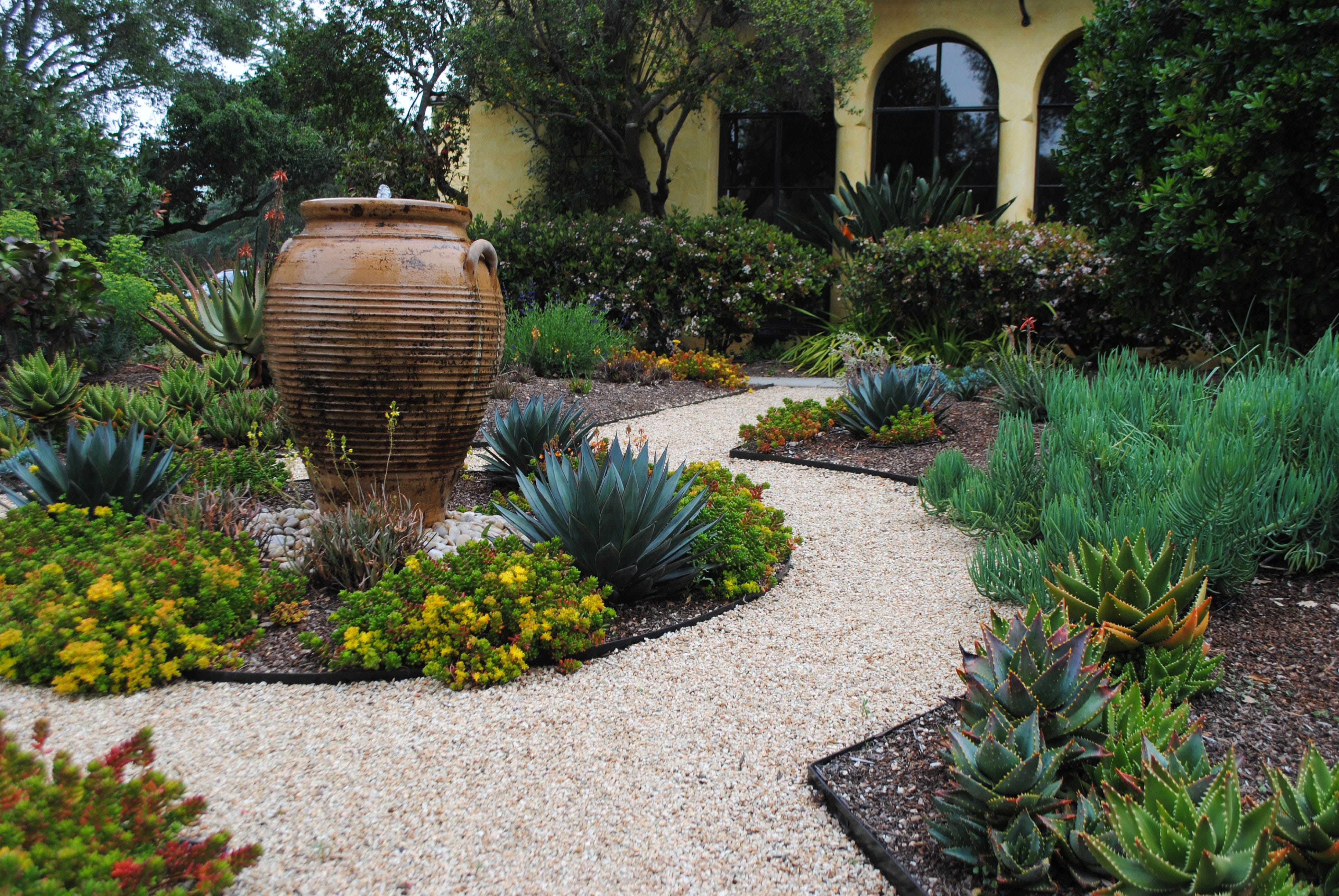
When designing this garden, we knew we wanted a focal point to bisect the center of the pathways. To keep in scale with the large garden and home, we needed a large focal point.  The Michalis Greek pot an ideal choice for a fountain conversion and blends beautifully with their historic Mediterranean home. By converting the pot into to a fountain, we added the gentle sound of trickling water, entertainment from the multitude of birds that adore taking baths there, and the illusion of ‘coolness’ from the water itself. We couldn’t have chosen a more perfect focal point for this garden.


Q: What was your favorite part of this project?

My favorite part of this project was to see the joy on my clients’ faces as they saw their garden’s breathtaking transformation. I continue to visit them and their garden every few months and seeing the succulents grow and fill in, creating an ever-changing tapestry has given my clients so much happiness through the years – all while significantly reducing their water bill!


See Rebecca’s other work on our blog:

Rebecca Sweet On Shades of Gray in the Garden
Stylish and Sustainable Garden Design


Top 5 Fountain Conversions

American Concrete - Fountain Conversions

Top 5 Fountain Conversions

Fountain conversions have become a signature service of Eye of the Day. Spring and Summer is the time to order this popular water feature. From classic shapes to more contemporary forms, fountain conversions are an elegant addition to any garden design. Depending on the style and aesthetic of the garden, the conversion process starts with choosing a container. Almost any vessel at Eye of the Day can be converted, but there are definite favorites at the store. We rank the top five fountain conversions that homeowners and designers love.

5. French Terracotta Fountain Conversions

While not as common a choice for a fountain conversion, French Anduze pots and biots are an elegant option for a water feature. We recommend sealing for this type of terracotta, especially to protect the glaze,

4. Concrete Fountain Conversions

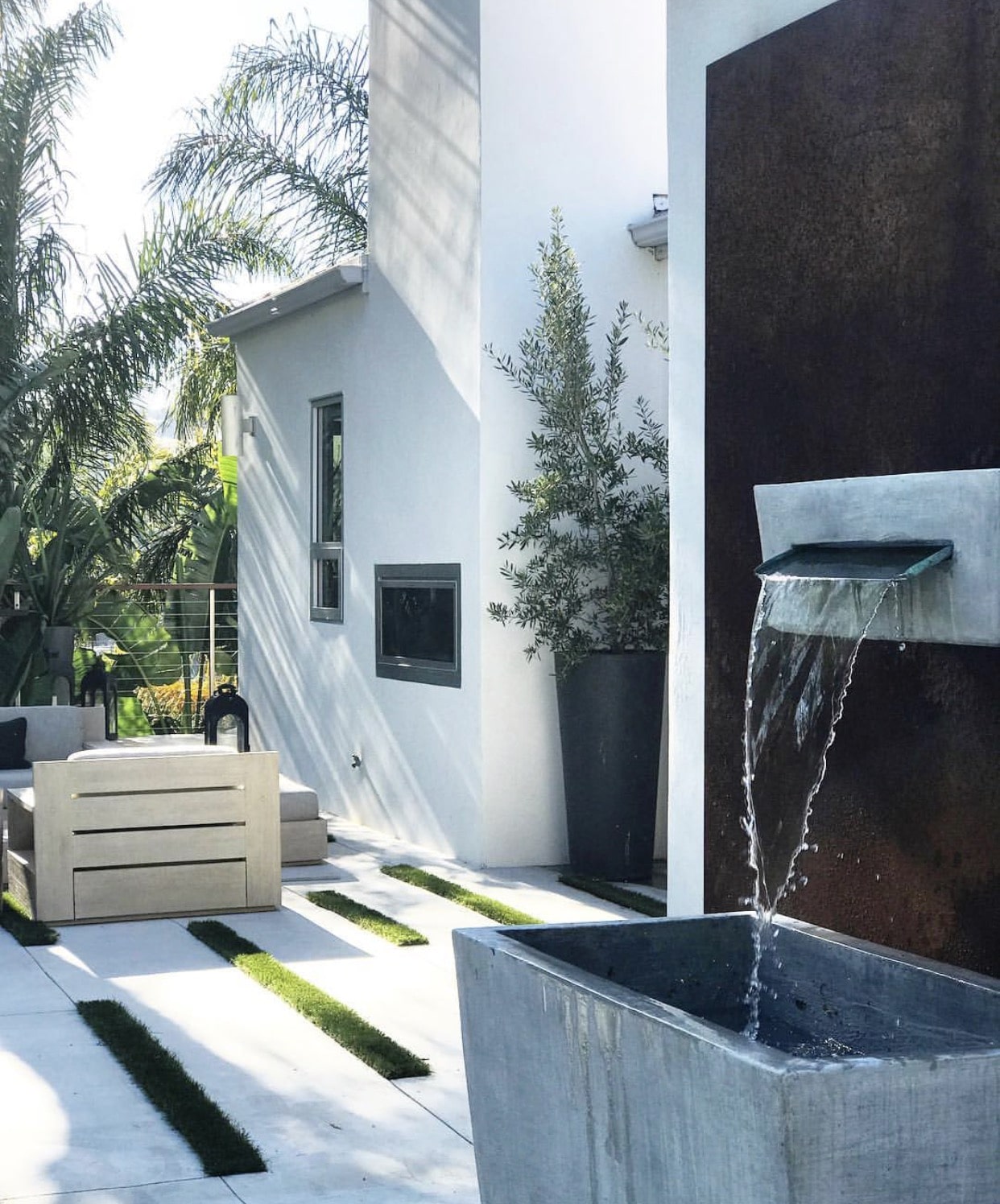
Our American made concrete pots are the ideal containers for both contemporary and traditional styles. These water features can be made up of different concrete garden décor pieces from birdbaths and urns, to ponds and containers.


This custom feature uses a concrete birdbath set into a pond based on an English garden the clients loved while visiting England.


This design used two American made concrete pots for the conversion. A custom insert was used for the flat spout.


3. Greek Terracotta Fountain Conversions

Here in California, Mediterranean style gardens are popular throughout the state. With sunshine filled days, proximity to the ocean, and lush plant life, our similar climates are the ideal foundation for a Mediterranean garden. Our Greek line of terracotta pottery is a popular option for containers and fountain conversions.

The Michalis pot fountain conversion was a popular design for Bay Area designer, Rebecca Sweet. Its classic shape was perfect for the Mediterranean garden design of her Palo Alto clients.

2. Italian Terracotta Fountain Conversions

Eye of the Day specializes in Italian terracotta pottery. Naturally, many clients and designers choose an Italian terra cotta pot as the vessel for their fountain conversion. We carry classic, ornate, and contemporary styles.

1. Gladding McBean Oil Jar Fountain Conversions

This is the most popular fountain conversion we do—and with good reason. The classic oil jar shape is a favorite among customers and as a water feature, it becomes a striking focal point in the home or garden. Available in a variety of colorful glazed finishes from Gladding McBean, both traditional and modern designs can incorporate this oil jar fountain conversion. The GMB88-33 is the most popular, but the GMB45 with the narrow neck is a lovely option as well.

Get inspired with the pottery and containers from Eye of the Day for your next garden design project. Contact us today to learn more about fountain conversions.


Eye of the Day Mother’s Day Gift Guide 2017

Mother's Day Gift Guide 2017 | garden decor | pottery

It’s that time of year where we honor and celebrate our mothers–Moms, foster Moms, grandmothers, and the ones who become our second, or even third, moms.

Show how thankful you are for the moms in your life with something special from Eye of the Day. Our gift guide has something unique for all different tastes and budgets.

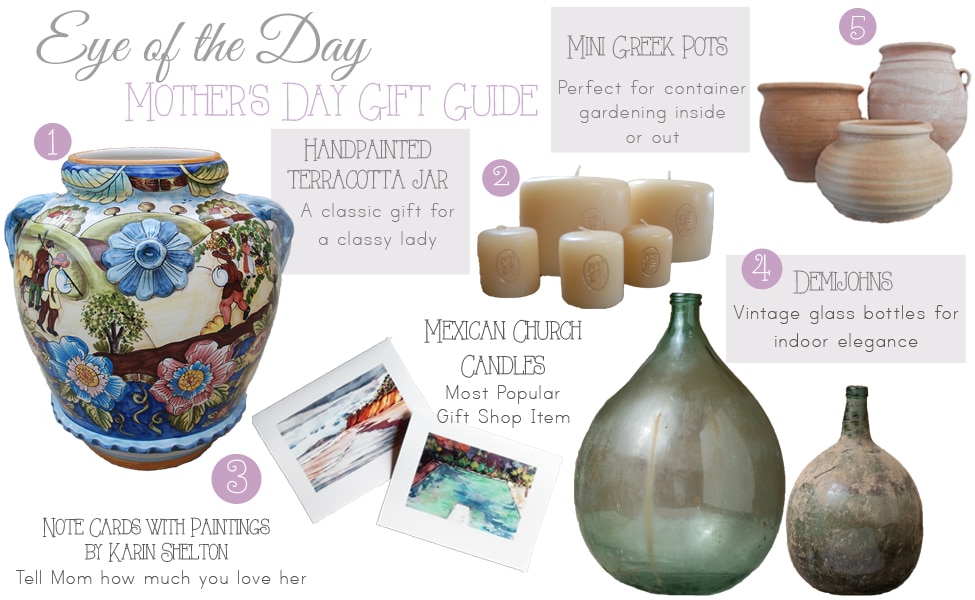
1. Handpainted Terracotta Jar
These jars, painted by hand in traditional Italian styles are classics for a reason. Gift one for the classy lady in your life.

2. Mexican Church Candles
These are our most popular items in the Gift Shop. These creamy candles are made with layers of paraffin and cotton wicks. Great addition for the home.

3. Note Cards with Paintings by Karin Shelton
Made by local Santa Barbara artist Karin Shelton, these note cards showcase lovely plants or landscapes from the area. A unique Mother’s Day card for your favorite lady.

4. Demijohns
These recent additions to the store are vintage glass bottles originally used for food and liquid storage. They make lovely pieces for indoor decor.

5. Mini Greek Pots
These are a personal favorite. These gorgeous handcrafted pots made on the island of Crete are perfect for indoor or outdoor container gardening. Instead of arranging flowers, create a mini garden for Mom–it’ll last longer than flowers, too!


Contact us for more information about our Gift Shop. We hope everyone has a lovely Mother’s Day weekend!