Book Review: The American Meadow Garden by John Greenlee

Eye of the Day|American meadow|John Greenlee

“We’ve reached a stage where we can no longer follow past practices unthinkingly, particularly when those practices are wasteful and injurious to the environment. It’s time to get rid of the old-fashioned lawn and embrace a sane and healthy future: the designed meadow.” – John Greenlee

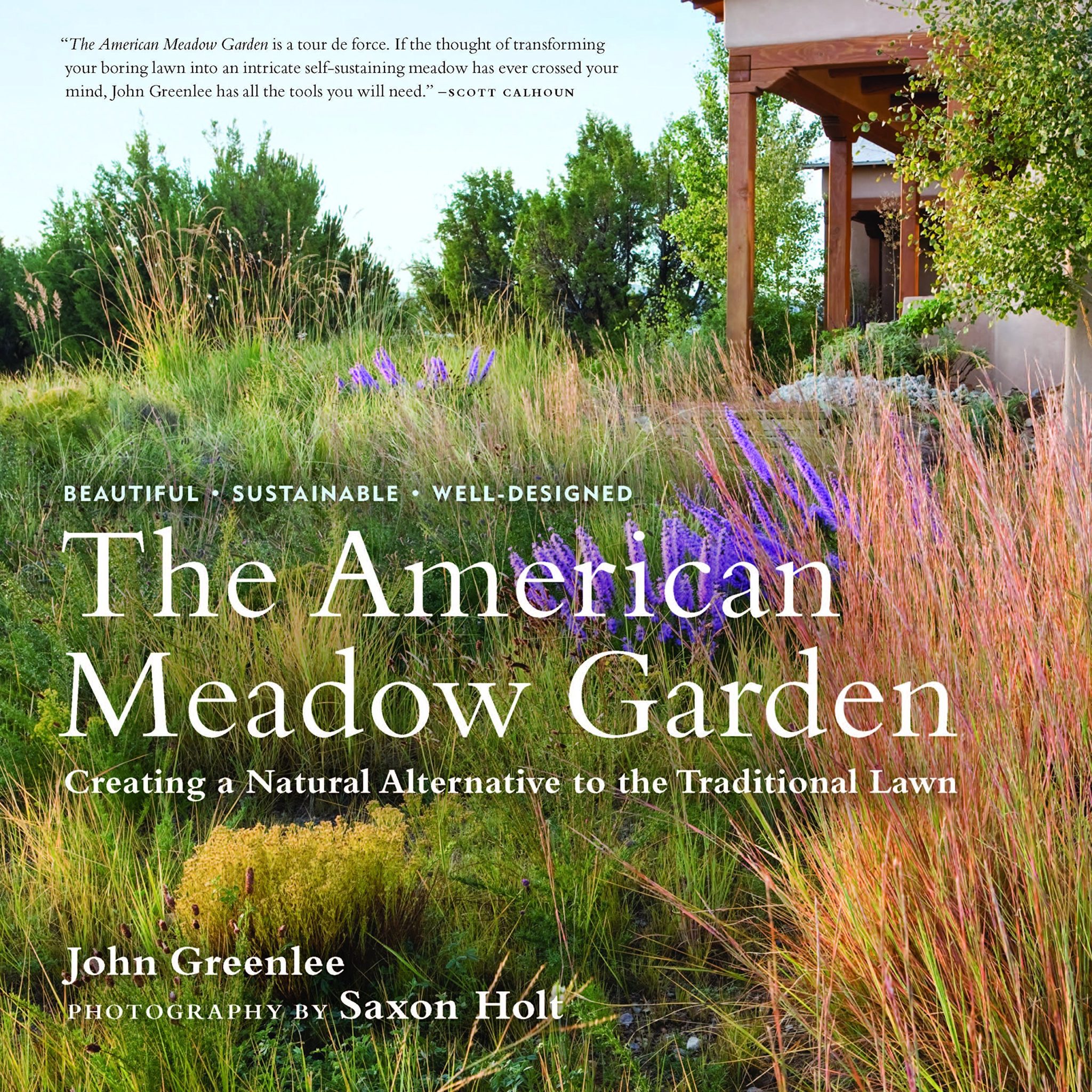
In The American Meadow Garden: Creating a Natural Alternative to the Traditional Lawn, “grass guru” John Greenlee leads us into a new way of thinking about grass.  He uses the words “glade,” “grassland,” “mead,” “savanna,” “pasture,” “sod,” and “meadow” among other terms, to describe areas around the world that are largely treeless, grass-covered landscapes.

Eye of the Day|American meadow|John Greenlee
Image via Timber Press

These words paint an image of golden or green grassy carpets, rippling in a breeze. In this beautiful book, we are given a portfolio of meadow gardens and a guide to grasses for meadows and how to maintain them.

We’re constantly looking for ways in which to cope with our water-challenged world in California and Greenlee offers alternatives to our lawn habit. In many areas, aquifers are dwindling and water is increasingly scarce. There is no longer enough of it to supply lawns. Growing populations and dwindling supply is our scary future and our landscapes must change with the times. The American Meadow Garden was published in 2009, but the relevance of the information and ideas within its covers increases every year.

The American Meadow Garden: Creating a Natural Alternative to the Traditional Lawn, by John Greenlee, Timber Press 2009


Montecito Landscape Refine a Santa Barbara Garden

Eye of the Day|Montecito Landscape|Garden Carpinteria Design
Blueprint: Montecito Landscape Refine a Santa Barbara Garden

Chris Cullen, the founder of Montecito Landscape, began landscaping at the tender age of eight at his family home in Los Altos Hills, CA. He got his contractor’s license in 1970 and moved to Montecito and named his company after his new home town.

Since then, Montecito Landscape has specialized in design and installation of residential landscapes. Chris has created some of the mainstays of the “Montecito Landscape” that are part of the image we see when we think of Montecito. For example, he was responsible for the creation of original landscaping at Ennisbrook (on Sheffield Road) adding the double line of Stone Pines that line the walking paths through the west end and choosing the specific type of trees planted at the entrance to match the plaster wall of the original construction (the plaster color was later changed, but the trees still remain).

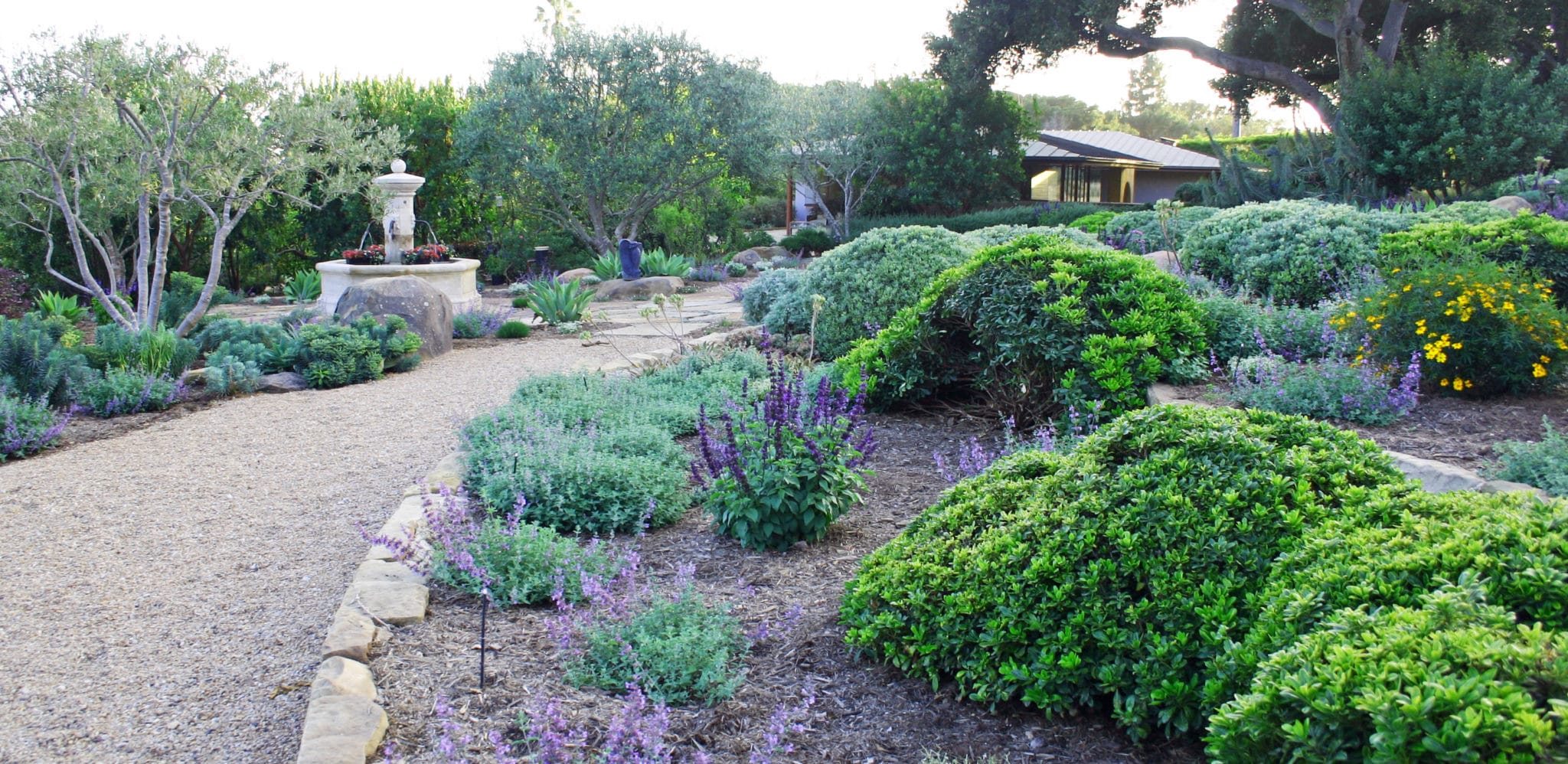
One of Chris and Lisa’s newest projects is a Santa Barbara home. The property had “good bones” but needed refinement. There were a number of unattractive hedges that blocked the beautiful vistas and made it feel hemmed in. The home is a work of art in itself with its simple, modern design and the way it is nestled into the property gives it the sense that it is a work of nature. Their job was to enhance the organic feel of the house and property while creating some space both visually and literally.

Consistent with Montecito Landscape’s garden design philosophy, they first isolate, and then focus on bringing out the best features of a property. Their feeling that each location is as different as each client helps them to approach every new project “intending to help the client see and appreciate their assets and then work with them to discover what it is they need and want.” It then becomes a focus to fulfill the clients’ dreams in such a way that uses their home and property’s intrinsic beauty in unexpected and surprising ways. The goal is to use the entire property in the “picture”, creating “negative space” in a three dimensional design.

When determining exactly what needed to be done when working on this project and how to fulfill what the client wanted, the Cullens knew that something about the landscape “wasn’t quite right” but they couldn’t identify it themselves. “In fact most of our clients know what they want and know when something works and when it doesn’t. What they don’t know is how fix it. That’s where we come in. This garden already had a drought tolerant theme, however many of the plantings were just not working; they were kind of ‘clunky.’ We suggested the addition of brightness and light to the scene, so that is what we did. With the addition of Euphorbia, Mexican Sage, Nepeta, Santa Barbara Daisy, Santolina and others we were able to add color and softness. When there is a lot of hardscape, as there was in this landscape, we wanted some softness as a counterpoint.”

When it came to adding garden décor “the client knew they wanted a water feature as a focal point and so of course, we sent them to Eye of the Day. With Brent’s help they found exactly what they were looking for. It then became our job to incorporate the fountain into the landscape in such a way that it seemed as if it were always there. This is our goal, then, when we utilize garden décor, fountains, sculpture, etc. it should feel as it belongs.”

For Chris and Lisa, “It is always a pleasure to create a beautiful ‘picture’ in the landscape; it’s why we do what we do. We live for the creation of aesthetics. The pleasure comes in working with the client to give them a garden they will use and enjoy for years to come. This project was no different. We loved collaborating with this particular couple because they were very involved and they love to work in their garden.”

Eye of the Day|Montecito Landscape|Garden Carpinteria Design

See more of Chris and Lisa Cullen’s work at Montecito Landscape.


Rebecca Sweet On Shades of Gray in the Garden

Eye of the Day|Rebecca Sweet|Shades of Gray Garden

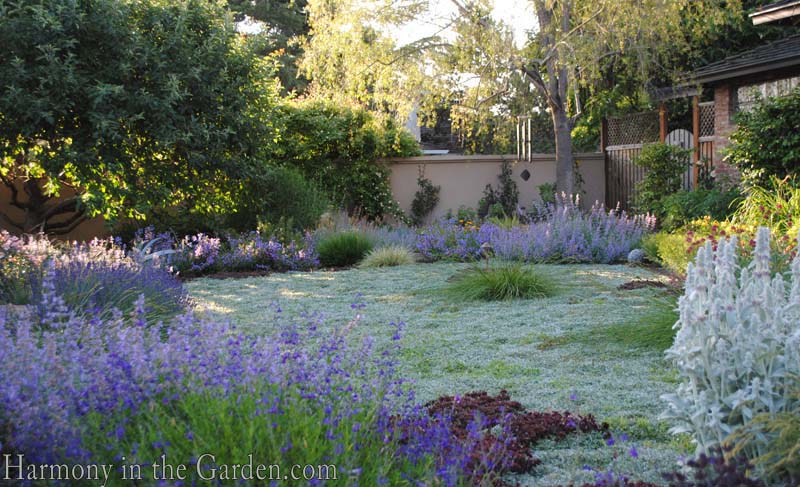
One of my favorite gardens that I designed a few years ago is a great example of how you can replace a water-thirsty lawn with lush looking, and less thirsty, plants.  One of the most successful strategies we used was to swap out the turf lawn and install a drought-tolerant Dymondia margaratea ‘lawn’ in its place.  But first, a little background and a few before & afters:

My client’s home is located on a busy corner within a stone’s throw of two nearby schools, has giant picture windows throughout the house and has a 4-foot high wall that surrounds most of the garden (a Lookiloo’s fantasy!)  What this translates into is the homeowners were on constant display to traffic and pedestrians alike and felt like they were living in a fishbowl, for all to see.

The lack of privacy would tempt many to build a fortress-like wall to surround the garden, but staying true to their welcoming personalities, they decided to create a garden that others might equally enjoy (after all, if they’re going to peek over the wall they might as well have something nice to look at, right?)

Tired of their threadbare, un-used, water-thirsty lawn and random mishmash of plantings, they wished for a more responsible, fun, and ‘livable’ garden that used less water and incorporated plenty of native plants to encourage wildlife to visit.  Our first step was to rip out the lawn and reinterpret a newer, smaller version using Dymondia.  I chose Dymondia because it’s extremely tough, drought-tolerant, evergreen and can withstand a fair amount of foot traffic. Plus, it’s just so darnned pretty.

Their concern, however, was that using such an expansive amount of the color gray in the garden would have a blinding, bright and parched effect.  This is a perfectly valid concern, and one that I’ve often heard from other clients who have experienced the unintended ‘glare’ in their gardens as a result of an overuse of gray plants.   To help avoid this common pitfall of using gray in the garden, here are a few tricks I’ve used to help tone down the brightness while still enjoying this beautiful color.

Shades of Gray

First, it’s important to realize that there are different shades of gray ranging from light & bright, to mid-level gray all the way to dark, charcoal-like foliage. And because of this range, it’s important to understand that not all grays are alike.  It’s perfectly okay to use plenty of gray plants in the garden, as long as you vary the shading.  No one wants to look at one bright gray plant after another without a place for the eye to rest, so remember to use plenty of mid-level and dark gray plants sprinkled throughout.

Keeping it Lush

In order to prevent gray colors from creating a ‘pass the sunglasses’ effect in your garden, it’s also important to include plenty of nearby plants that have deep, rich colors, such as burgundy, green and purple. In this garden, the plants chosen included the brilliant blue flowers of our native ‘Blue Springs’ Penstemon, vibrant purple Lavender and the deep burgundy Stonecrop that creeps throughout the edges of the Dymondia lawn.

Lambs Ear is used sparingly throughout the garden, as it’s a really bright shade of gray, almost bordering on white, and could easily cause the Dymondia to appear brighter than it actually is.

In fact, each Dymondia leaf consists of two colors – green on the bottom and silvery gray on top.  And once the Dymondia begins to grow and fill out (forming a soft and inviting 3-inch spongy mat), its slender leaves will begin to twist gently, revealing its different colors.

To further emphasize the green in the bi-colored foliage, I’ve included plenty of other surrounding plants with green colors to help strengthen the color echo.

For example, I’ve interspersed our native Carex divulsa (Berkeley Sedge) and Calamagrostis foliosa (Feather Reed Grass) throughout the lawn, as well as lots of perennials with green foliage.

It’s not just Dymondia that has hefty amounts of green in its coloring – take a look at a lot of other gray plants and you’ll notice green beneath the gray ‘fuzz’ (ie: many lavenders, senecios and hostas).  To emphasize the blue tones of the gray Dymondia colors, I also included plenty of blue plants in the garden, as well – like this ‘Beyond Blue’ fescue, various succulents, and many blue-flowered perennials.

My goal was to emphasize the tones and colors that I want while minimizing the tones that I don’t want.  Can you imagine how bright the garden would be if I had used an overabundance of white flowers and foliage?

Hardscaping

Hardscaping (such as nearby flagstones, patios and sidewalks) plays an important role when placed near gray plants as it, too, can serve to either tone down the brightness or amp it up to blinding proportions.

For this garden, we chose flagstones with slightly creamy-pink tones to them.  Again, the reason was to de-emphasize the bright gray colors by introducing softer muted shades to tone things down.

I’ve seen plenty of instances where a drift of bright gray plants, such as Lamb’s Ear or Artemesia, have been placed directly adjacent to a bright white cement walkway. And 9 times out of 10, that’s the area the homeowner is referring to when they say they don’t like the color gray.

To eliminate this blinding effect, just remember to use hardscaping ( as well as plants) with softer tones and/or darker colors.

A year after this garden was installed, we compared water bills – the result was amazing!   Compared to the wall-to-wall ‘carpeting’ of lawn from before, the new garden uses 40% less water, even though there is a ton of plants in this garden!  This shows that with creative and careful plant selection, and water-efficient drip irrigation, the result can be breathtaking while using much less water.
Summer 2015 Garden Design Magazine Review

Eye of the Day|Garden Design Magazine Summer 2015

GARDEN DESIGN: QUICK! GRAB YOURSELF A COPY!

Eye of the Day has been involved with the publication Garden Design magazine for many years. The latest iteration  of this “magazine” is quarterly and feels more like a book than a periodical.  There is absolutely no advertising to interrupt the flow of articles and inspiring photographs.

My eye was first caught by the Editor’s Note  “Moonshot Thinking for a Low Water World” in which Thad Orr, Editor-in-Chief, discusses replacing lawn with water-wise alternatives involving collection systems and irrigation monitoring. On the facing page is Fresh: Inspiration and Innovations from the World of Garden Design.  This article addresses “Tough Questions about Drought” by asking four people: the Director of the Nature Gardens of the Natural History Museum of Los Angeles, the Director of the Landscape Architecture and Horticulture Gardening Programs at UCLA, a well-known Californa Landscape Architect and the Water Efficiency Manager of Irvine Ranch Water District, what can be done to conserve water this summer and in the future. Initially, this was all I needed to  continue reading; we all need to immerse ourselves in questions and answers about water usage.

Elise’s Gift showcases the historic Redford Gardens in Quebec, illustrating the article about one of the largest plant collections in North America and the story of its founder, Elsie Stephen Redford with photos of the abundant flora of the gardens that were once the family’s fishing camp. Reading about Elsie’s vision and involvement in her “garden” overlooking the St. Lawrence River has me wishing for an in-depth  biography of her life.

These are only a few of the gems between the covers of Garden Design. This impressive publication is just jammed with articles and photos that are so interesting, beautiful and thought provoking that even those of us not claiming to be gardeners  will just want to absorb.

Subscribe here.


Groundskeeping: Brent’s Eye on Austin

Eye of the Day Garden Design Center|Austin travel groundskeeping| limestone

GROUNDSKEEPING:  Austin, Texas

Being from California, born and raised, I have always had a prejudice towards Texas.  They were cowboys and we were beach people if not surfers.  They like six guns and we like bongs, they eat TexMex and we eat real Mexican food.  Girls in Texas have big hair and wear lots of makeup and who doesn’t still dream about California girls.

Texas is a desert and so is most of California. We both have major water issues and we both landscape our homes and developments like there is no bottom to the aquifers that provide much of our water.

Travelling to Austin to visit my family I have come to really, really enjoy it.  This hilly area along the Colorado River (different Colorado from the one we know in California) is a fun and exciting place and I enjoy driving the neighborhoods and suburbs when I’m there.  On a recent trip I went out to visit different landscape architects and design firms.

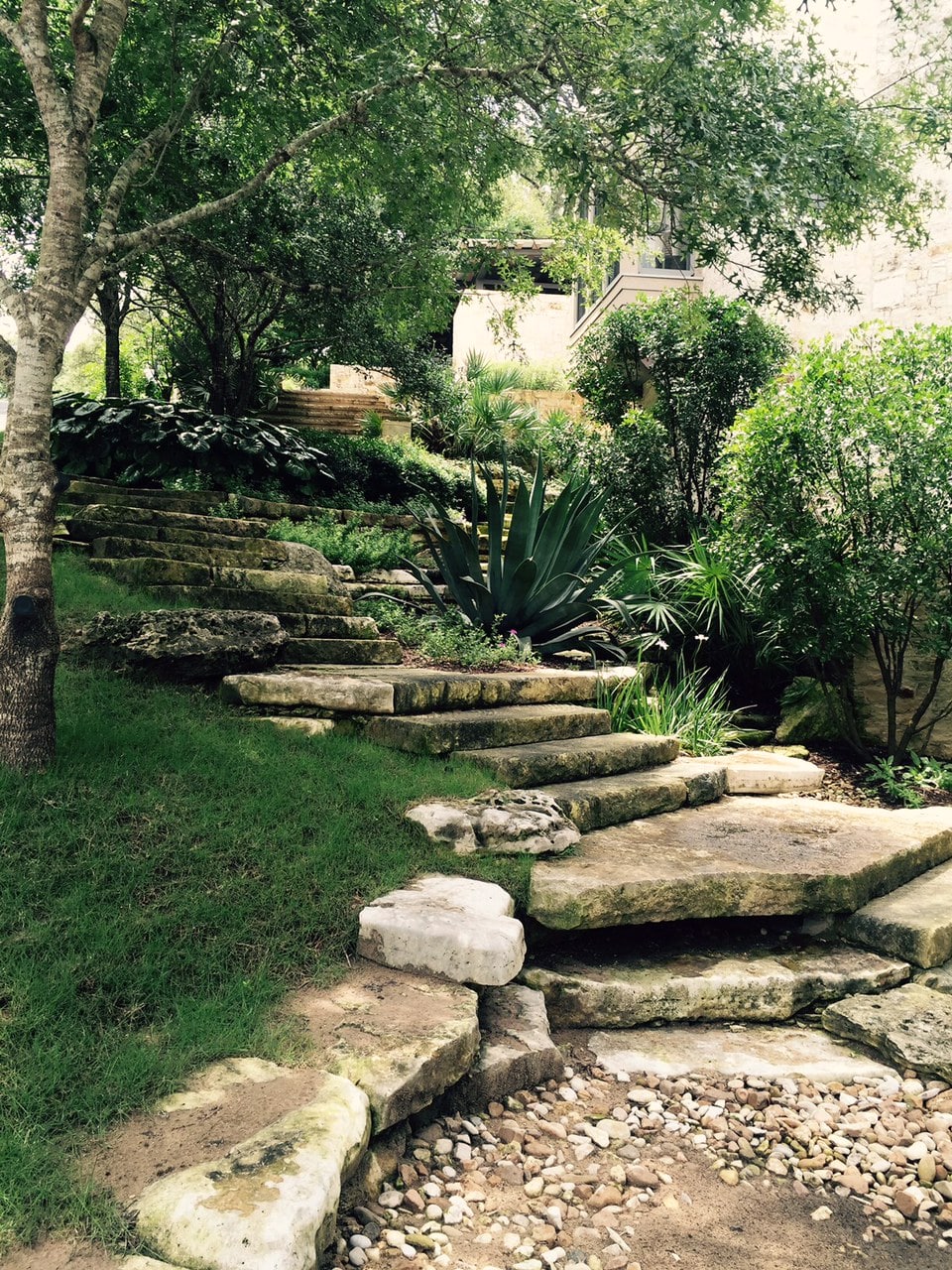
Several were in the Tarrytown neighborhood just west of the downtown which is doing its best to emulate the high-rise culture of many large cities today.  Tarrytown is an area of old and new residences that fit the description of “stately”.  With their use of Texas limestone for structures, walls and pathways and stairs, there is a feeling of substance and earth filled with lush landscapes that make one appreciate the humidity and heat in a way that as a Californian I didn’t know I could.

There are many, many architects and developers in the busy and growing Austin area and the design elements are trending to mid-century modern and contemporary.  The populace is very conscious of their outdoor areas and driving the neighborhoods shows a diversity of styles when it come to containers they use.

This historic estate makes the most of its entrance with lidded finials on the entry posts and two Campania concrete vase planters on the front porch.
 

Next is an empty tree planter downtown Austin on Willy Nelson Blvd.  Metal and wood, built for public traffic.  A new, modern twist on the Versailles planter used all over Europe with a very western feeling.  Perfect for walking on the sunny side of the street.  

Another commercial application, this project is in the University of Texas neighborhood – a large, metal square.  I like the scale and simplicity of its design and size in front of this office building.  

If you haven’t been and think of Texas the way I used to, I suggest a trip to the Austin area.  Great food, great music, the home of Whole Foods and a great place to experience the South and easy livin’ in great gardens.


A LANDSCAPE ARCHITECT DESIGNS FOR THE DROUGHT

Eye of the Day Garden Design Center|Sally Farnum Before and After garden design|drought

A LANDSCAPE ARCHITECT DESIGNS FOR THE DROUGHT

While landscape architect Sally Farnum of SE Farnum Associates has been taking the time to educate her clients about how to deal with their outdated, thirsty landscapes—especially rolling, green lawns—she has designed and implemented an outside environment for her own home that is water-considerate and still lush, inviting and peaceful.

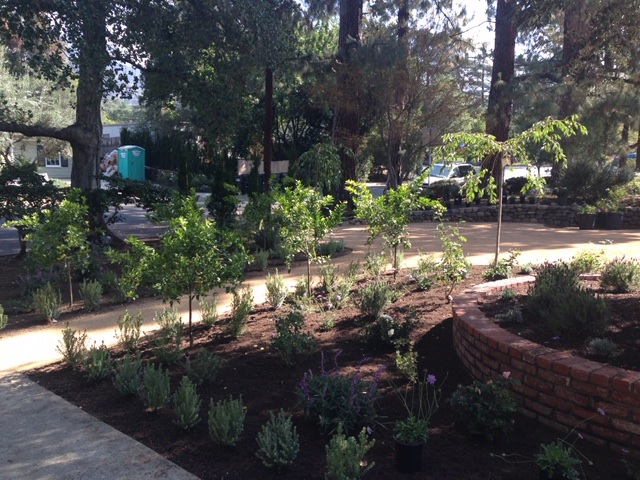
The first task was to remove a large front lawn and some accompanying flower beds.

BEFORE: Water-thirsty lawn

DURING: Removing lawn and introducing granite

Next, grading, drainage and landscape plan was translated to the area. Decomposed granite was used as the base of the pathway from the driveway, culminating in a keyhole design, at the end of which a dry-stacked rock wall would serve as a retaining wall as well as the background for a Gladding McBean fountain conversion.


ALMOST FINISHED!
Flanking each side of the pathway are two Antique Green Gladding McBean Oil Jars, preparing the eye for the fountain.  Planting on the perimeter of the path area includes a variety of water-friendly plants and trees.


STAY TUNED
Check back next month on Sally’s design in progress for photos of the finished project.