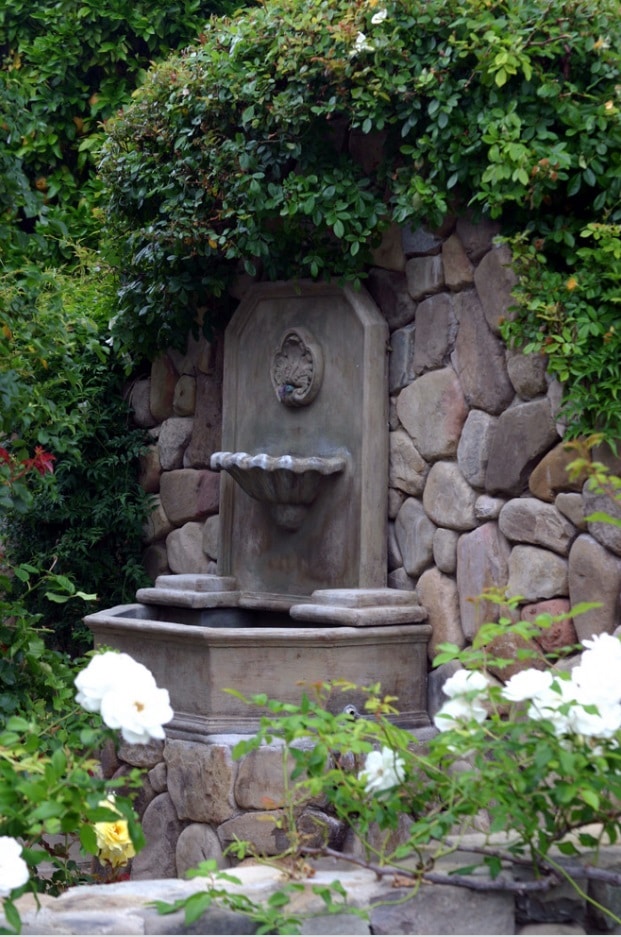
Paul Hendershot and Designing with Water Features

Paul Hendershot Garden Design Water Features

When Paul Hendershot and his trusty dog Chief walk through the door, our day at Eye of the Day becomes just that much better.  Paul likes to stroll through the store, seeing new products and picking the pieces he wants to show his clients. He’s funny and warm and stiletto sharp.

Paul Hendershot Garden Design Water Features

We were looking at his website one day and were pulled in by his remarkable, unique style.  He often works with clients in Ojai and given the heat and water problems particular to that area, we wanted to ask him about how he works within the inherent parameters as well as get a little background.

EOD: When did you become interested in landscape design and how did you begin?
PH:  I always had my own garden starting at a young age.  In my mid-30s I decided to be a landscape designer. I started by doing garden maintenance on my own. I read all the best books, such as those by Russell Page. Slowly people started asking me to help design their gardens and from there it took on a life of its own.

Paul Hendershot Garden Design Water Features

EOD: From whom or where have you drawn the inspiration for your style?
PH: Traveling, especially in Europe and noticing. Russell Page was the most dramatic influence as well as Sydney Baumgartner from Santa Barbara.

Paul Hendershot Garden Design Water Features

EOD: What do you want in a water feature and how do you include them in your designs?
PH: I use water features in courtyards and places where people linger, the sound is great. I also use them in gardens to attract birds. It depends on the space if it is a wall fountain or more of a pool-like fountain.

Paul Hendershot Garden Design Water Features

EOD: What challenges in your designs and with your clients do you deal with when considering the drought?
PH: My biggest challenge with clients is to convince them to get rid of their lawns.  People are really attached to their lawns. Lawns use more water than trees, shrubs, etc., lawns are water guzzlers.

Paul Hendershot Garden Design Water Features

EOD: So what do you offer them as an alternative? How do you get them to give it up?
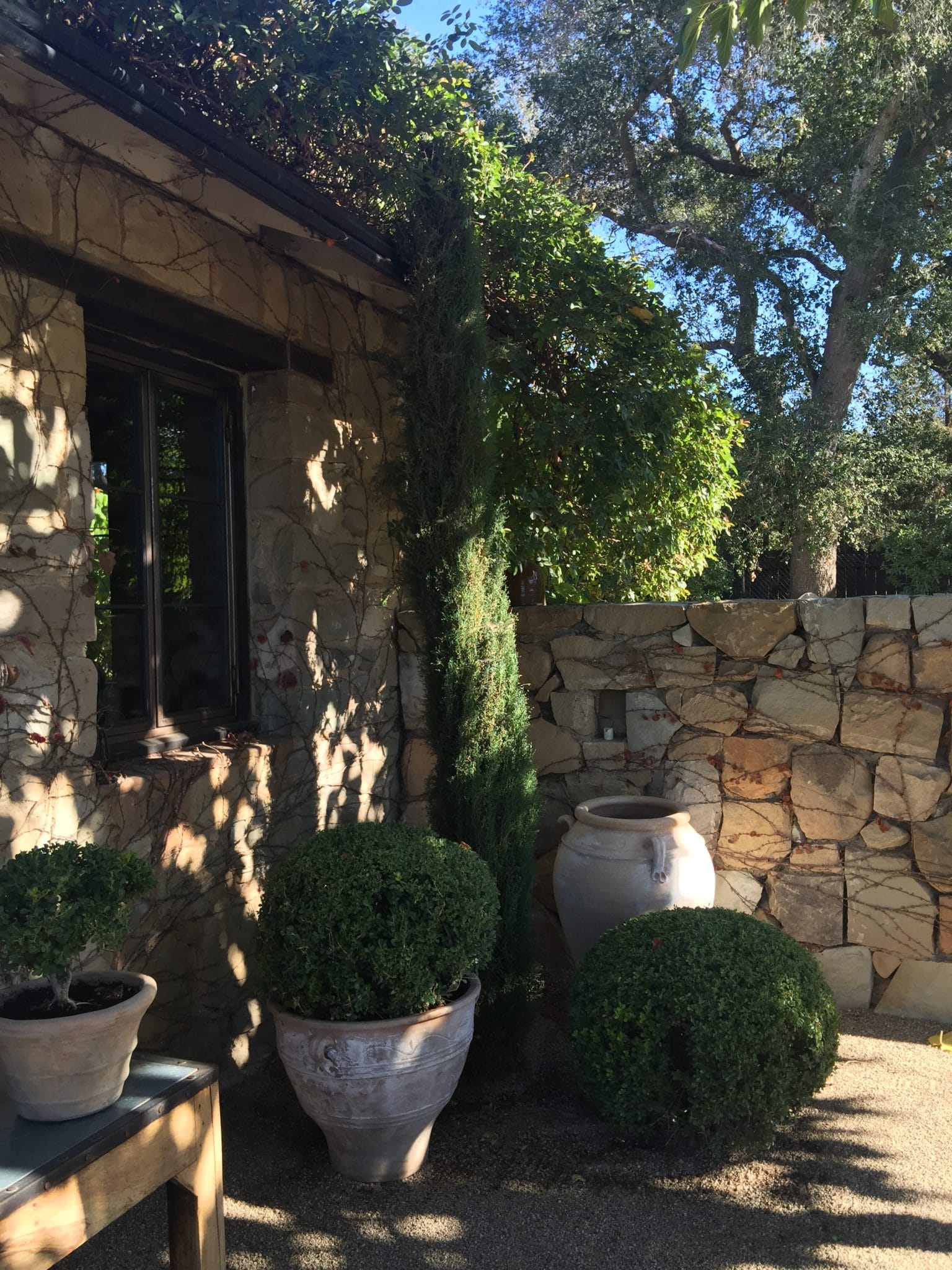
PH: I usually suggest courtyards with trees for shade and pea gravel as the surface and of course some kind of fountain. Pea gravel is inexpensive, good looking and allows the rainwater to return to the water table. With trees and shrubs, it has a very lush look. Also, groves of trees with pea gravel pathways and boxwood clipped in geometric shapes and pots as accents.

Paul Hendershot Garden Design Water Features

I think we need to change our aesthetic about gardens in California. We should use the examples of Spain, the South of France, Italy, and Morocco which often feature a courtyard with trees, shrubs, pots and water features. Connect them to the house and make outside rooms.

Paul Hendershot Garden Design Water Features

EOD: Are there any advantages or disadvantages to container planting?
PH: Depending on the space, containers, or I should say beautiful pots, add interest and beauty. Also, you can control the soil in a pot. You can make it more acidic or use the correct soil for orchids and unusual plants.  There is nothing more classic than a citrus tree in a beautiful pot.

EOD: Thanks for taking the time to talk to us Paul, we can’t wait to see you and Chief at Eye of the Day really soon.

View more of Paul’s work: Paul Hendershot Design 

Designer Recommendations for the California Garden

Eye of the Day| California Plant recommendations|Aristida Purpurea

What to Plant? The California Garden Checklist

Many of the landscape architects, designers and trade professionals  that have been frequenting Eye of the Day over the years are now friends and we asked a few of them what plants they like to use and why when designing for their clients.

Rick Button of Rick Button Landscaping

Some of Rick’s favorites:

  • OLIVES – They are simply beautiful in leaf, form and symbolism. I can make a case for them matching up with any vernacular of architecture.  They belong here.
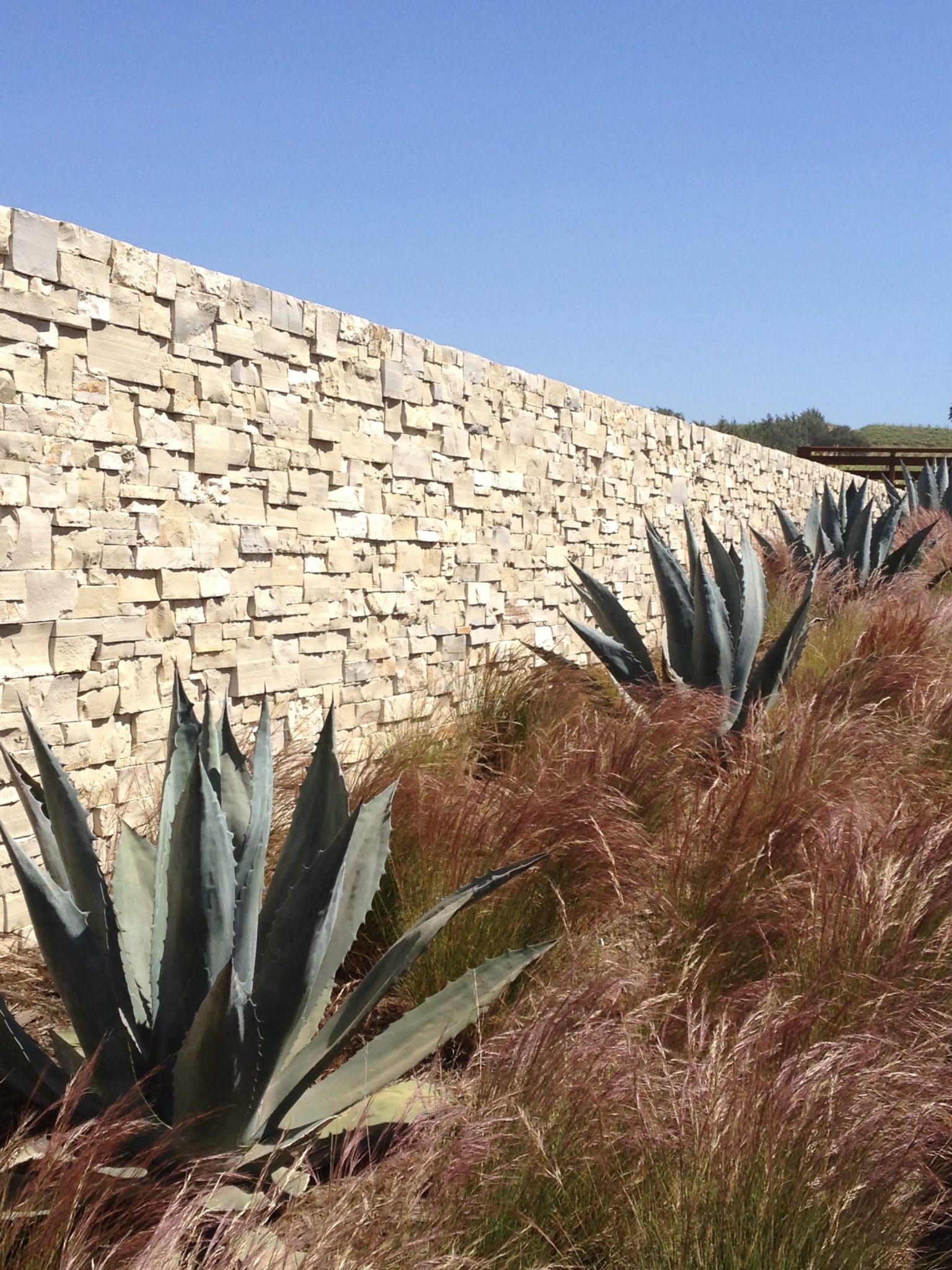
  • AGAVES – Where I am allowed to include them, I am always pleased. They are pure sculpture. Beautiful color. Put them with anything.  They steal the show.
  • CURRY – That gorgeous little shot of silver. Put it right next to a vibrant yellow green and you do not need another color in the garden. I keep them cut close without ever blooming and they become big billowy mounds.
  • ROSES – Always.
  • BOUGAINVILLEA – Always.
  • CITRUS – Always.

Puck Erickson of Arcadia Studio

I am going for Aristida purpurea.

  • PURPLE THREE-AWN – One of my favorite California grasses, it is worth the weight as it settles into the landscape. A great substitute for the invasive Mexican Feather Grass which should never be planted. Its delicate texture and subtle color picks up our afternoon light and it moves easily in the wind.

Bridget Walker of Arcadia Studios

Bridget also asked some of her colleagues for their favorites:

  • FRUITLESS OLIVE – A beautiful evergreen tree with silver green foliage. Olives are a great choice for drought tolerant landscapes; they are low water usage, love full sun and can be planted in many forms.
  • CLUSTERED FIELD SEDGE – A low-growing native grass commonly used as a drought tolerant lawn alternative. Perfect for informal lawns and meadow gardening
  • GIANT ORANGE NODDING PINCUSHION. A low mounding South African Native with course green foliage. Spring brings spectacular orange blooms 4-6″ wide.  Great in the green or for cut flowers for the home.

Sally Farnum of S E Farnum Associates

Sally gave me a list so long I had to make my own choices from her list:

  • CEANOTHUS “RAY HARTMAN”. Pale blue, fragrant blooms, it requires little water, no soil disturbance, no fertilizing, no drip and no application of soil amendment.
  • LANTANA “CONFETTI”. A shrub-type Lantana that loves the sunshine, it produces masses of flower clusters in yellow, pink, purple and wine-colored hues, it is drought and deer-resistant.
  • Many roses are cultivated for low water use, such as Meidiland, drift roses, knockout roses and some David Austins

If you are interested in more suggestions for drought-tolerant plants, please let me know: I have more recommendations for our friends.

Photo Credit: Courtesy of Arcadia Studio 


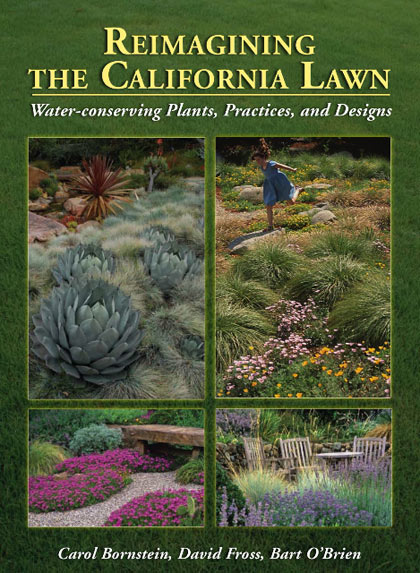
Book Review: Reimagining the California Lawn

Eye of the Day|Reimagining the California Lawn|drought garden

Book Review – Reimagining the California Lawn: Water-conserving Plants, Practices, and Designs

Continuing on a road we have just begun to travel, this month’s book,  Reimagining the California Lawn: Water-conserving Plants, Practices and Designs gives us another look at drought tolerant plants from around the world and offers design ideas and practical solutions to complement our Mediterranean climate.

From greenswards and meadows to succulent and kitchen gardens, this book presents alternatives to the traditional lawn that can reduce water use, beautify the landscape, and attract birds and butterflies. The horticulturist authors of Reimagining the California Lawn, Carol Bornstein, David Fross, and Bart O Brien, wrote the award-winning book California Native Plants for the Garden.

Eye of the Day|Reimagining the California Lawn|drought garden
“After considering the resources and maintenance that most California lawns demand – from heavy irrigation to regular applications of fertilizer to frequent mowing with power equipment – one conclusion becomes inescapable: we need to find alternatives to turf grass that are more environmentally sound.”

When you’re ready to remove or down-size your lawn, this inspiring book will be the perfect companion to help with the process. Reimagining the California Lawn is illustrated with more than 300 color photographs and offers a variety of plant palettes to choose from as you begin to create a more sustainable landscape.

The book’s publisher, Cachuma Press was founded by John Evarts and Marjorie Popper and has been a California corporation since 1991. Cachuma is a place name in the Santa Ynez Valley, where Cachuma Press is located. “Cachuma” comes from the name of a Chumash village on the Santa Ynez River which the Spanish spelled Aquitsumu. The Chumash word for the village, ‘Aqitsu’m, means “Constant Sign.”

For an interesting and cool plus, John and Marjorie were some of our first friends in the Santa Ynez Valley when our family moved there in 1991 and their daughter, Naomi went to school with, and was great friends with our daughter, Daisy.

Photo Credit: Image via Cachuma Press


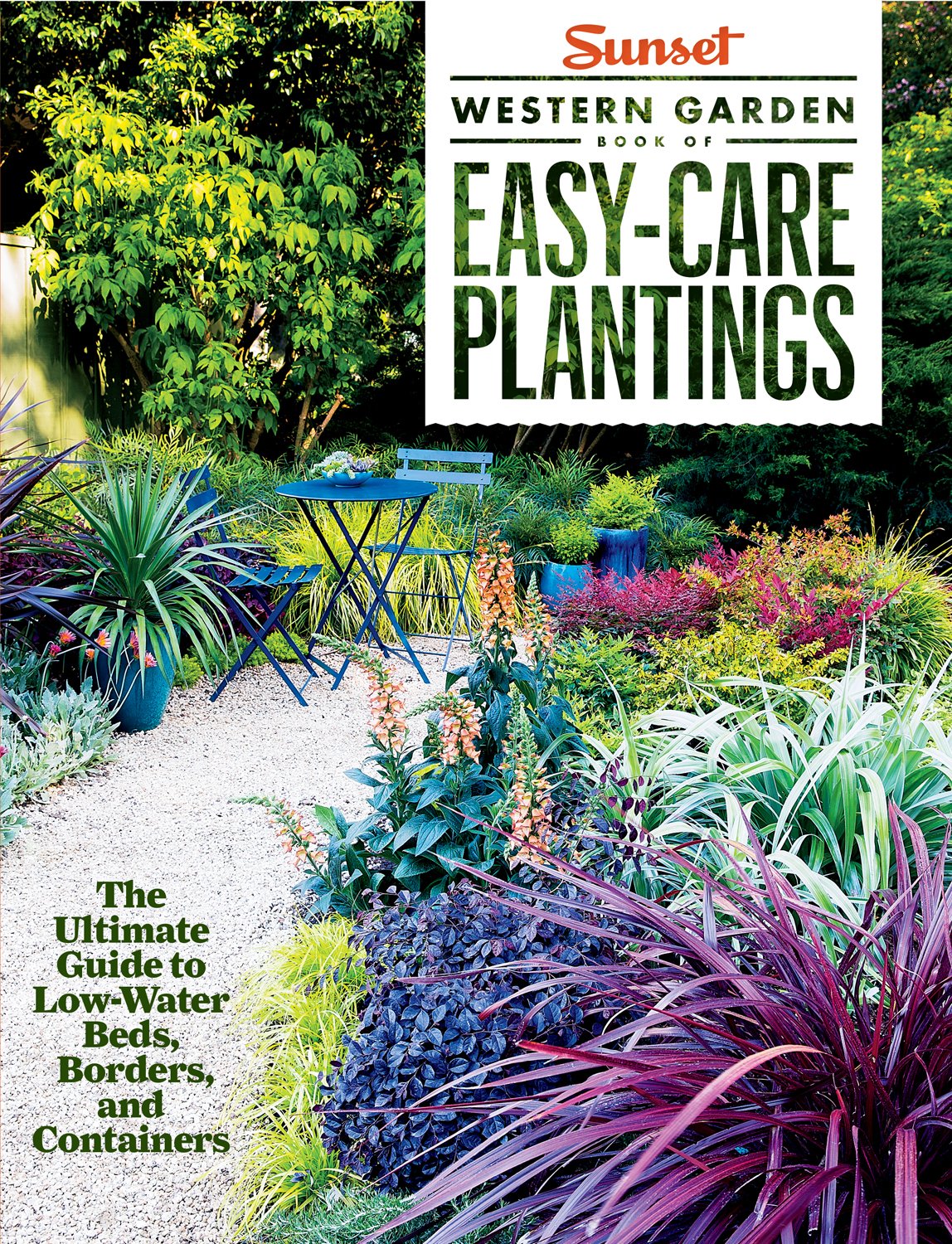
Book Review: Sunset Western Garden Book of Easy-Care Planting

Eye of the Day|Book Review| Sunset Western Garden Book of Easy Care Plantings

Book Review: Sunset Western Garden Book of Easy-Care Planting  

We never seem to stop talking about gardening during the drought and are always looking for ideas to help maintain or introduce new plants and methods into our own personal Shangri-la.  An especially helpful book can be just what you need to get rolling to some new ways.

Eye of the Day|Book Review|Sunset Western Garden Book Cover


Sunset Western Garden Book of Easy-Care Plantings: The Ultimate Guide to Low-Water Beds, Borders and Containers
truly serves as encouragement to gardeners of all levels to rethink their gardens, especially their lawns.  The book emphasizes drought-tolerant ground covers, permeable paving, succulents, native grasses and containers, and has lots of images for inspiration.

It offers suggestions on combining plants in interesting ways to display color, pattern, texture and fragrance while illustrating how few plants are needed to create a beautiful outdoor environment.  There are chapters full of plant charts with photos, descriptions and care advice to help make your garden easy to care for and easy on the eyes.

Since it wasn’t in the cards for Southern and Central California to reap the water rewards of the much touted El Nino this year, gardeners are continuing to struggle with how to use our water as efficiently as possible.  This new Sunset Western Garden Book will help all of us to see possibilities of new ways to garden that will benefit our senses and our environment.

Image via Sunset Magazine 


Drought Tips: Shrink Your Lawn or Ditch it All Together

Shrink Your Lawn or Ditch it All Together

Spring Equinox ushers in longer days and with  the recent arrival of the first day of spring and Daylight Saving Time just kicking in this means more time to devote to our outdoor spaces and gardens. We need to be sure to take time to enjoy our roses’ first flush of blooms, the most glorious of the whole year.

Assess Your Garden
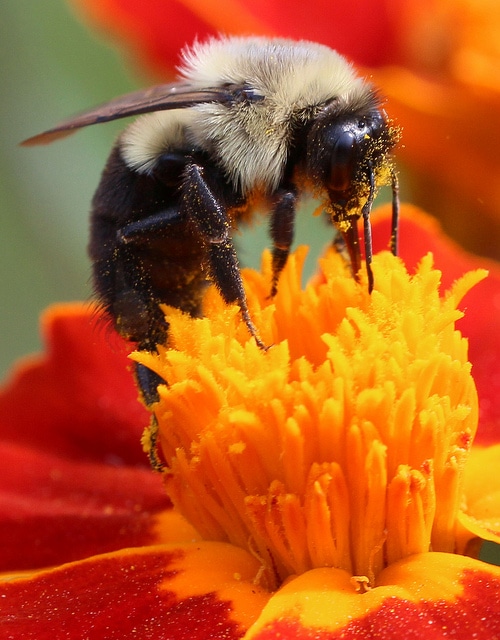
Take a look at your yard. Do you really need that plot of water-guzzling lawn? Across California, lawns are the leading consumer of outdoor residential water use. Let’s be honest, with very little to offer in the way of habitat value, thirsty traditional lawns could be smaller in favor of providing habitat for butterflies, birds, and bees.

In our mild climate, consider the many relaxing benefits of a water feature in your turf-free zone. Many no-turf options combine the use of local native plants, inviting paths, seating areas, perhaps a small meadow of flowering perennials, and water features.

Thoughtful Design
Think about your outdoor activity needs and limiting turf to places where you really need it (like a kids’ play areas). Some types of grassy lawns require less water than others so consider this when combining drought tolerant plantings alongside a lawn. Or, try eliminating it altogether—it’s the most effective way to reduce your outdoor water use (plus it gets you out of the mowing grind).

So if you don’t use it, why not ditch it? Beautiful landscapes that replace turf with easy care, drought-tolerant plants will make you wonder why it took you so long to make the change.  Eye of the Day has over two acres brimming with pots converted to fountains, multi-tiered fountains, beautiful statuary, antique wrought iron, birdbaths, patio furniture and staff who will happily guide you through making the switch to ditch your lawn, and to create a beautiful, peaceful outdoor space.


Photo Credit: Bee, Creative Commons, Pollen covered Bee by Bill Damon is licensed under CC by 2.0 


Paul Hendershot Design and Outdoor Living

Eye of the Day|Garden design| Paul Hendershot

In our continuing series of conversations with our favorite landscape architects, designers and contractors, we were really happy to talk to Paul Hendershot of Paul Hendershot Design, Inc. in Ojai, California.  All of us look forward to seeing Paul and his big, beautiful dog, Chief, walking through Eye of the Day.  Here are some things we found out when we talked to Paul.

Paul: I have great passion for landscaping.  I listen closely to what the clients want for their outside space and I am committed to creating a landscape that fits the style of the house. I have had great success with all my clients because I work to make their dreams come true and be sure the design fits the property

Eye of the Day|Garden design| Paul HendershotEye of the Day: What do you consider your signature style?
Paul: I am very fond of courtyards; rooms and spaces that are meant to be lived in as opposed to spaces that are simply decorative and consequently unusable. I have been using permeable elements such as pea gravel for many years.

Eye of the Day|Garden design| Paul HendershotEOD:  Has there been anything in particular that has inspired your style?
Paul: I was inspired while traveling mainly in Europe where I saw courtyard settings that had a recurring use of the same and similar plants that I use now. This creates that lush look with very low watering and a permeable ground.

Eye of the Day|Garden design| Paul HendershotEOD: Have you encountered any obstacles with your clients during the drought?
Paul: My main obstacle with clients has been convincing them to give up their lawns.  But I show my clients many of the gardens that we have done throughout the years that have no lawn to help them recognize what it could be like to give up their lawn.  After they feel the lushness and peacefulness of these gardens, they are convinced that they can live without a lawn.

EOD: What do you see for the future in the world of California landscape design?
Paul: The next developments I hope to see is more courtyards, patios, tree plantings, and permeable grounds. In other words: spaces to live in outside.

Eye of the Day|Garden design| Paul HendershotEOD: What are your short and long term goals for your business?
Paul: We intend to continue to work closely with our clients and focus on their dream gardens.  During this process, we will continue working with the clients with lots of fun in mind. We want to continue to design gardens, courtyards, and patios that use very little water, keeping abreast of the latest permeable options. We are full of gratitude for the great clients that we get to work with.

…and we’re full of gratitude for Paul and Chief.  To contact Paul, see his website: Paul Hendershot Design