Design and Los Angeles Love: Interview with Mark Rios of RCH Studios

Design and Los Angeles Love: Interview with Mark Rios of Rios Clementi Hale Studios

The easiest way to the heart of a native Angeleno is to give accolades about their beloved, but often maligned, city. Mark Rios, FASLA, FAIA, Founding Principal of the award-winning and admired design firm Rios Clementi Hale Studios in Los Angeles, is ten minutes into our interview when he says, “LA is this amazing melting pot,” before rattling off LA neighborhoods like a seasoned Metro driver. That regional knowledge would be a necessity at this point as RCH Studios has made their mark in elevating the Los Angeles landscape with high-profile designs as large as Grand Park in downtown and as small as Sunset Plaza in Silverlake, which was the prototype for a now citywide parklet program.

 Grand Park Los Angeles
“Grand Park—the first phase of a broader Grand Avenue revitalization plan to be realized—has been transformed from an underutilized open space into a vibrant urban park supporting a variety of active and passive programs.” Photo credit: Jim Simmons

In much of the work in their portfolio there is a balance of the city’s cultural heritage, sustainability efforts, and an evolving and limitless design process. The firm plans to introduce the first living green wall to Sunset Boulevard. The dramatic six-story sculptural lattice of native plantings and an accompanying public plaza “will provide a breath of fresh air for further build a sense of community.”

With over 75 design awards and a fine educational pedigree, it would be easy to sit back, but Rios insists on being challenged by, and having fun with, design and the city’s rich mix of cultures. Rios and his firm don’t just praise the uniqueness of LA, but seem to be making this a long-term love story.

Mark Rios is the Founding Principle Architect and Landscape Architect at RCH Studios. Learn more here. Photo Credit: Jim Simmons
Mark Rios, FASLA, FAIA, is the Founding Principal, Architect and Landscape Architect, at Rios Clementi Hale Studios. Learn more here. Photo Credit: Jim Simmons

Eye of the Day: Your firm takes on a diverse mix of projects, from traditional houses and gardens, to campuses, public parks, and even furniture. What design philosophy do you personally bring to each project? Is it important that you finish a design with a certain goal in mind?

Mark Rios: I really believe that having a diverse body of work inspires…one project inspires another in a non-linear way. There are really great architects and really great landscape architects that focus on a particular work type, whether it’s residential, healing gardens, or tall buildings or something. And we try to do the exact opposite. And maybe it’s because we get bored quickly. (laughs) But I think the idea of learning about a problem you’re trying to solve is really fundamental to how we work. And so, I’m just passionate about the research that goes behind each project. So doing something you’ve never done before, or haven’t designed before, is really exhilarating because you have to go through all this detective work and find out about all the things that go on in making decisions about it. So a broad practice is definitely harder to achieve and it’s kind of harder from a business model. But I think for us as designers it’s more satisfying.

Chen Residence
“The main goal of the designers was to create a restful atmosphere so the client would have a beautiful, open, effortless place to come home to. Guests look diagonally through the house from the front door and are drawn out by the pool and the 360-degree view.” Photo credit: Jim Simmons

EOTD: I think that’s important. It must be hard to balance the business model, but to also stay true to what you want as a designer and get what you want out of that project.

MR: (laughs) It is complicated. I think that we try to establish really high aspirations for each project and that sometimes those goals or concepts evolve as you learn more about the project and more about what its needs are, what the client is about, and what the design is about. You always want to end up with a solution that solves all the issues, works really well, is on budget, and is really beautiful. But on top of that, it has to address a higher concept of nature, it has to have an idea, it has to be memorable. You want it to be provocative in some way, and so I think good work has to tell a story—it has to have a big idea behind it.

EOTD: You’re a Los Angeles-based design firm that’s changing the landscape of the city. I can play a game of chess in a pocket park in Glendale under glowing abstract chess pieces that tower over me or celebrate the Fourth of July in Grand Park—you’ve got Angelenos ditching their beloved cars to walk around downtown LA. In many of your projects there seems to be a drive to revive the city in a modern and fresh way. What about Los Angeles and its people inspire your projects? Do you think LA doesn’t get enough credit as a place for great architecture?

MR: You know, I think that LA is this amazing melting pot. And what I love about it, what I’m really inspired by, is the cultural diversity. And I think it’s the most diverse American city. And diverse in a really authentic way, not in a Disneyland way. You have all these different, really rich communities. They’re really vibrant; they have their own sort of villages within this bigger city. And there are all these facts we’ve learned, like LAUSD recognizes 95 different languages, and, you know, there’s just this amazing spread of people. So I think our work is always trying to understand all these different cultures we are operating with and what the heritages and traditions of these different people are, and how you mix them up—this mash up of culture which is Los Angeles—so that the design is contemporary and it’s about our present-day inhabitants, yet somehow it connects people unexpectedly.

A pocket park design for chess players
“While every detail and nuance is derived from the tradition and lexicon of the game, the park’s entire design is patterned after strategic movements made in chess” with light towers fashioned after chess pieces. Photo credit: Tom Bonner

EOTD: Are there any LA spots you really like?

MR: The arts district in downtown Los Angeles is pretty amazing. It’s really transforming very, very fast. People are living there, there’s great…you know…

EOTD: Bars?

MR: (laughs) Bars and great restaurants, and people are having all sorts of new creative office space. It’s a really quickly changing community, but there are all these other enclaves. I think it’s really amazing to drive through Beverly Blvd., from the Westside all the way through Beverly Hills, West Hollywood, Koreatown, and as you go through downtown Los Angeles, it turns into First Street and you go through Mariachi Plaza. And Beverly through to First street is kind of nice—it cuts culturally through all of Los Angeles. So I think those are the really great things about our city. We are in our cars a lot and so I’m always looking at the signs when I’m in my car. What language are they in? What kind of food are they serving? (laughs) You see, you go through all these precincts of different cultures. It’s fun.

Part of the landscape design of Grand Park
At Grand Park, “custom site furniture designed in bright [s] a Southern California-backyard feeling.” Photo Credit: Jim Simmons

EOTD: I think taking someone new to LA through Beverly is a good way to show how our city is, in a lot of ways.

MR: Yes. And it takes all the bad stuff about LA—the traffic, the car culture—and all of a sudden makes you reexamine it in a new way. Your car is your vehicle to be a cultural explorer. It’s like this little space capsule that lets you go and see all these different things. Other cities don’t have that as much.

EOTD: Because you’re based in California, drought is an issue that must come up in your design projects. To keep designs sustainable, how do you still incorporate features that one would traditionally expect in a garden or landscape, like trees, lush plants, or fountains, while in drought-conscious California?

MR: I think it’s really our responsibility as architects, landscape architects, and designers, to really push forward, to get off the grid. Sustainability really deals with all different aspects. It deals with water, power, and energy. And it’s really about trying to make everyone less dependent on and not wasting natural resources. So we’re trying to make all of our work more sustainable as far as taking less water, as far as planting areas. It’s about recycling and reusing and filtering water, as far as water drain-off, before we put it back into the ground through the storm drain system. We’re always looking at ways of generating and powering our projects and how they can be more off the grid. And there are all these living building challenges. And the AIA has a 2030 Challenge [to reduce fossil fuel usage in the building industries to attain carbon-neutral status by 2030]. And architects and landscape architects are really pushing hard to change our physical environment to make it more balanced.

An entranceway design incorporates a living wall.
“A distinctive, planted entranceway that forms a vertical landscape or living wall brings a series of ecological learning moments to young children” at the Center for Early Education. Photo credit: Jim Simmons

EOTD: Do you have any recent projects that speak to that philosophy?

MR: One project that’s kind of fun is on Sunset Blvd. We’re doing a renovation of a big office building on the corner of Holloway and Sunset for IAC, Barry Diller’s company. And we’re putting this huge, new planted façade on the building that’s about six stories tall. It’s this big huge, moving, kind of curved awning that hangs out. It’s all planted with these plants from the Santa Monica Mountains—so all the plants are native plants. It’s sort of built like a big billboard, so it feels like one of the billboards on Sunset Blvd., but only it’s a plants billboard. I think what’s interesting about it is there is a very high water table under the building and so they are always taking water, pumping water out from underneath the building, and adding it to the water of the sewer system. So we’re basically capturing that water. All the water that we’re using to water this thing is basically from under the building. So we’re reusing the water table water to irrigate it. And it’s all sensor controlled so it only gets a drop of water when it needs it. What’s nice about it is that it’s not potable water. It is water that’s basically discharged water from under the building. So that’s a very sustainable story. People might ask, Why are you putting all these plantings on this building on Sunset during a drought? But we’re actually reusing all this water that’s getting thrown away to do it. And by doing it, it also helps with air purification and all sorts of things. I hope everybody looks at it and goes, That’s really beautiful, that’s cool and I really love it. They won’t realize it, but it has all these layers of research behind it.

IAC Green Wall design on Sunset Blvd.
“The lattice has the illusion of peeling off the will have views of the landscape below and the Hollywood Hills beyond.” Photo credit: RCH Studios

EOTD: You have degrees in architecture from USC and Harvard and your designs are known for their clean and modern lines. You have formal training, but your projects go beyond traditional explorations as you’ve ventured into product and graphic design. Can you tell us more about your and RCH Studio’s multi-disciplinary approach to design?

MR: You know, I like to think of the office as this design think tank and that we are a group of designers that do research, and we evolve ideas, and those ideas get built or manufactured, and made into lots of different things. An idea can be realized through a building, can be realized through a sign, or it can be realized through a plate. But it’s the same process, analysis, research, and inspiration that goes into that. Whatever the final craft you are making is, it’s kind of the same design process. We really think of ourselves foremost as designers, and not sort of limited by a traditional discipline. We think of ourselves as interpreters of culture, just like someone who is making a movie or writing a book, trying to tell stories about our culture—and we are using a variety of methodologies to elaborate on and tell those stories.

EOTD: Are there any projects you’re currently working on that you likeparticularly that are outside of the box of what we think landscape architects typically do?

MR: We’re starting to experiment with fashion. Most landscape architects may think about it, you know, but it’s kind of a hard new thing to be learning. We’re starting with small pieces, like bags, scarves, and pocket squares, and things like that. We’re starting to think about other stuff, but I think that we’ll continue to evolve and hopefully try new things. I don’t want to know what I’ll be doing in three years! I want to see what happens—surprise myself.

NotNeutral Central Park plate designs
notNeutral, an offspring of RCH Studios, includes collections of dishware, glassware, and furniture. Garden Plates focus on the contrast between organic elements of the highlighted park and the surrounding urban context.” Photo Credit: RCH Studios

EOTD: Container gardening is an easy way to control water consumption and is a popular form of gardening in drought-stricken California. In residential design, containers are often one of the last components added to a garden or home. How do you incorporate pottery, containers, or planters in your overall design?

MR: I think container gardens are fantastic for all the sustainability issues we’ve mentioned, and as far as limited means that give you great results. Containers are also really popular for another set of practical reasons. They’re like raised gardens, they’re easier to get to; they’re great for kids, the elderly. There’re a lot of practical things about container gardens. I think of container gardens as accessories. You think of your house, you have your favorite things around that animate the house, those things that bring your personality to a particular room. And people don’t think of outdoor spaces as being accessorized in any sort of way. So the first advice I’d give to everybody is don’t worry if all the containers match. (laughs) Don’t get caught up with buying containers that all look alike, you know. Just buy things you love. If you love something a lot, or this thing a lot, or that thing, then all those pieces will go together because, as artistic people, our taste comes through. I think it’s pretty impossible that if somebody loves five different things that those things aren’t going to all work together.

EOTD: So going back to school, you went to USC but also served as faculty at UCLA. One of your partners, Bob Hale, got his degree at UCLA. The schools play each other next month at the Rose Bowl. So when you go into work that day are you sporting Trojan or Bruin colors?

MR: (without pausing) I think it’s probably going to be the Trojans. (laughs) I have a long affiliation with USC and I think they have a great school of landscape architecture now and their art history department is fantastic. UCLA is terrific. I love the faculty there and they’re doing a really amazing job, but I think I’d be on the Trojans side.

EOTD: So no pranking Bob Hale? 

MR: No…we’ll be nice to each other, but you know we’ll each be rooting for our own team.

See the RCH Studio design portfolio here.


Home Outside Palette App: Landscape Design Made Easy and On the Go

Could it be time to add your mobile device to your set of gardening tools? There really is an app for everything. Bring out your inner designer to create the dream landscape you always imagined with the Home Outside Palette app. Move, resize, and even undo with over 280 available elements (trees, paths, enclosures, and more) to an existing or new landscape before even stepping outside. Design on the go has never been easier for novice and experienced designers.

“We created the Home Outside Palette app to help homeowners design their properties,” says Julie Moir Messervy, owner of landscape architecture and design firm JMMDS and creator of the app and the Home Outside online landscape design service. Using any iOS or Android smartphone or tablet, users can upload a property survey and use it as a background, or select a grid or colored background, and mock up their landscape by tapping and dragging hundreds of elements into place. The grouping feature lets you lock permanent elements together (such as the house, garage, and driveway), and the layers tool gives you the ability to play with different versions of a design.

An in-app purchase offers additional elements as well as a measuring tool that lets you input rectangular measurements or “walk-and-click” a GPS-based outline of your space. A drawing tool allows you to sketch free-form garden beds and other features. “From the start we knew that we wanted to include all the green features that today’s homeowners need: laundry lines, greenroofs, chicken coops, veggie gardens, compost bins, greenhouses, solar panels, and more,” says Messervy. “It is possible to have a functional, sustainable yard that’s also beautiful—and this app helps you get the design right before ever picking up a shovel.” When you’re finished, get important feedback before committing to any design element. You can share designs from the app on social media or email them to friends. For additional help with your landscape, the Ask an Expert feature lets you send a design from the app to JMMDS’s award-winning designers for their expert suggestions. The app is designed to be practical and user-friendly for the imaginative homeowner to the professional designer. Messervy adds, “Our mission is to make beautiful design available to anyone, anywhere.”


By Jennifer Silver, Marketing and Special Projects Manager of Julie Moir Messervy Design Studio

Jennifer has held a variety of teaching, writing and editing positions. When she moved to Vermont 12 years ago, she discovered her true passion: sustainable agriculture. She is never happier than when writing or gardening. At JMMDS, she gets to write about gardens—what could be better?


Right Plant, Right Place: The What and Where of Drought Tolerant Planting

My client was happy; she’d just completed installation of major landscape improvements designed by an award-winning designer. I was not so happy. Some of the plants the designer had chosen were simply not suited for the area where they’d been planted and it was my job to make them look good.

Landscape architects, designers, and maintenance crews are largely trained in the nuts and bolts of building landscape: walls, paths, site lines, and the mechanics of irrigation systems, but may not be as versed in the fine art of plant selection. The lusty plants at the nursery look fantastic in their pots, but growing information is scanty.

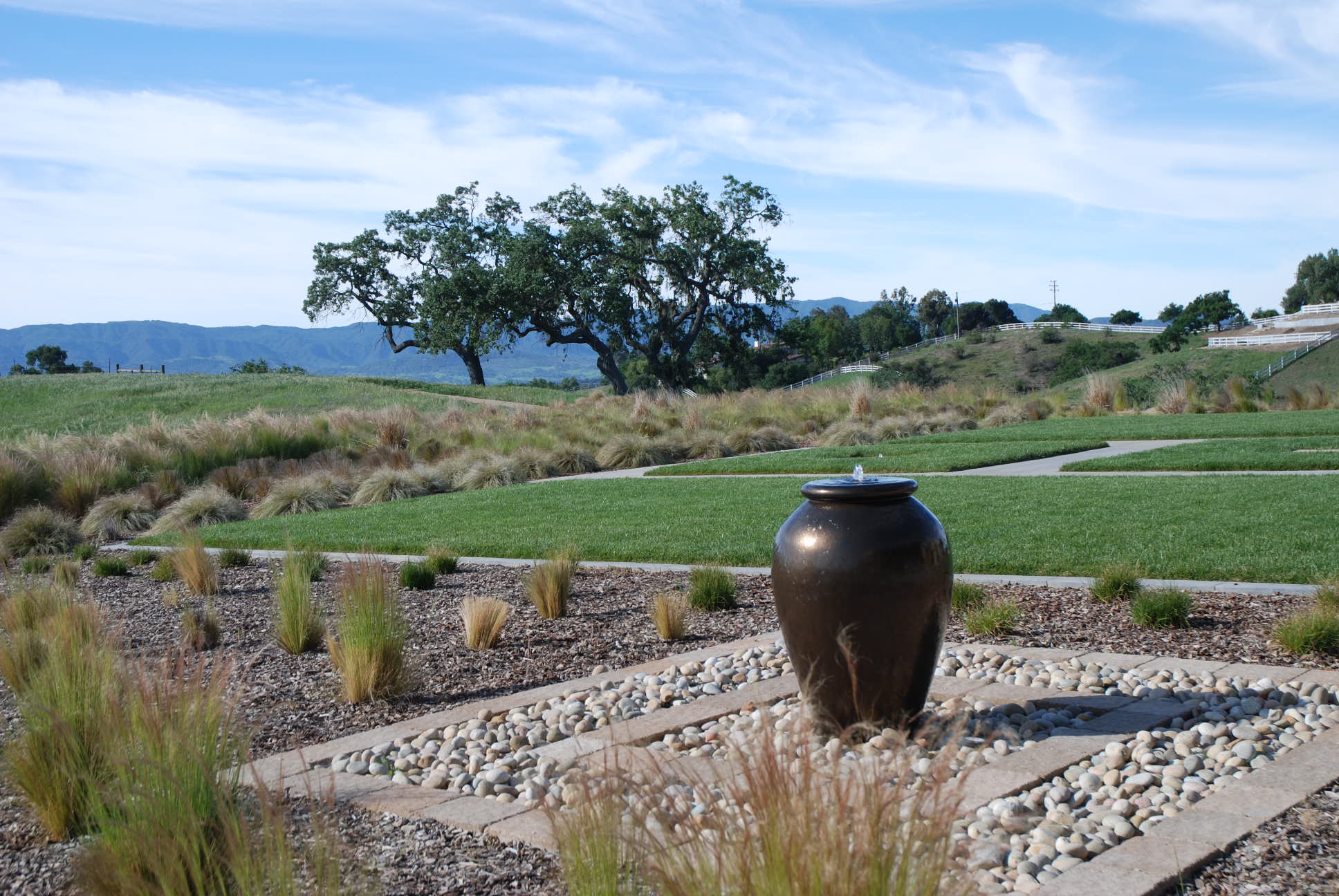
The tag says full sun to partial shade. Were the conditions it was tested in similar to your site? The tag says drought tolerant. What kind of soil would provide the support the plant needs to actually survive a drought? And for how long?

Especially in water-challenged Southern California, consider the following as essential to a successful landscape:

Soil

Test the soil. Is it heavy clay, loamy or sandy? Each different type requires specific treatments or careful plant selection. Match plant requirements to what is available (or achievable).

Plant Grouping

Group plants by water and exposure requirements. Even the Cadillac of irrigation systems will support plants only if all of them in the area being watered require the same amount at the same application rate. In our climate it should always be the primary principle to reduce the amount of water required for any given garden zone.

Environment

We shouldn’t have to relinquish every lush-looking palm, fern or ginger, just make sure they are placed where their water requirements don’t conflict with those of the more drought-tolerant ones.

Professional botanists and horticulturists have taken these questions to heart and provide more complete information in books, magazines and websites. Call on their expertise and experience to create a successful, beautiful garden.

See more of my writing on sustainable landscaping here.


Lisa Cox Design | Los Olivos Tasting Room Gets Design Update

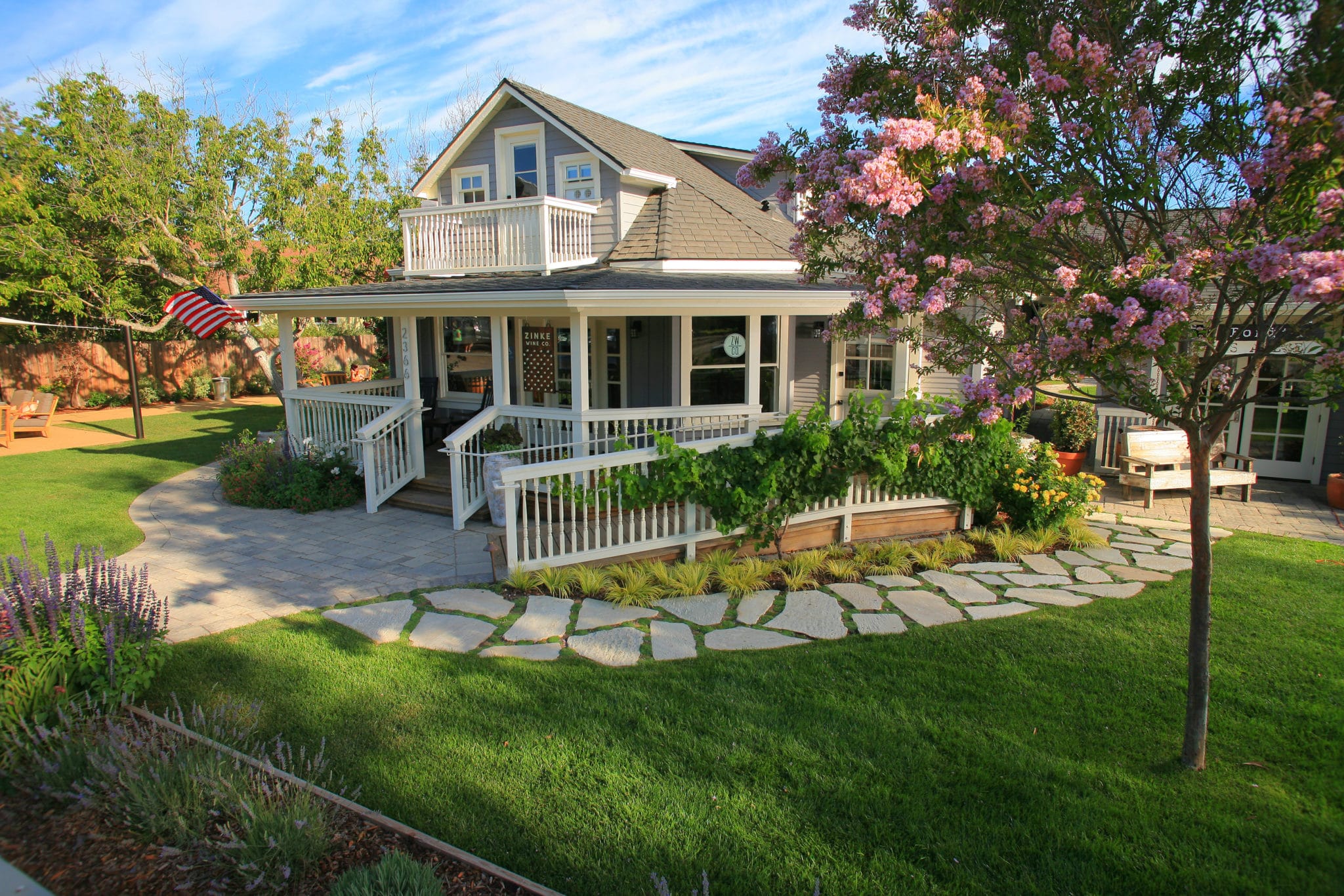
In the relatively short time Lisa Cox Landscape Design has been working in the Santa Barbara area and Santa Ynez Valley, she has become the go-to for anyone wanting clean and sharp designs with a focused point of view. This is clearly evident in her design for the brand new Zinke Wine Co. tasting room. Lisa says she can’t take complete credit for the beautiful design as she worked closely with Thierry Fraye of Paysage Landscape and the Zinkes who have impeccable taste and a clear vision for their brand.

Michael and Ashley Zinke are Zinke Wines. Michael Zinke is a self-taught winemaker that apprenticed at Girouard and Sans Liege wineries before venturing out on his own. They opened their state-of-the-art tasting facility in the wine country township of Los Olivos, CA this past May. They create single vineyard Rhone varietal wines sourced from a handful of Central Coast vineyards. They needed a venue befitting their precious creations and Lisa was the one to deliver.

Lisa incorporated Eye of the Day products throughout her design. As you approach the building you are greeted by two ‘aged’ Greek Bottle pots customized by Eye of the Day standing guard aside the main entrance. Each pot is planted with drought tolerant growth. While enjoying your first taste of Viognier you overlook an impressive Asian carved granite trough bursting with colorful succulents. You can also admire the lovely Italian San Rocco Giara Liscia pot that flanks the bocce court while waiting for your next throw. Zinke Winery Blueprint OverheadAfter taking it all in, we had some questions for Lisa:  

What was your inspiration for the design?
My Inspiration came from a few sources.  First and foremost, the owners, Michael and Ashley Zinke have distinct, incredible taste.  They were looking for a look that felt something with a rustic/industrial look and a warm welcoming feeling from the street that would draw in customers who were looking for something a little different.  Also, with the existing Cape Cod style structure of the Tasting Room, we wanted to keep that charm, but infuse it with a bit of modern charm!

Did the Zinkes have strong opinions on what they wanted or did they leave it up to you?
I would say they gave me a direction as stated above, but pretty much let me design what I felt would present both function and form to the space.

What were the particular challenges with this project?
We needed an area that would allow furniture placement which I accomplished with the DG cutouts that are surrounded with lush green grass. There was some existing hardscape that we “improved” with either widening pathways or substituting new flagstone stepping stones. With a mixed plant palette of natives, lush perennials and color, the end product turned out quite pleasing to the eye…and of course the succulent filled planters are incredible!

What do you most like about designing in the ‘Valley’?
I can honestly say, what I like most about designing in the valley are the people! Since my husband and I have only been here for 1½ years, we can honestly say we are overwhelmed with the warm, friendly and caring SYV community!  And of course, how can you beat our gorgeous natural landscape of rolling hills, oak trees and vineyards…it’s hard to beat! A special thanks to Rich Cox Photography for the images!


10 Design Principles of Frederick Law Olmsted

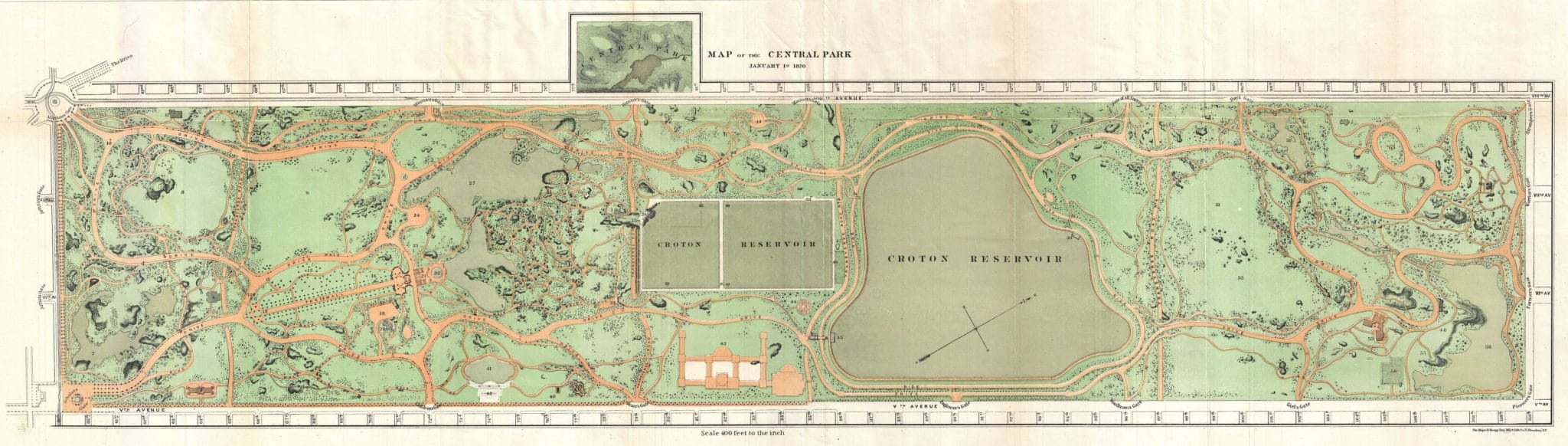
Frederick Law Olmsted, the father of American landscape architecture, is in many ways responsible for the way America looks. Beginning in 1857 with Central Park in New York City, he created designs for thousands of landscapes, including many of the world’s most important parks. Prospect Park and Fort Greene Park in Brooklyn are designed by Olmsted, as well as Boston’s Emerald Necklace, The Biltmore Estate in North Carolina, Mount Royal in Montreal, the grounds of the U.S. Capitol and the White House, Washington Park, Jackson Park and the World’s Columbian Exposition of 1893 in Chicago. Many of the green spaces that define towns and cities across the country are influenced by Olmsted. Frederick Law Olmsted Full Photo The “Maker of Parks”, Olmsted was a prolific writer and outlined his approach to design with ten principles:

1) Respect “the genius of a place”
Olmsted wanted his designs to stay true to the character of their natural surroundings.  The goal was to “access this genius” and let it infuse all design decisions.

2) Subordinate details to the whole
There was no room for details that were to be viewed as individual elements.  In his work, they were threads in a larger fabric.

3) The art is to conceal art
Olmsted believed the goal wasn’t to make viewers see his work. It was to make them unaware of it. To him, the art was to conceal art. And the way to do this was to remove distractions and demands on the conscious mind. Viewers weren’t supposed to examine or analyze parts of the scene. They were supposed to be unaware of everything that was working.

4) Aim for the unconscious
His designs subtly direct movement through the landscape. Pedestrians are led without realizing they’re being led. There is the sensation of feeling lost yet completely confident that you can easily return to your starting point.

5) Avoid fashion for fashion’s sake
He felt popular trends of the day, like specimen planting and flower-bedding of exotics, often intruded more than they helped.

FLO map6) Formal training isn’t required
Olmsted had no formal design training and didn’t commit to landscape architecture until he was 44.  His views on landscapes developed from traveling and reading.

7) Words matter
Olmsted wrote often and thought hard about the words he used. For example, he rejected the term “landscape gardening” for his own work since he felt he worked on a larger scale than gardeners.

8) Stand for something
His writings show that, in his view, he wasn’t just making pretty, green spaces, he was democratizing nature.

9) Utility trumps ornament
He wrote, “So long as considerations of utility are neglected or overridden by considerations of ornament, there will be not true art.”

10) Never too much, hardly enough
He constantly simplified the scene, clearing and planting to clarify the “leading motive” of the natural site. Thirty years after he helped to design Central Park, he wrote to his ex-partner, Calvert Vaux, “The great merit of all the works you and I have done is that in them the larger opportunities of the topography have not been wasted in aiming at ordinary suburban gardening, cottage gardening effects. We have let it alone more than most gardeners can. But never too much, hardly enough.”

Olmsted believed in the restorative power of landscape for ordinary people. He disliked straight lines. He loved contrasting textures, but it was a cardinal rule with him to blur the boundaries. The architecture of Europe impressed him, but trees were his true love. And that true love shows.  Everywhere.


APLD San Diego Visits Eye of the Day

Eye of the Day Garden Design Center recently welcomed some members of the San Diego district of the Association of Professional Landscape Designers. Headed by Koby Hall of Koby’s Garden Alchemy, Inc., the group of landscape designers hit the road for a weekend of visits to major garden influencers throughout the Santa Barbara area.

They stopped by EOTD here in Carpinteria for some tea and tours by owner, Brent Freitas, and sales rep, Mitch Walker who were happy to share information about our company history and an in-depth overview of our various product lines. This included our Italian terracotta from Terrecotte San Rocco and American pottery from Gladding McBean. The APLD group walked our showroom to see our extensive collection of fountains, statuary, and containers. Brent also spoke about our customization services including coloring, aging, and fountain conversions.

We were happy to see some EOTD items find new homes in future San Diego APLD designs. Special thanks to you guys and we’re happy you could visit!

If your group would like a tour of Eye of the Day, please contact us at: trade@

Click the slideshow for more of the San Diego APLD visit at Eye of the Day: