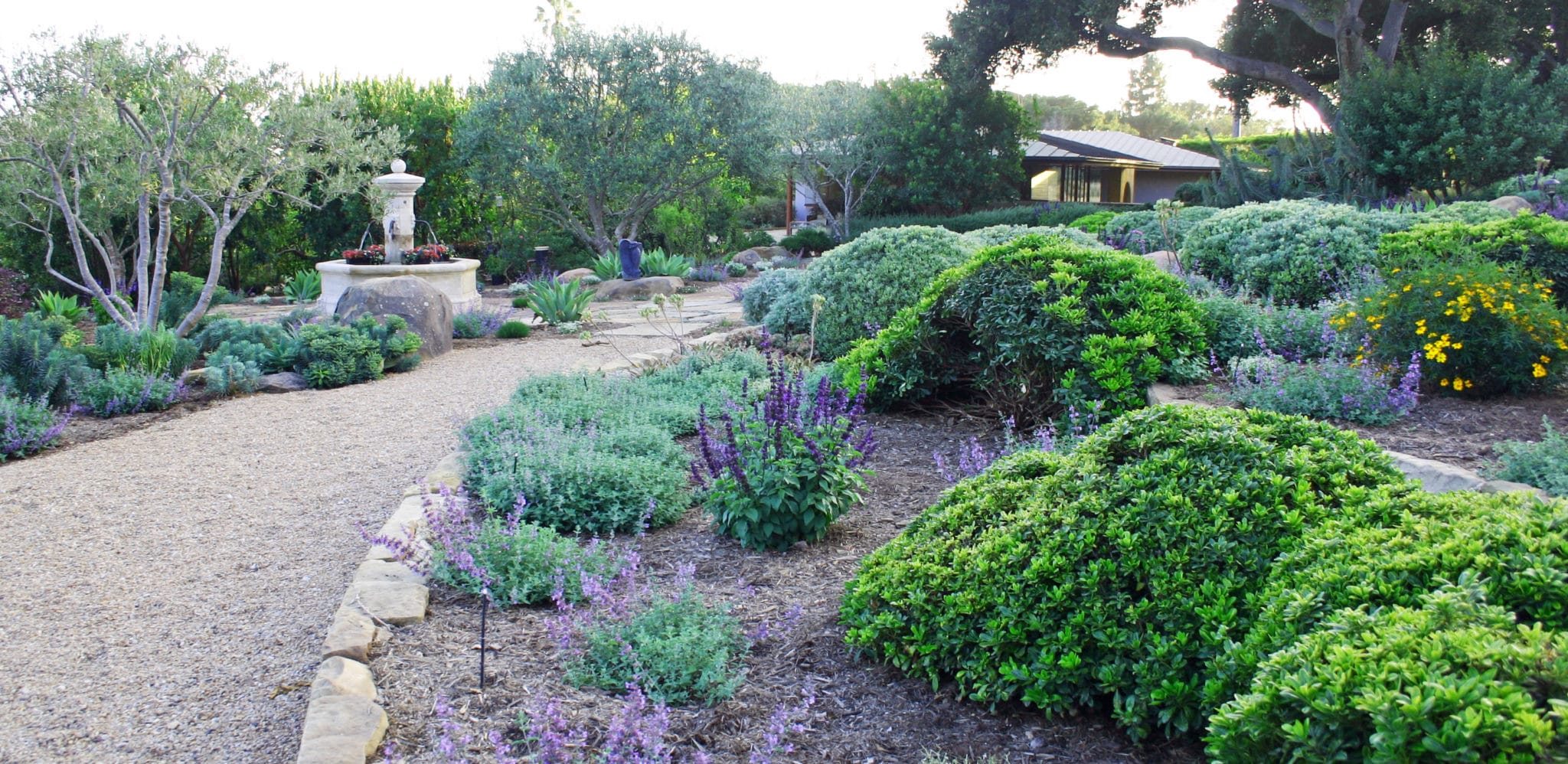
Blue Agave Landscape Design Project

Eye of the Day|Blue Agave Landscape| Garden Design

Blue Agave Landscape Design Project

After whetting your appetite for planting your own meadow and inspiring visions of golden grasslands,  we want to show you a different way of using the “no lawns” concept.

Eye of the Day|Blue Agave Landscape| Garden Design
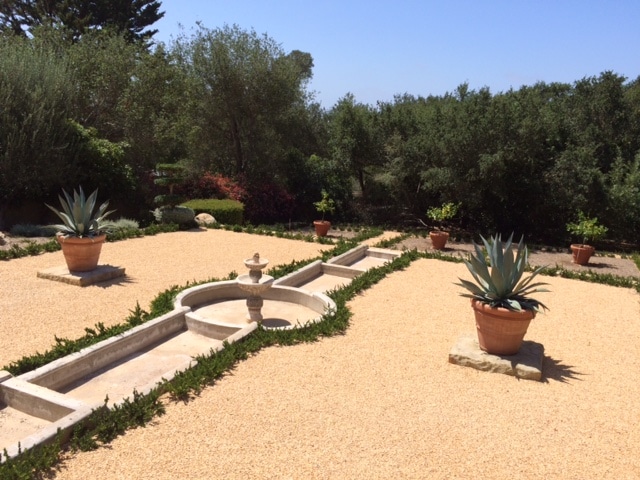
Ripping out a water thirsty lawn and replacing it with terracotta and agave.

Adan Venegas of Blue Agave Landscape in Santa Barbara used lots of Italian terracotta rolled rim pots for planting (surprise!) agaves and placing them throughout the area which was at one time planted in lawn.

Eye of the Day|Blue Agave Landscape| Garden Design
Decomposed granite surrounds the property.

Also in place of green grass, there is now the lovely soft golden hue of decomposed granite, offering an interesting textural and color contrast.  The lines of the fountain feature complete  the design with a complementary architectural edge.

Eye of the Day|Blue Agave Landscape| Garden Design
A fountain takes center stage in this design.

Adan, along with photos of another of his designs is featured in our Look Book as well. See the rest of his Designer Profile here.

Eye of the Day|Blue Agave Landscape| Garden Design
Terracotta pots dot the landscape.


Musings On Design: Jeffrey Gordon Smith Landscape Architecture Part 1

Eye of the Day|Jeffrey Gordon Smith Landscape Architecture

Jeffrey Gordon Smith Landscape Architecture and the Spirit of Place

The spirit of a place. This concept comes up throughout our interview with Jeffrey Gordon Smith, principal architect of Jeffrey Gordon Smith Landscape Architecture based in Baywood-Los Osos, CA. There is a respect and celebration of space throughout the work of Smith and his firm. They encourage clients to celebrate where they live and do so by connecting the designs of their projects to the existing natural landscape. From a chain of volcanic plugs corresponding to an outdoor space’s pergola design to a Japanese garden in the Pacific Rim evoking neighboring farm fields, site and architecture speak to each other and create a cohesive landscape.

Eye of the Day: What lead to you becoming a landscape architect and starting your own firm?

Jeffrey Gordon Smith: I was always interested in design. Basically, I wanted to go to school for architecture but the program at Cal Poly was impacted. So, I consulted my father and he directed me to a similar profession — Civil Engineering. I got into Civil Engineering only to find out later it was just impacted as Architecture. I think they made a mistake letting me in because my grades weren’t all that great. I spent a year in Civil Engineering taking all the calculus, physics, all the brutal courses and found out it wasn’t really my gig. Not only from a professional standpoint, but it just didn’t have enough of an artistic side to it I think.

I basically fell into Landscape Architecture. I started looking back into the school’s environmental design, landscape architecture, regional planning, architecture, and architectural engineering. I found Landscape Architecture almost by accident. I was really interested in the curriculum and what it potentially had to offer. I’m not really religious, but when I started taking courses, it was like I was a born-again Landscape Architect –that was it for me.

My father suggested I start an internship with a Landscape Architect. A firm was working for his company so he helped me get an internship with Emmett Wemple and Associates—one of the most important landscape architects in the Los Angeles area 50 years back. He did the Malibu Getty and other important projects. I did a summer internship and got more of a sense of what the field was about.

EOD: So you’ve been involved with Landscape Architecture since college. When did you start Jeffrey Gordon Smith Landscape Architecture?

JGS: God… I don’t know. I actually don’t know. I’ve probably been practicing for 15 years. I worked for several big firms before. Out of college, I worked for Peridian down in Irvine and they were one of the largest firms at the time. I was hired to work on a Spanish theme park in Japan. I got to be one of the head designers on a 172-acre Spanish theme park in Japan. I got to be involved at a high level in design right out of school. This was right before the great recession in the 90s. I thought I was such a rock star, but they started to get more into residential housing that wasn’t very creative. So I left and landed a job at Schwartz, Smith, Meyer with Martha Schwartz, this rock star of landscape architects at the time, very controversial. She was married to Peter Walker, who’s probably the landscape architect of our time right now. She splintered off and created her own design team with two others. We were doing high profile projects around the world. We worked for Rem Koolhaas, Isozaki, Frank Gehry. Then the recession hit and I was going from job to job and the profession was suffering. It was really tough to run a business in this economy. So I got kind of disenchanted with the profession because everyone was so unhappy at the time financially. It was really a tough time to be starting out.

I started doing side work with models—specifically model trees for one of the finest model tree makers in the world. I’ve worked on models from all over from Disney Concert Hall, to Richard Meyer, to Guggenheim Museum. I started moonlighting and doing my own stuff, a couple of outside projects and started doing a lot of production work for a house designer. The economy started swinging back on high end homes in Portola Valley and Bay Area. I was doing a lot of work and never decided to open my own office but I was doing so much that I needed all my work together, a title block, business cards…had I needed to open up my own office it would have been a daunting task, but it just kind of happened over a couple of years where I realized I needed to do this and my own work ended up keeping me going.

EOD: This is essentially where you branch off and start your own company. Your firm focuses on high end landscape design for a range of clients in residential and commercial projects. What design philosophy do you personally bring to each project? Is it important that you complete a design with a certain goal in mind? 

JGS: When I started out on my own I was working on these cookie-cutter, McMansion stuff that wasn’t very creative or innovative. I was always trying to push the edge but really to also pay the bills. I was fortunate enough in the real estate market  to buy property in San Francisco and sell it at the right time during the height of the tech industry—right place, right time. I was able to look at what I was doing and step back. I think we make decisions too often on money. Since I had a little breathing room from the house sale I looked in the mirror and asked myself what do I want to be when I grow up. I wanted to do much more interesting work and that got me into this present-day philosophy that I have.

I never set out to do a mission statement about what I needed to do. It was really trying to find a little bit more soul into what we’re working with and trying to find—sometimes I hate to use the word– the genus loci or the “spirit of the place.” It was something we always talked about in school and I felt like how could I dare to say that I could conjure up the spirit of a place or the power to call that. But I’ve been doing this so long that I think we have a fairly good tact and understanding in what’s going on in the process of the space or place and trying to extract out the greatest elements of that place. It’s almost as if you were to take a volume knob and crank it up and ask what this place wants to be, what is this place talking about, and really trying to put feelers out and be sensitive to what’s going on.

Eye of the Day|Jeffrey Gordon Smith Landscape Architecture

We came up with that idea of regionalism and looking back at my work over ten years that I kind of changed what I wanted to do and people started to follow my work and request work that wasn’t that McMansion type but the uniqueness of site. I started getting work because of this versus just working for someone who was trying to sell a house. It was more of the art side coming out and exploring that and pushing it in each project.

Not every project has that but I try to use a three-prong approach: site, architecture and client in trying to explore and unite it. You’re marrying the site to the architecture and back to the client. That’s basically been the formula of what we try to draw on each project. Sometimes you get an amazing site or neighbors on all sides, but you’re always given typically architecture which sometimes can be “architorture”, or it could be nondescript, bastardized architecture that you’re playing a smoke and mirrors game of don’t look at the architecture but look at the site. The other component of client is going in and interjecting into the architecture how the client lives, what they’re interior is about, and relate interior to the exterior. So that three element approach has been a foundation for what we do and springboard from.


Stay tuned next month for Part 2 of this interview!


Book Review: The American Meadow Garden by John Greenlee

Eye of the Day|American meadow|John Greenlee

“We’ve reached a stage where we can no longer follow past practices unthinkingly, particularly when those practices are wasteful and injurious to the environment. It’s time to get rid of the old-fashioned lawn and embrace a sane and healthy future: the designed meadow.” – John Greenlee

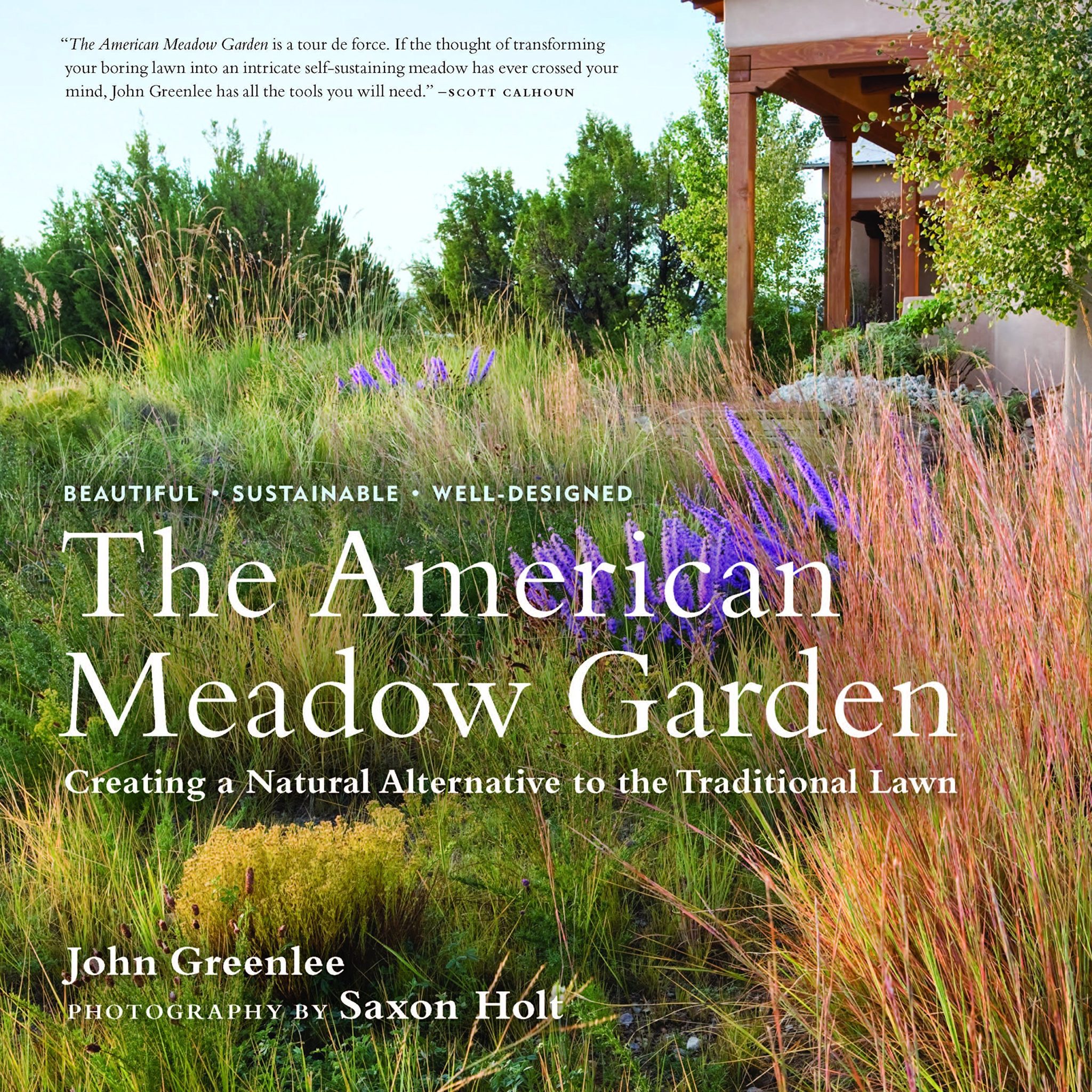
In The American Meadow Garden: Creating a Natural Alternative to the Traditional Lawn, “grass guru” John Greenlee leads us into a new way of thinking about grass.  He uses the words “glade,” “grassland,” “mead,” “savanna,” “pasture,” “sod,” and “meadow” among other terms, to describe areas around the world that are largely treeless, grass-covered landscapes.

These words paint an image of golden or green grassy carpets, rippling in a breeze. In this beautiful book, we are given a portfolio of meadow gardens and a guide to grasses for meadows and how to maintain them.

We’re constantly looking for ways in which to cope with our water-challenged world in California and Greenlee offers alternatives to our lawn habit. In many areas, aquifers are dwindling and water is increasingly scarce. There is no longer enough of it to supply lawns. Growing populations and dwindling supply is our scary future and our landscapes must change with the times. The American Meadow Garden was published in 2009, but the relevance of the information and ideas within its covers increases every year.

The American Meadow Garden: Creating a Natural Alternative to the Traditional Lawn, by John Greenlee, Timber Press 2009


Art in the Garden: Henry Null of the Romantic Garden

Eye of the Day|Henry Null| Garden Design Sako Balls

Art in the Garden: Henry Null of The Romantic Garden

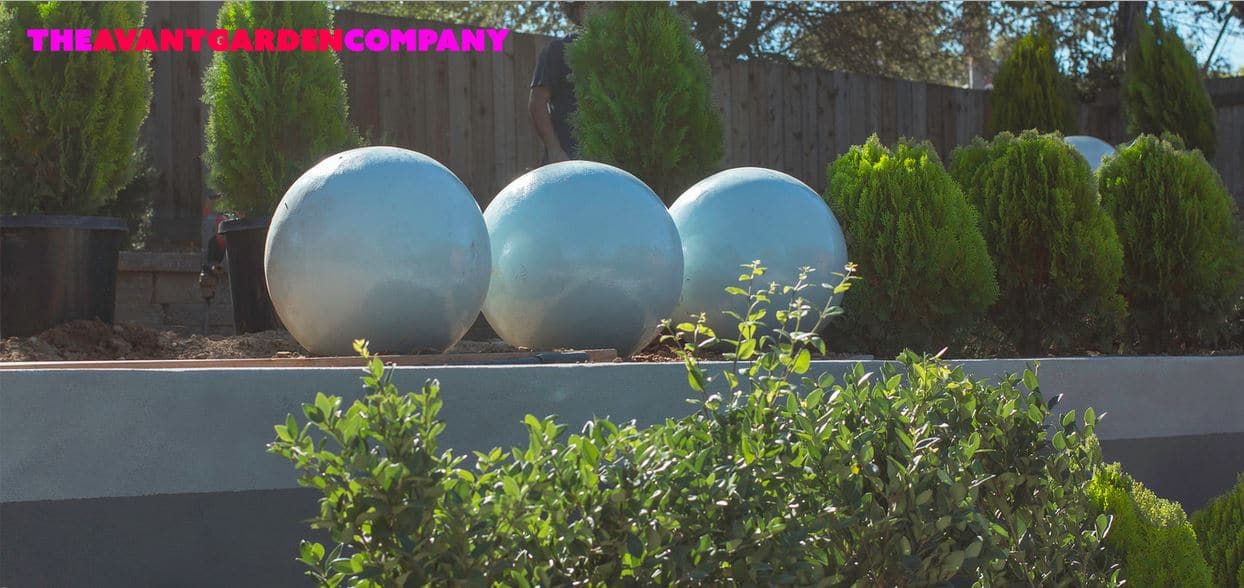
Long time Eye of the Day customer Henry Null of The Romantic Garden Company recently installed three Italian terracotta Sako balls in a Santa Barbara garden. The three globes, provided by Eye of the Day,  were custom colored by the company’s Service department. Null describes the project: “The Italian terra cotta Sako balls were rolled into place at the terraced garden we built in Santa Barbara. We had Eye of the Day epoxy-paint them to my color instructions (I wanted something close to the sky color to represent the universe.) But I also wanted the globes to break up the linear pattern of the texanum hedge. At the same time I wanted the globes to repeat a pattern of 3’s that I was constructing vertically with plants of Thuja occidentalis. Sound complicated? Well, it was.

One further general point about artistic objects in the garden:  to be effective, they should be distinctive or displayed in some distinctive way.  It should be the customer’s option, as a matter of personal taste.”

On another garden from years before, Null relates an example of using unique objects in the garden: “Years ago I worked for the late Margaret Mallory on Ortega Ridge. She was an art collector and in her garden a five-foot pedestal supported a beat-up metal gyroscope which was maybe 18 inches in diameter. I asked her about it and her reply was, “that gyroscope was on the last British gunship in Palestine.’ You don’t get much more distinctive than that. We don’t have any spare, war-weary gyroscopes hanging around, but we have a selection of odd garden ornaments that can be used for focal points.”

Null’s recent venture The Avant Garden Company “offers a unique perspective to gardening by providing a philosophical and metaphorical approach. Each aspect of the garden is strategically designed and formed to create a celestial garden piece.”

To view more of Henry’s work, please visit The Avant Garden Company and The Romantic Garden Company.

Custom finishes are a specialty at Eye of the Day. Please visit our website for more information.


Montecito Landscape Refine a Santa Barbara Garden

Eye of the Day|Montecito Landscape|Garden Carpinteria Design
Blueprint: Montecito Landscape Refine a Santa Barbara Garden

Chris Cullen, the founder of Montecito Landscape, began landscaping at the tender age of eight at his family home in Los Altos Hills, CA. He got his contractor’s license in 1970 and moved to Montecito and named his company after his new home town.

Since then, Montecito Landscape has specialized in design and installation of residential landscapes. Chris has created some of the mainstays of the “Montecito Landscape” that are part of the image we see when we think of Montecito. For example, he was responsible for the creation of original landscaping at Ennisbrook (on Sheffield Road) adding the double line of Stone Pines that line the walking paths through the west end and choosing the specific type of trees planted at the entrance to match the plaster wall of the original construction (the plaster color was later changed, but the trees still remain).

One of Chris and Lisa’s newest projects is a Santa Barbara home. The property had “good bones” but needed refinement. There were a number of unattractive hedges that blocked the beautiful vistas and made it feel hemmed in. The home is a work of art in itself with its simple, modern design and the way it is nestled into the property gives it the sense that it is a work of nature. Their job was to enhance the organic feel of the house and property while creating some space both visually and literally.

Consistent with Montecito Landscape’s garden design philosophy, they first isolate, and then focus on bringing out the best features of a property. Their feeling that each location is as different as each client helps them to approach every new project “intending to help the client see and appreciate their assets and then work with them to discover what it is they need and want.” It then becomes a focus to fulfill the clients’ dreams in such a way that uses their home and property’s intrinsic beauty in unexpected and surprising ways. The goal is to use the entire property in the “picture”, creating “negative space” in a three dimensional design.

When determining exactly what needed to be done when working on this project and how to fulfill what the client wanted, the Cullens knew that something about the landscape “wasn’t quite right” but they couldn’t identify it themselves. “In fact most of our clients know what they want and know when something works and when it doesn’t. What they don’t know is how fix it. That’s where we come in. This garden already had a drought tolerant theme, however many of the plantings were just not working; they were kind of ‘clunky.’ We suggested the addition of brightness and light to the scene, so that is what we did. With the addition of Euphorbia, Mexican Sage, Nepeta, Santa Barbara Daisy, Santolina and others we were able to add color and softness. When there is a lot of hardscape, as there was in this landscape, we wanted some softness as a counterpoint.”

When it came to adding garden décor “the client knew they wanted a water feature as a focal point and so of course, we sent them to Eye of the Day. With Brent’s help they found exactly what they were looking for. It then became our job to incorporate the fountain into the landscape in such a way that it seemed as if it were always there. This is our goal, then, when we utilize garden décor, fountains, sculpture, etc. it should feel as it belongs.”

For Chris and Lisa, “It is always a pleasure to create a beautiful ‘picture’ in the landscape; it’s why we do what we do. We live for the creation of aesthetics. The pleasure comes in working with the client to give them a garden they will use and enjoy for years to come. This project was no different. We loved collaborating with this particular couple because they were very involved and they love to work in their garden.”

Eye of the Day|Montecito Landscape|Garden Carpinteria Design

See more of Chris and Lisa Cullen’s work at Montecito Landscape.


Rebecca Sweet On Shades of Gray in the Garden

Eye of the Day|Rebecca Sweet|Shades of Gray Garden

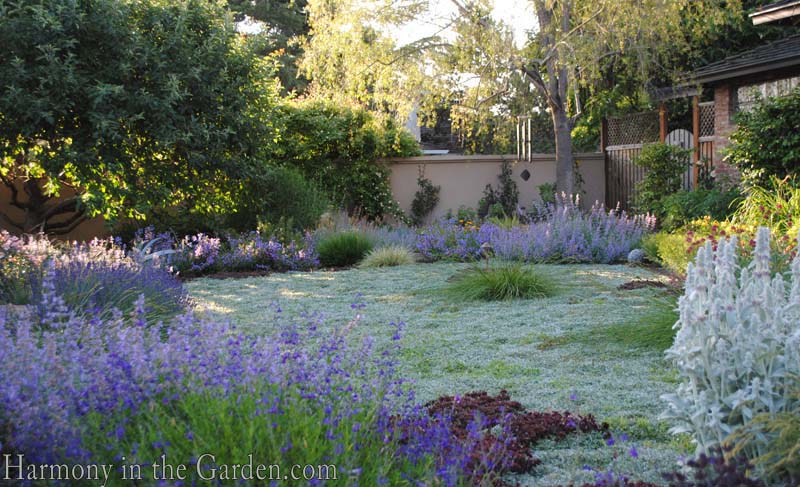
One of my favorite gardens that I designed a few years ago is a great example of how you can replace a water-thirsty lawn with lush looking, and less thirsty, plants.  One of the most successful strategies we used was to swap out the turf lawn and install a drought-tolerant Dymondia margaratea ‘lawn’ in its place.  But first, a little background and a few before & afters:

My client’s home is located on a busy corner within a stone’s throw of two nearby schools, has giant picture windows throughout the house and has a 4-foot high wall that surrounds most of the garden (a Lookiloo’s fantasy!)  What this translates into is the homeowners were on constant display to traffic and pedestrians alike and felt like they were living in a fishbowl, for all to see.

The lack of privacy would tempt many to build a fortress-like wall to surround the garden, but staying true to their welcoming personalities, they decided to create a garden that others might equally enjoy (after all, if they’re going to peek over the wall they might as well have something nice to look at, right?)

Tired of their threadbare, un-used, water-thirsty lawn and random mishmash of plantings, they wished for a more responsible, fun, and ‘livable’ garden that used less water and incorporated plenty of native plants to encourage wildlife to visit.  Our first step was to rip out the lawn and reinterpret a newer, smaller version using Dymondia.  I chose Dymondia because it’s extremely tough, drought-tolerant, evergreen and can withstand a fair amount of foot traffic. Plus, it’s just so darnned pretty.

Their concern, however, was that using such an expansive amount of the color gray in the garden would have a blinding, bright and parched effect.  This is a perfectly valid concern, and one that I’ve often heard from other clients who have experienced the unintended ‘glare’ in their gardens as a result of an overuse of gray plants.   To help avoid this common pitfall of using gray in the garden, here are a few tricks I’ve used to help tone down the brightness while still enjoying this beautiful color.

Shades of Gray

First, it’s important to realize that there are different shades of gray ranging from light & bright, to mid-level gray all the way to dark, charcoal-like foliage. And because of this range, it’s important to understand that not all grays are alike.  It’s perfectly okay to use plenty of gray plants in the garden, as long as you vary the shading.  No one wants to look at one bright gray plant after another without a place for the eye to rest, so remember to use plenty of mid-level and dark gray plants sprinkled throughout.

Keeping it Lush

In order to prevent gray colors from creating a ‘pass the sunglasses’ effect in your garden, it’s also important to include plenty of nearby plants that have deep, rich colors, such as burgundy, green and purple. In this garden, the plants chosen included the brilliant blue flowers of our native ‘Blue Springs’ Penstemon, vibrant purple Lavender and the deep burgundy Stonecrop that creeps throughout the edges of the Dymondia lawn.

Lambs Ear is used sparingly throughout the garden, as it’s a really bright shade of gray, almost bordering on white, and could easily cause the Dymondia to appear brighter than it actually is.

In fact, each Dymondia leaf consists of two colors – green on the bottom and silvery gray on top.  And once the Dymondia begins to grow and fill out (forming a soft and inviting 3-inch spongy mat), its slender leaves will begin to twist gently, revealing its different colors.

To further emphasize the green in the bi-colored foliage, I’ve included plenty of other surrounding plants with green colors to help strengthen the color echo.

For example, I’ve interspersed our native Carex divulsa (Berkeley Sedge) and Calamagrostis foliosa (Feather Reed Grass) throughout the lawn, as well as lots of perennials with green foliage.

It’s not just Dymondia that has hefty amounts of green in its coloring – take a look at a lot of other gray plants and you’ll notice green beneath the gray ‘fuzz’ (ie: many lavenders, senecios and hostas).  To emphasize the blue tones of the gray Dymondia colors, I also included plenty of blue plants in the garden, as well – like this ‘Beyond Blue’ fescue, various succulents, and many blue-flowered perennials.

My goal was to emphasize the tones and colors that I want while minimizing the tones that I don’t want.  Can you imagine how bright the garden would be if I had used an overabundance of white flowers and foliage?

Hardscaping

Hardscaping (such as nearby flagstones, patios and sidewalks) plays an important role when placed near gray plants as it, too, can serve to either tone down the brightness or amp it up to blinding proportions.

For this garden, we chose flagstones with slightly creamy-pink tones to them.  Again, the reason was to de-emphasize the bright gray colors by introducing softer muted shades to tone things down.

I’ve seen plenty of instances where a drift of bright gray plants, such as Lamb’s Ear or Artemesia, have been placed directly adjacent to a bright white cement walkway. And 9 times out of 10, that’s the area the homeowner is referring to when they say they don’t like the color gray.

To eliminate this blinding effect, just remember to use hardscaping ( as well as plants) with softer tones and/or darker colors.

A year after this garden was installed, we compared water bills – the result was amazing!   Compared to the wall-to-wall ‘carpeting’ of lawn from before, the new garden uses 40% less water, even though there is a ton of plants in this garden!  This shows that with creative and careful plant selection, and water-efficient drip irrigation, the result can be breathtaking while using much less water.