Groundskeeping: Europe Expedition 2016

Eye of the Day|Europe Expedition 2016|travel

My Annual European Expedition

Eye of the Day|Europe Expedition 2016|travel
The Freitas and Ryan families on their European expedition.

This year I did something different, not only did my wife Suzi accompany me but my daughter Daisy and her husband, Greg, came along for the first two weeks. As I get closer to looking for some sort of exit strategy I’ve been thinking of why not blending our business with theirs. For years the English have expanded their garden centers from being just plants, pots, soils and amenities into restaurants, outdoor sporting goods like fishing tackle, wine bars and other miscellaneous shopping. So, off we went (Daisy has experienced traveling and buying with me for years), to show them a firsthand experience of what it’s like to GO AND SEE.

Eye of the Day|Europe Expedition 2016|travel
Trying out the beer selection

In many ways food and drink is different in Europe than the USA but they are not always ahead of us. Sometimes, for example with beer and coffee, it’s our opinion they are way behind. Greg made this very clear to us as we tracked down cutting edge coffee providers in the major cities we visited. As he explained “third tier” coffee and how it is different from the typical, Starbucks type coffee. I was amazed at the differences.  Should Eye of the Day add a coffee machine?  What about a cafe?

Eye of the Day|Europe Expedition 2016|travel
Yup, more food and wine.

From world class tapas in San Sebastián to crepes in Montparnasse or simple but classic Tortellini en Brodo from Bologna, what would the impact be on EOD’s future?  So many questions, so many calories so we walked and walked and looked and as you may already know, Eye of the Day is about authenticity, quality and real personal service.  How would this type of expansion affect us?  How would we approach such an idea? A lot of questions coupled with a lot of ideas.

Milan to Bolzano to Bologna

Eye of the Day|Europe Expedition 2016|travel
Waiting in line for another great cuisine experience.

The number of food oriented businesses in Italian cities is extraordinary like most large cities.  Density equals bars, coffee shops, take-out, pizza, burgers everywhere in Europe and restaurant on restaurant. The key to being different beyond the norm is the atmosphere and the that have exterior space as comfortable as the inside have a much better chance to succeed, just look at your typical Paris bistro with its tables on the Rue. Sausage and beers in big steins in Bolzano on a large open piazza covered with a tent let in the sunshine but the environment could have been so much more. Throughout Italy it looked as though most restaurants had nowhere to go when it warms up in the Spring.

Eye of the Day|Europe Expedition 2016|travel
A classic example of French outdoor dining with classic furniture.

Eye of the Day|Europe Expedition 2016|travel
An outdoor French pizzeria

I hope that someday soon our goals come together and we can blend our passions into one exciting, vibrant and delicious venue. Eye of the Day, Garden Design Center with the Eye of the Day Cafe.  Stay tuned…

Photo Credits:

Creative Commons, French quarter patio dining by Janice Waltzer is licensed under CC BY 2.0
Creative Commons, Une pizzeria rustique by Stephane Mignon is licensed under CC BY 2.0


Paul Hendershot Design and Outdoor Living

Eye of the Day|Garden design| Paul Hendershot

In our continuing series of conversations with our favorite landscape architects, designers and contractors, we were really happy to talk to Paul Hendershot of Paul Hendershot Design, Inc. in Ojai, California.  All of us look forward to seeing Paul and his big, beautiful dog, Chief, walking through Eye of the Day.  Here are some things we found out when we talked to Paul.

Paul: I have great passion for landscaping.  I listen closely to what the clients want for their outside space and I am committed to creating a landscape that fits the style of the house. I have had great success with all my clients because I work to make their dreams come true and be sure the design fits the property

Eye of the Day|Garden design| Paul HendershotEye of the Day: What do you consider your signature style?
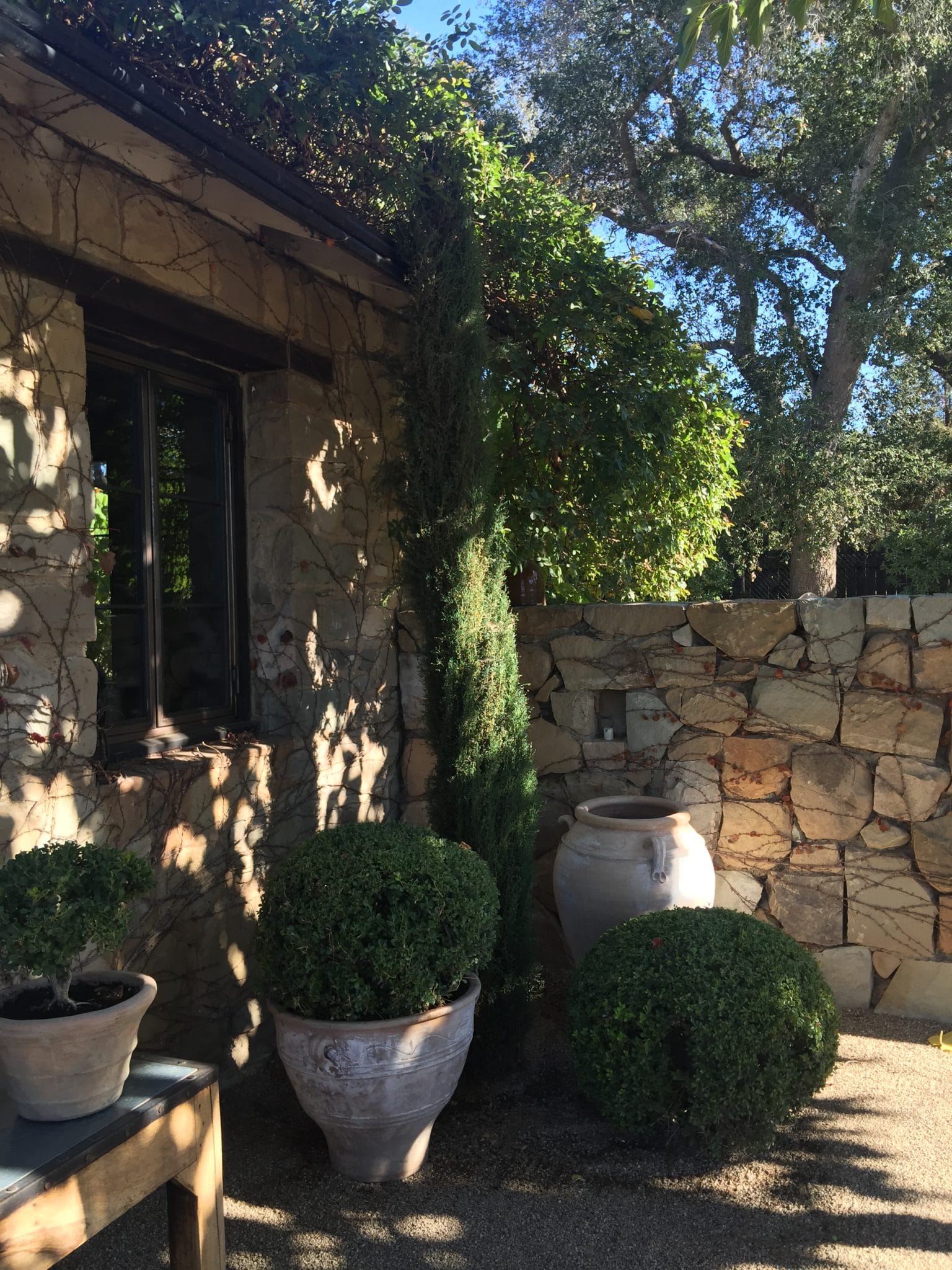
Paul: I am very fond of courtyards; rooms and spaces that are meant to be lived in as opposed to spaces that are simply decorative and consequently unusable. I have been using permeable elements such as pea gravel for many years.

Eye of the Day|Garden design| Paul HendershotEOD:  Has there been anything in particular that has inspired your style?
Paul: I was inspired while traveling mainly in Europe where I saw courtyard settings that had a recurring use of the same and similar plants that I use now. This creates that lush look with very low watering and a permeable ground.

Eye of the Day|Garden design| Paul HendershotEOD: Have you encountered any obstacles with your clients during the drought?
Paul: My main obstacle with clients has been convincing them to give up their lawns.  But I show my clients many of the gardens that we have done throughout the years that have no lawn to help them recognize what it could be like to give up their lawn.  After they feel the lushness and peacefulness of these gardens, they are convinced that they can live without a lawn.

EOD: What do you see for the future in the world of California landscape design?
Paul: The next developments I hope to see is more courtyards, patios, tree plantings, and permeable grounds. In other words: spaces to live in outside.

Eye of the Day|Garden design| Paul HendershotEOD: What are your short and long term goals for your business?
Paul: We intend to continue to work closely with our clients and focus on their dream gardens.  During this process, we will continue working with the clients with lots of fun in mind. We want to continue to design gardens, courtyards, and patios that use very little water, keeping abreast of the latest permeable options. We are full of gratitude for the great clients that we get to work with.

…and we’re full of gratitude for Paul and Chief.  To contact Paul, see his website: Paul Hendershot Design


The Rogue Garden: Brent’s Test Kitchen

Eye of the Day|Brent's Rogue Garden|The Test Kitchen

THE ROGUE GARDEN: Brent’s Test Kitchen

Hey! All you hoity toity landscape designers—this blog’s for you!

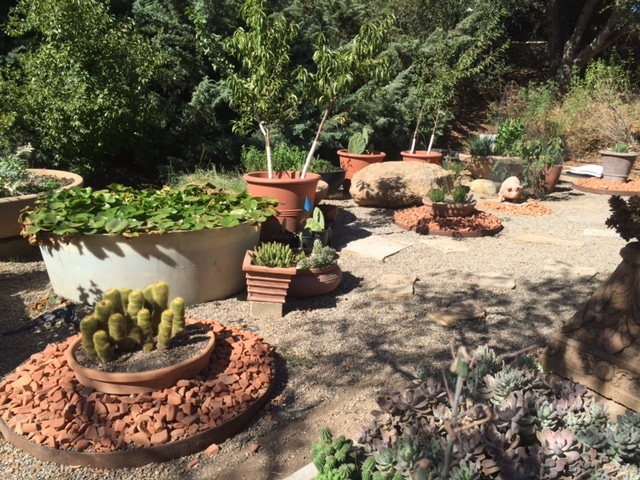
When my professional landscape design friends come to my home garden for the first time, they are usually thrown off balance by what they see: there are pots and containers everywhere.  I constantly rescue or buy plants to try out in our pots to show how they work together in the landscape and also to see how a plant performs in a container versus the ground.

While my garden is a “test kitchen”, it serves as inspiration for Eye of the Day as well as for the genetic sequence I received from my Portuguese great grandfather. He was a truck farmer who indentured himself in 1868 to the Campbell Estate in Hawaii to grow sugarcane. I love putting my hands in the dirt.
Eye of the Day|Brent's Rogue Garden|The Test Kitchen

My garden at home has helped us at Eye of the Day in many ways. We have learned that French Anduze pottery must be sealed or the glazing starts to fall off almost immediately. So, we tell everyone that if you purchase French Anduze, you must have it sealed to protect the glazing.

Something that every design professional should know about is how to properly plant pots and especially large pots. Pots that have diameters larger than 30” usually have plant material that starts big or will grow large due to the space for more root ball. But after a period of years and sometime climate conditions, a large plant needs to be removed from its container and trimmed and replaced. By replicating these situations in my own garden, I have formulated successful service practices for performing operations which allow clients to benefit by getting the most from their purchase of our products.

Also in my garden, there are odd experimental items like “vertical wall” planters and terra cotta shelf units for the patio. 25 years of business has resulted in a new product. Whether damaged in the container coming from Italy or through rough handling here at Eye of the Day, we take the broken pieces of pottery and produce Tumbled Terra Cotta.

Yes, my garden at home looks like a madman’s landscape but, I love it and I love spending time in this intimate setting surrounded by the products, plants and ideas that fuel my life.

Let me know if you’d like to visit.

Brent, the Rogue Gardener


Book Review: The Inspired Landscape

Eye of the Day|Book Review|Inspired Landscape Susan Cohen

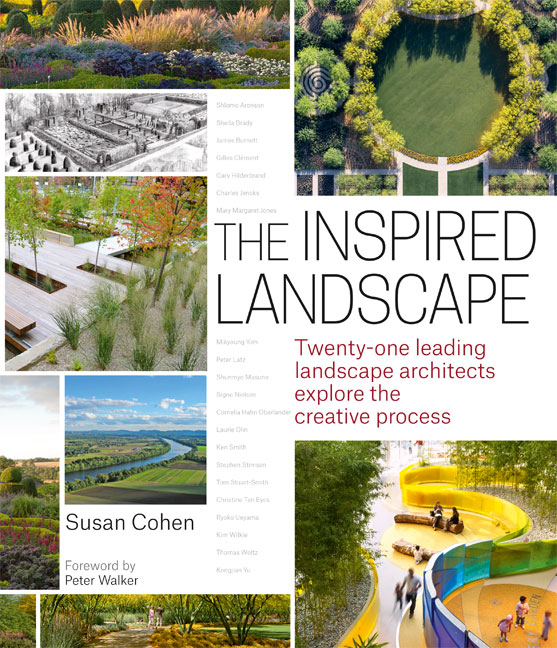
Book Review: The Inspired Landscape: Twenty-one leading landscape architects explore the creative process by Susan Cohen

I planned on liking this book before I opened it, but it had me at the dedication:

“For landscape architects – whose works, grounded in the practical, are elevated by their imaginations.”

Since we opened our business in 1994, we have met many, many landscape architects and some have been using Eye of the Day as their source for Italian terracotta, French Anduze pottery, Greek pottery and American concrete since our first year. This is a well researched book that I wish I could give every one of those loyal customers.  The Inspired Landscape by Susan Cohen features professionals from around the world and with drawings, plans, photographs and resources attempts to portray the creative process experienced personally by these individuals through specific projects.

The landscape architect forms a plan by taking cues from topography, light, client style and natural conditions.  Included in this book are designs of public places, botanical gardens, modern landscapes, country homes and on top of structures.  Cohen spots and magnifies the initial flicker of creativity and follows it through to the resulting design.  This book is a series of investigations into the inspiration and process of these twenty one specific designers, and a great resource for anyone looking for insight into and inspiration from landscape design.

And this is Interesting about Susan Cohen, too: besides being a landscape architect herself, she is a teacher and lecturer on landscape design and history and is the coordinator of the Landscape Design Program at the New York Botanical Garden where she founded the Landscape Design Portfolio Series.


Right-Sizing Your Garden and Saving Water

Eye of the Day| Deana Rae Right Sizing Your Garden|Save Water

Right-sizing your Garden and Saving Water
By Deana Rae McMillion, Garden Enthusiast and Master Gardener

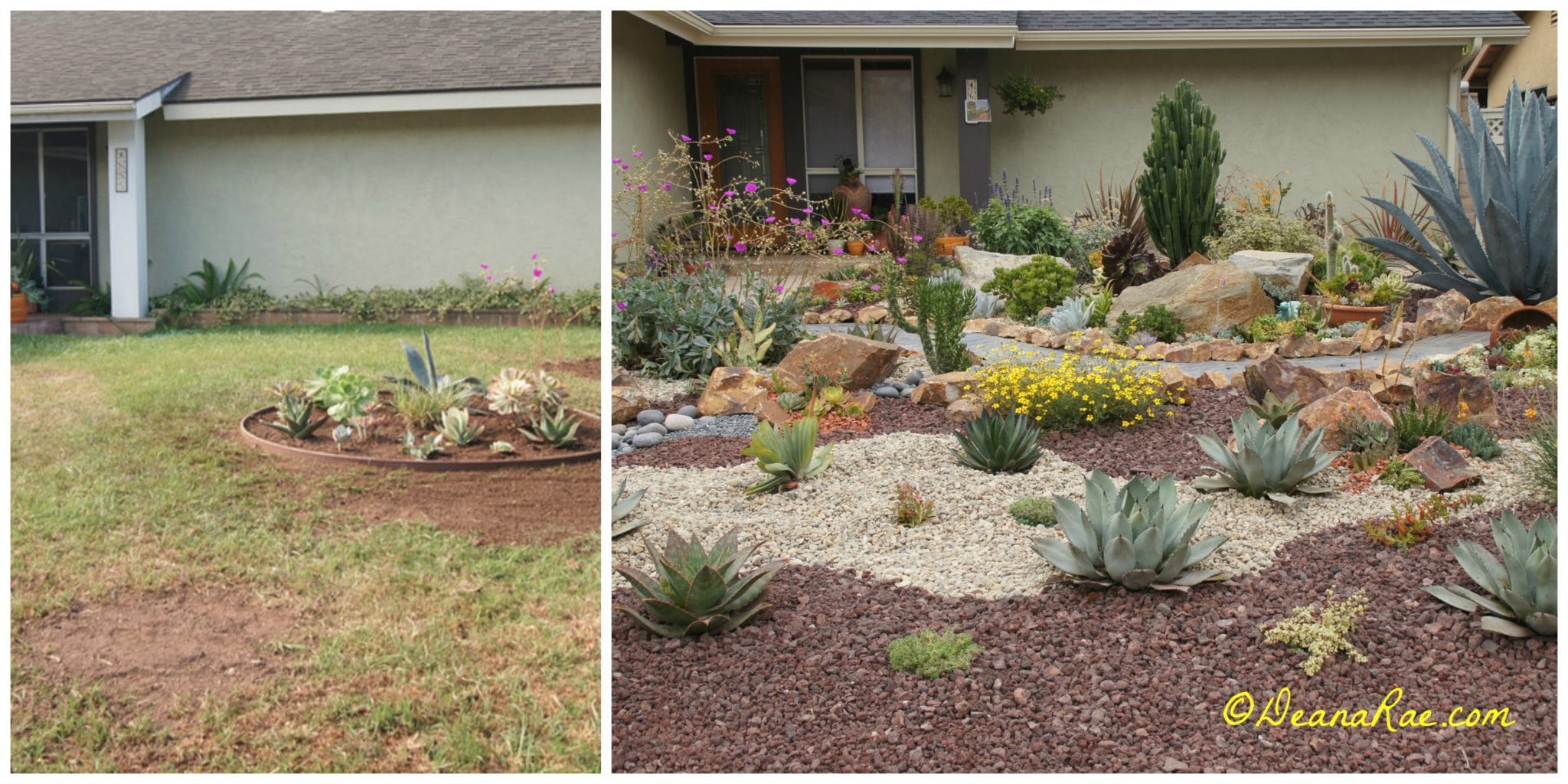
Right-sizing our gardens in order to reduce water usage is imperative. Just taking out your lawn isn’t necessarily the answer. Many people who do remove their lawns aren’t doing the necessary research and are planting water thirsty plants or invasive plants that use more water or rob their soil of nutrients.

If it seems overwhelming to remove your entire lawn, one thing you can do to save water is let it go brown. In this severe drought the most important thing to save are our valuable trees. But why not look at this as an opportunity to right-size your garden and plantings? California is a summer dry climate and that is not going to change even when the drought is over.

11 Ways to Conserve Water in Your Santa Barbara County Home Landscapes

  1. Select water-efficient plants that grow well in your climate and microclimate.
  2. Be hyper-aware of plant selection and be sure not to choose invasive plant species
  3. Hydrozones: Place plants with similar water needs together and irrigate them accordingly (high, medium, low, and very low zones).
  4. Let roots of established plants dry out between irrigations, water deeply and infrequently slightly below the root zone.
  5. If you do not use or enjoy your lawn consider replacing it with drought-tolerant plants. If you decide to keep your lawn – water it based on University of California’s “Drought Irrigation Tips”
  6. Mix soil amendments (compost, etc.) evenly and deeply into sandy and clay soils (40% or more by volume) before planting.
  7. Spread a 2-3” layer of mulch on top of the soil around garden plants and trees.
  8. Water early in the morning.
  9. Control weeds.
  10. Avoid over-fertilizing.
  11. Sweep walkways and driveways; do not hose them down with water.

Have a home landscape or gardening question? Contact the Santa Barbara County Master Gardener Helpline at 805-893-3485 or email anrmgsb@.

Please allow 3-4 business days for a response as the Master Gardener helpline is staffed by volunteers. Please be as detailed as you can in your query when leaving a message. Photographs are also helpful in our responding to your gardening concern.
Resources:
Santa Barbara Master Gardener Program
California Garden Web: Drought Gardening Tips
Plant Right: Home Gardeners


Musings On Design: Jeffrey Gordon Smith Landscape Architecture Part 2

Eye of the Day | Jeffrey Gordon Smith Landscape Architect

This is Part 2 of our interview with Jeffrey Gordon Smith Landscape Architecture with the principal architect himself. To read the first part, please visit here.

EOD: Based on your portfolio that definitely seems to be a case. It can be difficult to make sure all work in harmony, but your clients must know who you are and seek you out for those specific reasons.

JGS: Right, I don’t think I want to be the landscape architect for everyone. I tend to be a pleaser, but I’ve realized you can’t make everyone happy (laughs). I’ve been very fortunate, I feel, that we created this signature or style that people gravitate towards. I’m sure there are people who know they don’t like this style and I’ve learned this is okay. It’s kind of a Buddhist approach that hey, there’s always going to be change and not everyone is going to like you. So, looking back the one thing that has tied a lot of our work—that three-prong approach—is really hard to put a finger on. One of the things we are fortunate in the area we are working in is these amazing sites and getting to derive power from those places and turn that volume up. It’s almost like place making and tuning into the site. Being sensitive to the offsite: the colors, environment, and extract out and almost paint with plants and materials that feel that are of the place where it doesn’t feel contrived.

We had a project in Garden Design magazine and someone from Minnesota emailed me who were inspired by my work and wanted to make their backyard like the one in the magazine. They ended up having to bring most of it inside for the winter and I felt it missed the point. That’s what’s difficult with print; you only get a small sliver of the whole project. So much of the true nature and heart of project gets stripped out and they lose what’s really behind the project. They lost the whole impact of what the project was about: Using what you got, living where you are and celebrate where you are. I love the idea of a regionalism philosophy like that. The whole idea is to celebrate where you are even if you like a Mediterranean climate and landscape and you live in Minnesota. You can celebrate Minnesota.

EOD: That’s really about respect of location. You’re based in California and drought has been a concern the last few years. But based on your work, the projects continue to still feel lush. There’s water features, flowers, trees. How do you keep designs sustainable and still incorporate all these features despite the California drought.

JGS: I’m not a big sustainable, green flag waver. I’ve always believed we should tread on the Earth with the smallest footprint possible. I’ve kind of always done that in my work by playing up where you live and work with what you’re given. Paying homage to understanding the soil, climate, sun and wind exposure and work within those parameters rather than shoving something that doesn’t quite belong. We’re always trying to pay attention to the soil and guess what would be the happier plant environment. First understand the soil then the water you’re given. Most of our landscapes are drought tolerant just by working off with what we’re given. Sometimes we get requests for a tropical garden in an oak woodland. How would that work? We really try to open up their appreciation for where they’re at and try to get them to celebrate their location. We definitely have conflicts and I do tell them I’m not a “Yes person” but I’m not a “No person”. I’ll give them what they want but at least tell them what I think. And hopefully through that I hope we’ve educated clients, or at least pushed them outside their comfort level. I think again, it’s about becoming more sensitive to what’s around you.

With the drought, I’ve had lots of clients request water features and what not, but I’m not a big default water feature person. If a client requests it, we try to design something unique. The big thing I’m worried about is, Is this just a blip or will this be the next environment that California will be? I try to forecast it, looking at new plants and pushing the next edge. I’m always looking for plant material that works here and we can use as a new medium to transition into. I’m looking at Arizona for a lot of plants and similar areas that require almost no water and trying to push further out from the current environment.

We’re constantly probing and testing new plants to see how successful they are in certain projects.


EOD: When you do designs outside of California do you bring some of that sensitivity to the environment or do you judge each space on its own?

JGS: It really is trying to tie into place. We’re not always using strictly native—the cat’s out of the bag on that one. The true California landscape was let out when invasive European species were introduced. It would be unrealistic at this point to create a true California landscape. But I do like to rely on natives. I did a golf course in China and met a botanist there. The only common language we shared was Latin and we could discuss plants with Latin descriptors. They essentially had to create a nursery for the golf course. I suggested they use a roadside weed and they probably thought I was nuts. They saw it as a weed where I saw it as a native plant that grew very well and looked like it was at home. They thought I was completely crazed for wanting to use that weed but it could have propagated well. Working in another climate can be a challenge, even within California with all the different zones. If I were to work somewhere else I’d put the time in researching plant material and who is growing it. It’s not an easy profession to do well in many locations (laughs). If I was an architect I could grab a window, a door, or roofing material from any place and ship it across the globe it would be fine. But the plant material is the thing that could make or break it.


EOD: Are there any personal favorite projects of yours? And finally, what is your hope for the future of Jeffrey Gordon Smith Landscape Architecture?

JGS: I sometimes fear, how are we going to do better than what we’ve done in the past? But each year I look back there’s always another project that one ups one of the last ones. But it’s not really about one upping but there are qualities of that project that resonate and hold for itself. There was a perfect poetry of this project that connects to that space. Then you get another project and wonder how you’re going to pull that off in this one but you find some other element or other aspect to it that you can pull that kind of power as well.

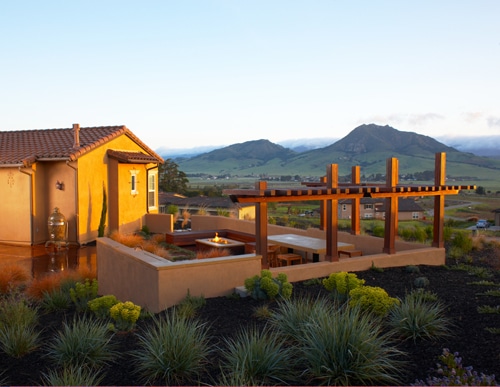
A lot of projects we’re looking at we’re trying to develop a narrative. An example is Seven Sisters. There are geologic features that surround this area called the Seven Sisters which are volcanic plugs. They’re two mountains that are part of the chain of mountains—they say seven but there’s technically eleven—that are in the background of the project. That’s where we got the different heights for the seven posts in the pergola. They’re sort of talking to place and kind of telling the story of the Seven Sisters. There’s a spa area just beyond here with another four which would be the missing sisters. One of the sisters is more of a rock, Morro Rock which is out to sea, but beyond that is the Davidson Seamount which sits about a mile out underwater and they’re smaller mounts along the chain which aren’t as well know. It is a little tongue in cheek story, but it’s how we create these unique spaces by trying to come up with a narrative or purpose for how things are made.

It’s a story the client might not even know about. What I love about this project, it’s kind of poking you in the side. Neighbors and friends who come to see the fabulous backyard might wonder what happened with the carpenter today, like what happened? Everyone wants to cut them off to the same level. But that’s the thing that makes the garden unique to this place and is celebrating the place. Someone could have torn this image out of a magazine and built it somewhere but it wouldn’t relate to that place.

Another project, Pacific Rim, the client wanted a Japanese garden. I had studied Japanese gardens but to avoid the kitsch aspects we instead try to reflect back on Japan from California. The idea was to use plants that work in this coastal stress with salt laden air that goes in this dune area with the nearby Pacific Ocean. One amazing thing about Japanese gardens is the borrowed landscape and how they create a reflection of their surroundings. Like a rock garden that represents Mt. Fuji. So here we are painting the landscape beyond. That deck is done in a parquet pattern which reflects the farm fields below. We designed raised planters which I call bonsai planters and are planted in crop rows like the farm fields. This landscape is reflecting and has references. There’s even a spirit walk which you would see in a typical Japanese garden, but not so kitschy. We’re still celebrating and having a nod towards Japanese style in some details.

Finally, there’s Backbay Retreat, which I kid around that we could have taken a Yahtzee cup and thrown plants out there and anywhere they landed would have been perfect. It was a really amazing setting. The client bought an empty property next to theirs and instead of building another house extended their garden. We spent a lot of time out at this site. It’s pretty sacred and we wanted to understand what the space wanted to be. We borrowed this curve of the bay’s shoreline and designed the deck around this curve—it’s kind of mimicking it. For the deck we used polished concrete so we could get a really glassy, super reflective quality because it relates to the water. The client had requested a fence for their dog so we disguised that fence as backing for the bench which is also designed with a nautical theme to connect back to the water.

We used Mexican pebble between the stone because it’s the same color of the dunes. The estuaries which are like fingers feeding into the bay match the stone and pebbles. Connections are being made with the side including the selection of materials. Even the rock that terminates the bench is a small version of Morro Rock. I don’t think anyone is going to the site saying this means this and that but you can leave a site or place with an experience that it just feels good or right and you’re not analyzing why that is, but it just feels like it is. We’re hoping as designers we’re evoking and tapping into those feelings to make connections to place. That’s what I’m trying to do when working on a project.


EOD: And what was your hope for the future?

JGS: World domination (laughs.)

EOD: That would require a lot of research.


To view more of the work of Jeffrey Gordon Smith Landscape Architecture, please visit their site here.