Garden Cocktails: End of Summer

Garden Cocktails: End of Summer

Leaving summer behind is always a little bittersweet, but apples are making their way into the farmer’s markets and this refreshing cocktail lets us hold on to our sweet summer months while looking into the face of autumn.

Eye of the Day|Garden Cocktails| Apple and Celery
Farmer’s Market ready apples

Eye of the Day|Garden Cocktails| Apple and Celery
Celery salt for your garden cocktails

END OF SUMMER
Makes 1 cocktail

Ingredients

  • 1 1⁄2 oz. Karlsson vodka, or other potato vodka
  • 2 oz. fresh apple cider
  • Dash simple syrup
  • Pinch of celery salt
  • 3 dashes celery bitters
  • Juice of one lime

Instructions:
Combine all ingredients over ice, shake and strain into a rocks glass over ice. Garnish with a celery salt rim.

Photo Credit:

Creative Commons, 20141109-OC-LSC-0011 by U.S. Department of Agriculture, is licensed under CC by 2.0
Creative Commons, celery salt by Jax House, is licensed under CC by 2.0


Change in the Garden: What to Plant in your Fall Garden

Change in the Garden:  What To Plant in the Fall Garden

It’s that time of year where the weather gets a little cooler, we get some rain (maybe less in California), and changes are made in the garden. Eye of the Day interviews some plant experts on their Fall favorite plantings and best tips for the garden.

Alison Walker, a Texas native who recently moved to California, has worked with plants and nurseries for over six years. She is excited to be living in a cooler climate and to get to plant all her recommendations below.

What to Plant:

Herbs:

  • Cilantro
  • Chamomile
  • Lemon Balm
  • Mints
  • Parsley
  • French Tarragon

Veggies:

  • Cabbages
  • Lettuces
  • Carrots
  • Brussels Sprouts
  • Kohlrabi
  • Turnips
  • Kale

Edible Blooms:

  • Purslane
  • Nasturtiums
  • Oxalis
  • Calendula

Evergreens:

  • Lavender
  • Rosemary
  • Sages
  • Thyme

Regular Garden Maintenance:

  • Add and Remove plants per climate requirements
  • Prune blooms and harvest bigger leaves on plants like Basil
  • Plant or deadhead Marigolds to act as deterrent for bugs
  • Fertilize, compost, and mulch as necessary
  • Replace and refresh any leggy leaves


Mimi Richardson is our resident succulent expert but grew up around all types of plants. She has worked at nurseries across the central coast. These are here tips for your Fall garden.

 What to Plant:

Grasses:

  • Fountain Grass
  • Mondo
  • Carex

Blooming Plants

  • Coprosma
  • Easter Lily
  • Cotoneaster
  • Gazania
  • Strawflower
  • Proteas

Other Recommendations:

  • You can be more hands off in the garden at this time of year
  • No Fruit Trees
  • Succulents are always a good idea
  • Have fun with fall containers and arrangements with:
    • Pumpkins, Warted Pumpkins
    • Artichokes
    • Oranges
    • Decorative Corn
    • Decorative Gourd
    • Butternut Squash
    • Ferns
    • Pomegranates
    • Celosia

Adrian Nunez is a Nurseryman at Seaside Gardens in Carpinteria, CA. He has focused on the retail side at Seaside for the last five years but has worked with wholesale nurseries for 17 years. He gives his best recommendations and tips for the Fall season.

No. 1 Tip for the Fall:  The most important and fundamental thing is to prepare your soil.  Get rid of weeds. Know your soil health, does it have enough nutrients? Use a soil tester that you can get at any garden store. Does it need nitrogen, phosphorus, or potassium? Dig at least six inches into the soil, loosen it up a bit, and add organic components. Before you plant anything, know your soil.

What to plant?

  • Bulbs
  • California natives
  • Shrubs
  • Vegetables: broccoli, Brussel sprouts, cabbage, cauliflower, lettuce, radish, spinach, kale

What to look for in buying plants?

  • Check the laTbels, what size will it get in terms of height and spread. Check the growing information and know the size.
  • Take the time to find the best shape plant. Look at it for health.
  • Look for plants that haven’t bloomed yet—better chance of surviving transplants.

What to consider for water?

  • Once you’re done planting, mulch the area to reduce water loss. If we end up not getting any rain, just do a once-a-week deep watering which will further prevent water loss.
  • In case we get water, do it every other week and reduce watering depending on how much rain we get.

Any other common FAQs for Fall gardens

  • When is the right time? Plant at end of October, early November. Ground is still warm enough to plant even with cooler weather.
  • What’s going to bloom through Fall? Rudbeckia, Coreopsis, ornamental grasses, Red Hot Poker or Kniphofia
  • Other tips? Feed plants now if you haven’t already done so in the summer. Good season for feeding.


Photo Credits:
Creative Commons, mint by yoppy is licensed under CC by 2.0
Creative Commons, brussel sprouts on stalks by Nick Saltmarsh is licensed under CC by 2.0 
Creative Commons, sage by Isaac Wedin is licensed under CC by 2.0 
Creative Commons,  starr-120403-4187-Carex_buchananii-habit-Kula-Maui by Forest and Kim Starr is licensed under CC by 2.0 
Creative Commons, Protea. by Mark Freeth is licensed under CC by 2.0 
Creative Commons, farmersmarket09095 by Kel and Val is licensed under CC by 2.0 
Creative Commons, Kale by Clyde Robinson is licensed under CC by 2.0 
Creative Commons, Red Hot Pokers by Ian Parkes is licensed under CC by 2.0 


Lisa Cox Landscape Design: Before and After European Farmhouse Garden

Today, Eye of the Day interviews Lisa Cox of Lisa Cox Landscape Design on a recent project in Los Olivos, California. Lisa is a designer we love to work with and it’s always a joy when she stops by the showroom sourcing decor for her designs. As the season slowly transitions into Fall here in California, this Before and After project is a sign of good change to come.

Eye of the Day|Lisa Cox Landscape Design|Before and After European Farmhouse Eye of the Day: Tell us a little about yourself and this project.

Lisa Cox:  My company, Lisa Cox Landscape Design, tackles residential projects exclusively in the Santa Ynez Valley. After moving here 3 years ago, I could see there was most definitely a need for Landscape Designers in our area.  Since I was the new gal in town, I started slowly with residences in my area and a few Tasting Rooms in Los Olivos, and then that was a great boost for my business.

This particular project in Los Olivos was a European Farmhouse that needed a face lift. Considering the property was already a stunner, it was a delight to tackle the project.

EOTD: What was your client’s goal for this particular garden?
LC: The client wanted to completely rework the front garden to create a more traditional plant palette of roses and boxwood in tandem with drought tolerant plants that do well in the Santa Ynez Valley such as rosemary, lavender and olive trees. We think the outcome was very pleasant, and works well with her charming residence.

EOTD: What was your initial vision for this garden? 

LC: My initial vision was to recreate something you would see in Provence, France. Since the homeowner considers France their second home, it was even more of an inspiration to help with that “look.”

After removing most of the original planters, we created areas of interest such as a rose garden, shade garden, and sun drenched beauty garden!

EOTD: Were there any unique problems that came up during the design or installation?

LC: I think the biggest challenge was correctly reworking the existing irrigation system for the newly planted areas, and using good sized plants to create an “Instant yard.” The design phase was easy since the homeowner is a very gifted interior designer with a good eye. A great collaboration.

Eye of the Day|Lisa Cox Landscape Design|Before and After European Farmhouse
EOTD: What would you describe as your garden design aesthetic and how do you work with your client’s own vision for the landscape?

LC: Each project I tackle starts with the needs and wants of the client. Sometimes, their input is great, and other times, I am allowed complete freedom to create what I think will work for not only the style of their home, but function, flow and of course, aesthetics. As I start to design, it all seems to come together with time.

Before I start a design, I send out a list of questions for the client to answer that entails how they will use the space being created, substrate choices, and plant choices that appeal to them. This usually guarantees I can design freely knowing I am in line with their vision for their home.

Eye of the Day|Lisa Cox Landscape Design|Before and After European Farmhouse
EOTD: For the pottery, why these particular pieces? 

LC: The vintage Greek oil jar was a perfect fit to blend both a traditional and Mediterranean look with a touch of rustic created by the aging finishes Eye of the Day offers.

EOTD: What was your favorite part of this project and design?

LC: Most definitely working with the homeowner and creating a vision that not only gave her a little piece of France, but also how the end result screams Santa Ynez Valley and all our glory here in wine country.

To view more of Lisa’s work, visit Lisa Cox Landscape Design or her Facebook page.

Photo Credits: Rich Cox Photography


Book Review of Gardens – An Essay on the Human Condition

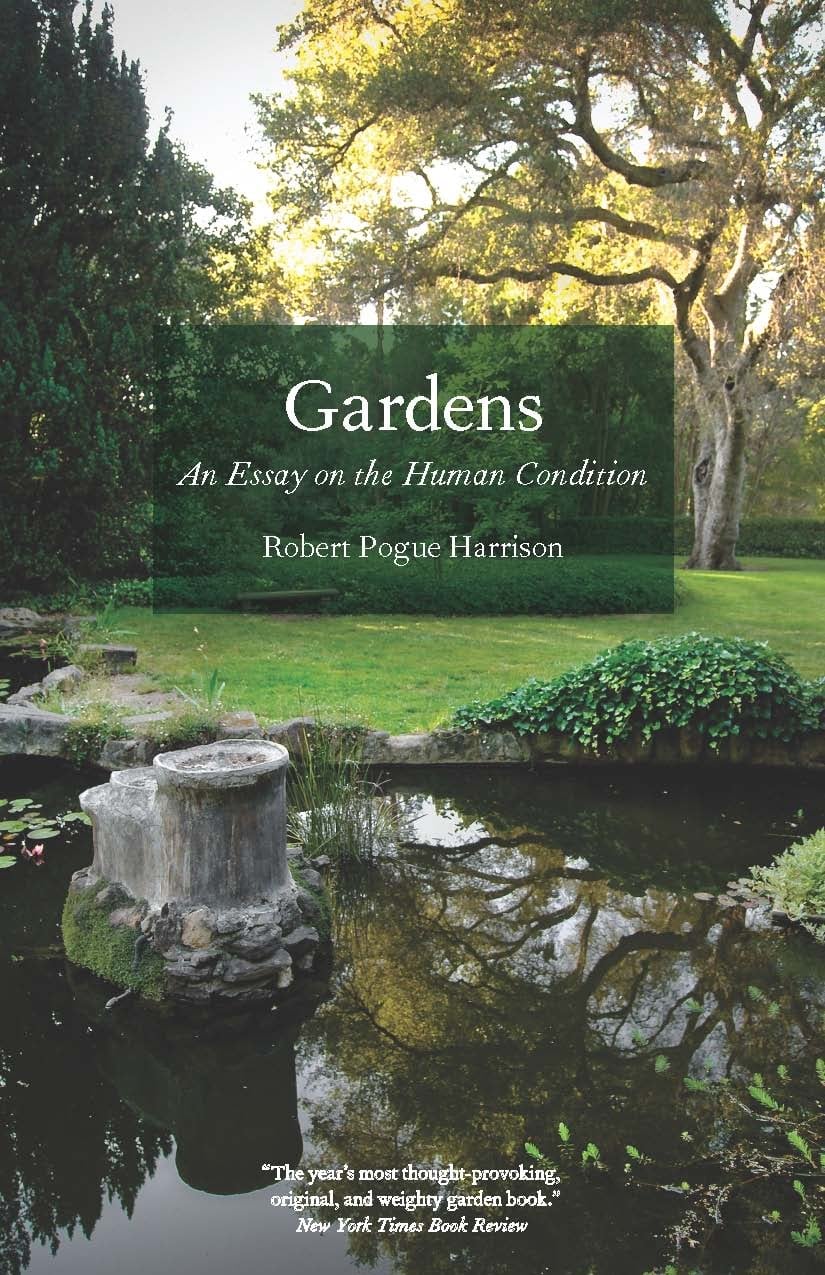
Gardens An Essay on the Human Condition Book Review

Book Review
GARDENS: AN ESSAY ON THE HUMAN CONDITION by Robert Pogue Harrison

This title caught my eye while browsing in my favorite bookstore in Austin, Texas and I really thought Brent would like it. I’m only about half way through it, but Harrison’s writing has me hooked. He shows us why gardens have become so important to us and we see how they have saturated our literature and our culture.

Gardens An Essay on the Human Condition Book Review
Each chapter is organized around a type of garden. For example: Eden, the temporary gardens of the homeless, or contemporary urban gardens which allows Harrison to explore, interrogate, meditate upon what these spaces tell us about the connection between earth, human, and spirit. Harrison argues that gardening is a path to patience and wisdom as an alternative to the restlessness of the human spirit.

As each of us spends time outdoors, either in our own garden or out in the world, there is an unusual type of communion that takes place between person and nature. Every weekend I see Brent in his element, almost as though in meditation, moving potted plants, watering with his ever-present watering can, propagating his palate of succulents, and at the end of the day he seems renewed.  This fine book strives to define and almost undefinable bond between human and garden.

“Whereas most people believe gardening to be a subset of life, gardeners understand that life is a subset of gardening.” – Robert Pogue Harrison

Photo via The University of Chicago Press Books


DIY Project How to Make a Succulent Fountain

DIY Succulent Fountain Conversion Garden Design

DIY: How to Make a Succulent Fountain 

Looking for a way to add a beautiful and water friendly feature to your garden? We’ve got the perfect garden project for your next weekend outdoors.

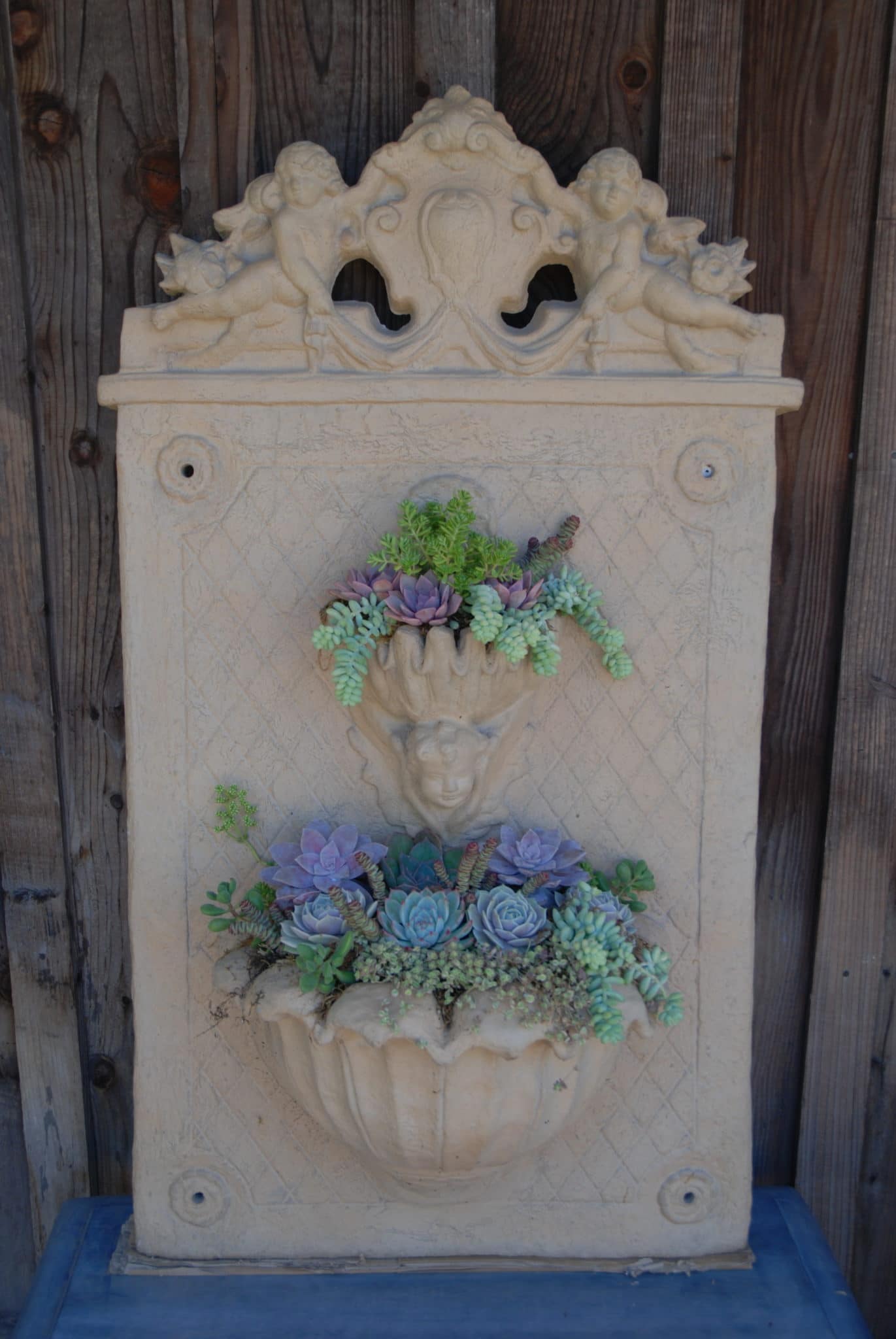
Here at Eye of the Day, Amelia Richardson, better known as Mimi, takes care of the succulent plantings around the store. An expert on succulents, she takes an overlooked wall fountain and transforms it into a beautiful container garden. This project is great not just for drought-stricken California, but any garden that gets enough sunlight throughout the year.

Here is a step-by-step guide to converting a fountain into a succulent fountain garden.

Step 1: Choose Your Vessel

Choose a fountain. It can be one meant to mount a wall, a standalone fountain, single or multi-tiered, or even a birdbath will do!

Step 2: Prep Your Container

Drain the fountain of water and make sure that any drainage holes are covered, if any. You can use a broken piece of pottery or terracotta. The soil will still shift so periodically check the draining that soil isn’t completely blocking it off.

You can also add a layer of rock gravel first before adding soil. If you’re using a birdbath, this step is a must.

Step 3: Add Your Soil

We recommend using cactus mix when planting succulents. It drains quickly which is good for plants that can’t sit in wet soil. We use EB Stone’s Organic Cactus Mix. If you live near Eye of the Day here in the Santa Barbara area, be sure to stop by and get some!DIY Succulent Fountain Conversion Garden Design

Step 4: Choose Your Succulents

When picking succulents, it will really depend on the planter. On large planters, you can choose a focal plant that you can work smaller succulents around. For example: A large Echeveria or Aeonium in the center that is worked around with smaller accent pieces like Sedum morganianum. 

Mimi Tips:

  • Have fun when picking succulents. Grouping like with like is also easier.
  • Color story: Jewel toned, all greens, chartreuses, blacks, cool tones versus warm tones
  • Textural: Soft, sharp, or hardy.
  • Shape: Round (Echeveria, aeonium, sempervivum), spiky (crassula, sansevieria), mix of large and small, tall and short. Senicio radicans and Sedum morganianum even mimic water flow as they drape over the edges.
  • Single type: Just one type of succulent for beginner planters. All rosette types are always pretty.

Step 5: Plan the Layout

Before you start the actual planting, place the succulents either on the ground or in the fountain as you imagine the final product. Here you can edit and rearrange as you see how it’ll all come together.

Sometimes planters can be organized and others more organic and wild. It will depend on the container and where it’s going.DIY Succulent Fountain Conversion Garden Design

Step 6: Start Planting

When removing a succulent from its plastic container, sometimes you’ll be transplanting to an area smaller than the soil around the succulent. You can remove much of the soil while still preserving the roots to get it to fit in the container spot.DIY Succulent Fountain Conversion Garden Design

Mimi Tip: Don’t be afraid to plant them close together. You can always leave space to let them fill out but getting into every nook and cranny helps to create its own ecosystem and that full growth actually slows down the propagation.

DIY Succulent Fountain Conversion Garden DesignBesides, you can always remove, replace and transplant—that’s the great nature of succulents. Succulents are hardy; they’re hard to ruin so press them into the soil. You can also use wet sheet moss to keep the plants moist and reduce the need for additional watering.

Step 7: Add Decorative Elements

Depending on the container get creative using shells, pieces of wood, rocks, broken pot or statue pieces, sea glass, etc. as added decorative material. If you prefer space between your succulents, these elements can help cover the soil.

DIY Succulent Fountain Conversion Garden Design

Step 8: Final Watering 

Give it a quick but generous soak and wash off the container with any leftover dirt. With succulents you want to water once or twice a week depending on sun and weather conditions. Soil should dry out (not completely bone dry) between watering. If soil is still damp you don’t need to water just yet.

If you’re using a container that does not have a drainage hole like a birdbath, then you would let it go bone dry between watering.

DIY Succulent Fountain Conversion Garden Design

Voila! You have a beautiful, water friendly, succulent fountain!


To check out another fun DIY project take a look at Design Rulz article on DIY Macrame Plant Hanger Patterns.


Paul Hendershot and Designing with Water Features

Paul Hendershot Garden Design Water Features

When Paul Hendershot and his trusty dog Chief walk through the door, our day at Eye of the Day becomes just that much better.  Paul likes to stroll through the store, seeing new products and picking the pieces he wants to show his clients. He’s funny and warm and stiletto sharp.

Paul Hendershot Garden Design Water Features

We were looking at his website one day and were pulled in by his remarkable, unique style.  He often works with clients in Ojai and given the heat and water problems particular to that area, we wanted to ask him about how he works within the inherent parameters as well as get a little background.

EOD: When did you become interested in landscape design and how did you begin?
PH:  I always had my own garden starting at a young age.  In my mid-30s I decided to be a landscape designer. I started by doing garden maintenance on my own. I read all the best books, such as those by Russell Page. Slowly people started asking me to help design their gardens and from there it took on a life of its own.

Paul Hendershot Garden Design Water Features

EOD: From whom or where have you drawn the inspiration for your style?
PH: Traveling, especially in Europe and noticing. Russell Page was the most dramatic influence as well as Sydney Baumgartner from Santa Barbara.

Paul Hendershot Garden Design Water Features

EOD: What do you want in a water feature and how do you include them in your designs?
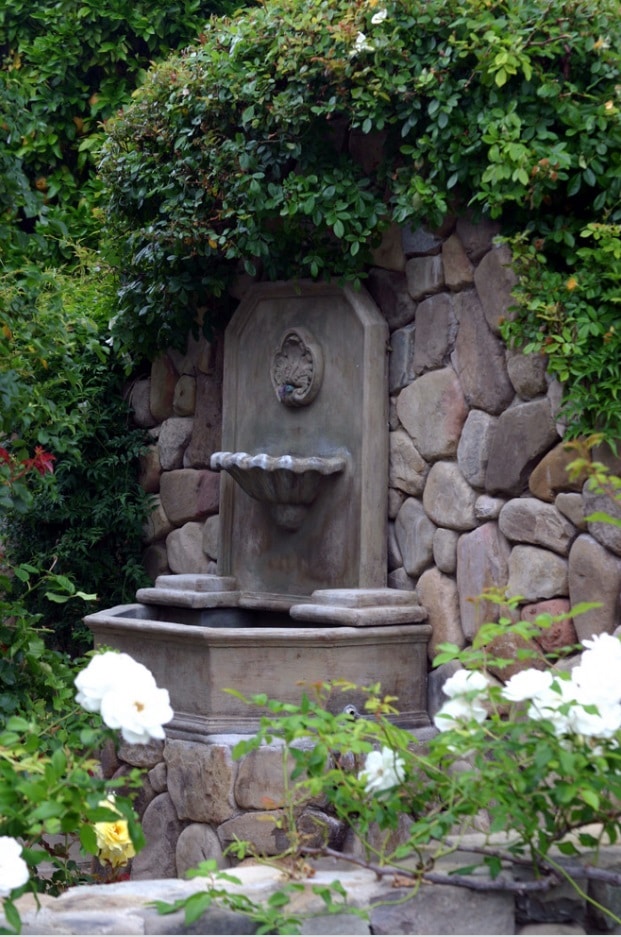
PH: I use water features in courtyards and places where people linger, the sound is great. I also use them in gardens to attract birds. It depends on the space if it is a wall fountain or more of a pool-like fountain.

Paul Hendershot Garden Design Water Features

EOD: What challenges in your designs and with your clients do you deal with when considering the drought?
PH: My biggest challenge with clients is to convince them to get rid of their lawns.  People are really attached to their lawns. Lawns use more water than trees, shrubs, etc., lawns are water guzzlers.

Paul Hendershot Garden Design Water Features

EOD: So what do you offer them as an alternative? How do you get them to give it up?
PH: I usually suggest courtyards with trees for shade and pea gravel as the surface and of course some kind of fountain. Pea gravel is inexpensive, good looking and allows the rainwater to return to the water table. With trees and shrubs, it has a very lush look. Also, groves of trees with pea gravel pathways and boxwood clipped in geometric shapes and pots as accents.

Paul Hendershot Garden Design Water Features

I think we need to change our aesthetic about gardens in California. We should use the examples of Spain, the South of France, Italy, and Morocco which often feature a courtyard with trees, shrubs, pots and water features. Connect them to the house and make outside rooms.

Paul Hendershot Garden Design Water Features

EOD: Are there any advantages or disadvantages to container planting?
PH: Depending on the space, containers, or I should say beautiful pots, add interest and beauty. Also, you can control the soil in a pot. You can make it more acidic or use the correct soil for orchids and unusual plants.  There is nothing more classic than a citrus tree in a beautiful pot.

EOD: Thanks for taking the time to talk to us Paul, we can’t wait to see you and Chief at Eye of the Day really soon.

View more of Paul’s work: Paul Hendershot Design