Flowers and Plants for a Drought Tolerant Garden

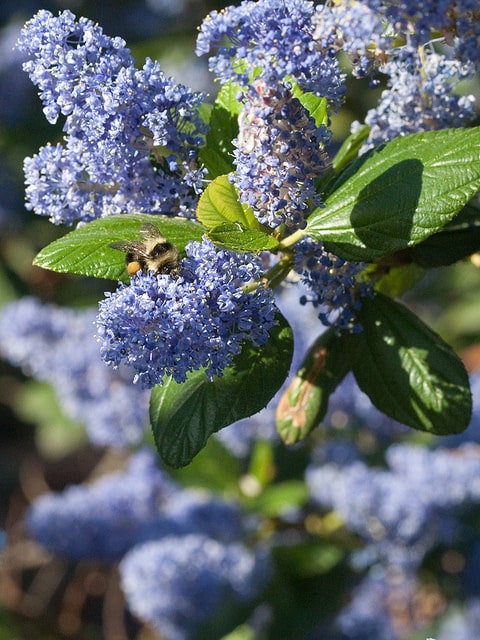
Eye of the Day|Verdure newsletter| wild lilac with bumblebee

Drought Concerns in the Garden

We are in a drought. And it may last for more than the short cycle of approximately seven years that has regularly occurred here in recent history. Some scientists are saying that this is part of a much larger cycle that could be one hundred to one hundred-fifty years in length (and let’s not even try to imagine how climate change will affect that). So, how do we keep our love of living, green things around us with much reduced water resources? One way is to look at the plants that have evolved in this habitat for many thousands of years. Native California plants are great choices for our modern gardens as are plants native to climate zones similar to ours.

Eye of the Day|Verdure newsletter| wild lilac with bumblebee, drought
A busy bumblebee pays a visit to this gorgeous Wild Lilac (Ceanothus) Photo Credit: JKehoe_Photos

Plant Options for Drought
Obvious choices for evergreen shrubs are Manzanita and Ceanothus. Both of these have been bred and selected for a variety of plant shapes and sizes. There are ground-hugging cultivars as well as tall and broad shapes to provide screening. Manzanitas have interesting bark as well as dainty, bell-shaped flowers. Ceanothus are often called California, or wild lilac, for the resemblance their flowers have to the cultivated lilacs our grandmothers grew. Consult a good garden guide or your local nursery for selections and specifics of each cultivar.

Eye of the Day| Verdure blog| pride of madeira, drought
A Monarch butterfly and a Pride of Madeira (Echium candicans). Photo Credit: Franco Folini

Mediterranean Plant Options for Drought
Other readily available options to replace thirsty plants during our dry spells hail from the Mediterranean region.  Some favorites include Echium candicans, Pride of Madeira, that covers itself with spires of tiny flowers in shades of blue and purple as well as Lion’s Tail, Leonotis leonuris, which bursts forth with sprays of brilliant orange blossoms from spring through fall.  And let’s not forget the many selections and species of rosemary and lavender that are ideally suited to our climate as well as their native zones.

Water for the Birds, Bees, and Bugs
One added perk for all of these native and non-natives is that they are quite attractive to bees, butterflies and other beneficial fauna that are seeking sustenance through this dry spell. So don’t be afraid to lose that thirsty garden and replace it with a verdant, more water thrifty landscape.



Groundskeeping: Traveling South for a Peru Expedition

True to my “Profile” I do wander the globe looking, sometimes under rocks.  Here at Eye of the Day we have been successful in offering old rocks with a purpose for the garden.

Throughout the centuries, agricultural societies shaped stone to hold water and fodder, fodder and water, to sustain their livestock. These pieces make stellar planters and add mass and dimension to a landscape in many ways. Here at EOD we make them into beautiful container gardens, water plant containers, border containers and fountains.

Yes, they are heavy and we have become pretty good at delivering and installing them, but that isn’t the story I want to tell here. The story is where to go to find these old and handmade things.

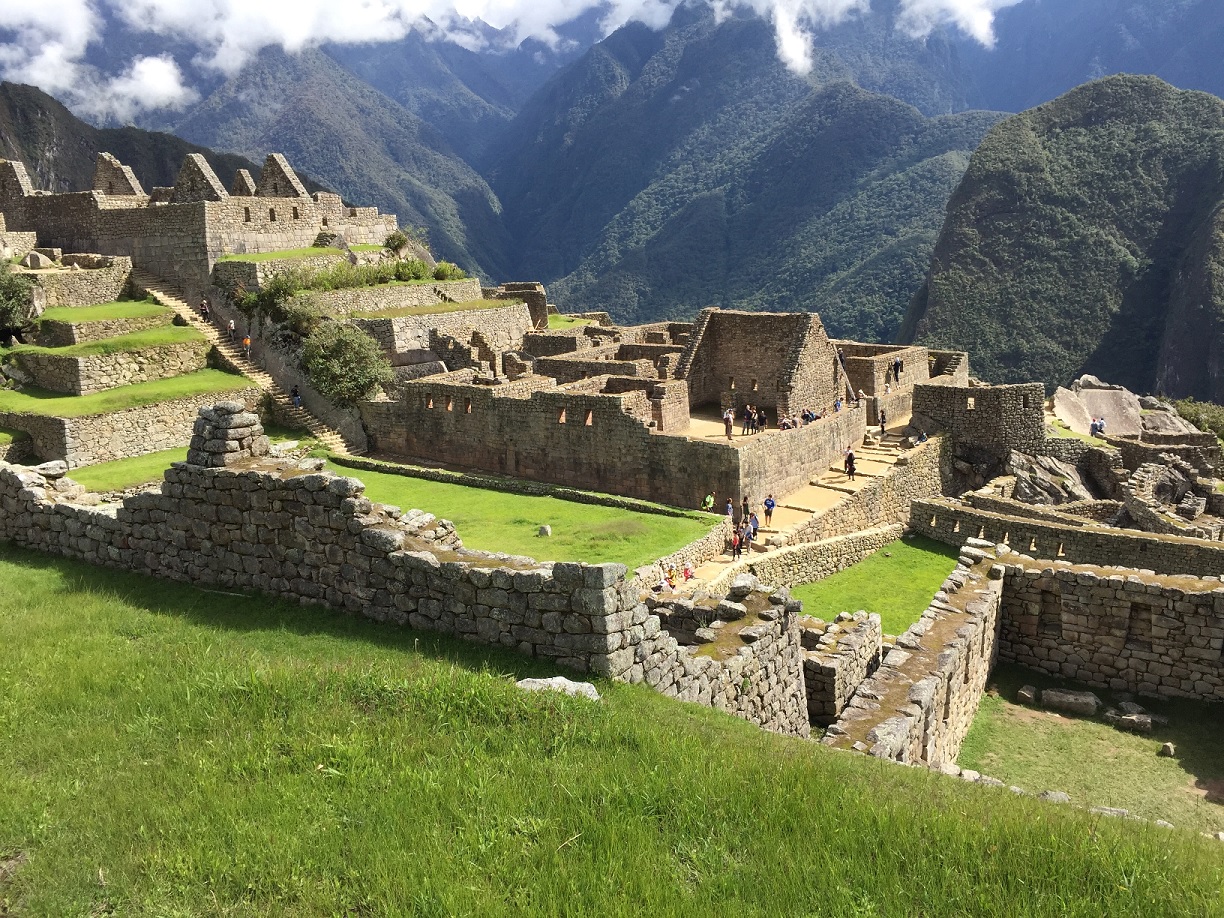
Where is there lots and lots of granite to hand pitch? The Andes, Peru, Machu Picchu.

Discovering Lima, Peru:

Busy and booming, this place where it never, and I mean never, rains is beyond bustling.  It reminds me of China with cars and buses everywhere so that if you’re not paying attention, you just might get run over.  There is smog, but being on the ocean, there is some relief.  Also, it’s a good idea to go in late November. Wait, that’s Summer. Or is it Winter there? T-shirts, sandals and shorts.

The city is spread out and the different districts make it fun and interesting to explore. The Baranca is funky, hip, and has a great flavor to it.


The M district, where everyone tells you to stay (I agree), is where the action is and the shopping and the best food. The food is fantastic, really. Ceviches galore and Pulpo,  the flavors and the talent of the cooks, chefs and kitchens is world class. The opportunities to walk and tour the city and sample their great restaurants are abundant.

Getting out of the City

But unless you are looking for crafts to purchase, especially things woven and crocheted from alpaca and sheep, or silverware all on a scale relative to grains of sand at the beach, you will be disappointed. So, I headed to the mountains of Cusco, something like 10,000 feet above sea level. This city is different in every way from Lima except for the woven and knitted goods.

Cusco is a small but bustling city with sights galore and outstanding food. The streets are still mostly made of granite cobblestone and strong ankles are recommended.  Let me say here that the coca tea is a good idea and tastes great, it helps with the altitude but it is not the experience many think it will be or maybe even want. I didn’t, however, chew any leaves, it just didn’t strike me as important. I was hunting for rocks!

If you could turn granite into energy, the Peruvians would be the wealthiest people on the planet.  How did the Incas move the boulders (some a hundred tons or more), not only downhill but, down mountain slopes, across large rivers and up mountain slopes hundreds and hundreds of feet into place, and when fitted together you could not slide an eyelash between them?

The ever present granite mountains granite buildings, granite temples and, granite streets are enough to cause a need in the hardened soul for some loamy soil and terracotta planters (that’s EOD humor, by the way). I was certain that I would come across some troughs or stones carved to hold water for thirsty beasts kept for their wool and hair.

Sadly, I canvassed from car, bus and train windows and never saw anything until we were on our way to Puno and we stopped at the most outrageous church I’ve ever seen. There I saw two old stones, definitely carved to hold water. Unfortunately, they were over two thousand years old and I could never have afforded them, at least for use as planters.  Oh well! Not every expedition is successful from the EOD point of view. Nor does it have to be, even for me, but I was surprised that in a country made of stone, so little of it has found  its way into the culture.

Oh well, on to the next spot!


Eco Friendly Landscape Design by Lisa Cox for Hacienda Style Home

Lisa Cox, of Lisa Cox Landscape Design has happily designed landscapes ranging from simple tract homes to vast estates.  As she plans an outdoor environment, she envisions a transformation that communicates the lifestyle and personal taste of the client, while incorporating her own style. Each garden is designed and built with all materials including stone, plants, trees, water features, and garden art selected by Lisa using local, top qualified growers and suppliers.

Commitment to sustainability, the use of drought tolerant plants and trees, including California natives, has been an integral part of her design process, allowing a more “naturalistic” result that mimics the local terrain.

When Lisa met with her new clients in the Santa Ynez Valley, they requested that the newly constructed home not have any sod in the front area, and that she use drought tolerant plants including grasses and succulents. Working with a blank slate, except four nice sized olive trees at the entrance, she was free to design the space, including selection of a plant palette that complimented the Hacienda style of the home. With the use of local sandstone boulders, salvias and phormiums as her base, she also incorporated deciduous trees and perennials for color in the Spring and Summer, and a few rows of grape vines because after all, it’s the Santa Ynez Valley!

Choosing Greek terracotta pots from Eye of the Day, filled with “Blue Glow” Agaves gave the clean, rustic look she was looking for on the front porch and the traditional Terrecotte San Rocco terracotta pot in front worked perfectly to show off the “Little Ollie.”

It seems everything progressed perfectly for Lisa and her clients, but there WERE a few important challenges:

  1. The need to place a gopher basket for every plant as the local area is inundated with gophers that would quickly destroy the plantings, and
  2. The necessity of paying close attention to selecting plants that can stand the heat as well as the sometimes frigid nights where temperatures can go into the low 20’s or below.

As Lisa’s work on the project came to a close, she felt deep satisfaction; in fact she felt this was a home environment she could inhabit herself.  The project was a dream to work on and the end result was exactly what the homeowner envisioned.

Visit Lisa Cox Landscape Design to view more of her work.


Groundskeeping: Exploring Urban Landscapes and Frederick Law Olmsted

GROUNDSKEEPING is about my travels for my life’s work, keeping Eye of the Day fresh and exciting not just for me, but our clients and customers. I am always trying to find what others are seeking for their designs.  Like a chef experimenting with ingredients and flavors to interest his public, I look for those things that different places and cultures want and need, and that architecture requires for exteriors to be in harmony with structures.

Recently I decided to return to the East Coast, which is the market we ship to more and more frequently. While walking throughout New York and Boston my goal was to come up with new ideas and directions.

Revisiting and walking the length of Central Park, one of my favorite urban places on earth, was a specific goal.  It is 2.9 miles long (in a straight line), but my meandering probably added another half mile or so.  Fredrick Law Olmsted was a remarkable genius and I marvel at his accomplishments. The Ramble is still my favorite area of all.  It is hard to believe you’re in the city at all.

As I approached the northern end I came to the Conservatory Garden, the only formal garden in the Park. It’s truly an intense, wonderful experience for garden lovers. I recommend that you go to Google images for more wonderful photos. From the corner of 110th Street I took the bus down 5th Avenue to my reward, lunch at Gramercy Tavern. I needed plenty of oysters to soothe my soul and rest my sore feet.

Next, I traveled to Boston ($ one-way bus ticket) to compare cities and get a better feel for this historic place and the homes and offices of its famous residents. Boston is to NYC as Santa Barbara is to LA; while it is a major city and urban center, it feels much more intimate.

Boston Public Garden, like Central Park, is right in the center of the city; it’s smaller, but very dynamic. The 24-acre park was the first public botanic garden in the USA, established in 1837. My favorite site is the magnificent bronze statue of George Washington on his horse.

Boston Garden Lake & Bridge - Brent Travel Photo

Across the street from the Park is Beacon Hill. The word “historic” doesn’t begin to do justice to this neighborhood. Walking its narrow streets is not for those of weak ankle. I immediately saw what I was looking for, something you rarely see in the West: window boxes.  They were everywhere and many decorated for Halloween.

Boston Window Box 7 Boston Window Box 3 Boston Window Box 5I could have walked all day through the streets of Beacon Hill, taking pictures of the Federal style homes packed side by side sporting window boxes below every wonderfully fenestrated opening.  San Francisco, Pasadena, and Brentwood: why don’t you have any window boxes?  They are jewelry for the home. Designers, what are you afraid of?  I want window boxes.  I have window boxes.

Next, my pilgrimage led me to the unassuming home office of Frederick Law Olmsted in Brookline, Massachusetts. This is the location where The Master worked on his brilliant, timeless designs. The Park Rangers and volunteers were wonderful, helpful and spunky. It is moments from downtown Boston, just a short cab ride.

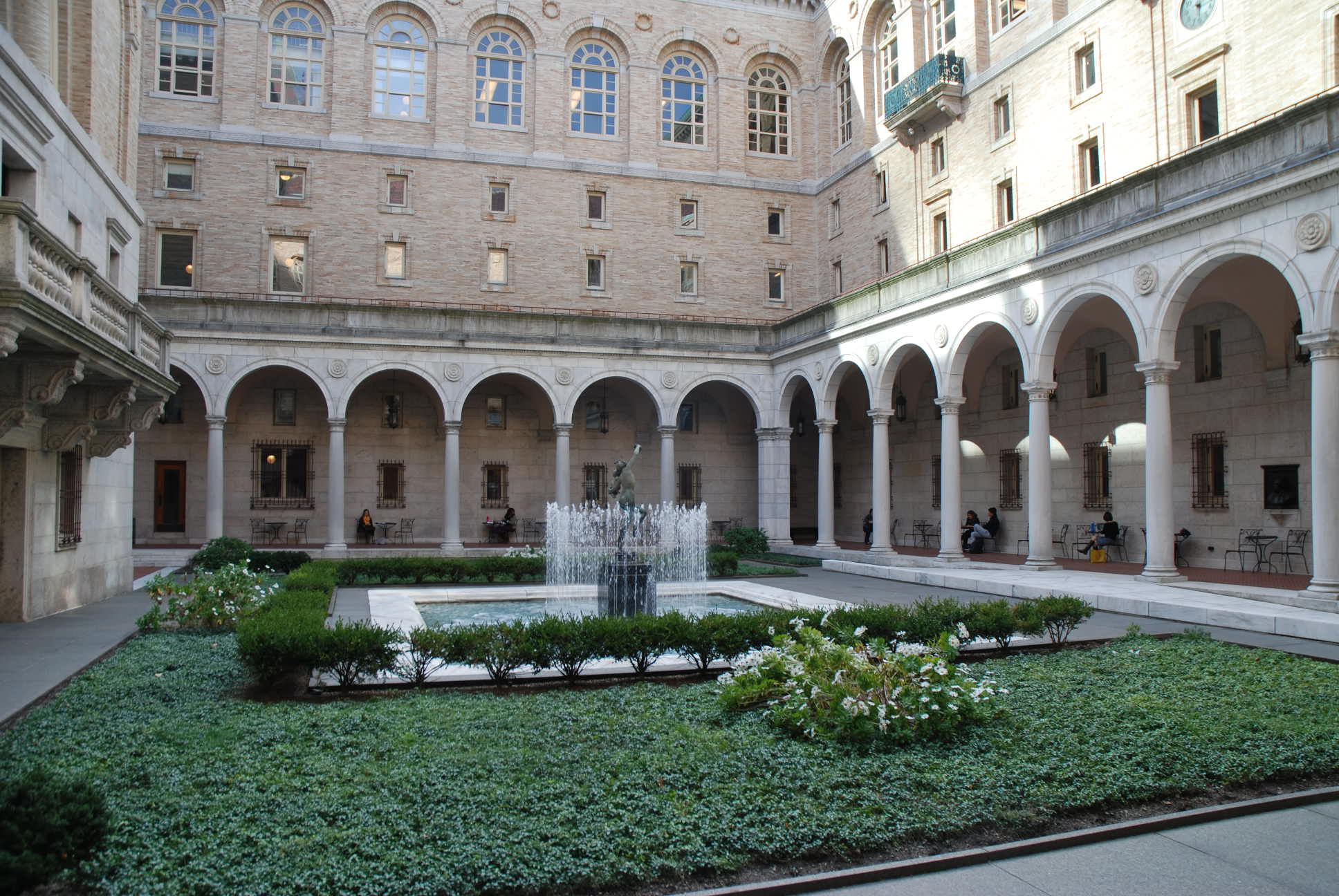
20459367-F2BB-45CB-9071-4C8F2EAC083FFinally: the fountain I stumbled upon when I walked through Boston’s main library.  In the courtyard is a fountain that replaces my favorite for many years, The Electric Fountain at the corner of Wilshire Boulevard and Santa Monica Boulevard in Beverly Hills.  In the courtyard of Boston’s public library is the most wonderful fountain, Frederick MacMonnies’ Bacchante and Infant Faun.

Boston Library Fountain 1

In its unique setting it is difficult to think of another fountain I’ve seen in my travels that could make me smile more.

Where to next??


Books to Read by the Fire and a Hot Cocoa and Book Giveaway!

BOOKS TO READ BY THE FIRE THIS WINTER

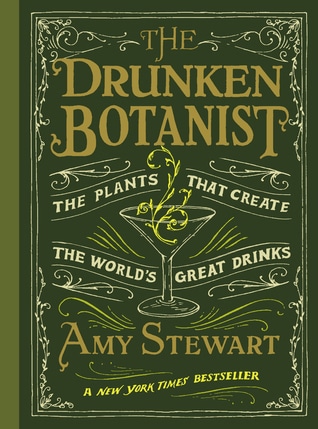
Suzi Freitas gives her recommendations for books to cozy up to this winter. For our readers, we’re also doing a special giveaway. Enter below by visiting our Facebook page or following us on Twitter  to win a copy of The Drunken Botanist and cocoa powder from famed French luxury baker and sweets maker, Laduree. The perfect treat while reading a book this winter.*


Amy Stewart Wicked Plants image

1. Wicked Plants: The Weed That Killed Lincoln’s Mother and Other Botanical Atrocities, By Amy Stewart

Stewart takes on over two hundred of Mother Nature’s most appalling children in an A to Z description of plants that kill, maim, intoxicate, and otherwise offend. Scary botanical illustrations create a portrait of the evildoers that may be living in your own backyard. This collection of bloodcurdling botany will frighten, entertain and educate even the most courageous gardeners. This book would provide perfect fireside reading on a cold winter evening.

 2. The Drunken Botanist, By Amy Stewart

Also by Amy Stewart (can’t get enough of her), The Drunken Botanist details the botanical history, science and chemistry of over 150 plants, flowers, trees and fruits. Many surprising and somewhat odd plants have been fermented or distilled, in fact every great drink starts with a plant. For example, Sake: rice, Scotch: barley, Gin: juniper. One of the most interesting sections regards the thirty-year court battle over Angostura bitters and its “secret” recipe, which technically may not even contain bark from the Angostura tree. The book includes over fifty drink recipes along with growing advice for gardeners, making it a great gift for gardeners/cocktail lovers or gardeners or cocktail lovers.


Carol Wall Mr. Otwita image

3. Mister Owita’s Guide to Gardening: How I Learned the Unexpected Joy of a Green Thumb and an Open Heart, By Carol Wall

The author’s neighbor, Mister Owita, helps her to transform her outlook on life following a series of personal misfortunes, and to allow herself to appreciate her lush backyard oasis. Through Owita’s extensive horticultural education, kindness and a variety of mutual interests, the pair becomes inseparable while they perform miracles on Wall’s property and her life.


a Rafflecopter giveaway

1. Sign Up through Rafflecopter
2. Like Us on Facebook or Follow us on Twitter. Each one is an entry to the giveaway*

*Giveaway Open to U.S. Residents Only, 18 Years Old and Over.

Giveaway Ends December 31, 2014.


How to Bring Warmth to Your Winter Garden

Baby, it’s cold outside! Now is the time for snuggling up, hunkering down and staying in. The garden may be a little drab to look at with deciduous trees going bare and flowers and grasses fading into muted tones. It‘s a good time to put a little warmth and brightness back into the landscape.


One way to do that is with plants whose foliage is aflame with gold, yellow, orange and red. Here are a few eye-catching plants to add pop to a dreary corner. For an accent, or even a hedge alternative, there are several bright selections of mirror bush, Coprosma to choose from. In this case, their cultivar name often says it all. ‘Inferno’, ‘Pina Colada’, and ‘Tequila Sunrise’ give you an idea of what their creators were seeing in the variegated foliage they sport. All are medium-sized shrubs, about four feet by three feet and require only moderate water and partial shade, or as the garden guide calls it “cool sun”. There is also a low, spreading version called ‘Evening Glow’ that can act as a groundcover.

The ever-popular flax plants also have some dazzling variegations: ‘Cream Delight’ is striped with creamy yellow, ‘Jester’ has a bright pinkish-range mid-rib and green leaf margins, ‘Sunset’ sports shades of apricot, pink and green, and ‘Yellow ‘Wave’ has a sunny yellow center stripe.

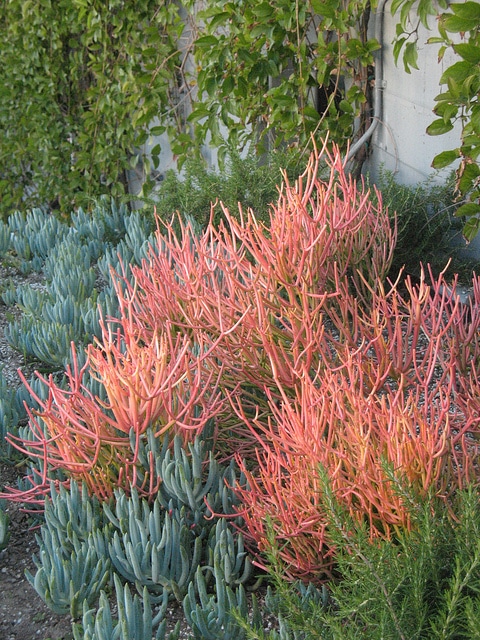
For really low water use areas there are a number of succulents that will provide that sunset glow. One is a selection of euphorbia (Euphorbia tirucalli) called ‘Sticks on Fire”. As you can imagine, it is flaming yellow and orange. Keep it as a container specimen or put it in the background where it could grow into a sizeable shrub (remember that its sap is irritating!). Most everybody knows the jellybean plant, Sedum rubrotinctum, which can eventually provide unbroken cover in the planting bed or add interest at the edge of a mixed container garden. Just as colorful is Crassula capitella ‘Campfire’ whose pointed little leaves look like flames racing across the ground.

One last group to consider for winter color includes those shrubs that produce red or orange fruits at the end of the season. Most will hold the berries for months (if the birds don’t get them all first). Cotoneaster horizontalis ‘Perpusillus’ grows only one or two feet high, but spreads to seven feet wide and is covered with bright red berries. Larger shrubs in the firethorn genus of Pyracantha include P. koidzumii ‘Victory’ and P. coccinea ‘Kasan’. Both may be left in a natural fountain shape, but take well to espaliering on fences or against walls. And lastly, don’t forget our native Christmas berry, Toyon heteromeles for handsome dark green foliage festooned with cheery red fruits.

Image licenses: Christmas Berry, Sticks on Fire