Book Review: The American Meadow Garden by John Greenlee

Eye of the Day|American meadow|John Greenlee

“We’ve reached a stage where we can no longer follow past practices unthinkingly, particularly when those practices are wasteful and injurious to the environment. It’s time to get rid of the old-fashioned lawn and embrace a sane and healthy future: the designed meadow.” – John Greenlee

In The American Meadow Garden: Creating a Natural Alternative to the Traditional Lawn, “grass guru” John Greenlee leads us into a new way of thinking about grass.  He uses the words “glade,” “grassland,” “mead,” “savanna,” “pasture,” “sod,” and “meadow” among other terms, to describe areas around the world that are largely treeless, grass-covered landscapes.

Eye of the Day|American meadow|John Greenlee
Image via Timber Press

These words paint an image of golden or green grassy carpets, rippling in a breeze. In this beautiful book, we are given a portfolio of meadow gardens and a guide to grasses for meadows and how to maintain them.

We’re constantly looking for ways in which to cope with our water-challenged world in California and Greenlee offers alternatives to our lawn habit. In many areas, aquifers are dwindling and water is increasingly scarce. There is no longer enough of it to supply lawns. Growing populations and dwindling supply is our scary future and our landscapes must change with the times. The American Meadow Garden was published in 2009, but the relevance of the information and ideas within its covers increases every year.

The American Meadow Garden: Creating a Natural Alternative to the Traditional Lawn, by John Greenlee, Timber Press 2009


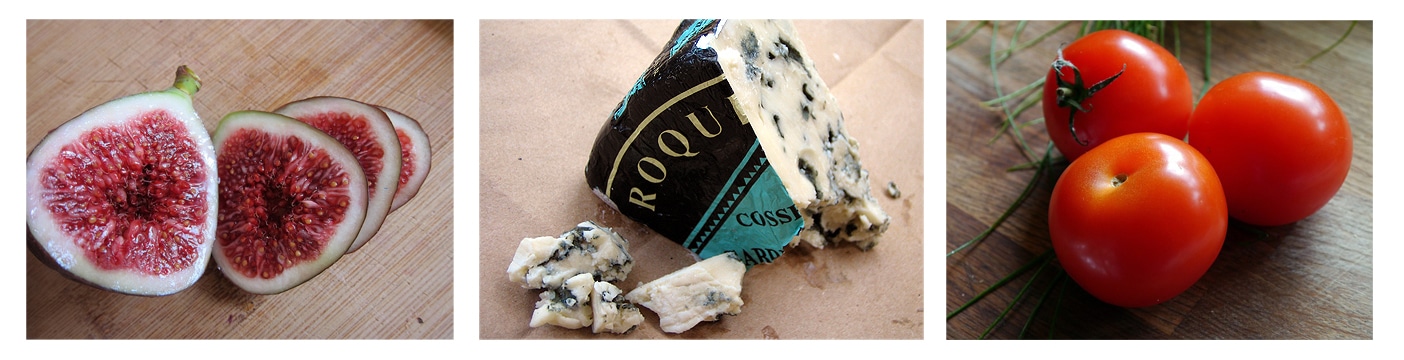
Garden Recipe: Tomato, Fig, and Cheese Salad

Eye of the Day|Garden Salad|Fig Cheese Tomato Salad

Garden Recipe: TOMATOES FIGS CHEESE

We have had a tiny fig tree in our back yard for seven years…so maybe we are graced with four or five velvety, crunchy, voluptuous figs each summer.  This year it is veritably FILLED with figs.  It’s still a tiny tree, but it’s trying harder this time. Daydreaming of my favorite garden fruits and vegetables (figs and tomatoes) makes me want to eat this until October.

Ingredients

  • 1 T Balsamic vinegar
  • ¼ t fine sea salt
  • ¼ c really good olive oil
  • 3 T pine nuts
  • 1 perfectly ripe large tomatoes
  • ½ lb (or more!) ripe figs, cut in quarters
  • 1 oz crumbled Roquefort cheese
  • 1 t fresh thyme leaves
  • Black pepper

Whisk the vinegar and salt together, then slowly whisk in the olive oil.  Toast the pine nuts in a small skillet until light golden.  Spread tomato slices on a large plate and scatter the figs and pine nuts over the tomatoes.  Sprinkle with the cheese and thyme then drizzle with the dressing and finish with freshly ground black pepper to taste.

Photo Credits:
Roquefort Cheese, Creative Commons, Roquefort Cheese by Cyn Furey is licensed under CC BY-NC-ND 2.0
Figs, Creative Commons, this year, i have discovered an appreciation of figs by snickclunk is licensed under CC by 2.0
Tomatoes, Public Domain Dedication, Tomatoes by Image Party is licensed under CC0 1.0


Garden Cocktails: Backyard Fig Margarita

Eye of the Day|Garden Cocktails|Fig Margarita

Garden Cocktails: Backyard Fig Margarita
Pick some figs from your little tree in the back yard, or get them from the Farmers’ Market…

BACKYARD MARGARITA

1 ½  oz. silver tequila
½  oz. fig simple syrup (it’s easy, you can make it)
½ oz. Cointreau or Triple Sec
¼  oz. fresh lime juice

Combine all ingredients and shake with ice. Strain into an ice-filled glass and garnish. With a lime wedge on a pick with a fig wedge.

Fig  Simple Syrup
1 pint figs
2 cups water
1/2 cup sugar

Remove the stems from the figs and cut into quarters.. Bring the figs, sugar and water  to a boil, lower the heat and simmer until the syrup has reduced by half. Let cool to room temperature and strain into a clean glass jar.

Photo Credit: Pinterest


Tips for Successful Edible Gardening by The Conscious Garden

Eye of the Day|Edible Gardening|The Conscious Garden

Tips for Successful Edible Gardening by The Conscious Garden

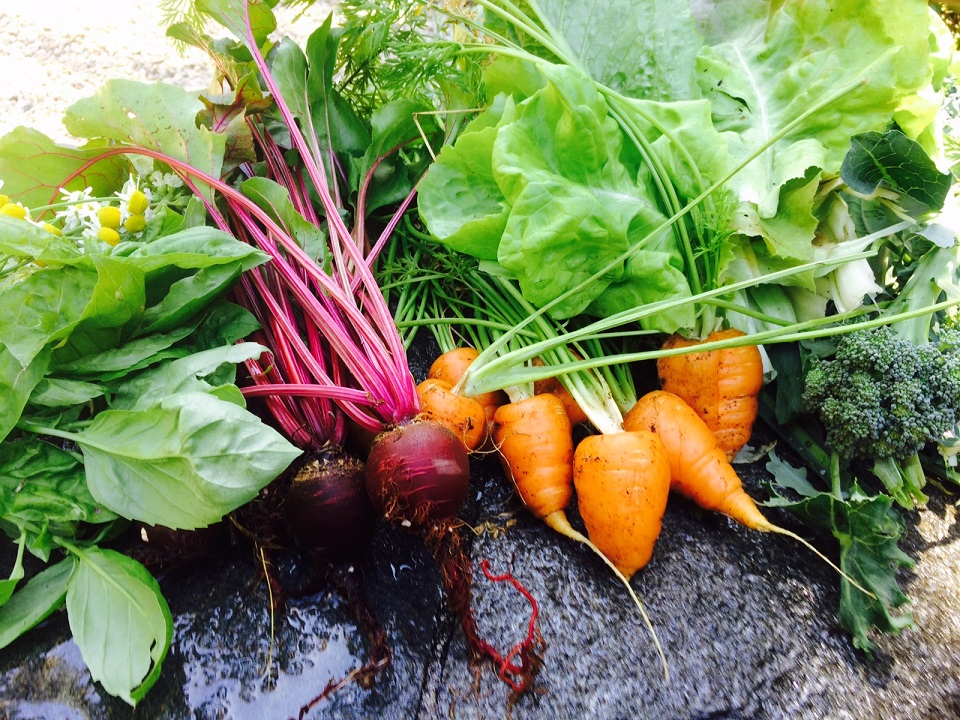
In Southern California we love to eat healthy food and there is no fresher, tastier or more nutrient dense foods than those that you pick from your own garden or that you buy from the farmers market.  It is important to know that your food is free of chemicals, organic and full of nutrients,  so what better way to know what is in your plants than growing it yourself?  I want to share with you some of the main things to remember when setting up an edible garden, and whether you have a yard or not, it IS possible!

I have been growing food since I was a kid, and one of the things I have learned, is that plants will grow in anything.  So, what ever you have to grow food in, whether it is a raised bed, beautiful container or just a simple plastic drum, you too can have edible vegetables right at your home.

Tips for a Successful Edible Gardening

Soil
The key to having good nutrients in your food is in the soil and that is also the advantage of growing at home: you can truly know if it is organic and what’s in it as you plant.  Use a premium potting soil to begin with.  If you have a large garden, use a mixture of different composts such as manure and worm castings.  The soil provides the nutrients to the plants and allows them to be strong.

Water
Edible plants require a little bit of water often and if you add a drip system, it will ensure the plants are getting water directly to their roots where it is required and it makes the garden more water efficient.  This is especially important in container gardening, and it will make life SO much easier.

Plants
When you decide to plant, choose seedlings from a good organic local supplier, providing bio-dynamic organic seedlings. This will ensure that the roots are strong and will stand up to transplanting and our current drought conditions, giving the plants a good start to their edible nutrient supplying journey. It is also time efficient.

Pest Control
Be ready for providing pest control – and keep it organic, non-toxic.  Sluggo for snails, Organocide for bugs and Serenade for diseases.  I find that if you notice bugs attacking a particular plant, leave one of those plants free of pest control and the bugs will eat that one plant and leave the rest alone.  (Periodically remove the bug-plant and destroy it removing the bugs and disease).

Feeding
Remember plants need food too!  Fish and kelp as the master formula is great. Or you can use an organic food with mycorrhizae. The numbers on the pack of organic fertilizer should not be higher than 5-5-5, which are nitrogen, phosphorus and potassium in a low balanced form.

Just remember, take care of your edibles and they will take care of you. Don’t be afraid to try your hand at an edible garden. If you see something you would like to plant, try a handful of plants and see how it goes.  Plants are sustaining and will grow for you if you just give them a chance.

I am available for consultations or garden support to fulfill your edible garden desires.

Happy Planting!

Sagar Faucheaux
The Conscious Garden

Phone:  (805) 745 5555
consciousgarden@



Book Review: Planting the Dry Shade Garden

Eye of the Day|Shade Garden| Graham Rice

IT’S NOT A DARK, DRY BOOK!

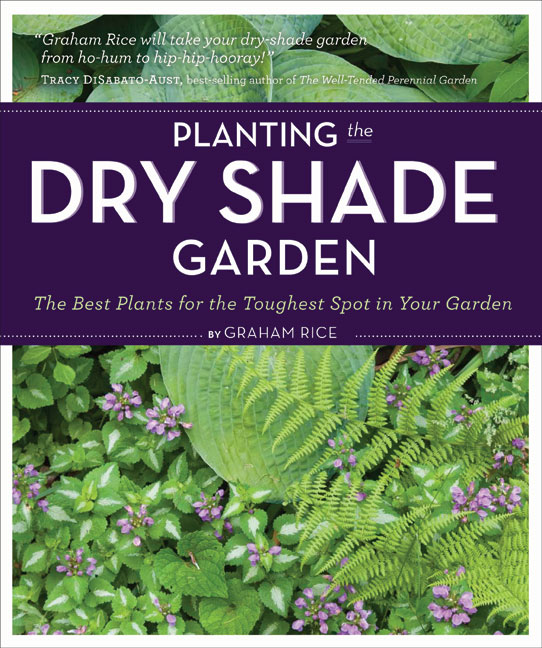
Apparently, figuring out what to plant in an area of your garden that has shade, but no moisture, is a problem that stymies gardeners everywhere. We have been focused like a laser beam on our lack of water and how to logically use what little we have and Planting the Dry Shade Garden: the Best Spot for the Toughest Spot in Your Garden, by Graham Rice, Timber press 2011, provides practical ideas and solutions for these problem places in the garden.

Eye of the Day|Shade Garden| Graham Rice

Read through and find out how to prune to allow more light and how to work with the soil to condition it to hold more water. Mr. Rice offers 130 plants that do fine with reduced light and moisture levels —long-blooming woodland gems like epimediums and hellebores, and even lush foliage plants like evergreen ferns and bear’s breeches (my personal favorite, of course). Shrubs, climbers, perennials, ground covers, bulbs, annuals, and perennials — an entire palette to help you transform challenging spaces into rich, rewarding gardens.

The book’s 125 beautiful color plates are mainly the work of award-winning photographer Judy White, so not only is the book packed with good advice, but the pictures reveal the beauty of the plants you can grow in the garden’s heart of darkness.

Photo Credit: Bear’s Breeches, Acanthus Mollis by Kristen Paulus is licensed under C.C. 2.0


Essence of Summer Salad

Eye of the Day|Essence of Summer Garden Salad|

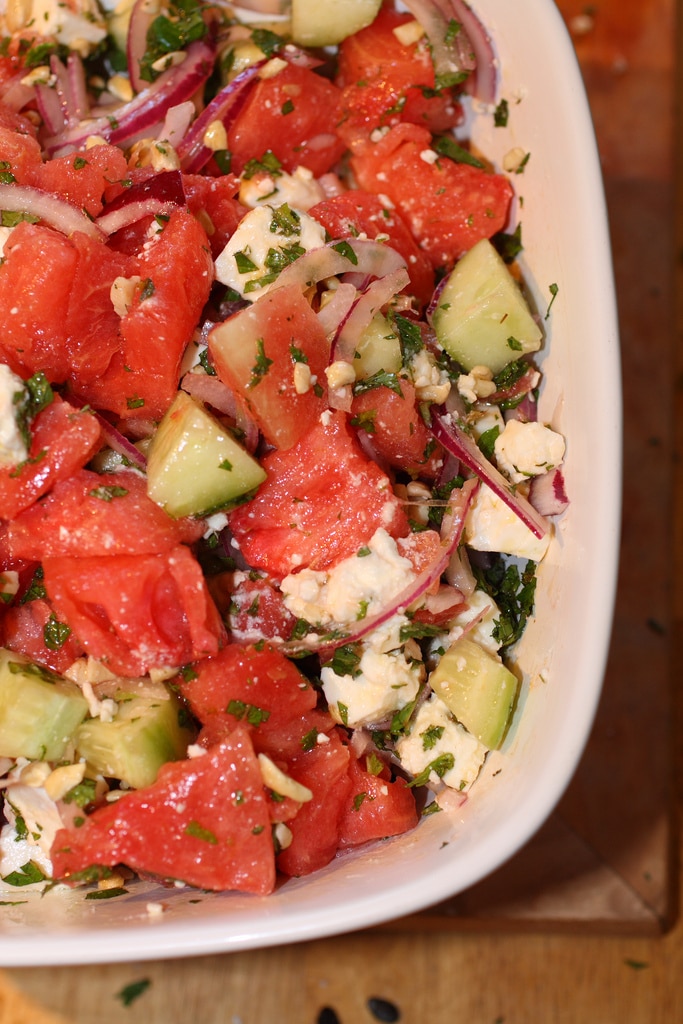
ESSENCE OF SUMMER SALAD

You’re going to need something else from your garden to go with your cocktail, by the way.  Gardens are so wonderful…

  • 1 lb tomatoes, large,  small and tiny, yellow, pink, red, black, green.  Large ones cut in quarters or eighths.
  • 1 med. cucumber, sliced or cubed, peeled or not
  • Pickled onions from following recipe, drained
  • 1 pkg good feta, crumbled
  • 2 c. cubed, perfect watermelon
  • ¼ c. chopped mint
  • ½ c. whole basil leaves

Toss all ingredients except feta together, pour on ½ the dressing, toss then taste.  Add more if you wish.  Strew feta.  Eat.

Dressing

  • ¼ c. rice vinegar
  • 2 T fresh lime juice
  • ¾ c. peanut oil
  • Salt and pepper to taste
  • 1 t sugar

SHAKE IT UP OR WHISK IT UP.

Pickled Red Onions

  • 1 sm. Red onion, halved then sliced thin
  • 1 c white wine vinegar
  • ¼ c sugar
  • Pinch of red pepper flakes

Bring vinegar and sugar to simmer until sugar dissolves, pour over onions and add red pepper flakes, let it sit at least 30 minutes then refrigerate and cool.  These will last in your refrigerator forever.

Image Credit: Watermelon Salad by Eric Petruno is licensed under C.C. 2.0