Just Eat It: Pasta with Chive Blossoms

Eye of the Day Garden Design Center

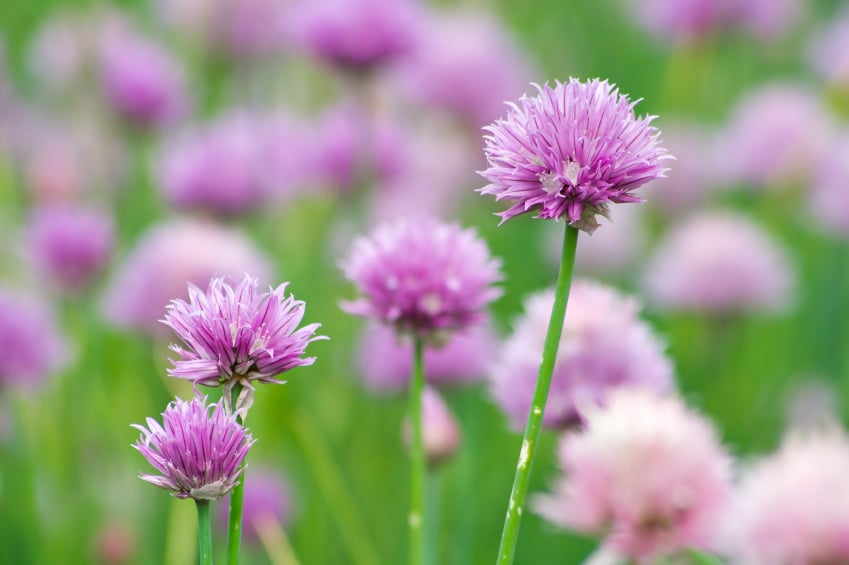
Eye of the Day Garden Design CenterIt’s still pretty early for lots of dining from the garden, but as we all know, Brent loves his chives and chive blossoms.  We have had a fairly steady supply of lettuces and herbs so far this year and even when it looked like we had lost our chives to the deadly December freeze, their little blades began pushing up and out in early February and now are grandly abundant with their pretty, delicate lavender blossoms.  And if you have a healthy forest of parsley, like we do, there’s nothing wrong with a shower of that minced greenness here.

CHIVES AND BLOSSOMS IN YOUR PASTA

1 pound pasta, linguine or fettucine  (make your own, if you’re so inclined!)

1/2 cup pasta water

5 tablespoons unsalted butter

1 cup freshly grated Parmigiano-Reggiano , plus more to serve

Salt and fresh ground black pepper to taste

4 cups lightly packed snipped chives

As many chive blossoms as you can muster

2 T minced Italian parsley (optional)
Cook the pasta in lots of boiling, salted water until slightly firm. Scoop out  the 1/2 cup of pasta water and put it in a large, warmed serving bowl. Drain the pasta and add it to the bowl.

Act fast:  add the cheese and butter and your desired amount of salt and pepper to the bowl and toss to combine so that the butter barely melts and there’s a little emulsification going on. Then add the chives, chive blossoms and optional parsley and serve immediately to get the fresh taste of the uncooked chives.  Have a nice little bowl of grated Parmigiano-Reggiano on the side to add, if you like.  Then: JUST EAT IT!

FOUR SERVINGS

Book Review: The Beautiful Edible Garden

Eye of the Day Garden Design Center

Eye of the Day Garden Design CenterA minor dispute broke out in my neighborhood this week. When a couple planted herbs and vegetables along their front walkway, the HOA president chastised them via email: “Now you have a garden in front of the house. Who approved that? Please take care of the above quickly.”

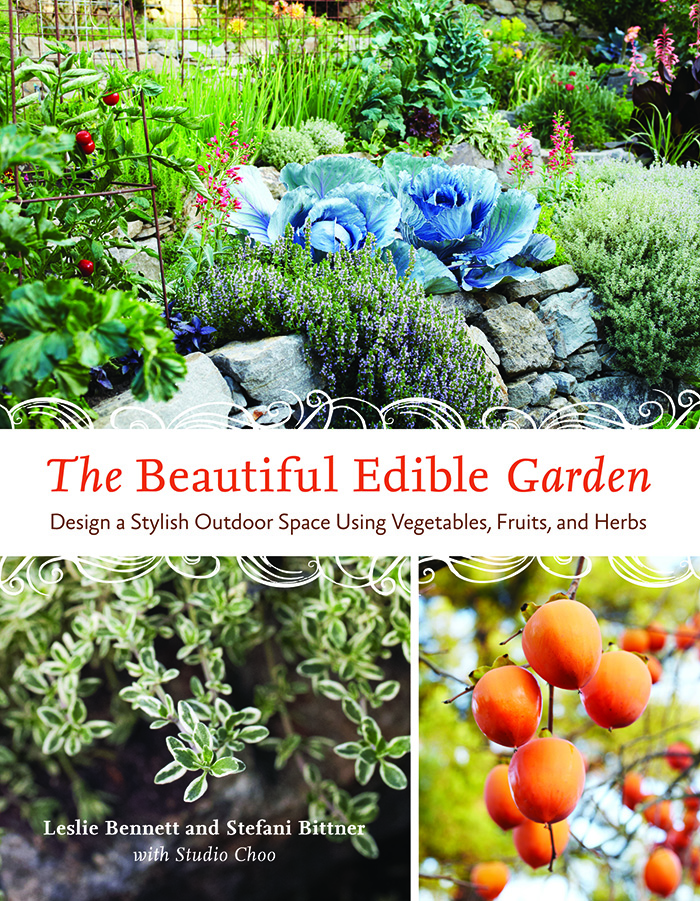
To some, an area where edibles are growing is a “garden” while other plants are for “landscaping”, but Leslie Bennett and Stefani Bittner, authors of The Beautiful Edible Garden, debunk this myth. Published by Ten Speed Press in 2013, the book offers design ideas for stylish outdoor spaces that incorporate vegetables, fruits and herbs.

What sets this book apart from others covering the same topic are the specific plants they suggest and the reasons they give for plant choices. For an unexpected border, try alpine strawberries, which produce tasty white fruit but don’t send out runners. Other strawberries wouldn’t grow in a neat line like alpines do. Bennett and Bittner recommend peppers, eggplant, chard and cabbage as attractive additions to an existing ornamental bed. They call it an “integrated garden” which is perfect for those who don’t want to completely start over on areas they’ve already planted.

Because it’s so common for people to view edible plants only as food producers, the pair encourage readers to look at the architectural characteristics of every plant. Big, bushy rosemary can line a path and create a visual anchor as much as another less-fragrant and less useful shrub.

Edible gardening is much more than a fun idea for those with a heart for it. It’s become a revolution, with some gardeners transforming their entire front yard, back yard or both into food-growing plots. In Orlando where I live, Jason and Jennifer Helvengston launched a protest called “Plant a Seed, Change the Law” after the city insisted they replace their front yard veggie garden with a lawn last year.

Because some neighborhoods and even whole towns and cities resist non-traditional plantings, a book like this one is especially important. It points out the so-called landscaping possibilities offered by plants that produce food, allowing gardeners to use traditional bed, border, hedge and path designs to conduct their food-growing operations. Once you finish The Beautiful Edible Garden, you are in possession of all these secrets, and you can take care of the above quickly.

Ready to dive in? Come by the shop to purchase a copy, or buy a copy HERE.


Just Eat It: Freitasalad

Eye of the Day Garden Design Center

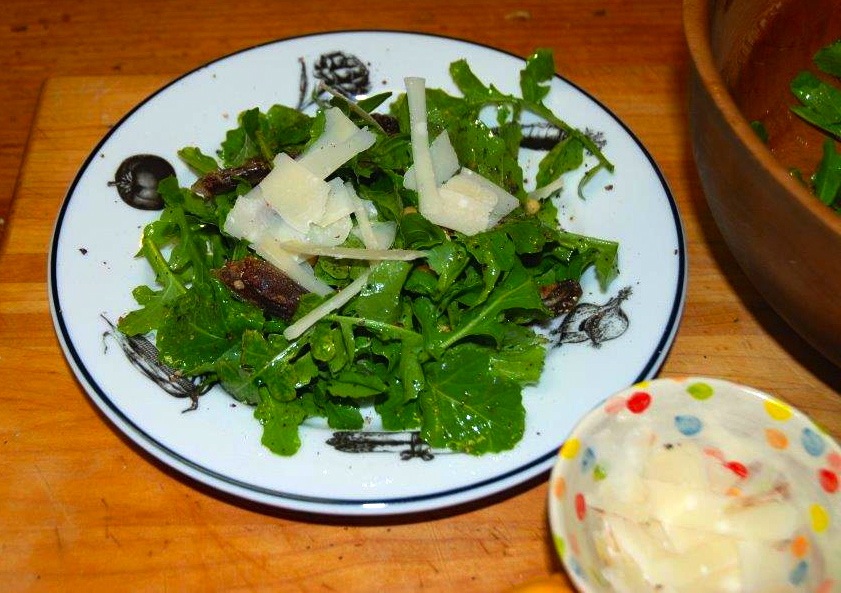
Brent and I have now been traveling for many years to Europe to find the perfect pieces for Eye of the Day, but at one time we were star-struck novices and our first trip to Paris to shop for the store was one miraculous impression after another.  A circuitous route to Just Eat It, I know, but together we had a culinary revelation that led to the recipe I am about to share with you. At a small restaurant on the left bank we ordered a Salade de Roquette. No big deal, right? But somehow, this salad attained celestial status to us. Arugula. Olive oil. Salt. Dates.

Eye of the Day Garden Design Center

Now, fifteen years later, Arugula Salad has become ours. We grow arugula so spiky, so small, so spicy and Meyer lemons so juicy and, well, lemony that we think we are now higher on the evolutionary scale than we were on that first trip. This is OUR arugula salad for two (feel free to multiply liberally):

FREITASALAD

2 cups emerald green, spiky, spicy, fresh arugula

1 juicy Meyer lemon (or a regular one if necessary)

A few healthy glugs of Cretan olive oil from our last shipment of pottery from Crete

Maldon sea salt, a little more that you might think

2 Tablespoons of pan roasted pine nuts

4 Medjool dates, pitted and quartered lengthwise

1/3 cup or so of golden curls of Parmigiano Reggiano

Pepper

In your favorite salad bowl, place the cleaned arugula. Squeeze the lemon juice over the arugula, add the olive oil and salt and toss together. Divide between two plates and split the pine nuts, dates and Parmigiano Reggiano between the two salads. Grind a little black pepper over the top if you want more spice. And it is. Over the top.

Eye of the Day Garden Design Center


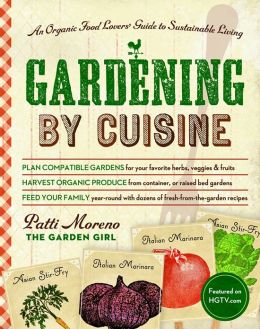
Our review of Patti Moreno’s “Gardening By Cuisine”

Eye of the Day Garden Design Center

Eye of the Day Garden Design CenterI bet if a nineteenth century man learned that in the future hundreds of books would crop up to teach people how to grow their own food, he’d laugh, and then cry. How could a practice so central to human survival for thousands of years suddenly come off as a new hobby? Well, that’s exactly what’s happened, and this trend marketing must be working, because in November my husband and I put together a raised bed, poured in some good soil, and planted kale and beet seeds. We also planted garlic cloves, and if it isn’t already obvious, we were making a “super foods” garden. We feel stronger already.

Patti Moreno, the author of Gardening By Cuisine, would certainly approve, as her book advises readers on the requirements and merits of herb pesto gardens, Mediterranean vegetable gardens, Asian stir-fry gardens, marinara sauce gardens, and other themes that lead from a seed directly to a recipe.

This fun idea of Moreno’s appeals to brand new vegetable gardeners by covering beginner’s steps for setting up an organic garden from scratch. She deals with drip irrigation (perhaps the most important thing a new gardener must embrace), soil, sunlight and pests. Before anyone has a chance to get bored, she delves into harvesting, drying, freezing and all manner of preserving. The crescendo comes with her delightful recipes for meals around the clock, detox drinks, desserts–all organized by your cuisine of choice. Thanks to her, I’ll be making a Triple Herb Potato Soup with Red Winter Kale & Manchego Cheese, with red kale I grew myself.

Gardening by Cuisine, available through , published by Sterling in 2013.