DIY Project How to Make a Succulent Fountain

DIY Succulent Fountain Conversion Garden Design

DIY: How to Make a Succulent Fountain 

Looking for a way to add a beautiful and water friendly feature to your garden? We’ve got the perfect garden project for your next weekend outdoors.

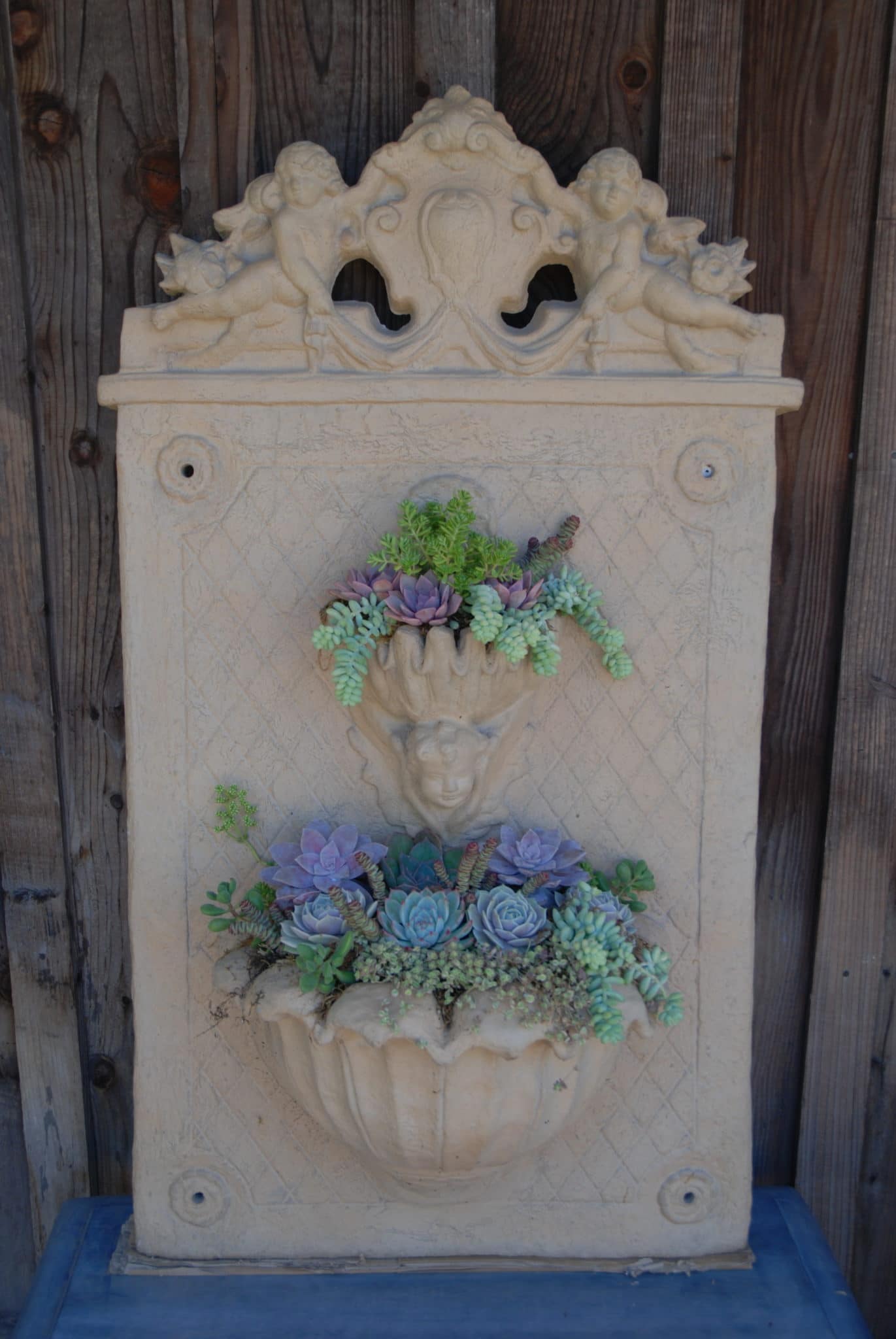
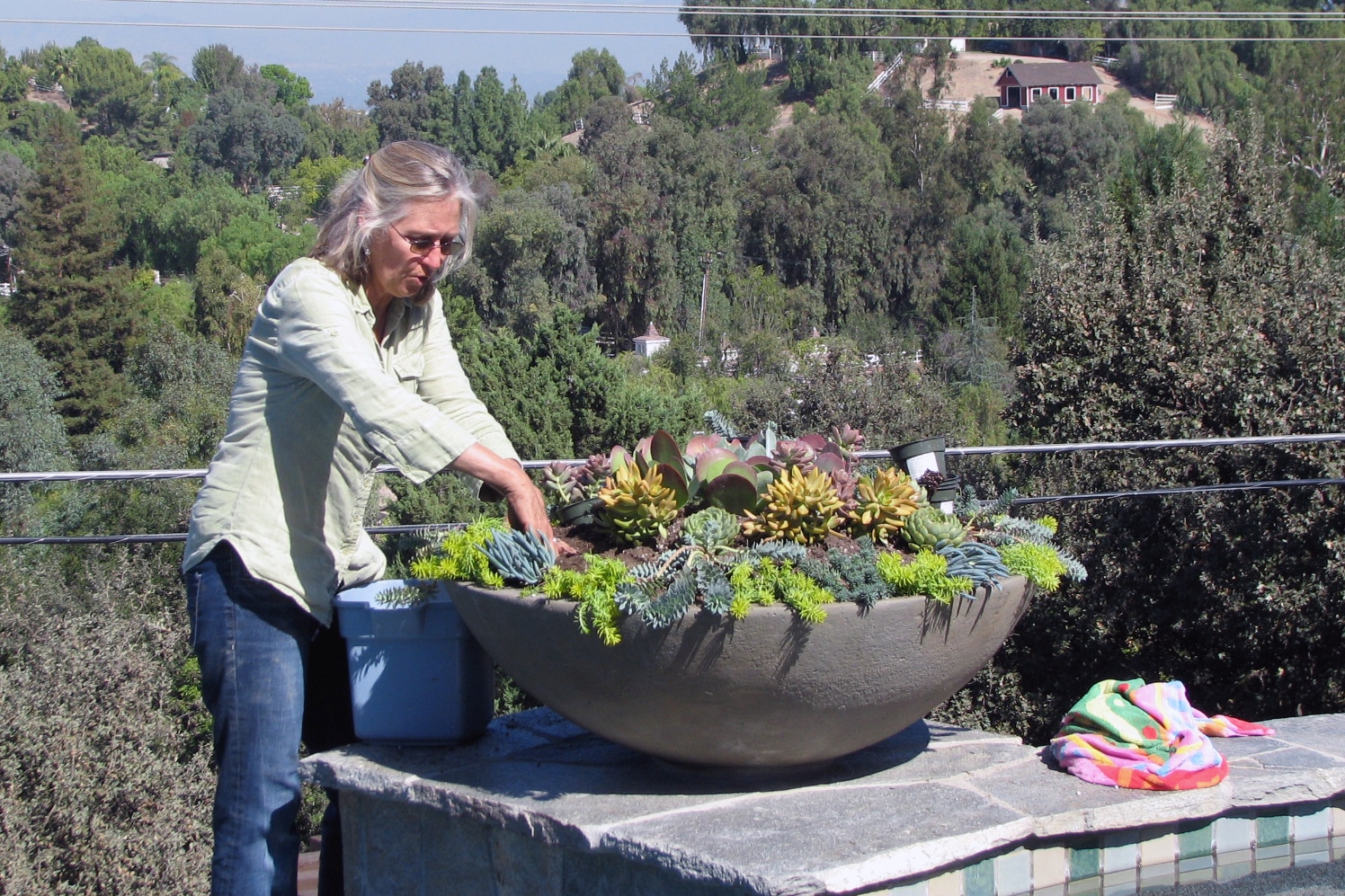
Here at Eye of the Day, Amelia Richardson, better known as Mimi, takes care of the succulent plantings around the store. An expert on succulents, she takes an overlooked wall fountain and transforms it into a beautiful container garden. This project is great not just for drought-stricken California, but any garden that gets enough sunlight throughout the year.

Here is a step-by-step guide to converting a fountain into a succulent fountain garden.

Step 1: Choose Your Vessel

DIY Succulent Fountain Conversion Garden Design
We chose an overlooked wall fountain as our container for this project.

Choose a fountain. It can be one meant to mount a wall, a standalone fountain, single or multi-tiered, or even a birdbath will do!

Step 2: Prep Your Container

Drain the fountain of water and make sure that any drainage holes are covered, if any. You can use a broken piece of pottery or terracotta. The soil will still shift so periodically check the draining that soil isn’t completely blocking it off.

You can also add a layer of rock gravel first before adding soil. If you’re using a birdbath, this step is a must.

Step 3: Add Your Soil

We recommend using cactus mix when planting succulents. It drains quickly which is good for plants that can’t sit in wet soil. We use EB Stone’s Organic Cactus Mix. If you live near Eye of the Day here in the Santa Barbara area, be sure to stop by and get some!DIY Succulent Fountain Conversion Garden Design

Step 4: Choose Your Succulents

DIY Succulent Fountain Conversion Garden Design
So much to choose from!

When picking succulents, it will really depend on the planter. On large planters, you can choose a focal plant that you can work smaller succulents around. For example: A large Echeveria or Aeonium in the center that is worked around with smaller accent pieces like Sedum morganianum. 

DIY Succulent Fountain Conversion Garden Design
Mimi doing some “shopping.”

Mimi Tips:

  • Have fun when picking succulents. Grouping like with like is also easier.
  • Color story: Jewel toned, all greens, chartreuses, blacks, cool tones versus warm tones
  • Textural: Soft, sharp, or hardy.
  • Shape: Round (Echeveria, aeonium, sempervivum), spiky (crassula, sansevieria), mix of large and small, tall and short. Senicio radicans and Sedum morganianum even mimic water flow as they drape over the edges.
  • Single type: Just one type of succulent for beginner planters. All rosette types are always pretty.

Step 5: Plan the Layout

Before you start the actual planting, place the succulents either on the ground or in the fountain as you imagine the final product. Here you can edit and rearrange as you see how it’ll all come together.

Sometimes planters can be organized and others more organic and wild. It will depend on the container and where it’s going.DIY Succulent Fountain Conversion Garden Design

Step 6: Start Planting

When removing a succulent from its plastic container, sometimes you’ll be transplanting to an area smaller than the soil around the succulent. You can remove much of the soil while still preserving the roots to get it to fit in the container spot.DIY Succulent Fountain Conversion Garden Design

Mimi Tip: Don’t be afraid to plant them close together. You can always leave space to let them fill out but getting into every nook and cranny helps to create its own ecosystem and that full growth actually slows down the propagation.

DIY Succulent Fountain Conversion Garden DesignBesides, you can always remove, replace and transplant—that’s the great nature of succulents. Succulents are hardy; they’re hard to ruin so press them into the soil. You can also use wet sheet moss to keep the plants moist and reduce the need for additional watering.

DIY Succulent Fountain Conversion Garden Design
Wet the moss before using. The moss helps keep succulents moist and is also decorative.

Step 7: Add Decorative Elements

Depending on the container get creative using shells, pieces of wood, rocks, broken pot or statue pieces, sea glass, etc. as added decorative material. If you prefer space between your succulents, these elements can help cover the soil.

DIY Succulent Fountain Conversion Garden Design
Mimi Tip: Firmly place the succulents into their spot–don’t worry, they’re resilient!

DIY Succulent Fountain Conversion Garden Design

Step 8: Final Watering 

Give it a quick but generous soak and wash off the container with any leftover dirt. With succulents you want to water once or twice a week depending on sun and weather conditions. Soil should dry out (not completely bone dry) between watering. If soil is still damp you don’t need to water just yet.

If you’re using a container that does not have a drainage hole like a birdbath, then you would let it go bone dry between watering.

DIY Succulent Fountain Conversion Garden Design
The top tier of this fountain plays with color and shape.

DIY Succulent Fountain Conversion Garden Design
Rosette shapes in different jewel tones are accented by sedum.

DIY Succulent Fountain Conversion Garden Design

Voila! You have a beautiful, water friendly, succulent fountain!


To check out another fun DIY project take a look at Design Rulz article on DIY Macrame Plant Hanger Patterns.
Paul Hendershot and Designing with Water Features

Paul Hendershot Garden Design Water Features

When Paul Hendershot and his trusty dog Chief walk through the door, our day at Eye of the Day becomes just that much better.  Paul likes to stroll through the store, seeing new products and picking the pieces he wants to show his clients. He’s funny and warm and stiletto sharp.

Paul Hendershot Garden Design Water Features

We were looking at his website one day and were pulled in by his remarkable, unique style.  He often works with clients in Ojai and given the heat and water problems particular to that area, we wanted to ask him about how he works within the inherent parameters as well as get a little background.

EOD: When did you become interested in landscape design and how did you begin?
PH:  I always had my own garden starting at a young age.  In my mid-30s I decided to be a landscape designer. I started by doing garden maintenance on my own. I read all the best books, such as those by Russell Page. Slowly people started asking me to help design their gardens and from there it took on a life of its own.

Paul Hendershot Garden Design Water Features

EOD: From whom or where have you drawn the inspiration for your style?
PH: Traveling, especially in Europe and noticing. Russell Page was the most dramatic influence as well as Sydney Baumgartner from Santa Barbara.

Paul Hendershot Garden Design Water Features

EOD: What do you want in a water feature and how do you include them in your designs?
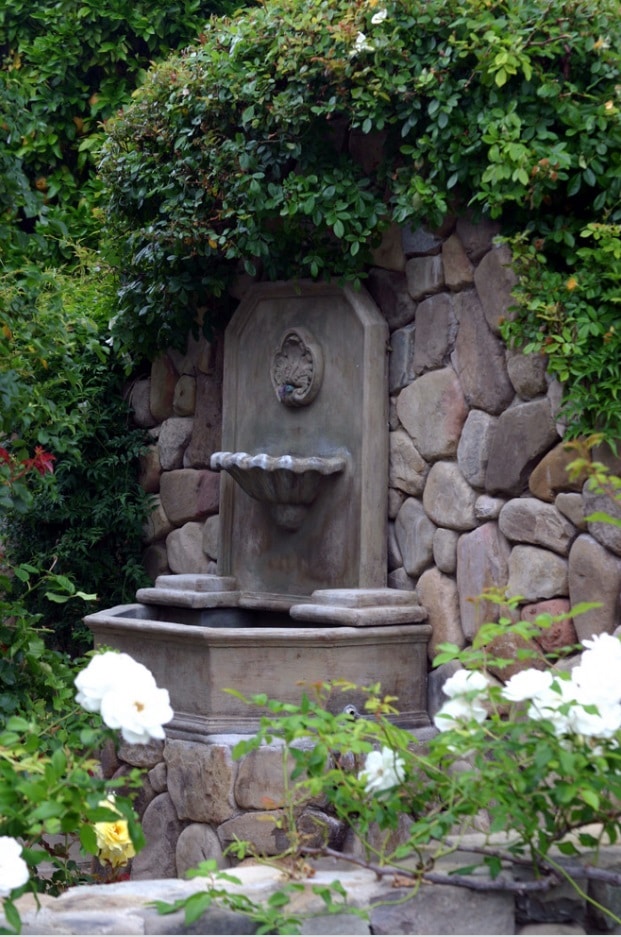
PH: I use water features in courtyards and places where people linger, the sound is great. I also use them in gardens to attract birds. It depends on the space if it is a wall fountain or more of a pool-like fountain.

Paul Hendershot Garden Design Water Features

EOD: What challenges in your designs and with your clients do you deal with when considering the drought?
PH: My biggest challenge with clients is to convince them to get rid of their lawns.  People are really attached to their lawns. Lawns use more water than trees, shrubs, etc., lawns are water guzzlers.

Paul Hendershot Garden Design Water Features

EOD: So what do you offer them as an alternative? How do you get them to give it up?
PH: I usually suggest courtyards with trees for shade and pea gravel as the surface and of course some kind of fountain. Pea gravel is inexpensive, good looking and allows the rainwater to return to the water table. With trees and shrubs, it has a very lush look. Also, groves of trees with pea gravel pathways and boxwood clipped in geometric shapes and pots as accents.

Paul Hendershot Garden Design Water Features

I think we need to change our aesthetic about gardens in California. We should use the examples of Spain, the South of France, Italy, and Morocco which often feature a courtyard with trees, shrubs, pots and water features. Connect them to the house and make outside rooms.

Paul Hendershot Garden Design Water Features

EOD: Are there any advantages or disadvantages to container planting?
PH: Depending on the space, containers, or I should say beautiful pots, add interest and beauty. Also, you can control the soil in a pot. You can make it more acidic or use the correct soil for orchids and unusual plants.  There is nothing more classic than a citrus tree in a beautiful pot.

EOD: Thanks for taking the time to talk to us Paul, we can’t wait to see you and Chief at Eye of the Day really soon.

View more of Paul’s work: Paul Hendershot Design 


California Garden Designer Jennifer Voss of Gardefacts

Jennifer Voss|Gardefacts|California Garden Design

Jennifer Voss of Gardefacts Designs Thoughtful and Practical California Gardens

In our continued series, Blueprint, that covers the work and projects of landscape and garden professionals, we are happy to count Jennifer Voss of Gardefacts in Santa Barbara, California as one of our most loyal designers. She has been using Eye of the Day as a primary resource for over a decade and she uses our products to highlight and enhance her California garden designs.

Jennifer’s love of horticulture began with visits to the Los Angeles County Arboretum with her grandparents, where they wandered through the garden and bamboo forests, feeding the plentiful peacocks and learning the names of the plants.

With Jennifer’s knowledge of plants, she became interested in design and plant care and studied botany in college and Landscape Design at UCLA.  She has visited hundreds of gardens throughout England, France, Italy and the United States and these influences help guide her in her designs.

Jennifer finds that the best method for working with a new client is to listen closely to how they describe their vision for their space and translate that to a design that is both beautiful and practical.  Check out the photos and you’ll see how Jennifer seamlessly incorporates Eye of the Day pots into her designs.

See more of Jennifer’s work at Gardefacts including more container gardens, design projects, and even edibles!


Designer Recommendations for the California Garden

Eye of the Day| California Plant recommendations|Aristida Purpurea

What to Plant? The California Garden Checklist

Many of the landscape architects, designers and trade professionals  that have been frequenting Eye of the Day over the years are now friends and we asked a few of them what plants they like to use and why when designing for their clients.

Rick Button of Rick Button Landscaping

Some of Rick’s favorites:

  • OLIVES – They are simply beautiful in leaf, form and symbolism. I can make a case for them matching up with any vernacular of architecture.  They belong here.
  • AGAVES – Where I am allowed to include them, I am always pleased. They are pure sculpture. Beautiful color. Put them with anything.  They steal the show.
  • CURRY – That gorgeous little shot of silver. Put it right next to a vibrant yellow green and you do not need another color in the garden. I keep them cut close without ever blooming and they become big billowy mounds.
  • ROSES – Always.
  • BOUGAINVILLEA – Always.
  • CITRUS – Always.

Puck Erickson of Arcadia Studio

I am going for Aristida purpurea.

  • PURPLE THREE-AWN – One of my favorite California grasses, it is worth the weight as it settles into the landscape. A great substitute for the invasive Mexican Feather Grass which should never be planted. Its delicate texture and subtle color picks up our afternoon light and it moves easily in the wind.

Bridget Walker of Arcadia Studios

Bridget also asked some of her colleagues for their favorites:

  • FRUITLESS OLIVE – A beautiful evergreen tree with silver green foliage. Olives are a great choice for drought tolerant landscapes; they are low water usage, love full sun and can be planted in many forms.
  • CLUSTERED FIELD SEDGE – A low-growing native grass commonly used as a drought tolerant lawn alternative. Perfect for informal lawns and meadow gardening
  • GIANT ORANGE NODDING PINCUSHION. A low mounding South African Native with course green foliage. Spring brings spectacular orange blooms 4-6″ wide.  Great in the green or for cut flowers for the home.

Sally Farnum of S E Farnum Associates

Sally gave me a list so long I had to make my own choices from her list:

  • CEANOTHUS “RAY HARTMAN”. Pale blue, fragrant blooms, it requires little water, no soil disturbance, no fertilizing, no drip and no application of soil amendment.
  • LANTANA “CONFETTI”. A shrub-type Lantana that loves the sunshine, it produces masses of flower clusters in yellow, pink, purple and wine-colored hues, it is drought and deer-resistant.
  • Many roses are cultivated for low water use, such as Meidiland, drift roses, knockout roses and some David Austins

If you are interested in more suggestions for drought-tolerant plants, please let me know: I have more recommendations for our friends.

Photo Credit: Courtesy of Arcadia Studio 


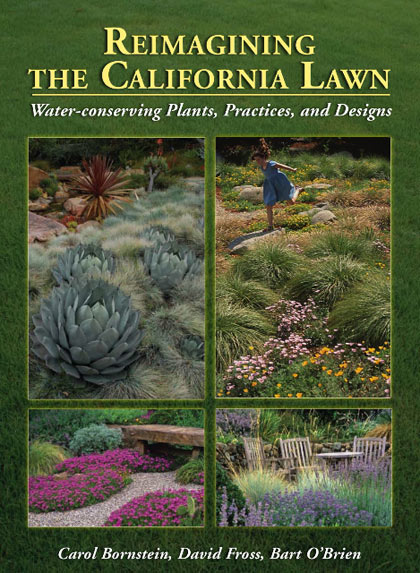
Book Review: Reimagining the California Lawn

Eye of the Day|Reimagining the California Lawn|drought garden

Book Review – Reimagining the California Lawn: Water-conserving Plants, Practices, and Designs

Continuing on a road we have just begun to travel, this month’s book,  Reimagining the California Lawn: Water-conserving Plants, Practices and Designs gives us another look at drought tolerant plants from around the world and offers design ideas and practical solutions to complement our Mediterranean climate.

From greenswards and meadows to succulent and kitchen gardens, this book presents alternatives to the traditional lawn that can reduce water use, beautify the landscape, and attract birds and butterflies. The horticulturist authors of Reimagining the California Lawn, Carol Bornstein, David Fross, and Bart O Brien, wrote the award-winning book California Native Plants for the Garden.

Eye of the Day|Reimagining the California Lawn|drought garden
“After considering the resources and maintenance that most California lawns demand – from heavy irrigation to regular applications of fertilizer to frequent mowing with power equipment – one conclusion becomes inescapable: we need to find alternatives to turf grass that are more environmentally sound.”

When you’re ready to remove or down-size your lawn, this inspiring book will be the perfect companion to help with the process. Reimagining the California Lawn is illustrated with more than 300 color photographs and offers a variety of plant palettes to choose from as you begin to create a more sustainable landscape.

The book’s publisher, Cachuma Press was founded by John Evarts and Marjorie Popper and has been a California corporation since 1991. Cachuma is a place name in the Santa Ynez Valley, where Cachuma Press is located. “Cachuma” comes from the name of a Chumash village on the Santa Ynez River which the Spanish spelled Aquitsumu. The Chumash word for the village, ‘Aqitsu’m, means “Constant Sign.”

For an interesting and cool plus, John and Marjorie were some of our first friends in the Santa Ynez Valley when our family moved there in 1991 and their daughter, Naomi went to school with, and was great friends with our daughter, Daisy.

Photo Credit: Image via Cachuma Press


Eye of the Day Installations at the Pasadena Public Library and Santa Barbara Museum of Art

Eye of the Day| Santa Barbara Museum of Art| Installation

Eye of the Day Installations at the Pasadena Public Library and Santa Barbara Museum of Art

Pasadena Public Library and the Garden Club

On April 23rd and 24th, the Pasadena Public Library was transformed into a botanical paradise. “Reflections – A Centennial Celebration”,  was presented by the Pasadena Garden Club. The purpose of the Garden Club of America flower show staged within the Library was to set standards of artistic and horticultural excellence. Judges from all over the United States offered their evaluation of the individual entries.

Eye of the Day|Pasadena Public Library| InstallationMyron Hunt,  one of the club’s founding members, was the architect for the Pasadena Public Library and the architect for the Casita del Arroyo, a community meeting house, with a water demonstration garden and butterfly sanctuary, which has been the major community project for the Pasadena Garden Club since it was conceived, designed and built as a public works project during the Great Depression.

An Eye of the Day favorite landscape architect and member of the Pasadena Garden Club, Sally Farnum of SE Farmun Associates, designed two succulent gardens for the front area of the library and chose two Gladding McBean Oil Jars in a vibrant blue green color to frame the library entry.

We think they should be there permanently!

Eye of the Day and the Buddha at The Santa Barbara Museum of Art

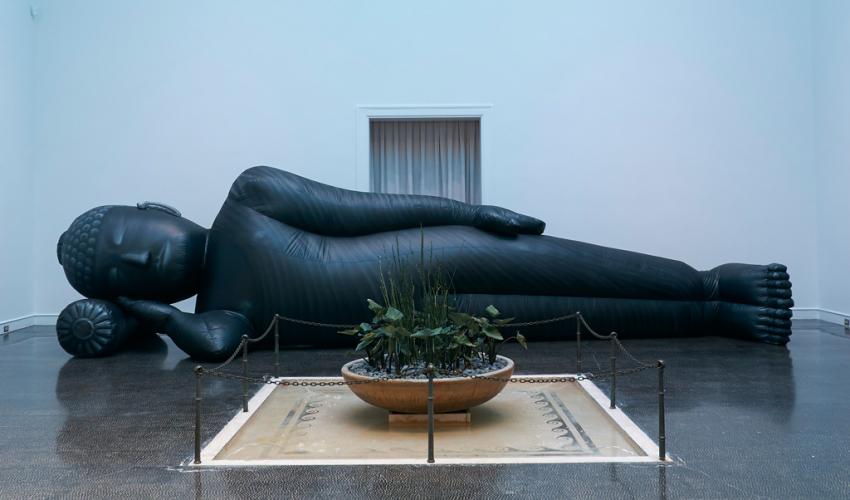
Recently our good friend Virginia Hayes, curator of Lotusland, sent Julie Jordan, Curator of Contemporary Art at The Santa Barbara Museum of Art to Eye of the Day to choose a container for an upcoming exhibit.  Julie chose the pot and Virginia planted it with lotus.  Now visitors entering the Museum’s historic Ludington Court will see the finished product next to which is the focus of the exhibit, a 26′ long and 6′ high inflatable, reclining Buddha.  The sculpture is the work of Lewis de Soto and is entitled Paranirvana (Self-Portrait) and the exhibit will be in place through July 31st.

Eye of the Day| Santa Barbara Museum of Art| InstallationWe are so fortunate to be a part of this great installation!