Montecito Landscape Garden Design – The Cullen Meadow

Garden Design | Montecito Landscape | Cullen Meadow

Montecito Landscape Garden Design – The Cullen Meadow

Lisa and Chris Cullen of Montecito Landscape are long time customers of Eye of the Day. We feature one of their recent designs as they transform a large lawn to a walking garden with a central water feature using a custom Eye of the Day fountain conversion.


Garden Design | Montecito Landscape | Cullen Meadow
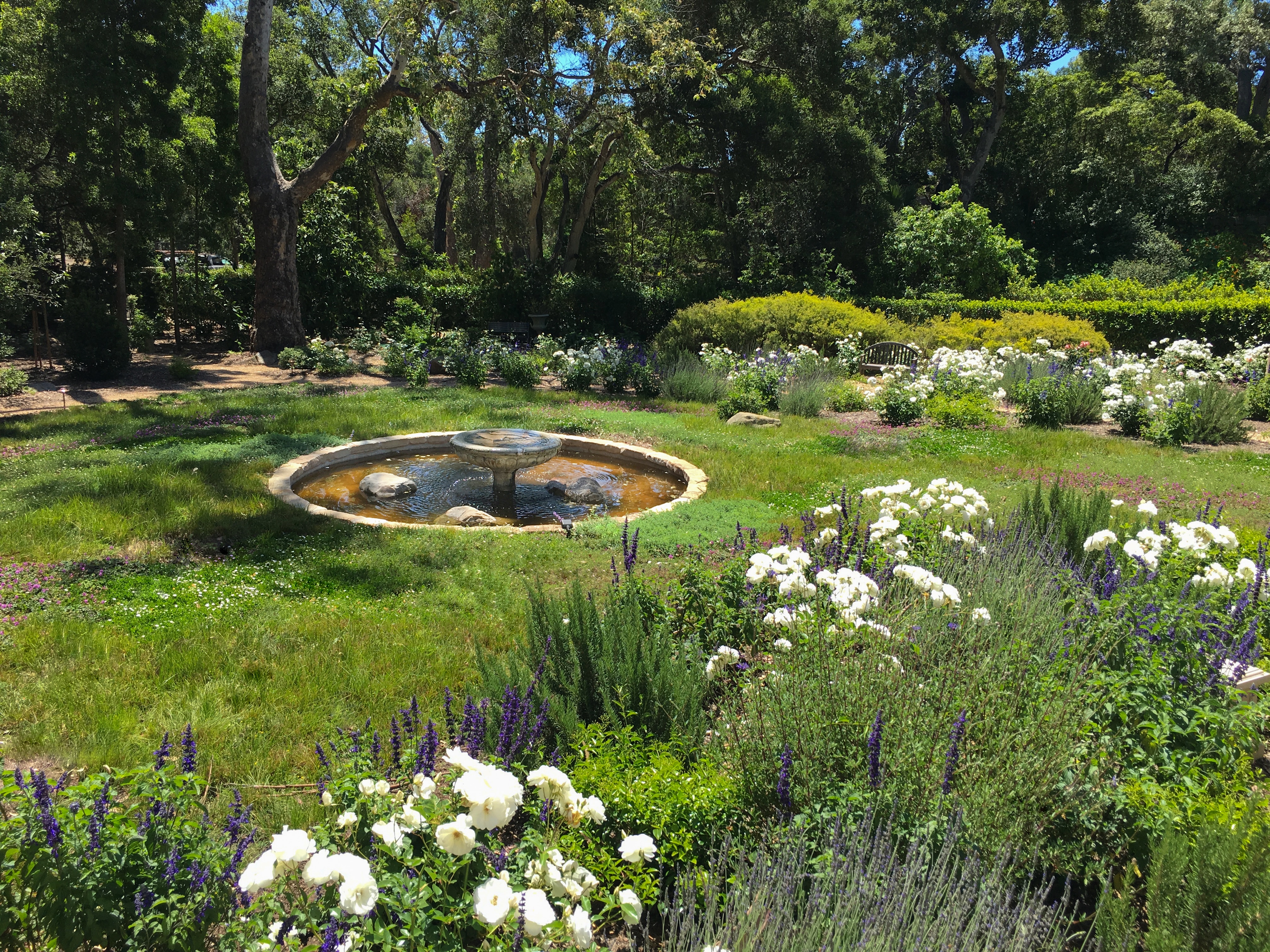
The pond and fountain is the centerpiece of the garden design.

Garden Design | Montecito Landscape | Cullen Meadow

Tell us a little about Montecito Landscape and this project. 

Montecito Landscape is celebrating 47 years of creating gardens in Montecito and beyond this month! We are a small, boutique company specializing in landscape design and installation. This particular project is one of our favorites. The client was very involved in the development of the design and she trusted us when we presented an out-of-the ordinary idea.

What was your client’s goal for this garden?

The area was a huge, dead lawn and with the drought and water restrictions it was going to be difficult if they wanted to keep it looking good. They wanted something drought tolerant but beautiful and interesting. Initially, the client wanted lawn, but we wanted to do something completely different from the norm. They trusted our vision and agreed to go along.

Garden Design | Montecito Landscape | Cullen Meadow
Pathways invite you to meander throughout the garden.

Choose a path, Montecito Landscape created destinations throughout the garden.

What was your initial vision for the landscape?

We wanted to eliminate the lawn all together and create a “walking garden” providing destinations that would invite meandering and discovering. We also wanted to take advantage of the outer perimeter of the property by removing the Pittosporum hedges that were cutting off what became “the forest” from the rest of the property. We created pathways and destinations in this area that connected to the main garden, so that one could enjoy it from every vantage point.

Our innovation was “The Cullen Meadow” which is a drought tolerant alternative to lawn. The “meadow” consists of drought tolerant, flowering plants such as Santa Barbara daisy, Nepeta, Carex and others that can be walked on and mowed like a lawn, but that needs only occasional maintenance. Plus, it is way more interesting than a lawn!

The idea for the central pond came from the client when she sent us a photo of one she saw in England. The minute we saw it, we knew this was exactly what this garden needed. We also needed a fountain to mitigate the noise from the street and the pond created the perfect way of integrating a water feature into the design.


Garden Design | Montecito Landscape | Cullen Meadow
Another discovery in the garden.

Garden Design | Montecito Landscape | Cullen Meadow
Another water feature lined with tile.


Were there any unique problems that came up during the design or installation?

Working out how to make the “Cullen Meadow” something that could be used as a lawn and how to lessen the street sounds and visual distraction of cars going by without blocking the distant views.


What would you describe as your garden design aesthetic and how do you work with your client’s own vision for the landscape?

We work with Nature not against her. We design gardens that are cohesive from conception to the finished product. A garden should flow, it should “feel right”. They should have a theme, a vibe and a sense of place. Our designs take the entire property into account, taking advantage of the unique qualities and features of that specific property. We begin by looking at what makes the space special, what are the assets and work out how we can use those features to their best advantage. We also believe that drought tolerant gardens can be beautiful. They can have roses, camellias and even hydrangeas if planted in the appropriate location and using correct gardening technique.

We love to collaborate with the client. We spend time with them, driving around if needed, pointing out various gardens so that we can tune into their specific aesthetic and discover exactly how they envision using the garden. We want our clients to get out and be in their gardens so we design for the individual. Gardens are for living and we know we have been successful when we hear how much our clients love their new landscapes.

Garden Design | Montecito Landscape | Cullen Meadow
In the background, the network of pathways is visible.

Garden Design | Montecito Landscape | Cullen Meadow
The water thirsty lawn is replaced by the Cullen Meadow.


For the garden décor, why these pieces?

The fountain needed to be simple and the correct scale if it was to work in the pond. The pond is 15 feet across and is the main feature of the landscape design, so the fountain needed to be perfect. Brent Freitas at Eye of the Day helped us in selecting the exact right fountain and we (and the client) are very happy with the result.

Garden Design | Montecito Landscape | Cullen Meadow
The work done in the outer perimeter of the garden.

Garden Design | Montecito Landscape | Cullen Meadow
Inspired by another garden, the clients request a pond fountain.

What was your favorite part of this project and design?

The central pond, fountain and the “meadow” are what make this garden so special. We knew the house and the location deserved something special and I think we succeeded. I love water features, ponds, and fountains and believe that every garden needs one or two for the visual and musical sound aesthetic. Fountains and water features can be “tuned” to fit the type of effect you are trying to create. And fountains are not just for aesthetic reasons! A fountain brings birds and bees to a garden and we all know how important the birds and the bees are!


Visit Montecito Landscape to view more of their work.

Book Review: Planting in a Post Wild World

Book Review Planting in a Post Wild World

BOOK REVIEW: PLANTING IN A POST-WILD WORLD

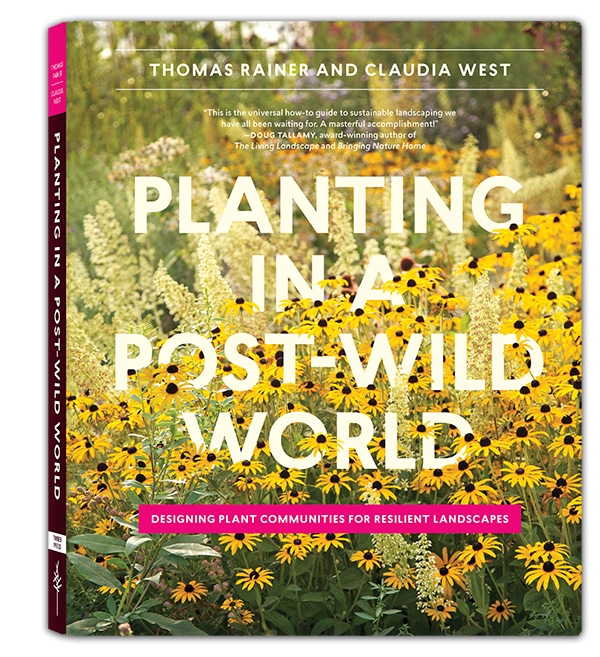
Though most of their readers might be other designers, Thomas Rainer and Claudia West’s Planting in a Post-Wild World offers plenty of information for non-professionals as well. The book shows how to design and maintain an ecological landscape and does so in a beautifully, clear way. One of the most helpful sections of the book suggests viewing a landscape in four different layers:

  1. Structural Layer: comprised of the year-round key parts of a design. These components should always be maintained, though replaced if needed, and kept clearly defined as they are the basis of the design.
  2. Seasonal Layer: waves of color/texture provided by each season’s visually dominant plants. These are maintained by treating them en masse, thinning or spreading as necessary.
  3. Groundcover Layer: provides the main diversity of the planting and most of the ecological function. This layer does not contribute noticeably to the aesthetic design, except as a living mulch. It’s managed by retaining and adding diversity as much as possible to maximize the health of all the plants in the landscape.
  4. Gap Fillers: self-sowing plants throughout the design and encouraged to set seed. This builds up a seed bank of desirable plants which will ideally sprout to fill any gaps that occur.


Book Review Planting in a Post Wild World I love how the authors separate the main aesthetic contributors (the first two layers) from the main ecological contributors (the last two). That makes it much easier to create a landscape that is strong in both beauty and functionality.

For a gardener, unfamiliar with ecology, this book is a great primer.


Coco Rose Design | Wedding Romance & French Pottery

Coco Rose Design | Floral Design | French Pottery

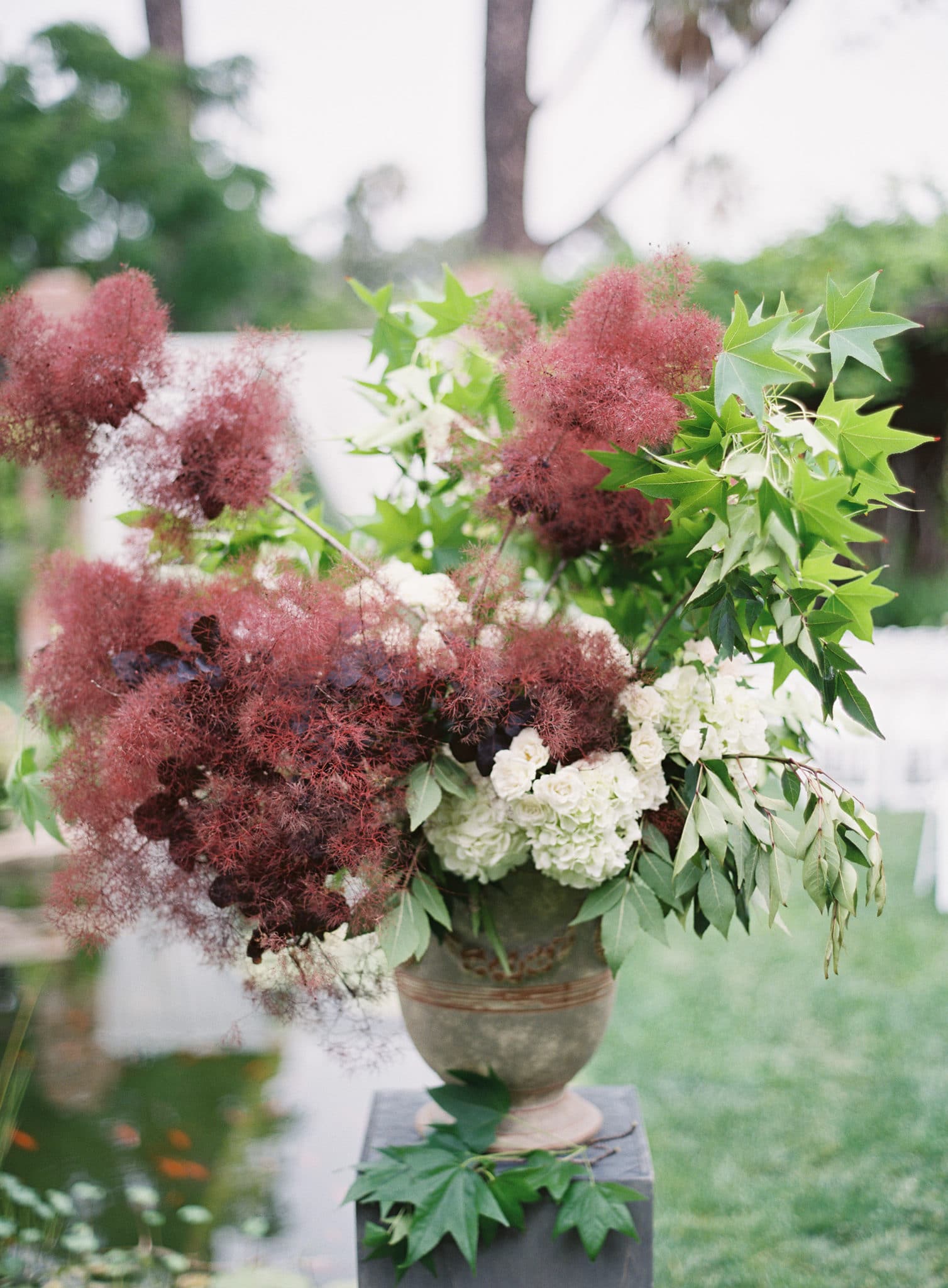
Nina Kincaid is the person behind Coco Rose Design, a floral design company specializing in elegant and charming weddings. Her Instagram account is a constant feed of beautiful floral arrangements from pretty and sweet bouquets to bold and bright centerpieces. Based in Santa Barbara but also drawing from her Hawaiian roots, Nina’s work is marked by flowers and plants that are both romantic and environmentally conscious. Her floral design for a wedding at El Encanto in the foothills of Santa Barbara illustrates this aesthetic. From centerpieces in the couple’s color palette to combining Classic French Anduze pottery in a simple antiqued grey with a striking arrangement of smoke bush and liquid amber. Nina graciously answered some of our questions.

Eye of the Day: Tell me a little about yourself and how you decided to pursue a career in floral and event design.

Nina Kincaid: I have always had a passion for plants and flowers as well as a great love of art, I discovered floral design as a way to express my art while working with a medium I feel deeply connected to. I was born and raised on the Big Island and then attended UCSB. My parents had a flower farm growing bird of paradise, anthuriums and tropical foliage, so from an early age I was always around flowers. At UCSB I studied Art History and Italian Studies while working in nurseries and flower shops which eventually led to discovering the wedding and event floral business. I was immediately hooked- it was exciting, challenging, creative and I dove in.

EOTD: How does your upbringing influence your design approach? Any rules you live by in your work?

Nina Kincaid: I try not to restrict my designs to any steadfast rules, but there are patterns that I seem to follow. Color is really important to me in my work. My background in studying art influences my designs in many ways- composition, balance, depth, color theory, etc.

EOTD: Tell me about the wedding you recently worked with at El Encanto in Santa Barbara?

Nina Kincaid: This wedding was for a couple from San Francisco. The bride and I really clicked over the phone and via email. She and her (now) husband have great style and I was so happy to work with a couple that was open and excited to use bright vivid colors. We came up with this color palette that was perfect for the end of spring/start of summer- watermelon and corals with hints of peach and burgundy for drama and dimension. They were a dream to work with and not to mention the photographer they hired is one of my favorite people in the business, Mike Radford.

EOTD: Did your clients have a specific idea for the flowers and how much does your own personal aesthetic come into play?

Nina Kincaid:The client did have a specific idea for the flowers. They love loose, organic, gardenesque, seasonal floral design which plays very well to my aesthetic.

EOTD: What was it about the French Anduze vases that made you choose them? 

Nina Kincaid: I am in LOVE with the Anduze line of vessels. I think I have 3 pairs in my collection now, and use them almost weekly. The proportion of the urn, the terracotta, the glaze, the ornamental swag, everything about them calls to me. They have an understated earthy elegance that really pairs well with my designs as well as the beautiful Santa Barbara venues were my events are hosted.

EOTD: What was your favorite part about designing for this event?

Nina Kincaid: My favorite part about designing for this event was the use of bold color and the smoke bush that I got to work with which is featured in the grey Anduze urns. It is such a magical branch. It’s a beautiful deep rich burgundy plum leaf that bursts into these clouds of fluffy wine colored puffs. The season is fleeting, just a few short weeks and I was over the moon that I got the opportunity to design with them. It was super fun!


To see more of Nina’s work: Coco Rose Design, and follow her on Instagram!
Photo Credits: Mike Radford Photography


Garden Design Magazine: Spring 2017

Garden Design Magazine Spring 2017

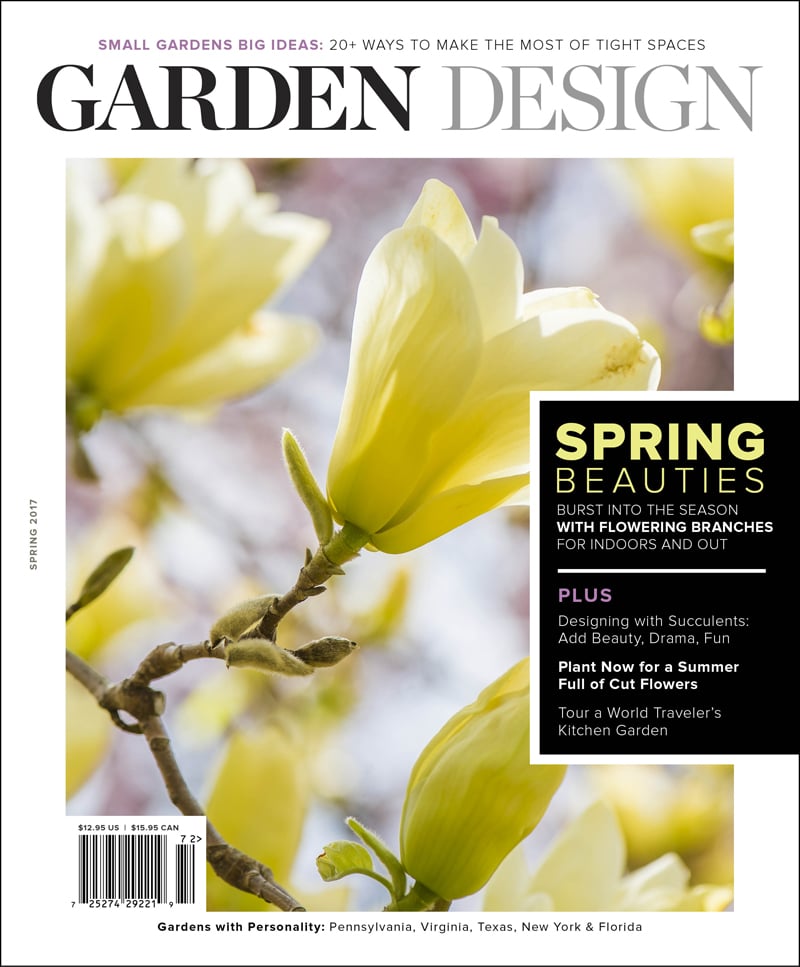
Garden Design’s Spring Issue Now Shipping – Get Yours!

Subscribe before April 15th, 2017 and get this issue free when you subscribe! Go to

Garden Design Magazine Spring 2017

If you haven’t seen Garden Design magazine yet, the current issue is a great one to start off with!

  • There are no ads in Garden Design. Yes, you read that right—no ads.  Just 148 pages of beautiful gardens and plants delivered to you each quarter. These are more like books.
  • Many of the stories unfold over 8 to 20 pages. So you get the behind-the-scenes look at topics you care about most—designing with plants, landscape design, container gardens, kitchen gardens, houseplants, and more.
  • Each magazine is collectible and coffee table worthy. It’s filled with large, bold photography so you can appreciate the details of gardens that make them great.

Plant lovers will love this issue:

  • Daffodils: Here’s what you need to know about planting, growing, and enjoying daffodils. Wait until you see the photos!
  • Learn how Annie’s Annuals become one of the most trusted gardeners in America.
  • Flowering branches: The parade of blossoms from flowering branches starts in February and continues through May and beyond. Get tips for growing, arranging, and harvesting them

There is so much more in this issue! Here is what a recent subscriber said:

“I saw a copy of Garden Design magazine late last year and was absolutely impressed with the in-depth articles and the beautiful photography. This past spring I became a subscriber and love every single page. It is beautifully presented and I love that there are no ads. I don’t subscribe to too many magazines, but Garden Design is worth every single penny. I highly recommend it.”

Subscribe before April 15th, 2017 and get this issue free when you subscribe!

Go to: 

Photo Credits:

Daffodils- Georgianna Lane
Annie (Nursery display garden)- Meg Smith
Flowering branches’ Ngoc Minh Ngo​


Groundskeeping: In a Glazed Daze in Italy

In a Glazed Daze in Italy: Glazed terracotta pottery

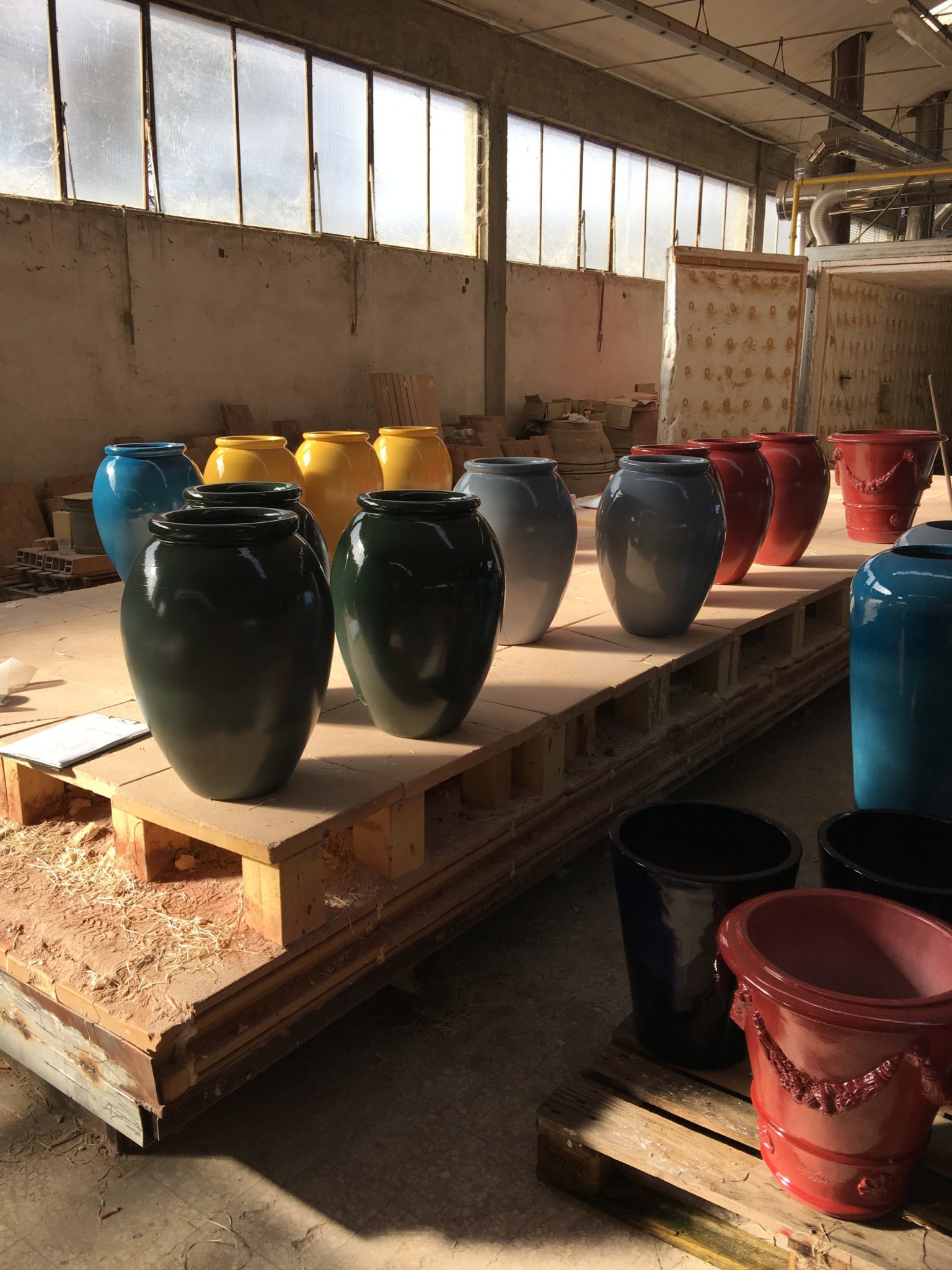
From concrete planters to Italian terracotta pots, custom glazing has been one of Eye of the Day’s strengths for over fifteen years. We are sometimes amazed by the wild colors envisioned by one designer after another for special colors or finishes, but always try to provide what each designer or client requests. Either the beauty, quality and history of the colorful kiln-fired glazes produced by our most treasured American manufacturer, Gladding McBean, or hand painted and stained Greek pots made the same way for millennia will fulfill most requests.

As the largest distributors in the USA of the famed French Provencal pottery known as Vase Anduze, we have a wide selection of colors and sizes. We ship them from New York to San Diego and Washington state to Florida. Colorful pottery is the finishing touch:  the eyeliner, pearls and earrings for your home and garden.

Last month my son had his winter break and was able to go to the Terrecotte San Rocco factory in Italy with me to see the glazes they have started to produce. Part of preparing our children for the world and possibly to follow in our footsteps is to share our day to day labors. I wanted to take Ben to the factory so he could see it and be part of the process as well as to show him where this historic tradition of terracotta pottery comes from. We Segwayed our way around Rome seeing sites with historic statues, fountains, and pots from past millennia. The context was not lost on him and when we got to the Rocco factory, he was as dazzled with the new colors as I was.

For more than five years our largest factory, Terrecotte San Rocco has been experimenting and testing glazes to add to their impressive line of fine, frost proof terracotta pottery and their range of colors is magnificent and beautiful. Now we can offer all the great shapes in colors, including custom colors, to our clients. Don’t be afraid to dream up impossible colors for all of Rocco’s fabulous shapes.

We’ll dazzle you!

Brent


Lotusland Profile: Eric Nagelmann

Lotusland profile | Eric Nagelmann

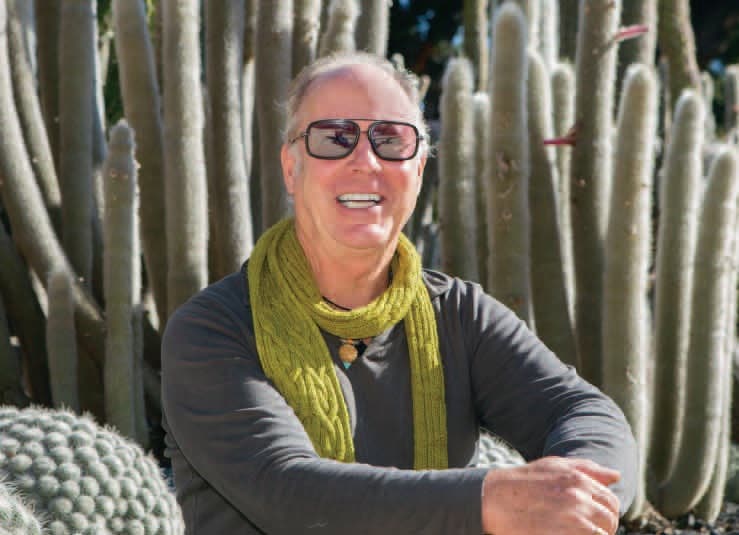
Eric Nagelmann* was once somewhat of a shy violet. One of nine children raised a stone’s throw from Lotusland, he spent time quietly tending his family’s garden as a child. He is rarely described as shy today, as he is not afraid to lend his voice as a champion for things close to his heart. Lotusland is grateful to be among Eric’s passions. He has gifted us his design work pro-bono, as well as supporting many other local organizations including the Carpinteria Bluffs, the Carpinteria Arts Center, Santa Barbara High School’s Green Academy, Elings Park and Planned Parenthood.

A preeminent landscape designer whose international work and reputation are unparalleled, Eric’s generosity, energy and impact at Lotusland are immeasurable. Current professional projects include the Goldstein residence in Los Angeles, which was recently bequeathed to the Los Angeles County Museum of Art. Eric is leading a Lotusland field trip to the residence on February 10, 2017. Another of Eric’s recent projects is Cuixmala, a glamorous bohemian resort in Careyes, Mexico.

Eric was first introduced to Lotusland by a friend in the 1970s. He recalls a meeting with Madame Walska, who greeted him warmly and invited him to enjoy the property, long before it became open to the public. That visit left an impression that led to Eric’s deep involvement as a long-time donor and designer at Lotusland. He has gifted his talents on three significant gardens. First was the creation of the Dunlap cactus garden in 2003, which he fondly refers to as “Salvador Dali goes to the desert.”

In 2015, Eric created the Palmetum, by reimagining the central garden and walkway between the water garden and the front of the historic Reginald Johnson-designed home and opening up an important 514′-long architectural axis reaching south to the wishing well. Most recently, Eric renovated our insectary garden, now a humming haven for beneficial insects and a valuable teaching tool for our Sustainable Horticulture Program. While the cactus garden is arguably Eric’s biggest achievement at Lotusland, the insectary represents Eric’s deep connection to the garden. It is a garden that, like Eric, warmly draws you in, creates a buzz of positive activity and has a far-reaching benefit for the entire property and our community.

In spring of 2017, when the insectary is in full bloom, Lotusland will celebrate with a ribbon-cutting and reception. We hope you will join us to help recognize Eric, and please say thank you when you see him in the garden!

By Rebecca Anderson

*This profile was originally printed in the Winter 2017 Lotusland bulletin. Text and profile photo courtesy of Lotusland.

Photo Credits:
Creative Commons, Cacti and euphorbia garden, Lotusland,by brewbooks, is licensed under CC BY-SA 2.0