Elements of French Garden Design

French Garden Design

Elements of French Garden Design

French garden design Versailles
The epitome of classic French garden design at Versailles.

The classic French garden invokes images of bright lavender, ordered gravel paths, calm reflecting pools, symmetrical planting beds of boxwoods and shrubs—maybe a stone bench waiting for someone to rest on it. The Old World charm of French gardens fits beautifully with classic country homes and chateaus or today’s modern styles. Designing gardens in the French style is going to be different from other types of landscape design but it is surely influenced by other styles.

French garden design closely borrow from Italian landscapes with their similar themes of symmetry. Moroccan courtyard gardens reflect the need for cooling elements and protection from the elements. Many French gardens include a water feature. Mediterranean gardens almost always contain terracotta pottery while French gardens use classic wood planter boxes or Anduze vases. English gardens with their exuberance for abundance and flowers are the inverse of the cooler color palette of French garden design but share a love for native elements. All these developments influenced each other to give us the classic French garden.

The Basic Elements of a French Garden

French Garden Design
Chalk lines mark the planning stages for this large formal French garden.

Below are the basics that most French gardens incorporate, and we will discuss them in detail as you consider this style in your own landscape.

  • Order and Symmetry
  • Neat and Defined Spaces
  • Cool Color Palette
  • Stone Elements

Order Over Nature

Above all else, symmetry and geometry are the main hallmarks of French gardens, imposing order over nature. The epitome of this mathematic approach are the gardens at the Palace of Versailles. This is the best in formal French garden design and easily recognizable with its symmetrical gravel paths, Versailles citrus planters, ordered groves and neat topiary, and principle axis from which the design flows. All French gardens have a little Versailles in them.

The ideals of a French garden reflect the history of France itself. In the 17th century, King Louis XIV’s palace at Versailles was the seat of power. Control was reflected in all aspects, even nature:

By shaping nature, men can exert control over their surroundings and create small paradises modeled after their own ideal of beauty… Louis XIV became an orchestrator, not only of nature but also of how visitors viewed this landscape. The gardens of Versailles are not natural; rather they represent the triumph of man over nature. As the Sun King, he imposed absolute control over nature, subjugating wilderness to his own ideal of beauty. (Robert Schwartz)

French garden designers worked like architects, extending the concepts of geometry, optics, and perspective to the garden. Gardens are sectioned off by tall hedges and topiaries the way walls define spaces. Topiary is an extension of that control. Often trimmed into ornamental shapes, like balls and triangles, man is literally defining the growth and shape of the plant. These are placed in rows along the main axes of the garden and line pathways or border sections. Those pathways are laid out like hallways that flow from one “room” to the next. The rooms being grove sections, planter beds, or lawns. Trees are planted in the same way, identical ones lined up neatly in a bosquet, a formal plantation of trees. These are planted to line pathways and after growing high, the tree tops are trimmed in neat shapes. (Wiki)

The design is all about perspective because French gardens are meant to be viewed from all angles, even above from a terrace or window of a chateau. Many famous French gardens, like the one at Chateau de Villandry, are overlooked by the main property. The principal axis is crossed by one or more perpendicular perspectives and alleys. The eye is always drawn to a central feature whether a pool of water, a chateau, even a statue.

French Garden design gravel
Gravel pathways, central water feature, and cool colors. (Photo courtesy of Paul Hendershot Design)

Neat and Defined Spaces
There’s a saying that there is a place for everything and everything in its place. French gardens are the neat and tidy students of garden design. The main plan is to create an overall sense of order and control. From there, the ground level does the bulk of the work creating elaborate parterres, or planting beds. These parterres are the most easily recognizable aspect of  French garden design. Often in the shape of elegant squares, ovals, circles, or scrolls, these patterned planting beds complement not just the design, but can be seen from the main house or building. They are usually edged with low boxwood or other shrubbery that help define space and keep edges neat.

Planting beds tend to be more complex closer to the main structure, filled with artfully designed boxwood because they can be easily seen from the main structure or terrace. Farther out, the planting beds become simpler, usually enclosing grass or a water feature.

Whether small or expansive, immaculate lawns continue the theme of ordered nature and create a nice balance against more elegant and intricate details. Lawns are often rectangular or square, creating lines of interest across the axis and define sections of the garden. Pathways, often made of gravel, border garden elements like lawns and create avenues to travel throughout the design.

Cool Color Scheme

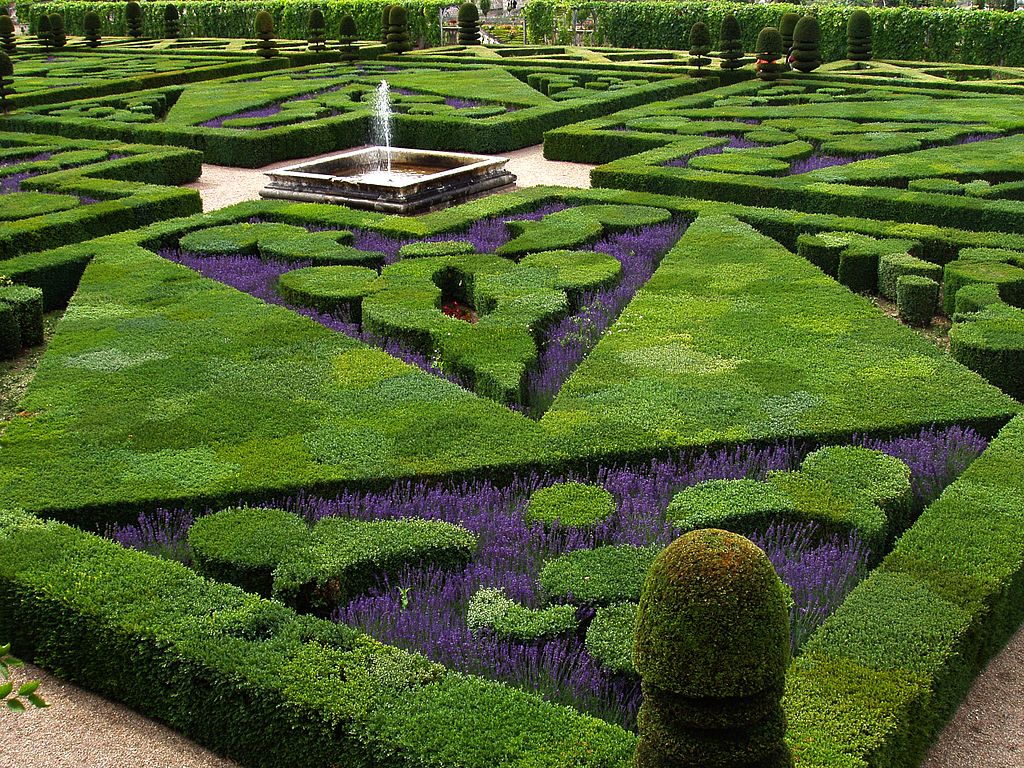
French gardens usually incorporate a cool color palette that emphasizes greens and whites—think boxwood and stone gravel pathways. Rows of lavender bring in purple and reflecting pools the cool blues. Because ornamental flowers were rare in France in the 17th century, the color palette was limited. Trees, bushes, and topiary had to stand out in other ways, so they were trimmed in geometric forms. For décor, the greys and blues of an iron bench, pergola, or trellis reinforce the cool color scheme. Introducing water features like reflecting ponds, pools and fountains plays up the geometric patterns as they are often in circular or rectangular shapes.

French garden design lavender hedges boxwood
Neatly trimmed boxwood and hedges in bright green. The dark purple of the lavender continues the cool color palette.

Stone Elements

Whether seen in gravel paths, statuary, or terraces, stone is an easy element to incorporate into a French garden design. It provides balance against the plantings and underpinnings to the entire design. Planting beds can even be edged with stone. Pathways enforce order by controlling the route of a visitor to the garden and continues the aspect of geometry with straight lines across and perpendicular to the axis.

Stone garden elements like statues, columns, or follies also provide points of interest throughout the garden design. They are often the central feature of enclosed groves or mark intersections on pathways. They can also line pathways, interspersing trees and plants in a repetitive and ordered pattern. Sculpture and statuary in classic French style are of mythological figures like cherubs, nymphs, goddesses, and warriors.

Gravel pathways, stone planters and statuary, as well as stone edgings that run along hedges.

Stone is also used for more than decorative elements and often makes up the all-important terrace where one can enjoy the view of the whole design. Stone can also border boxwoods and planter beds. When incorporating water elements, stone coping encloses pools and fountains.

French Design for All

The hallmarks of a French garden can be seen in more formal and strict gardens like the grand ones at Versailles or as simple as a potager, or kitchen garden. Planting beds are sectioned off for specific herbs and plants meant for cooking. Potagers are more practical, but their design borrows from the rich tradition of French formal gardens. Upkeep will require regular maintenance for any garden using this style. Provencal style gardens overflow with color and have a charming wildness to them, but also incorporate the same elements of stone, boxwood, and water features. Precise care and control are required for traditional French design, but the results are fantastic. French garden design continues to attract garden lovers and inspire gardens all around the world.


References:

Wikipedia contributors. “French formal garden.” Wikipedia, The Free Encyclopedia. Wikipedia, The Free Encyclopedia, 26 Jan. 2018. Creative Commons 3.0

Robert Schwartz. “France in the Age of Les Misérables, Formal Gardens.”

Photo Credits:

Creative Commons. CCo Creative Commons. Pixabay.
Creative Commons, French Formal Garden in Loire Valley by Aernoudts jean is licensed under CC BY 3.0.


Your Potager | Making a French Kitchen Garden

French kitchen Garden - Potager

A Potager – Your French Kitchen Garden

Votre Potager Francais

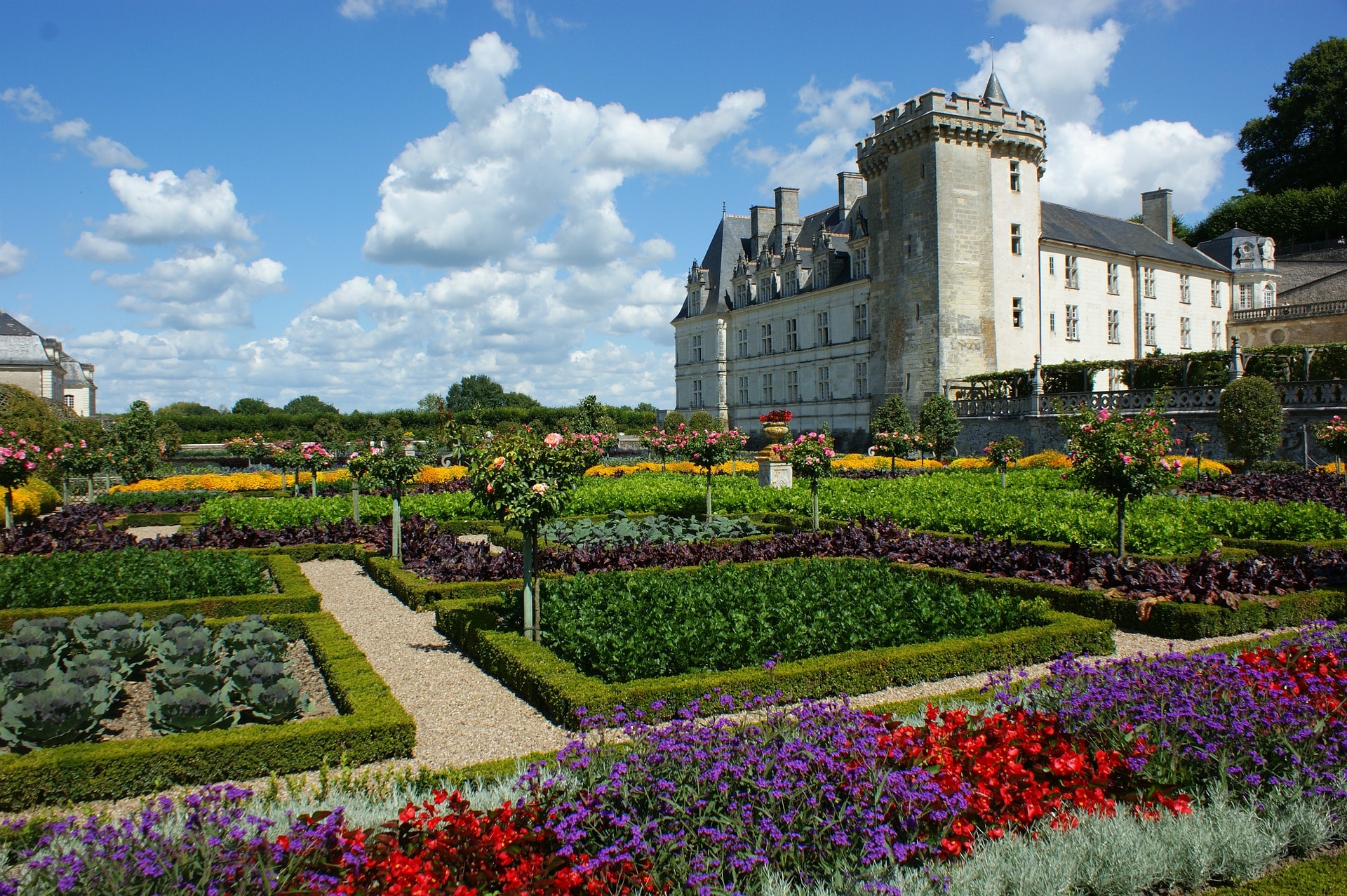
In France the kitchen garden, or “potager” is centered on vegetables and herbs and is typically an informal design perfectly in tune with nature. The garden can be a place where local fauna, including insects, birds and reptiles feel at home. Great promoters of biodiversity, kitchen gardeners have saved many heirloom vegetable varieties with their efforts, so by planting your kitchen garden you can be part of a growing and necessary group.

When planning your own potager, consider how the site you choose fits into the rest of the landscape, it’s proximity to your kitchen and your vantage point to get the best view of the garden.

Designing Your Potager

Also, consider the overall design and how you plan to cultivate by hand or machine to determine the width of the paths and shape of the beds. As the seasons change and your plants grow, the width of the paths will evolve, and you won’t see much bare earth between plantings. A good design will include vertical accents as well as lots of colors and shapes. Small fruit trees traditionally stand at the edge of the potager with strawberries, annual herbs or flowers planted at their feet. Aggressive herbs like mint should be planted in containers.

Floral Elements

Complete your potager garden with stunning floral displays. Annuals like poppies, cornflowers and sweet peas add a cottage garden charm, plus their roots don’t take up much soil space. You can also grow edible flowers to make the entire garden productive. Rose petals taste delicious, and chamomile flowers can be used to make tea. Borage is stunning floated in drinks or frozen in ice cubes, and lavender adds subtle flavor to sugar, cocktails, champagne and baked treats like shortbread.

Useful Plants in the Garden

You can also choose flowers that help you out in the garden. Plant calendulas (English marigolds) around your tomatoes to deter aphids. The orange petals have a peppery flavor and can be used as a cheap alternative to saffron in the kitchen.  Nasturtiums have edible leaves and petals too, but unlike marigolds they attract aphids, as well as cabbage white butterflies. Plant them near vulnerable vegetables like kale, beans, cabbage and cauliflower, and the pests will eat the nasturtiums instead of your dinner. After harvesting, plant fast growing plants such as chervil and salad greens to fill in any empty spaces.

With some effort, your potager can be as lovely as this small Provençal garden described by novelist Henri Bosco, which “nestled under the terrace, sheltered by high, warm walls but open onto the valley full of brown and blue summits, offered to the rosebushes, the tulips, and even to the stray weeds a well of warm air which smelled all at once of fruit trees, hawthorn, and hyssop. Birds twittered among the was more charming than this garden. It existed in this tiny sheltered bit of land which had trusted itself to man, under the large benevolent house—just big enough for a soul without worldly ambition or possessing the genius of retirement.”


Photo Credits:

Creative Commons, Villandry-Loire-Garden1 is licensed under CC0 by 1.0
Creative Commons, Vegetable Garden is licensed under CC0 by 1.0
Kitchen Garden, Creative Commons, Kitchen Garden at Emmaus House in Bristol by Heather Cowper is licensed under CC BY 2.0.
Villandry – Le potager, Creative Commons, Villandry – Le potager by sgustin78 is licensed under CC BY-SA 2.0


Fountain Conversion – Bringing Your Water Feature to Life

The Fountain Conversion – Bringing Your Water Feature to Life

FONT – FONTANA – FUENTE – FONTÄN – آبنما –噴泉 – FOUNTAIN

It is said that elephants are good luck because wherever you find them you find water and food.  Water fountains have become a necessity of life in our gardens: the sound, the reflection, the energy of water in our environment. The Chinese art or practice of feng shui is to create harmonious surroundings and water is an essential element. Natural surroundings balanced between wind, water, light and energy come together to create an environment of peace and serenity.

This time of year, lying in bed on a balmy night, listening to the timpani of a running fountain is a luxury. When you wake and look out the window into the garden, what catches your eye? Is it the fresh bloom on the rose bush or the luxuriousness of a newly cut lawn or the sparkling water of your fountain? The perfect answer would be:  all three.

What is the main element to look for in your fountain?  Is it “visual”?

Think of your favorite fountain when you were a child. Suzi’s was the fountain at Griffith Park on Los Feliz Boulevard. Mine was the fountain at the corner of Wilshire Boulevard and Santa Monica Boulevard in Beverly Hills. At night, it was alive with colored lights. Built in 1931 and known as the Beverly Hills Electric Fountain.

Another element is “sound”. From the roar of a natural waterfall to the zen-esque rhythm of a Japanese bamboo deer-scare fountain, as it fills, spills and then the hollow knock as it hits its rock.  From quiet to loud, hearing water move and splash, tumble and fall onto itself creates mood, energy and a powerful balm for the soul.

The third element is “form”, possibly the most subjective when choosing your fountain.

All fountains work the same: water circulates, rises and falls from its source and back. The physical form and structure of the fountain resists, shapes and redirects the water’s flow. There are tiered fountains that many describe as a wedding cake. There are wall fountains, structures with spouts directing the water to flow into a vessel or intermediate bowls and finally spilling into a pond or container to recirculate up and down again.

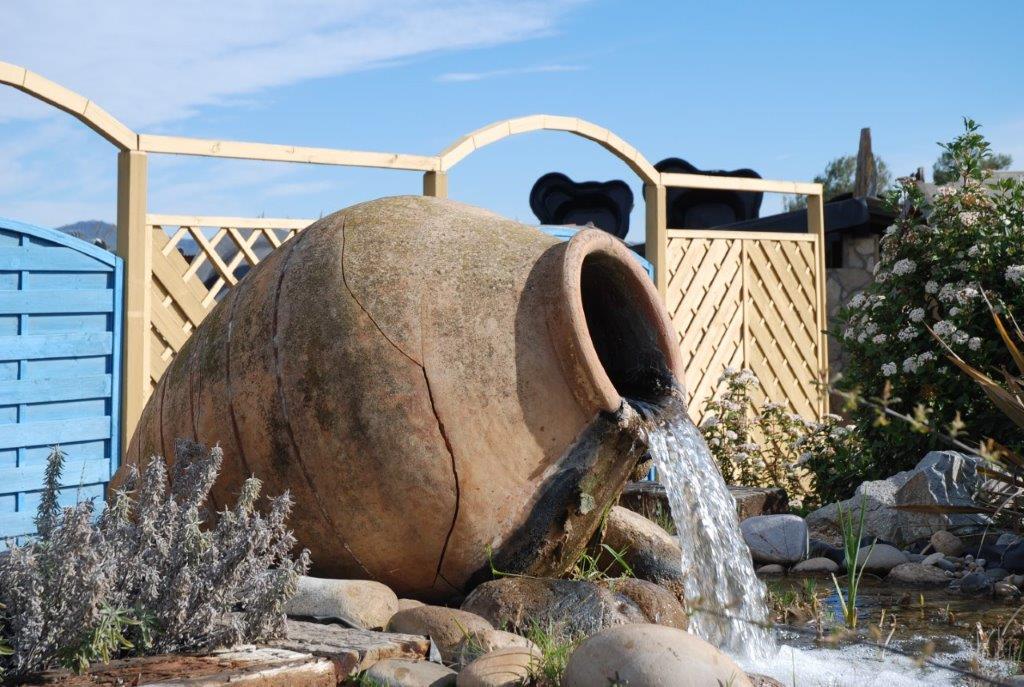
A vessel is defined as a hollow or concave utensil, as a cup, bowl, pitcher, or vase, used for holding liquids. At Eye of the Day we can convert almost any pot, container, urn, or vase in our inventory into a fountain. Fountain conversions have become a signature service and our reputation for making bespoke fountains for the projects of our clients and designers has led us to shipping them throughout the United States.

A fountain conversion can be performed on most any pot, allowing for hundreds if not thousands of choices. If you want a unique fountain for your space and don’t want one that looks like the one your neighbor has, think about choosing your own shape, color, design and then have us convert it into a fountain.

Our Gladding McBean 88-33 is a simple pot; a sleek, high fired and colorful urn perfect for a fountain conversion.  We create a water-tight seal at the bottom and attach a copper riser to carry the water to the top and create a head.

The “head” is the water that bubbles above the waterline at the top of the pot and creates the reflection, motion and sound when its falls back upon itself. As the vessel fills to the brim, it will spill over the pot and fall back to the basin and be recirculated back to the top forever and ever (as long as you keep the basin full).

The basin, which we refer to most often as the “pond” can sit above grade or below. It is very popular to hide the basin below grade and then cover it with rocks or pebbles or tumbled glass, giving the appearance of an eternal spring, its source hidden and mysterious as if it emanates from the earth.

The pump is housed in this pond or basin and its electric cord either comes out underneath the basin/pond or over its side where it can be obscured with stones or other ground cover. Always remember to keep a couple of inches of the basin above grade so that when it rains, dirt and debris can’t wash into it and compromise the pump.

Your container must be prepared to hold water and have water run over all surfaces continuously for a long period of time.  There are many quality products on the market to seal and waterproof your fountain. You can use any larger container to act as your basin, it doesn’t have to be concrete or something special. I once had a client who took a heavy-duty trash can and cut it down to 12 inches and buried it in the ground.

In addition to the vessel to be made into your fountain and the basin for it to sit in, you will need a “pump house”.  This is exactly what it sounds like: a house for your pump. In addition to hiding the pump from view, the pump house has another purpose, to act as a pedestal for your fountain vessel to sit on and it must be strong and stable enough to carry the fountain’s weight.

Converting pottery to fountains is easy and everything to complete the job can be purchased from your local hardware store. The one thing you might want to spend time searching for is that perfect vessel.

Another type of fountain conversion has the water returning inside of the vessel. This eliminates the need for a basin/pond and the pump house, eliminating the cost of these two additional items and the same container will fit into an even smaller space.

There is very little splash if the water is kept at a lower level within the container.  Also, the sound will resonate at different pitches depending on how full you keep the vessel. Just think of a wine glass being tapped with a knife.

Other ideas for Fountain Conversions:

  • Rectangular troughs
  • Low Bowls
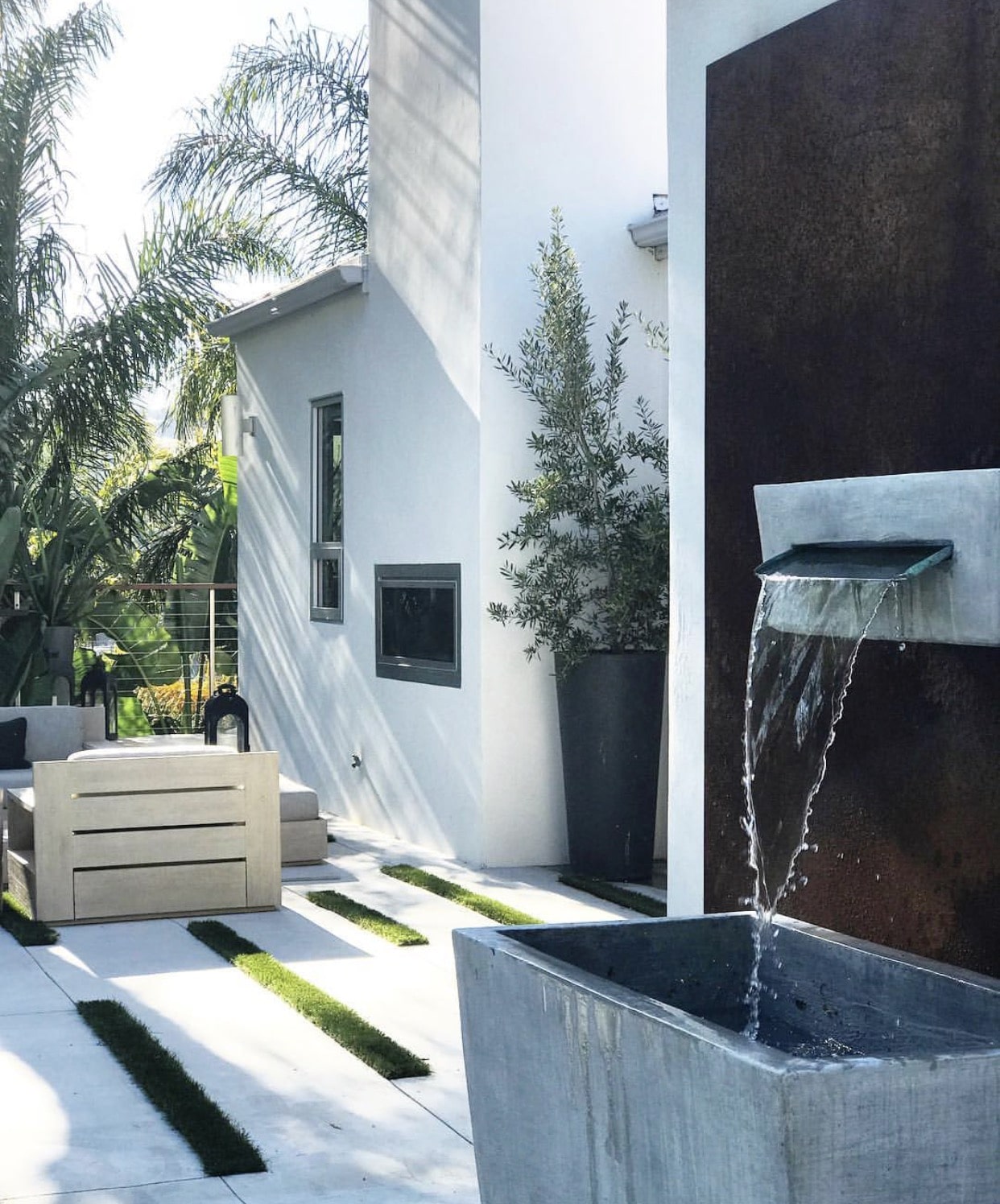
  • Turning a wall into a fountain
  • Old Stones 


Materials Needed:

  1. Vessel of your choice
  2. Basin/Pond to fit underneath and wide enough diameter to catch as much splash as possible.
  3. PVC or copper tubing for riser.
  4. Pump house large and sturdy enough to enclose your pump and carry the weight of your vessel filled with water.
  5. Water pump strong enough to pump water to top of your pot

Let your imagination be your guide and create a unique fountain for your space from almost any water worthy vessel.  Please come see our incredible selection of pots and containers as well as old European stone troughs, millstones and other garden art here at Eye of the Day.

We will bring your vision to life!


A Fountain Conversion by Rebecca Sweet

Fountain Conversion Rebecca Sweet garden design

Fountain Conversion: A Michalis in the Garden 

We have been fortunate to have Rebecca Sweet write for The Yardstick in the past and knowing that she has a sustained love for Mediterranean gardens and is busy with clients seeking her expertise and experience, we are pleased that she took the time to answer some questions about her garden design featuring Eye of the Day’s Greek pot, the Michalis, as a fountain conversion.  Rebecca is the author of several esteemed books on gardening and her work has been featured in Sunset Magazine, Horticulture and a variety of other national publications.  Her design firm, Harmony in the Garden, is in Los Altos California.


Q: Tell us a little about yourself as a designer and Harmony in the Garden.

I’m a California native, and though I’ve lived in both the southern and central parts of the state, I’ve spent most of my life in the Bay Area. Over the years I’ve seen this area’s sleepy suburbs transform into the bustling, densely populated, high-energy area that it is today. The people who call this place home come from all over the country, as well as the world, and have brought with them their unique perspectives on gardening. Having had my landscape design company, Harmony in the Garden, for over 15 years now, it’s been an incredible gift to be a part of these changes and to help so many people from different walks of life create their versions of paradise.

Q: What was your client’s goal for this garden?

As passionate gardeners themselves, the clients wanted to transform this part of their garden from a water-guzzling, and unsightly half-dead lawn into something that would require much less maintenance and water. This area is situated close to their home and can be viewed from several large windows, so it needed to look good year-round.

Q: What was your initial vision for the landscape and did that change over time?

My vision and theirs complemented one another perfectly, as we are all succulent fans. So, to reduce water consumption, as well as indulge in our love of succulents, we removed the lawn, replacing it with a low-water succulent and cactus garden. To help tie this new space in with their existing, and more traditional style of garden, we also incorporated   several flowering shrubs and perennials that were colorful, yet also drought-tolerant and low-maintenance.

Because the area is fairly large, we knew we needed to break up the space into smaller, more manageable planting areas. Wide decomposed granite pathways were the solution, gently meandering through the space, helping to bring down the scale of the oversized garden.

Q: Any unique issues or challenges for this project during the design or installation?

Initially, the homeowner wanted this garden to thrive without supplemental water but quickly realized that just wasn’t going to happen. This area is in full sun so even the cactus were suffering through the blistering summer heat-waves. Luckily, we had a feeling this might happen and had previously installed a framework of irrigation under the ground ‘just in case.’ We ended up irrigating the garden, on a very reduced schedule.

Q: What would you describe as your garden design aesthetic and how do you work with your client’s own vision for the landscape?

My own aesthetic is one that appears full and lush, yet is quite drought-tolerant. My passion for plants has allowed me to create drought tolerant gardens that don’t ‘look’ drought  tolerant, and is what I’m probably best known for creating.

Since so many of my clients come from around the world, their vision for their garden (and the    plants they’re used to seeing) can be challenging to translate with California’s lack of water. Luckily, living in a mild-winter climate such as ours, we have access to an expansive selection of drought-tolerant plants from which to choose.  I love interpreting their vision into a garden overflowing with plants that will thrive here.

Q: For garden décor, why the Michalis Greek pot for the fountain conversion?

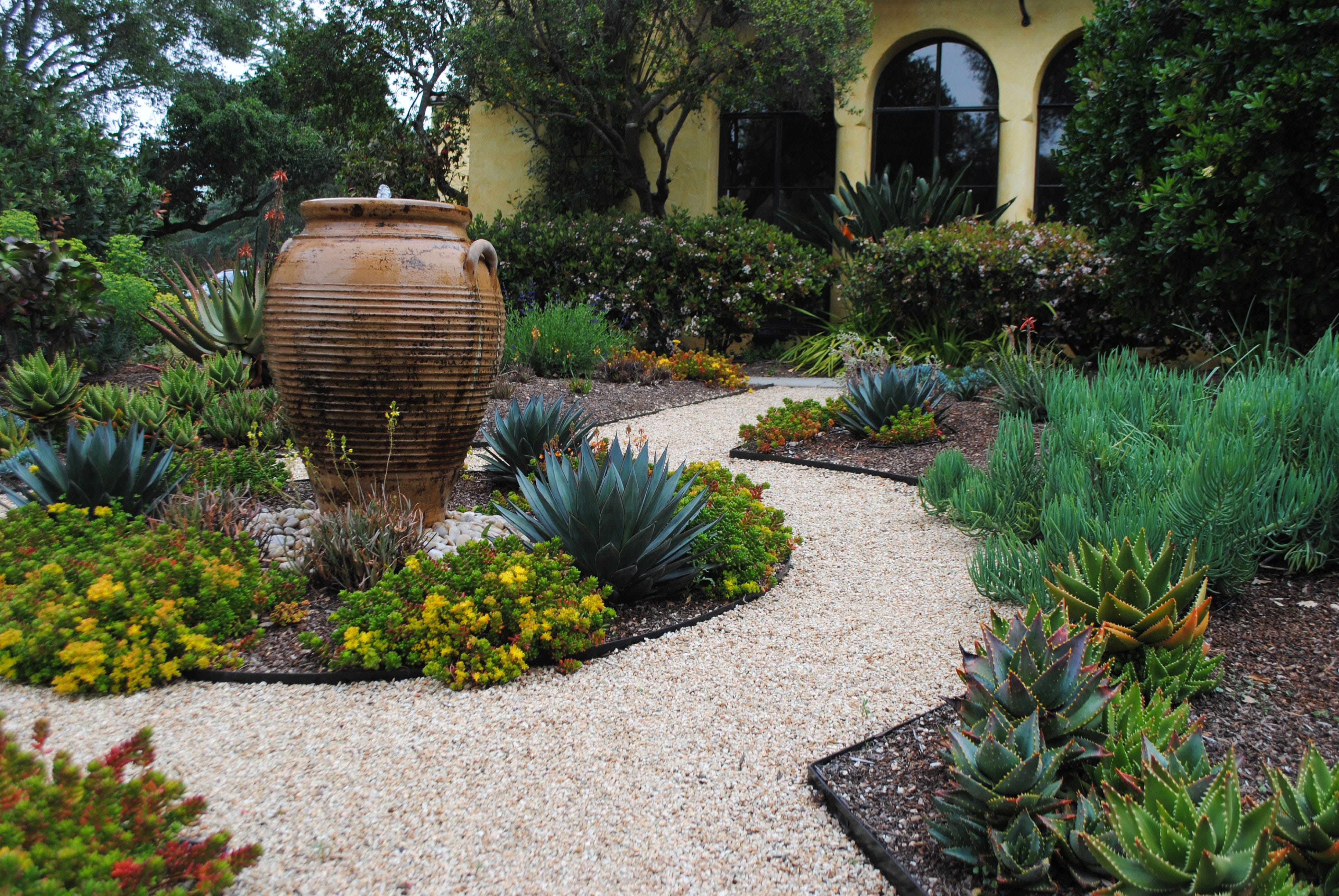
When designing this garden, we knew we wanted a focal point to bisect the center of the pathways. To keep in scale with the large garden and home, we needed a large focal point.  The Michalis Greek pot an ideal choice for a fountain conversion and blends beautifully with their historic Mediterranean home. By converting the pot into to a fountain, we added the gentle sound of trickling water, entertainment from the multitude of birds that adore taking baths there, and the illusion of ‘coolness’ from the water itself. We couldn’t have chosen a more perfect focal point for this garden.


Q: What was your favorite part of this project?

My favorite part of this project was to see the joy on my clients’ faces as they saw their garden’s breathtaking transformation. I continue to visit them and their garden every few months and seeing the succulents grow and fill in, creating an ever-changing tapestry has given my clients so much happiness through the years – all while significantly reducing their water bill!


See Rebecca’s other work on our blog:

Rebecca Sweet On Shades of Gray in the Garden
Stylish and Sustainable Garden Design


Top 5 Fountain Conversions

American Concrete - Fountain Conversions

Top 5 Fountain Conversions

Fountain conversions have become a signature service of Eye of the Day. Spring and Summer is the time to order this popular water feature. From classic shapes to more contemporary forms, fountain conversions are an elegant addition to any garden design. Depending on the style and aesthetic of the garden, the conversion process starts with choosing a container. Almost any vessel at Eye of the Day can be converted, but there are definite favorites at the store. We rank the top five fountain conversions that homeowners and designers love.

5. French Terracotta Fountain Conversions

While not as common a choice for a fountain conversion, French Anduze pots and biots are an elegant option for a water feature. We recommend sealing for this type of terracotta, especially to protect the glaze,

4. Concrete Fountain Conversions

Our American made concrete pots are the ideal containers for both contemporary and traditional styles. These water features can be made up of different concrete garden décor pieces from birdbaths and urns, to ponds and containers.


This custom feature uses a concrete birdbath set into a pond based on an English garden the clients loved while visiting England.


This design used two American made concrete pots for the conversion. A custom insert was used for the flat spout.


3. Greek Terracotta Fountain Conversions

Here in California, Mediterranean style gardens are popular throughout the state. With sunshine filled days, proximity to the ocean, and lush plant life, our similar climates are the ideal foundation for a Mediterranean garden. Our Greek line of terracotta pottery is a popular option for containers and fountain conversions.

The Michalis pot fountain conversion was a popular design for Bay Area designer, Rebecca Sweet. Its classic shape was perfect for the Mediterranean garden design of her Palo Alto clients.

2. Italian Terracotta Fountain Conversions

Eye of the Day specializes in Italian terracotta pottery. Naturally, many clients and designers choose an Italian terra cotta pot as the vessel for their fountain conversion. We carry classic, ornate, and contemporary styles.

1. Gladding McBean Oil Jar Fountain Conversions

This is the most popular fountain conversion we do—and with good reason. The classic oil jar shape is a favorite among customers and as a water feature, it becomes a striking focal point in the home or garden. Available in a variety of colorful glazed finishes from Gladding McBean, both traditional and modern designs can incorporate this oil jar fountain conversion. The GMB88-33 is the most popular, but the GMB45 with the narrow neck is a lovely option as well.

Get inspired with the pottery and containers from Eye of the Day for your next garden design project. Contact us today to learn more about fountain conversions.


The Not So Dirty Jobs: Custom Services by Eye of the Day

Custom Service | Eye of the Day Garden Design Center

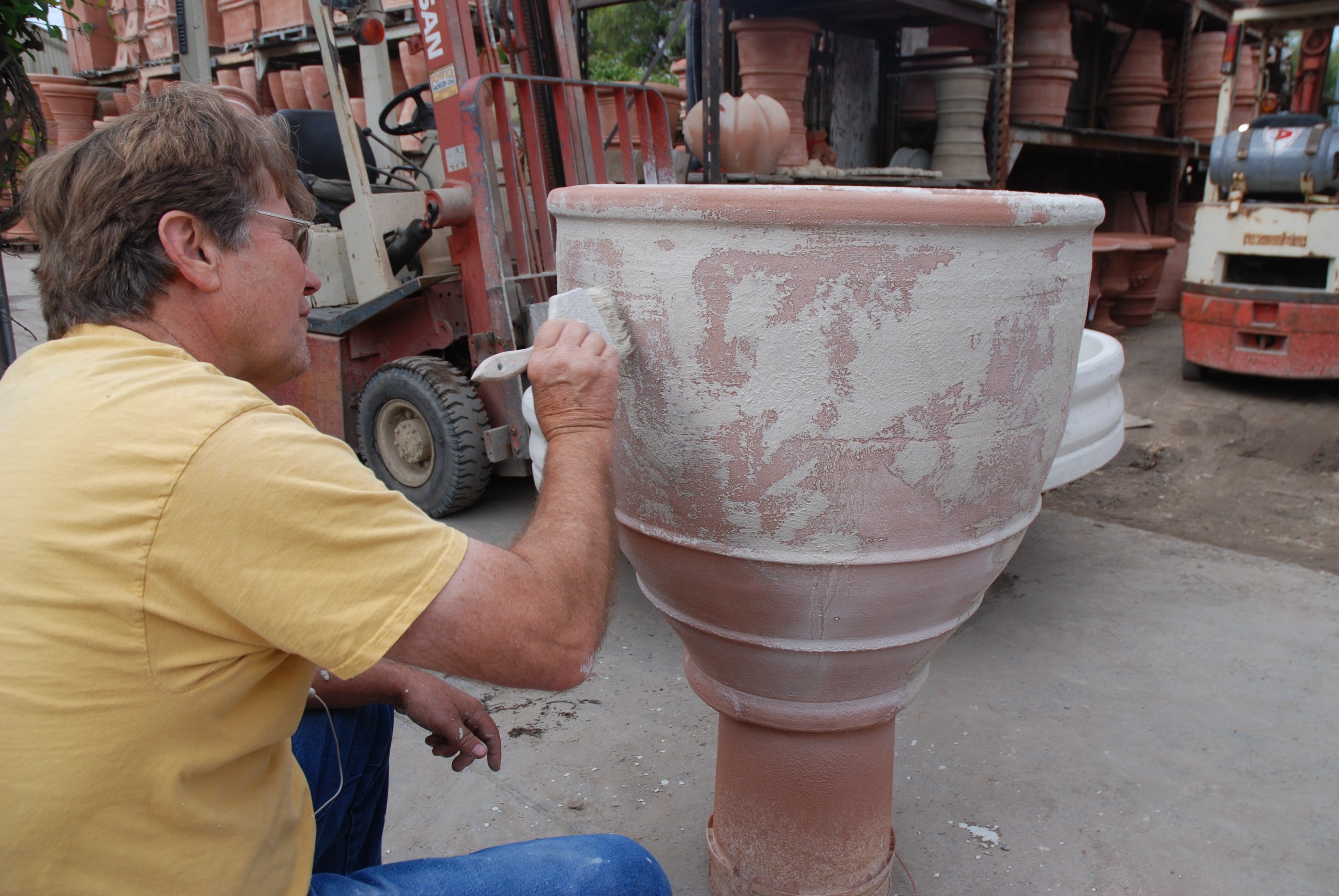
We sell some of the most beautiful terracotta pottery sourced throughout Europe; pottery that has been hand made the same way for centuries, even millennia.  I’m still amazed that designers and clients want us to glaze over it with today’s color choice as professed by Martha Stewart. It is not ours to ask why, we just do it, that’s why we offer a variety of custom services.  It’s what we do, sometimes even though we don’t want to.

Drilling holes, creating drip edges, adding spouts and yes, beating the crap out of a perfectly good terracotta pot so it looks old is what we call “custom services” at Eye of the Day.

Whether it is painting Greek pots in pastel colors for a Schrager Hotel in Miami Beach or sealing the inside of four large French Anduze pots for the Chateau Marmont on the Sunset Strip, we do what our clients request or need.

Call it what you want, custom, special, additional, we call it CUSTOM SERVICES!

I have to tell you this one:  a garden designer purchased a hand-carved French limestone fountain for a project. Needless to say, it had a bunch of zeros on the price tag.  The designer instructed us to paint it completely white, every inch. Go figure…

If you want a statue with its head knocked off, we’ll do it. If you want your fountain to drip better, we’ll do it, and if you want your beautiful terracotta pots painted in your school colors we’ll do it. We call it, “CUSTOM SERVICES” and we deliver. Just ask the guy in Malibu with the all-white French limestone fountain hand carved in Provence.

To learn more about our Custom Services, please contact us.