Book Review of Gardens – An Essay on the Human Condition

Gardens An Essay on the Human Condition Book Review

Book Review
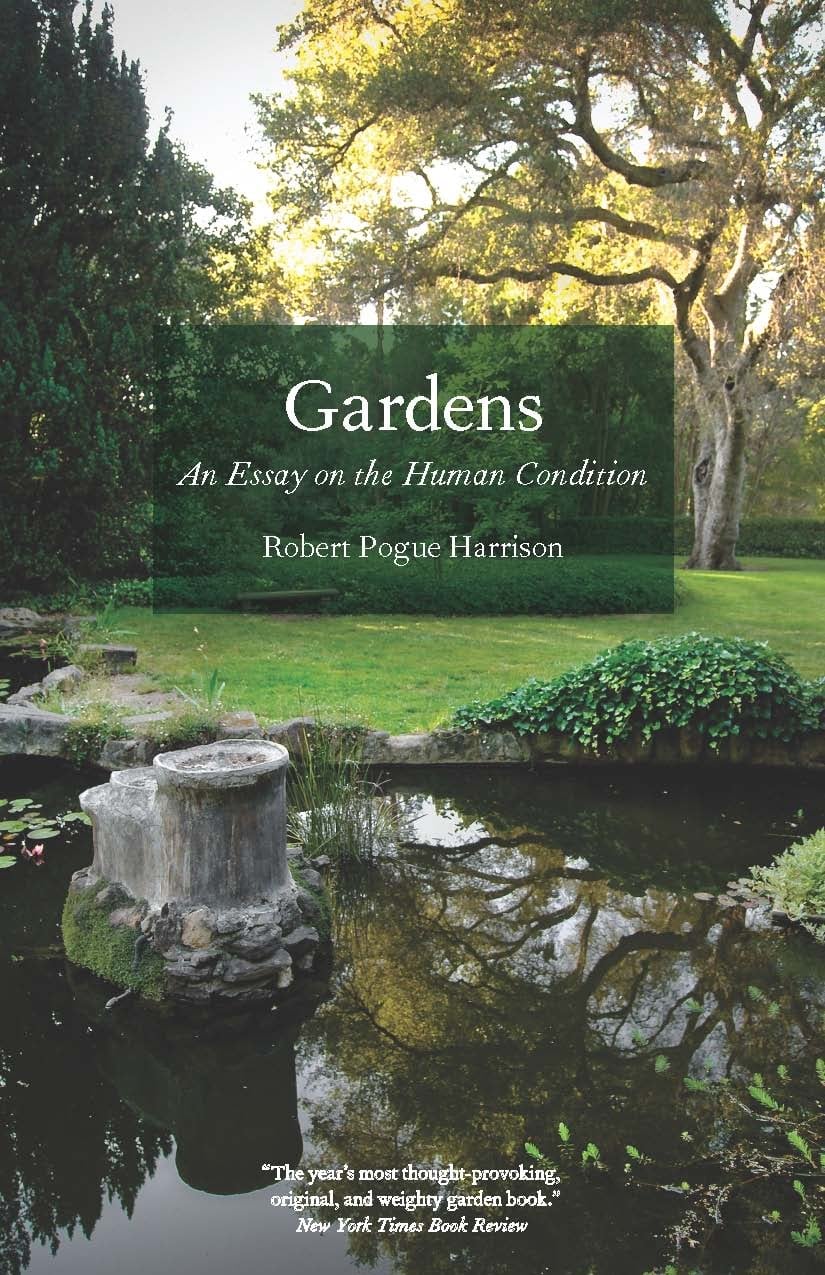
GARDENS: AN ESSAY ON THE HUMAN CONDITION by Robert Pogue Harrison

This title caught my eye while browsing in my favorite bookstore in Austin, Texas and I really thought Brent would like it. I’m only about half way through it, but Harrison’s writing has me hooked. He shows us why gardens have become so important to us and we see how they have saturated our literature and our culture.

Gardens An Essay on the Human Condition Book Review
Each chapter is organized around a type of garden. For example: Eden, the temporary gardens of the homeless, or contemporary urban gardens which allows Harrison to explore, interrogate, meditate upon what these spaces tell us about the connection between earth, human, and spirit. Harrison argues that gardening is a path to patience and wisdom as an alternative to the restlessness of the human spirit.

As each of us spends time outdoors, either in our own garden or out in the world, there is an unusual type of communion that takes place between person and nature. Every weekend I see Brent in his element, almost as though in meditation, moving potted plants, watering with his ever-present watering can, propagating his palate of succulents, and at the end of the day he seems renewed.  This fine book strives to define and almost undefinable bond between human and garden.

“Whereas most people believe gardening to be a subset of life, gardeners understand that life is a subset of gardening.” – Robert Pogue Harrison

Photo via The University of Chicago Press Books


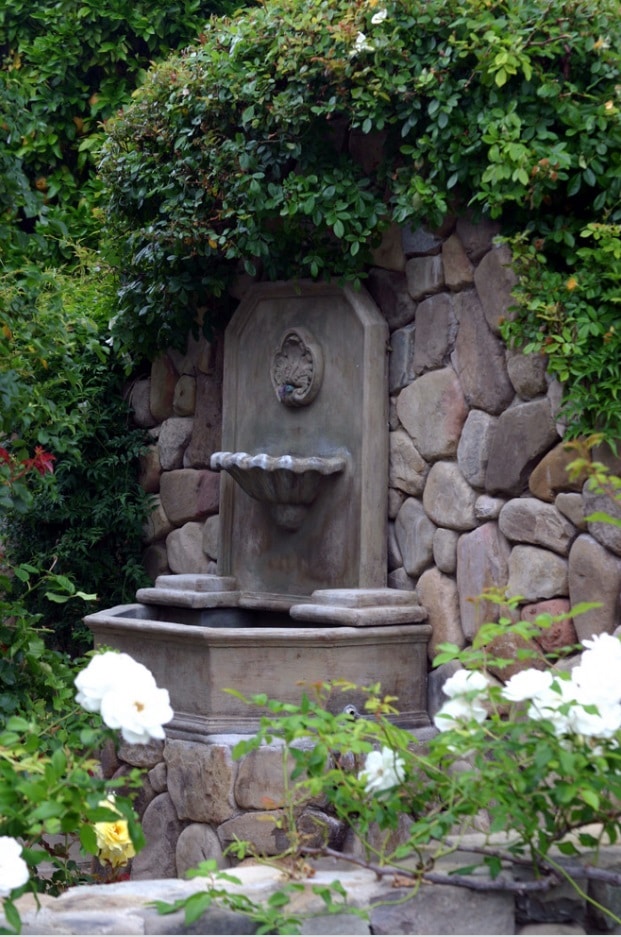
A Brief History of Fountains at Eye of the Day

Contemporary fountain design fess parker

A Brief History of Fountains at Eye of the Day

About twenty years ago, Brent and I had a life-changing meeting with the rep of a company that manufactures concrete garden ornaments. Of course, we didn’t know at the time it was life-changing. If anything, it was more “mystifying” to me. For reasons only apparent in Brent’s mind, we were choosing fountains that we would sell at our fledgling store, which we had named for our nine-year-old daughter, Daisy.

Honestly, I had never thought about fountains, they were alien to me, but there we were choosing three-tier fountains topped with angels, little fountains to put against a wall that were reminiscent of rocky outcroppings.

I had a favorite: two frogs on a loveseat sitting under an umbrella; water sliding down the concrete umbrella, protecting the love-frogs. So began our long-term relationship with fountains for the garden.

We have seen tastes change dramatically, though not everyone’s—animal figurines and faux-stone fountains are not so popular any longer.  Majestic, Mediterranean style concrete fountains have slowed down. About fifteen years ago, on a trip to France, Daisy and Brent came across a stone carver and soon fantastic hand-carved limestone fountains graced our showroom, and continue to do so.

In recent years we find that many of our customers want something completely different and decide to choose a beautiful pot, maybe a richly hued Gladding McBean Oil Jar or a rustic Greek Pithari and we convert their choice into a fountain, water glistening over the sides of the vessel and recirculation via a hidden pond.

And now, a few individuals have come to us with a new idea for their water feature, something we are excited to produce for them. The Modern or Mid-Century Modern trend is directing a movement toward vastly more contemporary looking fountains. So not only in architecture and home furnishings, we’re seeing many customers who want something with clean lines and no “frou-frou”.

contemporary fountains garden design
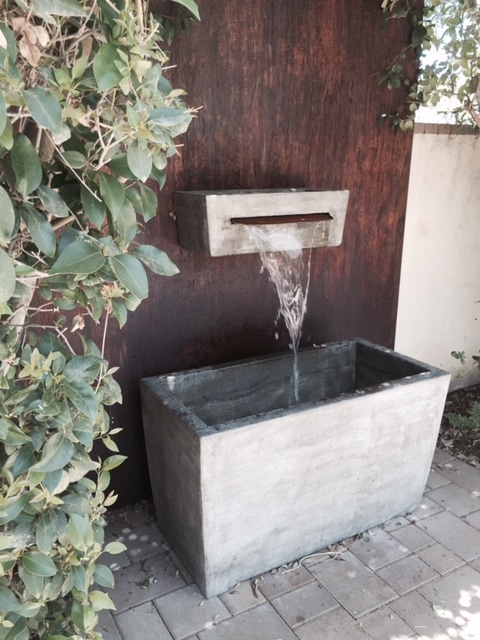
Both The Fess Parker Wine Country Inn and a well-known celebrity photographer asked us to fabricate a fountain that would complement a modern aesthetic.  We accomplished this by almost turning the concept upside down. Well, sideways, anyway. Using two rectangular concrete pots, we turned one on its side, cut a long, narrow piece from the center and inserted a copper “tongue” for the water to exit the piece and flow into a larger rectangle placed on the ground.

With the success of this custom fountain conversion design, we are not only producing fountains with an old world charm and a rustic look, but moving into the Mid-Century—so modern in our approach.  Working on more ideas, coming your way.


DIY Project How to Make a Succulent Fountain

DIY Succulent Fountain Conversion Garden Design

DIY: How to Make a Succulent Fountain 

Looking for a way to add a beautiful and water friendly feature to your garden? We’ve got the perfect garden project for your next weekend outdoors.

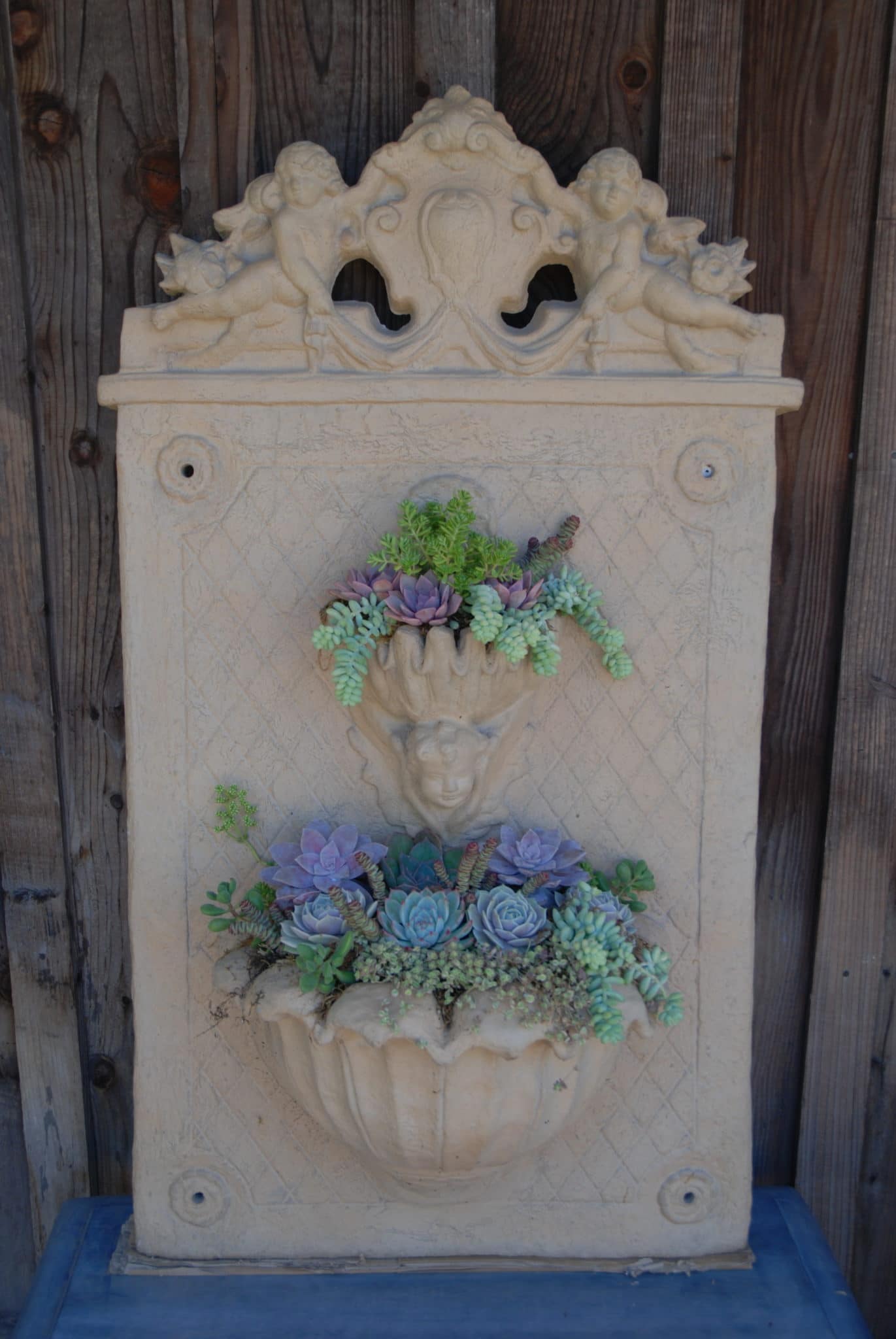
Here at Eye of the Day, Amelia Richardson, better known as Mimi, takes care of the succulent plantings around the store. An expert on succulents, she takes an overlooked wall fountain and transforms it into a beautiful container garden. This project is great not just for drought-stricken California, but any garden that gets enough sunlight throughout the year.

Here is a step-by-step guide to converting a fountain into a succulent fountain garden.

Step 1: Choose Your Vessel

Choose a fountain. It can be one meant to mount a wall, a standalone fountain, single or multi-tiered, or even a birdbath will do!

Step 2: Prep Your Container

Drain the fountain of water and make sure that any drainage holes are covered, if any. You can use a broken piece of pottery or terracotta. The soil will still shift so periodically check the draining that soil isn’t completely blocking it off.

You can also add a layer of rock gravel first before adding soil. If you’re using a birdbath, this step is a must.

Step 3: Add Your Soil

We recommend using cactus mix when planting succulents. It drains quickly which is good for plants that can’t sit in wet soil. We use EB Stone’s Organic Cactus Mix. If you live near Eye of the Day here in the Santa Barbara area, be sure to stop by and get some!DIY Succulent Fountain Conversion Garden Design

Step 4: Choose Your Succulents

When picking succulents, it will really depend on the planter. On large planters, you can choose a focal plant that you can work smaller succulents around. For example: A large Echeveria or Aeonium in the center that is worked around with smaller accent pieces like Sedum morganianum. 

Mimi Tips:

  • Have fun when picking succulents. Grouping like with like is also easier.
  • Color story: Jewel toned, all greens, chartreuses, blacks, cool tones versus warm tones
  • Textural: Soft, sharp, or hardy.
  • Shape: Round (Echeveria, aeonium, sempervivum), spiky (crassula, sansevieria), mix of large and small, tall and short. Senicio radicans and Sedum morganianum even mimic water flow as they drape over the edges.
  • Single type: Just one type of succulent for beginner planters. All rosette types are always pretty.

Step 5: Plan the Layout

Before you start the actual planting, place the succulents either on the ground or in the fountain as you imagine the final product. Here you can edit and rearrange as you see how it’ll all come together.

Sometimes planters can be organized and others more organic and wild. It will depend on the container and where it’s going.DIY Succulent Fountain Conversion Garden Design

Step 6: Start Planting

When removing a succulent from its plastic container, sometimes you’ll be transplanting to an area smaller than the soil around the succulent. You can remove much of the soil while still preserving the roots to get it to fit in the container spot.DIY Succulent Fountain Conversion Garden Design

Mimi Tip: Don’t be afraid to plant them close together. You can always leave space to let them fill out but getting into every nook and cranny helps to create its own ecosystem and that full growth actually slows down the propagation.

DIY Succulent Fountain Conversion Garden DesignBesides, you can always remove, replace and transplant—that’s the great nature of succulents. Succulents are hardy; they’re hard to ruin so press them into the soil. You can also use wet sheet moss to keep the plants moist and reduce the need for additional watering.

Step 7: Add Decorative Elements

Depending on the container get creative using shells, pieces of wood, rocks, broken pot or statue pieces, sea glass, etc. as added decorative material. If you prefer space between your succulents, these elements can help cover the soil.

DIY Succulent Fountain Conversion Garden Design

Step 8: Final Watering 

Give it a quick but generous soak and wash off the container with any leftover dirt. With succulents you want to water once or twice a week depending on sun and weather conditions. Soil should dry out (not completely bone dry) between watering. If soil is still damp you don’t need to water just yet.

If you’re using a container that does not have a drainage hole like a birdbath, then you would let it go bone dry between watering.

DIY Succulent Fountain Conversion Garden Design

Voila! You have a beautiful, water friendly, succulent fountain!


To check out another fun DIY project take a look at Design Rulz article on DIY Macrame Plant Hanger Patterns.
Paul Hendershot and Designing with Water Features

Paul Hendershot Garden Design Water Features

When Paul Hendershot and his trusty dog Chief walk through the door, our day at Eye of the Day becomes just that much better.  Paul likes to stroll through the store, seeing new products and picking the pieces he wants to show his clients. He’s funny and warm and stiletto sharp.

Paul Hendershot Garden Design Water Features

We were looking at his website one day and were pulled in by his remarkable, unique style.  He often works with clients in Ojai and given the heat and water problems particular to that area, we wanted to ask him about how he works within the inherent parameters as well as get a little background.

EOD: When did you become interested in landscape design and how did you begin?
PH:  I always had my own garden starting at a young age.  In my mid-30s I decided to be a landscape designer. I started by doing garden maintenance on my own. I read all the best books, such as those by Russell Page. Slowly people started asking me to help design their gardens and from there it took on a life of its own.

Paul Hendershot Garden Design Water Features

EOD: From whom or where have you drawn the inspiration for your style?
PH: Traveling, especially in Europe and noticing. Russell Page was the most dramatic influence as well as Sydney Baumgartner from Santa Barbara.

Paul Hendershot Garden Design Water Features

EOD: What do you want in a water feature and how do you include them in your designs?
PH: I use water features in courtyards and places where people linger, the sound is great. I also use them in gardens to attract birds. It depends on the space if it is a wall fountain or more of a pool-like fountain.

Paul Hendershot Garden Design Water Features

EOD: What challenges in your designs and with your clients do you deal with when considering the drought?
PH: My biggest challenge with clients is to convince them to get rid of their lawns.  People are really attached to their lawns. Lawns use more water than trees, shrubs, etc., lawns are water guzzlers.

Paul Hendershot Garden Design Water Features

EOD: So what do you offer them as an alternative? How do you get them to give it up?
PH: I usually suggest courtyards with trees for shade and pea gravel as the surface and of course some kind of fountain. Pea gravel is inexpensive, good looking and allows the rainwater to return to the water table. With trees and shrubs, it has a very lush look. Also, groves of trees with pea gravel pathways and boxwood clipped in geometric shapes and pots as accents.

Paul Hendershot Garden Design Water Features

I think we need to change our aesthetic about gardens in California. We should use the examples of Spain, the South of France, Italy, and Morocco which often feature a courtyard with trees, shrubs, pots and water features. Connect them to the house and make outside rooms.

Paul Hendershot Garden Design Water Features

EOD: Are there any advantages or disadvantages to container planting?
PH: Depending on the space, containers, or I should say beautiful pots, add interest and beauty. Also, you can control the soil in a pot. You can make it more acidic or use the correct soil for orchids and unusual plants.  There is nothing more classic than a citrus tree in a beautiful pot.

EOD: Thanks for taking the time to talk to us Paul, we can’t wait to see you and Chief at Eye of the Day really soon.

View more of Paul’s work: Paul Hendershot Design 


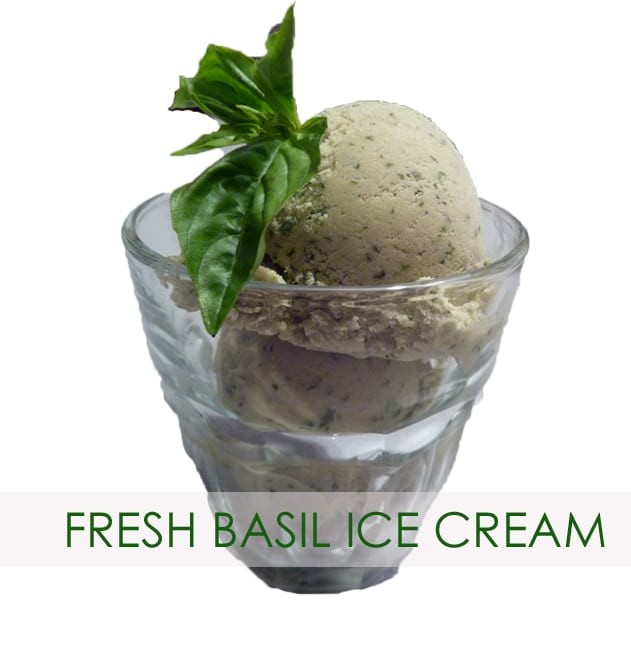
Garden Recipes: Fresh Basil Ice Cream

basil ice cream-garden recipe-gardens

Garden Recipes: Fresh Basil Ice Cream

How can you NOT want to eat this all summer? Walk out to your herb garden and grab a handful of that basil. The only thing that could make this better would be some fresh basil ice cream to go with it.

basil ice cream-garden recipe-gardensFRESH BASIL ICE CREAM

2 cups whole milk

3 tablespoons chopped fresh basil

1/2 cup sugar

4 large egg yolks

1/2 cup well-chilled heavy cream


Bring milk, basil, 1/4 c sugar and a pinch of salt to a boil in a heavy saucepan. Remove from the heat and let it steep for 1/2 hour. Transfer to a blender and blend for 1 minute.

Beat egg yolks and remaining 1/4 c sugar with an electric mixer until thick and pale, about 1 minute. Add milk mixture in a stream and mix well. Pour into saucepan and cook over moderate heat, stirring constantly until temperature reaches 175 and coats the back of a spoon (do not let it boil). Immediately remove from heat and strain the mixture into a metal bowl. Place the bowl in a larger bowl filled with ice water and stir until cold, about 10 minutes.

Stir in cream and freeze in an ice cream maker. Transfer ice cream to an airtight container and put in freezer to harden, at least 2 hours.

YUM.

Photo Credit: Fresh Basil Ice Cream, Creative Commons, Basil Ice Cream by Eugene Kim is licensed under CC by 2.0 


Why Expensive Pottery for Your Garden?

Expensive pottery|Eye of the Day|garden design

Why Expensive Pottery for Your Garden?

Whether you are a garden enthusiast or if you’re like me and have gardening in your soul, no doubt you are always on the lookout for great pots—not just great shapes and styles but pottery that lasts.

English lead containers and Francesco del Re’s pure bronze pots might be the most expensive planters on the planet, but who buys plant pots made from lead or solid bronze? Guilty! Recently I wrote about Italian pottery from the commune of Impruneta and tried to debunk the myth that it is not the name of Impruneta itself which is important but the clay they use. Not all clay is equal and when the pottery you are looking at has a high price tag, don’t be afraid to ask some questions about the origin, the clay body used, the firing temperature and duration in the kiln.

Many people think we only sell expensive pottery at Eye of the Day, and we do carry high-end items, but there is the saying “You get what you pay for”.

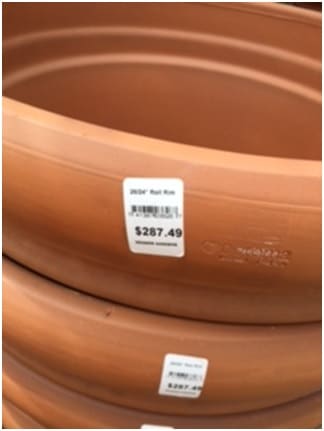
At a local nursery, a competitor of ours sells the classic Italian double rolled rim planter with a 24” diameter for $. The product is produced by one of the largest pot manufacturers in the world, Deroma of Italy. These pots are made from inferior clay and you will find that they start to break down almost immediately.

Our high quality Italian double roll rims will last for a century or more. Our price for the same size pot is $—a big difference for a pot that might last a decade opposed to one that will last for 100 years or more. The conclusion is: high quality pottery isn’t necessarily more expensive, it just depends on where you shop and what you know about the quality of the pots.

Learn more about terracotta and how terracotta pots are made at our blog.

Related Articles:
The Truth Behind the Aged Terracotta You Buy
Inside the Pieces: Why We Love Authentic Pottery