No More Lawns: Urban Eco Design of Santa Barbara, California

Eye of the Day Garden Design Center

Eye of the Day Garden Design CenterBrent and I have become friends with Jonathan Reichlan and Natalie van Zelm over the last few years, not just because they use our products in their projects, but also their work is beautiful, conscientious and imaginative and Natalie and Jonathan are completely interesting, engaging people. A great way to get to know them and their style is to take a look at the website for their company Urban Eco Design (). It is evident that together they draw inspiration from native planting and xeriscape design, both so necessary with current climate change issues.

Natalie recently brought us up to date on a current Urban Eco Design project in which they have been collaborating with the owner of a local Eye of the Day Garden Design Centerproperty. They agreed that they needed to update the gardens to be congruent with the future of landscaping while respecting the local environment. They installed a lemon orchard, a simple drought tolerant knot garden, and gorgeous antique pottery from Eye of the Day, concentrating much of the design design on an inviting, soft hued hardscape. The best part? There’s not a lawn in sight.

“Urban Eco Design’s primary focus is to create a relationship between the property owner and the garden, developing a personalized ‘Eden’”, says Natalie. “We consider the relationship to be a long lasting one that will fulfill all the senses, enjoying the tastes of edible plantings, the scents, colors and the feeling of being in a nurturing garden. Our intention is to incorporate low maintenance, drought tolerant and Eye of the Day Garden Design Centeredible plantings, several usable and inviting spaces and plenty of enticements to spend time outside enjoying the majority of the square footage of one’s property.”

Jonathan and Natalie’s inventiveness and awareness are present in each of their designs, fully taking into consideration their clients’ taste, budget and the ecology of each property to bring fulfillment to their interpretation of ‘Eden’, free of lawns.

Just Eat It: Pasta with Chive Blossoms

Eye of the Day Garden Design Center

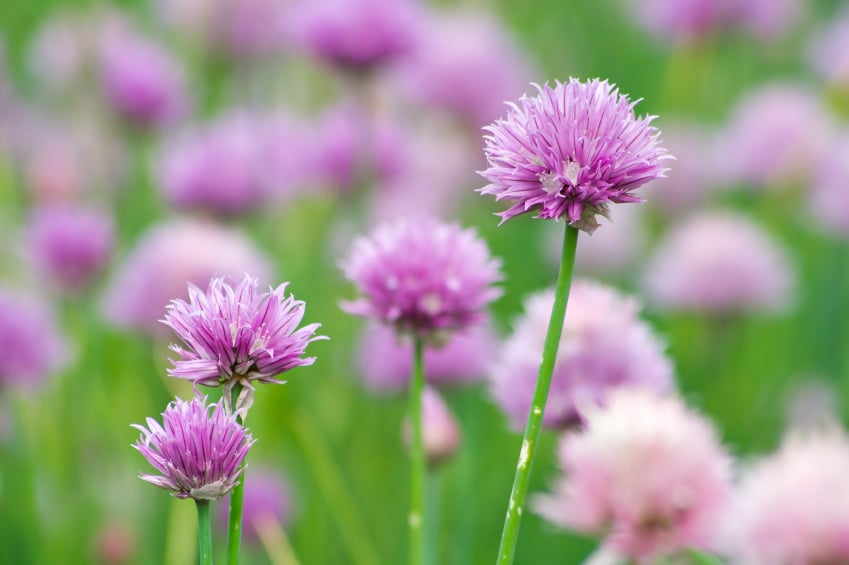
Eye of the Day Garden Design CenterIt’s still pretty early for lots of dining from the garden, but as we all know, Brent loves his chives and chive blossoms.  We have had a fairly steady supply of lettuces and herbs so far this year and even when it looked like we had lost our chives to the deadly December freeze, their little blades began pushing up and out in early February and now are grandly abundant with their pretty, delicate lavender blossoms.  And if you have a healthy forest of parsley, like we do, there’s nothing wrong with a shower of that minced greenness here.

CHIVES AND BLOSSOMS IN YOUR PASTA

1 pound pasta, linguine or fettucine  (make your own, if you’re so inclined!)

1/2 cup pasta water

5 tablespoons unsalted butter

1 cup freshly grated Parmigiano-Reggiano , plus more to serve

Salt and fresh ground black pepper to taste

4 cups lightly packed snipped chives

As many chive blossoms as you can muster

2 T minced Italian parsley (optional)
Cook the pasta in lots of boiling, salted water until slightly firm. Scoop out  the 1/2 cup of pasta water and put it in a large, warmed serving bowl. Drain the pasta and add it to the bowl.

Act fast:  add the cheese and butter and your desired amount of salt and pepper to the bowl and toss to combine so that the butter barely melts and there’s a little emulsification going on. Then add the chives, chive blossoms and optional parsley and serve immediately to get the fresh taste of the uncooked chives.  Have a nice little bowl of grated Parmigiano-Reggiano on the side to add, if you like.  Then: JUST EAT IT!

FOUR SERVINGS


One Hundred Years in the Garden

Eye of the Day Garden Design Center

Who doesn’t dream about living to a hundred? With all of the wonder in this world, the multitude of invention, the quality of our existence and the amazing number of fabulous cook books available, who wouldn’t want to live forever, especially in the garden?

Eye of the Day Garden Design CenterI have friends who live to play golf, crash mountains on boards, get dragged behind a boat going a hundred mph and torture themselves in a myriad of ways they call pleasure. Not me. I dream of being in my garden. Gardening increases your lifespan, according to Dr. Mao Shing Ni, a 38th generation doctor of Chinese medicine. In his book Secrets of Longevity Cookbook, he says: “Centenarians around the world come from many different backgrounds and professions, but one of the most common hobbies among them is gardening. As exercise, gardening strengthens the muscles, as a discipline it requires patience and cultivates fortitude; and in the end it brings rewards and joy to its practitioners. Studies show that gardeners have a lower incidence of heart disease and osteoporosis than non-gardeners.”

I doubt I’ll make it to a hundred but I’m not too worried nor is it the point, I only want more time in my garden to relax, get dirty and breath. I’m waiting for the chives to bloom so I can sprinkle them on salads and eggs. I’m looking forward to warmer weather so the basil will grow (I love fresh pesto!). I may live to one hundred but I’m looking forward to “this” spring, to my garden, to the prospect of vine-ripened tomatoes in just a couple of more months, to the trees blooming. One day at a time in spring is what I’m dreaming of right now.


Bring Water Lilies Home

Eye of the Day Garden Design Center

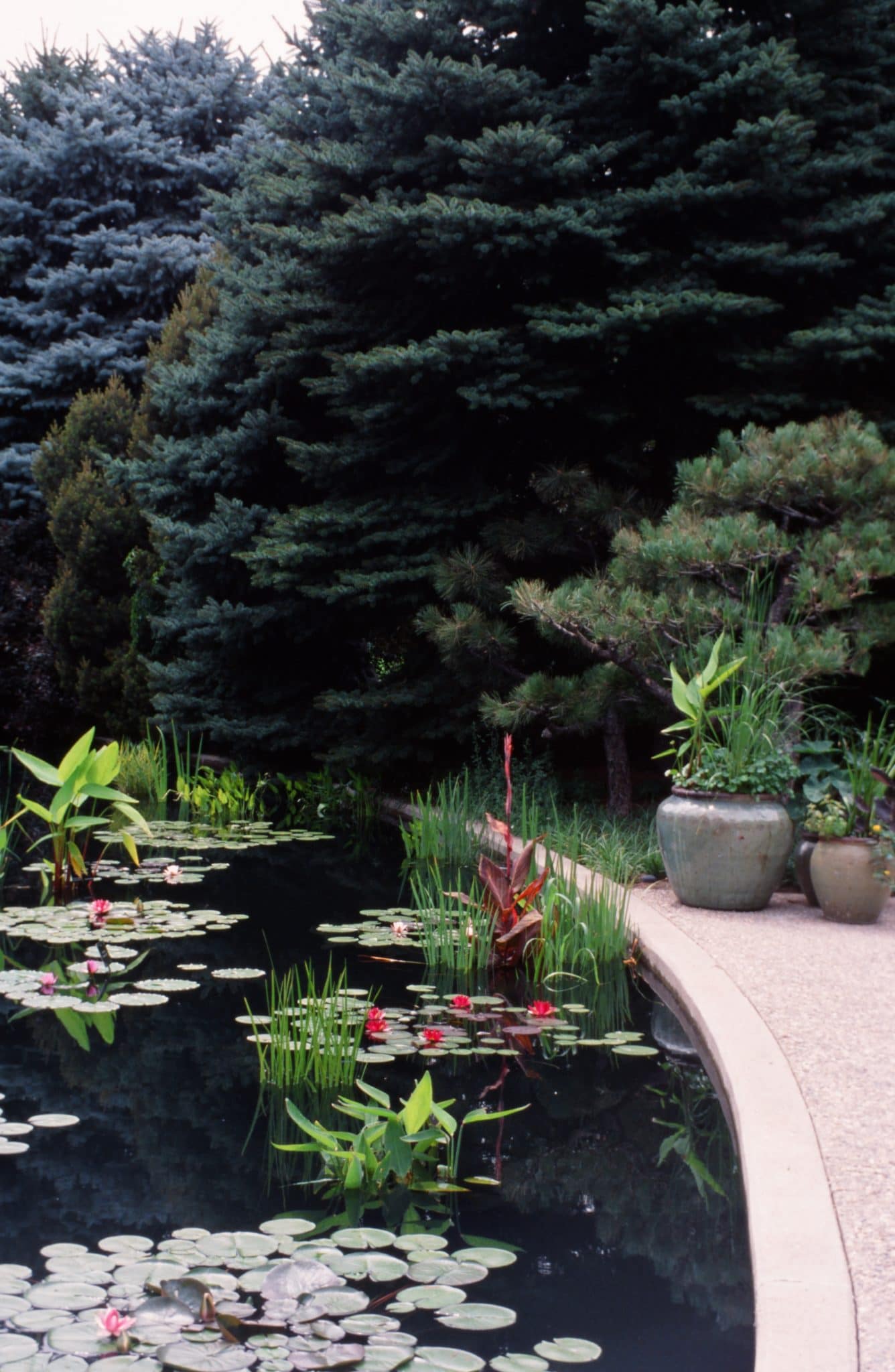
Eye of the Day Garden Design CenterMaybe you’ve had this experience: you are having a lovely picnic at Alice Keck Park Memorial Garden. Or, you are visiting one of the world-class botanic gardens around the country or the world. You stop by the pond to admire the lovely water lilies, the turtles that have crawled out to sun themselves on the shore, and the colorful koi moving in lazy patterns underwater. It all seems far away and idyllic, but what would it be like to get closer?

One way to do that (short of wading in and upsetting all of the creatures in the pond) is to grow a water lily (or two) in a smaller, above-ground container. In a container garden, the intricate and beautiful, even sometimes-fragrant flowers are within nose reach. You may not want to try turtles or koi, but aquatic plants, including water lilies, are very well suited to such confined quarters.

Eye of the Day Garden Design CenterWater lilies are unique plants and quite ancient in origin. Their showy flowers come in many colors and float on the surface of the water along with glossy orbicular leaves. There are hardy water lilies that go dormant in winter in temperate zones and tropicals that prefer to grow year-round in warmer climes. The tropical water lilies will perform wonderfully in cooler climates, but may have to be treated as annuals there.

Water lilies do grow in soil, so planting one in a container requires that a durable pot be prepared for them. The first rule of growing aquatic plants is to provide a growing medium free of organic material. I know that seems to go against all of our gardening instincts, but the root zone of aquatic plants is quite anaerobic, meaning that the bacteria (and other microorganisms living there) use other pathways in the decomposition of organics that can result in smelly and even toxic conditions. Nice clay soil, even sand, will support their roots and not contribute to other noxious problems.

Most water lilies require about 10 to 12 inches of soil in their growing pot and another 10 to 20 inches of water over the surface of the soil, although there are a few dwarf varieties that will bloom in far less space. Shop for them online and read the descriptions of their size and growth pattern to determine what size container will be best. The decorative outer planter will need to be water tight, of course, and many will be fired with an impervious glaze. Other choices are porous clay or concrete pots, which can be sealed. If the container already has drainage holes, they can be plugged to provide the perfect mini-water garden. Be sure to add a few mosquito-eating fish to complete your mini-ecosystem.


Book Review: The Beautiful Edible Garden

Eye of the Day Garden Design Center

Eye of the Day Garden Design CenterA minor dispute broke out in my neighborhood this week. When a couple planted herbs and vegetables along their front walkway, the HOA president chastised them via email: “Now you have a garden in front of the house. Who approved that? Please take care of the above quickly.”

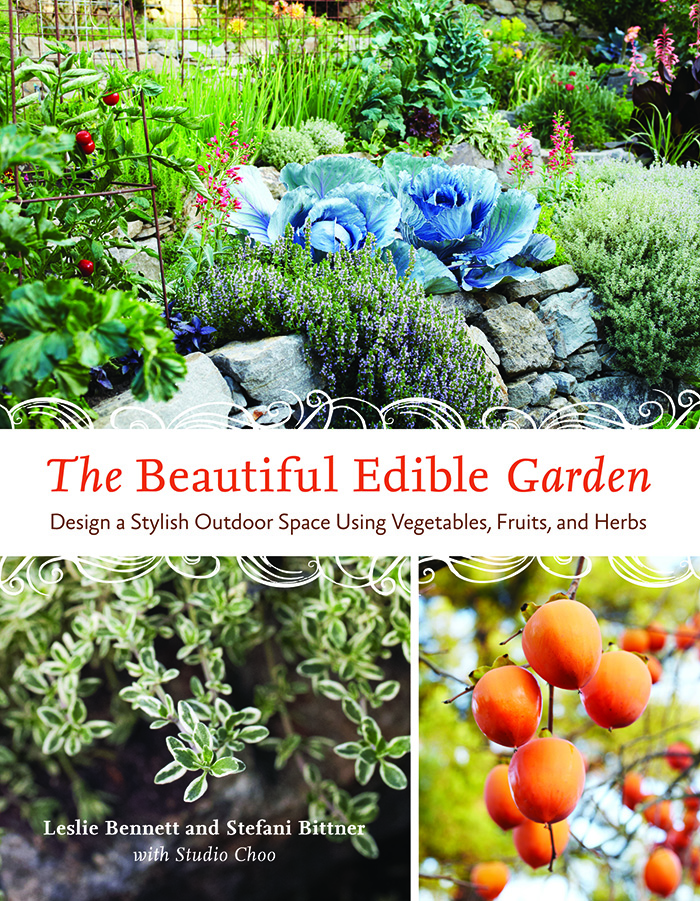
To some, an area where edibles are growing is a “garden” while other plants are for “landscaping”, but Leslie Bennett and Stefani Bittner, authors of The Beautiful Edible Garden, debunk this myth. Published by Ten Speed Press in 2013, the book offers design ideas for stylish outdoor spaces that incorporate vegetables, fruits and herbs.

What sets this book apart from others covering the same topic are the specific plants they suggest and the reasons they give for plant choices. For an unexpected border, try alpine strawberries, which produce tasty white fruit but don’t send out runners. Other strawberries wouldn’t grow in a neat line like alpines do. Bennett and Bittner recommend peppers, eggplant, chard and cabbage as attractive additions to an existing ornamental bed. They call it an “integrated garden” which is perfect for those who don’t want to completely start over on areas they’ve already planted.

Because it’s so common for people to view edible plants only as food producers, the pair encourage readers to look at the architectural characteristics of every plant. Big, bushy rosemary can line a path and create a visual anchor as much as another less-fragrant and less useful shrub.

Edible gardening is much more than a fun idea for those with a heart for it. It’s become a revolution, with some gardeners transforming their entire front yard, back yard or both into food-growing plots. In Orlando where I live, Jason and Jennifer Helvengston launched a protest called “Plant a Seed, Change the Law” after the city insisted they replace their front yard veggie garden with a lawn last year.

Because some neighborhoods and even whole towns and cities resist non-traditional plantings, a book like this one is especially important. It points out the so-called landscaping possibilities offered by plants that produce food, allowing gardeners to use traditional bed, border, hedge and path designs to conduct their food-growing operations. Once you finish The Beautiful Edible Garden, you are in possession of all these secrets, and you can take care of the above quickly.

Ready to dive in? Come by the shop to purchase a copy, or buy a copy HERE.


Join Us at the San Francisco Flower and Garden Show

Starting this Wednesday, March 19th and running through the rest of the week and weekend, Eye of the Day will be exhibiting fine terra cotta garden pottery and Fermob outdoor furniture in a booth at the San Francisco Flower and Garden Show at the San Mateo Event Center.

The fun starts at the entry, where Eye of the Day’s authentic European pieces will be incorporated into the display garden that lines the path leading into the main exhibit hall. Designed by the show’s director Chris Woods. A native of England and now a U.S. citizen, Woods has worked in the garden world as a director and designer for over thirty years. He started his career at the Royal Botanical Gardens, Kew, where he was trained as a horticulturist.

After moving to the United States and occupying several prestigious positions in the garden world, he was commissioned by the Pennsylvania Horticultural Society to design the central feature for the Philadelphia International Flower Show 2013. The SFFGS is pleased to have him on board, and the entry gardens–complete with Eye of the Day’s beautiful containers–are sure to be spectacular.