Moles, Gophers and Other Damned Pests

garden pests

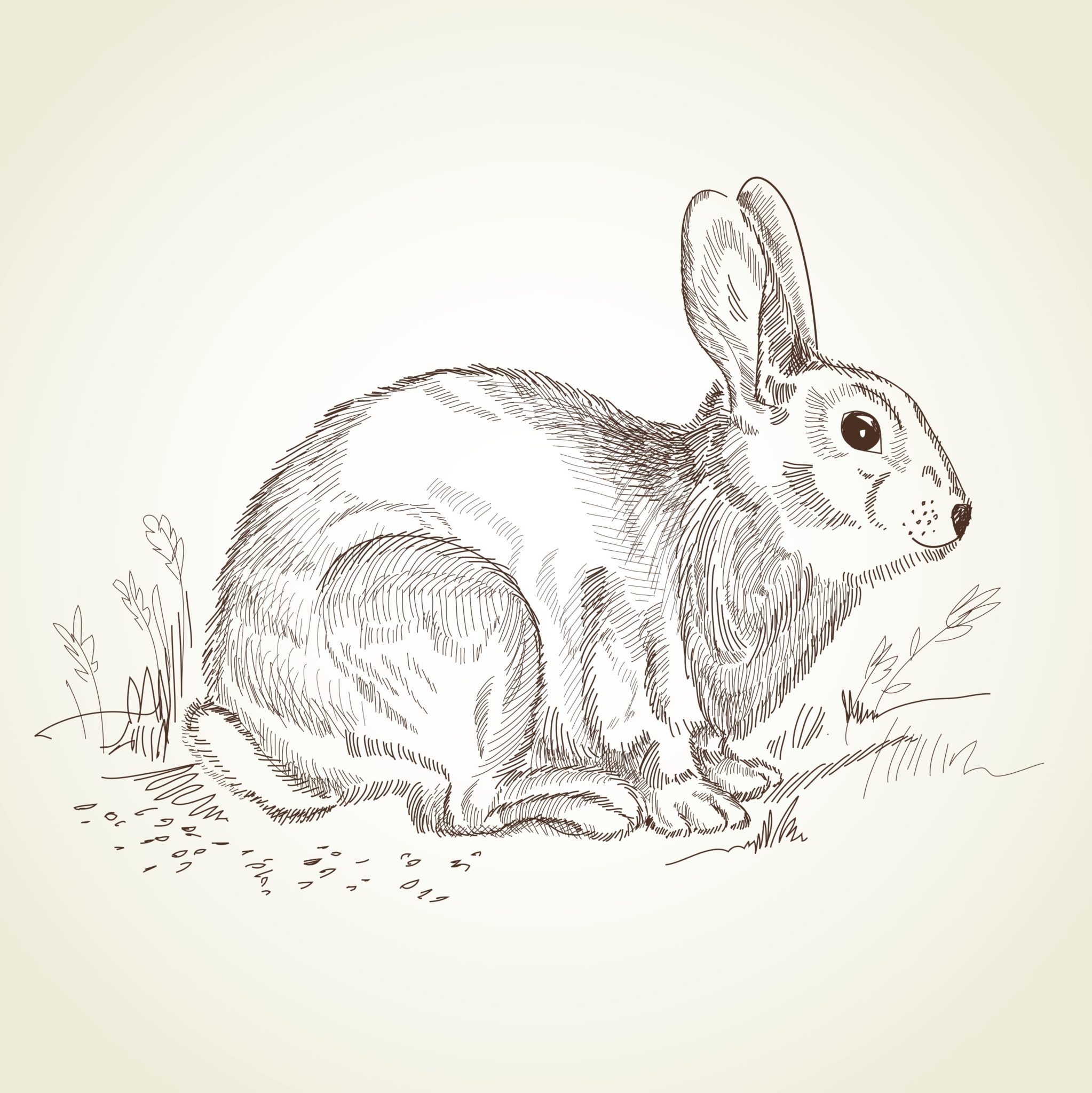
Unless you live on the second floor (or above) of a townhouse or condo, your garden will probably be plagued at one time or another by some kind of furry pest. Moles and voles are less common in urban areas, but can do serious damage to gardens on the outskirts. Gophers seem to respect no borders and may tunnel dozens of feet into your yard to pull your prized specimens underground in just the blink of an eye. Another ubiquitous pest is the cuddly, cute cottontail rabbit. Just one little bunny can eat its way through a row of lettuces or a patch of parsley while you are watching the evening news.

garden pestsThere is lots of advice about installing baskets around the roots of your newly planted herbs and flowers to thwart the underground vermin. Little else is to be done about rabbits except to fence them out; not usually a very aesthetic option. Another, simple solution is to plant your herb garden in pots. The burrowers can’t get in and if the pots are tall enough (only 10 inches or so) bunnies can’t reach the tender greens.

In fact, planting herbs (or anything) in pots is an ideal way to provide the exact conditions they require. Sage (Salvia officinalis) is partial to very well-drained soil, while parsley (Petroselinum crispum) loves to be moist all the time. Choose the planting medium that fits the specific needs of each plant and it will be easy to ensure success. Pick your favorite culinary herbs and either group them together in larger pots according to their needs or give them their own space and cluster the pots together. Add a pot or two of ornamentals, maybe some that have edible flowers like calendula (Calendula officinalis), borage (Borago officinalis), or pansies and violets (Viola spp.). Nurture the plants and ward off the pests by planting in containers.
Poor Conditions? Grow Tomatoes in Pots

tomatogrowers.com

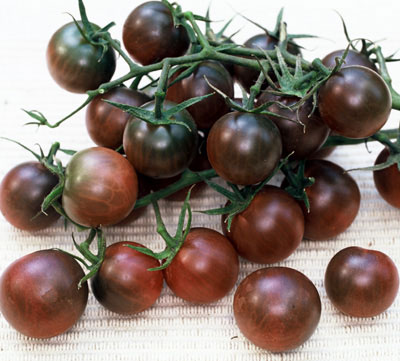
Summer to me means juicy ripe tomatoes (corn and squash also make the menu often, as well). Finally, after months of insipid, tasteless impersonators, there are flavorful, luscious orbs in many shades of green, yellow and red to eat out of hand or include in salads and salsas. Growing up in the central valley of California, tomatoes were easy and plentiful. Both my dad and grandpa had prolific gardens; the days were long, the weather warm to hot and the soil rich and fertile. Just the right conditions for success.

I am not so lucky. I live just a mile from the coast and under a very shady oak tree. Not only does the oak steal the sun, its roots suck up all the moisture and nutrients present in the soil of my small garden plot. So, I have resorted to growing my tomatoes in pots. I plant them in large containers with all the nutrients and drainage they require and place them in the sunniest spot I have.

Choosing the Right Plants

Some years, I’ve started seeds of interesting or heirloom varieties. Some years, I buy already sturdy plants from local nurseries or home improvement centers. One of the characters to look for in choosing tomatoes for containers is the word “determinate.” Some tomatoes just want to keep growing and growing (like the vines some of their ancestors are). These are called “indeterminate” and are less well suited for container culture. The determinate selections have a genetic set-point that limits their ultimate size. They may still require some support, especially as they start bearing those juicy fruits, so provide a tomato cage or sturdy stake when planting to keep them upright.

Consider the Varieties

The scope of varieties is huge, both in size, color and texture. There are those designated as cherry tomatoes (some of the sweetest), perfect, one-serving patio tomatoes and big, beefy tomatoes suitable for accompanying grilled meats at the cookout. Whichever you choose, tomatoes can thrive happily in a planter if your garden plot is less than ideal (like mine). Now is the time to search out your favorites and get them started for those summer feasts. Browse  for an introduction to the wonderful world of tomatoes.


Book Worm: The Fruit of Our Labor, or Not

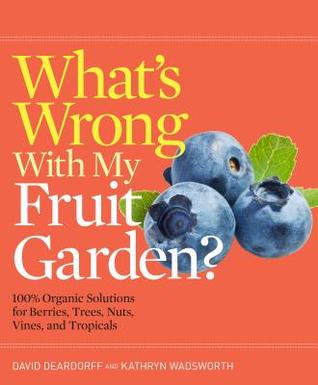
What's Wrong With My Fruit Garden?

I’m fixing to go blueberry picking with my daughter next week, and there are two reasons. The first is that the lovely little fruits are in season, and since we buy them twice a week in season or out, we’re craving freshies. The second is that I don’t grow fruit.

What's Wrong With My Fruit Garden?I find fruit intimidating. My first foray was with raspberries, which I planted in the only place I had, which was shady, and this was not a shade variety. Wrong wrong wrong. Since I had always wanted raspberries, I believed in my heart that they would come through, a youthful delusion that proved me a fool. And with all the trouble I’ve had with tomatoes, I feel like a complete failure. I’ve had no issues with lettuces, kales and leafy things, even when I start from seed, but I can’t get it straight with sweet stuff.

When I leafed through and then pored over What’s Wrong With My Fruit Garden? today, light burst through the clouds. The problem is that I’ve never had the right fruit book, and the solution is now in my hands. David Deardorff and Kathryn Wadsworth get all nerdy about fruit: culture information on many popular fruits in the first quarter of the book is followed by an in-depth Problem-Solving Guide that lasts for days and breaks down symptoms, matching them to causes. Thank you for the photos! And before it’s all over, the final chapters provide organic solutions for common problems, suggestions for changing growing conditions and pest control options.

Bottom line, the book is perfectly organized, well-worded and trustworthy. I’ve looked at a hundred others, and none nailed it like this one does. Best news yet: we keep it in stock it at the store.


Dreams Do Come True

mustard field

Work, work, work. You toil, you apply yourself day after day and increasingly you dream about a holiday from your routine. Your mind’s eye focuses constantly on visions of someplace other than work. A country drive down some faraway country road. Wondering what magnificence will be around the next bend on the road less traveled.

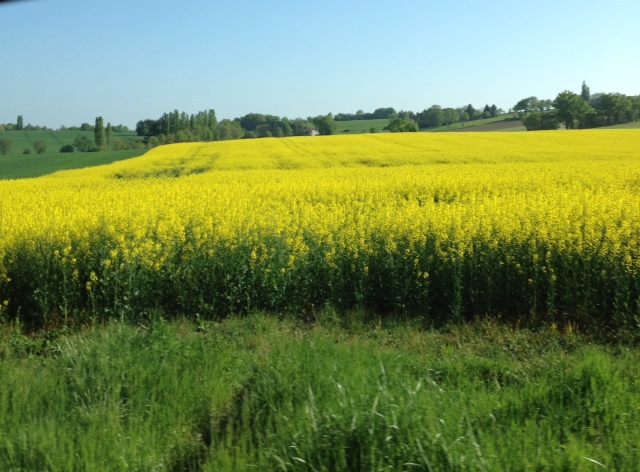
Its spring and the field of mustard blinds you as it comes into view and washes all memory of your desk, emails, meetings and responsibilities away.  Yes! This is what you needed, to stop and smell the flowers…..

mustard field

Well now you know it isn’t a dream anymore because peonies like this don’t grow in Santa Barbara. Coming down from the wonderful feeling of again, driving in France, driving down the Autoroute on my way to the Avignon area in Provence, I’m following the Rhone River and wonder if I’m dreaming again as I look out to see one of many French nuclear power plants.  Looks safe to me…

Finally, I arrive for the night at my friend Alain’s house, a dreamy Provéncal maison du terrior.

Dinner is served: abundant local Syrah, fresh bread and fresh tuna caught the day before in the Mediterranean Sea.

My desk and forklift are a million miles away. Sweet dreams! Arivois.

P.S. Love France like I do? Take a look at our Pinterest board, “Because we love France.”


Your Garden: An Oasis for Friendly Creatures

garden frog

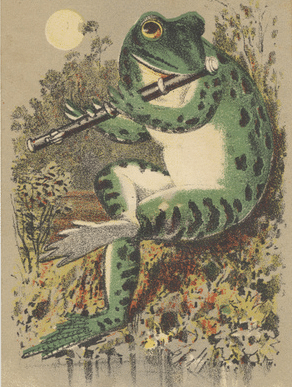
garden frogIf you’ve ever lived anywhere near a lake, a pond, or a stream, you will know what I’m describing now: it is the sound of spring at dusk. This sound is not the cacophony of many tiny birds courting each other as the sun rises; it is the almost deafening din of frogs seeking their mates as the sun descends. Countless frogs are making their way to the nearest body of water with that primal urge to further their species.

Frogs are not the only fauna that seek out some source of water. Many other garden friends such as insect-eating birds and pollinator partners like bees and butterflies also need a reliable source of this essential element. Normally, these nearly invisible insect helpers will sip quietly and unseen under the shrubs or on the dewy grass, but during this drought time, as landscapes transition to much drier sites, there will be fewer of these mini watering holes to visit. Birds are no different, although a bit more evident as they zip or flutter through the garden. Not only do they need a drinking fountain, they will be healthier and happier if they can also take a quick splash to reduce the insects riding piggy back under their feathers.

These creatures are essential partners in the balanced ecosystems that gardens should be modeled on. The great news is that their requirements for water are very small. Insects need just a shaded, boggy spot to land and sip. Container gardens are a perfect way to conserve water and yet offer up refreshment to these critters. For the bugs and butterflies, a bog plant that has just a skim of water over the surface of its soil will allow them to straddle a tiny puddle to slurp up their refreshment.

Birds do want just a bit more surface and depth, but that can be found in a shallow saucer or other decorative container that allows them to sip and splash. Place these containers at the edges of the garden where avian visitors can feel safe from predators.

Your mini oasis may also serve as a way station for other wild vertebrates that share our gardens, such as raccoons, opossums, and more. But everyone should be welcome at our little watering holes.


And Now…To Our Mothers

mother's day

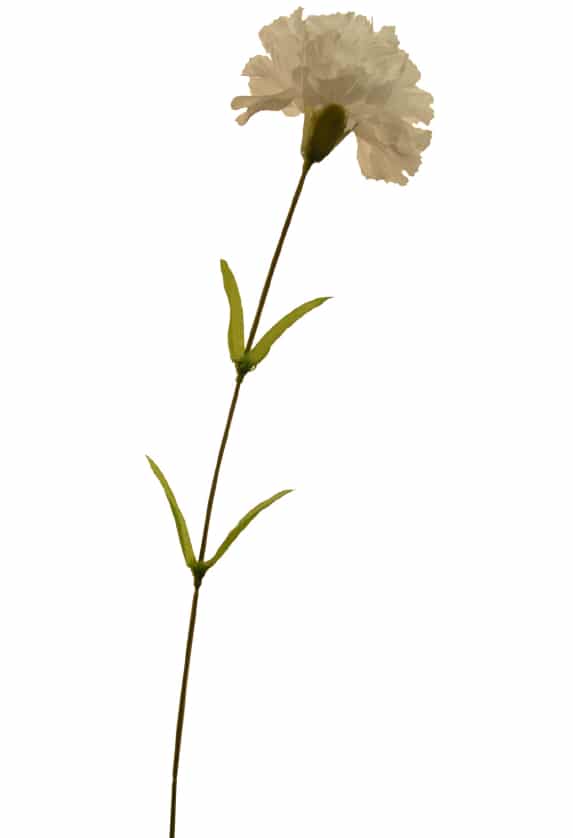
Anna Jarvis is credited with originating Mothers Day in 1907. Her mother died on May 9, 1905, and missing her greatly, Anna started a letter mother's daywriting campaign to ask ministers, businessmen and congressmen to make Mothers Day a holiday to recognize all mothers.  With each letter, she would send a white carnation.

In May of 1914, President Woodrow Wilson made Mothers Day an annual holiday. Traditionally, if you were a mother, you would wear a carnation on Mothers Day – a white carnation if your mother had passed away and a colored carnation if your mother was still living.

Throughout history, flowers have been linked with motherhood, symbolizing purity, beauty and life – all of which we attribute to our mothers. Love your mother and always remember that she began loving YOU  before you were even born.