Lisa Cox Design | Los Olivos Tasting Room Gets Design Update

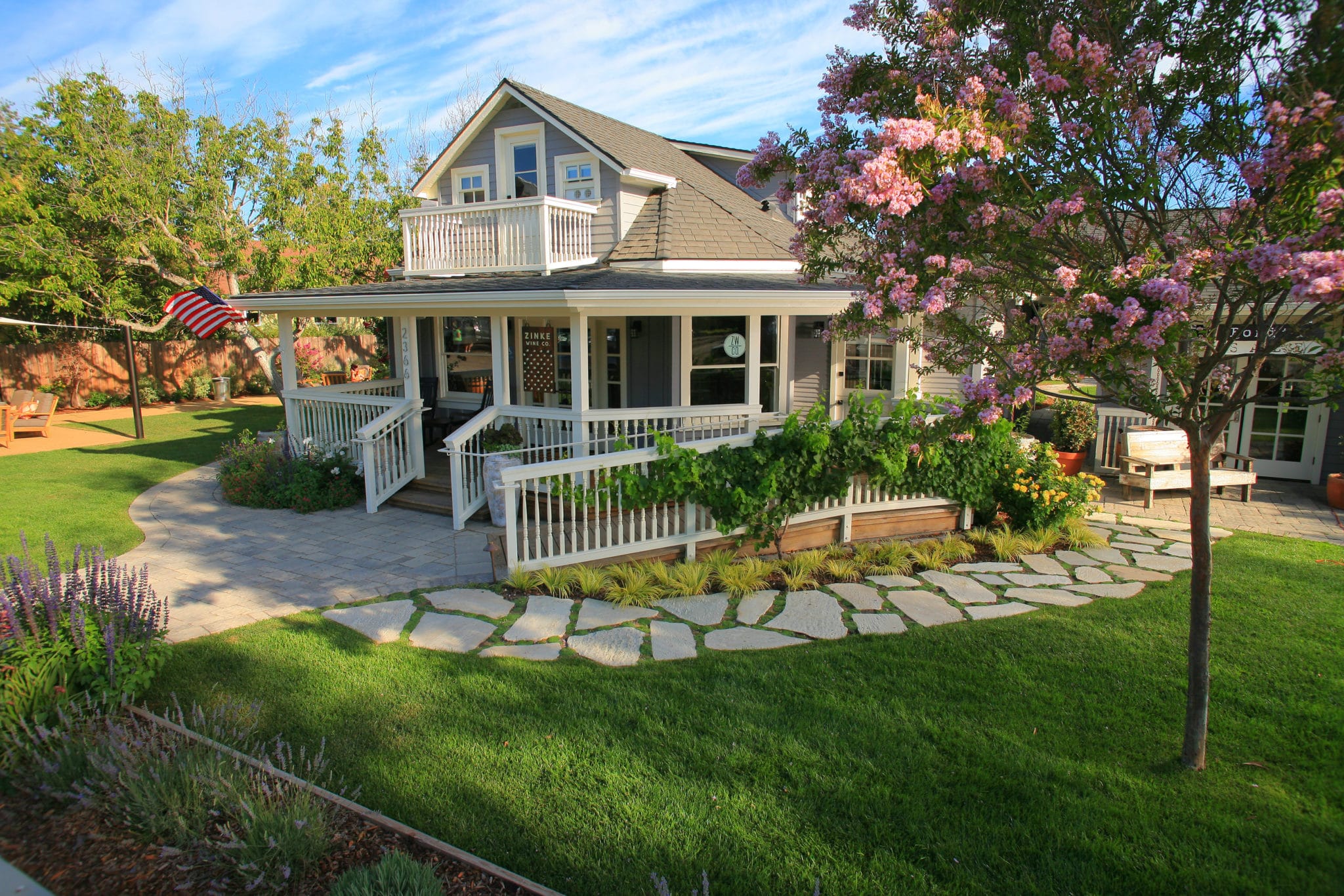
In the relatively short time Lisa Cox Landscape Design has been working in the Santa Barbara area and Santa Ynez Valley, she has become the go-to for anyone wanting clean and sharp designs with a focused point of view. This is clearly evident in her design for the brand new Zinke Wine Co. tasting room. Lisa says she can’t take complete credit for the beautiful design as she worked closely with Thierry Fraye of Paysage Landscape and the Zinkes who have impeccable taste and a clear vision for their brand.

IMG_3740
The Zinke Wine Co. Tasting Room in Los Olivos

Michael and Ashley Zinke are Zinke Wines. Michael Zinke is a self-taught winemaker that apprenticed at Girouard and Sans Liege wineries before venturing out on his own. They opened their state-of-the-art tasting facility in the wine country township of Los Olivos, CA this past May. They create single vineyard Rhone varietal wines sourced from a handful of Central Coast vineyards. They needed a venue befitting their precious creations and Lisa was the one to deliver.

IMG_3748
Two Greek Bottle pots customized by Eye of the Day

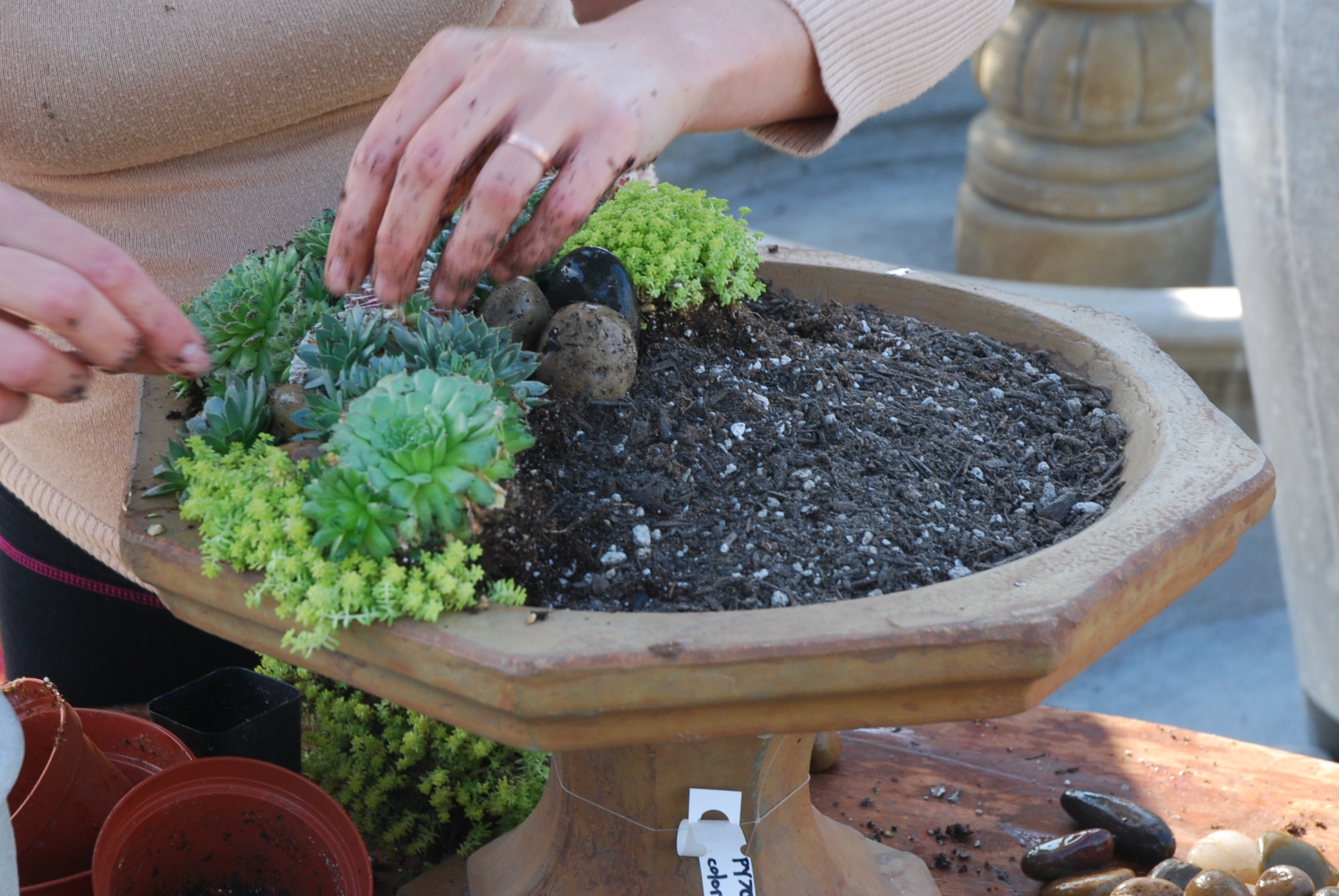
Lisa incorporated Eye of the Day products throughout her design. As you approach the building you are greeted by two ‘aged’ Greek Bottle pots customized by Eye of the Day standing guard aside the main entrance. Each pot is planted with drought tolerant growth. While enjoying your first taste of Viognier you overlook an impressive Asian carved granite trough bursting with colorful succulents. You can also admire the lovely Italian San Rocco Giara Liscia pot that flanks the bocce court while waiting for your next throw. Zinke Winery Blueprint OverheadAfter taking it all in, we had some questions for Lisa:  

What was your inspiration for the design?
My Inspiration came from a few sources.  First and foremost, the owners, Michael and Ashley Zinke have distinct, incredible taste.  They were looking for a look that felt something with a rustic/industrial look and a warm welcoming feeling from the street that would draw in customers who were looking for something a little different.  Also, with the existing Cape Cod style structure of the Tasting Room, we wanted to keep that charm, but infuse it with a bit of modern charm!

IMG_3802
Italian San Rocco Giara Liscia pot from Eye of the Day

Did the Zinkes have strong opinions on what they wanted or did they leave it up to you?
I would say they gave me a direction as stated above, but pretty much let me design what I felt would present both function and form to the space.

IMG_3782
Asian carved granite trough

What were the particular challenges with this project?
We needed an area that would allow furniture placement which I accomplished with the DG cutouts that are surrounded with lush green grass. There was some existing hardscape that we “improved” with either widening pathways or substituting new flagstone stepping stones. With a mixed plant palette of natives, lush perennials and color, the end product turned out quite pleasing to the eye…and of course the succulent filled planters are incredible!

What do you most like about designing in the ‘Valley’?
I can honestly say, what I like most about designing in the valley are the people! Since my husband and I have only been here for 1½ years, we can honestly say we are overwhelmed with the warm, friendly and caring SYV community!  And of course, how can you beat our gorgeous natural landscape of rolling hills, oak trees and vineyards…it’s hard to beat! A special thanks to Rich Cox Photography for the images!
10 Design Principles of Frederick Law Olmsted

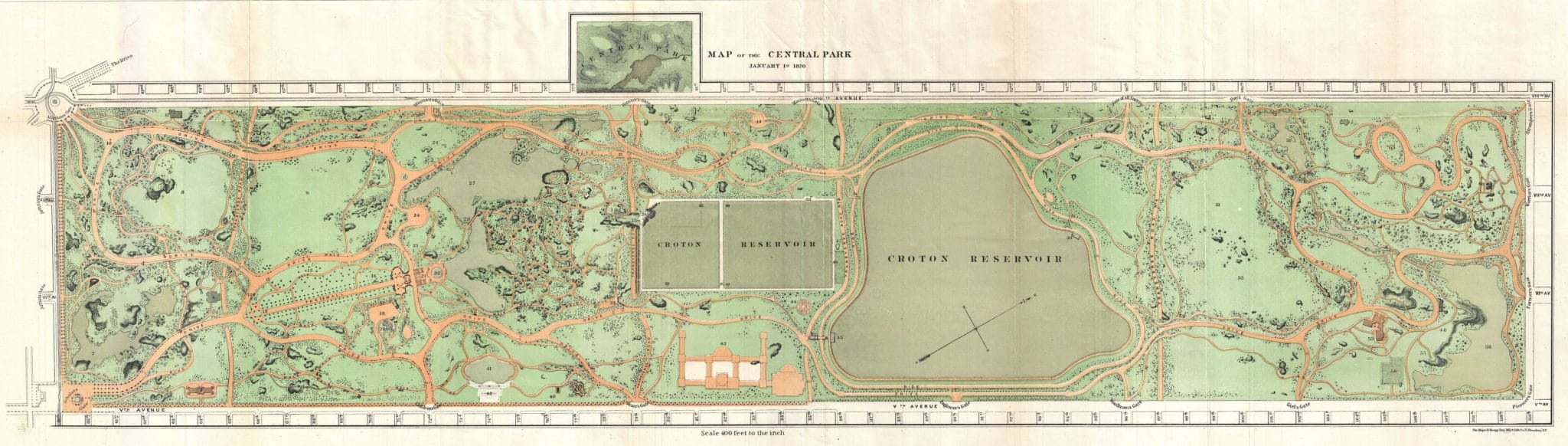
Frederick Law Olmsted, the father of American landscape architecture, is in many ways responsible for the way America looks. Beginning in 1857 with Central Park in New York City, he created designs for thousands of landscapes, including many of the world’s most important parks. Prospect Park and Fort Greene Park in Brooklyn are designed by Olmsted, as well as Boston’s Emerald Necklace, The Biltmore Estate in North Carolina, Mount Royal in Montreal, the grounds of the U.S. Capitol and the White House, Washington Park, Jackson Park and the World’s Columbian Exposition of 1893 in Chicago. Many of the green spaces that define towns and cities across the country are influenced by Olmsted. Frederick Law Olmsted Full Photo The “Maker of Parks”, Olmsted was a prolific writer and outlined his approach to design with ten principles:

1) Respect “the genius of a place”
Olmsted wanted his designs to stay true to the character of their natural surroundings.  The goal was to “access this genius” and let it infuse all design decisions.

2) Subordinate details to the whole
There was no room for details that were to be viewed as individual elements.  In his work, they were threads in a larger fabric.

3) The art is to conceal art
Olmsted believed the goal wasn’t to make viewers see his work. It was to make them unaware of it. To him, the art was to conceal art. And the way to do this was to remove distractions and demands on the conscious mind. Viewers weren’t supposed to examine or analyze parts of the scene. They were supposed to be unaware of everything that was working.

4) Aim for the unconscious
His designs subtly direct movement through the landscape. Pedestrians are led without realizing they’re being led. There is the sensation of feeling lost yet completely confident that you can easily return to your starting point.

5) Avoid fashion for fashion’s sake
He felt popular trends of the day, like specimen planting and flower-bedding of exotics, often intruded more than they helped.

FLO map6) Formal training isn’t required
Olmsted had no formal design training and didn’t commit to landscape architecture until he was 44.  His views on landscapes developed from traveling and reading.

7) Words matter
Olmsted wrote often and thought hard about the words he used. For example, he rejected the term “landscape gardening” for his own work since he felt he worked on a larger scale than gardeners.

8) Stand for something
His writings show that, in his view, he wasn’t just making pretty, green spaces, he was democratizing nature.

9) Utility trumps ornament
He wrote, “So long as considerations of utility are neglected or overridden by considerations of ornament, there will be not true art.”

10) Never too much, hardly enough
He constantly simplified the scene, clearing and planting to clarify the “leading motive” of the natural site. Thirty years after he helped to design Central Park, he wrote to his ex-partner, Calvert Vaux, “The great merit of all the works you and I have done is that in them the larger opportunities of the topography have not been wasted in aiming at ordinary suburban gardening, cottage gardening effects. We have let it alone more than most gardeners can. But never too much, hardly enough.”

Olmsted believed in the restorative power of landscape for ordinary people. He disliked straight lines. He loved contrasting textures, but it was a cardinal rule with him to blur the boundaries. The architecture of Europe impressed him, but trees were his true love. And that true love shows.  Everywhere.


Groundskeeping: On The Road to an Ancient Landscape – The Bristlecone Pine Forest

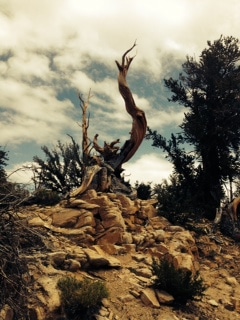
Rushing from place to place trying to fulfill our obligations to one and all, we miss so many beautiful moments and opportunities.  I recently made a large delivery to El Dorado Hills to a client who found Eye of the Day through our website.  The house reminded me of L’Amorosa in Tuscany, a mini fortress built of stone. The entrance required two of our largest Terrecotte San Rocco Orcios (oil jars). bristlecone 1 However, rushing this order to meet a deadline, I was not excited about a 14-hour round trip from Santa Barbara to Sacramento. After all, with fear and trepidation, I could have freighted it all including the antique Orcios, but I had a plan that would allow my sense of adventure, my love of horticulture and my need to spend time with South Pasadena’s 2014 Teacher of the Year, my sister Nan, on her much deserved summer break. bristlecone 4bristlecone 5The plan was to take advantage of being so near to California Highway 49, which goes through California’s Gold Country, and drive back via this scenic byway checking out how things have developed over the last 20 odd years. Then, we could take advantage of the open passes over the Sierra Nevada Mountains to smell the pine sapped air and dip our toes in cool mountain lakes. And because I suffer from a Sisyphus complex, crest the divide and descend the eastern side down to Highway 395 to the Owens Valley (think about the movie Chinatown and you’ll remember the fight for the water from this valley). bristlecone 3And here, just 26 miles up, up and up outside of Lone Pine, California was our true destination: the Bristlecone Pine Forest, home to Earth’s oldest living things, trees that are over 4,000 years old. Nature’s longest lasting landscape design in one of the planet’s harshest environments. A trek at 10,000 feet sucking thin air to be in a landscape of such desolation and beauty.  I look at sophisticated, lush, and beautiful landscape designs and gardens every day of my life and the contrast of this magnificent place and its unfathomable significance is seared into my mind’s eye forever. bristlecone 2Oh, the places my work takes me!


The Importance of Sustainable Gardening

The word of the day is sustainability. The United Nations World Commission for the Environment defines sustainability as “meeting the needs of the present without compromising the ability of future generations to meet their own needs.”

The other word that makes headlines is “green.” What that means for gardeners and landscape designers: We must pay attention to the materials we use in our landscapes. Hardscape materials should be renewable. Plants should not require major input of chemicals (fertilizers, pesticides, fungicides) to keep them healthy. Water needs should be easily fulfilled by the local climatic regime. 2014-01-10 We can also invite in native sources of nutrients and pest control agents. In an ideal natural ecosystem, there are no major inputs from outside sources. Think about an old-growth forest. Seeds sprout, trees and herbs grow and die. Their elements are recycled by decomposing fungi and bacteria to feed the roots of the remaining members of the forest. The model for us to emulate is to recycle all of the organic material produced either on site or by directing it to the local recycling program. We are used to calling it green waste, but it is really a green resource. 2014-01-18 Caring for our landscapes, whether we have a small city lot or manage a golf course, should mean thinking about sustainable practices. We must begin to see our personal green spaces as little pieces of a much larger urban ecosystem. What are the integral parts of that ecosystem? Who or what are the major players in this cycle? What are their needs? What practices will we need to adopt to encourage this natural process? And, just as important, what practices must we abandon?

The goal of sustainable gardening is to have a complete cycling of nutrients and maximum health of the soil and plants.


APLD San Diego Visits Eye of the Day

Eye of the Day Garden Design Center recently welcomed some members of the San Diego district of the Association of Professional Landscape Designers. Headed by Koby Hall of Koby’s Garden Alchemy, Inc., the group of landscape designers hit the road for a weekend of visits to major garden influencers throughout the Santa Barbara area.

They stopped by EOTD here in Carpinteria for some tea and tours by owner, Brent Freitas, and sales rep, Mitch Walker who were happy to share information about our company history and an in-depth overview of our various product lines. This included our Italian terracotta from Terrecotte San Rocco and American pottery from Gladding McBean. The APLD group walked our showroom to see our extensive collection of fountains, statuary, and containers. Brent also spoke about our customization services including coloring, aging, and fountain conversions.

We were happy to see some EOTD items find new homes in future San Diego APLD designs. Special thanks to you guys and we’re happy you could visit!

If your group would like a tour of Eye of the Day, please contact us at: trade@

Click the slideshow for more of the San Diego APLD visit at Eye of the Day:


Take a Look Inside Our Brand Book

Eye of the Day Garden Design Center is proud to announce the launch of our first-ever Brand Book. When you visit our store you meet the unforgettable people and see the authentic pottery that we’ve built our business on, and now you can have that Eye of the Day experience by viewing digital publication on any device.

Why a Brand Book? As our clientele becomes more nationwide, we have felt people were missing out on the core idea that we are a local, family business with a visually spectacular array of products. Some of our long-standing customers and friends wanted the opportunity to see our ever expanding selection as well.

mission statement

“Coming to Eye of the Day is about finding design inspiration,” says Brent Freitas Owner and CEO. That inspiration is conveyed via the Brand Book by breathtaking photos of products in and out of the landscape settings, coupled with informative text that has the depth and richness you’d expect from Eye of the Day. “If you are drawn to a container but unsure as to how you could use it in your garden, there is probably an answer for you in the Brand Book.”

The Brand Book is as helpful to the novice as it is to garden professionals, some of whose profiles and projects grace the digital pages. Rick Button and Carol ‘Puck’ Erickson are just a couple of the featured designers that share their thoughts on our containers and fountains are incorporated into their projects.

Print

If you are looking for quality and durability but have been unable to get that finish that you need for your project, the Brand Book also touches upon our customization process. This release is intended to be an important digital resource for anyone who loves or is involved with creating exceptional outdoor living spaces.

Click here to be among the first to preview our brand new book.