Home Outside Palette App: Landscape Design Made Easy and On the Go

Could it be time to add your mobile device to your set of gardening tools? There really is an app for everything. Bring out your inner designer to create the dream landscape you always imagined with the Home Outside Palette app. Move, resize, and even undo with over 280 available elements (trees, paths, enclosures, and more) to an existing or new landscape before even stepping outside. Design on the go has never been easier for novice and experienced designers.

PaletteApp_AllDevices
The Palette app on various mobile devices assists with landscape design

“We created the Home Outside Palette app to help homeowners design their properties,” says Julie Moir Messervy, owner of landscape architecture and design firm JMMDS and creator of the app and the Home Outside online landscape design service. Using any iOS or Android smartphone or tablet, users can upload a property survey and use it as a background, or select a grid or colored background, and mock up their landscape by tapping and dragging hundreds of elements into place. The grouping feature lets you lock permanent elements together (such as the house, garage, and driveway), and the layers tool gives you the ability to play with different versions of a design.

Palette_ipad-1
You can even change up your design elements with your tablet

An in-app purchase offers additional elements as well as a measuring tool that lets you input rectangular measurements or “walk-and-click” a GPS-based outline of your space. A drawing tool allows you to sketch free-form garden beds and other features. “From the start we knew that we wanted to include all the green features that today’s homeowners need: laundry lines, greenroofs, chicken coops, veggie gardens, compost bins, greenhouses, solar panels, and more,” says Messervy. “It is possible to have a functional, sustainable yard that’s also beautiful—and this app helps you get the design right before ever picking up a shovel.” When you’re finished, get important feedback before committing to any design element. You can share designs from the app on social media or email them to friends. For additional help with your landscape, the Ask an Expert feature lets you send a design from the app to JMMDS’s award-winning designers for their expert suggestions. The app is designed to be practical and user-friendly for the imaginative homeowner to the professional designer. Messervy adds, “Our mission is to make beautiful design available to anyone, anywhere.”


By Jennifer Silver, Marketing and Special Projects Manager of Julie Moir Messervy Design Studio

Jennifer has held a variety of teaching, writing and editing positions. When she moved to Vermont 12 years ago, she discovered her true passion: sustainable agriculture. She is never happier than when writing or gardening. At JMMDS, she gets to write about gardens—what could be better?


Debunking the Terracotta Mythos

Debunking the Terracotta Mythos

The sun has yet to awaken, the moon just rose as a wink on the horizon, and the roosters are making that heinous sound only roosters can make, disturbing my first cup of coffee. Excuse me while I get that cup…


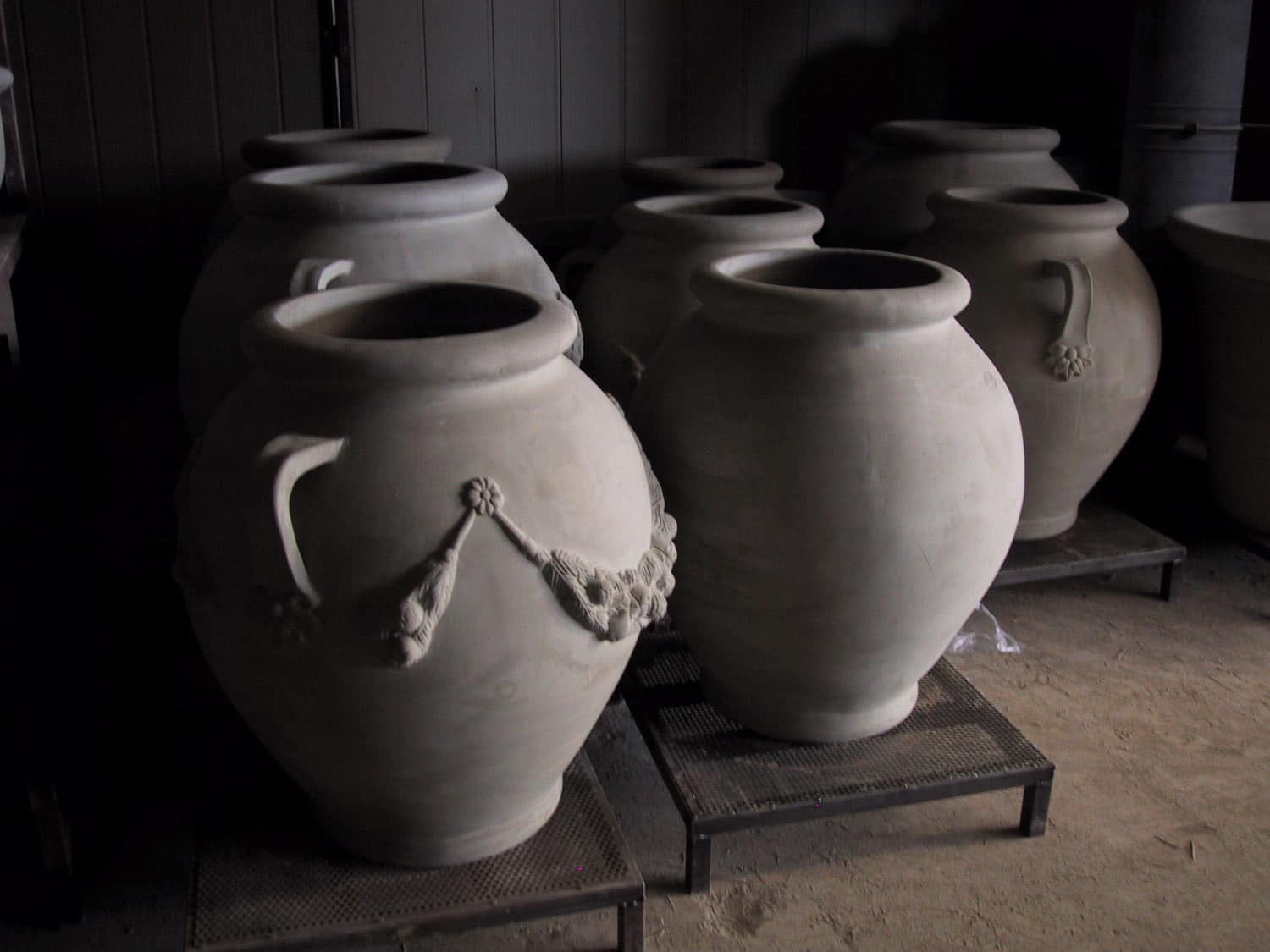
I want to talk about terracotta and it’s classification as an earthenware clay body. In ceramics we have hundreds of clays available to us, but all of them fit into one of two categories; earthenware, or stoneware. The difference between earthenware and stoneware is the maturation temperature, more easily termed as low or high fire clay. Low fire clays, having been fired to their maximum temperature (anywhere from 1800-2100°F) remain porous, while high fire clays vitrify when fired to higher temperatures ( 2200-2500° F). Since clays have many “ingredients” that are specific to their particular region, all clays have a different temperature range, but all can be classified as either low fire or high fire clay. Terracotta is technically a red earthenware, a low fire clay containing between 5 and 10% iron.


The meaning of “terracotta” is “baked earth” in Italian. Many people mistakenly use the words “terracotta” to describe anything made of clay from anywhere in the world, whether it is low or high fired. But as we are beginning to understand, terracotta is an actual clay body itself. It is abundant and utilitarian, can be found on every continent, and has been used for millennia to create irrigation piping, garden pots, and roof tile. It is best to speak of terracotta regionally, for example Mexican terracotta is essentially the same as Italian, but fired at a lower temperature. Another mistake about terracotta is that it is weak. In many places in the world it is hard to find even enough fuel to bring the fire up to the maturation temperature of the clay. If the temperature that matures (hardens, strengthens) the red clay is 1980°F, but the fire only reaches 1800°F, what happens? You have immature, under-baked pottery that is susceptible to cracking and doesn’t last very long. This happens all over the places simply don’t have the wood to do the firings, so they will use whatever they can to heat up their pots, resulting in a market in which one terracotta pot will last only two years and the one next to it will last two hundred… it just depends on the fire and country of origin.

The next time someone says to you that terracotta is junk and won’t stand the test of time, tell them in all confidence that it depends on where it is from and how it was fired. Then you can say that Eye of the Day garden design center only sells authentic Italian Galestro terracotta, mined for five generations from the same clay deposit, and fired to perfection. You can always depend on Eye of the Day for the highest quality in garden design products.

Hope this was informative. See you all next month!


Elements of Style: The Classic Mediterranean Garden

Elements of Style: The Classic Mediterranean Garden

A classic Mediterranean style garden is typically low-maintenance, drought tolerant and perfect for a climate dry and hot in Summer and warm and moist in Winter. For those of us living in California, this seems a perfect fit. Traveling throughout the Mediterranean region, focused on the landscape and gardens, reminders of California are constant.

The defining characteristics of the Mediterranean style are:

  • Focus on hardscapes, with very little or no lawn
  • Citrus, olive trees, rosemary and lavender often planted in terracotta pots
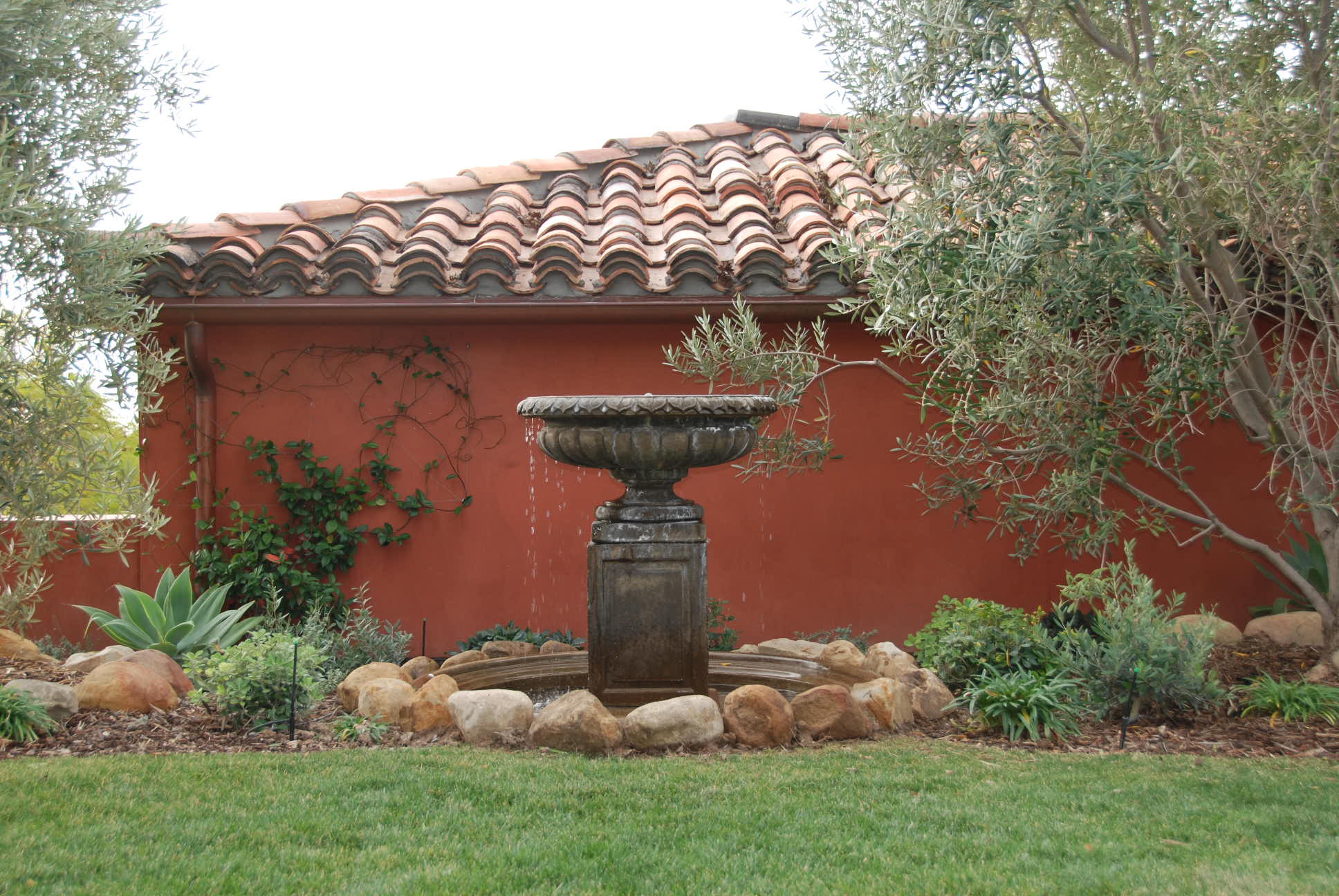
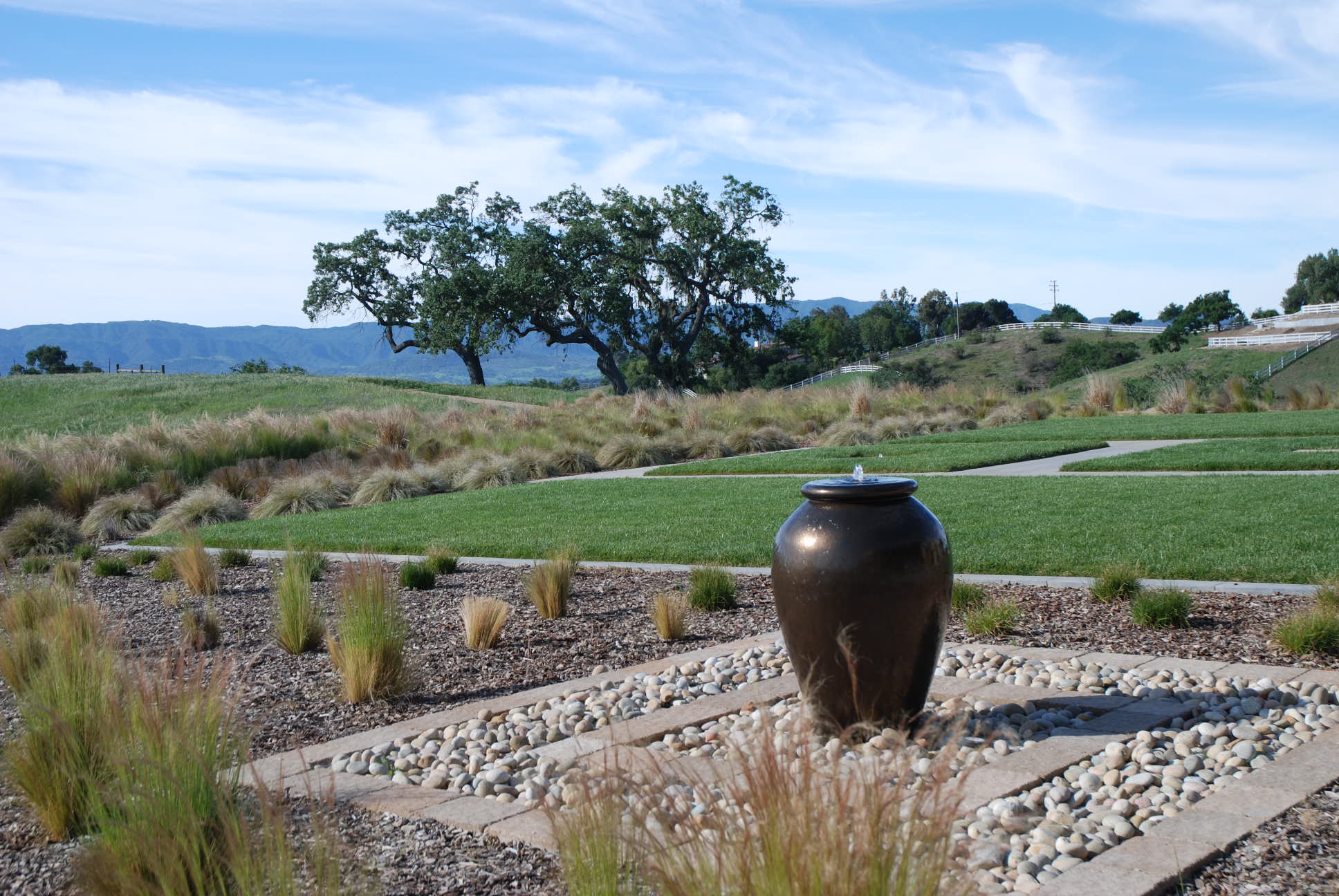
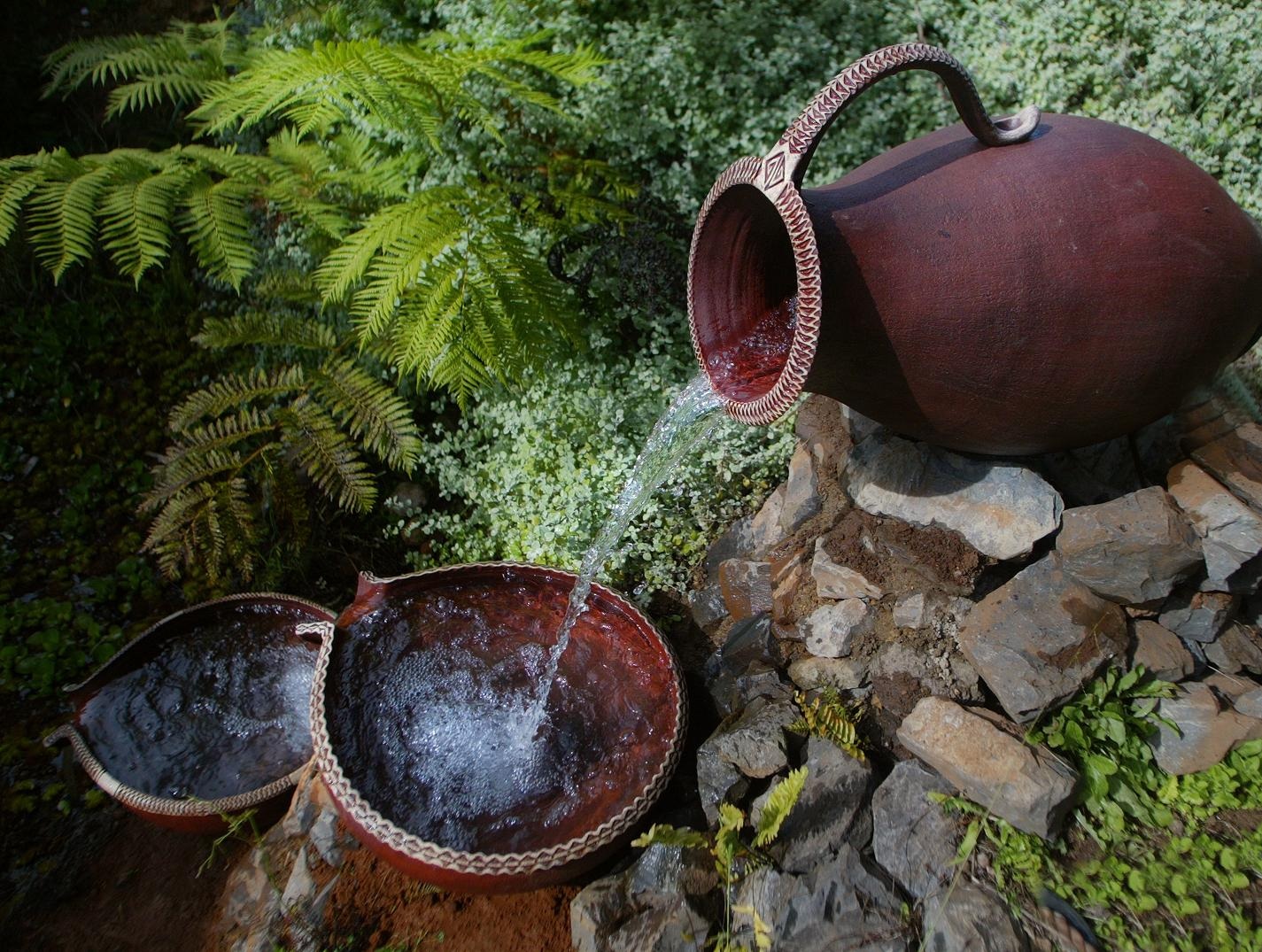
  • Fountains and water features are key. Water features became popular in the gardens of the Italian Renaissance. They reflect the garden and provide the relaxing elements of sight and sound.  Because of the scarcity of water in the Mediterranean,  many water elements offer a relief from the heat.
  • Large and small terracotta pots and urns and statuary. Pottery in many forms has been a part of Mediterranean gardens since their origins in ancient Roman households. From intricate bas-relief to simple and plain, they are quintessential for a European garden.  Statues, urns and planters provide focal points and because their footprints are small, they are particularly useful in a small garden. The Greeks and Romans filled their pots with flowers to add color to their courtyards and pathways without depleting the water supply, or they used them to grow fruit trees that could be moved about  according to the outside temperature.  But pots were also used as beautiful objects on their own – a classic oil jar at the end of an allee, a row of terracotta pots topping a balustrade, or an urn crowning a pedestal.

You don’t have to live in Spain, Greece or Italy to reflect the siren call of the Mediterranean classic garden.  A few carefully chosen garden elements… an antique Greek pithari, a scattering of large terracotta pots and urns and a simple water feature will create your classic otium.  Being water conscious and embracing a rustic, muted look will go a long way toward making your space the place to be.


How To Keep Your Fountains Water Wise During Drought

As we all face this unprecedented drought, we need to make smart choices about using water. At this point I’m praying for rain, but I’m realistic enough to know my lobbying may not be that influential.

But I have instituted several measures, the first of which regards my fountain. This water element is an essential part of the environment at my home. It runs 24/7 at this time of year and requires filling once a week. The sound it provides directly affects my sleep.  Could I live without it? Yes, I suppose I could, but why should I? It just doesn’t use as much water as one might think. It recycles the water and other than splash, evaporation and birds, the water goes round and round. I have calculated that I typically add about five gallons a week. The equivalent of about two toilet bowl flushes.

Water Wise fountain

Think about how much water a small lawn consumes and the minimal use of a fountain along with its relaxing and recuperative powers. It seems to me to that it’s a good use of water in my home. Some other tricks for your fountains are:

  • Turn down the pump to reduce the flow and splash
  • If you have a  fountain that splashes a lot, place plastic buckets around it to catch the errant water to add back to the fountain.
  • Use bath water: I am an ardent bather, I love a hot bath even in the summer, and I use that water to fill my fountains as well as water container plants. It’s easy to use an old pump and some tubing and when you’re finished with the bath, pump the water into 5 gallon pails and use it in the garden.

I don’t have any tips for you for your lawn because I haven’t had a lawn in twenty years. My feeling is: JUST SAY NO TO LAWNS. There are so many things that you can do instead and probably will have to do instead, especially if this drought continues for much longer.


Right Plant, Right Place: The What and Where of Drought Tolerant Planting

My client was happy; she’d just completed installation of major landscape improvements designed by an award-winning designer. I was not so happy. Some of the plants the designer had chosen were simply not suited for the area where they’d been planted and it was my job to make them look good.

Landscape architects, designers, and maintenance crews are largely trained in the nuts and bolts of building landscape: walls, paths, site lines, and the mechanics of irrigation systems, but may not be as versed in the fine art of plant selection. The lusty plants at the nursery look fantastic in their pots, but growing information is scanty.

The tag says full sun to partial shade. Were the conditions it was tested in similar to your site? The tag says drought tolerant. What kind of soil would provide the support the plant needs to actually survive a drought? And for how long?

Especially in water-challenged Southern California, consider the following as essential to a successful landscape:

Soil

Test the soil. Is it heavy clay, loamy or sandy? Each different type requires specific treatments or careful plant selection. Match plant requirements to what is available (or achievable).

Plant Grouping

Group plants by water and exposure requirements. Even the Cadillac of irrigation systems will support plants only if all of them in the area being watered require the same amount at the same application rate. In our climate it should always be the primary principle to reduce the amount of water required for any given garden zone.

Environment

We shouldn’t have to relinquish every lush-looking palm, fern or ginger, just make sure they are placed where their water requirements don’t conflict with those of the more drought-tolerant ones.

Professional botanists and horticulturists have taken these questions to heart and provide more complete information in books, magazines and websites. Call on their expertise and experience to create a successful, beautiful garden.

See more of my writing on sustainable landscaping here.


Baked Earth: Your Passport Into Fascinating World of Fired Clay

eye of the day garden design center

Want to learn about the wide range of materials and methods used in the production of garden pottery? Professional ceramicist Scott Semple will answer all your questions concerning terracotta and its applications in garden design throughout the 35,000-year history of fired clay vessels, from ancient times until the present day. Our hope is that you will find this educational journey not only informative but a valuable tool when considering Eye of the Day pottery as a functional, aesthetic and site-specific option for your garden design needs. sm-scottSempleAbout the Author With over 40 years experience, internationally-recognized ceramic artist, arts activist, and educator Scott Semple of SS Clay Works will lead a monthly exploration into “What is clay and why is it important?” We are pleased to introduce Eye of the Day resident consultant Scott Semple: Scott 1Hi folks! What a great idea—mixing garden design, world travel, critical examination and mud! Sounds messy, fun and engaging all at once. So, a little back story on me: I am a fifth-generation Californian with brown thumbs. It’s like I was telling Brent last night, I’ve never been able to grow anything, but when it comes to mud—specifically clay, you are talking to the right guy. As a professional, I am what is referred to as a “Large Format Potter,” meaning I build huge pieces out of clay. I am fortunate to have my pieces in the private collections of many prominent and celebrated individuals, and currently balance my time between the studio, the classroom, and the natural world. Scott 2People often refer to clay, ceramics and pottery all in the same context. I do this all the time. Yet perhaps a little clarification is needed. Clay is the actual material. In its essence (and a very elementary definition) it is decomposed granite, at once sculptural and utilitarian, abundant and valuable. Ceramics on the other hand, is what happens when you add fire: Fired clay is ceramic. And pottery is pottery, it’s that simple. So don’t get confused as I move fluidly between terms. Scott 3There are countless applications for ceramics, especially when you consider ceramic engineering or clay in material sciences. NASA, Raytheon, Apple, and Toyota are but a few entities using clay. But in the garden design business, Eye of the Day really stands above and beyond the competition. They bring the real deal, direct from the countries, potteries, and clay villages of the world to our yards and ultimately our lives. I am proud to be working with this team. See you guys next month. -SS. Questions and thoughts for Scott? Let us know! Comment via Twitter or Facebook with the hashtag #BakedEarth and we’ll make sure your queries get to Scott. Better yet, leave a comment for him below in the comments section.