Preview Spring Garden Design Magazine

Eye of the Day|Spring Garden Design |


Eye of the Day|Spring Garden Design Magazine
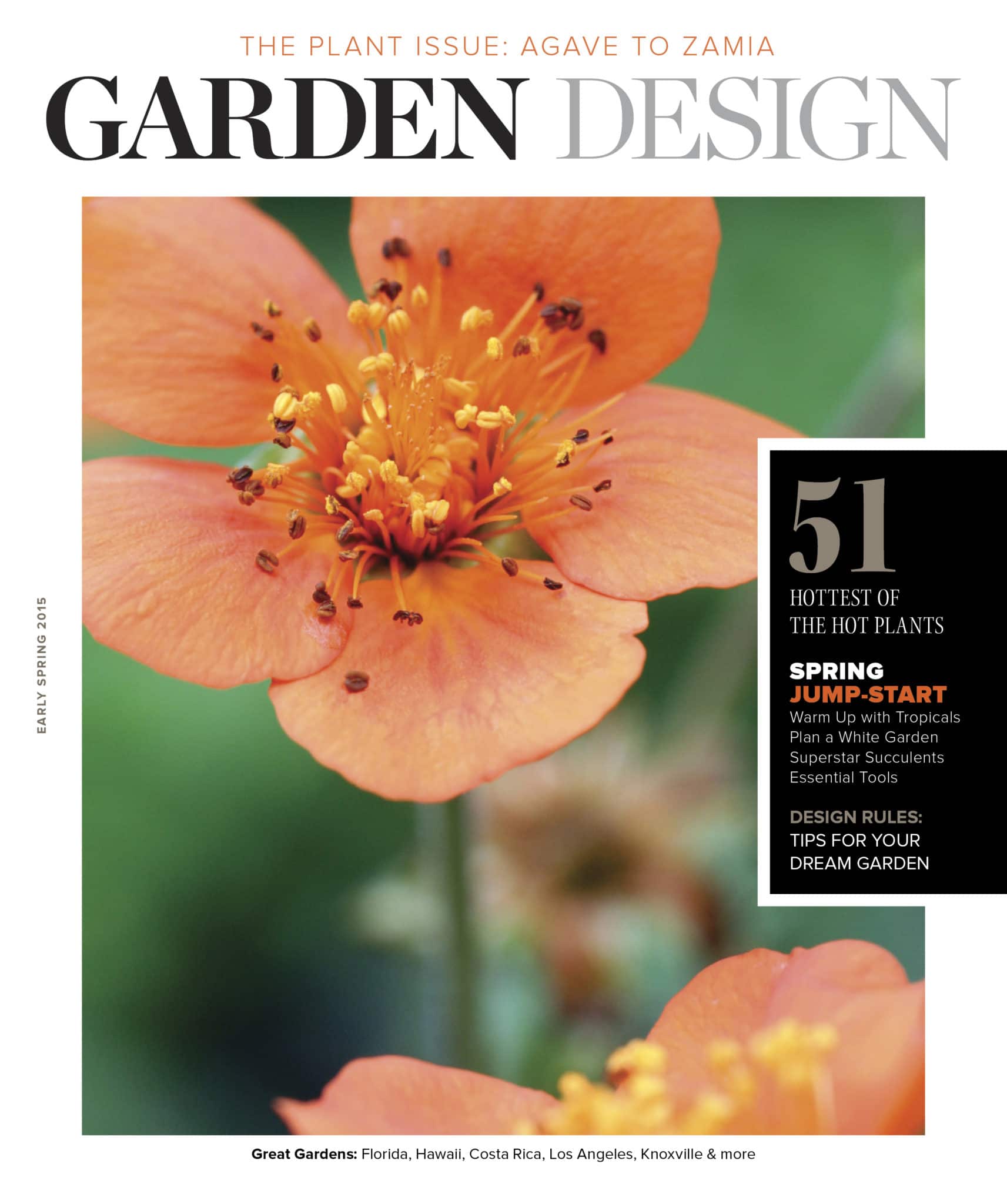
2015 Spring Garden Design Magazine Cover

Garden Design magazine is bringing back their always-popular collection of Way Hot Plants–perennials, shrubs, and grasses plant aficionados love. See them all plus much more stunning photography, gardens, plants, and products in their current issue Early Spring, on sale now. Preview the issue and subscribe today: .

Eye of the Day |Garden Design Magazine| Hottest Plants Preview
Preview of Hottest Plants feature in Garden Design Magazine


Eye of the Day Valentine’s Day Gift Guide 2015

Eye of the Day Garden Design Center|Valentine's Day Gift Guide|Eye of the Day products for Valentine's Day

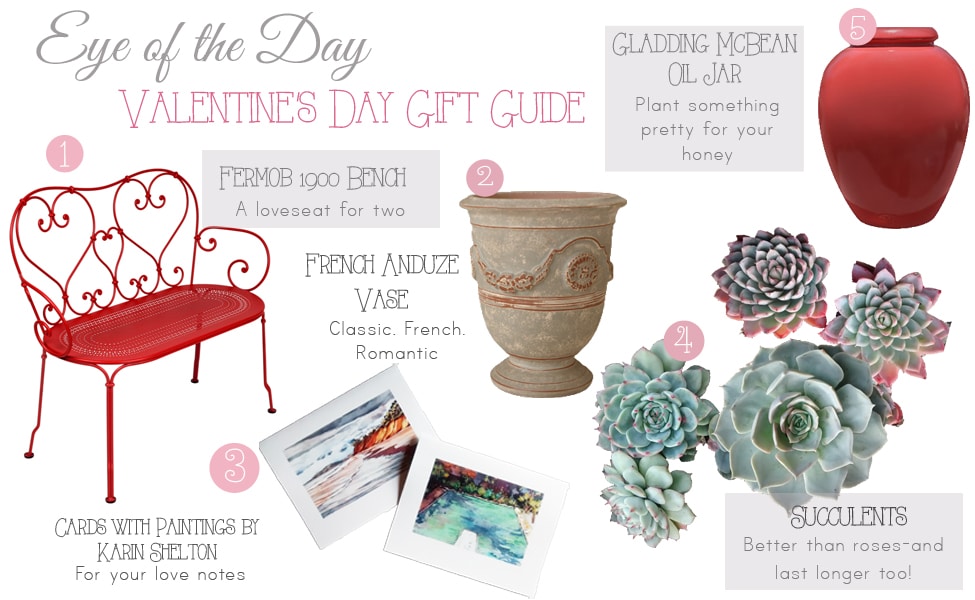
Valentine’s Day is just around the corner. Check out the Eye of the Day Valentine’s Day Gift Guide for special and unique ideas for your sweetheart.

1. Fermob 1900 Bench – A love seat built for two!

2. French Anduze Vase – Classic pottery for a classy person.

3. Cards with Paintings by Karin Shelton – Please call or visit our showroom – Perfect for writing love letters.

4. Succulents – Please call or visit our showroom – Small or big, these make a great alternative to flowers.

5. Gladding McBean Oil Jar – Plant something that will last.

Contact: 805-566-6500


Groundskeeping: Traveling South for a Peru Expedition

True to my “Profile” I do wander the globe looking, sometimes under rocks.  Here at Eye of the Day we have been successful in offering old rocks with a purpose for the garden.

Throughout the centuries, agricultural societies shaped stone to hold water and fodder, fodder and water, to sustain their livestock. These pieces make stellar planters and add mass and dimension to a landscape in many ways. Here at EOD we make them into beautiful container gardens, water plant containers, border containers and fountains.

Yes, they are heavy and we have become pretty good at delivering and installing them, but that isn’t the story I want to tell here. The story is where to go to find these old and handmade things.

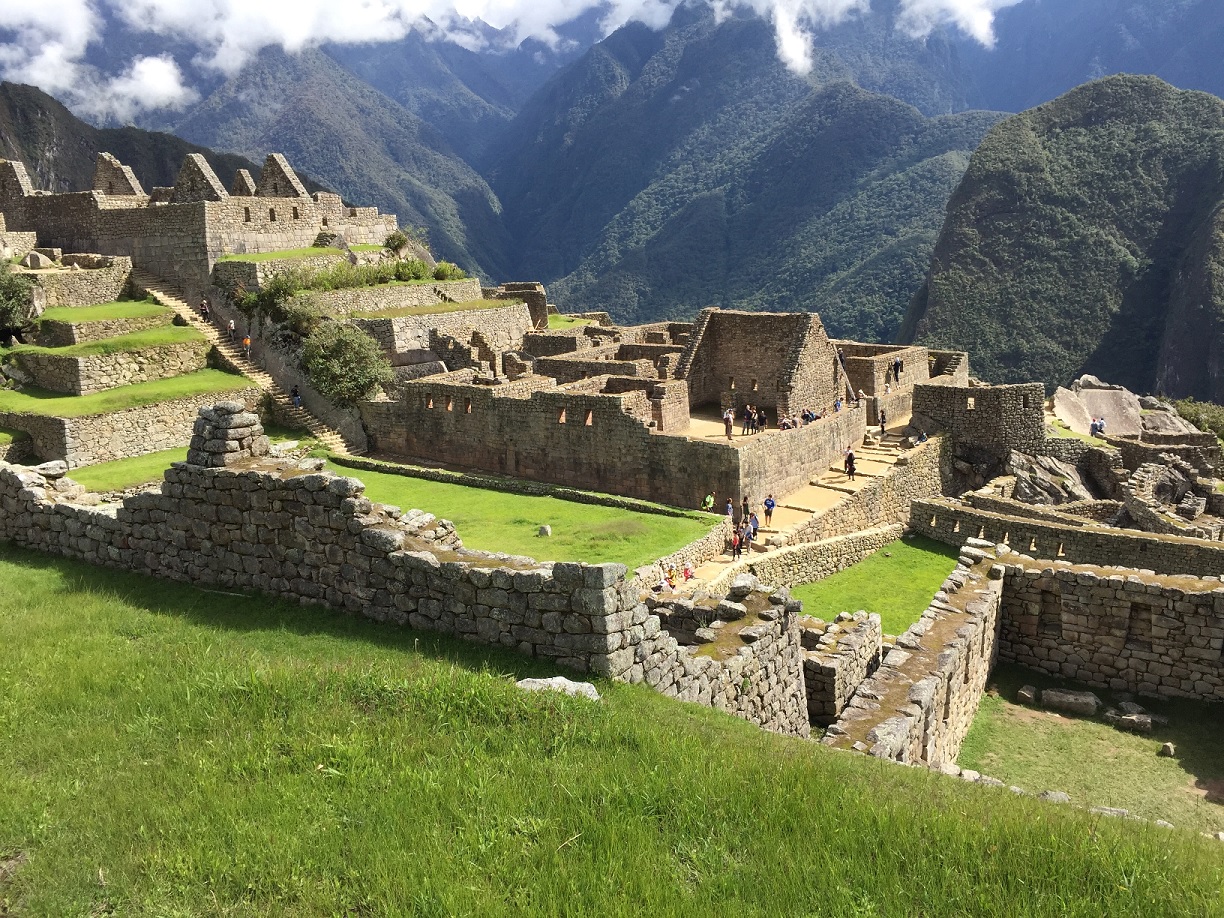
Where is there lots and lots of granite to hand pitch? The Andes, Peru, Machu Picchu.

Discovering Lima, Peru:

Busy and booming, this place where it never, and I mean never, rains is beyond bustling.  It reminds me of China with cars and buses everywhere so that if you’re not paying attention, you just might get run over.  There is smog, but being on the ocean, there is some relief.  Also, it’s a good idea to go in late November. Wait, that’s Summer. Or is it Winter there? T-shirts, sandals and shorts.

The city is spread out and the different districts make it fun and interesting to explore. The Baranca is funky, hip, and has a great flavor to it.


The M district, where everyone tells you to stay (I agree), is where the action is and the shopping and the best food. The food is fantastic, really. Ceviches galore and Pulpo,  the flavors and the talent of the cooks, chefs and kitchens is world class. The opportunities to walk and tour the city and sample their great restaurants are abundant.

Getting out of the City

But unless you are looking for crafts to purchase, especially things woven and crocheted from alpaca and sheep, or silverware all on a scale relative to grains of sand at the beach, you will be disappointed. So, I headed to the mountains of Cusco, something like 10,000 feet above sea level. This city is different in every way from Lima except for the woven and knitted goods.

Cusco is a small but bustling city with sights galore and outstanding food. The streets are still mostly made of granite cobblestone and strong ankles are recommended.  Let me say here that the coca tea is a good idea and tastes great, it helps with the altitude but it is not the experience many think it will be or maybe even want. I didn’t, however, chew any leaves, it just didn’t strike me as important. I was hunting for rocks!

If you could turn granite into energy, the Peruvians would be the wealthiest people on the planet.  How did the Incas move the boulders (some a hundred tons or more), not only downhill but, down mountain slopes, across large rivers and up mountain slopes hundreds and hundreds of feet into place, and when fitted together you could not slide an eyelash between them?

The ever present granite mountains granite buildings, granite temples and, granite streets are enough to cause a need in the hardened soul for some loamy soil and terracotta planters (that’s EOD humor, by the way). I was certain that I would come across some troughs or stones carved to hold water for thirsty beasts kept for their wool and hair.

Sadly, I canvassed from car, bus and train windows and never saw anything until we were on our way to Puno and we stopped at the most outrageous church I’ve ever seen. There I saw two old stones, definitely carved to hold water. Unfortunately, they were over two thousand years old and I could never have afforded them, at least for use as planters.  Oh well! Not every expedition is successful from the EOD point of view. Nor does it have to be, even for me, but I was surprised that in a country made of stone, so little of it has found  its way into the culture.

Oh well, on to the next spot!


Eco Friendly Landscape Design by Lisa Cox for Hacienda Style Home

Lisa Cox, of Lisa Cox Landscape Design has happily designed landscapes ranging from simple tract homes to vast estates.  As she plans an outdoor environment, she envisions a transformation that communicates the lifestyle and personal taste of the client, while incorporating her own style. Each garden is designed and built with all materials including stone, plants, trees, water features, and garden art selected by Lisa using local, top qualified growers and suppliers.

Commitment to sustainability, the use of drought tolerant plants and trees, including California natives, has been an integral part of her design process, allowing a more “naturalistic” result that mimics the local terrain.

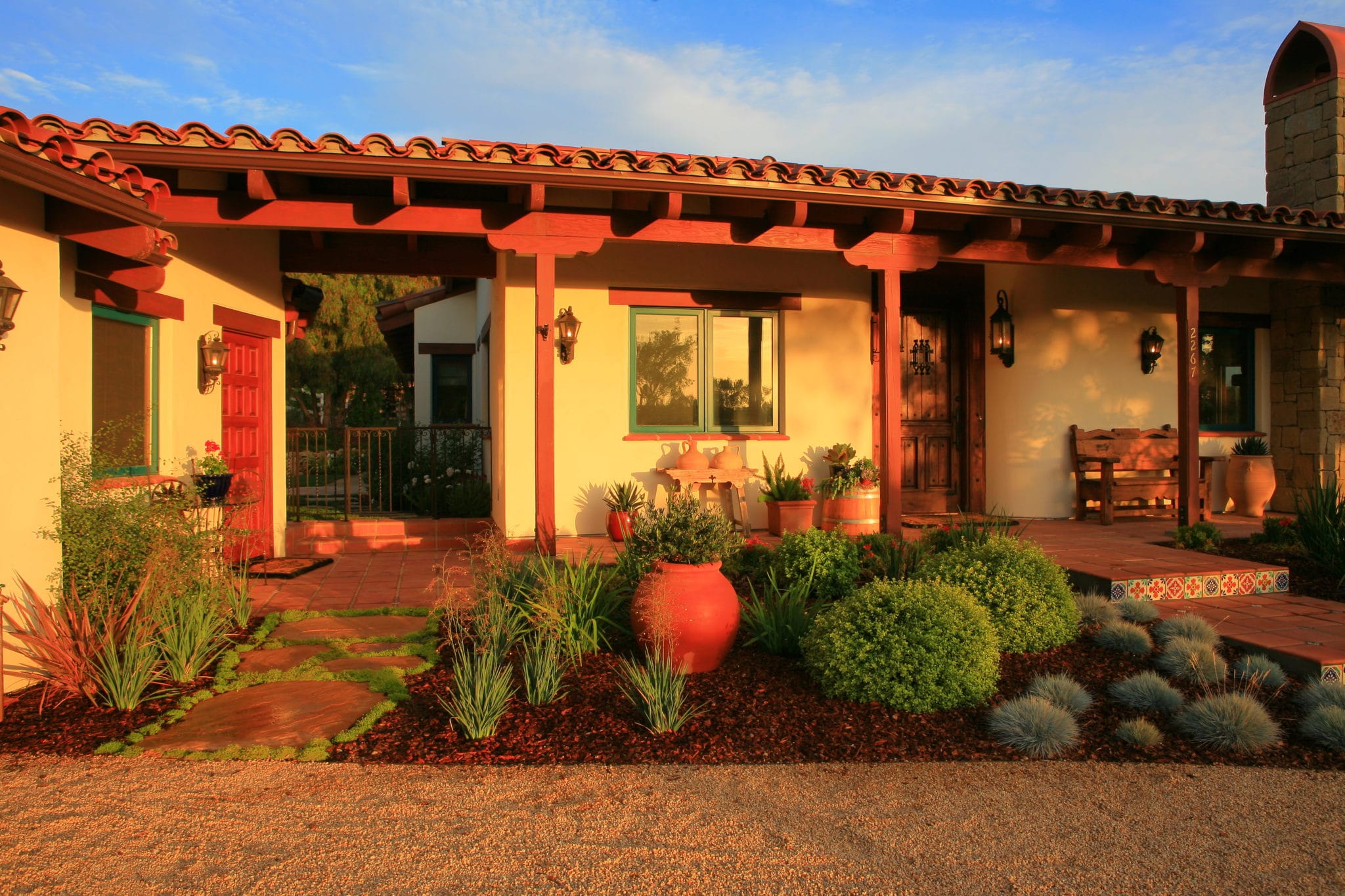
When Lisa met with her new clients in the Santa Ynez Valley, they requested that the newly constructed home not have any sod in the front area, and that she use drought tolerant plants including grasses and succulents. Working with a blank slate, except four nice sized olive trees at the entrance, she was free to design the space, including selection of a plant palette that complimented the Hacienda style of the home. With the use of local sandstone boulders, salvias and phormiums as her base, she also incorporated deciduous trees and perennials for color in the Spring and Summer, and a few rows of grape vines because after all, it’s the Santa Ynez Valley!

Choosing Greek terracotta pots from Eye of the Day, filled with “Blue Glow” Agaves gave the clean, rustic look she was looking for on the front porch and the traditional Terrecotte San Rocco terracotta pot in front worked perfectly to show off the “Little Ollie.”

It seems everything progressed perfectly for Lisa and her clients, but there WERE a few important challenges:

  1. The need to place a gopher basket for every plant as the local area is inundated with gophers that would quickly destroy the plantings, and
  2. The necessity of paying close attention to selecting plants that can stand the heat as well as the sometimes frigid nights where temperatures can go into the low 20’s or below.

As Lisa’s work on the project came to a close, she felt deep satisfaction; in fact she felt this was a home environment she could inhabit herself.  The project was a dream to work on and the end result was exactly what the homeowner envisioned.

Visit Lisa Cox Landscape Design to view more of her work.


Terracotta Incognito: The Method Behind the Form

Terra Incognito: The Method Behind the Form

There are various forming methods than can be used when working with clay.  As a self-proclaimed clay nerd, I can tell you that one of my favorite parts of the journey is actually forming the piece. There is a “form” and there is a “surface” and if you learn to treat the two as separate aspects of the same whole, you will have a successful composition. In ceramics, there are many ways to form something from clay. For example, a piece  of clay can be thrown on a potter’s wheel, press molded, slump molded, pinched into shape, coiled, built with slabs or extruded.

For this article I want to focus on just three forming methods: Throwing, Press Molding, and Coiling.

Throwing
To “throw” is to form clay using a potter’s wheel.  As the clay spins on the wheel it is then “lifted” into shape. This is a very popular method, usually used to fashion functional or utilitarian pieces, such as plates, cups, bowls, teapots, or containers.

The word “throw” comes from the old English meaning to twist, turn, or propel—a perfectly apt definition. The potter’s wheel is a relatively new invention in the 30,000 year history of ceramics, and not used by all clay cultures. Much of the Greek pottery at Eye of the Day is wheel thrown.

Press Molding

Press Molding is when a piece of clay is actually pressed into a mold or form. The mold is made from an original form which is made from clay, then reproduced in Plaster of Paris, which becomes the mold so the shape can be replicated over and over again. This is a particularly helpful method when forming large pieces that would otherwise be hard to reproduce. The Italian terracotta carried at Eye of the Day is traditionally press molded.

Coiling

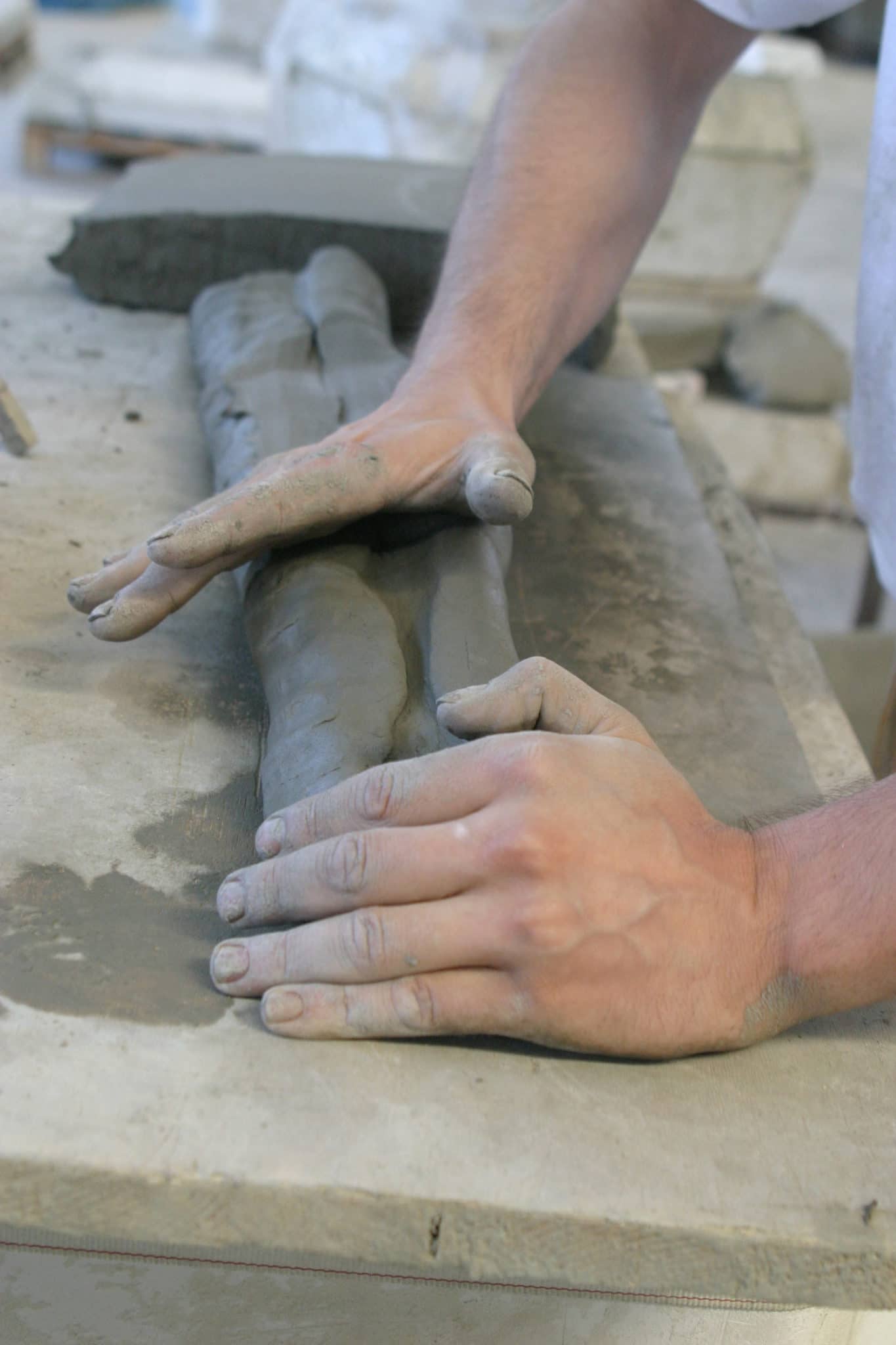
Coiling is one of the oldest methods for forming clay. The material is rolled back and forth until it looks like a “rope” of clay. You begin with a shape in mind, then the coils are placed on top of each other until the desired shape is formed. This is a particularly slow method, the clay needs to harden a bit before more coils can be stacked, so a potter will begin one piece and then move to another to begin, then move to another, and so on. By the time he has begun say the fourth or fifth shape, the first one will be stiff enough to continue the next phase of the shape.

Eye of the Day has an array of vessels produced using each of these traditional methods, authentically manufactured and imported directly from the very best potteries of the world.


Italian Terracotta Pottery Adds Elegance to Your Outdoor Areas

Planted pots and containers add color and visual interest to your landscape design, garden and outdoor living areas. Choosing the right pots can be a challenge with the wide variety of options available today. Consider adding beautiful Italian terracotta pottery, created to handle the elements and last for decades.

What is Galestro Clay?
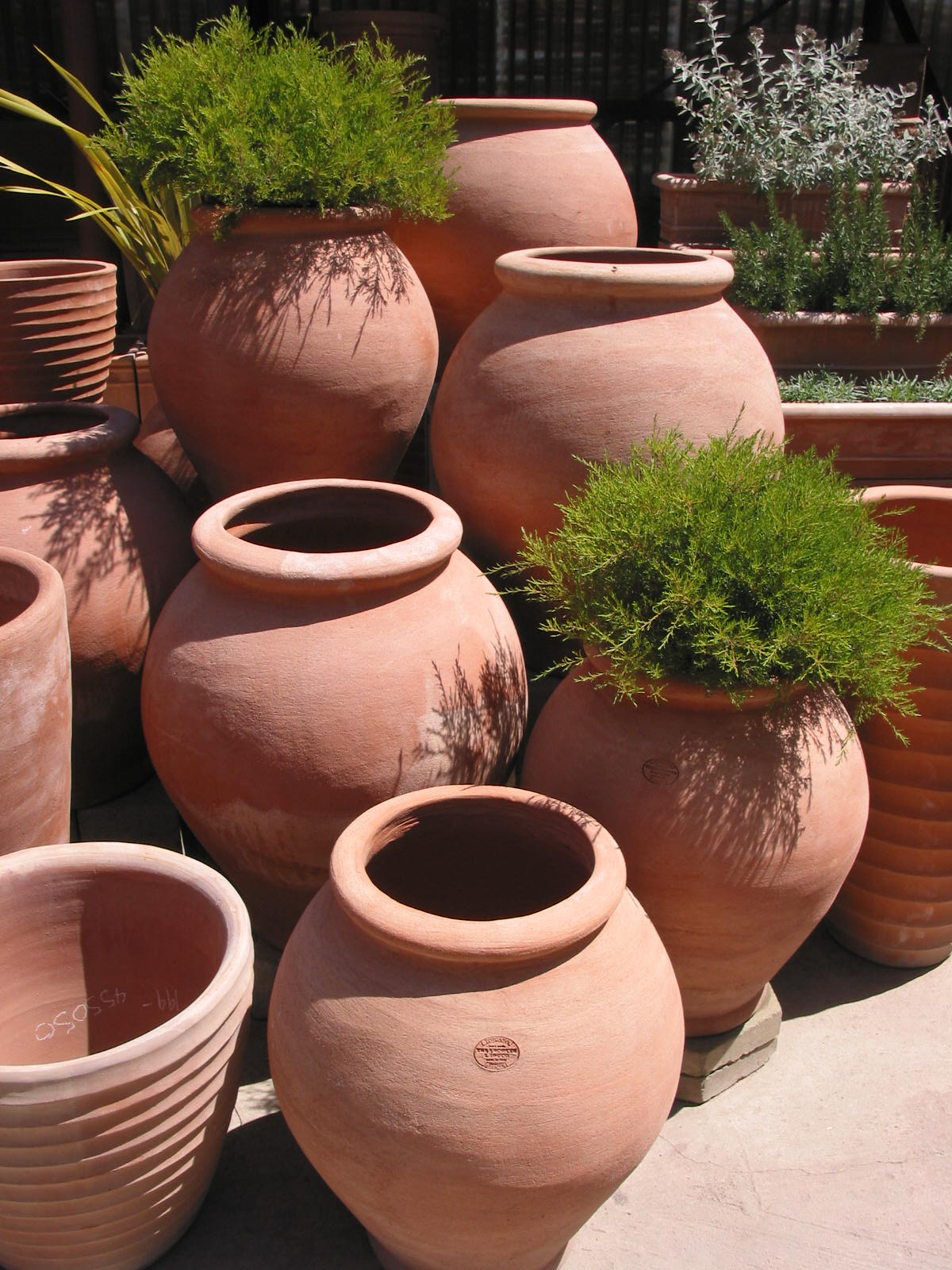
Eye of the Day’s Italian terracotta pottery is fabricated from Galestro clay, fired at an extremely high temperature. It is a high-quality, dense clay known for creating particularly durable pots, frost resistant to -15 degrees Fahrenheit. Galestro clay is found in Tuscany, near the borders of Grosseto, Arezzo and Siena. Pots made from this clay are created by hand and air-dried before firing. If conscientiously maintained, this pottery will last decades.

Terracotta Pottery: Style
In addition to customary classic pottery like the beloved double roll rim, more ornate Italianate styles featuring details such as garland, rosette and leaf motifs, are available to infuse your home with old-world design. Eye of the Day’s Terre Colorate line brings clean, modern Italian design to contemporary garden style.

Whatever your garden style, with Eye of the Day’s help you can add a clear visual appeal using Italian terracotta pots.

Eye of the Day Garden Design Center provides high quality pots for decoration and for planting. Learn more about our Italian terra cotta pottery.