Groundskeeping: Brent’s Eye on Austin

Eye of the Day Garden Design Center|Austin travel groundskeeping| limestone

GROUNDSKEEPING:  Austin, Texas

Being from California, born and raised, I have always had a prejudice towards Texas.  They were cowboys and we were beach people if not surfers.  They like six guns and we like bongs, they eat TexMex and we eat real Mexican food.  Girls in Texas have big hair and wear lots of makeup and who doesn’t still dream about California girls.

Eye of the Day Garden Design Center|Austin travel groundskeeping| limestone
Austin has similar landscaping to California designs.

Texas is a desert and so is most of California. We both have major water issues and we both landscape our homes and developments like there is no bottom to the aquifers that provide much of our water.

Eye of the Day Garden Design Center|Austin travel groundskeeping| limestone
Texas limestone incorporated throughout this design.

Travelling to Austin to visit my family I have come to really, really enjoy it.  This hilly area along the Colorado River (different Colorado from the one we know in California) is a fun and exciting place and I enjoy driving the neighborhoods and suburbs when I’m there.  On a recent trip I went out to visit different landscape architects and design firms.

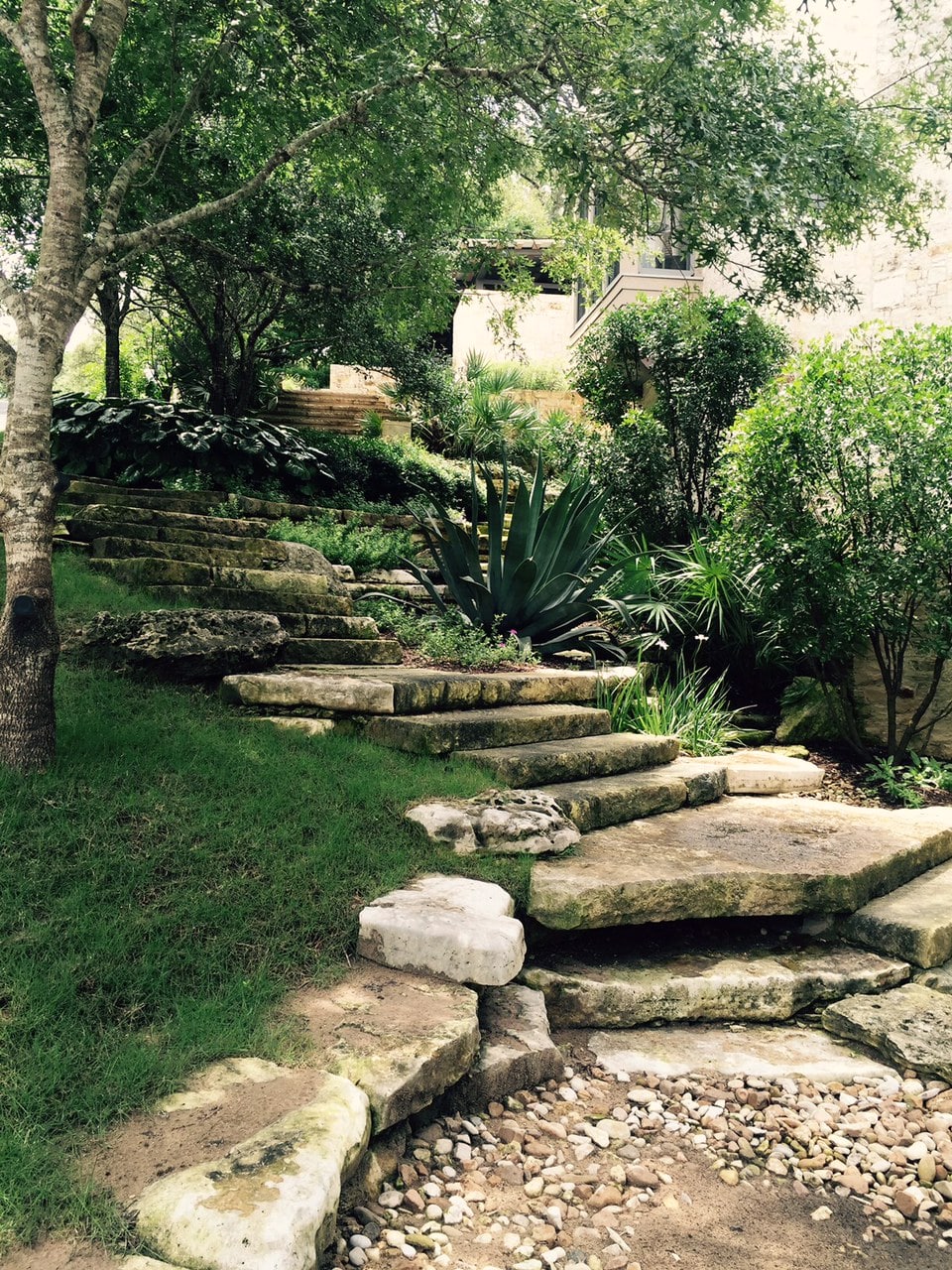
Several were in the Tarrytown neighborhood just west of the downtown which is doing its best to emulate the high-rise culture of many large cities today.  Tarrytown is an area of old and new residences that fit the description of “stately”.  With their use of Texas limestone for structures, walls and pathways and stairs, there is a feeling of substance and earth filled with lush landscapes that make one appreciate the humidity and heat in a way that as a Californian I didn’t know I could.

Eye of the Day Garden Design Center|Austin travel groundskeeping| limestone
More Texas limestone used to create a stairway

There are many, many architects and developers in the busy and growing Austin area and the design elements are trending to mid-century modern and contemporary.  The populace is very conscious of their outdoor areas and driving the neighborhoods shows a diversity of styles when it come to containers they use.

This historic estate makes the most of its entrance with lidded finials on the entry posts and two Campania concrete vase planters on the front porch.
 

Next is an empty tree planter downtown Austin on Willy Nelson Blvd.  Metal and wood, built for public traffic.  A new, modern twist on the Versailles planter used all over Europe with a very western feeling.  Perfect for walking on the sunny side of the street.  

Eye of the Day Garden Design Center|Austin travel groundskeeping| planters and containers
Classic pottery at the gate as well as at the front entrance.

Another commercial application, this project is in the University of Texas neighborhood – a large, metal square.  I like the scale and simplicity of its design and size in front of this office building.  

Eye of the Day Garden Design Center|Austin travel groundskeeping| planters and containers
Metal planters and water wise plants line this Austin business.

If you haven’t been and think of Texas the way I used to, I suggest a trip to the Austin area.  Great food, great music, the home of Whole Foods and a great place to experience the South and easy livin’ in great gardens.
A LANDSCAPE ARCHITECT DESIGNS FOR THE DROUGHT

Eye of the Day Garden Design Center|Sally Farnum Before and After garden design|drought

A LANDSCAPE ARCHITECT DESIGNS FOR THE DROUGHT

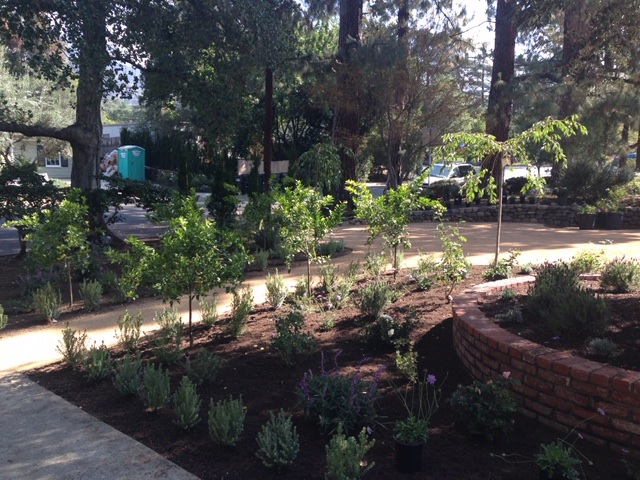
While landscape architect Sally Farnum of SE Farnum Associates has been taking the time to educate her clients about how to deal with their outdated, thirsty landscapes—especially rolling, green lawns—she has designed and implemented an outside environment for her own home that is water-considerate and still lush, inviting and peaceful.

The first task was to remove a large front lawn and some accompanying flower beds.

BEFORE: Water-thirsty lawn

DURING: Removing lawn and introducing granite

Next, grading, drainage and landscape plan was translated to the area. Decomposed granite was used as the base of the pathway from the driveway, culminating in a keyhole design, at the end of which a dry-stacked rock wall would serve as a retaining wall as well as the background for a Gladding McBean fountain conversion.


ALMOST FINISHED!
Flanking each side of the pathway are two Antique Green Gladding McBean Oil Jars, preparing the eye for the fountain.  Planting on the perimeter of the path area includes a variety of water-friendly plants and trees.


STAY TUNED
Check back next month on Sally’s design in progress for photos of the finished project.


Edible Container Gardening 101

Eye of the Day Garden Design Center|Edible Container Garden| Oscar Carmona

Edible Container Gardening 101

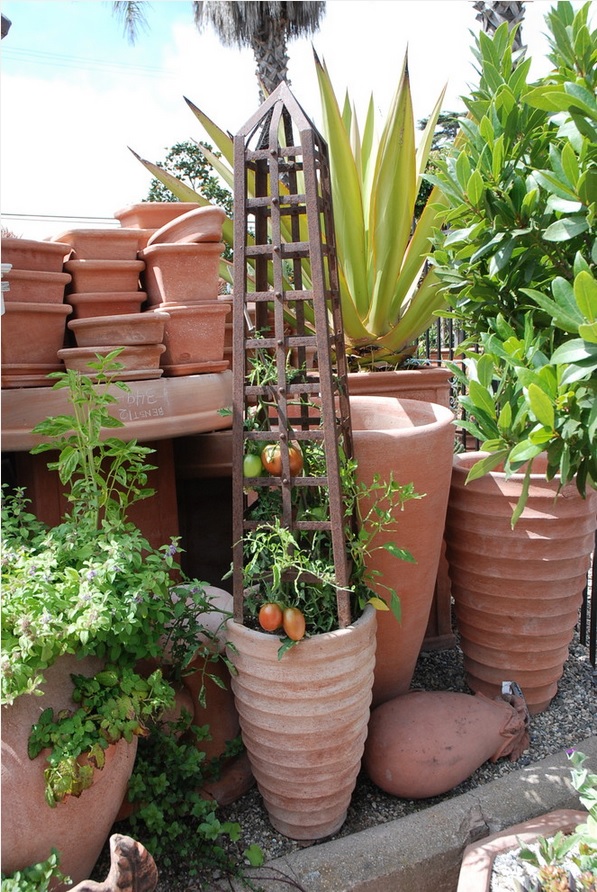
Edible container gardening is a great way to grow vegetables especially when there is no space for a traditional garden. If you live in a condominium or an apartment, containers can provide valuable growing options. A container on casters gives you the ability to move your vegetables to sun or shade, depending on what you want to grow and the time of year. With good, fertile potting soil and a topping of protective mulch you can get by with minimal water.

If you have never tried growing edibles in a container or have not had much success, here are five key considerations  that will greatly enhance your efforts.

POT SIZE

It is important to match the size of your pot to the types of vegetables you want to grow. Bowl shaped pots that are somewhat shallow, approximately 8 to 10 inches, can be great for growing lettuces and other leafy greens. Peppers, cucumbers, beans and larger growing herbs need a deeper pot, 12- 18 inches. Tomatoes like pots that are 18-24 inches deep and about 12-14 inches in diameter.

POTTING SOIL

I recommend choosing an organic potting soil that includes lots of good compost, organic nutrients and important beneficial soil microbiology. EB Stone’s 420 blend has all of these ingredients. Plants grow well in pots when they have a rich growing medium and regular watering. Purchasing top quality potting soil is key to growing healthy, productive plants in containers.

WHERE TO LOCATE YOUR EDIBLE GARDEN

Sunlight and favorable temperatures are also important to growing healthy plants.  Observe how much sun exposure your selected area gets.  Morning sun with shade in the afternoon is good for growing leafy greens such as lettuces, arugula or kale. Sun all day is great for tomatoes and peppers. Shade loving plants like the ambient temperature range of 56-75 degrees. Full sun loving plants are comfortable in the temperature range  of 60 to the mid to upper 80’s. You may find that you have spots in and around your home to grow a bit of both. Remember that the sunlight and temperature will vary throughout the year. So you may need to make adjustments to what you want to grow and/or move containers from season to season.

PLANT NUTRITION

Good organic potting soil will contain necessary organic nutrients. These nutrients not only provide an important food source for your plants, but also for the beneficial microorganisms in the soil. Beneficial soil microbiology will help plants grow strong, nutrient dense and more disease resistant. I also recommend an all-purpose fish/kelp liquid fertilizer applied once weekly throughout the growing season to ensure that your edibles have access to a full range of organic nutrients.

WATERING

Plants in pots need regular, efficient watering as they can become dry more quickly than when planted in the ground. Water until you see it coming out of the drain hole at the bottom of the pot. This means that you have watered completely through the root zone. Fertile potting soil and a layer of mulch will help retain moisture. As you get to know your growing environment you will be able to fine-tune your watering schedule.

Once you have experienced success  with your container garden, you can take growing to the next level by planting your favorite crops in succession over the course of the growing season, which is all year in our neck of the woods!   So don’t plant everything all at once. Start a little at a time with strategic new plantings at  four, eight and twelve week intervals. Leafy greens can be successively grown every four to six weeks. Longer growing crops can be planted every eight to twelve weeks.

Now you are ready to get started or advance your edible container gardening efforts. With some good observation for growing potential in and around your home and care to provide your edibles with a good growing environment you will enjoy successful harvests well into the future.

Oscar Carmona, Healing Grounds Nursery 

Special Event: Eye of the Day will be hosting a special Edible Container Gardening Workshop with Oscar Carmona on Saturday, June 27th. For more information and to reserve your spot, please visit the event page.


Book Review: Fountains – Splash and Spectacle

Eye of the Day Garden Design Center| Fountains Splash and Spectacle| Fountains

FOUNTAIN AS MUSE

Sunday morning.  Outside the bank of our bedroom windows, the fountain’s splash and play completely encompass the peacefulness of home.  Our shy friend, a tiny iridescent green hummingbird is curiously eyeing the droplets arcing into the air. Especially while we are all thinking about water problems in California, enjoying a few moments with the sound, sight and spray of our fountain is almost intoxicating.

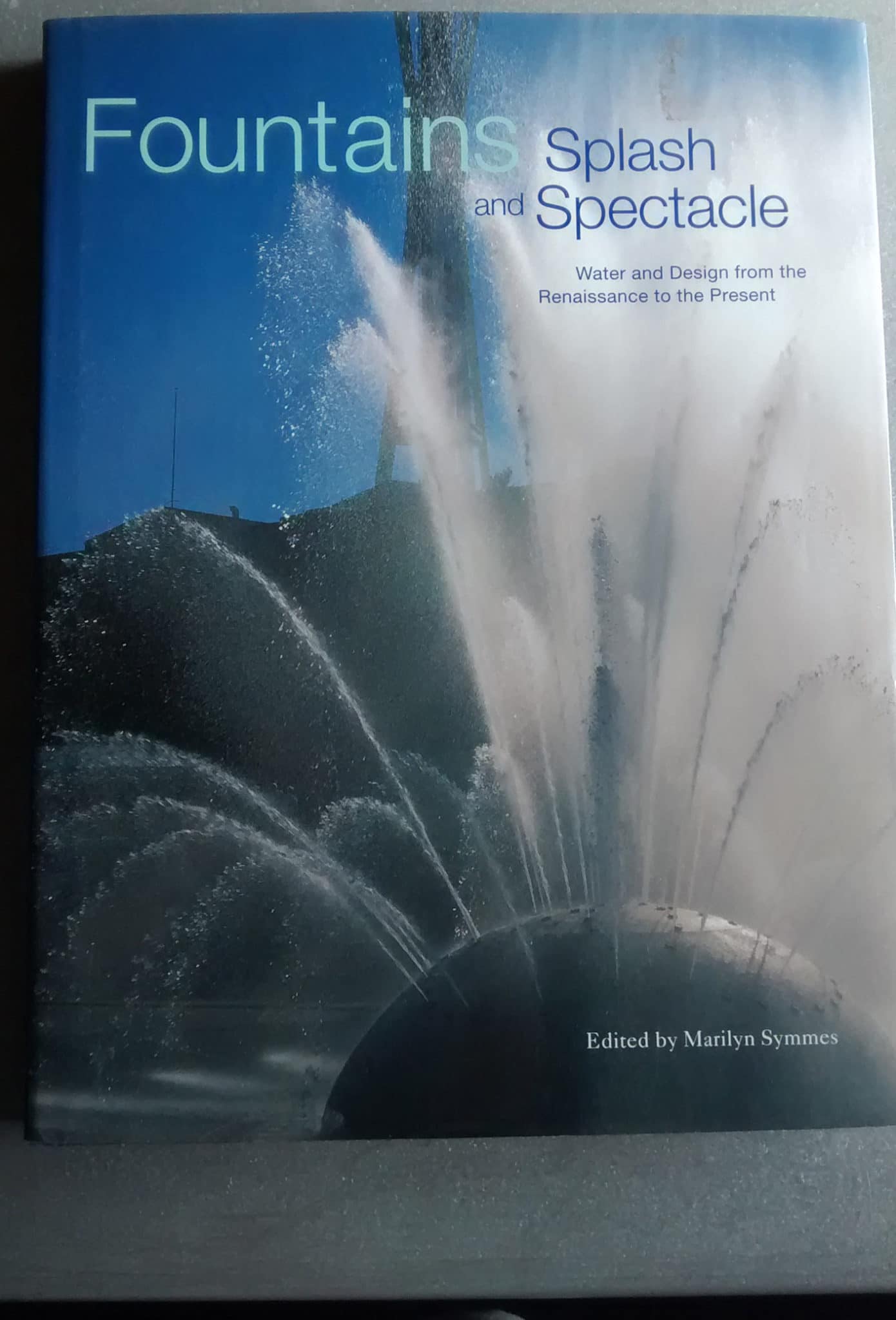
Throughout the years we have consistently added to Eye of the Day’s library of books pertaining to gardening, fountains, pottery, terracotta and European antiques. While I was mesmerized by the muse of my fountain, I remembered a book I found for Brent a few years ago:  Fountains Splash and spectacle: Water and Design from the Renaissance to the Present edited by Marilyn Symmes. The book traces the history of fountains throughout the world from the renovations of ancient Roman aqueducts to choreographed, computer controlled displays combining light, music, and fireworks.

Photographs, paintings, illustrations, etchings and drawings are so plentiful and varied that even if you only pick up the book to see them you’ll be drawn into reading a few paragraphs like this one:

Water possesses almost magical qualities.  A spraying fire hydrant can transform a sweltering city street into a temporary oasis, offering neighborhood children a showery playground as welcome relief—from the dry, hard pavement…the sound of moving water—sometimes a roar, at other times a whisper–breaks the stillness and can provide an aural refreshment on a warm day.

The last photo in the book is the best possible illustration of this paragraph.

Though our water problems have no foreseeable end and we may need to regulate the use of our fountains, the birds, bees and butterflies not only enjoy, but need water to survive and even a few hours a day provide a magical quality.  And that’s not just for animals, but for those of us staring out the window on a Sunday morning as well.


Fountains: Splash and Spectacle – Water and Design from the Renaissance to the Present. Edited by Marilyn Symmes. The Smithsonian Institution, 1998.


From Your Edible Garden: Go From Terracotta Bowl to Salad Bowl

Eye of the Day|Kale and Cilantro Salad|

From Your Edible Garden: Go From Terracotta Bowl to Salad Bowl

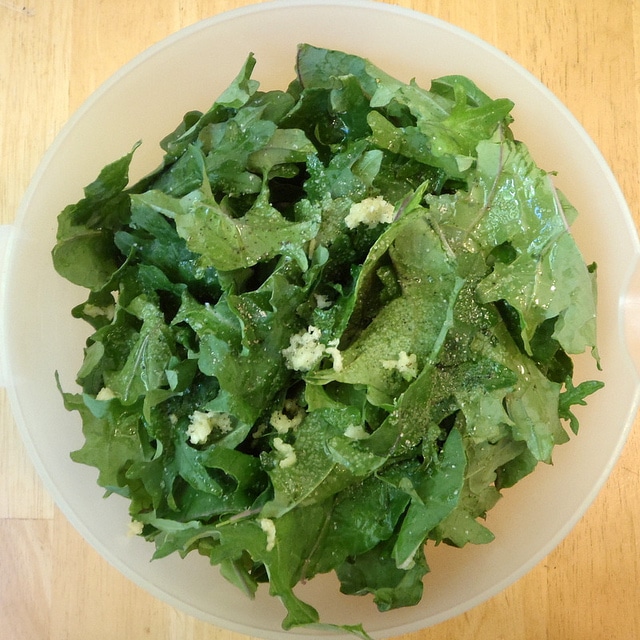
A few edible green things you could EASILY plant in your edible garden container are KALE and CILANTRO.  Oh, I know…kale, kale, kale…maybe you think you’ve heard enough about kale to last until the end of your days.  I’m with you.  But when I tasted this at the home of some great friends, I thought I could EAT this until the end of my days.

Salad Recipe:

  1. Pick a bunch of young, black kale (lacinato kale, Tuscan kale, dinosaur kale) from the beautiful Italian terra cotta bowl you so carefully planted. Alternatively, purchase a bunch at your farmers’ market.
  2. Do the same with a bunch of cilantro. Stem both kale and cilantro and mix together in a large bowl.
  3. Douse it with the best tasting olive oil you know. Squeeze a lemon on it.  Scatter salt and pepper then toss it all together.  Taste it and add more lemon juice if it needs more sparkle.
  4. It’s so perfect just the way it is, but thin shards of Parmigiano Reggiano only make you want to have a never ending supply of kale and cilantro for this salad.


Photo Credit: Kale Salad, Creative Commons, PA113178 by Joy is licensed under C.C. 2.0


The Truth Behind the Aged Terracotta You Buy

Eye of the Day|Quality terracotta differences|design pottery

The Truth Behind the Aged Terracotta You Buy

If you have read the articles by Scott Semple you now have a good understanding of what makes up terracotta pottery. From Gladding McBean’s stoneware to our Italian frost resistant earthenware containers, at Eye of the Day Garden Design Center we sell high-quality terra cotta products which last and last.

Now, what about aesthetics? Do you want your pots to last? Is it important that future generations are given your garden pots along with your jewelry, silverware and bedroom set? Many people love the patina of terracotta when it gets older and though a crumbling pot is not the same thing as “patina” they think it still looks cool.

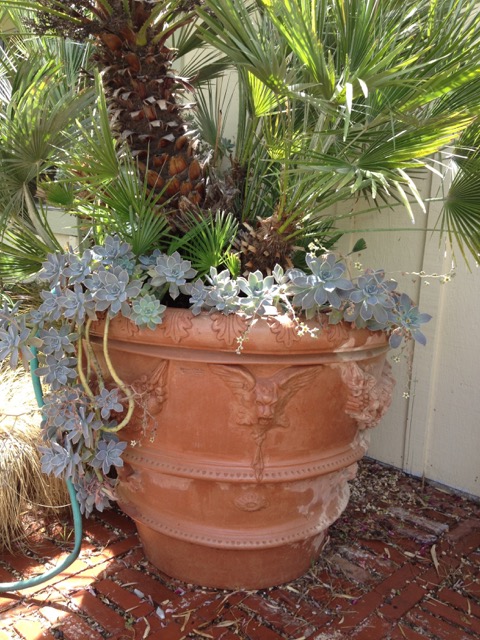
This Italian pot from Terrecotte Olympia of Tuscany, Italy is a favorite of designers in Southern California. It is not made with frost proof Galestro clay but with Sienna clay, which is clay Americans typically find at their garden store. Olympia, like many Italian clays and other clays from which garden pots are produced, will almost immediately begin to spall and flake. Although they have a wonderful aged patina that designers love to specify in their designs, the material does not have a long life compared to pottery made from Galestro clay. The problems will be seen in Mexican and most Asian terracotta products as well.

At Eye of the Day, we hope that our retail and professional design clients will consider the investment they are making and choose terracotta for the centuries. For a further example of how these pots age and look, take a look at the following pictures of the Italian pots at the Ralph Lauren Store at the Stanford Shopping Center in Palo Alto. If this is not enough to convince you, well, that’s why there are both vanilla and chocolate…something for everyone.

If you like that falling-apart look, come and see our seconds and close-out area at the store where we have lots of consigned pottery from customers who are replacing their containers with new ones. The prices are great and the look is shabby/chic. We also have remaining stock from Terrecotte Olympia at half price: it’s still half-good.